
 Bitcoin
  Ethereum
  Tether
  XRP
XRP  BNB
BNB  USDC
USDC  Solana
  TRON
TRON  Lido Staked Ether
  Figure Heloc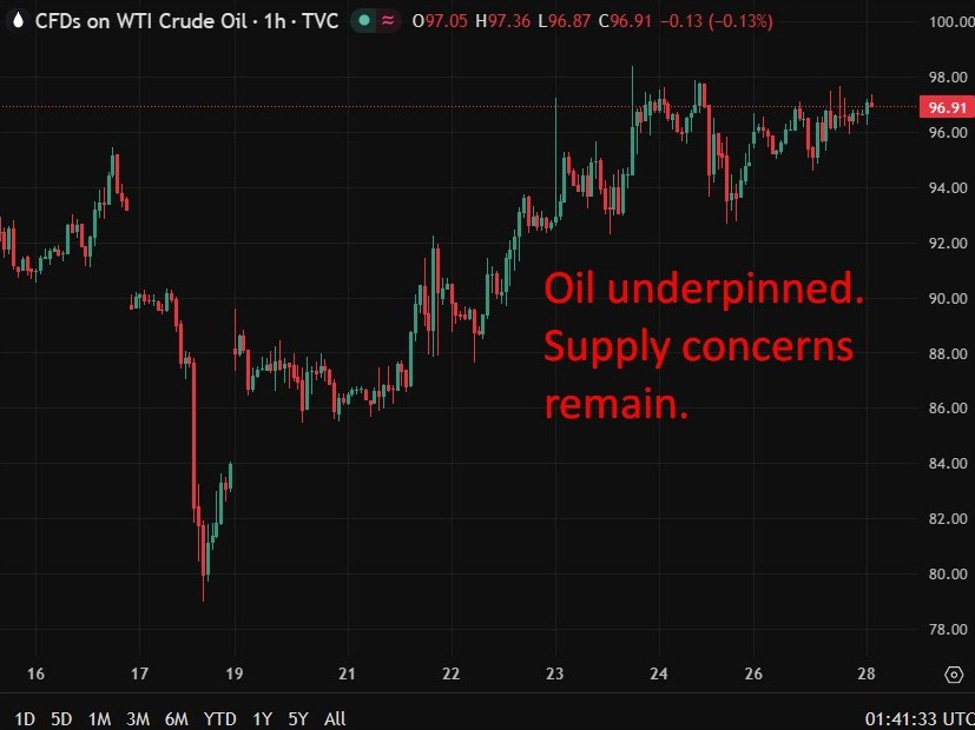
Iran has just 12 to 22 days of unused crude storage remaining, with exports down 70% under the U.S. naval blockade and a further 1.5 million bpd output cut possible by mid-May, Kpler says.Bloomberg (gated) carry the report. SummaryIran has just 12 to 22 days of unused crude storage capacity remaining, according to research firm Kpler, raising the prospect of forced production cuts of a further 1.5 million barrels per day by mid-MayIranian crude exports have fallen to around 567,000 barrels a day from an average of 1.85 million barrels a day in March, a drop of roughly 70% since the U.S. naval blockade of Iranian ports took hold in early AprilIran has already curtailed up to 2.5 million barrels of daily crude production, with neighbouring producers including Saudi Arabia, Iraq, Kuwait and the UAE also forced to reduce output since conflict erupted on February 28Kpler said no tankers have been observed successfully evading the U.S. naval blockade around the Strait of HormuzDespite the supply collapse, Tehran is unlikely to feel the full financial impact for another three to four months, given the time required for cargoes to reach Chinese ports and for buyers to settle paymentsIran is running critically short of crude storage capacity, with research firm Kpler warning the country has just 12 to 22 days of unused space remaining before it is forced to cut production further, potentially by as much as 1.5 million barrels per day by mid-May.The storage crisis is a direct consequence of the U.S. naval blockade imposed on Iranian ports in early April. Exports have collapsed from an average of 1.85 million barrels a day in March to around 567,000 barrels a day, a fall of roughly 70%. Kpler said it has not observed a single tanker successfully evading the blockade in waters around the Strait of Hormuz, suggesting the enforcement operation is proving highly effective.Iran has already absorbed significant production losses. Goldman Sachs estimated last week that the country has curtailed as much as 2.5 million barrels of daily output since the conflict began on February 28. A further forced cut of 1.5 million barrels per day would represent a devastating additional blow to what was once OPEC’s second-largest source of supply. The wider regional impact is also significant, with Saudi Arabia, Iraq, Kuwait and the UAE all having reduced output since hostilities erupted.The financial pain for Tehran, however, will take time to arrive. Iranian crude cargoes typically take around two months to reach Chinese ports, the primary destination for the regime’s oil, and buyers have a further two months to settle payments. Kpler estimates the revenue impact will not be fully felt for another three to four months, a lag that gives Tehran some near-term financial breathing room even as its physical oil infrastructure comes under acute pressure.That buffer may also complicate the diplomacy. With Iran not yet facing an immediate cash crisis, the urgency to reach a deal on the Strait of Hormuz may be lower than the supply data alone would suggest. —The combination of a collapsing Iranian export volume, rapidly exhausting storage capacity and the prospect of a further 1.5 million barrel per day production cut by mid-May removes meaningful supply from an already disrupted global market. Iran has already curtailed up to 2.5 million barrels per day according to Goldman Sachs, and neighbouring Gulf producers have also been forced to reduce output since hostilities began. The effective closure of the Strait of Hormuz is compounding the supply shock. The three to four month lag before Iran’s oil revenues feel the full impact suggests Tehran retains some financial buffer in the near term, which may complicate diplomacy by reducing the immediate pressure on the regime to reach a deal. This article was written by Eamonn Sheridan at investinglive.com. 🔗 Source 💡 DMK Insight Iran’s dwindling crude storage is a ticking time bomb for oil prices. With only 12 to 22 days of unused storage left, the potential for a significant supply shock looms large. A 70% drop in exports due to the U.S. naval blockade is already squeezing the market, and if the anticipated 1.5 million bpd output cut materializes by mid-May, we could see prices spike as global demand continues to recover. Traders should keep an eye on WTI and Brent crude benchmarks, as any disruption in Iranian supply could lead to a bullish breakout above recent resistance levels. But here’s the flip side: if Iran manages to circumvent sanctions or if OPEC+ decides to adjust their output strategy, we could see a rapid reversal. So, while the immediate outlook suggests tightening supply, the geopolitical landscape remains fluid. Watch for any news on negotiations or sanctions that could impact these dynamics. The next few weeks will be crucial for positioning in the oil market. 📮 Takeaway Monitor Iran’s crude storage levels closely; a supply shock could push oil prices higher, especially if output cuts happen by mid-May.
Morgan Stanley sees dollar risks skewed to downside as energy shock sensitivity fades
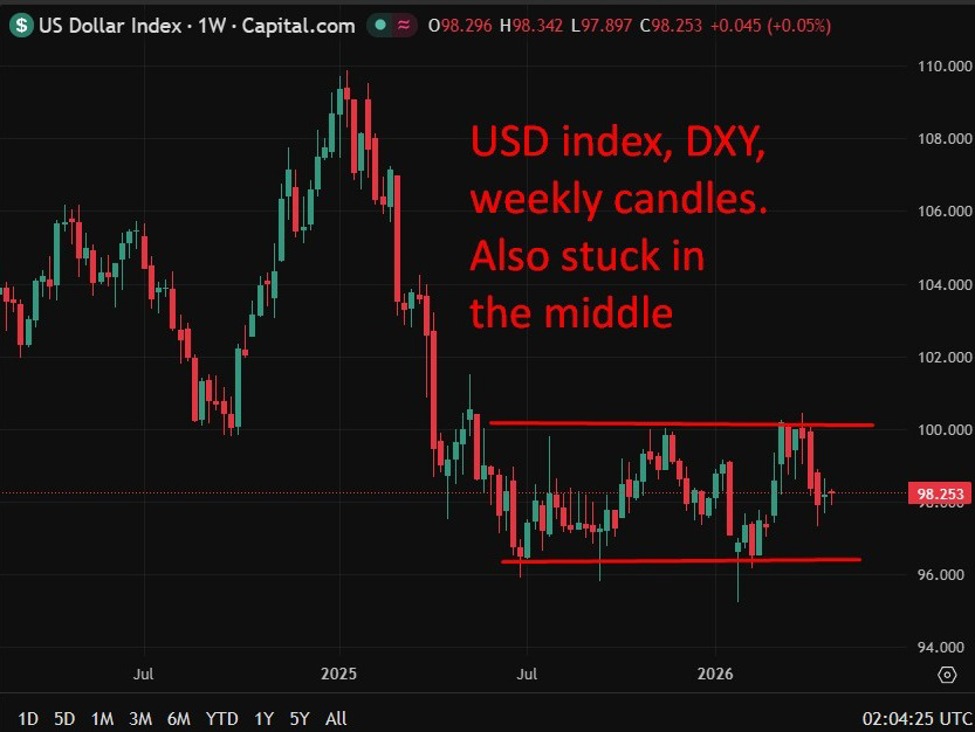
Morgan Stanley says dollar risks are increasingly skewed to the downside as FX markets grow less sensitive to energy war headlines, though refined product shortages remain a key upside risk for the currency. SummaryMorgan Stanley analysts say risks for the dollar are increasingly skewed to the downside, with FX markets becoming less sensitive to energy supply disruption headlines from the warInvestors are shifting focus to longer-term themes, with Morgan Stanley saying there is broad agreement that the dollar has scope to trade at a deeper discount to rate differentialsThe bank is nonetheless cautious about turning outright negative on the dollar, warning that markets may be underestimating the risk of refined energy product shortagesSuch shortages could weaken economic data expectations and trigger risk aversion, both of which would traditionally support dollar demandMorgan Stanley has flagged a meaningful shift in foreign exchange market dynamics, warning that risks for the dollar are increasingly tilted to the downside as investors grow less reactive to energy supply disruption headlines and turn their attention to longer-term structural themes.In a note to clients, the bank’s analysts said FX markets are displaying a diminishing sensitivity to news flow around the war’s impact on energy supply, a notable development given the scale of disruption to Strait of Hormuz traffic and Iranian crude exports in recent weeks. Rather than trading on each new headline, investors appear to be stepping back and focusing on where the dollar should be trading relative to interest rate differentials over a longer horizon.Morgan Stanley said it believes investors broadly share its view that there is meaningful scope for the dollar to trade at a deeper discount to those rate differentials, a framing that implies the currency has further to fall from current levels once the noise of day-to-day war headlines recedes.The bank is not yet ready to turn outright negative on the dollar, however. Its key concern is that markets may be underestimating the risk of refined energy product shortages, a second-order consequence of the Hormuz disruption that has attracted less attention than the headline moves in crude benchmarks. A shortage of gasoline, diesel or jet fuel would feed directly into weaker economic data and could trigger a wave of risk aversion that historically supports dollar demand.The tension Morgan Stanley identifies is therefore between a structural case for dollar weakness building in the background and a tactical risk that an underappreciated refined products crunch forces investors back toward safe-haven positioning. Until that uncertainty resolves, a fully committed negative dollar call remains premature in the bank’s view.—Bearish framing for the dollar, though Morgan Stanley stops short of a full negative call. The key insight is the shift in FX market behaviour: investors are increasingly looking through energy supply disruption headlines and focusing on structural dollar weakness relative to rate differentials, a dynamic that suggests the greenback’s traditional safe-haven bid during geopolitical stress is eroding. The caveat is significant for energy markets specifically: Morgan Stanley warns that investors may be underestimating the risk of refined product shortages, which could yet trigger a fresh wave of risk aversion and dollar demand.Morgan Stanley says dollar risks are increasingly skewed to the downside as FX markets grow less sensitive to energy war headlines, though refined product shortages remain a key upside risk for the currency. For oil markets the refined products angle is worth watching closely, as shortages in gasoline, diesel or jet fuel would represent a second-order consequence of the Hormuz disruption that has so far received less attention than crude benchmarks. This article was written by Eamonn Sheridan at investinglive.com. 🔗 Source 💡 DMK Insight Morgan Stanley’s take on the dollar’s downside risk is a wake-up call for traders: energy headlines are losing their grip on FX markets. As refined product shortages loom, the dollar could face volatility despite the broader trend suggesting weakness. This shift in sensitivity means traders need to reassess their positions, especially if they’re heavily long on the dollar. If the dollar starts to slip, it could trigger a cascade effect across commodities and emerging markets, particularly those reliant on dollar-denominated trade. Keep an eye on the correlation between the dollar and crude oil prices; a spike in oil could exacerbate dollar weakness if it leads to inflation fears. Here’s the kicker: while the dollar’s immediate outlook seems shaky, the refined product shortages could create a counterbalancing effect. Traders should monitor key levels around the dollar index to gauge sentiment—watch for a break below recent support levels, which could signal further downside. The next few weeks will be crucial as we navigate these mixed signals. 📮 Takeaway Watch for the dollar index to break key support levels; refined product shortages could create volatility in the coming weeks.
Bank of England rate decision may spring a split vote surprise, HSBC warns
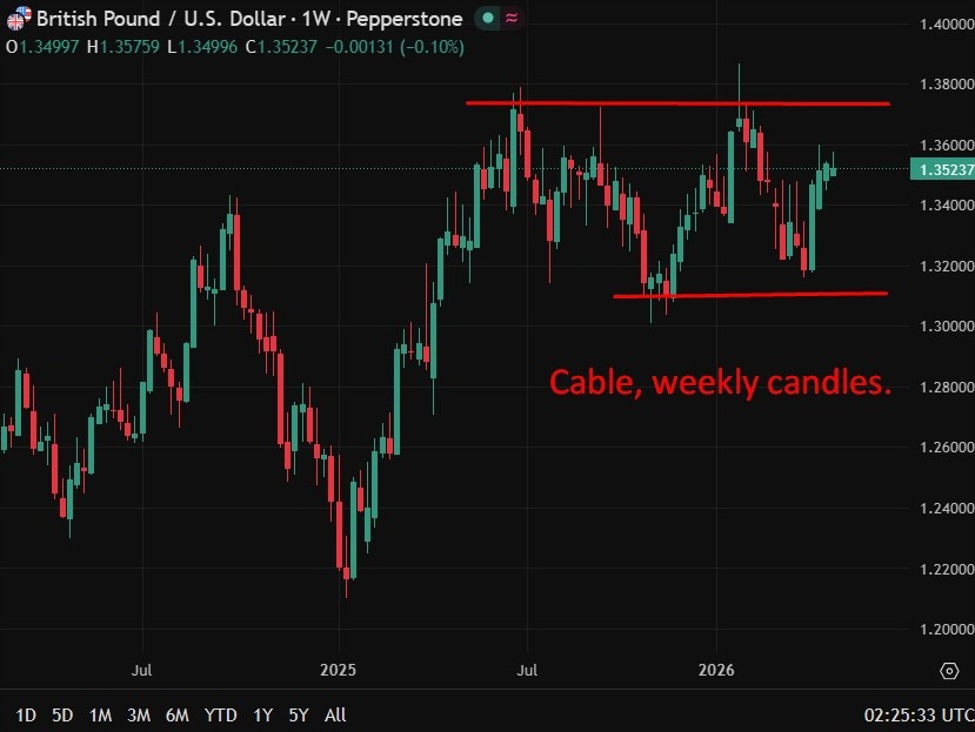
HSBC warns the Bank of England’s Thursday rate decision could deliver a hawkish split vote, with some members potentially voting for a rise, though sterling upside looks limited with 60bps already priced. SummaryHSBC analysts say the Bank of England’s Thursday rate decision could produce a split vote, with some members potentially voting to raise rates rather than holdThe market consensus is positioned for a unanimous 9-0 vote to keep rates steady, making any dissent a hawkish surpriseSterling’s capacity to benefit from such an outcome looks limited, with the market already pricing roughly 60 basis points of tightening by year-endThe possibility of a hawkish dissent reflects concern among some committee members about inflation risks, particularly as the Iran war threatens to drive energy and import costs higherThursday’s Bank of England interest rate decision could deliver a hawkish surprise, with analysts at HSBC warning that the vote may not be the clean 9-0 hold that markets are broadly expecting.In a note to clients, the bank flagged the possibility that one or more members of the Monetary Policy Committee could break ranks and vote for an outright rate rise, a development that would run counter to the dominant expectation of a unanimous decision to leave rates unchanged.The dissent, if it materialises, would reflect growing discomfort among some committee members about the inflation outlook, particularly as the Iran war continues to put upward pressure on energy and import costs. The BOE has been monitoring closely the extent to which businesses are passing on higher costs to consumers, a transmission mechanism that Governor Andrew Bailey has previously suggested remains contained relative to the 2022 inflation surge, when prices topped 11%.Despite the potential for a split decision, HSBC’s analysts are cautious about reading too much into sterling’s prospects. The pound’s ability to benefit from a hawkish surprise is seen as limited, given that the market is already pricing in a substantial degree of policy tightening, approximately 60 basis points by year-end. With that much tightening already in the price, a dissenting vote or two would confirm rather than dramatically shift the market’s existing trajectory.The more meaningful signal from any split would be what it implies about the committee’s tolerance for allowing war-driven inflation to persist without a policy response. A hawkish minority would keep pressure on the majority to act sooner rather than later if price data continues to deteriorate.BOE due on Thursday this week, 30 April:—A split vote would be a modest hawkish surprise relative to market consensus, which has been positioned for a clean 9-0 hold. However, HSBC’s analysts note that sterling’s ability to benefit is constrained by the degree of tightening already priced in, with around 60 basis points of hikes expected by year-end. That leaves little room for an upside repricing in the pound even if one or two members break ranks in favour of a rise. The more significant market read would be what a dissenting vote signals about the committee’s tolerance for Iran war-driven inflation feeding into domestic prices, a dynamic the BOE has been watching carefully. If the split materialises, it would reinforce the hawkish undertone in UK rates markets without necessarily moving sterling materially. This article was written by Eamonn Sheridan at investinglive.com. 🔗 Source 💡 DMK Insight HSBC’s warning about a potential split vote at the Bank of England’s rate decision is a big deal for traders right now. With 60bps already priced in, any hint of a hawkish stance could lead to volatility in the GBP/USD pair. Traders should keep an eye on the voting breakdown; if even one member pushes for a rate hike, it might spark a short-term rally. However, the upside for sterling seems capped, suggesting that any gains could be fleeting. Look for key levels around recent highs and lows to gauge market sentiment. Also, consider how this decision could ripple through related assets like UK bonds or even equities, as a more aggressive BoE stance might tighten liquidity further. Here’s the thing: while the market seems to have baked in a cautious approach, any surprises could lead to a shake-up. Watch the reaction closely on Thursday, especially if the vote is split, as that could set the tone for GBP trading in the weeks ahead. 📮 Takeaway Monitor the Bank of England’s rate decision closely on Thursday; a split vote could trigger volatility in GBP/USD, especially if any members call for a hike.
Bank of Japan leaves its short term rate at 0.75%, as expected
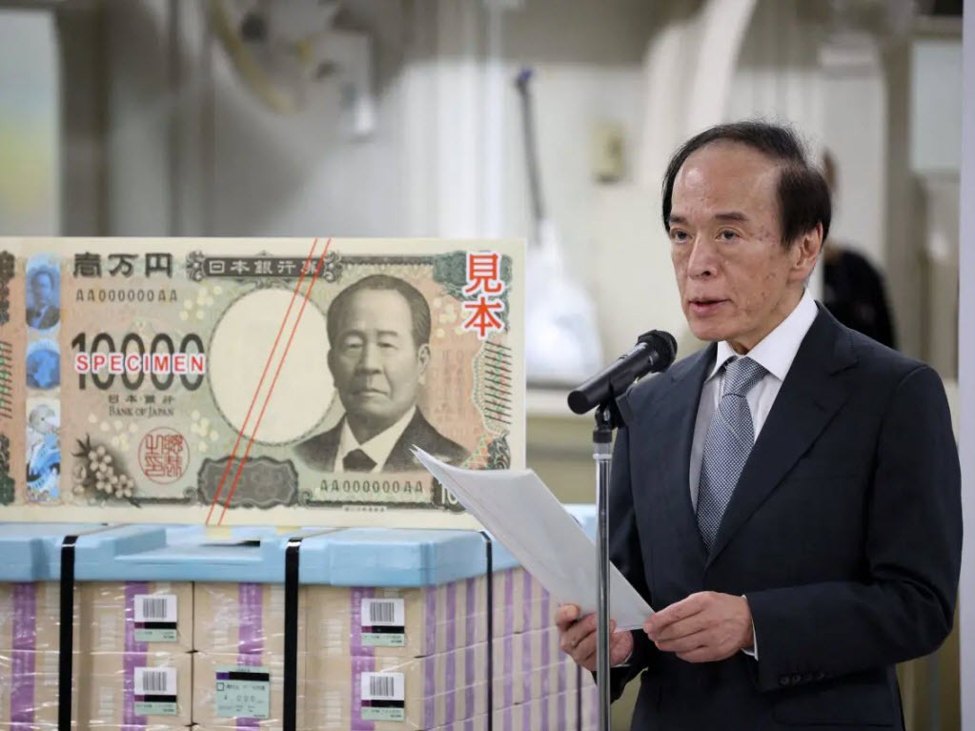
Bank of Japan holds rates but sharply upgrades inflation outlook as Iran war bitesThe Bank of Japan left its short-term policy rate unchanged at 0.75% on Tuesday, as widely expected, but delivered a significantly more hawkish inflation outlook alongside the decision, sharply revising up its price forecasts while acknowledging that the Iran war and elevated crude oil prices are clouding Japan’s growth trajectory.The voteThe decision to hold was not unanimous. Three board members, Nakagawa, Takata and Tamura, proposed raising the short-term rate target to 1.0% from 0.75%, a move that was turned down by a majority vote. The dissent is notable in its scale: three members pushing for a hike simultaneously, even against the backdrop of war-driven economic uncertainty, signals that the hawkish minority on the board is growing more vocal and more willing to act.Takata, in justifying his proposal, said the BOJ’s price stability target had been more or less achieved and that inflation risks in Japan were already skewed to the upside, driven by second-round effects from overseas price pressures feeding into domestic costs. Nakagawa made a similar argument, saying that even with the Middle East situation remaining unclear, economic developments and accommodative financial conditions meant risks to prices were tilted upward.The inflation forecastsThe quarterly outlook report contained the most striking numbers in the statement. The board’s median forecast for core consumer price inflation in fiscal 2026 was revised to 2.8%, a dramatic jump from the 1.9% projected in January. The fiscal 2027 forecast was lifted to 2.3% from 2.0%, and the board offered its first projection for fiscal 2028, pencilling in inflation at 2.0%, precisely at target.The BOJ said underlying inflation is likely to be at a level broadly consistent with its 2% target in the second half of fiscal 2026 and through fiscal 2027, a statement that, taken at face value, implies the conditions for further rate hikes are approaching even if the board is not yet ready to act on them.The primary driver of the upward revision is crude oil. The board said the rise in crude oil prices reflecting the impact of the Middle East situation is expected to push down corporate profits and households’ real income, while simultaneously pushing the year-on-year rate of CPI increase for fiscal 2026 significantly higher. The BOJ also flagged the risk that higher crude prices are being passed on to goods and services more easily than in the past, a second-round inflation concern that the three dissenting members clearly weighed heavily in their hike proposals.The growth pictureOn growth, the BOJ’s tone was considerably more cautious. Japan’s economic growth is likely to decelerate in fiscal 2026, the bank said, with higher crude oil prices squeezing corporate profits and eroding households’ real income through a deterioration in the terms of trade. Private consumption is expected to be broadly flat.The BOJ was careful to note mitigating factors. Government fuel oil subsidies and other fiscal support measures are expected to underpin the economy, and accommodative financial conditions will provide additional support. The bank projected that growth would recover moderately from fiscal 2027 onwards as the adverse effects of high crude prices are expected to wane. The overall assessment, however, was that risks to the economic outlook are skewed to the downside while risks to inflation are skewed to the upside, a classic stagflationary framing that makes the BOJ’s policy path unusually difficult to navigate.The policy signalThe BOJ said it will conduct monetary policy as appropriate from the perspective of sustainably and stably achieving its 2% inflation target, standard language that preserves maximum flexibility. The bank stressed the need to pay particular attention to the impact of the Middle East situation on financial and foreign exchange markets, and warned that if crude oil prices remain elevated for longer than expected, the economy could slow further through a significant decline in corporate profits and household real income.Equally, the board said it must pay due attention to preventing the risk of inflation deviating significantly upward from its projections, a formulation that keeps the door open to further tightening even in the current uncertain environment.Real interest rates remain at significantly low levels by the BOJ’s own assessment, a statement that implicitly acknowledges the case for further normalisation has not gone away, regardless of the external headwinds.The takeawayTuesday’s decision is best read not as a pause in the tightening cycle but as a holding pattern imposed by circumstances. The inflation forecasts have been revised sharply higher, three members voted to hike immediately, and the bank’s own language acknowledges that price risks are tilted upward. What is holding the majority back is the growth uncertainty created by the Iran war and its impact on Japanese households and businesses through elevated energy costs.The question for markets is how long that uncertainty can justify inaction when inflation is running well above target and a significant minority of the board believes conditions for a hike already exist. Governor Ueda’s press conference later today will be closely watched for any shift in tone that brings the next rate hike closer into view. The next meeting is June, and then July:—The yen jumped on the decision, thought its not a big move: This article was written by Eamonn Sheridan at investinglive.com. 🔗 Source
investingLive Asia-Pacific FX news wrap: Trump unhappy with Iran. BoJ hawkish hold.
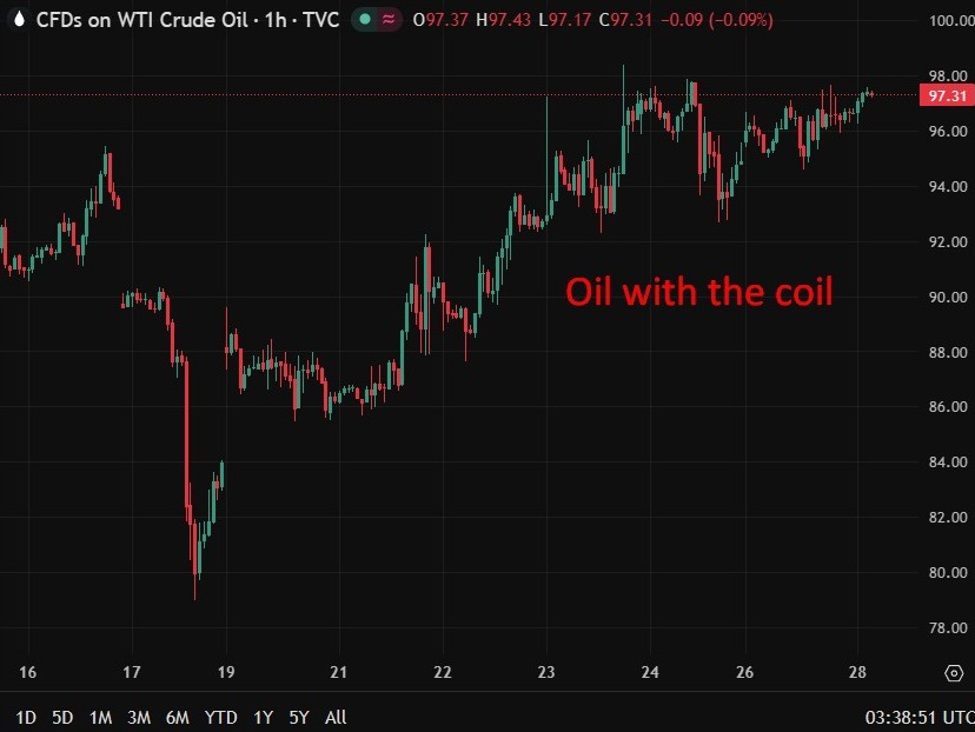
Bank of Japan leaves its short term rate at 0.75%, as expectedBank of England rate decision may spring a split vote surprise, HSBC warnsMorgan Stanley sees dollar risks skewed to downside as energy shock sensitivity fadesIran has 22 days of storage left as naval blockade drives exports to near collapsePBOC sets USD/ CNY reference rate for today at 6.8589 (vs. estimate at 6.8282)Foreign carmakers warn cheap models face U.S. exit without USMCA dealKatayama talks up yen intervention risk (as usual) as crude volatility weighs currencyEaster discounts cool UK shop prices but Iran war inflation threat looms largeJapan March Unemployment rate 2.7% (vs. expected 2.6%, prior 2.6%)Vance said to question Pentagon’s war picture as US missile stockpiles face serious strainTrump sceptical of Iran’s Hormuz offer as nuclear demands remain the sticking pointWSJ: Trump sceptical on Iran’s Hormuz proposal but White House presses on with talksU.S. and Iran closer to deal than it seems as mediators push for Hormuz agreement firstU.S. and Iran closer to deal than thought, with Hormuz access key to any agreementBessent warns global aviation sector: service Iranian airlines and face U.S. sanctionsSummaryTrump is said to be unhappy with Iran’s nuclear proposal, with Secretary of State Rubio reiterating that preventing Iran from obtaining a nuclear weapon remains Washington’s core demand; no deal, no resumption of war, Hormuz stays shutThe Bank of Japan held rates at 0.75% in a 6-3 vote, with three members pushing for an immediate hike to 1.0%; the BOJ upgraded its inflation outlook sharply and downgraded growth, putting a June hike in play and July looking close to certainJapanese Finance Minister Katayama reiterated round-the-clock readiness to act on yen volatility in coordination with the U.S., though her comments provided little tangible support for the currencyUSD/JPY edged lower after the BOJ decision; the dollar softened modestly across major FX pairsForeign automakers including Nissan, Hyundai and Toyota warned the Trump administration they may pull affordable models from the U.S. market if USMCA is not renewed or is watered downMeta Platforms is preparing to unwind its acquisition of AI startup Manus after Chinese authorities blocked the deal, with founders set to depart and Beijing imposing a deadline of several weeks to reverse the transactionSouth Korea’s KOSPI hit a record intraday high, up more than 1.2%, led by automakers and steel stocks, with investor attention turning to major U.S. technology earnings for clues on AI investment and semiconductor demandMarkets ended Tuesday’s session with crude futures pushing higher and equity and fixed income futures under pressure, as further reports confirmed that U.S. President Donald Trump is dissatisfied with Iran’s latest proposal to end the war.Reuters, citing a U.S. official, reported that Trump does not love the proposal, echoing earlier accounts from the Wall Street Journal and the New York Times. The sticking point is the same one it has been throughout: Iran’s offer focuses on reopening the Strait of Hormuz and restoring pre-war conditions without addressing the nuclear programme. Secretary of State Marco Rubio made Washington’s position plain, saying that preventing Iran from acquiring a nuclear weapon remains the core concern and that any framework which sidesteps enrichment is insufficient.The background context helps explain why the gap is so wide. Iran’s proposal, as characterised by those familiar with its content, would amount to a restoration of its pre-war revenue position, including the potential to levy tolls on Hormuz traffic worth billions of dollars annually, combined with the retention of full enrichment capability. For Washington, accepting those terms would effectively confer on Tehran the status of a fourth major centre of global power. It is little wonder Trump is pushing back. The White House is expected to deliver a counterproposal in the coming days. For now, no deal, no resumption of hostilities, and the Strait of Hormuz remains closed.Away from the war:Ahead of the Bank of Japan’s policy statement, Finance Minister Satsuki Katayama reiterated that the government was standing by around the clock and ready to act against foreign exchange volatility in close coordination with the United States. The verbal support offered the yen little traction in practice.The BOJ decision, when it came later, carried more substance than the headline “hold” suggested. The bank kept its short-term rate at 0.75% as expected, but the vote was split 6-3, with Nakagawa, Takata and Tamura all advocating an immediate 25 basis point rise to 1.0%. The dissenting trio cited upward risks to inflation and argued that the conditions for tightening had already arrived. The majority disagreed, pointing to the uncertain growth outlook created by elevated crude oil prices and the Middle East conflict. The BOJ sharply upgraded its inflation forecasts, lifting the fiscal 2026 core CPI projection to 2.8% from 1.9% in January, while trimming its growth outlook. The hawkish tone of the statement, combined with the scale of the dissent, has put a June rate hike firmly in play, with July looking close to a certainty if the data holds. USD/JPY moved modestly lower in the wake of the decision, while the dollar softened slightly across other major pairs.Away from the macro headlines, the Wall Street Journal reported that foreign automakers including Nissan, Hyundai and Toyota have warned the Trump administration they may withdraw their most affordable models from the U.S. market if the USMCA trade agreement is not renewed or is materially weakened. Trump’s second-term tariffs have rendered many entry-level models unprofitable, and manufacturers say the uncertainty is also freezing investment decisions on new U.S. manufacturing capacity.In corporate news, Meta Platforms is said to be preparing to unwind its acquisition of AI startup Manus after Chinese authorities moved to block the deal. The Wall Street Journal reported that Manus’ founders would leave Meta as part of the reversal, with complex investor payouts and technical integration work complicating the process. Beijing has set a preliminary deadline of several weeks to undo the transaction.On the equity side, South Korea’s KOSPI closed at a record intraday high, gaining more than 1.2% on the session, led by strength in automakers and steel manufacturers. Investor attention
Japanese yen holds slightly higher after a more hawkish hold by the BOJ
The BOJ policy decision earlier sees USD/JPY drop back from around 159.50 to sit closer to the 159.00 level currently. The central bank opted to maintain the short-term interest rate at 0.75%. However, there were three board members who dissented and wanted to push for a 25 bps rate hike today. The members who dissented were Takata, Tamura, and Nakagawa.The yen moved higher as this looks to be at least a step in the direction towards a rate hike in June, all else being equal. That after the BOJ also upped its inflation forecasts for fiscal year 2026 to 2.8%. That marks a sharp increase from their previous projection in January of 1.9%.As such, it definitely sets the stage for their next move even if they are not quite ready to act upon that today just yet.The relative uncertainty from the Middle East conflict is still weighing and being too hasty in raising interest rates could backfire on the economy. As I mentioned yesterday, major central banks have a very tough balancing act in going about managing policy in the months ahead. The post: Major central banks are up against a very tough task in navigating monetary policy nextThe drop in USD/JPY currently sees price action fall back below the key hourly moving averages. That puts sellers back in near-term control but given the more cautious market mood, it will be tough to see the yen pull stronger gains in general.The uncertainty of the Middle East conflict is still weighing strongly on the currency and the Japanese economy, no thanks to oil prices still being sky high. Sure, the futures market may look calmer but physical prices for oil barrels are at lofty premiums of around $140 to $150. And that is the price that Japan has to pay now while having to balance out another round of releasing their emergency reserves.Unless the situation in the Middle East changes, it will be tough for the yen to get off the floor. And in that lieu, just be wary of the market reaction along the Japanese yield curve.The short-end of the curve is seeing yields push up but the longer-end is seeing yields push down instead. That’s a small but subtle signal that the long-end is showing fears of a potential economic bust from over-tightening. This article was written by Justin Low at investinglive.com. 🔗 Source 💡 DMK Insight The BOJ’s decision to hold rates steady is shaking up USD/JPY, and here’s why that matters: With USD/JPY dropping from around 159.50 to the 159.00 level, traders should be paying close attention to the dissent within the BOJ. Three board members pushing for a rate hike signals a potential shift in monetary policy that could come sooner than expected. If the BOJ decides to raise rates, it could strengthen the yen and lead to a significant correction in USD/JPY. This is especially relevant as the market has been pricing in a more dovish stance from the BOJ, which could lead to volatility as traders reassess their positions. Look for key technical levels around 158.50 and 159.50. A break below 158.50 could trigger further selling pressure, while a rebound above 159.50 might indicate a return to bullish sentiment. Keep an eye on upcoming economic data releases from Japan and the U.S. that could influence the dollar-yen dynamic. The real story is how quickly the BOJ could pivot if inflation pressures mount, so be ready for rapid shifts in sentiment. 📮 Takeaway Watch for USD/JPY to test the 158.50 level; a break could signal deeper corrections as market sentiment shifts.

China's top leadership body vows to continue to expand domestic demand
Needs to call for more effective, proactive fiscal policyTo continue to expand domestic demandTo implement appropriately loose monetary policyWill ensure liquidity conditions remain ampleWill keep yuan exchange rate basically stableTo improve energy security, stabilise property market and price of agricultural productsTo orderly resolve risks related to local government debtThe readout reaffirms their existing policy path but there is a subtle leaning towards favouring stabilisation and security. If anything, that suggests a more consolidative tone in being more guarded against the narrative of a global growth slowdown. That especially as the US-Iran conflict has threatened the world economy on multiple fronts.But if anything, it reaffirms that Beijing is continuing to hold more easy policy in general to try and stimulate the local market environment. Trying to prop up domestic demand conditions remain their biggest challenge and will continue to be the case in the years to come still. That ever since the collapse of the property market since the Covid pandemic. This article was written by Justin Low at investinglive.com. 🔗 Source 💡 DMK Insight China’s push for proactive fiscal policy could impact SOL’s performance significantly. With SOL currently at $83.71, traders should consider how broader economic policies can influence crypto demand. If China’s fiscal measures successfully stimulate domestic demand, we might see increased liquidity flowing into risk assets like cryptocurrencies. This could lead to upward pressure on SOL, especially if the yuan stabilizes as intended. However, if these policies fail to materialize or lead to unintended consequences, we could see a pullback in crypto markets, including SOL. Keep an eye on the yuan’s exchange rate and any announcements regarding local government debt, as these could serve as catalysts for price movements. Watch for SOL to test key support levels around $80. If it holds, that could signal bullish sentiment, but a break below might indicate a bearish trend. Also, monitor any shifts in trading volume, as spikes could indicate institutional interest or panic selling, both of which will affect SOL’s trajectory in the coming weeks. 📮 Takeaway Watch SOL closely around the $80 support level; a hold could signal bullish momentum, while a break might lead to further declines.

FX option expiries for 28 April 10am New York cut
There are a couple to take note of on the day, as highlighted in bold below.They are all for EUR/USD layered in between the 1.1700 to 1.1750 levels. Given the size of the expiries, we could see more cagey price action in the session ahead in and around the levels noted. That especially if market sentiment remains more guarded and cautious, as we have seen typically to be the case in European trading since last week.That being said, the floor for the pair at the moment remains closer to the 200-day moving average at 1.1675 currently. So, keep that in mind in case of any downside extensions. However, the expiries at 1.1700 could be a factor in pulling price action and keeping things more sticky in European morning trade.As for topside levels, the gains yesterday were limited by the 200-hour moving average instead. That is seen at 1.1744 currently and sits near the larger expiries above too. So, the expiries and the key technical level will act as a bit of a ceiling in limiting price movements to the topside.All of that of course is subject to headline risks and the broader market mood surrounding the US-Iran conflict. As things stand, we’re still nowhere near finding a solution with both sides still not willing to talk. So, the overarching negative mood is still something to consider as it is the bigger driver of trading sentiment this week.There was a mix of headlines overnight with CNN initially reporting that the US and Iran may be close to a deal. However, that was countered by a WSJ report that Trump does not fancy Iran’s proposal of separating nuclear talks from overall negotiations.For more information on how to use this data, you may refer to this post here. This article was written by Justin Low at investinglive.com. 🔗 Source 💡 DMK Insight EUR/USD is sandwiched between 1.1700 and 1.1750, and here’s why that matters: With significant expiries in this range, traders should brace for potential volatility. This could lead to choppy price action as market participants position themselves ahead of these expirations. If we see a breach of either level, it could trigger a wave of stop-loss orders, amplifying the movement. On the flip side, if the pair holds within this range, it may indicate consolidation before a breakout. Keep an eye on the daily chart for any signs of momentum building as we approach these key levels. Also, consider how this might affect correlated assets like the DXY index. A strong move in EUR/USD could reflect broader sentiment shifts in the forex market, impacting other pairs as well. Watch for any news or economic data releases that could influence the euro or dollar, as these could serve as catalysts for movement beyond the expiries. 📮 Takeaway Monitor the 1.1700 and 1.1750 levels in EUR/USD closely; a breakout could signal significant volatility in the coming sessions.

IC signs Guillermo Ochoa to Accelerate Growth Across Latin
IC (previously IC Markets), a leading global provider of online trading services, has announced a strategic partnership with Guillermo Ochoa, accelerating its expansion across Latin America with a sharp focus on Mexico—one of its fastest-growing markets. An icon of modern football, Ochoa continues to perform at the highest level with AEL Limassol, maintaining his status as one of Mexico’s most trusted and recognizable sporting figures. With a distinguished international career and widely expected to anchor Mexico’s goal in the next cycle of global competition, his influence across Mexico and Latin America remains unmatched. Through this partnership, IC secures exclusive rights to Ochoa’s name, image, and likeness across global marketing channels, enabling a high-impact, culturally resonant rollout across the region. The collaboration is designed to convert momentum into market dominance—combining IC’s global trading infrastructure with Ochoa’s credibility, reach, and deep-rooted trust among millions of fans. “This is a strategic move, not a branding exercise,” said Andrew Budzinski, Founder of IC. “Guillermo Ochoa represents performance under pressure, consistency at the highest level, and absolute trust—exactly what trading demands. As we scale aggressively in markets like Mexico, this partnership allows us to cut through faster, connect deeper, and convert stronger.”Ochoa added: “I have always believed that success comes from discipline, preparation, and performing when it matters most. IC shares that same mindset. This partnership is about connecting with people who are focused on improving, growing, and making smarter decisions every day, and I’m excited to be part of that journey with them.”IC will activate the partnership through a fully integrated, multi-channel strategy spanning broadcast, digital, and social ecosystems. Premium live match exposure across Latin America, combined with high-performance digital acquisition campaigns and localized content, is expected to significantly expand reach while driving measurable improvements in engagement, conversion, and client acquisition efficiency. This partnership strengthens IC’s growing global sports portfolio, alongside its high-profile relationship with the Haas F1 Team, reinforcing the brand’s positioning at the intersection of performance, precision, and global scale. As Latin America continues to emerge as a critical growth market, IC is doubling down on strategic investments that deliver both brand impact and commercial returns. About ICIC is a leading global provider of online trading services, offering access to a wide range of financial markets including forex, commodities, indices, and more. With a strong focus on technology, execution quality, and client experience, IC serves traders across multiple regions worldwide. This article was written by IL Contributors at investinglive.com. 🔗 Source 💡 DMK Insight IC Markets’ partnership with Guillermo Ochoa isn’t just a marketing move; it signals a serious commitment to capturing the Latin American trading market, particularly in Mexico. With Ochoa’s popularity, the firm aims to leverage his influence to attract new retail traders in a region where online trading is gaining traction. This could lead to increased trading volumes and liquidity, which are crucial for day traders and swing traders looking for opportunities in forex and crypto markets. But here’s the kicker: while this partnership might boost brand visibility, traders should be cautious. Increased competition in Latin America could lead to tighter spreads and better trading conditions, but it could also mean more volatility as new participants enter the market. Watch for how this affects trading volumes and market sentiment in the coming weeks. Key metrics to monitor include changes in trading activity on platforms like IC Markets and any shifts in forex pairs that are popular in the region, particularly USD/MXN. If you see a surge in activity, it could be a signal to adjust your strategies accordingly. 📮 Takeaway Keep an eye on trading volumes at IC Markets in the coming weeks; increased activity could signal new opportunities, especially in USD/MXN.
BOJ governor Ueda vows to stay on the path of raising interest rates
Forecasts an economic slowdown for the coming fiscal year as Middle East tensions weighBut overall, economic outlook remains stable although conditional on supply chain situationFor now, Japanese economy shows moderate recovery signs despite some weaknessThat outlook assumes no major supply chain disruption thoughBOJ will keep raising interest rates while adjusting level of monetary supportThat will be according to changes in economic, price, and financial conditionsBoard member Takata recommended adding a reference that inflation target has been achievedRising oil prices may have greater impact on inflationBut policymakers need to be alert to the risk of additional economic slowdown due to supply shockBOJ has kept main scenario unchangedHowever, the odds are now lower for the outlook to be realisedWill act appropriately to avoid lagging behind the curveBut seeks more time in assessing Middle East conflict and the impact on economy, pricesUnderlying inflation remains slightly below the 2% targetThe comments follow from the BOJ policy decision earlier, in which the central bank left the short-term interest rate unchanged at 0.75%. However, three policymakers – namely Takata, Tamura, and Nakagawa – dissented against the decision in voting to raise interest rates to 1.00%. As such, that saw a 6-3 vote split among the BOJ board on the decision.Ueda’s remarks are keeping in line with their decision but doesn’t signal too much urgency at the balance. The fear for the BOJ is that they are now needing to respond to cost-push inflation and that may derail economic conditions. That especially since the government is also needing to balance out the fiscal side of things.And the main concern now is that markets are already pricing in this degree of tightening. So, the BOJ has to deliver at some point or risk the Japanese yen imploding further. And that will open up a whole different can of worms.It’s a tough task. And they won’t be the only ones having trouble navigating the current storm. From yesterday: Major central banks are up against a very tough task in navigating monetary policy next This article was written by Justin Low at investinglive.com. 🔗 Source 💡 DMK Insight The forecast of an economic slowdown due to Middle East tensions is a red flag for traders: While the Japanese economy shows moderate recovery, the reliance on stable supply chains is a gamble. If tensions escalate, we could see volatility spike, impacting not just Japanese assets but also global markets. Traders should watch the Bank of Japan’s (BOJ) interest rate adjustments closely, as these will influence the yen’s strength against other currencies. If the BOJ continues to raise rates, it could support the yen in the short term, but any supply chain disruptions could quickly reverse that trend. Keep an eye on key levels for the USD/JPY pair; a break above or below recent ranges could signal where the market is headed next. The real story is how geopolitical risks can ripple through the forex market, affecting everything from commodity prices to equities. Don’t underestimate the impact of these external factors on your trading strategies. 📮 Takeaway Monitor the USD/JPY pair closely; a breakout could signal significant market shifts amid geopolitical tensions and BOJ rate changes.