Bitcoin
  Ethereum
  Tether
  XRP
XRP  BNB
BNB  USDC
USDC  Solana
  TRON
TRON  Lido Staked Ether
  Figure Heloc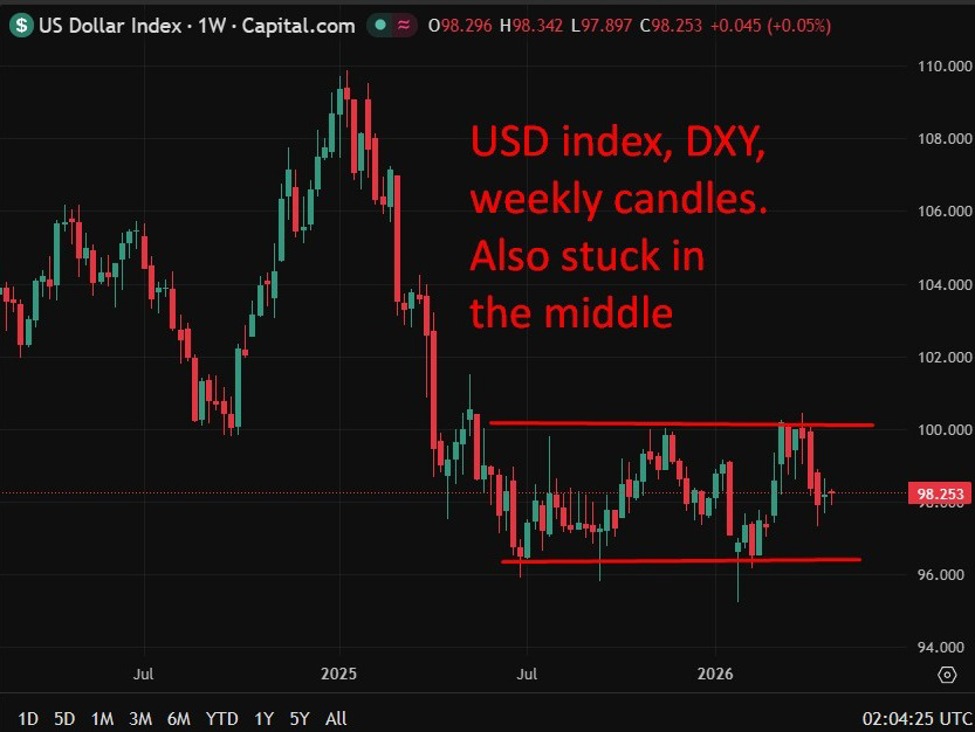
Morgan Stanley says dollar risks are increasingly skewed to the downside as FX markets grow less sensitive to energy war headlines, though refined product shortages remain a key upside risk for the currency. SummaryMorgan Stanley analysts say risks for the dollar are increasingly skewed to the downside, with FX markets becoming less sensitive to energy supply disruption headlines from the warInvestors are shifting focus to longer-term themes, with Morgan Stanley saying there is broad agreement that the dollar has scope to trade at a deeper discount to rate differentialsThe bank is nonetheless cautious about turning outright negative on the dollar, warning that markets may be underestimating the risk of refined energy product shortagesSuch shortages could weaken economic data expectations and trigger risk aversion, both of which would traditionally support dollar demandMorgan Stanley has flagged a meaningful shift in foreign exchange market dynamics, warning that risks for the dollar are increasingly tilted to the downside as investors grow less reactive to energy supply disruption headlines and turn their attention to longer-term structural themes.In a note to clients, the bank’s analysts said FX markets are displaying a diminishing sensitivity to news flow around the war’s impact on energy supply, a notable development given the scale of disruption to Strait of Hormuz traffic and Iranian crude exports in recent weeks. Rather than trading on each new headline, investors appear to be stepping back and focusing on where the dollar should be trading relative to interest rate differentials over a longer horizon.Morgan Stanley said it believes investors broadly share its view that there is meaningful scope for the dollar to trade at a deeper discount to those rate differentials, a framing that implies the currency has further to fall from current levels once the noise of day-to-day war headlines recedes.The bank is not yet ready to turn outright negative on the dollar, however. Its key concern is that markets may be underestimating the risk of refined energy product shortages, a second-order consequence of the Hormuz disruption that has attracted less attention than the headline moves in crude benchmarks. A shortage of gasoline, diesel or jet fuel would feed directly into weaker economic data and could trigger a wave of risk aversion that historically supports dollar demand.The tension Morgan Stanley identifies is therefore between a structural case for dollar weakness building in the background and a tactical risk that an underappreciated refined products crunch forces investors back toward safe-haven positioning. Until that uncertainty resolves, a fully committed negative dollar call remains premature in the bank’s view.—Bearish framing for the dollar, though Morgan Stanley stops short of a full negative call. The key insight is the shift in FX market behaviour: investors are increasingly looking through energy supply disruption headlines and focusing on structural dollar weakness relative to rate differentials, a dynamic that suggests the greenback’s traditional safe-haven bid during geopolitical stress is eroding. The caveat is significant for energy markets specifically: Morgan Stanley warns that investors may be underestimating the risk of refined product shortages, which could yet trigger a fresh wave of risk aversion and dollar demand.Morgan Stanley says dollar risks are increasingly skewed to the downside as FX markets grow less sensitive to energy war headlines, though refined product shortages remain a key upside risk for the currency. For oil markets the refined products angle is worth watching closely, as shortages in gasoline, diesel or jet fuel would represent a second-order consequence of the Hormuz disruption that has so far received less attention than crude benchmarks.
This article was written by Eamonn Sheridan at investinglive.com.
💡 DMK Insight
Morgan Stanley’s take on the dollar’s downside risk is a wake-up call for traders: energy headlines are losing their grip on FX markets. As refined product shortages loom, the dollar could face volatility despite the broader trend suggesting weakness. This shift in sensitivity means traders need to reassess their positions, especially if they’re heavily long on the dollar. If the dollar starts to slip, it could trigger a cascade effect across commodities and emerging markets, particularly those reliant on dollar-denominated trade. Keep an eye on the correlation between the dollar and crude oil prices; a spike in oil could exacerbate dollar weakness if it leads to inflation fears. Here’s the kicker: while the dollar’s immediate outlook seems shaky, the refined product shortages could create a counterbalancing effect. Traders should monitor key levels around the dollar index to gauge sentiment—watch for a break below recent support levels, which could signal further downside. The next few weeks will be crucial as we navigate these mixed signals.
📮 Takeaway
Watch for the dollar index to break key support levels; refined product shortages could create volatility in the coming weeks.