
 Bitcoin
  Ethereum
  Tether
  XRP
XRP  BNB
BNB  USDC
USDC  Solana
  TRON
TRON  Lido Staked Ether
  Figure Heloc
The BOJ has stayed on hold as probability of baseline outlook has decreasedUnderlying price trend is still below targetPrefers utilising more time in evaluating Middle East situation and how it will impact economy, pricesTakes seriously the fact that there were three board members who dissented on the decision todayThe other six members were mindful of upward risks to inflationHowever, not seeing any immediate urgency to raise interest rates for nowMay raise interest rates if upside risks to prices emerge while downside risks to the economy remain limitedAny decision will depend on economy, inflation risks beyond what is happening to the Middle EastCommunicating closely with government on monetary policyThis certainly removes a lot of the hawkish elements from the decision earlier in the day. However, at least he points out that the consensus seems to be that policymakers are cautious about upside risks to the inflation outlook. That being said, they will have a lot to think about in trying not to make a misstep on policy setting.As mentioned earlier, moving too early risks crippling the economy at a time when surging oil prices are already taking a heavy toll on households and businesses. Adding to that, it also goes against the government’s fiscal plans and makes worse the Takaichi trade.Besides that, the reaction here can easily be linked to dealing with cost-push inflation and that is already something monetary policy is not well equipped to handle in the first place. So, there’s that.USD/JPY is now trading back up to 159.30 levels from around 159.00 earlier. This comes as risk trades are also looking more cautious with tech shares weighing down on US futures. S&P 500 futures are down 0.2% with Nasdaq futures down 0.4% currently. This article was written by Justin Low at investinglive.com. 🔗 Source 💡 DMK Insight The BOJ’s decision to hold rates is a signal of caution amid global uncertainties, and here’s why that matters right now: With inflation still below target, the BOJ is clearly prioritizing stability over aggressive monetary policy shifts. The dissent from three board members indicates internal divisions, which could lead to future volatility in the yen. Traders should keep an eye on how this cautious stance interacts with broader market trends, especially in commodities and forex. If the Middle East situation escalates, it could further complicate Japan’s economic outlook, affecting export-driven sectors. Watch for any shifts in the USD/JPY pair, especially around key support and resistance levels, as these geopolitical factors unfold. The market’s reaction could be swift, so staying alert to any changes in sentiment is crucial. In the coming weeks, monitor inflation data and any comments from BOJ officials for hints on future policy direction. A sudden shift in tone could trigger significant moves in the yen and related assets. 📮 Takeaway Watch the USD/JPY pair closely; any signs of BOJ policy shifts could lead to rapid market movements.

The Japanese Yen jumps on hawkish BoJ dissenters but erases gains on dovish Governor Ueda
FUNDAMENTAL OVERVIEWUSD:The US dollar has come under renewed pressure yesterday despite the lack of progress in the US-Iran negotiations and the Strait of Hormuz closure. What has been weighing on the greenback to start the week was the news saying that Iran proposed to reopen the Strait of Hormuz if the US blockade is lifted and then hold nuclear talks later. This constant push for a diplomatic resolution instead of another full-fledged war has been supporting the risk sentiment on expectations that a deal would be reached eventually. Nonetheless, the stalemate is causing oil prices to rise, and we are now basically back around triple digit levels.Reports are also saying that Trump is unlikely to accept Iran’s proposal, which might keep the risk sentiment in check and support the US dollar in the short-term. Overall, we are now in a consolidation phase until the next major catalyst. Tomorrow, we have the FOMC policy decision and although the Fed is expected to keep everything unchanged amid the US-Iran uncertainty, there’s a risk of a more hawkish leaning due to resilient US data and a longer than expected US-Iran war. A neutral Fed shouldn’t bring much volatility, but a more hawkish one could give the US dollar a boost given the recent selloff.JPY:On the JPY side, the BoJ today left interest rates unchanged at 0.75% as widely expected. The quarterly outlook report showed a significant upward revision for inflation and a downgrade for growth due to the US-Iran war. The highlight of the decision though were the three dissenters who voted for a rate hike, which gave the Japanese yen a short-term boost.Most of the gains were pared back as Governor Ueda struck a more measured tone as he noted that they want to take a little bit more time in gauging how the Middle East situation would affect Japan’s economy and acknowledged that underlying inflation is currently a bit below the 2% target. He added that they expect underlying inflation to be around 2% from second half 2026 but admitted that he doesn’t know how many months it would take to gauge timing of their next rate hike. All in all, the bias for the Japanese Yen remains neutral to bearish. USDJPY TECHNICAL ANALYSIS – DAILY TIMEFRAMEOn the daily chart, we can see that USDJPY continues to consolidate between the 158.00 support and the 160.00 handle. If we get another pullback from the recent highs, we can expect the buyers to step in again around the support with a defined risk below it to position for a rally into the 162.00 handle. The sellers, on the other hand, will want to see the price breaking lower to open the door for a drop into the major upward trendline around the 155.00 level.USDJPY TECHNICAL ANALYSIS – 4 HOUR TIMEFRAMEOn the 4 hour chart, we can see the price broke the downward trendline and started to consolidate just above it. We now have another minor downward trendline defining the consolidation. The sellers will likely continue to lean on it with a defined risk above it to keep pushing into new lows, while the buyers will look for a break higher to increase the bullish bets into the 162.00 handle next.USDJPY TECHNICAL ANALYSIS – 1 HOUR TIMEFRAMEOn the 1 hour chart, there’s not much we can add here as the sellers will either look for a rejection around the minor downward trendline or a break below today’s low, while the buyers will wait for a break above the trendline to increase the bullish bets into new highs. The red lines define the average daily range for today. UPCOMING CATALYSTSToday we get the US Consumer Confidence report. Tomorrow, we have the FOMC policy decision. On Thursday, we get the US Q1 GDP, the US Employment Cost Index and the latest US Jobless Claims figures. On Friday, we conclude the week with the US ISM Manufacturing PMI. This article was written by Giuseppe Dellamotta at investinglive.com. 🔗 Source 💡 DMK Insight The US dollar’s recent weakness highlights a critical moment for traders: geopolitical tensions are reshaping currency dynamics. With the US-Iran negotiations stalling and the potential reopening of the Strait of Hormuz on the table, traders need to keep a close eye on how these developments might impact oil prices and, consequently, the dollar. A stronger oil market could lead to further dollar depreciation, especially if inflation concerns resurface. This scenario could trigger a shift in trading strategies, particularly for those holding long positions in USD. Watch for key levels in the DXY index; a break below recent support could signal a deeper downtrend. Additionally, monitor the correlation with oil futures, as any spike in crude prices could exacerbate dollar weakness. On the flip side, if negotiations progress or tensions ease, we might see a swift rebound in the dollar, catching many off guard. Traders should be prepared for volatility and adjust their positions accordingly, especially in the forex and commodities markets. 📮 Takeaway Keep an eye on the DXY index; a break below key support could signal further dollar weakness, especially if oil prices rise.

Latest ECB consumer expectations survey shows surging inflation expectations, lower growth
One year ahead inflation expectations rise to 4.0% in March from 2.5% in February3 years ahead Inflation expectations rise to 3.0% vs 2.5% prior 5 years ahead rise to 2.4% from 2.3%GDP growth seen at -2.1% in year ahead vs -0.9% seen a month earlierFull report hereThe latest ECB consumer expectations survey for March 2026 was marked by surging inflation expectations and worsening outlook for economic growth. Compared with February, median consumer perceptions of inflation over the past year climbed from 3.0% to 3.5%. More striking, however, was the jump in future expectations; median inflation forecasts for the next 12 months surged to 4.0% from 2.5%, while the three-year outlook rose to 3.0%. Even the long-term five-year forecast saw a slight uptick to 2.4%. This broad increase in inflation expectations was accompanied by heightened uncertainty, though a consistent demographic trend remained: younger respondents and those in higher-income brackets generally maintained lower inflation expectations than older and lower-income cohorts.The financial pressure on households is further evidenced by the disconnect between income and spending. While expectations for nominal income growth over the next 12 months remained stagnant at 1.2%, consumers reported a sharp increase in both past and future spending. Perceived nominal spending growth over the previous year rose to 5.1%, and expected spending growth for the year ahead climbed to 4.1%, the highest level recorded since mid-2023. This suggests that consumers anticipate having to allocate more of their unchanged wages toward essential costs, particularly in the lower three income quintiles where spending expectations were highest.Macroeconomic sentiment has soured alongside these rising costs. Economic growth expectations for the coming year dipped further into negative territory, falling to -2.1% from February’s -0.9%. This pessimism extends to the labor market, where the expected unemployment rate in 12 months’ time increased to 11.3%. While consumers still view the labor market as broadly stable, expecting only a slight rise from the perceived current unemployment rate of 10.6%, there is a clear divide in sentiment based on wealth. Lower-income households anticipate a much harsher job market, with expected unemployment reaching 13.7%, compared to just 9.7% for higher-income respondents.Finally, the housing and credit sectors are showing signs of increased strain. Expectations for home price growth edged up to 3.7%, while anticipated mortgage interest rates for the year ahead rose to 4.9%. Access to capital is also becoming more difficult; the net percentage of households reporting a tightening of credit access over the past year reached levels not seen since early 2024. Looking forward, consumers are bracing for even tighter credit conditions, suggesting that the combination of high interest rates and stricter lending may continue to weigh on household mobility and major purchases in the months to come.ECB rate hike expectations rose following the ECB survey. Traders now price in 70 bps of tightening by year-end compared to 64 bps on Friday. The central bank is expected to hold rates steady this week while maintaining a hawkish bias, with the June meeting remaining live for a rate hike unless the US-Iran war resolves before then. This article was written by Giuseppe Dellamotta at investinglive.com. 🔗 Source 💡 DMK Insight Rising inflation expectations are shaking up the market, and here’s why that matters for ETH: With ETH currently at $2,279.33, the uptick in one-year inflation expectations to 4.0% could pressure the Federal Reserve to maintain or even increase interest rates. This scenario typically strengthens the dollar, which can lead to a bearish sentiment in crypto markets. Traders should keep an eye on how ETH reacts to these macroeconomic indicators, especially as we approach key resistance levels around $2,400. If inflation continues to rise, we might see a shift in investor sentiment, pushing ETH lower as capital flows back to traditional assets. On the flip side, if inflation expectations stabilize or decline, it could provide a bullish catalyst for ETH, especially if it breaks above that $2,400 resistance. Watch for any comments from the ECB or Fed that could influence market sentiment. The immediate focus should be on the next inflation report and how it aligns with these expectations, as volatility is likely to increase around these announcements. 📮 Takeaway Monitor ETH’s reaction around the $2,400 resistance level, especially as inflation expectations evolve; a break could signal a bullish trend.
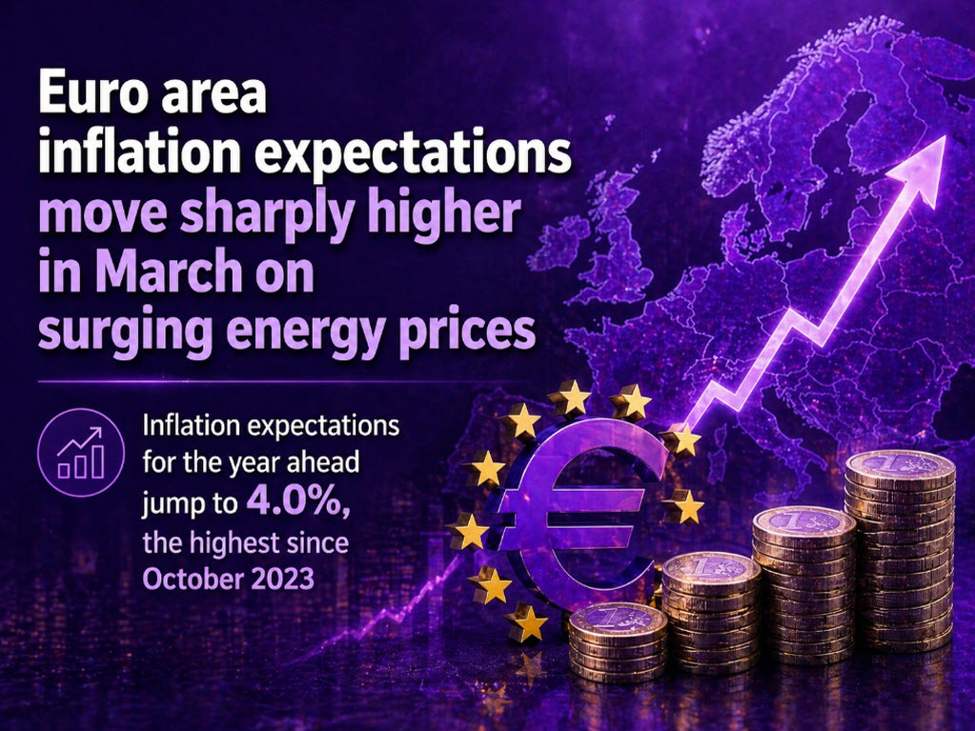
Euro area inflation expectations for the year ahead jump to highest since October 2023
The fallout from the Middle East conflict is certainly taking a toll on households and the survey results definitely show it. As mentioned before, the prices we see on our screens reflect those of futures contracts. They are not the same as physical prices and prices at the pump, which have skyrocketed.And the longer the war drags on, the spillover impact becomes more embedded into all parts of the economy. In turn, that is when consumers will have to deal with higher prices all around. And when prices go up, they almost never come back down even if the supply shock dissipates eventually.The latest ECB consumer expectations survey for March highlights the negative outlook shared by consumers at the moment. Of note, the median estimate for inflation expectations for the year ahead has jumped to 4.0% – the highest since October 2023. That is a marked increase from the 2.5% reading in February.And across all measures, inflation expectations have increased markedly as well. The long-term measure may not be as evident but continues to keep above the 2% inflation target level from the ECB.Trouble, trouble. This article was written by Justin Low at investinglive.com. 🔗 Source 💡 DMK Insight The ongoing Middle East conflict is impacting market sentiment, and here’s why that matters: rising geopolitical tensions often lead to volatility in energy prices, which can ripple through various asset classes. Traders should be aware that futures prices may not align with physical prices, especially in commodities like oil, where supply chain disruptions can create significant discrepancies. If the conflict escalates, we could see a spike in crude oil prices, which historically correlates with increased volatility in equities and currencies tied to energy exports. Look for key levels in oil futures; a break above recent highs could trigger a wave of speculative buying. Conversely, if the situation stabilizes, we might see a pullback. Keep an eye on the broader market context—economic indicators like inflation rates and consumer sentiment will also play a role in how traders react. The real story is that while the headlines may seem distant, the effects on your trading positions can be immediate and significant. Watch for any major announcements or developments in the conflict, as they could shift market dynamics rapidly, impacting not just oil but also related sectors like transportation and manufacturing. 📮 Takeaway Monitor crude oil futures closely; a breakout above recent highs could signal increased volatility across markets, impacting energy stocks and currencies tied to oil.

Silver erases all post-ceasefire gains as hawkish central banks weigh on precious metals
FUNDAMENTAL OVERVIEWSilver has now erased all the gains since the start of US-Iran ceasefire as the current stalemate is keeping the hawkish Fed worries alive. In fact, despite lower real yields, looser financial conditions and a weaker US dollar, the hawkish Fed bias has been the main culprit capping the bullish momentum in precious metals. This is unlikely to change anytime soon as even if the US-Iran war officially ends and the Strait of Hormuz is reopened, the increase in economic activity might keep inflation higher for longer and force the Fed to hold rates steady. Nonetheless, the reopening of the Strait should give the market a boost in the short-term as it would ease some inflation worries and bring back rate cut expectations. After that though, traders will be focused on economic data and the Fed’s stance.Tomorrow, we have the FOMC policy decision and although the Fed is expected to keep everything unchanged amid the US-Iran uncertainty, there’s a risk of a more hawkish leaning due to resilient US data and a longer than expected US-Iran war. A neutral Fed shouldn’t bring much volatility, but a more hawkish one could add more pressure on silver.SILVER TECHNICAL ANALYSIS – DAILY TIMEFRAMEOn the daily chart, we can see that silver extended the losses after the price fell back below the key 78.00 level. The natural target for the sellers should be the major upward trendline around the 67.00 handle. If the price gets there, we can expect the buyers to step in with a defined risk below the trendline to position for a rally back into the 78.00 level. The sellers, on the other hand, will look for a break to extend the drop into the next trendline around the 55.00 handle.SILVER TECHNICAL ANALYSIS – 4 HOUR TIMEFRAMEOn the 4 hour chart, we have a key swing level at 72.60. This is where we can expect the buyers to step in with a defined risk below the level to position for a rally into new highs. The sellers, on the other hand, will look for a break to increase the bearish bets into new lows.SILVER TECHNICAL ANALYSIS – 1 HOUR TIMEFRAMEOn the 1 hour chart, we have a minor downward trendline defining the drop into the 72.60 level. If the price breaks above it, we can expect the buyers to increase the bullish bets into the next trendline around the 75.00 handle. The sellers, on the other hand, will wait for the pullback into the 75.00 handle to position for a drop into new lows. The red lines define the average daily range for today. UPCOMING CATALYSTSToday we get the US Consumer Confidence report. Tomorrow, we have the FOMC policy decision. On Thursday, we get the US Q1 GDP, the US Employment Cost Index and the latest US Jobless Claims figures. On Friday, we conclude the week with the US ISM Manufacturing PMI. This article was written by Giuseppe Dellamotta at investinglive.com. 🔗 Source 💡 DMK Insight Silver’s recent price action is a clear signal of market sentiment amid geopolitical tensions and Fed policy. The complete erasure of gains since the US-Iran ceasefire highlights how sensitive silver is to macroeconomic factors, particularly the Fed’s hawkish stance. Traders need to recognize that despite favorable conditions like lower real yields and a weaker dollar, the Fed’s bias is keeping silver prices in check. This could lead to a consolidation phase, especially if the Fed maintains its current rhetoric in upcoming meetings. For those trading silver, keep an eye on key support levels. If silver breaks below recent lows, it could trigger further selling pressure. Conversely, if the Fed shifts its tone or if geopolitical tensions escalate, we might see a sharp reversal. Watch for any comments from Fed officials in the coming weeks, as they could provide clues on future monetary policy and its impact on precious metals. 📮 Takeaway Monitor silver’s support levels closely; a break below recent lows could signal further downside, while Fed comments may shift momentum.
Strong dollar selling expected for this month-end – Credit Agricole
It’s not just the US-Iran conflict, major central bank decisions, and key US tech earnings that will be in the picture this week. Just be mindful that month-end shenanigans are also something to consider in the days ahead. Yes, we’re already at the end of another crazy month in markets.And according to Credit Agricole, their month-end fixing model points to strong dollar selling after weighing in all the usual drivers.”Global equity markets were broadly firmer in April. In FX, the USD was broadly weaker on the month.Overall, the moves in equity markets, when adjusted for market capitalisation and FX performance this month, suggest month-end portfolio-rebalancing flows are likely to be strong USD selling across the board, with the strongest sell signal in the case of the USD vs EUR.”Their argument points to EUR/USD making strides higher, all else being equal. The pair is seeing a bit of a mixed start this week, bouncing higher yesterday after finding support from its 200-day moving average last week. However, near-term gains are more limited closer to the 200-hour moving average – seen at 1.1742 currently. That before any potential talk of revisiting the 1.1800 level.Just be wary that these month-end fixing calls are not the be all, end all in deciding price movements. In a time like this, headline risks remain paramount and the biggest driver of price action. This is just part of what will feed into trading sentiment as a whole in trying to get a better handle on how markets might behave as we look to close out the month of April. This article was written by Justin Low at investinglive.com. 🔗 Source 💡 DMK Insight With ETH at $2,279.33, traders need to brace for volatility driven by geopolitical tensions and month-end positioning. The US-Iran conflict and central bank decisions are likely to create ripples across the crypto and forex markets. As we approach the end of the month, expect increased trading activity as positions are squared off. This could lead to sharp price movements in ETH and other assets. Keep an eye on how these macro events influence market sentiment, especially if tech earnings come in stronger or weaker than expected, which could further sway investor confidence. Here’s the kicker: while many will focus on the immediate impacts of these events, there’s potential for hidden opportunities in the volatility. If ETH can hold above $2,250, it might attract buyers looking for a rebound, but a drop below that level could trigger stop-loss orders and accelerate selling pressure. Watch for key resistance around $2,350, as breaking through could signal a bullish reversal. The next few days will be crucial for positioning ahead of the month-end close. 📮 Takeaway Monitor ETH closely; a hold above $2,250 could signal a buying opportunity, while a drop below may trigger selling pressure.
BoC preview: rates to remain unchanged amid US-Iran uncertainty and soft data
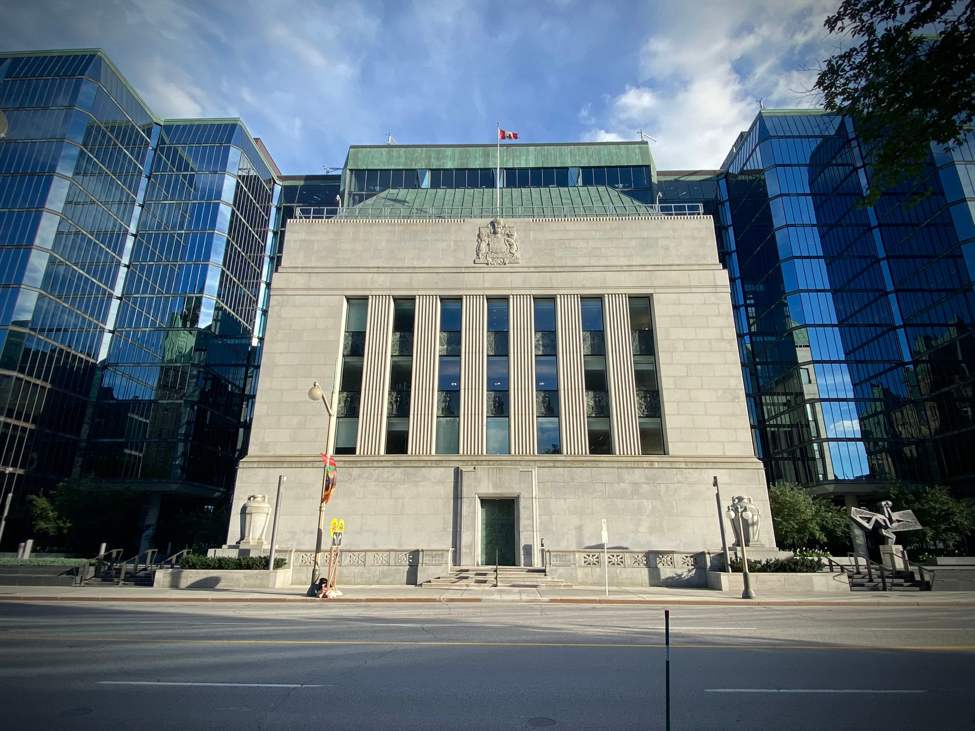
The Bank of Canada is widely expected to keep the policy rate unchanged at 2.25% tomorrow. The central bank will likely maintain a cautious stance and a “wait and see” approach amid sluggish economy and inflationary risks stemming from US-Iran war. The BoC will also release new economic forecasts which are expected to mirror the other central banks’ outlooks, with upward revision for inflation and downward revision for growth.Recent data has been strongly supporting a neutral stance. Headline inflation climbed to 2.4% in March, largely driven by a spike in energy costs due to the disruptions in the Strait of Hormuz, but the main core inflation metric (Trimmed-Mean CPI) fell to 2.2%, very close to the 2% mid-range target.The recent employment reports have been weak, pointing more towards rate cuts than rate hikes. While a weak labor market and sluggish growth would normally argue for further rate cuts to stimulate activity, the risk of a secondary inflation wave has been keeping the BoC on the sidelines. Central banks typically look through volatile energy prices, but the concern for the BoC will be whether these costs seep into broader inflation expectations and higher wage growth. The risks for the Canadian economy do not stop with the US-Iran war though as there’s still uncertainty around the upcoming CUSMA renegotiations.All in all, tomorrow’s decision is unlikely to bring much volatility as the central bank will likely stress data-dependency and avoid pre-committing to any rate path. The market is pricing in a rate hike in the fourth quarter of 2026, so traders will focus on any change in tone and communication that could point to an earlier than expected rate hike or a strong pushback against market’s pricing. This article was written by Giuseppe Dellamotta at investinglive.com. 🔗 Source 💡 DMK Insight The Bank of Canada’s decision to hold rates at 2.25% signals a cautious approach amid economic uncertainty. For traders, this means the Canadian dollar could remain under pressure, especially if inflationary concerns escalate due to geopolitical tensions like the US-Iran war. If the BoC’s forecasts indicate a prolonged economic slowdown, we might see further weakness in CAD, which could impact related assets like ADA, currently at $0.25. Keep an eye on how this plays out in the forex market, as CAD pairs may react sharply to any shifts in sentiment. Watch for key support levels in ADA; if it breaks below $0.24, it could trigger further selling pressure. Conversely, if CAD weakens significantly, ADA might find some support as traders look for alternatives in the crypto space. In short, monitor the BoC’s economic forecasts closely; they could provide critical insights into future rate decisions and market sentiment. 📮 Takeaway Watch ADA closely; if it drops below $0.24, it could signal further downside, especially if CAD weakens due to BoC’s forecasts.
Why Most DeFi Protocols Remain Vulnerable To Hacks: Lessons From Recent Exploits
DeFi lost over $750 million in early 2026 — largely from Drift Protocol and KelpDAO. Bridges remain a major risk area — the Kelp incident … 🔗 Source 💡 DMK Insight DeFi’s $750 million loss in early 2026 raises serious red flags for traders: The collapse of Drift Protocol and KelpDAO highlights the ongoing vulnerabilities in decentralized finance, particularly around bridge protocols. These incidents aren’t just isolated; they reflect broader systemic risks that could affect liquidity and investor confidence across the DeFi space. As traders, it’s crucial to recognize that such losses can lead to increased volatility in related assets, especially those tied to DeFi projects. If you’re holding tokens linked to these protocols, now’s the time to reassess your positions. Look for potential ripple effects on major cryptocurrencies that interact with DeFi platforms. For instance, Ethereum could see increased selling pressure if confidence wanes. Keep an eye on key support levels for Ethereum and other DeFi tokens; a breach could trigger further sell-offs. Monitoring the sentiment in DeFi communities and any regulatory responses will also be vital in the coming weeks as traders navigate this turbulent landscape. 📮 Takeaway Watch for Ethereum’s support levels and DeFi sentiment as the fallout from the $750 million loss unfolds—this could signal further volatility.
How to Stay Safe in DeFi: Security Best Practices for 2026
DeFi losses in 2026 still often begin with phishing, stale approvals, fake apps, compromised devices and risky bridge routes. Phishing was the most frequent attack … 🔗 Source 💡 DMK Insight Phishing attacks are still the leading cause of DeFi losses, and here’s why that matters: As we head into 2026, traders need to be hyper-aware of the risks associated with decentralized finance. Phishing schemes are evolving, and the frequency of these attacks suggests that even seasoned investors are vulnerable. This isn’t just about individual losses; it can lead to broader market instability if trust erodes. If you’re trading in DeFi, consider tightening your security measures—use hardware wallets, enable two-factor authentication, and double-check URLs before approving transactions. The real story is that while DeFi offers incredible opportunities, it also comes with significant risks. Traders should monitor the security protocols of platforms they use and stay updated on the latest phishing tactics. A sudden spike in reported phishing incidents could trigger a sell-off in DeFi tokens, impacting liquidity and price stability. Keep an eye on community discussions and updates from security firms to gauge sentiment and potential market reactions. 📮 Takeaway Stay vigilant against phishing attacks in DeFi; consider enhancing your security measures to protect your investments.
France’s Crypto Wrench Attacks Show Digital Wealth Has an Offline Security Problem
French prosecutors said 88 people have been charged across 12 ongoing crypto-linked kidnapping and extortion cases. Authorities have recorded 135 crypto-related kidnapping or extortion incidents … 🔗 Source 💡 DMK Insight Crypto-related crime is on the rise, and here’s why that matters for traders: With 88 people charged in France alone, the surge in crypto-linked kidnappings and extortion cases signals a growing concern that could impact market sentiment. As authorities report 135 incidents, traders should be aware that negative headlines can lead to increased regulatory scrutiny, which often results in volatility. This could affect not just the crypto market but also correlated assets like stocks in blockchain companies or even traditional financial institutions exposed to crypto. Traders should keep an eye on how these developments influence market psychology. If fear starts to dominate, we could see a sell-off, particularly in altcoins that are already under pressure. Watch for key support levels in major cryptocurrencies; a breach could trigger further panic selling. The real story here is how these incidents might lead to stricter regulations, which could stifle innovation and investment in the sector. As we navigate this landscape, monitoring news cycles and sentiment will be crucial for positioning in the coming weeks. 📮 Takeaway Keep an eye on market sentiment and support levels in major cryptocurrencies; increased regulatory scrutiny could lead to volatility.