 Bitcoin
  Ethereum
  Tether
  BNB
BNB  XRP
XRP  USDC
USDC  Solana
  TRON
TRON  Lido Staked Ether
  Figure Heloc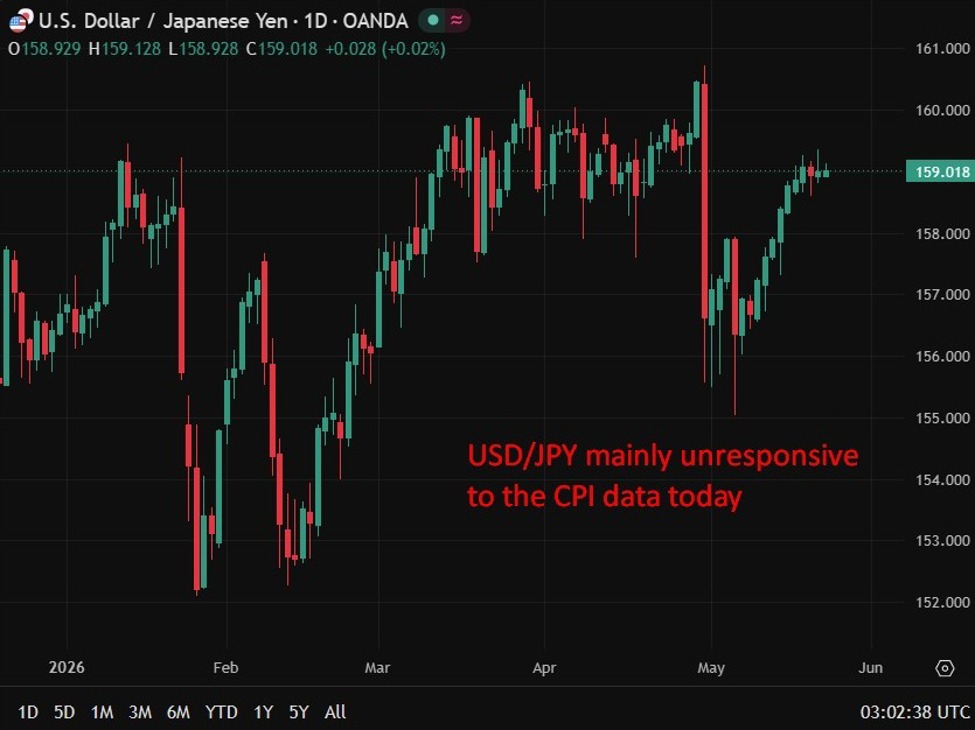
RBNZ set to hold at 2.25% but majority now see hikes coming by end-SeptemberING expects June BOJ rate hike despite softer than forecast Japan CPIBeijing’s state planner softens tone on foreign investment in Chinese technology sectorOil seen capped near $100 as Iran war demand destruction offsets supply lossAlberta to hold October referendum on whether to begin separation process from CanadaReserve Bank of India (RBI) set to hand 3.05 trillion to government in record transferPBOC sets USD/ CNY reference rate for today at 6.8373 (vs. estimate at 6.7992)US markets face shortened Friday and full Monday closure for Memorial DayJapan core inflation hits four-year low in April but war-driven rebound seen aheadJapan Core inflation rate 1.4% y/y vs. 1.7% expectedUK and Irish consumers edge up from lows but spending caution runs deepMorgan Stanley sets a base case TOPIX target of 4,300, with Japan preferredNew Zealand Q1 2026 Retail sales beat estimates: +0.9% q/q (expected +0.6%)ICYMI – Exxon in talks to return to Venezuela oil fields nearly two decades after exitTalks between Iran and the United States are continuing through Pakistani intermediariesAustralian dollar under pressure say analysts as RBA rate-hike cycle seen nearing its endICYMI: UAE’s Hormuz bypass pipeline is 50% complete as oil flow recovery set for 2027Unnamed “Senior Iranian source” says No deal has been reached yet, but gaps have narrowedinvestingLive Americas FX news wrap: Markets cheer on claims of US-Iran agreementSummary:Iran war newsflow was subdued; talks between Tehran and Washington are continuing via Pakistani intermediaries, focused on establishing a framework for a potential agreementJapan’s core CPI rose 1.4% year-on-year in April, a four-year low and below the 1.7% consensus; the core-core measure, which strips out fresh food and energy and is closely watched by the BOJ, slowed to 1.9% from 2.4% in March, its weakest since July 2024Asian equities traded mostly higher, drawing support from a solid Wall Street handover and cautious optimism around Iran developmentsThe Nikkei gained more than 2%; mainland Chinese equities lagged at +0.2% while Hong Kong moved more constructively at +0.8%Major FX pairs remained rangebound through the sessionLooking ahead: US President Trump hosts the swearing-in ceremony for Kevin Warsh as Federal Reserve Chair at 1100 ET (1500 GMT) at the White House, and speaks later at Rockland Community College at 1500 ET (1900 GMT); US markets are closed Monday for Memorial DayAsian markets closed mostly higher on Friday in a session that lacked drama on the geopolitical front but delivered one of the more notable data points of the week, with Japan’s core inflation falling to its slowest pace in four years and prompting fresh debate about the Bank of Japan’s path ahead.Iran war newsflow was subdued through the Asian day. Talks between Washington and Tehran are understood to be continuing via Pakistani intermediaries, with the exchanges centred on establishing a framework that could eventually support a formal agreement. The absence of any escalation was enough to sustain the cautious optimism that has been underpinning risk sentiment across the region in recent sessions.The Nikkei was the standout performer, gaining more than 2 percent, a move that reflected the broader positive tone rather than any enthusiasm about the Japanese inflation data. Core consumer prices rose just 1.4 percent year-on-year in April, well below the 1.7 percent consensus and the weakest reading since March 2022. The core-core index, which strips out both fresh food and energy and serves as the BOJ’s preferred gauge of demand-driven inflation, slowed to 1.9 percent from 2.4 percent in March, its softest level since July 2024. Government subsidies on energy and education were the primary drivers of the miss rather than any genuine underlying disinflation, and analysts broadly maintained their calls for a BOJ rate hike in June regardless.Mainland Chinese equities lagged the regional advance, gaining just 0.2 percent, while Hong Kong moved more meaningfully at 0.8 percent. Major currency pairs held narrow ranges through the session, with traders appearing reluctant to take on fresh directional exposure ahead of the US Memorial Day long weekend, which will keep New York markets closed on Monday.The weekend kicks off after President Trump hosts the swearing-in ceremony for Kevin Warsh as Federal Reserve Chair at the White House at 1100 Eastern Time. Trump is also due to speak later in the day at Rockland Community College at 1500 Eastern Time.
This article was written by Eamonn Sheridan at investinglive.com.
💡 DMK Insight
RBNZ’s decision to hold rates at 2.25% signals a cautious approach amid global economic pressures. With the majority expecting hikes by the end of September, traders should watch for shifts in sentiment that could impact the NZD. The anticipation of a rate hike aligns with broader trends in central bank policies, particularly as the BOJ is also expected to raise rates despite softer CPI data. This could lead to increased volatility in forex pairs involving the NZD and JPY. Additionally, the mixed signals from China’s state planner regarding foreign investment could further complicate market dynamics, especially for commodities like oil, which is being capped near $100 due to demand destruction from geopolitical tensions. Traders should keep an eye on the NZD/USD and JPY/USD pairs for potential breakout points, particularly if the RBNZ follows through on its rate hike expectations. The real story here is the interplay between these central bank decisions and how they might affect risk sentiment across markets. If the RBNZ raises rates as expected, it could strengthen the NZD, but any missteps could lead to sharp reversals. Watch for key levels around 0.6200 for NZD/USD and 145.00 for JPY/USD as potential pivot points.
📮 Takeaway
Monitor the NZD/USD and JPY/USD pairs closely; key levels to watch are 0.6200 and 145.00, respectively, as central bank decisions unfold.