
 Bitcoin
  Ethereum
  Tether
  BNB
BNB  USDC
USDC  XRP
XRP  Solana
  TRON
TRON  Lido Staked Ether
  Figure Heloc
Many Democratic lawmakers have said that they will not support any version of a crypto market structure bill without provisions on ethics to address potential conflicts of interest by elected officials. 🔗 Source 💡 DMK Insight Democratic lawmakers are pushing for ethics provisions in crypto legislation, and here’s why that matters: The ongoing debate around crypto regulation is heating up, especially with ETH currently at $1,979.57. If lawmakers tie support for crypto bills to ethics reforms, it could delay the passage of crucial legislation. Traders should be aware that any prolonged uncertainty can lead to increased volatility in the crypto markets, particularly for assets like Ethereum. If the bill stalls, we might see ETH struggle to maintain its current levels, especially if it breaks below key support around $1,900. On the flip side, if lawmakers can reach a consensus that includes these provisions, it could pave the way for more institutional investment and a bullish trend. Keep an eye on the political landscape and any announcements regarding the bill’s progress. The next few weeks could be pivotal, especially as we approach the end of the month when many traders reassess their positions based on regulatory news. 📮 Takeaway Watch for ETH to hold above $1,900; any regulatory delays could trigger volatility and impact trading strategies.

Australia widening current account deficit, inventory draw to weigh on Q1 GDP
Building Permits m/m (Apr) -3.4% prior -10.5%Building Permits y/y (Apr) +10.2% prior +9.0%Private House Approvals m/m (Apr) -1.0% prior +0.9%Business Inventories q/q (Q1) +0.5% prior -0.1%Company Gross Profits q/q (Q1) -1.3% prior +5.8%Net Exports Contribution to GDP (Q1) -0.8% prior -0.1%Current Account (Q1) -A$27.1B prior -A$21.1BEarlier:RBA’s hawkish Harper hints herald hikeAustralia minimum wage rises 4.75% This article was written by Eamonn Sheridan at investinglive.com. 🔗 Source 💡 DMK Insight Building permits dropped 3.4% m/m, and here’s why that matters: the housing market’s cooling could signal broader economic concerns. The decline in building permits, especially after a significant prior drop of 10.5%, raises red flags for traders. It suggests that developers are pulling back, likely due to rising interest rates and economic uncertainty. This trend could impact related sectors, especially construction and materials, which have already been under pressure. The RBA’s hawkish stance, hinted at by Harper, adds to the complexity. If the central bank continues to tighten, we might see further declines in housing activity, which could ripple through the economy. Traders should keep an eye on the upcoming economic indicators, particularly the next set of building permits and housing starts. A sustained downturn could lead to bearish sentiment in the stock market, particularly for companies tied to real estate and construction. Watch for any shifts in the RBA’s policy that might influence these metrics, as they could provide critical insights into future market movements. 📮 Takeaway Monitor building permits closely; a continued decline could signal broader economic weakness and impact related sectors significantly.
Japan one step from historic yen collapse, SMBC Nikko warns
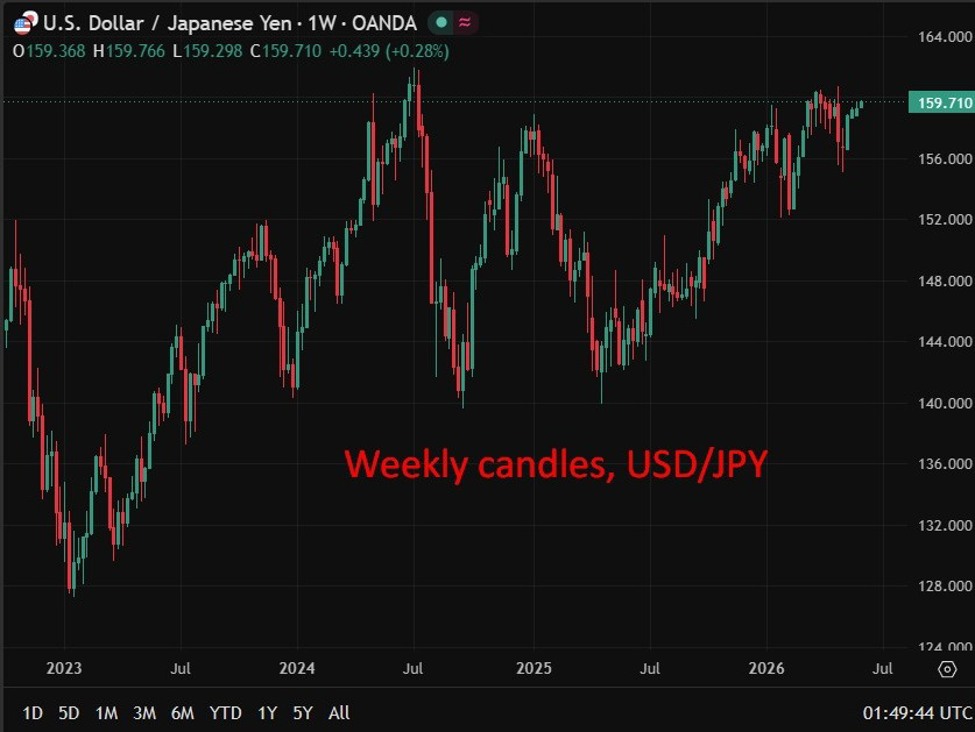
SMBC Nikko warns Japan is one step from a historic yen collapse, citing oil price risk and fiscal loosening, as Finance Minister Katayama pledges action if needed.Summary: Sources: SMBC Nikko Securities reported by the Wall Street Journal; Finance Minister KatayamaSMBC Nikko strategist Makoto Noji warned Japan may be on the verge of a historic yen collapse, driven by prolonged oil price risk and fiscal looseningNoji called for rate hikes, a halt to fiscal expansion, and further intervention acting together, arguing no single measure is sufficient aloneFinance Minister Katayama said the government would take appropriate action in currency markets if necessaryJapan may be just one step away from a historic yen collapse, according to SMBC Nikko Securities strategist Makoto Noji, who warned that prolonged oil price pressure and fiscal loosening have pushed the currency to a dangerous threshold.Three years of cost-push inflation have already severely burdened Japanese households, and Noji argued that any demand stimulus at this juncture would only accelerate inflation further. His prescription is a combination of further yen-buying intervention, Bank of Japan rate hikes, and a firm halt to fiscal expansion, warning that intervention alone cannot substitute for structural adjustment.The challenge is acute. Japan cannot control the Hormuz-driven oil shock, making domestic policy the only available lever. Every fiscal concession made to ease cost-of-living pressure carries a currency cost that intervention must then offset, a dynamic that is becoming increasingly difficult to sustain. Finance Minister Katayama said Tuesday the government would take appropriate action in currency markets if necessary.–The warning from SMBC Nikko lands on a market already aware that Japan deployed a record single-period intervention recently, suggesting the authorities are fighting hard to hold a line that fundamentals are pressing against. A prolonged oil price surge, a direct consequence of the Hormuz closure, is the external variable Tokyo cannot control, making the domestic policy response, rate hikes and fiscal restraint, the only available lever. Any signal that the government is unwilling or unable to tighten fiscal policy would be taken badly by the yen. Katayama’s readiness-to-act language provides short-term support, but the SMBC Nikko framing suggests intervention alone cannot substitute for structural adjustment. This article was written by Eamonn Sheridan at investinglive.com. 🔗 Source 💡 DMK Insight Japan’s yen is teetering on the brink, and here’s why traders should pay attention: With SMBC Nikko’s warning about a potential collapse, the implications for forex traders are significant. The combination of rising oil prices and fiscal loosening could exacerbate inflationary pressures, leading to a weaker yen. If Finance Minister Katayama follows through on his pledge for intervention, it could create volatility in the forex market, particularly for USD/JPY pairs. Traders should monitor the 150 level closely, as a breach could trigger further selling pressure. But here’s the flip side: if the government does act decisively, it might stabilize the yen temporarily, creating a short-term buying opportunity. Keep an eye on economic indicators like Japan’s trade balance and inflation rates, as these will influence market sentiment. The real story is how global oil prices interact with Japan’s fiscal policy—any spikes could lead to a rapid depreciation of the yen, impacting not just forex but also commodities linked to Japan’s import needs. Watch for any announcements from the Ministry of Finance in the coming weeks, as they could provide critical signals for positioning. 📮 Takeaway Watch the 150 level on USD/JPY; a breach could signal a deeper yen decline, while any government intervention may create short-term buying opportunities.

S&P 500 futures analysis today: ES JUN26 fails repair near 7632
S&P 500 fails upper repair as sellers push price back toward lower valueLast updated: June 2, 2026, 03:28 AM ET (see new update below ‘Key takeaways’)Instrument: S&P 500 futures contractCurrent analytical score: -4 / +10Market state: Failed bullish repair / bearish control returning into lower-value testKey takeaways for today’s S&P 500 tradersS&P 500 futures failed to sustain the upper repair attempt above the 7620-7632 area.Sellers regained short-term control after price rejected the upper-value zone and migrated back toward 7584-7578.The current tradeCompass map is bearish while ES remains below 7589.75-7594.00.A stronger bearish continuation signal appears if price accepts below 7578.50-7576.00.Bulls need to reclaim 7594-7596.60 to start repairing the failed upper auction.New update on recent price action: Score changed from -4 to -1The ES short-term score has improved from -4 to -1, meaning the earlier bearish control has weakened. Buyers stepped in near support, and the TradingView chart also shows that the rising support line has held for now.This does not mean a clean bullish takeover. It means the market has moved back into a more neutral trading-range condition, with a leg down followed by a leg up.The next key upside levels to watch are:7613.75 – important POC reference 7620.25 – value area high and major acceptance testIf price can push into that zone and sustain above it, buyers improve the repair case. If price reaches that area and rejects again, the range remains unresolved and sellers may regain pressure.Also keep yesterday’s VWAP near 7603 in focus. If ES sustains below 7603, bears regain greater short-term control.For now: support held, buyers repaired some damage, but this is still a trading range. Watch the reaction at 7603, 7613.75, and 7620.25.As previously reported 5 hours before the above update:Geopolitical shifts and central bank signaling are heavily impacting macro liquidity zones today, requiring absolute precision around key order-flow levels and microstructure setups. On the trade front, Eamonn Sheridan highlights that market sentiment is shifting as the White House trims tariffs on farm and industrial gear while tweaking its metals regime, a move that could alleviate near-term supply chain friction. Looking to Asia, Eamonn also warns that Japan’s proposed 2027 sales tax cut introduces massive yen volatility and bond market risks as political timelines complicate the macroeconomic outlook. Over in the commodities complex, crude oil markets remain deeply on edge despite Trump’s optimistic statements regarding a Hormuz deal because a persistent credibility gap is keeping buyers from sustaining a clean breakout above current resistance. Finally, tracking the Aussie dollar’s microstructure is critical right now, as recent central bank analysis indicates that hawkish policy hints from the RBA’s Harper could herald an imminent rate hike, giving macro traders a clear technical playbook to trade the breakout if standard deviation bands hold.ES futures short verdictS&P 500 futures are showing a failed bullish repair sequence after the market rejected the 7620-7632 upper zone and moved back into the lower-value area near 7584-7578.The short-term bias is bearish, but not aggressively bearish yet. Price is now testing important lower-value support, including the latest HVN near 7584, the session VAL near 7578.75, and lower VWAP deviation support around 7576.17. That means sellers have control, but they are now pressing into an area where responsive buyers may attempt a defense.The practical score is -4 / +10. That reflects bearish short-term control, while still respecting the possibility of a bounce from lower-value support.What happened in S&P 500 futures?The broader auction began with ES building value around the 7588-7600 region, then attempting to repair higher into the 7618-7632 zone.For a moment, bulls appeared to have a chance to create higher acceptance. But the key problem is that the upper expansion did not hold.The rejection from the 7620-7632 area changed the short-term story. Instead of holding the higher shelf, price rotated lower and accepted business started migrating down. That is important because in auction-market analysis, the location of accepted business can matter more than a temporary price spike.The sequence of HVN migration turned lower:This is not clean bullish rotation anymore. It is a failed repair attempt.Why the failed 7620-7632 zone mattersThe 7620-7632 area matters because it represented the market’s attempt to move into higher value. A simple price touch above resistance is not enough. Traders need to see acceptance.In this case, the opposite happened. ES pushed into the upper area, but sellers responded, and price failed to hold the zone. That makes the move look more like an upper liquidity grab or failed auction than a clean bullish breakout.What this means: a failed auction occurs when price moves into a higher or lower area but cannot attract enough acceptance to stay there. When price returns back into the prior range, traders often reassess who is really in control.ES futures tradeCompass mapThis tradeCompass map is designed as a decision framework, not a prediction that every level must be reached.How ES traders can use this map todayAs long as ES remains below 7589.75-7594.00, the short-term read stays bearish. That area includes the current reclaim zone around VWAP and the lower-to-mid value shelf. If price bounces into that zone but fails again, sellers may still have the cleaner tactical case.A stronger bearish continuation setup would require acceptance below 7578.50-7576.00. That would show that the lower value boundary and SD2 Down area are failing. If that happens, the next important support reference is around 7569-7570.For bulls, the first important task is not to chase a small bounce. Bulls need to reclaim 7594-7596.60 and hold above it. A stronger repair would also need better order-flow quality, higher HVN migration, and follow-through toward 7603-7605.Why the score is not more bearishA score of -6 or -7 would imply stronger downside acceptance or cleaner bearish expansion. That is not fully confirmed yet.The reason is location. ES is already trading near lower-value support. The latest push lower reached the 7578-7584 area, which includes multiple important references:7584.00 latest HVN / local accepted business7578.75 session VAL7576.17 SD2 Down7569-7570 major failed-breakdown supportAlso, the latest selling push was not an extreme liquidation bar. Sellers have control, but the
Australia's net trade and flat government spending cloud GDP outlook
Australia’s net trade will subtract ~0.8ppt from Q1 GDP as data centre and fuel imports surged and commodity exports fell, with government spending flat and the current account deficit wider than forecast. Earlier:Australia widening current account deficit, inventory draw to weigh on Q1 GDPRBA’s hawkish Harper hints herald hikeSummary points:Net exports will subtract 0.8 percentage points from Q1 GDP, worse than the 0.5 point drag forecast, as trade in goods and services fell into deficit for the first time since December quarter 2017Imports of data centre equipment hit historic highs, driven by bulk AI server rack purchases for infrastructure build-out in New South Wales and Victoria, alongside a surge in fuel imports; mining commodity exports fellThe current account deficit widened to A$27.1 billion in Q1, from a revised A$23.0 billion the prior quarter, well above forecasts of A$23.2 billionGovernment spending was flat in Q1, with operational spending down 0.2% to A$159.3 billion and public fixed asset investment up 0.9% to A$38.9 billion; net contribution to GDP was zeroInventories are expected to add 0.2 percentage points to growth, providing partial offset; Q1 GDP forecasts centre on a 0.5% quarterly rise, slowing from 0.8% the prior quarterThe RBA has raised rates three times this year to 4.35%, fully reversing last year’s easing; it forecasts growth slowing to 1.9% by Q2 and 1.3% by year-endAustralia’s economy enters Wednesday’s first-quarter GDP release carrying more drag than analysts had anticipated, with net trade set to subtract 0.8 percentage points from growth and government spending contributing nothing, leaving the headline figure heavily dependent on household consumption and business investment to avoid a sharp disappointment.Data from the Australian Bureau of Statistics confirmed the current account deficit widened to A$27.1 billion in the March quarter, from a revised A$23.0 billion previously, well beyond forecasts of A$23.2 billion. Trade in goods and services fell into deficit for the first time since the December quarter of 2017, as mining commodity exports declined and imports surged on two fronts: fuel, reflecting the global energy shock from the Hormuz closure, and data centre equipment, where imports hit historic highs driven by bulk purchases of AI server racks for infrastructure projects in New South Wales and Victoria.Government spending offered no relief. Operational expenditure edged down 0.2% in the quarter to an inflation-adjusted A$159.3 billion, while public fixed asset investment rose 0.9% to A$38.9 billion. The net contribution to GDP was zero, ending a run of strong outcomes from the public sector.Inventories are expected to add 0.2 percentage points, providing only partial offset. Forecasts centre on a quarterly rise of 0.5%, slowing from the 0.8% gain recorded the prior quarter, with annual growth seen around 2.6%.The broader backdrop is one of deliberate cooling. The Reserve Bank of Australia has delivered three rate increases this year, in February, March and May, returning the cash rate to 4.35% and fully reversing the prior easing cycle. Early signs suggest the tightening is beginning to bite: household consumption fell in April, home prices have flatlined, and unemployment has started to drift higher. The RBA projects growth slowing to 1.9% by the second quarter and 1.3% by year-end as the combined weight of policy tightening and the energy shock filters through. Forecast for GDP due tomorrow may be revised. Stay tuned. —The GDP print due Wednesday is shaping up as a soft one, with net trade subtracting 0.8 percentage points, well beyond the 0.5 points forecast, and government spending contributing nothing. Inventories adding 0.2 points provides only partial offset, leaving household consumption and business investment to carry the quarter. The RBA’s three rate hikes this year to 4.35% are already showing up in softer household spending, flat home prices and a drifting unemployment rate, and the bank’s own forecasts see growth decelerating sharply to 1.3% by year-end. For the AUD, a weaker-than-expected GDP print Wednesday would add to existing downward pressure from the global energy shock. This article was written by Eamonn Sheridan at investinglive.com. 🔗 Source 💡 DMK Insight Australia’s widening current account deficit is a red flag for traders watching GDP trends. The projected 0.8 percentage point hit to Q1 GDP from increased imports and declining commodity exports signals potential economic weakness. With government spending stagnant, this paints a concerning picture for the Australian economy. Traders should keep an eye on the Reserve Bank of Australia’s (RBA) response, especially after hawkish hints from officials like Harper. If the RBA raises rates to combat inflation, it could lead to volatility in the AUD/USD pair. Look for key technical levels around recent support and resistance zones, as a rate hike could strengthen the AUD temporarily, but the underlying economic data suggests caution. Additionally, monitor commodity prices, as further declines could exacerbate the current account deficit and impact the AUD negatively. In the broader context, this situation could ripple through related markets, particularly those tied to commodities and energy. If the trend continues, it could lead to a bearish sentiment in the Australian dollar, especially against stronger currencies like the USD. Watch for any updates on trade balances and commodity prices in the coming weeks to gauge the potential impact on the AUD. 📮 Takeaway Keep an eye on the AUD/USD pair; a rate hike from the RBA could provide short-term strength, but the widening current account deficit suggests longer-term weakness.
Nvidia's Huang says supply secured for robust AI growth despite constraints
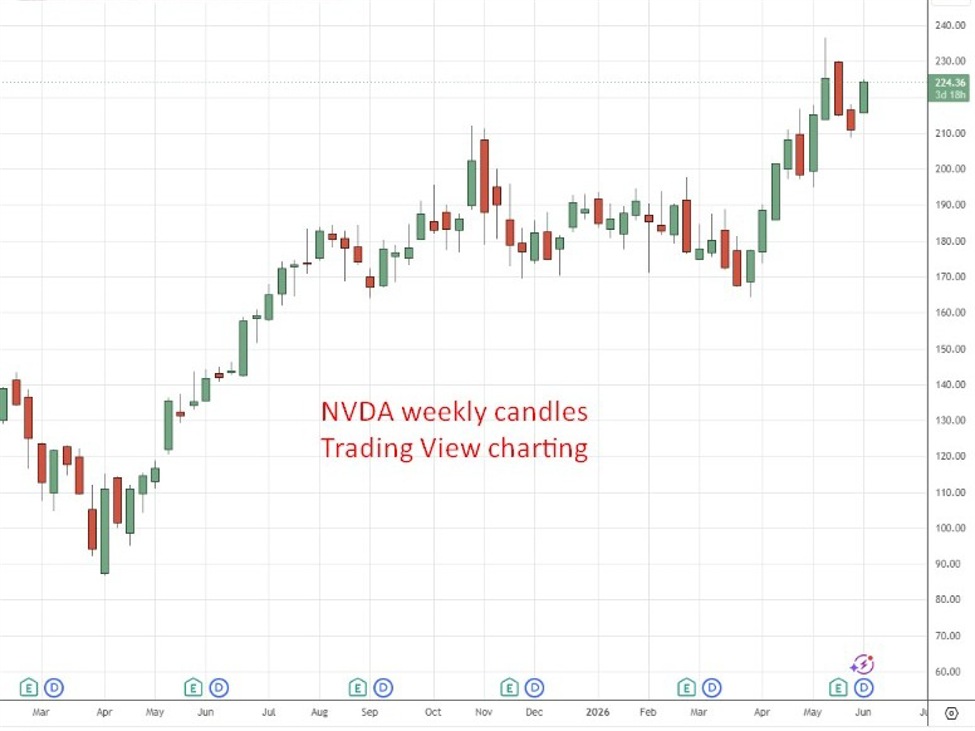
Nvidia CEO Jensen Huang said the company has secured supply for robust AI growth but remains supply constrained, speaking at Computex in Taipei where he reaffirmed a $150bn annual Taiwan investment. Summary: Source: Nvidia CEO Jensen Huang, Computex press conference, TaipeiHuang said Nvidia has secured supply for robust growth across CPUs and GPUs but acknowledged the company remains supply constrainedNvidia unveiled the RTX Spark PC chip, due to launch in the fall, targeting the AI-enabled personal computer market in competition with AMD, Intel and Apple; the effort is part of a joint initiative with Microsoft to reinvent the PCThe Vera data centre CPU was flagged as Nvidia’s next major growth driver, competing with AMD and Intel in the data centre processor market; Huang said Vera would prove more popular than GPUs given its role in data processingNvidia announced plans to invest around $150 billion a year in Taiwan, which Huang described as a strategic US partner and the epicentre of the AI revolutionNvidia is now the largest corporate purchaser within Taiwan’s technology ecosystemNvidia chief executive Jensen Huang told reporters at Computex in Taipei on Tuesday that the company has secured sufficient supply to support robust growth across its GPU and CPU product lines, while acknowledging that supply constraints have not been fully resolved.The comments position Nvidia carefully ahead of what is expected to be another period of intense demand from data centre operators and hyperscalers racing to build out AI infrastructure. Huang was speaking a day after the company, valued at around $5 trillion, unveiled a slate of new products including the RTX Spark chip, which brings AI processing capabilities to personal computers and is due to launch in the fall. The chip will compete directly with offerings from AMD, Intel and Apple, and forms part of a broader collaboration with Microsoft that Huang described as an effort to reinvent the PC for the AI era.The more consequential product announcement may prove to be the Vera data centre CPU, which Huang said would become Nvidia’s next major growth driver, surpassing even its GPU franchise in importance due to the processor’s central role in handling the computational workloads that underpin AI systems. Vera competes in a segment currently dominated by AMD and Intel, and Nvidia’s entry will intensify an already crowded race for data centre silicon.Huang used the Taipei event to reinforce Nvidia’s strategic commitment to Taiwan, confirming plans to invest approximately $150 billion annually in the island and describing it as the epicentre of the global AI revolution. He said Taiwan’s own investments in US manufacturing make it a strategic partner for Washington, and that Nvidia intends to make the supply chain as resilient as possible. The company is now the single largest corporate purchaser within Taiwan’s technology ecosystem, Huang said.Demand for Nvidia’s AI chips has generated tens of billions in revenue and helped propel the company to become the world’s most valuable, a position that makes every word from Huang on supply and growth a market-moving event in its own right.—Huang’s supply assurances will be closely read by hyperscalers and data centre operators who have staked hundreds of billions in capex on continued GPU availability. The acknowledgement that constraints persist, even alongside the bullish supply commentary, keeps the tight-supply narrative alive and supports Nvidia’s pricing power. The Vera CPU push into territory currently held by AMD and Intel opens a new competitive front that will pressure margins at both rivals. The RTX Spark PC chip, launching in the fall, adds a consumer-facing dimension to Nvidia’s AI ambitions that broadens the addressable market beyond data centres. The $150 billion annual Taiwan investment figure underscores how deeply Nvidia’s supply chain is anchored to the island, a geopolitical concentration risk that markets have so far chosen to price lightly. This article was written by Eamonn Sheridan at investinglive.com. 🔗 Source 💡 DMK Insight Nvidia’s commitment to a $150bn investment in Taiwan signals strong confidence in AI’s future, but supply constraints could limit immediate growth. For traders, this news is crucial as it highlights Nvidia’s strategic positioning in the AI sector, which is likely to impact its stock price and related tech stocks. If Nvidia can overcome supply issues, we might see a bullish trend, but any delays could lead to volatility. Watch for Nvidia’s stock to react around key technical levels, particularly if it approaches recent highs or lows. Additionally, keep an eye on semiconductor stocks, as they often move in tandem with Nvidia’s performance. The broader tech market could also feel the ripple effects, especially if supply chain issues persist, affecting production timelines and earnings forecasts across the sector. 📮 Takeaway Monitor Nvidia’s stock closely for reactions around key technical levels, especially if supply constraints impact earnings forecasts in the coming weeks.
Citi reiterate forecast for a 25bp RBA rate hike at the Bank's August meeting.
Earlier:Australia lifts minimum wage by 4.75%.Analysts at Citi said Australia’s minimum wage increase, layered on top of existing cost pressures, reinforced their call for a fourth RBA rate hike in August to 4.60%. The bank flagged upside inflation risks persisting into the second half, with the wage decision adding to business cost burdens already elevated by the Middle East conflict. This article was written by Eamonn Sheridan at investinglive.com. 🔗 Source 💡 DMK Insight Australia’s minimum wage hike is a game changer for traders watching the RBA’s next moves. The 4.75% increase isn’t just a headline; it signals potential inflationary pressures that could push the Reserve Bank of Australia (RBA) to raise rates again. Citi’s prediction of a fourth hike to 4.60% in August could lead to a stronger AUD, impacting forex traders. If inflation persists, we might see a shift in monetary policy that could ripple through global markets, especially commodities and equities linked to Australian economic performance. Keep an eye on the AUD/USD pair; if it breaks above recent resistance levels, it could signal a bullish trend. But here’s the flip side: if wage growth doesn’t translate into sustained consumer spending, we could see a slowdown that might actually prompt the RBA to reconsider its aggressive stance. Traders should monitor economic indicators like consumer confidence and retail sales closely. The immediate focus should be on the RBA’s next meeting and any statements that could hint at future policy directions. 📮 Takeaway Watch for the RBA’s August meeting; a rate hike to 4.60% could strengthen the AUD, especially if inflation risks materialize.

BOJ should hike in June and signal clear rate path, SMFG markets chief says
MFG global markets chief Nagata said the BOJ should hike in June and lay out a clear normalisation path to stabilise bonds, as 10-year yields hit 30-year highs and the yen nears 160. Summary: Source: Arihiro Nagata, global markets chief, Sumitomo Mitsui Financial Group, via Reuters interviewSMFG’s Nagata called for a BOJ rate hike in June, describing it as certain, and said the key issue at the June 15-16 meeting is how clearly the bank signals its path toward policy normalisationNagata argued that a clearer forward path would reduce upward pressure on long-term yields, noting it would be sufficient for the BOJ to simply confirm it sees little gap with existing market pricingJapan’s 10-year government bond yield has risen to 30-year highs; the yen has weakened back toward 160 per dollar despite large-scale interventionThe Middle East conflict has complicated BOJ timing, with higher energy costs simultaneously lifting inflation and weighing on Japan’s import-dependent economySMFG has proposed the BOJ halt further bond purchase tapering and hold monthly purchases at around 2.1 trillion yen from April 2027; Nagata said that level would be manageable without market stress while allowing market functioning to recoverSMFG said it would be willing to buy long-term bonds if yields reach around 3%, subject to overall supply and demand conditionsThe Bank of Japan should raise interest rates at its June meeting and follow the move with a clearly articulated path toward policy normalisation, according to the global markets chief of Sumitomo Mitsui Financial Group, Japan’s second-largest banking group by assets.Arihiro Nagata, speaking to Reuters, said a June hike was not only warranted but expected with confidence, describing it as certain. He framed the rate decision itself as the lesser issue, however, arguing that the more consequential question at the June 15-16 meeting is how explicitly the BOJ communicates what comes next. A clear forward path, Nagata said, would do more to contain upward pressure on long-term yields than the hike alone, because it would reduce uncertainty about the pace and endpoint of tightening.The context for that argument is stark. Japan’s 10-year government bond yield has climbed to its highest level in three decades, while the yen has drifted back toward the psychologically significant 160 per dollar mark despite the record-scale intervention deployed by the Ministry of Finance in recent weeks. The combination suggests that market confidence in Japan’s policy framework, rather than the level of any individual instrument, is the core problem.Nagata said it would be sufficient for the BOJ to signal that it sees little divergence between its own expectations and what markets are already pricing, which includes nearly two rate hikes this year and further tightening beyond. That alignment, made explicit, could anchor long-end yields without requiring further aggressive action.On bond purchases, Nagata said SMFG has formally proposed that the BOJ halt further tapering and hold monthly JGB purchases at around 2.1 trillion yen from April 2027, a level he described as manageable without causing market stress while still allowing normal market functioning to recover. The BOJ will review its existing taper plan at the June meeting and set out a new framework for fiscal 2027, with markets watching closely for any signal on whether the current pace of reduction continues.—Ten-year Japanese government bond yields at 30-year highs and the yen pressing back toward 160 per dollar frame the urgency behind the SMFG call. A June hike is widely priced, but the bond market’s behaviour suggests forward guidance is now the more critical variable: without a credible normalisation path, long yields may continue to rise regardless of what the policy rate does. SMFG’s proposal to halt further bond purchase tapering at 2.1 trillion yen a month from April 2027 is a significant ask, effectively putting a floor under BOJ support for the JGB market at a moment when fiscal concerns are already elevated. The bank’s stated willingness to buy long-term bonds at around 3% yields provides a private sector backstop signal that markets will note. This article was written by Eamonn Sheridan at investinglive.com. 🔗 Source 💡 DMK Insight The call for a June BOJ rate hike is a game changer for traders: here’s why. With 10-year yields hitting 30-year highs, the pressure is mounting on the Bank of Japan to act. If they follow Nagata’s advice, it could signal a shift in monetary policy that traders need to prepare for. A rate hike would likely strengthen the yen, which is already nearing the critical 160 level against the dollar. This could lead to significant volatility in forex pairs, especially USD/JPY. Traders should keep an eye on how this potential shift affects bond markets and related assets, as a stronger yen could dampen export-driven stocks. But here’s the flip side: if the BOJ hesitates or fails to provide a clear normalization path, we might see a backlash in the yen and a spike in yields. This uncertainty could create trading opportunities for those looking to capitalize on short-term movements. Watch for any statements from the BOJ leading up to June, as they could provide clues on their intentions and market direction. 📮 Takeaway Monitor the USD/JPY pair closely as the BOJ’s June decision approaches; a rate hike could push the yen stronger, impacting forex and bond markets.

investingLive Asia-Pacific FX news wrap: Trump indicated a deal within a week. Again.
BOJ should hike in June and signal clear rate path, SMFG markets chief saysCiti reiterate forecast for a 25bp RBA rate hike at the Bank’s August meeting.Nvidia’s Huang says supply secured for robust AI growth despite constraintsAustralia’s net trade and flat government spending cloud GDP outlookS&P 500 futures analysis today: ES JUN26 fails repair near 7632Japan one step from historic yen collapse, SMBC Nikko warnsAustralia widening current account deficit, inventory draw to weigh on Q1 GDPEthereum Analysis Today: ETH Repairs From Washout, But Bulls Need Acceptance Above 2020.5White House trims tariffs on farm and industrial gear, tweaks metals regimePBOC sets USD/ CNY central rate at 6.8187 (vs. estimate at 6.7720)RBA’s hawkish Harper hints herald hikeTokyo and Washington closely monitoring forex markets together, finance minister confirmsJapan eyes sales tax cut from 2027 but bond market (and yen!) risks loom largeRBNZ risks crushing already weakened economy to contain oil-driven inflation Kiwibank warnCommerzbank lifts Brent to $90 on Hormuz closure, no return to pre-war pricesSouth Korea May 2026 inflation data higher than expected, keeps BoK on hike alertIsrael PM contradicts Trump, will continue operating against Hezbollah in Southern LebanonTrump says Hormuz deal is “looking good” but his credibility gap keeps markets on edgeBofA contrarian sell signal nears trigger as S&P optimism hits highest since February 2025Oil’s biggest single-day gain in weeks as Middle East tensions flare againICYMI! Strategy sells Bitcoin for first time since 2022, breaking “never sell” pledgeRecord close for the major indices once againKey points:Trump told ABC News a Hormuz ceasefire extension and reopening deal could come within a week, but markets gave the remarks little credit given his track record on conflict timelinesWhite House cut tariffs on agricultural equipment including combines and harvesters, a rare Trump concession on tradeAustralia lifted its minimum wage by 4.75%; RBA board member Harper sounded a hawkish note on inflation, adding to the case for an August hikeAustralian Q1 data pointed to a soft Wednesday GDP print, with net trade subtracting 0.8 percentage points and government spending flatJapan is pursuing a food sales tax cut from 8% to 1% from April 2027, a move with bond market implications already demonstrated when Takaichi first floated the plan in JanuaryFinance Minister Katayama flagged close US-Japan forex coordination; USD/JPY was quiet around 159.70Alphabet announced an $80 billion equity raise for AI infrastructure, including a $10 billion private placement from Berkshire HathawayTrump told ABC News he thinks he will have an agreement with Iran to extend the ceasefire and reopen the Strait of Hormuz over the next week. Trump is credibility-challenged on this front, however, and his remarks went largely unheeded by markets. Further from the US, and in a welcome climbdown, the White House said it will reduce tariffs on agricultural equipment such as combines and harvesters to ease costs for American farmers and manufacturers.Australia lifted its minimum wage by 4.75%. Separately, Reserve Bank of Australia board member Ian Harper sounded a hawkish note, saying stronger-than-expected domestic demand and the return of capacity constraints have reopened the output gap, prompting markets to price in further policy action. Harper flagged persistent inflation as a genuine concern, noting that market-based inflation measures have moved higher, which he described as worrying. The RBA meets next on June 15 and 16, where a pause is widely expected, but the faster rise in award wages alongside Harper’s comments on inflation expectations add to the case for another hike, most likely in August.Australian data today indicated the GDP print due Wednesday is shaping up as a soft one, with net trade subtracting 0.8 percentage points, well beyond the 0.5 points forecast, and government spending contributing nothing. Inventories adding 0.2 points provides only partial offset, leaving household consumption and business investment to carry the quarter.Japanese media reported that Japan’s government is pursuing a food sales tax cut from 8% to 1% from April 2027 for two years. The proposal carries bond market implications that have already been road-tested: Prime Minister Takaichi’s initial announcement in January caused a spike in yields as investors priced in further deterioration of Japan’s already stretched fiscal position. A confirmed rollout would likely revive that pressure. Finance Minister Katayama subsequently weighed in with intervention warnings, confirming that Japan is closely coordinating with the United States on foreign exchange, with both sides actively monitoring conditions. USD/JPY did little on the session, sitting around 159.70, with the dollar quiet more broadly. It was a subdued day across markets generally, with South Korean and Japanese equities pulling back from recent record highs.On the corporate front, Alphabet announced a proposed $80 billion equity capital raise to expand AI infrastructure and compute capacity, comprising a $30 billion underwritten offering, a $40 billion at-the-market programme, and a $10 billion private placement from Berkshire Hathaway.–Australia’s cash rate, inflation rate, and the wage hike above both: This article was written by Eamonn Sheridan at investinglive.com. 🔗 Source 💡 DMK Insight The potential BOJ rate hike in June could shake up forex markets, especially USD/JPY. If the BOJ signals a clear path for future rate increases, it might strengthen the yen against the dollar, which is currently under pressure from the Fed’s stance. Traders should watch for volatility in currency pairs, particularly those involving the yen, as market participants adjust their positions based on the BOJ’s decisions. Meanwhile, the RBA’s expected 25bp hike in August adds another layer of complexity, potentially impacting AUD pairs. With the S&P 500 futures reflecting broader market sentiment, any shifts in these central bank policies could lead to cascading effects across equities and commodities. Keep an eye on key levels for USD/JPY around recent highs and lows, as these could serve as pivotal points for breakout or reversal strategies. 📮 Takeaway Watch for the BOJ’s June meeting; a rate hike could strengthen the yen, impacting USD/JPY and related pairs significantly.

Crude oil analysis today: oil futures fail near 94.20 resistance, testing lower value
Key takeaways for traders and investors following oil todayCrude oil futures repaired strongly from the 86.35-87.00 lower zone, but buyers failed to sustain control near the 94.20-94.78 upper shelf.The current oil analysis leans mildly bearish, with a Prediction Score of -3 / +10.The key lower-value area to watch is 91.37-91.78. A sustained break below it would strengthen the bearish case.Bulls need to reclaim 92.10-92.47 to stabilize the short-term structure.A stronger bullish repair would require acceptance back above 94.20, followed by a clean hold above 94.64-94.78.Crude oil futures analysis summaryCrude oil futures are no longer showing clean bullish continuation after the latest failed acceptance attempt near 94.20-94.78. The market repaired impressively from the prior lower zone near 86.35-87.00, but the rally into the upper shelf met aggressive selling, leaving the current crude oil analysis mildly bearish while price tests the lower-value zone around 91.37-91.78.This analysis is based on the C1! crude oil futures chart, which traders often use as a continuous front-month crude oil futures reference. For most readers, the practical point is less about the exact futures symbol and more about the crude oil futures price structure: buyers repaired from a lower washout zone, failed at the upper gate, and now need to defend the lower part of the repaired range.Crude oil 4-hour chart: why the failed bounce mattersMy 4-hour crude oil futures chart above gives traders another useful way to understand the current weakness.The important point is simple: crude oil bounced from the lower part of the range, but the bounce was too weak to reach the main volume area around the Point of Control, or POC. That matters because the POC is often like a magnet in a balanced market. It marks the price area where the most trading activity took place over the selected range.In this chart, the POC is near the red horizontal line around the mid-$90s. The blue lines mark the broader value area, which is the zone where most of the trading volume occurred.When price falls toward the lower edge of that value area and then bounces, a healthier recovery will often try to rotate back toward the POC. That does not always mean price must reach it, but if the market cannot even get close, it tells us something important about buyer strength.That is what happened here. Crude oil futures bounced from the lower-value area near the $88-$89 zone, but the recovery stalled below the POC. In plain English, buyers stepped in, but they did not show enough power to drive price back toward the fairest and most liquid part of the prior range.This can be a warning sign. It suggests that sellers may still be in control, or that larger supply is waiting above the market before price can recover into the main volume zone.For traders, the lesson is not to assume that every bounce from support is automatically bullish. A bounce is more convincing when it can reclaim important market structure. In this case, the bounce was unable to reach the POC, which keeps the crude oil chart vulnerable. And what I am looking at now is if crude oil futures loses $91.25, it can find its way to $87.60Prediction score for crude oil todayPrediction Score: -3 / +10This is a mildly bearish read, not a full bearish breakdown call.The market has not fully surrendered the prior bullish repair from the 86.35-87.00 area. However, the failed move above 94.20-94.78 is important because that was the zone where buyers needed to prove acceptance. Instead, the market printed signs of supply, failed to hold the upper area, and rotated back toward lower value.Why crude oil is not cleanly bearish yetThe bearish case is not complete because crude oil futures already showed meaningful repair from the May 29 low.The market pushed down toward 86.35, but sellers did not get clean downside continuation. Later, price recovered back toward the 87.76 area with stronger positive delta and better low-defense behavior. That was an early sign that the lower zone was not simply collapsing.After that, crude oil advanced through the 88-90 area, then toward 91-92, and eventually reached the 94 area. That sequence created real value migration higher. In simple terms, buyers did manage to move the market away from the lows and force a meaningful recovery.That is why the current oil analysis should not be read as “crude oil is collapsing.” A more accurate interpretation is that the bullish repair attempt has weakened after failing at a major upper supply zone.Why the failed 94.20-94.78 zone mattersThe most important part of this crude oil futures analysis is the failure near 94.20-94.78.That area acted as the upper gate. If buyers had accepted above it, the market could have shifted from a repair phase into a stronger bullish continuation phase. Instead, crude oil futures rejected from the zone with negative delta and weak close quality.The most important rejection evidence came from the high-area selling near 94.78 and again around 94.20-94.45. In both cases, price pushed into the upper region but failed to hold there. That suggests the market did a lot of business near the highs, but buyers were not strong enough to keep control.For traders, this is the difference between a breakout and a trap. A brief move into resistance is not enough. In futures trading, especially in crude oil, acceptance matters. Bulls need price to spend time above the level, defend pullbacks, and prevent fast reversals back into the prior range.Key crude oil futures levels to watchWhat would make crude oil more bullish?The first bullish improvement would come if crude oil futures reclaim and hold above 92.10-92.47.That would suggest buyers are defending the lower-value retest and trying to repair the failed upper rejection. It would not be a full bullish takeover, but it would reduce the immediate bearish pressure.A stronger bullish upgrade would require acceptance back above 94.20. That level matters because it was the high-volume supply shelf where the prior rally failed. If buyers can reclaim 94.20 and prevent another sharp rejection, the market may