 Bitcoin
  Ethereum
  Tether
  XRP
XRP  BNB
BNB  USDC
USDC  Solana
  TRON
TRON  Lido Staked Ether
  Dogecoin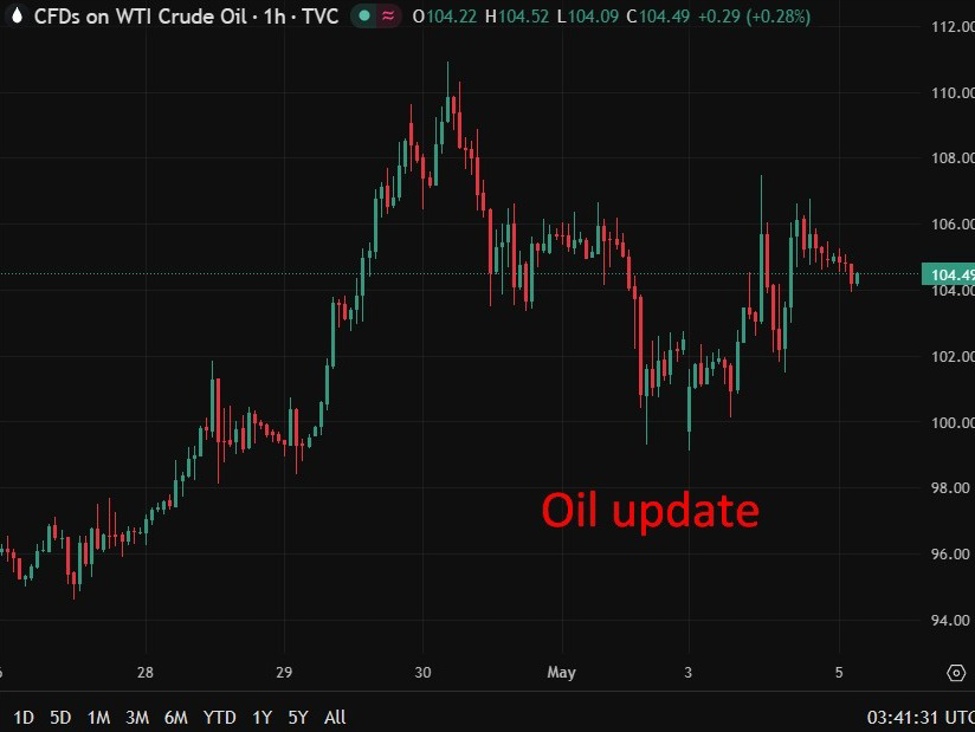
Bank of Canada’s Macklem backs Fed independence ahead of Powell departureRBA set to hike to 4.35% today. NAB sees cash rate peaking near 4.6%.Rabobank holds yen bull view despite poor run, eyes Hormuz as key riskAustralian data: March household spending +1.6% m/m (prior +0.3%)Iran launches boats, missiles and drones at US warships in Hormuz confrontationChevron chief compares Hormuz crisis to 1970s oil shocks as shortages loomS&P 500 target of 7,600 reaffirmed as Goldman warns on inflation and rate cut constraintsTrump tariff refunds to begin May 12 as CBP processes $166bn in claimsUS edges closer to resuming Iran combat as ceasefire holds by a threadAustralia April Services PMI (final) 50.7 (preliminary 50.3, prior 46.3)ECB forecasters slash growth and raise inflation outlook as energy shock bitesReminder, Japanese and mainland China markets are close again today, Tuesday, May 5, 2026Saudi Arabia demands Hormuz guarantees as Israel braces for rapid Iran escalationWilliams: Fed well positioned but energy price surge could prove worse than markets expectIMF says worst-case global economy warning is now the working assumption – oil shock hitinvestingLive Americas market news wrap: Iran strikes the UAE, oil prices jumpAt a glance:Crude futures edged lower after the prior session’s gains, with APAC macro newsflow relatively lightUS military officials indicated they are closer to resuming combat operations against Iran than 24 hours earlier, raising geopolitical tensionIran’s Foreign Minister Araqchi struck a more conciliatory tone, saying there is no military solution to the Hormuz crisis and that Pakistan-mediated talks are making progress, while warning the US and UAE against being drawn into a conflict by “ill-wishers”Trump echoed the cautiously positive tone on talks, offering a brief but notable signal of potential diplomatic engagementMajor FX markets traded in narrow ranges, with Japanese and mainland Chinese markets closed for holidays thinning liquidity across the sessionThe Australian dollar held steady ahead of the RBA rate decision at 0430 GMT, with Governor Bullock scheduled to speak an hour after the announcementRegional equities tracked Wall Street lower, though the absence of Japanese, Chinese and South Korean markets limited overall participationUS Secretary of State Marco Rubio will hold a White House press briefing at 3pm ET on Tuesday, standing in for Press Secretary Karoline Leavitt who has begun maternity leaveCrude oil futures gave back modest ground during Asian hours, consolidating after the prior session’s gains amid a relatively quiet macro backdrop and mixed signals on the trajectory of the Middle East conflict.The most consequential newsflow of the session pulled in opposite directions. US military officials indicated that Washington is closer to resuming major combat operations against Iran than it was 24 hours earlier, a development that sat uneasily alongside surprising more conciliatory language from Tehran. Iranian Foreign Minister Abbas Araqchi said the events unfolding in the Strait of Hormuz had demonstrated that there is no military solution to the crisis, and described Pakistan-brokered talks as making progress. He added a pointed warning to the United States and the UAE against being drawn into a quagmire by what he called ill-wishers, a formulation that suggests Tehran is seeking to keep diplomatic channels open while resisting further escalation. President Trump has offered a brief but notable echo of the positive tone on negotiations, lending the commentary a degree of credibility it might otherwise have lacked.Currency markets were subdued, with major pairs trading in narrow ranges throughout the session. Participation was thinned by public holidays in Japan and mainland China, reducing liquidity and dampening the usual flow of regional macro catalysts. The Australian dollar drifted quietly in the run-up to the Reserve Bank of Australia’s rate decision, due at 0430 GMT, with Governor Michele Bullock scheduled to address markets an hour after the announcement in what is likely to be one of the session’s most closely watched events.Regional equity markets followed Wall Street lower, though the absence of Japanese, Chinese and South Korean participants limited the depth of the move and kept overall trading conditions relatively contained.Looking ahead to the US session, Secretary of State Marco Rubio will hold a White House press briefing at 3pm ET on Tuesday, stepping into the role while Press Secretary Karoline Leavitt begins maternity leave. Given the active state of Middle East diplomacy, the briefing carries more than routine significance. -The RBA announcement is due at 2.30pm Sydney time / 0030 US Eastern time / 0430 GMT. Reserve Bank of Australia Governor Bullock sill hold the press confernce an hour later. This article was written by Eamonn Sheridan at investinglive.com. 🔗 Source 💡 DMK Insight With ADA at $0.26, the macroeconomic backdrop is shifting, and here’s why that matters for traders: The Bank of Canada’s support for Fed independence signals a potential tightening in monetary policy, which could ripple through global markets. As the RBA prepares to hike rates to 4.35%, traders should be cautious about how these moves might affect risk assets like ADA. Higher interest rates typically strengthen fiat currencies, potentially leading to a bearish sentiment in crypto markets. Keep an eye on how ADA reacts to these macro trends, especially if it tests key support levels around $0.25. If it breaks below that, we could see a further decline, while a bounce back could signal a buying opportunity. Also, the Australian household spending data shows a significant uptick, which could bolster the AUD and impact crypto pairs involving the Australian dollar. Traders should monitor the correlation between ADA and AUD, especially in light of geopolitical tensions in the Middle East, which could add volatility to the market. The next few days will be crucial as we await further economic indicators and central bank announcements. 📮 Takeaway Watch ADA closely around the $0.25 support level; a break could signal further downside, while a bounce might present a buying opportunity.
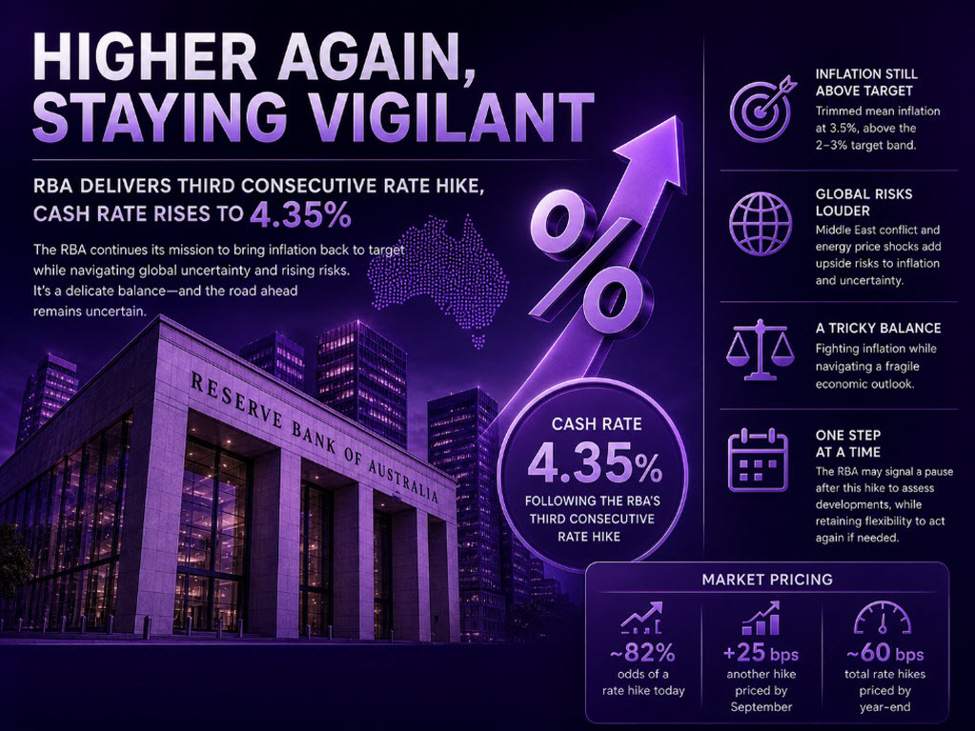
Heads up: RBA monetary policy decision set for the bottom of the hour
In bringing the cash rate back to 4.35%, the RBA will have essentially reversed its brief easing cycle in 2025. This will then bring interest rates back to the recent peak levels seen during 2024, which followed from rate hikes during 2022 to 2023. So much for being done with the battle against inflation, eh?Any further rate hikes after today will see the cash rate move back to levels last seen during 2011. And if it does hit the 5% threshold, that will be the highest since 2008. Given that backdrop, it is going to be a very tricky situation for the RBA in communicating their next steps and how they are viewing the balance between high rates and the economic outlook.But for now, it’s all about taking things one step at a time.As a reminder, the RBA has already been on a hawkish tilt since the turn of the year with core inflation keeping well above their target band of 2% to 3%. The latest trimmed mean reading sits at 3.5% and policymakers were already worried about inflation pressures getting out of hand before the war.So when you add in the impact of higher energy prices from the US-Iran conflict, it just adds upside risks to the whole picture.That being said, the war also complicates things a fair bit. And it’s not just for the RBA, but for all major central banks. There’s a fine balance to be struck and it may be prudent to buy as much time as possible in waiting for more clarity. That especially since there is still no end to the conflict and the Strait of Hormuz situation remains as it is for over two months now.As such, it may be possible for the RBA to switch up their language a little today. After delivering another 25 bps rate hike, the central bank could lean towards signaling a pause in wanting to gather more certainty from Middle East developments. However, expect them to communicate that they will maintain optionality and flexibility to act again if needed in the months ahead.That especially since they will bring interest rates back to a more restrictive level and give themselves some legroom to work with. The only question is, will that be enough considering an already more inflationary backdrop prior to the war and now having to factor in the potential risks of second round effects?There’s value in waiting but there’s also great risk in waiting too long. But compared to other major central banks, perhaps not being able to cut interest rates as much previously was a blessing in disguise. That being said, it may end up being a double-edged sword if they’re not careful in dealing with the latest situation.As things stand, traders are pricing in ~82% odds of a rate hike today with a second 25 bps rate hike priced in by September. By year-end, there’s a total of ~60 bps of rate hikes priced in for the RBA. This article was written by Justin Low at investinglive.com. 🔗 Source 💡 DMK Insight The RBA’s decision to raise the cash rate back to 4.35% signals a shift in monetary policy that traders need to watch closely. This reversal of the easing cycle could have significant implications for both the forex and crypto markets. Higher interest rates typically strengthen the local currency, which could lead to a stronger Australian dollar against its peers. For forex traders, this means monitoring AUD/USD closely for potential bullish setups. Additionally, the ripple effect on crypto could be notable; as interest rates rise, risk appetite often diminishes, potentially leading to downward pressure on digital assets. It’s worth noting that this move comes after a period of rate hikes from 2022 to 2023, suggesting that the RBA is responding to persistent inflationary pressures. Traders should keep an eye on upcoming economic indicators, particularly inflation data, as these will likely dictate future monetary policy shifts. Watch for key levels in AUD/USD around recent highs and lows to gauge market sentiment. 📮 Takeaway Monitor AUD/USD for bullish setups as the RBA’s rate hike to 4.35% could strengthen the Australian dollar and impact risk assets.
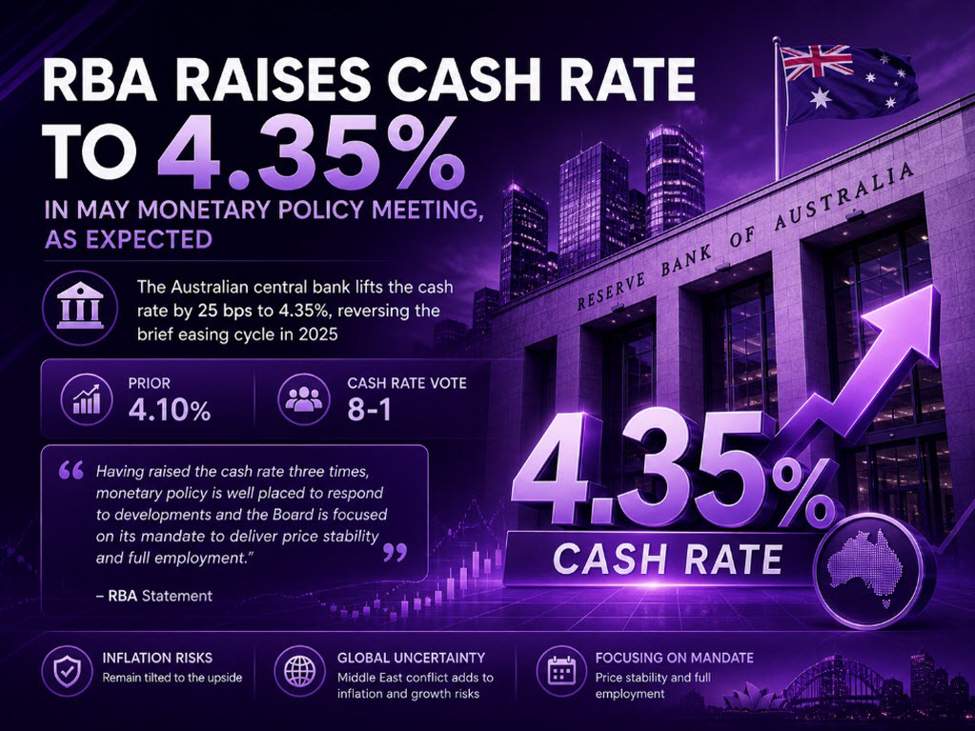
RBA raises cash rate to 4.35% in May monetary policy meeting, as expected
Prior 4.10%Cash rate vote was 8-1Middle East conflict has resulted in sharply higher fuel and commodity prices, which are already adding to inflationThere are early signs that many firms are looking to increase prices of their goods and servicesThere are materially heightened uncertainties about the outlook for domestic economic activity and inflationThere are plausible scenarios where inflation is higher and activity lower than envisaged under the baseline forecastThere are indications that Middle East conflict could lead to second-round effects on prices for goods and services more broadlyInflation is likely to remain above target for some time and that the risks remain tilted to the upsideHaving raised the cash rate three times, monetary policy is well placed to respond to developmentsFocused on mandate to deliver price stability and full employmentWill do what it considers necessary to achieve that outcomeFull statementThe key passage in all of this is this one right here: “Having raised the cash rate three times, monetary policy is well placed to respond to developments and the Board is focused on its mandate to deliver price stability and full employment.”That’s as clear a signal as any that they are leaning towards being on the sidelines until they get better clarity on how Middle East developments will impact the inflation outlook further.Adding to that, they subtly toned down their language slightly after having said in March that risks to inflation have “tilted further to the upside”. This time around, they’re saying that risks to inflation “remain tilted to the upside” only. It’s not much but it is some indication of also erring more towards staying pat in June.Besides that, the RBA notes that their baseline forecast is for “the conflict is resolved soon and fuel prices decline” but also “sees underlying inflation peaking higher than was expected in February”. However, they at least acknowledge that there could be scenarios in which the outcome is worse than what they are forecasting.But either way for now, they might be more comfortable moving to the sidelines after three straight rate hikes to undo the entire easing cycle from 2025.Coming into the meeting, traders were pricing in ~85% odds of a 25 bps rate hike with ~61 bps of rate hikes priced by year-end.AUD/USD is just marginally up on the decision but not really doing much, keeping flattish now at 0.7165 on the day. This article was written by Justin Low at investinglive.com. 🔗 Source 💡 DMK Insight Rising commodity prices from the Middle East conflict are shaking up inflation expectations, and here’s why that matters: With the cash rate vote recently at 4.10% and an 8-1 split, traders should be on high alert. Higher fuel and commodity prices are not just a short-term blip; they signal a potential shift in consumer behavior as firms start to pass costs onto consumers. If inflation continues to rise, we could see central banks tightening monetary policy more aggressively, which would impact everything from forex pairs to crypto assets. Keep an eye on inflation metrics and central bank communications, as they could dictate market sentiment in the coming weeks. But here’s the flip side: if firms are cautious about raising prices due to economic uncertainties, we might see a slowdown in consumer spending, which could ease inflationary pressures. This creates a tug-of-war scenario for traders. Watch for key economic indicators and sentiment shifts that could signal whether inflation is truly entrenched or if we’re headed for a cooling period. Pay attention to the next inflation report and any central bank meetings for potential market-moving insights. 📮 Takeaway Monitor inflation reports closely; a sustained rise could trigger aggressive central bank actions, impacting forex and commodity markets significantly.
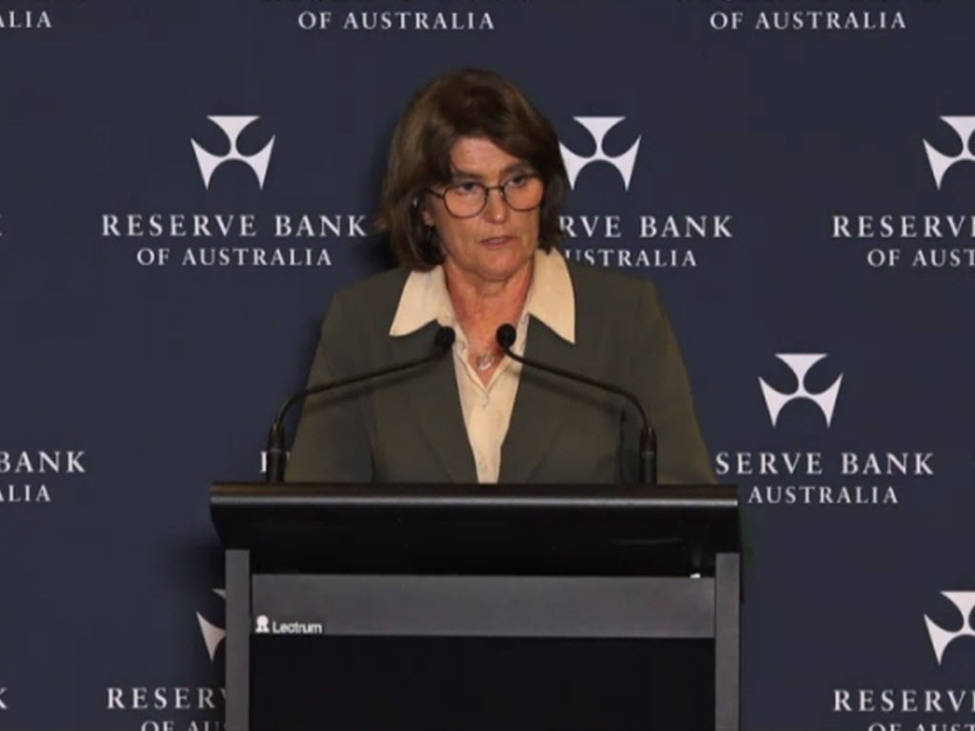
RBA governor Bullock: We must get on top of inflation now before it gets away from us
The interest rate increase will help contain inflationary shockIf second round effects feed through to expectations, then it could require even higher ratesThe cash rate level is now a bit restrictiveThat gives us space to see how the conflict plays outQ&A session:”Wait and watch” is probably the wrong term to describe current stanceWe feel we are now in a position where we’ve got space to be alert to both sides of the risks to inflation outlookThe war has delivered a shock to income, “it has made us all feel poorer”Baseline scenario outlines that growth will be anaemic but economy will still growQuite possible we didn’t have to raise cash rate again if the war didn’t occur, but reality is that it didThe war has made the tradeoff much, much worse; we have to be cognizant of its impact on inflation expectationsReasonable for businesses passing on costs to consumersWe want to guard against inflation pressures being embedded into the economyEven if the conflict is resolved quickly, the costs will mount all throughout the yearWith this rate hike, we have space to sit and see what happensThe aussie is down slightly here as Bullock is brushing aside the prospect of taking another step too quickly. She is still painting a more optimistic picture on the economy and reaffirms that rates are now in a restrictive space to try and tackle inflation pressures that have been and are looking to filter in through the war.Although she categorically says that “wait and watch” is not the right term to describe their existing stance, it certainly does look like it. And the point of her denial is purely for the optics. It just sounds bad to say that when households look set to struggle in the months ahead amid higher prices.AUD/USD is down 0.3% to 0.7140 with the next 25 bps rate hike now pushed to November. It was previously priced in for September instead. By year-end, there’s ~30 bps of rate hikes priced in now. That’s mildly lower than what we saw before the RBA rate decision earlier in the day. This article was written by Justin Low at investinglive.com. 🔗 Source 💡 DMK Insight The recent interest rate hike is a pivotal moment for ETH traders, especially with ETH currently at $2,376.83. Higher rates typically strengthen the dollar, which can pressure crypto prices as investors seek safer assets. If inflation expectations rise further, we could see additional rate increases, which might push ETH below key support levels. Traders should be on the lookout for how ETH reacts to these macroeconomic changes. If ETH breaks below $2,300, it could trigger a wave of selling, while a bounce back above $2,500 might signal a bullish reversal. Keep an eye on broader market sentiment as well; if institutional investors start reallocating funds due to these rate hikes, it could lead to significant volatility in the crypto space. The interplay between interest rates and crypto prices is crucial right now, and understanding this dynamic could provide a trading edge. 📮 Takeaway Watch for ETH’s reaction around $2,300 and $2,500; a break below $2,300 could signal further downside.
FX option expiries for 5 May 10am New York cut
There aren’t any major expiries to take note of on the day, with the full list seen below.The only real mover so far on the day is the Australian dollar, being dragged down slightly amid RBA governor Bullock’s press conference – which is still ongoing. She’s making it clear that the central bank has room to wait now before taking the next step, and that is seeing hawkish expectations ease slightly. In turn, AUD/USD is now down 0.4% to 0.7136 on the day.As for trading sentiment among major currencies in general, it all continues to ride on the risk mood. In that lieu, US-Iran developments remain the key risk factor. So, headline risks remain paramount at this stage.It’s been a big mess to start the new week with a lot of he said, she said on what is happening in the Strait of Hormuz and with regards to missiles and drone strikes. However, the fact of the matte remains that the US and Iran are still far apart from reaching a resolution. As such, the war continues to drag on and global energy supply continues to tighten further.So, that’s keeping the dollar in a steadier spot and will be a driving factor in the background as we look to the session ahead.For more information on how to use this data, you may refer to this post here. This article was written by Justin Low at investinglive.com. 🔗 Source 💡 DMK Insight The Australian dollar’s dip during RBA governor Bullock’s press conference highlights market sensitivity to central bank commentary. Traders should pay close attention to Bullock’s remarks, as they could signal future monetary policy shifts. The absence of major expiries today means that volatility might be more directly influenced by her statements rather than scheduled events. If Bullock hints at a more dovish stance, we could see further weakness in the AUD, potentially testing key support levels. Conversely, any hawkish signals could trigger a rebound. Keep an eye on the AUD/USD pair for immediate reactions, especially if it approaches recent lows. This situation underscores the importance of monitoring central bank communications, as they can have outsized impacts on currency movements, especially in quieter trading environments. 📮 Takeaway Watch the AUD/USD closely for reactions to Bullock’s comments; a dovish tone could push it towards recent support levels.

The Online Trading Industry Converges at iFX EXPO International 2026
The online trading industry requires reliable infrastructure and compliant operations to function effectively. iFX EXPO International 2026 addresses these operational needs by gathering key technology and financial participants in one physical location. Scheduled to take place between 16-18 June 2026, at the City of Dreams Mediterranean in Limassol, the event provides a structured environment for business development and networking. The demand for dedicated networking space reflects the industry’s focus on direct partnerships.Attendees will have direct access to established brands, including Equiti Capital, Leverate, Ecommbx, Solid Payments, payabl, and LMAX Global. This layout allows institutional representatives to evaluate new trading tools, liquidity pools, and payment gateways through direct comparison. Brokers can meet directly with liquidity providers and regulatory consultants to negotiate technical contracts and plan their regional expansions. Additionally, the event delivers actionable market data through its dedicated conference stages. The online trading landscape faces continuous updates regarding jurisdictional compliance and digital asset integration. Industry experts will lead panel discussions detailing these shifting frameworks alongside current client acquisition metrics. Attendees receive practical operational knowledge to implement within their own corporate structures.Event informationiFX EXPO International 2026 is set to welcome 6,500+ attendees, 200+ exhibitors, and 100+ speakers across three days of intensive networking and content.Knowledge and insight are delivered across two dedicated conference stages. On the first stage, The Speaker Hall hosts expert-led sessions covering market trends, regulatory frameworks, and client acquisition strategies. The second stage, the Mastery Hub, is making its debut at iFX EXPO International 2026. It is a first-of-its-kind content stage for the Cyprus edition of the expo. Following its successful launch at iFX EXPO Dubai, the Mastery Hub brings 25+ hours of exclusive content featuring need-to-know insights, strategic trends, and conversations on discipline and human performance, going beyond technical analysis to explore the mindset behind long-term success.The social programme runs alongside the main expo floor. The Welcome Party opens the event with an informal setting designed for reconnecting with existing partners and making introductions ahead of the main event days. The Night Party follows, offering a space to unwind after a full day of networking with entertainment exclusive to iFX EXPO attendees.Securing event accessProfessionals planning to attend must complete their registration through the official event website. Securing a pass unlocks the ability to book meetings with key exhibitors and access the conference sessions. Furthermore, only officially registered attendees qualify for the exclusive accommodation rates provided at the City of Dreams hotel. Interested parties should register promptly to coordinate their logistics and monitor the official channels for the final agenda announcements. Follow this link to reserve your place in advance. This article was written by IL Contributors at investinglive.com. 🔗 Source 💡 DMK Insight The upcoming iFX EXPO International 2026 could signal a shift in trading infrastructure, and here’s why that’s crucial for traders right now. As SOL trades at $84.88, the focus on operational compliance and technology at this expo highlights the industry’s push for reliability. This could lead to increased institutional participation, which often drives volatility and liquidity in the crypto markets. Traders should keep an eye on how these developments might affect SOL and similar assets, especially if new partnerships or technologies are announced. Additionally, the timing of the expo in June 2026 means any strategic moves or innovations could influence market sentiment in the months leading up to it. Watch for any early indicators of institutional interest or regulatory changes that could emerge from this gathering, as they might set the stage for significant price movements. On the flip side, if the event fails to deliver tangible advancements or if regulatory hurdles arise, we could see a dampening effect on market enthusiasm. So, stay alert for any news leading up to the expo that could impact SOL’s trajectory. 📮 Takeaway Monitor SOL’s price action around the June 2026 iFX EXPO; institutional interest could drive volatility, so watch for early indicators of compliance and technology advancements.

Iran parliament speaker says US has jeopardised shipping security through Strait of Hormuz
The translated message:”The new equation of the Strait of Hormuz is in the process of being solidified. The security of shipping and energy transit has been jeopardized by the United States and its allies through the violation of the ceasefire and the imposition of a blockade; of course, their evil will diminish. We know full well that the continuation of the status quo is intolerable for America; while we have not even begun yet.”It doesn’t sound like they are ready to cede any ground just yet. That especially on that final line in saying that the prevailing status quo is unsustainable to the US. Meanwhile, the US is saying the opposite in that it is Iran who will have to give up ground first if things continue down this path.Meanwhile, there’s also a report saying that South Korea is considering Trump’s ‘Project Freedom’ proposal. The news say that lawmakers are reviewing domestic rulings to see if they can participate in the project.That’s a sort of polite response of a slow rejection I would say. At this stage, it’s tough to imagine any countries wanting to get too involved in the whole situation. South Korea is a close US ally, so they won’t want to draw the ire of Trump in outright rejecting his call. This article was written by Justin Low at investinglive.com. 🔗 Source
Switzerland April CPI +0.6% vs +0.6% y/y expected
Prior +0.3%Core CPI +0.3% y/yPrior +0.4%Even with price pressures set to rise in the months ahead, the Swiss economy now feels like it has a bit of a buffer to work with. But in the bigger picture, it’s not exactly a good thing if the Swiss franc continues to stay at more elevated levels. That will in turn feed to depress price pressures instead.The impact of higher energy prices will eventually feed through but a stronger currency will help cushion against that somewhat. The real fear for the SNB is what happens when the conflict ends and second round effects are not as evident. It’ll be back to the drawing board again in needing to deal with a strong currency while being up against the ropes of further monetary policy easing.For now, they can at least avoid from needing to explore unconventional policy methods such as negative interest rates again. But for Switzerland, it always feels like we will revisit this topic again inevitably down the road. This article was written by Justin Low at investinglive.com. 🔗 Source 💡 DMK Insight Core CPI holding steady at +0.3% signals a mixed bag for Swiss traders right now. While the Swiss economy seems to have a buffer against rising price pressures, the stagnation in the Swiss franc could raise concerns about its long-term strength. Traders should watch for any shifts in monetary policy from the Swiss National Bank, especially if inflation trends upward. The current levels suggest a cautious approach; if the franc weakens further, it could impact related assets like EUR/CHF and USD/CHF. Keep an eye on key technical levels—if the franc breaks below recent support, it could trigger a wave of selling. On the flip side, if inflation does rise more than expected, it might prompt the SNB to act, potentially strengthening the franc. So, monitor the upcoming economic data closely, especially any shifts in inflation expectations or central bank commentary. The next few weeks could be pivotal for positioning in the forex market. 📮 Takeaway Watch for any shifts in Swiss inflation data and SNB policy, especially if the franc breaks below key support levels.

Gold's outlook remains neutral-to-bearish amid prolonged US-Iran stalemate and neutral Fed
FUNDAMENTAL OVERVIEWGold extended the losses further as the prolonged US-Iran stalemate and rising tensions in the Strait of Hormuz pushed real yields and the US dollar higher. The precious metal lacks all the bullish drivers that supported it at the start of the year. The threat to Fed independence was never really an issue, but it was a narrative pushing gold prices higher. That is now gone for good with Fed’s Powell remaining on the board until 2028. Moreover, the Fed is slowly turning more hawkish, and we are not far away from the central bank dropping completely the easing bias. In the short-term, the price action will continue to be driven mainly by US-Iran headlines, with a resolution likely triggering a relief rally. But after that, the focus will quickly turn back to the Fed and the economic data. Even though the end of the war will likely bring energy prices significantly lower, the increase in economic activity could keep inflation higher for longer and eventually even require rate hikes to bring it sustainably back to the 2% target that the Fed has been missing since 2021. GOLD TECHNICAL ANALYSIS – DAILY TIMEFRAMEOn the daily chart, we can see that gold extended the losses further. The price is trading right in the middle of the two key trendlines, so there’s not much we can glean from this timeframe. We need to zoom in to see some more details. GOLD TECHNICAL ANALYSIS – 4 HOUR TIMEFRAMEOn the 4 hour chart, we have a resistance zone around the 4,650 level. From a risk management perspective, the sellers will have a better risk to reward setup around the resistance with a defined risk above it to position for a drop into the 4,350 level next. The buyers, on the other hand, will look for a break to pile in for a rally into the 5,000 level.GOLD TECHNICAL ANALYSIS – 1 HOUR TIMEFRAMEOn the 1 hour chart, we have a minor upward trendline defining the current pullback. The buyers will likely continue to lean on the trendline to keep pushing into the resistance, while the sellers will look for a break lower to pile in for a drop into the 4,350 level next. The red lines define the average daily range for today. UPCOMING CATALYSTSToday we get the US ISM Services PMI and the US Job Openings data. Tomorrow, we have the US ADP report. On Thursday, we get the latest US Jobless Claims figures. On Friday, we conclude the week with the US NFP report and University of Michigan Consumer Sentiment survey. This article was written by Giuseppe Dellamotta at investinglive.com. 🔗 Source 💡 DMK Insight Gold’s recent decline signals a shift in market dynamics that traders need to watch closely. With rising tensions in the Strait of Hormuz and a stronger US dollar, gold is losing its appeal as a safe haven. The lack of bullish drivers that initially supported gold prices earlier this year indicates a potential shift in sentiment. Traders should be cautious as real yields climb, which typically inversely affects gold prices. If the dollar continues to strengthen, we could see gold testing critical support levels. Keep an eye on the $1,800 mark; a break below could trigger further selling pressure. Conversely, if geopolitical tensions escalate significantly, it might create a temporary spike in gold prices, but that seems less likely in the current environment. The flip side is that if inflation continues to rise, gold could regain some traction, but for now, the macroeconomic indicators suggest a bearish outlook. Watch for any changes in Fed policy or unexpected geopolitical developments that could shift this narrative. 📮 Takeaway Monitor gold closely around the $1,800 level; a break below could signal further declines as the dollar strengthens.

Oil prices stay elevated amid rising tensions in the Strait of Hormuz, US-Iran stalemate
FUNDAMENTAL OVERVIEWOil prices remain in triple digit territory amid the prolonged US-Iran stalemate and rising tensions in the Strait of Hormuz. Yesterday, we got reports and denials about Iran firing on US ships in the Strait which brought some volatility. It looks like there were some warning shots but it’s not clear what happened beyond that. Trump said the US sank 6 Iranian fast boats while Iran denied it. Iran also launched a surprise attack against the UAE oil route that bypasses the Strait of Hormuz in Fujairah. This latest escalation is likely to keep oil prices supported as the risk of another military confrontation increased. Trump has played things down for now, which is keeping the markets in check, but the situation could worsen quickly. CRUDE OIL TECHNICAL ANALYSIS – DAILY TIMEFRAMEOn the daily chart, we can see that crude oil extended the gains into the 110.00 level after the price broke above the key 93.00 resistance. The natural target for the buyers is the March high around the 120.00 level. From a risk management perspective, the buyers will have a better risk to reward setup around the 93.00 support to position for a rally into the 120.00 level. The sellers, on the other hand, will need a break below the support to open the door for a drop back into the next support around the 78.00 level.CRUDE OIL TECHNICAL ANALYSIS – 4 HOUR TIMEFRAMEOn the 4 hour chart, we have a minor resistance zone around the 107.00 level. If we get a pullback into it, we can expect the sellers to step in with a defined risk above it to extend the drop into the 93.00 support. The buyers, on the other hand, will look for a break to pile in for a rally into the 120.00 level next.CRUDE OIL TECHNICAL ANALYSIS – 1 HOUR TIMEFRAMEOn the 1 hour chart, we have a minor upward trendline defining the current consolidation. The buyers will likely continue to lean on it to keep pushing into new highs, while the sellers will look for a break lower to pile in for a drop into the 93.00 support. The red lines define the average daily range for today. UPCOMING CATALYSTSToday we get the US ISM Services PMI and the US Job Openings data. Tomorrow, we have the US ADP report. On Thursday, we get the latest US Jobless Claims figures. On Friday, we conclude the week with the US NFP report and University of Michigan Consumer Sentiment survey. It goes without saying that US-Iran headlines will continue to dominate the price action. This article was written by Giuseppe Dellamotta at investinglive.com. 🔗 Source 💡 DMK Insight Oil prices staying above $100 is a big deal for traders right now. The ongoing US-Iran tensions are creating a volatile environment, especially with reports of Iran firing warning shots at US ships. This kind of geopolitical risk can lead to sudden price spikes or drops, making it crucial for traders to stay alert. If tensions escalate, we could see oil prices push even higher, impacting not just energy stocks but also sectors reliant on oil, like transportation and manufacturing. Traders should keep an eye on the $100 resistance level; a sustained break above could signal further bullish momentum. On the flip side, if diplomatic efforts ease tensions, we might see a pullback. Watch for any news from the Strait of Hormuz or statements from US officials that could shift market sentiment. The next few days could be pivotal, so having stop-loss orders in place is wise to manage risk effectively. 📮 Takeaway Monitor oil prices around the $100 mark; geopolitical developments could trigger significant volatility in the coming days.