Bitcoin
  Ethereum
  Tether
  XRP
XRP  BNB
BNB  USDC
USDC  Solana
  TRON
TRON  Lido Staked Ether
  Figure Heloc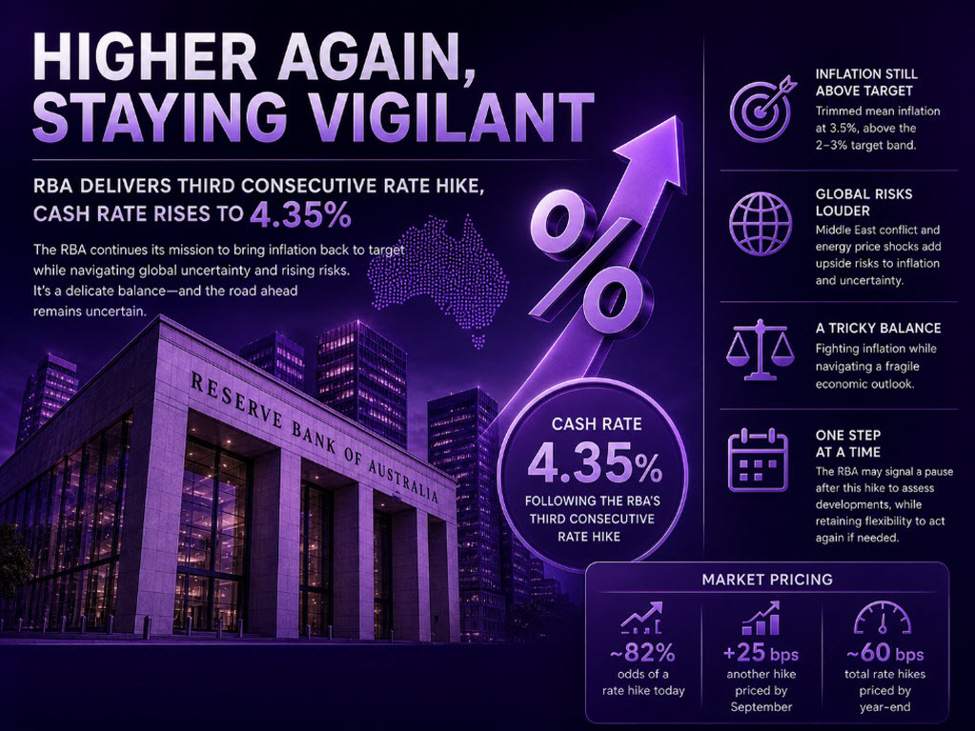
In bringing the cash rate back to 4.35%, the RBA will have essentially reversed its brief easing cycle in 2025. This will then bring interest rates back to the recent peak levels seen during 2024, which followed from rate hikes during 2022 to 2023. So much for being done with the battle against inflation, eh?Any further rate hikes after today will see the cash rate move back to levels last seen during 2011. And if it does hit the 5% threshold, that will be the highest since 2008. Given that backdrop, it is going to be a very tricky situation for the RBA in communicating their next steps and how they are viewing the balance between high rates and the economic outlook.But for now, it’s all about taking things one step at a time.As a reminder, the RBA has already been on a hawkish tilt since the turn of the year with core inflation keeping well above their target band of 2% to 3%. The latest trimmed mean reading sits at 3.5% and policymakers were already worried about inflation pressures getting out of hand before the war.So when you add in the impact of higher energy prices from the US-Iran conflict, it just adds upside risks to the whole picture.That being said, the war also complicates things a fair bit. And it’s not just for the RBA, but for all major central banks. There’s a fine balance to be struck and it may be prudent to buy as much time as possible in waiting for more clarity. That especially since there is still no end to the conflict and the Strait of Hormuz situation remains as it is for over two months now.As such, it may be possible for the RBA to switch up their language a little today. After delivering another 25 bps rate hike, the central bank could lean towards signaling a pause in wanting to gather more certainty from Middle East developments. However, expect them to communicate that they will maintain optionality and flexibility to act again if needed in the months ahead.That especially since they will bring interest rates back to a more restrictive level and give themselves some legroom to work with. The only question is, will that be enough considering an already more inflationary backdrop prior to the war and now having to factor in the potential risks of second round effects?There’s value in waiting but there’s also great risk in waiting too long. But compared to other major central banks, perhaps not being able to cut interest rates as much previously was a blessing in disguise. That being said, it may end up being a double-edged sword if they’re not careful in dealing with the latest situation.As things stand, traders are pricing in ~82% odds of a rate hike today with a second 25 bps rate hike priced in by September. By year-end, there’s a total of ~60 bps of rate hikes priced in for the RBA.
This article was written by Justin Low at investinglive.com.
💡 DMK Insight
The RBA’s decision to raise the cash rate back to 4.35% signals a shift in monetary policy that traders need to watch closely. This reversal of the easing cycle could have significant implications for both the forex and crypto markets. Higher interest rates typically strengthen the local currency, which could lead to a stronger Australian dollar against its peers. For forex traders, this means monitoring AUD/USD closely for potential bullish setups. Additionally, the ripple effect on crypto could be notable; as interest rates rise, risk appetite often diminishes, potentially leading to downward pressure on digital assets. It’s worth noting that this move comes after a period of rate hikes from 2022 to 2023, suggesting that the RBA is responding to persistent inflationary pressures. Traders should keep an eye on upcoming economic indicators, particularly inflation data, as these will likely dictate future monetary policy shifts. Watch for key levels in AUD/USD around recent highs and lows to gauge market sentiment.
📮 Takeaway
Monitor AUD/USD for bullish setups as the RBA’s rate hike to 4.35% could strengthen the Australian dollar and impact risk assets.