 Bitcoin
  Ethereum
  Tether
  XRP
XRP  BNB
BNB  USDC
USDC  Solana
  TRON
TRON  Lido Staked Ether
  Dogecoin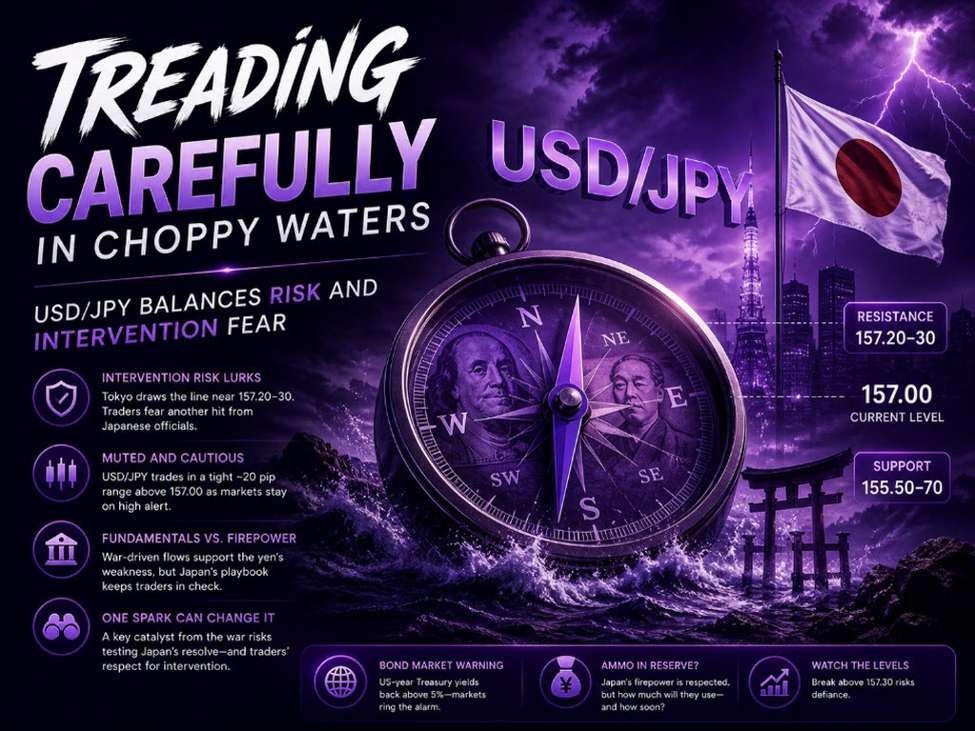
It’s a tricky moment for USD/JPY as traders adopting a more cautious approach so far today. While the yen continues to be punished by the US-Iran conflict, the dollar side of the equation is also keeping firmer as the war drags on. Adding to that now is the bond market starting to ring the alarm bells with 30-year Treasury yields crossing back above the 5% threshold.The fundamental backdrop continues to work against the yen and that is a tough landscape to go up against. And Tokyo officials surely know that very well. They have more than likely stepped into the market a few times already since last Thursday but that hasn’t done much to keep USD/JPY pinned down. In fact, we’re starting to see a bit of a pattern now:The last few hits seem to come around 157.20 levels and that is precisely where we’re holding since Asia trading today. The pair is trading in a very muted range of just 20 pips since the open. Yes, it was also a Japanese market holiday but the price action above mostly reflects the kind of caution among traders in not wanting to push things too far.With Japan’s ministry of finance (MOF) already appearing to draw a line on any move above the 157.20-30 region, traders are surely fearing that they might incur the wrath of Tokyo officials in knocking the pair back down again.That being said, there’s still downside support closer to 155.50-70 levels. So, that remains a key region that the MOF has to get the BOJ to help them break through in doing their bidding. For now, traders are still respecting the fire power that Japan might have in pushing back against any further upside move.However, I fear all it takes is one key catalyst from the war and it risks raising the defiance among market players towards Japan’s playbook. If that happens, it is up to the MOF then to decide how hard it wants to go next in shooting down USD/JPY buyers or otherwise risk wasting all their ammunition since last week. This article was written by Justin Low at investinglive.com. 🔗 Source 💡 DMK Insight USD/JPY is at a crossroads, and here’s why that matters: the ongoing US-Iran conflict is weighing heavily on the yen, while the dollar remains resilient. Traders are sensing increased volatility as geopolitical tensions escalate, leading to a cautious stance on both sides. The bond market’s reaction is crucial; if yields continue to rise, it could bolster the dollar further, creating a stronger upward pressure on USD/JPY. Watch for key resistance levels around recent highs, as a break could trigger a surge in buying interest. Conversely, if the yen finds support amid risk-off sentiment, we might see a pullback. Keep an eye on economic indicators from both the US and Japan, as they could shift sentiment quickly. The real story is how the bond market dynamics interplay with geopolitical risks, potentially leading to rapid price movements. Monitor the 10-year Treasury yields closely as they could signal shifts in dollar strength against the yen. 📮 Takeaway Watch for USD/JPY resistance levels; a break could signal a bullish trend, while support in the yen could lead to a pullback.

Indian Rupee flirts with new record lows as US-Iran stalemate extends, tensions rise
FUNDAMENTAL OVERVIEWUSD:The US dollar started the week on a positive note following rising tensions in the Strait of Hormuz. Yesterday, we got reports and denials about Iran firing on US ships in the Strait which gave the greenback a boost. Trump said the US sank 6 Iranian fast boats while Iran denied it. Iran also launched a surprise attack against the UAE oil route that bypasses the Strait of Hormuz in Fujairah. This latest escalation is likely to keep the US dollar supported as the risk sentiment stays more on the defensive. Trump has played things down for now, but the situation could worsen quickly. Overall, we are now in a consolidation phase as we await the next key development in this US-Iran stalemate. The Fed is slowly abandoning the easing bias amid resilient US data and elevated energy prices. The reopening of the Strait could weigh on the greenback in the short-term as oil prices will likely crater and rate cut bets will increase. After that though, the focus will quickly turn back to the Fed and the economic data. With the end of the war, the increase in economic activity could keep inflation higher for longer and eventually even require rate hikes to bring it sustainably back to the 2% target that the Fed has been missing since 2021.INR:On the INR side, the US-Iran stalemate and rising tensions in the Strait of Hormuz keep weighing on the currency as the Indian Rupee now flirts with new record lows against the greenback.The INR will likely remain under pressure as long as the situation in the Strait of Hormuz remains unresolved. In the big picture, the Indian Rupee remains on a bearish structural trend against the US dollar, so the dip-buyers will likely look for opportunities around strong technical levels to keep pushing into new highs. USDINR TECHNICAL ANALYSIS – DAILY TIMEFRAMEOn the daily chart, we can see that USDINR has now basically reached the March high around the 96.00 handle. This is where we can expect the sellers to step in with a defined risk above the high to position for a drop back into the upper bound of the channel. The buyers, on the other hand, will look for a break to increase the bullish bets into new highs.USDINR TECHNICAL ANALYSIS – 4 HOUR TIMEFRAMEOn the 4 hour chart, we have an upward trendline defining the current momentum. We can expect the buyers to continue to lean on the trendline with a defined risk below it to keep pushing into new highs. The sellers, on the other hand, will look for a break to pile in and target a drop back into the upper bound of the channel.USDINR TECHNICAL ANALYSIS – 1 HOUR TIMEFRAMEOn the 1 hour chart, there’s not much we can add here as the buyers will likely continue to lean on the trendline to keep pushing into new highs, while the sellers will look for a rejection around the March high or wait for a break below the trendline to position for new lows.UPCOMING CATALYSTSToday we get the US ISM Services PMI and the US Job Openings data. Tomorrow, we have the US ADP report. On Thursday, we get the latest US Jobless Claims figures. On Friday, we conclude the week with the US NFP report and University of Michigan Consumer Sentiment survey. This article was written by Giuseppe Dellamotta at investinglive.com. 🔗 Source 💡 DMK Insight Rising tensions in the Strait of Hormuz are pushing the US dollar higher, and here’s why that matters: The recent reports of military confrontations have created a risk-off sentiment among traders, leading to a flight to safety in the dollar. This geopolitical instability often results in increased volatility across markets, particularly in commodities like oil, which could see price spikes. Traders should keep an eye on the correlation between the dollar and oil prices, as a stronger dollar typically pressures oil prices down, impacting related assets like energy stocks and ETFs. If the dollar continues to gain traction, we could see a test of key resistance levels, which might prompt further positioning adjustments. But don’t overlook the flip side—if tensions de-escalate, the dollar could quickly reverse course, leading to potential buying opportunities in riskier assets. Watch for any new developments in the Strait of Hormuz and how they might influence market sentiment. Key levels to monitor include the dollar index’s resistance around 105, which could signal further strength or a reversal if broken. 📮 Takeaway Keep an eye on the dollar index around 105; geopolitical developments could trigger volatility and impact related assets like oil and energy stocks.
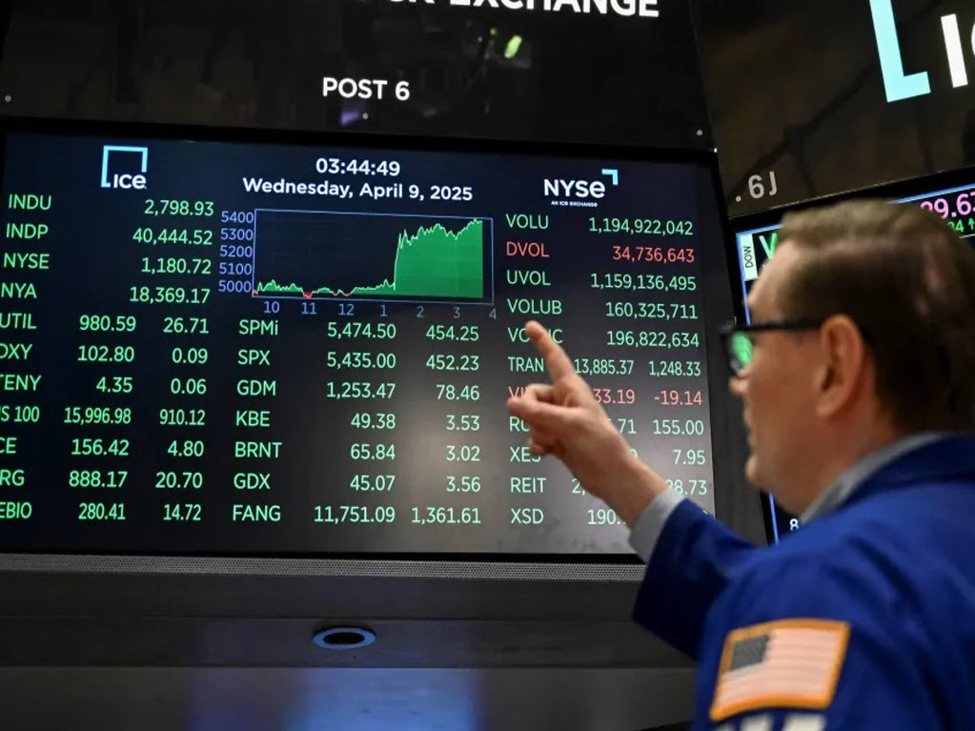
US futures keep steadier after the drop yesterday
The broader market mood continues to be driven by US-Iran developments and after the he said, she said episode yesterday, we’re seeing a rather quiet period today. The US continues to reaffirm that it is establishing some presence in the Strait of Hormuz, while Iran is maintaining that they are the ones still in control.Looking past all the noise, shipping data does not lie. There’s still less than ten vessels crossing the strait in total per day, which reflects rather muted progress. Iran’s attack on the UAE is also sparking further tensions but so far, markets are still leaning towards being more optimistic about things playing out for the better.S&P 500 futures are up 0.3% while Nasdaq futures are up 0.6% on the day. Tech shares may not feel the pinch from higher bond yields as much, but just be wary that it could be more of a factor for broader risk sentiment if this keeps up. 10-year Treasury yields are pushing to 4.42% on the week while 30-year Treasury yields is testing waters above the key 5% threshold.That might come back to bite at investors as the bond market makes its move first.For now, Wall Street will be hoping for more positive news to come. However, both the US and Iran continue to be far apart from reaching any consensus on talks. We’ll have to see how the US making inroads on the Strait of Hormuz will help with traffic. But otherwise, the complacency being shown is really adding up especially for a time when global energy supply continues to tighten further and the world economy is set to be hit hard by this prolonged stalemate. This article was written by Justin Low at investinglive.com. 🔗 Source 💡 DMK Insight The ongoing US-Iran tensions are creating a cautious atmosphere in the markets, and here’s why that matters for traders right now. With the US reinforcing its military presence in the Strait of Hormuz, traders should be on alert for potential disruptions in oil supply, which could ripple through energy markets and impact correlated assets like the USD and commodities. The geopolitical landscape is often a catalyst for volatility, and any sudden escalation could lead to sharp price movements, especially in oil futures. Look for key technical levels in crude oil; if prices break above recent highs, it could signal a bullish trend, while a drop below support levels might indicate a bearish sentiment. Additionally, keep an eye on the broader market sentiment—if tensions escalate, we might see a flight to safety in gold or the USD. The real story here is that while today feels quiet, the underlying geopolitical risks could ignite market activity at any moment. Traders should monitor news updates closely and be prepared for rapid shifts in sentiment, especially as we approach the end of the month, which often brings increased volatility in response to geopolitical developments. 📮 Takeaway Watch for any escalation in US-Iran tensions that could disrupt oil supply; key levels to monitor in crude oil are recent highs and support levels.

AUD/USD remains stuck in a range as RBA signals a pause and US-Iran stalemate extends
FUNDAMENTAL OVERVIEWUSD:The US dollar started the week on a positive note following rising tensions in the Strait of Hormuz. Yesterday, we got reports and denials about Iran firing on US ships in the Strait which gave the greenback a boost. Trump said the US sank 6 Iranian fast boats while Iran denied it. Iran also launched a surprise attack against the UAE oil route that bypasses the Strait of Hormuz in Fujairah. This latest escalation is likely to keep the US dollar supported as the risk sentiment stays more on the defensive. Trump has played things down for now, but the situation could worsen quickly. Overall, we are now in a consolidation phase as we await the next key development in this US-Iran stalemate. The Fed is slowly abandoning the easing bias amid resilient US data and elevated energy prices. The reopening of the Strait could weigh on the greenback in the short-term as oil prices will likely crater and rate cut bets will increase. After that though, the focus will quickly turn back to the Fed and the economic data. With the end of the war, the increase in economic activity could keep inflation higher for longer and eventually even require rate hikes to bring it sustainably back to the 2% target that the Fed has been missing since 2021.AUD:On the AUD side, the RBA raised the Cash Rate to 4.35% as widely expected today and signalled a pause. In fact, the central bank added in the statement the key passage “having raised the cash rate three times, monetary policy is well placed to respond to developments, and the Board is focused on its mandate to deliver price stability and full employment”. The RBA has also revised its forecasts for the Cash Rate by matching the market expectations of two more rate hikes by year-end. Governor Bullock doubled down on the more neutral tone as she stated that “the cash rate level is now a bit restrictive” and “that gives us space to see how the conflict plays out”. Finally, she added that “with this rate hike, we have space to sit and see what happens”. The market pared back some of the hawkish bets and it now see the next rate hike coming in September at the earliest. AUDUSD TECHNICAL ANALYSIS – DAILY TIMEFRAMEOn the daily chart, we can see that AUDUSD is consolidating around the cycle highs as the US-Iran stalemate keeps the price action more rangebound. From a risk management perspective, the buyers would have a much better risk to reward setup around the major trendline to position for a rally into new highs. The sellers, on the other hand, will need a break lower to open the door for new lows.AUDUSD TECHNICAL ANALYSIS – 4 HOUR TIMEFRAMEOn the 4 hour chart, we can see more clearly the consolidation phase highlighted by the blue box. The market participants will likely continue to play this range by buying at support and selling at resistance until we get a breakout on either side.AUDUSD TECHNICAL ANALYSIS – 1 HOUR TIMEFRAMEOn the 1 hour chart, there’s not much else we can add here as the sellers will have a better risk to reward setup around the resistance, while the buyers will have it around the support. The red lines define average daily range for today. UPCOMING CATALYSTSToday we get the US ISM Services PMI and the US Job Openings data. Tomorrow, we have the US ADP report. On Thursday, we get the latest US Jobless Claims figures. On Friday, we conclude the week with the US NFP report and University of Michigan Consumer Sentiment survey. This article was written by Giuseppe Dellamotta at investinglive.com. 🔗 Source 💡 DMK Insight The US dollar’s recent strength is tied to geopolitical tensions, and here’s why that matters for traders right now: Rising tensions in the Strait of Hormuz often lead to increased volatility in the forex markets, particularly for the USD. With reports of Iran firing on US ships and Trump’s claims of military action, traders should be on high alert. The dollar typically gains during geopolitical unrest as investors flock to safe-haven assets. This could impact trading strategies focused on USD pairs, especially against currencies like the Euro or Yen, which may weaken as risk aversion rises. Keep an eye on how these tensions evolve, as they could lead to significant price movements in the coming days. On the flip side, if the situation de-escalates, we might see a quick reversal in dollar strength. Traders should monitor key levels in USD pairs—if the dollar breaks above recent highs, it could signal further bullish momentum. Conversely, any signs of easing tensions could trigger a sell-off. Watch for updates from the region and be ready to adjust your positions accordingly. 📮 Takeaway Monitor USD pairs closely; a break above recent highs could signal further strength, while easing tensions might trigger a sell-off.
Oil surges as Iran strikes UAE and Hormuz risks fuel supply fears
Western Texas Intermediate (WTI), the US crude Oil benchmark, soars sharply by more than 3% on Monday amid an ongoing escalation in the Middle East, as Iran launched attacks on the United Arab Emirates (UAE), while sources cited by CNN in Dubai said that they expect attacks on Iran by the US and Isr 🔗 Source 💡 DMK Insight WTI crude’s 3% jump signals heightened geopolitical risk, and here’s why traders should pay attention: The recent surge in oil prices is directly tied to escalating tensions in the Middle East, particularly with Iran’s aggressive actions against the UAE. This kind of volatility often leads to significant price swings, making it crucial for traders to monitor not just WTI, but also related assets like Brent crude and energy stocks. Historically, similar geopolitical crises have resulted in oil prices testing key resistance levels; for WTI, the $90 mark could be a pivotal point to watch. If prices breach this level, it could trigger further buying pressure, while a failure to hold could lead to a swift correction. But don’t just focus on the upside—consider the potential for a backlash or de-escalation. If diplomatic efforts succeed, we might see a rapid pullback in prices. Keep an eye on the daily charts for any signs of reversal patterns or volume spikes, as these could indicate shifts in market sentiment. Traders should also watch for news updates on military actions or diplomatic negotiations, as these will likely dictate the short-term direction of oil prices. 📮 Takeaway Watch for WTI to test the $90 resistance level; geopolitical developments could drive significant volatility in the coming days.

China: Oil shock seen contained – Standard Chartered
Standard Chartered’s Hunter Chan and Shuang Ding expect robust external demand to support China’s April industrial production and trade, even as services and construction soften. They see higher Oil prices lifting PPI and energy CPI, while headline CPI stays at 1% year-on-year. 🔗 Source 💡 DMK Insight China’s industrial production is set to shine in April, but here’s the catch: rising oil prices could complicate the inflation narrative. While external demand is expected to bolster production, the anticipated increase in oil prices will likely push up the Producer Price Index (PPI) and energy Consumer Price Index (CPI). This could create a divergence between the headline CPI, which remains stagnant at 1% year-on-year, and the underlying inflation pressures from energy costs. Traders should keep an eye on how these dynamics play out, especially in commodities like crude oil, which could see volatility as they react to these economic indicators. If oil prices spike significantly, it could lead to increased costs for manufacturers, potentially squeezing margins and impacting stock prices across sectors. Watch for any shifts in oil prices and their correlation with industrial production figures. A breakout above key resistance levels in oil could signal broader inflationary pressures, which might prompt central banks to adjust their monetary policies sooner than expected. 📮 Takeaway Monitor oil price movements closely; a breakout could signal rising inflation pressures impacting industrial production and broader market sentiment.
EUR/USD slides as Middle East tensions and Fed hike bets boost US Dollar
The Euro (EUR) trades on the back foot against the US Dollar (USD) on Monday as reports of renewed attacks in the Middle East lift the Greenback. 🔗 Source 💡 DMK Insight The Euro’s weakness against the Dollar highlights a critical risk-off sentiment in the market right now. With renewed geopolitical tensions in the Middle East, traders are flocking to the safety of the USD, which could lead to further downside for the EUR. This situation is exacerbated by the ongoing divergence in monetary policy between the European Central Bank and the Federal Reserve. If the EUR/USD pair continues to slide, watch for key support levels around recent lows, as a break could trigger a wave of selling. Additionally, keep an eye on related assets like commodities, which often react to shifts in currency strength. The real story is how long this risk-off sentiment will last; if tensions escalate, we could see a more prolonged Dollar strength, impacting not just the Euro but also other currencies and commodities in the process. 📮 Takeaway Monitor the EUR/USD pair closely; a break below recent support levels could signal further Dollar strength amid rising geopolitical tensions.
Fed’s Williams: Inflation likely to be 3% this year
John Williams, President of the Federal Reserve (Fed) Bank of New York, said in a prepared speech at the Cynosure Group Spring Symposium in New York, United States (US) on Monday, that there is no way to know yet how the Iran war impact will play out for the United States economy. 🔗 Source 💡 DMK Insight John Williams’ comments on the uncertain impact of the Iran war on the US economy are a wake-up call for traders. With geopolitical tensions rising, particularly in the Middle East, traders need to brace for volatility across multiple asset classes. The Fed’s stance, especially with inflation still a concern, could lead to shifts in monetary policy if the situation escalates. This uncertainty might affect the dollar’s strength, which is already under pressure from mixed economic data. If the conflict intensifies, we could see a flight to safe-haven assets like gold and the Swiss franc, while riskier assets may face sell-offs. Keep an eye on key levels for the dollar index and gold—any significant moves could signal broader market trends. Here’s the thing: while mainstream coverage may focus on immediate impacts, the longer-term implications for interest rates and inflation could be more significant. Traders should monitor economic indicators closely, especially any shifts in Fed policy that could arise from this geopolitical instability. 📮 Takeaway Watch for volatility in the dollar and gold prices as geopolitical tensions rise; key levels to monitor are the dollar index and gold’s resistance around recent highs.

Taiwan: Growth momentum and LNG risks – DBS
DBS Group Research economist Ma Tieying upgrades Taiwan’s 2026 GDP growth forecast to 9.4% from 7.0%, citing stronger-than-expected AI-driven exports and resilient ICT demand. The report notes robust first-quarter GDP and expects quarterly growth to moderate later in 2026. 🔗 Source 💡 DMK Insight Taiwan’s GDP growth forecast just got a serious boost, and here’s why that matters: An upgrade from 7.0% to 9.4% in Taiwan’s 2026 GDP growth signals a significant shift in economic momentum, driven largely by AI-driven exports and strong demand in the ICT sector. For traders, this could mean a bullish outlook on Taiwanese equities and related tech stocks, especially those involved in AI and ICT. Keep an eye on the TAIEX index and major tech players like TSMC, as they might see increased buying interest. But don’t overlook the cautionary note about potential moderation in quarterly growth later in 2026. This could indicate volatility in the market as expectations adjust. If the quarterly growth starts to slow, it might lead to profit-taking or a shift in sentiment. Traders should watch for key resistance levels in the TAIEX and any shifts in export data that could signal a change in the underlying economic conditions. The real story is how these forecasts play out against global economic trends, particularly in the tech sector, which is notoriously sensitive to broader market shifts. 📮 Takeaway Watch Taiwan’s TAIEX index closely; a bullish trend could emerge if GDP growth holds above 9%, but be prepared for potential volatility later in 2026.

ECB’s Nagel: June rate hike may be warranted if the inflation outlook does not improve
Joachim Nagel, member of the European Central Bank (ECB) and President of the Bundesbank, spoke in Frankfurt am Main, Germany, on Monday. He said that the longer the Middle East conflict lasts, the greater the risk of high inflation will reimain without ECB intervention. 🔗 Source 💡 DMK Insight Nagel’s warning about prolonged Middle East conflict highlights inflation risks that could shake markets. For traders, this is a crucial moment. If the ECB feels pressured to intervene, we could see shifts in monetary policy that directly impact the euro and related assets. Inflationary pressures often lead to volatility in forex pairs, especially EUR/USD. Keep an eye on inflation indicators and ECB comments in the coming weeks. If inflation data shows unexpected spikes, it could trigger a hawkish stance from the ECB, leading to euro strength against the dollar. But here’s the flip side: if the conflict escalates, risk-off sentiment could drive investors toward safe havens like the dollar and gold, potentially weakening the euro. Watch for key levels in EUR/USD; a break below recent support could signal further downside. The next inflation report will be pivotal, so mark your calendars and stay alert for ECB communications. 📮 Takeaway Monitor EUR/USD closely; a break below support could signal further euro weakness if inflation pressures rise.