
 Bitcoin
  Ethereum
  Tether
  XRP
XRP  BNB
BNB  USDC
USDC  Solana
  TRON
TRON  Lido Staked Ether
  Dogecoin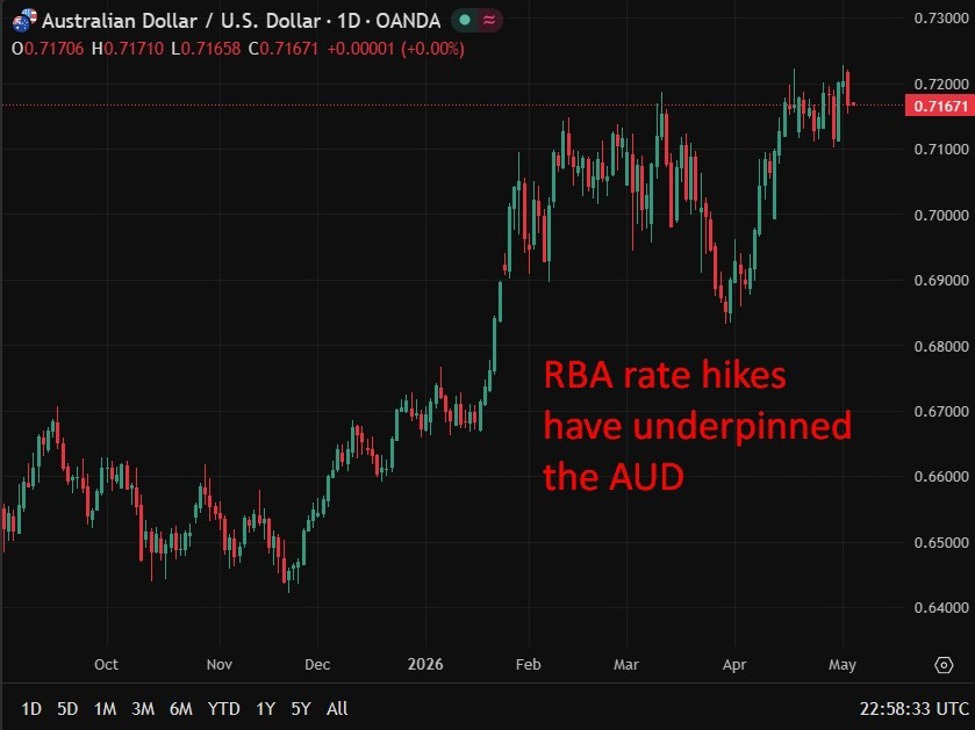
Australia’s services PMI rose to 50.7 in April from 46.3 in March, but new orders fell for a second month and input price inflation hit its fastest pace since August 2022, driven by Middle East fuel costs.Summary:The S&P Global Australia Services PMI Business Activity Index rose to 50.7 in April from 46.3 in March, returning to expansion territory after a contraction in the prior month, per the S&P Global releaseNew orders fell for a second consecutive month in April, with the pace of decline marginally faster than in March, with respondents citing higher fuel costs linked to the Middle East war as a key driver, according to S&P GlobalInput price inflation accelerated sharply in April to its fastest pace since August 2022, with more than 43% of respondents reporting rising input costs, while output price inflation hit its fastest rate since January 2023 as firms passed costs on to customers, per the surveyBusiness activity growth was confined to just two of the five monitored sectors, information and communication and consumer services, while transport and storage, finance and insurance, and real estate and business services all contracted, according to the releaseStaffing levels rose for the sixteenth consecutive month in April, at a pace quicker than March, helping firms work through backlogs which fell at their sharpest rate since November 2024, per S&P GlobalThe Composite Output Index returned to expansion at 50.4 in April from 46.6 in March, though business sentiment eased again to its lowest level in 22 months, according to the surveyS&P Global Economics Director Andrew Harker warned that the sustainability of the activity and employment expansions remains in question given falling new orders and intensifying inflationary pressures, and said the outlook hinges on how the Middle East conflict and Hormuz disruption evolveAustralia’s services sector returned to growth in April, but the recovery rests on uncertain foundations, with new orders falling for a second straight month and fuel-driven inflation surging to its highest level in nearly four years as the economic consequences of the Middle East war continue to ripple through the Asia-Pacific region.The S&P Global Australia Services PMI Business Activity Index rose to 50.7 in April from 46.3 in March, crossing back above the 50.0 threshold that separates expansion from contraction. The rebound was driven primarily by sustained job creation rather than demand, with rising staffing levels allowing firms to process existing work even as the flow of new business continued to weaken. Employment has now grown in sixteen consecutive months, and the pace of hiring accelerated in April relative to March.The demand picture, however, remains troubled. New orders declined for a second successive month, and the pace of that decline was marginally faster than in March. Survey respondents identified the Middle East war as a central factor, particularly through its impact on fuel costs, which are feeding directly into purchase decisions and dampening client appetite. International new business offered a partial offset, ticking higher in April after a solid contraction in March, but not by enough to compensate for the domestic shortfall.The inflationary dimension of the report is its most significant element for the broader economic outlook. Input price inflation accelerated sharply in April to its fastest pace since August 2022, with more than 43% of respondents signalling higher costs during the month. Firms in transport and storage recorded the steepest input cost increases of any sector covered, reflecting their direct exposure to fuel price movements, and also led on selling price inflation. Across the services sector as a whole, output prices rose at the fastest rate since January 2023 as businesses moved to recover margin through higher charges to customers.The combination of rising costs and falling new orders produced a bifurcated sectoral picture. Activity growth was confined to information and communication and consumer services, while transport and storage, finance and insurance, and real estate and business services all contracted. The breadth of the slowdown in activity outside those two sectors underlines how unevenly the fuel cost shock is being distributed across Australia’s service economy.At the composite level, which combines services and manufacturing, the Output Index also returned to expansion at 50.4 from 46.6 in March. Manufacturing production continued to fall, however, meaning the composite recovery is entirely services-dependent and therefore vulnerable to the same demand and inflation pressures weighing on that sector.Business sentiment deteriorated further in April, reaching its lowest point in 22 months despite the headline activity rebound. Firms cited hopes for a swift resolution to the Middle East conflict as a precondition for a recovery in new orders, but confidence that such a resolution is imminent was notably absent. S&P Global’s Economics Director Andrew Harker captured the tension at the heart of the data, noting that the key question is whether the improvements in activity and employment can be sustained against a backdrop of falling demand and intensifying cost pressures, with the answer depending heavily on how the conflict and the disruption around the Strait of Hormuz develop in the months ahead.–The acceleration in Australian input price inflation to its fastest pace since August 2022 is a direct transmission of Middle East energy disruption into a major Asia-Pacific economy, and will complicate the Reserve Bank of Australia’s rate calculus at a moment when domestic demand signals are already softening. The fact that more than 43% of survey respondents flagged rising input costs in a single month points to the breadth as much as the depth of the inflationary impulse. Transport and storage firms bearing the steepest cost increases will face the sharpest margin compression, with price pass-through to customers already running at its fastest since January 2023. Business sentiment sitting at a 22-month low despite a technical return to activity growth suggests the headline PMI rebound will carry limited weight with markets assessing the durability of Australia’s services expansion.-Still to come later, the Reserve Bank of Australia decision, due at 0430 GMT / 0030 US Eastern time. Governor Bullock will spaeak an hour later:CBA tips RBA rate hike tomorrow but warns Iran war makes
US edges closer to resuming Iran combat as ceasefire holds by a thread
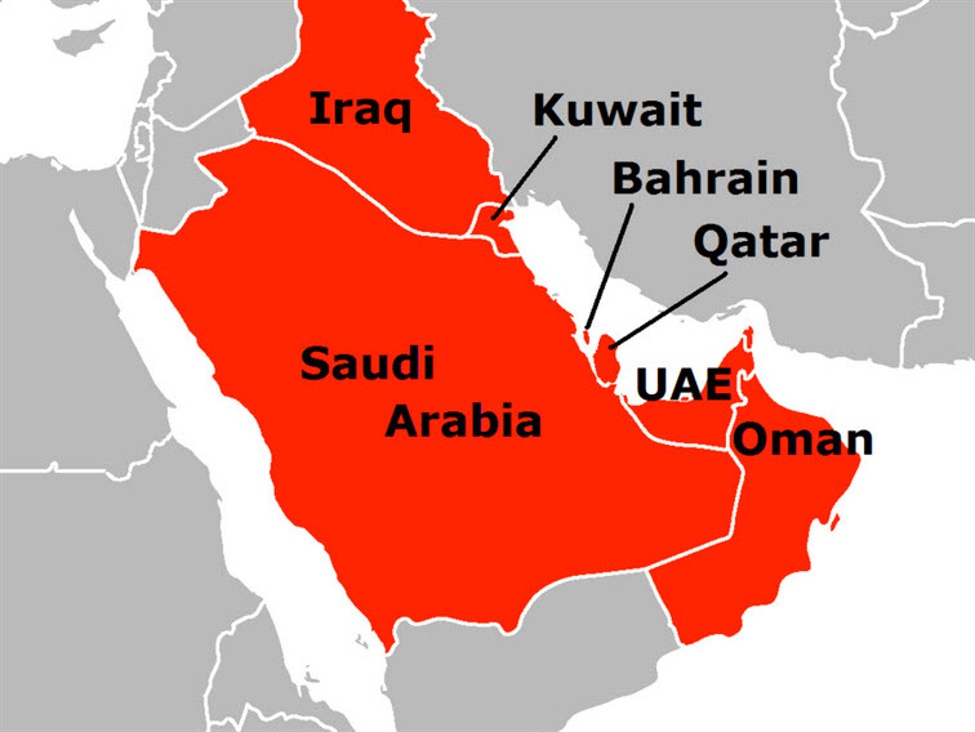
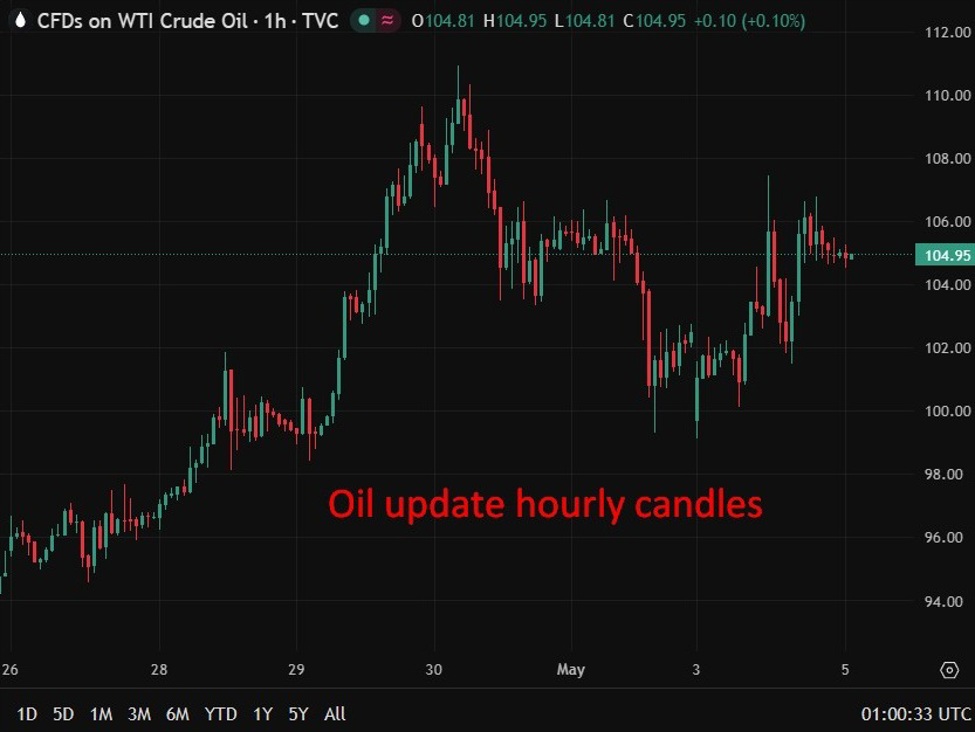
The US is closer to resuming major combat operations against Iran than it was 24 hours ago after Iranian forces fired on US vessels and struck UAE targets, senior officials told Fox News, as the ceasefire holds but frays.Senior US officials told Fox News chief national security correspondent Jennifer Griffin that the US is closer to resuming major combat operations against Iran than it was 24 hours earlier, following Iranian attacks on US vessels and UAE territory using missiles, drones and fast boatsThe assessment came as the Strait of Hormuz ceasefire was being tested at the outset of Project Freedom, per the Fox News reportOfficials said the final decision on whether to resume military operations rests with President Donald Trump and Iran’s new leadership, with no orders to end the ceasefire having been issued, according to Fox NewsThe US military has been described as standing ready to respond and as rearmed and retooled, though its current focus remains on defensive operations to protect vessels in the Gulf, per senior officials cited by Fox NewsNo orders to restart the bombing campaign have been received and officials confirmed there has been no un-pausing of the ceasefire, according to the reportThe United States is edging toward a resumption of major combat operations against Iran, senior officials warned on Monday, after Iranian forces fired on US naval vessels and launched missile, drone and fast boat attacks against the UAE during an active ceasefire, bringing the fragile pause in hostilities to its most dangerous moment since it began.The warnings were delivered to Fox News chief national security correspondent Jennifer Griffin, with officials stating directly that the US is closer to resuming large-scale military operations than it was 24 hours prior. The deterioration came as the ceasefire in the Strait of Hormuz was being tested at the start of Project Freedom, a development that has placed the durability of the pause in hostilities under immediate and acute pressure.Despite the gravity of the incidents, officials were careful to draw a distinction between proximity to resumed combat and a decision to resume it. No orders to end the ceasefire have been given, they said, and no instruction to restart the bombing campaign has been received. The ceasefire, in their characterisation, has not been un-paused. For now, US military attention remains fixed on defensive operations, with forces focused on protecting American and allied vessels operating in the Gulf.The decision on whether that defensive posture converts into renewed offensive action rests, officials said, with President Donald Trump and Iran’s new leadership. The framing places the outcome in the hands of two decision-makers whose calculations are at present opaque. Trump has consistently signalled willingness to use military force while leaving room for negotiated outcomes, and Iran’s new leadership inherits a conflict whose trajectory they did not initiate but must now manage.What is not in question is the military readiness of US forces in the theatre. Officials described the military as rearmed and retooled, language that signals the logistical and operational preparation for resumed combat is complete. The constraint is political, not military, and that constraint is now being stress-tested by Iranian actions that, under almost any conventional framework, would constitute a breach of ceasefire terms.The combination of Iranian aggression against US forces and Gulf state territory, a US military poised to respond, and a political decision point sitting with two unpredictable leaderships creates the most volatile set of conditions the region has faced since the conflict began. Energy markets, which have been pricing a degree of Hormuz disruption but not an outright resumption of major combat, may be materially underweight the risk that the next 24 to 48 hours brings a decisive and rapid change in the situation.– Iranian attacks on US naval vessels and UAE territory during an active ceasefire represent a qualitative escalation that markets will struggle to absorb calmly. The confirmation that the US military is rearmed, retooled and in a defensive posture in the Gulf raises the immediate risk premium on Strait of Hormuz transit to its highest point since the conflict began. Any decision by Trump or Tehran to resume major combat operations would almost certainly trigger an acute supply shock across Gulf energy infrastructure, with Hormuz closure or further restriction the most immediate price catalyst. The fact that no ceasefire termination order has been given offers thin comfort: the gap between defensive posture and resumed offensive operations has narrowed to a matter of presidential or Iranian leadership decision, with no buffer of process or negotiation visibly in place. This article was written by Eamonn Sheridan at investinglive.com. 🔗 Source 💡 DMK Insight Tensions with Iran are escalating, and here’s why that matters for traders: geopolitical risks can trigger volatility in oil and forex markets. With the US potentially resuming combat operations, traders should keep an eye on crude oil prices, which often react sharply to Middle Eastern conflicts. A spike in oil could lead to increased inflation concerns, impacting the USD and other currencies. If oil breaches key resistance levels, say above $90 per barrel, expect a ripple effect across energy stocks and related commodities. Additionally, forex pairs like USD/IRR could see significant movement as sanctions and military actions unfold. It’s worth noting that while some traders might see this as a buying opportunity in energy sectors, the flip side is the risk of a broader market sell-off if tensions escalate further. Watch for any announcements from the US government or military, as these could serve as catalysts for immediate market reactions, particularly in the next few days as the situation develops. 📮 Takeaway Monitor crude oil prices closely; a breach above $90 could signal increased volatility in energy markets and related forex pairs.
Trump tariff refunds to begin May 12 as CBP processes $166bn in claims
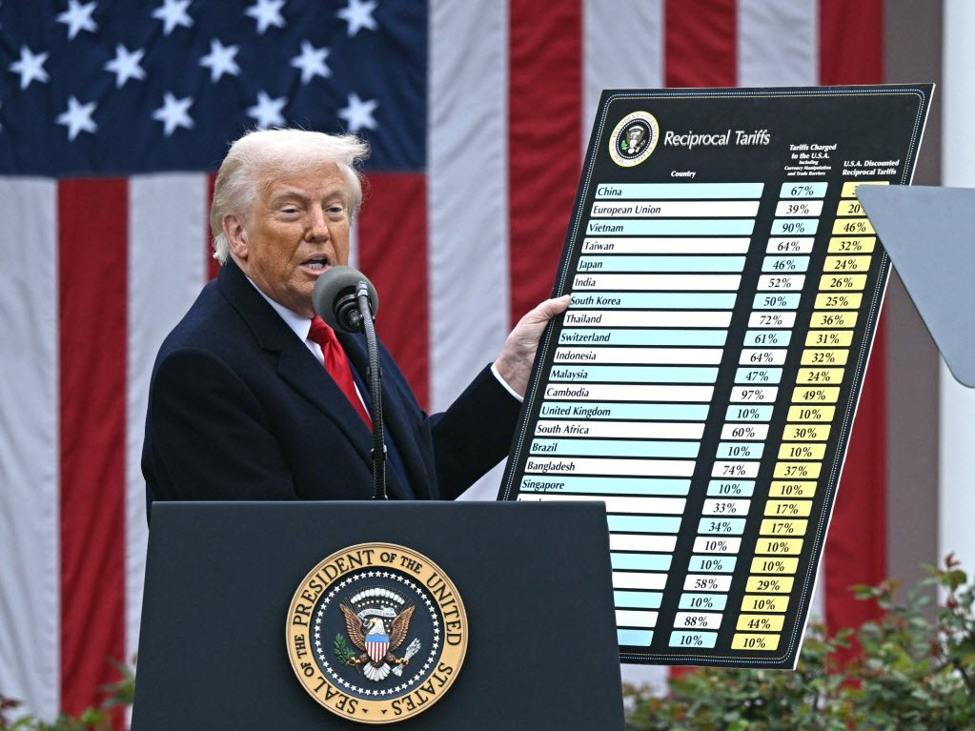
US Customs and Border Protection says the first electronic refunds from tariffs ruled illegal by the Supreme Court will begin as early as May 12, with up to $166bn in collected duties subject to repayment. Summary:US Customs and Border Protection said on Monday that the first electronic refunds from tariffs ruled illegal by the Supreme Court will begin as early as May 12, one day later than a prior estimate, per the CBP announcementThe revised start date for Automated Clearing House payments was disclosed in a message to shippers that also announced the availability of status reports allowing claimants to track refund processing, according to the CBPA Court of International Trade order last week had indicated refunds would begin around May 11, with no explanation given for the one-day delay, per the reportUp to $166 billion in CBP collections derived from tariffs imposed under the International Emergency Economic Powers Act are subject to repayment following the Supreme Court ruling, according to the reportThe Supreme Court ruled that President Trump exceeded his authority in using the 1977 IEEPA sanctions law as the legal basis for imposing the tariffs, per the ruling The United States is preparing to begin repaying up to $166 billion in tariff receipts after the Supreme Court ruled that President Donald Trump exceeded his legal authority in imposing them, with Customs and Border Protection confirming the first electronic refunds will flow as early as May 12.CBP announced the revised start date in a communication to shippers that also introduced status reporting tools allowing claimants to monitor where their refund stands in the processing queue. The one-day slip from an earlier May 11 estimate, set out in a Court of International Trade order last week, was offered without explanation.The tariffs in question were levied under the International Emergency Economic Powers Act, a 1977 law designed as a sanctions mechanism that the Trump administration repurposed as the legal foundation for sweeping import duties. The Supreme Court determined that using IEEPA in that way exceeded presidential authority, invalidating the collections and triggering the repayment obligation now working its way through CBP’s systems.The ruling carries consequences well beyond the refund mechanics. IEEPA had become a central instrument of Trump’s trade policy, and its judicial invalidation removes one of the administration’s most flexible tools for applying tariff pressure without congressional approval. The $166 billion figure represents the cumulative collections subject to challenge, making this one of the largest forced fiscal reversals in recent US trade history.For businesses that paid the duties, the refunds arrive after months of margin pressure and supply chain adjustment undertaken on the assumption that the tariffs were a permanent feature of the trading environment. The May 12 start date marks the beginning of what is likely to be a lengthy disbursement process given the volume of claims involved. — A $166 billion refund pipeline flowing back to importers represents a meaningful, if one-off, liquidity injection into the US corporate sector, with the largest beneficiaries likely to be high-volume goods importers in retail, electronics and manufacturing. The scale of the refunds also underscores the fiscal cost of the Supreme Court’s ruling for the US government, removing a significant revenue stream that had been factored into near-term budget projections. For trade policy, the ruling and its financial consequences narrow the administration’s room to use IEEPA as a tariff mechanism going forward, potentially shifting leverage in ongoing trade negotiations. Currency and bond markets will be watching whether the refund disbursements affect Treasury issuance planning in the weeks ahead. This article was written by Eamonn Sheridan at investinglive.com. 🔗 Source 💡 DMK Insight The upcoming electronic refunds from tariffs could shake up market dynamics significantly. With the Supreme Court ruling on these tariffs, traders should be aware that up to $166 billion in duties is set for repayment, which could lead to increased liquidity in the market. This influx of capital might influence consumer spending and investment patterns, particularly in sectors heavily impacted by tariffs, like manufacturing and retail. If companies receive these refunds, they might reinvest in their operations or pass savings to consumers, potentially boosting economic activity. Keep an eye on how this affects related assets, especially those in the commodities and import-heavy sectors. On the flip side, there’s a risk that the market overreacts to the news, leading to volatility as traders speculate on the broader economic implications. Watch for key price levels in sectors affected by tariffs, and consider monitoring consumer sentiment indicators as these refunds roll out. The timing is crucial; May 12 is just around the corner, so prepare for potential market shifts leading up to and following this date. 📮 Takeaway Watch for market reactions around May 12 as $166 billion in tariff refunds could impact liquidity and consumer spending.
S&P 500 target of 7,600 reaffirmed as Goldman warns on inflation and rate cut constraints
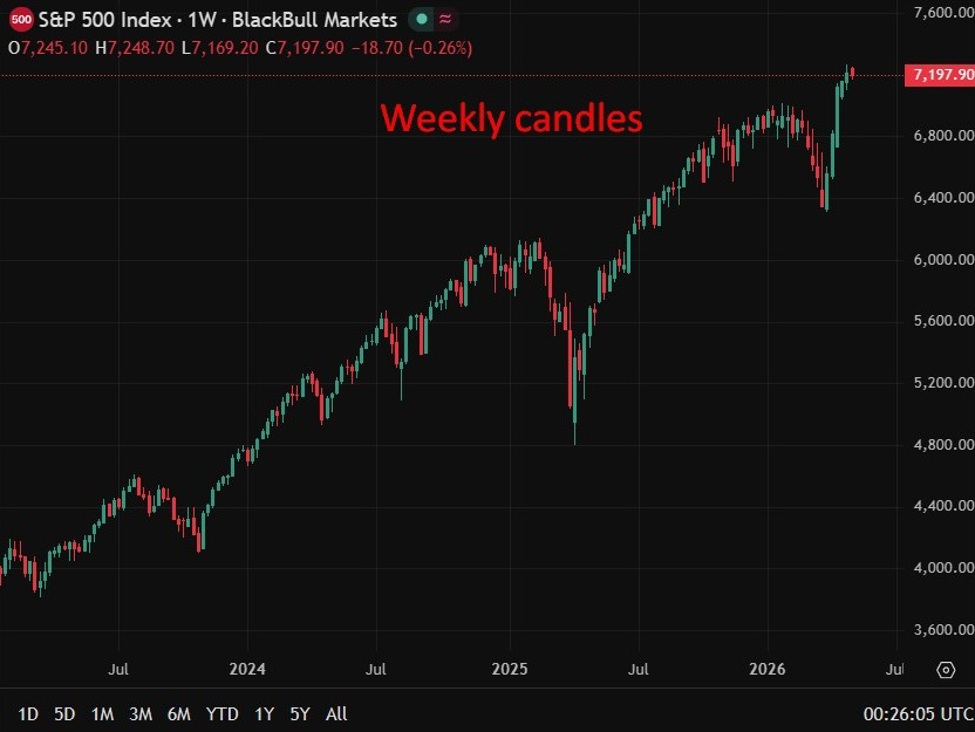
Goldman Sachs strategist Tony Pasquariello says the US equity bull market primary trend remains higher but flags energy prices as a clear danger and warns risk-reward has deteriorated after a historic Nasdaq rally.Summary:Goldman Sachs strategist Tony Pasquariello told clients on Monday that the primary trend in US equities remains higher, supported by five consecutive weeks of gains that reversed five prior down weeks, driven by resilient economic data, strong earnings and improved sentiment following a ceasefire announcement, per the client noteFirst-quarter earnings growth more than doubled expectations, with 61% of S&P 500 companies beating estimates by more than one standard deviation and only 5% missing by that margin, the best such performance outside the 2021 reopening in 25 years, according to PasquarielloGoldman’s baseline forecast calls for 2.1% GDP growth and 12% earnings growth, with the S&P 500 seen rising from around 7,200 to 7,600, per the notePasquariello cautioned that risk-reward has become less attractive following the Nasdaq 100’s 15.6% monthly gain, its largest in more than 23 years, and noted that systematic investors have largely completed their buying, according to the noteThe strategist flagged energy prices as a clear-and-present danger to the bullish outlook, and warned that inflation could constrain the Federal Reserve from delivering additional rate cuts, per the client notePasquariello recommended a long delta, long vol positioning construct, advising investors to hold high-conviction names while using cheap options to build hedges, according to Goldman SachsGoldman Sachs strategist Tony Pasquariello reaffirmed a bullish outlook for US equities on Monday while delivering a pointed warning that energy prices represent a clear and present danger to that view, as the firm held its S&P 500 target at 7,600 against a backdrop of deteriorating risk-reward following a historic technology rally.In a note to clients, Pasquariello described the primary trend in US equities as higher, pointing to five consecutive weeks of gains that fully reversed the losses from five prior down weeks. The recovery was driven by a combination of resilient economic data, strong corporate earnings and a lift in market sentiment following a ceasefire announcement. Initial jobless claims hitting their lowest level since 1969 and first-quarter earnings growth that more than doubled expectations added weight to the constructive case, with 61% of S&P 500 companies beating estimates by more than one standard deviation, the best such reading outside the 2021 reopening in 25 years.Goldman’s baseline calls for 2.1% GDP growth and 12% earnings growth this year, with the S&P 500 climbing from its current level of around 7,200 to 7,600. Pasquariello was unambiguous on the macro direction: it is a bull market and the primary trend is higher.The caution, however, is real. The Nasdaq 100’s 15.6% monthly gain, its largest in more than 23 years, has consumed the systematic buying that typically amplifies momentum moves, leaving the index without that mechanical tailwind. Risk-reward, Pasquariello said, has become less attractive at current levels. Inflation remains a constraint on the Fed’s ability to cut rates further, limiting a key pillar of the equity bull case.Most notably, Pasquariello singled out energy prices as a clear-and-present danger, a formulation that places the oil price shock near the top of the risk distribution for US equities. His recommended response was a long delta, long vol construct: maintain exposure to high-conviction positions but use the current period of relatively cheap options to build hedges against a deteriorating scenario. –Pasquariello’s energy-as-clear-and-present-danger framing is the most pointed signal in the note, and sits uncomfortably alongside a 7,600 S&P 500 target that assumes the inflationary impulse from higher oil remains contained. If energy prices continue to rise, the Fed’s already-constrained easing path narrows further, removing the rate cut tailwind that has supported equity valuations through the recent rally. The Nasdaq 100’s 15.6% monthly gain, the largest in over 23 years, has absorbed much of the systematic buying that typically follows momentum signals, leaving the index more reliant on fundamental earnings delivery than technical flows for its next leg. The long delta, long vol positioning recommendation is telling: Goldman is not abandoning the bull case, but is explicitly hedging against a scenario where the macro backdrop deteriorates faster than the baseline assumes. This article was written by Eamonn Sheridan at investinglive.com. 🔗 Source 💡 DMK Insight Goldman Sachs’ Tony Pasquariello just highlighted a crucial risk for traders: rising energy prices. While the overall trend in US equities is still bullish, the warning about energy costs signals potential volatility ahead. If energy prices continue to climb, sectors heavily reliant on these inputs could face margin pressures, impacting earnings forecasts and overall market sentiment. The recent Nasdaq rally has set high expectations, but with risk-reward dynamics shifting, traders might want to reassess their positions. Keep an eye on energy futures and related stocks, as any significant movement could trigger broader market reactions. Here’s the thing: if energy prices break key resistance levels, it could lead to a sell-off in equities, especially in tech-heavy indices like the Nasdaq. Watch for any shifts in oil prices and their correlation with equity performance, particularly in the coming weeks as earnings reports roll out. The next few trading sessions could be pivotal. 📮 Takeaway Monitor energy prices closely; a breakout could signal a shift in equity market dynamics, especially for tech stocks post-Nasdaq rally.
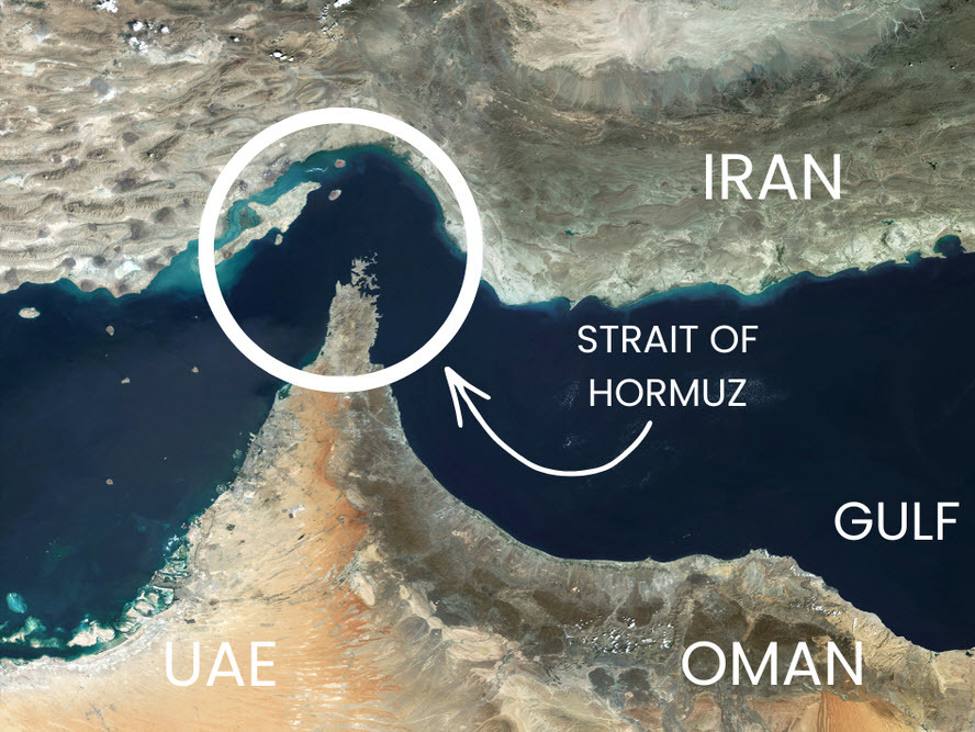
Chevron chief compares Hormuz crisis to 1970s oil shocks as shortages loom
Chevron CEO Mike Wirth warned Monday that physical oil shortages will begin appearing globally due to the Strait of Hormuz closure, with Asian economies first to shrink as supply buffers are exhausted.Summary:Chevron Chairman and CEO Mike Wirth said physical shortages in oil supply would begin appearing around the world as a result of the Strait of Hormuz closure, through which 20% of global crude supply passes, per his remarks at a Milken Institute discussion reported by ReutersWirth said economies will begin shrinking, with Asia affected first given its heavy dependence on Gulf oil production and refineries, followed by Europe, according to ReutersThe Chevron chief said surplus commercial stocks, shadow fleet tankers and national strategic reserves were all being absorbed, removing the cushions that had so far softened the supply impact, per ReutersWirth described the overall effect of the Hormuz closure as potentially as large as the supply disruptions of the 1970s, which caused fuel rationing and prolonged queues at retail pumps across major economies, according to ReutersThe United States, as a net crude exporter, would be less exposed than other regions but would ultimately feel the effects, with the last scheduled Gulf oil shipment being offloaded at the Port of Long Beach at the time of Wirth’s remarks, per Reuters Chevron Chairman and Chief Executive Mike Wirth delivered one of the starkest assessments yet of the Strait of Hormuz crisis on Monday, warning that physical oil shortages are now imminent, that economies will begin contracting in response, and that the scale of disruption could rival the oil shocks of the 1970s that reshaped the global economy for a decade.Speaking at a Milken Institute event, Wirth said the closure of the strait, through which roughly 20% of the world’s seaborne crude supply passes, has progressed to the point where the supply buffers that initially absorbed the shock are running out. Surplus stocks in commercial markets, tankers operating in shadow fleets to avoid sanctions, and national strategic petroleum reserves are all being drawn down, he said. Once those cushions are exhausted, the gap between available supply and demand must be closed by a different mechanism: economic contraction.Asia will bear the earliest and heaviest impact. The region is the most heavily dependent on Gulf crude production and refinery output, and Wirth said its economies will be the first to shrink as demand is forced to adjust downward to meet constrained supply. Europe faces the next wave of exposure. The sequencing reflects the geography of Gulf oil dependency rather than any policy choice, and it leaves the world’s fastest-growing economic region in the most vulnerable position.The United States, as a net exporter of crude, occupies a more protected position than its allies and trading partners. Wirth was careful to note, however, that protection is relative and temporary. The last scheduled shipment of oil from the Gulf was being offloaded at the Port of Long Beach at the time of his remarks, serving the Los Angeles basin and southern California. That moment, unremarkable in normal times, marks a concrete inflection point: the point at which even the US begins to absorb the closure’s consequences in its own supply chain.Wirth’s comparison to the 1970s oil shocks carries particular weight coming from a major operator with direct visibility into physical supply flows. Those disruptions, triggered by the 1973 Arab oil embargo and the 1979 Iranian revolution, produced fuel rationing, surging inflation, deep recessions and a fundamental reordering of energy policy across the developed world. The suggestion that the current crisis is potentially of equivalent magnitude places it in a category that financial markets, central banks and governments may not yet be fully pricing.—A sitting major oil CEO explicitly warning of imminent physical shortages is a materially different signal from financial market pricing or policy commentary, carrying the weight of operational visibility into actual supply flows. Wirth’s observation that surplus commercial stocks, shadow fleet capacity and strategic reserves are all being drawn down simultaneously suggests the buffers that have so far cushioned the price impact are close to exhaustion. The 1970s comparison is not rhetorical: those disruptions produced fuel rationing, demand destruction and deep recessions across import-dependent economies. Asian refinery margins and freight rates warrant immediate attention, as the region faces the earliest and sharpest demand adjustment. For US energy markets, the offloading of the last scheduled Gulf shipment at Long Beach is a concrete, dateable moment that marks the point at which even the world’s largest oil producer begins to feel the closure’s downstream effects. This article was written by Eamonn Sheridan at investinglive.com. 🔗 Source 💡 DMK Insight Chevron’s warning about oil shortages due to the Strait of Hormuz closure is a major red flag for traders. With Asian economies likely to feel the pinch first, this situation could trigger a spike in crude oil prices, affecting everything from energy stocks to inflation rates. Traders should keep an eye on WTI and Brent crude futures, especially if prices start breaking above key resistance levels. The potential for supply disruptions could lead to increased volatility in related markets, including energy ETFs and oil-dependent currencies. Look for immediate reactions from institutional players who might hedge against rising oil prices, especially if we see a sustained move above $90 per barrel in Brent. On the flip side, if the situation resolves quickly, we could see a sharp pullback, so it’s crucial to monitor news developments closely and adjust positions accordingly. 📮 Takeaway Watch for Brent crude prices; a sustained break above $90 could signal significant market shifts and increased volatility in energy-related assets.
Iran launches boats, missiles and drones at US warships in Hormuz confrontation
The USS Truxtun and USS Mason transited the Strait of Hormuz under a sustained Iranian barrage of small boats, missiles and drones, entering the Persian Gulf without either vessel being struck, per US defense officials. Summary:Two US Navy destroyers, the USS Truxtun and USS Mason, successfully transited the Strait of Hormuz and entered the Persian Gulf after navigating a sustained Iranian attack, per US defense officials who spoke to CBS NewsIran launched a coordinated barrage of small boats, missiles and drones against the two vessels during the passage, in what defense officials described as a sustained series of threats, according to CBS NewsThe destroyers were supported throughout the transit by Apache helicopters and other aircraft, with defensive measures successfully intercepting or deterring each incoming threat, per the defense officialsNeither US vessel was struck during the confrontation, and military officials confirmed that no projectiles launched by Iranian forces reached the ships, according to CBS News Two United States Navy destroyers have forced a passage through the Strait of Hormuz and into the Persian Gulf under sustained Iranian fire, in the most direct military confrontation between US warships and Iranian forces in the strait since the conflict began.The USS Truxtun and USS Mason navigated a coordinated Iranian barrage that included small attack boats, missiles and drones during the transit, according to defense officials who spoke to CBS News. The attack was described as sustained and deliberate, representing a significant escalation in Iran’s willingness to directly engage US naval assets in the waterway through which a fifth of the world’s seaborne oil supply ordinarily passes.Both destroyers were supported by Apache helicopters and additional aircraft throughout the passage. Defensive systems, bolstered by that air cover, successfully intercepted or deterred every incoming threat. Military officials confirmed that no projectiles launched by Iranian forces made contact with either ship, and neither vessel sustained damage during the transit.The successful passage carries clear strategic weight for Washington. Forcing transit through the strait under live fire asserts that the United States retains the capability and the will to contest Iranian efforts to restrict Hormuz navigation, and demonstrates that US naval assets can operate in the waterway despite active opposition. The deployment of Apache helicopter support alongside the destroyers points to a carefully prepared operation rather than a routine passage, suggesting the transit was planned and executed as a deliberate show of force.For Iran, the response is equally telling. The decision to launch a coordinated multi-vector attack against two US warships rather than allow uncontested passage signals that Tehran has no intention of conceding navigational control of the strait without a fight, regardless of the military disparity involved. The use of small boats alongside missiles and drones reflects a layered harassment doctrine designed to complicate defensive responses and maximise the risk of a hit even against a well-protected target.The confrontation materially raises the stakes for subsequent transits and for the broader trajectory of the conflict.–A successful forced transit under live fire is a deliberate and highly visible assertion of freedom of navigation rights in the world’s most critical oil chokepoint, and its immediate market read is double-edged. On one hand, the fact that two destroyers got through without being struck demonstrates that US naval capability remains sufficient to contest Iranian control of the strait. On the other, the intensity of the Iranian response, coordinated small boats, missiles and drones in sustained barrage conditions, signals that Tehran is prepared to engage US warships directly rather than yield passage. That combination raises rather than lowers the probability of a miscalculation triggering resumed major combat, and keeps the risk premium on Hormuz-dependent oil supply firmly elevated. Any market relief at the successful transit should be weighed against what the Iranian willingness to attack two destroyers implies for the next attempt. This article was written by Eamonn Sheridan at investinglive.com. 🔗 Source 💡 DMK Insight Tensions in the Strait of Hormuz just spiked, and here’s why traders should pay attention: geopolitical risks can lead to volatility in oil and related markets. The successful transit of the USS Truxtun and USS Mason under fire highlights the ongoing military posturing in the region, which could impact oil supply routes. If Iran escalates its actions, we might see a surge in oil prices, especially if Brent crude approaches key resistance levels around $90 per barrel. For traders, this situation is a double-edged sword. While rising tensions could lead to higher oil prices, they also introduce significant risk. If the situation de-escalates, we could see a rapid correction in oil prices, potentially back to support levels near $80. Keep an eye on the daily charts for crude oil and watch for any news that could trigger sudden price movements. Institutions are likely to react quickly to any escalation, so being nimble is crucial right now. 📮 Takeaway Watch for oil prices around $90; geopolitical tensions could trigger volatility, so stay alert for sudden market shifts.

Australian data: March household spending +1.6% m/m (prior +0.3%)
Australian data, March 2026 household spending +1.6% m/m (prior +0.3%)+0.7% q/q+6.3% y/y (prior +4.3%) Spending jumped by the most in over two years in March. Transport costs soared due to much higher fuel prices,Still to come, due 2.30pm Sydney time (0430 GMT/ 0030 US Eastern time):CBA tips RBA rate hike tomorrow but warns Iran war makes it a close call. Split RBA boardMay meeting, RBA set for third straight hike as Hormuz closure drives inflation surgeNewsquawk Week Ahead: US NFP, ISM Services PMI, RBA, Canadian jobs and OPEC+Governor Bullock will speak an hour later This article was written by Eamonn Sheridan at investinglive.com. 🔗 Source 💡 DMK Insight Household spending in Australia surged 1.6% month-over-month, and here’s why that matters: This uptick, the largest in over two years, signals a potential shift in consumer confidence, which could influence the Reserve Bank of Australia’s (RBA) monetary policy. With transport costs spiking due to rising fuel prices, traders should keep an eye on inflationary pressures that might prompt the RBA to raise interest rates sooner than expected. If CBA’s prediction of a rate hike materializes, it could strengthen the Australian dollar against major pairs, particularly the USD and NZD. But there’s a flip side—higher rates could dampen spending in the long run, especially if consumers feel the pinch from increased borrowing costs. For now, watch the AUD/USD pair closely; a break above recent resistance levels could signal a bullish trend, while any signs of consumer fatigue could reverse gains. Key levels to monitor are the 0.6500 and 0.6600 marks for potential entry points or stop-loss placements. 📮 Takeaway Watch for the AUD/USD reaction around 0.6500 and 0.6600 as potential rate hikes loom, impacting trading strategies in the coming weeks.
Rabobank holds yen bull view despite poor run, eyes Hormuz as key risk
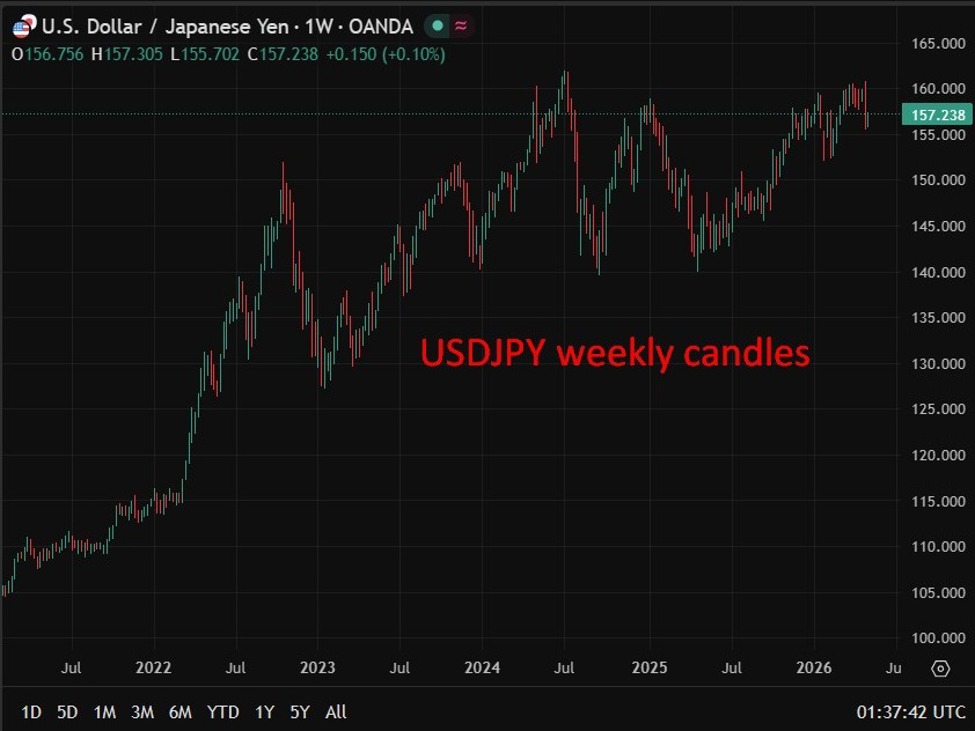
Rabobank is maintaining its forecast for USDJPY to end the year at lower levels, citing Japan’s structural shifts, while flagging the Strait of Hormuz timeline as a key assumption underpinning the call.Summary:Rabobank has maintained its forecast for USDJPY to finish the year at lower levels, based primarily on structural changes underway within Japan, per the bank’s noteThe yen has been a weak performer year to date, continuing to be weighed down by its reputation as a funding currency, according to RabobankRabobank cautioned that currency intervention tends to be ineffective at reversing established trends and can create opportunities for speculators to add to positions at more attractive levels, per the noteThe bank’s year-end yen call is conditioned on the Strait of Hormuz reopening within weeks rather than months, with that timeline described as a key assumption in the baseline forecast, according to Rabobank Rabobank is holding its forecast for the yen to strengthen against the dollar by year-end, maintaining conviction in a structural Japan thesis even as the currency has remained one of the poorest performers in foreign exchange markets through 2026, with the Strait of Hormuz closure identified as the primary risk to that call.The yen has struggled to escape its long-standing reputation as a funding currency, a designation that keeps it under pressure in risk-on environments as investors borrow cheaply in yen to deploy into higher-yielding assets elsewhere. That dynamic has persisted through the year to date, frustrating what Rabobank has consistently framed as a multi-year structural re-rating story rooted in changes taking place within Japan itself. The bank has not specified which structural shifts underpin its optimism, but the broader market context points to the Bank of Japan’s gradual policy normalisation and the domestic inflation dynamics that have accompanied it as the likely drivers of the longer-term yen constructive view.On intervention, Rabobank struck a notably sceptical note. The bank argued that currency intervention, while capable of engineering a short-term turn, is more likely to represent a temporary disruption to an established trend than a durable reversal. In that framing, intervention becomes less a policy tool and more an entry point, potentially offering speculators the chance to add to existing positions at more favourable levels rather than forcing them to cover.The most significant conditionality in the note concerns the Strait of Hormuz. Rabobank’s year-end USDJPY downside forecast rests on an assumption that the waterway reopens within weeks rather than over a period of several months. The yen’s behaviour under an extended Hormuz closure is materially different from its behaviour in a world where energy supply disruption resolves relatively quickly, and the bank’s willingness to flag that dependence explicitly reflects how central the geopolitical timeline has become to near-term currency forecasting across asset classes.—Rabobank’s decision to hold a year-end yen strengthening forecast despite persistent underperformance reflects a conviction trade rather than a momentum call, and the distinction matters for positioning. If the structural Japan thesis is correct but the Hormuz closure extends beyond the weeks assumed in the baseline, the yen faces a prolonged period of further weakness before any fundamental turn materialises, handing carry traders additional runway. The note’s implicit warning that intervention is more likely to create entry opportunities for speculators than to force a durable trend reversal is a direct signal to short-side players that dips may be buyable. USDJPY direction in the second half of the year will hinge heavily on whether Hormuz reopens on Rabobank’s assumed timetable, making the strait as consequential for FX markets as it is for energy. This article was written by Eamonn Sheridan at investinglive.com. 🔗 Source 💡 DMK Insight Rabobank’s forecast for USDJPY to close lower this year is a signal for traders to reassess their positions. The emphasis on Japan’s structural shifts suggests a long-term trend that could impact the currency pair significantly. With geopolitical factors like the Strait of Hormuz in play, traders should be wary of volatility spikes. If USDJPY breaks below key support levels, it could trigger further selling pressure. Look for confirmation on the daily charts; a sustained move under 140 could signal a deeper bearish trend. On the flip side, if the pair holds above this level, it might indicate a temporary pullback rather than a full reversal. Keep an eye on economic indicators from Japan and the U.S. that could influence this outlook, particularly any shifts in monetary policy or trade relations. The next few weeks are crucial, so monitoring these developments will be key to navigating potential market shifts. 📮 Takeaway Watch for USDJPY to hold below 140; a break could signal deeper bearish momentum, while support could indicate a temporary pullback.
RBA set to hike to 4.35% today. NAB sees cash rate peaking near 4.6%.
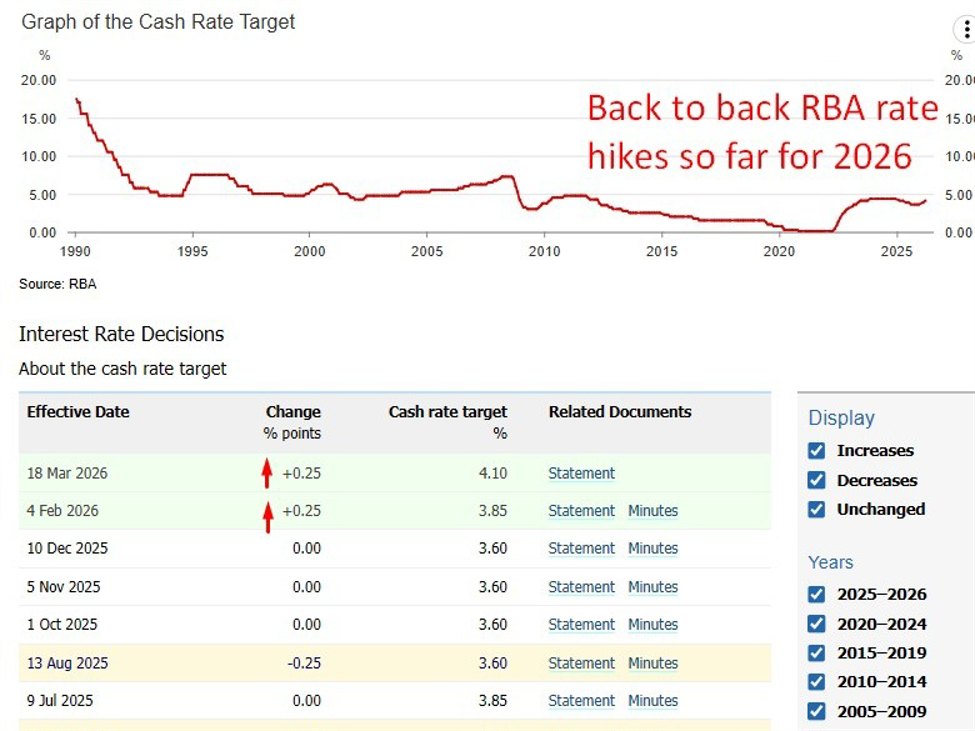
National Australia Bank expects the RBA to hike 25bp to 4.35% on Tuesday, with updated forecasts likely to show a terminal rate of around 4.6% as energy-driven inflation and above-potential growth limit the bank’s options. Earlier:CBA tips RBA rate hike tomorrow but warns Iran war makes it a close call. Split RBA boardMay meeting, RBA set for third straight hike as Hormuz closure drives inflation surgeNewsquawk Week Ahead: US NFP, ISM Services PMI, RBA, Canadian jobs and OPEC+Decision is due at 2.30pm Sydney time (0430 GMT/ 0030 US Eastern time)Summary:National Australia Bank expects the Reserve Bank of Australia to raise its cash rate by 25 basis points to 4.35% at its Tuesday meeting, returning the rate to its level before the cuts delivered through 2025, per the NAB noteNAB cited above-potential domestic growth, a labour market operating near capacity and re-emerging inflation pressures as conditions that already justified tightening before the Middle East conflict escalated, according to the noteFirst-quarter trimmed-mean inflation came in at 3.5% year on year, leaving the RBA with limited room to treat the energy price shock as temporary and look through its inflationary impactThe RBA’s updated Statement on Monetary Policy is expected to show downward revisions to near-term growth and upward revisions to inflation, with unemployment forecasts little changed in the near term but revised higher further out, according to NABThe cash rate assumption underlying the new SOMP forecasts is likely to peak at around 4.6%, up from the 4.3% peak embedded in the February SOMPThe Reserve Bank of Australia is widely expected to raise its cash rate by 25 basis points to 4.35% at its Tuesday meeting, according to National Australia Bank, with updated forecasts set to accompany the decision that point to a higher terminal rate than previously projected as energy-driven inflation narrows the central bank’s room to manoeuvre.The move, if delivered as NAB anticipates, would return the cash rate to the level that prevailed before the RBA began cutting through 2025, effectively unwinding that easing cycle in its entirety. NAB argues that the domestic case for tightening was already established before the Middle East conflict intensified. Growth was running above potential, the labour market was operating near capacity and inflation pressures had begun to re-emerge. The energy price shock has since added a further inflationary layer, lifting both actual inflation and near-term expectations in a way the RBA cannot easily dismiss.The Q1 trimmed-mean inflation print of 3.5% year on year is central to that assessment. Trimmed-mean is the RBA’s preferred measure of underlying inflation, and a reading at that level sits materially above the bank’s 2% to 3% target band. With core inflation already elevated before the full impact of higher energy costs has passed through the economy, NAB argues the RBA has limited scope to treat the current shock as transitory and hold rates steady.Alongside the rate decision, the RBA will release its quarterly Statement on Monetary Policy containing an updated set of economic forecasts, and NAB expects those projections to reflect the changed environment explicitly. Near-term growth forecasts are likely to be revised down, acknowledging the drag from higher energy costs and tighter financial conditions, while inflation forecasts are expected to move higher. Unemployment projections are seen as broadly unchanged in the near term but nudged upward further out in the horizon, consistent with a growth slowdown that eventually feeds into the labour market.—- A return to 4.35% would take the cash rate back to its pre-easing levels, effectively unwinding the rate relief Australian borrowers received through 2025 and signalling that the RBA regards the inflation resurgence as too broad to accommodate. The implied peak of around 4.6% in the updated SOMP forecasts, up from 4.3% in February, is the more consequential number for markets, representing a meaningful upward shift in the terminal rate assumption that will reprice mortgage rates, business lending costs and Australian dollar positioning. With growth forecasts likely being revised down simultaneously, the RBA is walking into stagflationary territory where neither easing nor aggressive tightening offers a clean exit. Australian rate-sensitive equities and the property market face renewed pressure if the SOMP confirms a higher-for-longer trajectory extending well into the forecast horizon. This article was written by Eamonn Sheridan at investinglive.com. 🔗 Source 💡 DMK Insight The anticipated RBA rate hike to 4.35% is a pivotal moment for traders, especially with inflation pressures mounting. As National Australia Bank suggests, the potential terminal rate of 4.6% reflects a tightening stance that could impact the AUD significantly. Traders should watch for volatility in the forex market, particularly against the USD, as a rate hike could strengthen the AUD in the short term. However, the looming uncertainty from geopolitical tensions, like the Iran war, adds a layer of risk that could lead to sudden market shifts. If the RBA’s decision aligns with expectations, we might see a bullish reaction in the AUD, but any surprises could trigger sharp corrections. Keep an eye on the 4.35% level as a key pivot point; a failure to hike could lead to a bearish sentiment. In terms of strategy, consider positioning for a potential short-term rally in the AUD, but be prepared for rapid adjustments based on global events. Monitoring economic indicators and geopolitical developments will be crucial in navigating this landscape. 📮 Takeaway Watch the RBA’s rate decision on Tuesday; a hike to 4.35% could strengthen the AUD, but geopolitical risks may lead to volatility.
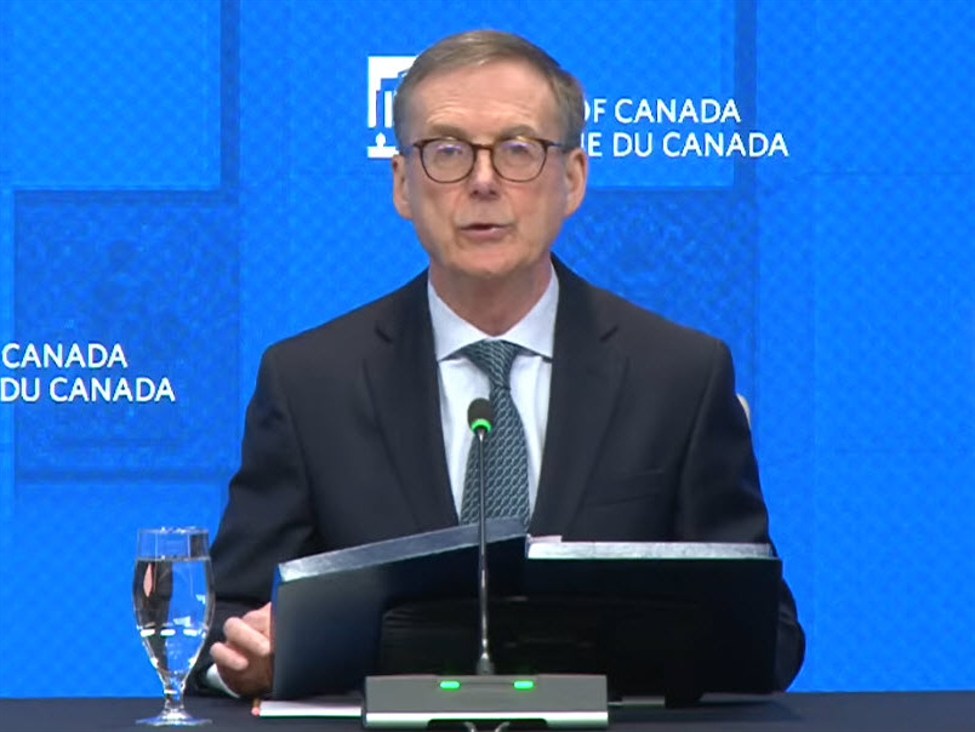
Bank of Canada's Macklem backs Fed independence ahead of Powell departure
Bank of Canada Governor Tiff Macklem told parliament he expects the Federal Reserve’s culture and conduct to continue unchanged under its incoming chairman, dismissing concerns about Fed independence post-Powell. Macklem was speaking Monday afternoon Canada time. Summary:Bank of Canada Governor Tiff Macklem said he believes the culture and conduct of the US Federal Reserve will continue as it has historically, per his testimony to the House of Commons on MondayMacklem made the remarks in response to parliamentary questions about the risk of the Fed losing its institutional independence as Chairman Jerome Powell’s term approaches its end on May 15, according to his testimonyThe Bank of Canada governor expressed confidence in the continuity of the Fed’s institutional character through the leadership transition, per the House of Commons testimonyBank of Canada Governor Tiff Macklem has moved to calm concerns about the future of Federal Reserve independence, telling parliament on Monday that he expects the central bank’s culture and conduct to remain intact through the leadership transition that will follow Jerome Powell’s departure as chairman on May 15.Appearing before the House of Commons, Macklem was asked directly about the risk that the Fed could lose its institutional independence under its incoming leadership, a concern that has gained traction in financial markets and policy circles as the end of Powell’s term approaches and speculation about his successor’s relationship with the White House intensifies. Macklem’s response was unambiguous: he believes the Fed’s culture and comportment will continue as they have in the past.The remarks carry weight beyond their brevity. As governor of one of the world’s most closely watched central banks and the steward of an economy deeply intertwined with that of the United States, Macklem is among the most credible external voices on the question of Fed institutional integrity. His willingness to offer a public and positive assessment of the Fed’s likely trajectory is a form of peer endorsement that markets will register, even if the underlying uncertainty about the incoming chair’s independence from political pressure has not been resolved.The question of Fed independence has become increasingly pointed as Powell’s May 15 end date approaches. Powell has been a consistent and at times publicly combative defender of the central bank’s autonomy, and his departure opens the possibility, in the minds of some market participants, of a successor more inclined to accommodate political pressure on rate settings. In an environment already complicated by Middle East-driven inflation, a Fed perceived as less than fully independent would represent a significant additional source of instability for rate and currency markets globally.Macklem’s testimony does not resolve those questions, but it signals that Canada’s central bank is not building a Fed independence breakdown into its working assumptions, a baseline assessment that will inform how the Bank of Canada thinks about the cross-border rate and currency dynamics that matter enormously for the Canadian economy. This article was written by Eamonn Sheridan at investinglive.com. 🔗 Source 💡 DMK Insight Fed leadership changes can shake market sentiment, and here’s why that matters for traders: Macklem’s remarks about the Fed’s continuity under new leadership suggest stability, which could influence market expectations around interest rates. If traders believe the Fed will maintain its current policies, it could lead to a stronger USD, impacting forex pairs and crypto assets like ADA. With ADA currently at $0.26, any shifts in investor sentiment towards the dollar could create volatility in altcoins. If the Fed’s stance remains dovish, ADA might see upward pressure, especially if it breaks above key resistance levels. Conversely, if market participants start pricing in tighter monetary policy, ADA could face downward pressure. It’s worth noting that while Macklem’s comments provide reassurance, they don’t account for potential market reactions to economic data releases or geopolitical events. Traders should keep an eye on upcoming Fed meetings and economic indicators, as these could lead to rapid shifts in sentiment. Watch for ADA’s performance around $0.25 and $0.30, as these levels could dictate short-term trading strategies. 📮 Takeaway Monitor ADA closely around $0.25 and $0.30; Fed policy signals could drive significant volatility in the coming weeks.