
 Bitcoin
  Ethereum
  Tether
  XRP
XRP  BNB
BNB  USDC
USDC  Solana
  TRON
TRON  Lido Staked Ether
  Figure Heloc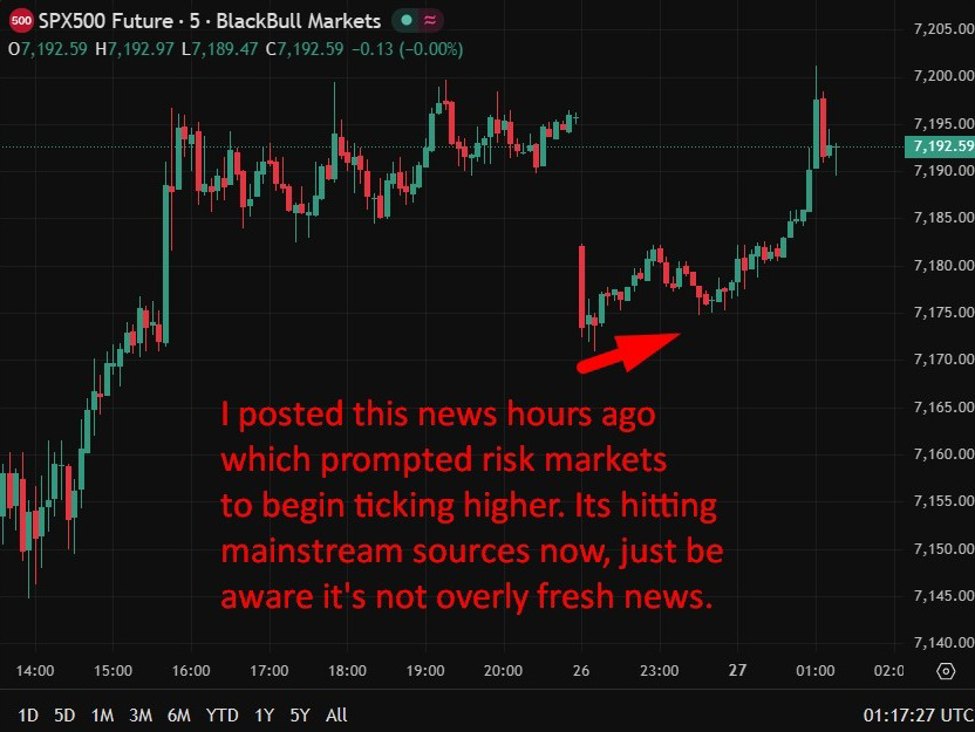
Iran has proposed reopening the Strait of Hormuz and ending the war before nuclear talks begin, passing the plan via Pakistani mediators to the White House as negotiations remain deadlocked. (Axios reporting on what I reported on hours ago)SummaryIran passed a new proposal to the White House via Pakistani mediators to reopen the Strait of Hormuz and end the war before nuclear talks beginThe proposal attempts to bypass internal Iranian disagreements over the scope of nuclear concessions it is willing to offerNuclear negotiations would only commence after the strait is reopened and the US naval blockade lifted, under the proposalTrump cancelled a planned trip by envoys Steve Witkoff and Jared Kushner to Islamabad after no progress was made during Iranian FM Araghchi’s visit to PakistanTrump signalled in a Fox News interview he wants to maintain the naval blockade, believing Iran faces an oil infrastructure collapse within days if exports remain blockedAraghchi held talks with Omani officials in Muscat on Sunday focused on the Strait of Hormuz before returning to IslamabadAraghchi expected to travel to Moscow on Monday to meet Vladimir PutinWhite House said it would not negotiate through the press and would only accept a deal that prevents Iran from obtaining a nuclear weaponIt remains unclear whether the US is willing to explore the Iranian-Pakistani proposalIran has put forward a new diplomatic proposal aimed at breaking the deepening stalemate in negotiations with the United States, offering to reopen the Strait of Hormuz and agree a ceasefire before any nuclear talks take place, according to Axios, which cited a US official and two sources with direct knowledge of the matter.The proposal, passed to the White House via Pakistani mediators, represents a significant reframing of Iran’s negotiating position. Rather than attempting to resolve the nuclear dispute and the Hormuz crisis simultaneously, Tehran is now seeking to separate the two issues entirely, securing a reopening of the strait and a lifting of the US naval blockade first, with nuclear negotiations to follow at a later stage. The approach is designed in part to work around deep divisions within the Iranian leadership over how far the country is willing to go in meeting US demands for a long-term suspension of uranium enrichment and the removal of enriched uranium stockpiles from Iranian territory.The proposal’s prospects are uncertain at best. Trump made clear in a Fox News interview on Sunday that he intends to maintain the naval blockade, viewing it as his most potent source of leverage over Tehran. The US president suggested Iran was approaching a critical point, warning that its oil infrastructure could face an internal collapse within days if exports remain blocked for much longer, and that any resulting damage would be permanent and irreversible. That framing suggests the White House sees little incentive to release pressure before extracting nuclear concessions.The breakdown in momentum was underlined by Trump’s decision to cancel a planned trip to Islamabad by his envoys Steve Witkoff and Jared Kushner after Iranian Foreign Minister Abbas Araghchi’s visit to Pakistan over the weekend ended without progress. Trump told Axios he saw no point in sending his team on an 18-hour flight given the state of the talks, adding that Iran could call if it wanted to engage.Araghchi’s diplomatic activity has nonetheless continued at pace. After leaving Pakistan, he held talks with Omani officials in Muscat focused on the Strait of Hormuz before returning to Islamabad for a second round of discussions. On Monday he was expected to travel to Moscow to meet Russian President Vladimir Putin, a visit that underlines Iran’s efforts to shore up international support as the pressure from the US blockade intensifies.Multiple mediators are now involved in the process. Araghchi briefed Pakistani, Egyptian, Turkish and Qatari counterparts over the weekend on Iran’s position, making clear that there is no internal consensus in Tehran on the nuclear question. That admission is significant, as it suggests any deal touching on enrichment would face resistance from hardline factions within the Iranian leadership regardless of what negotiators agree at the table.The White House declined to engage with the specifics of the proposal, with spokesperson Olivia Wales stating that the US would not negotiate through the press and would only accept a deal that permanently prevents Iran from acquiring a nuclear weapon.—-The Iranian proposal to decouple Hormuz from nuclear talks is a significant diplomatic development with direct implications for energy markets. A reopening of the strait without a nuclear resolution would remove the most acute supply disruption driving oil prices, potentially triggering a sharp correction in crude. However, Trump’s stated desire to maintain the naval blockade as leverage suggests the White House is unlikely to accept a deal that surrenders its primary pressure point before securing nuclear concessions. The cancellation of the Witkoff and Kushner trip to Islamabad signals a hardening of the US position in the short term. For markets, the key risk is that the stalemate deepens, keeping the strait closed for longer and sustaining the supply shock. The involvement of Russia, with Araghchi heading to Moscow to meet Putin, adds a further geopolitical dimension that could complicate any path to resolution. This article was written by Eamonn Sheridan at investinglive.com. 🔗 Source 💡 DMK Insight Iran’s proposal to reopen the Strait of Hormuz could shift oil market dynamics significantly. With tensions in the region affecting supply routes, any easing of hostilities might lead to a drop in oil prices, impacting not just crude but also related assets like energy stocks and currencies of oil-dependent economies. Traders should keep an eye on Brent crude futures, especially if they approach key support levels. If negotiations progress, we could see volatility in the oil market, particularly if prices dip below recent lows. Conversely, if talks fail, expect a spike in risk premium, pushing prices higher. Watch for reactions from major players in the oil market, including OPEC+, as they might adjust production strategies based on these developments. The real story is how this geopolitical maneuvering could create opportunities for short-term trades,
China industrial profits surge at fastest pace since September in boost for economy
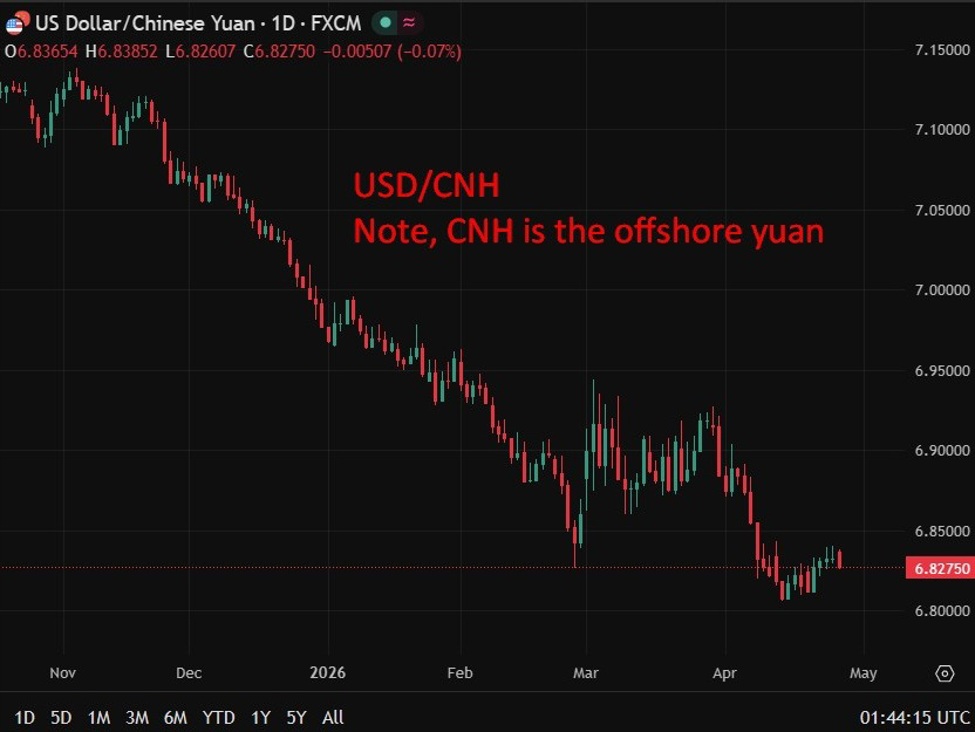
China’s industrial profits at large firms rose 15.8% year-on-year in March, the fastest pace since September, with Q1 profits up 15.5%, beating the prior 15.2% reading. Earlier:China imports set to overtake exports for first time since 2021 on AI chip surgeSummaryChina’s industrial profits at large firms rose 15.8% year-on-year in March, fastest growth since September 2025January to March industrial profits rose 15.5% year-on-year, up from 15.2% in the prior readingData covers industrial firms with annual revenue above 20 million yuanStrong profit growth driven by AI-related manufacturing demand, export momentum and improving pricing powerResults come despite headwinds from the Iran war energy shock and global trade uncertaintyChina’s industrial output rose 7.7% year-on-year in Q1 2026, underpinning the profit reboundWeak domestic consumption remains a structural drag but export demand and capital investment are filling the gapChina’s industrial sector delivered its strongest profit growth in seven months in March, with large firms posting a 15.8% year-on-year gain that exceeded expectations and reinforced the resilience of the country’s manufacturing economy in the face of significant external pressures.The data, released by China’s National Bureau of Statistics, showed that profits at industrial enterprises with annual revenue above 20 million yuan rose 15.8% in March from a year earlier, the fastest pace of growth since September last year. For the first quarter as a whole, profits were up 15.5% year-on-year, a modest acceleration from the prior reading of 15.2% and a result that will be seen as broadly encouraging given the scale of disruption caused by the Iran war and the associated energy shock.The strength of China’s industrial profit picture reflects several overlapping forces that have converged to support the manufacturing sector in recent months. Chief among them is the global artificial intelligence investment boom, which has driven surging demand for chips, advanced manufacturing equipment and the broader supply chain that feeds into AI infrastructure development. China has emerged as a central node in that supply chain, with first-quarter trade data showing imports of integrated circuits soaring 54% year-on-year in March alone, while exports of AI-related goods have continued to climb.Export demand more broadly has provided a powerful tailwind. China’s total exports rose 15% year-on-year in the first quarter of 2026, a result that has surprised economists to the upside and driven sharp upward revisions to full-year trade forecasts. Industrial firms have benefited directly from that external demand, with sectors including electric vehicles, solar panels, industrial machinery and electronics all reporting strong order books.Pricing dynamics have also played a role in the profit rebound. After years of deflationary pressure that squeezed margins across the industrial sector, producer prices have begun to stabilise and in some categories recover, supported by higher global commodity prices and a pickup in domestic capital investment. That shift has allowed firms to rebuild profitability without relying solely on volume growth.The results are particularly notable given the headwinds the sector has been navigating. The partial closure of the Strait of Hormuz following the outbreak of the Iran war has disrupted global energy flows and pushed up input costs for energy-intensive industries. Economists had warned that the shock could weigh meaningfully on Chinese industrial output and margins, but the first-quarter data suggests the impact has so far been more contained than feared. China’s diversified energy supply base and strategic petroleum reserves have provided a degree of insulation, while the country’s dominant position in green energy manufacturing has allowed it to benefit from the surge in global demand for alternatives to fossil fuels.Domestic consumption remains the weak link in China’s economic picture. Household spending has yet to mount a convincing recovery, leaving the industrial sector reliant on exports and fixed asset investment to sustain its momentum. Authorities have rolled out a series of incremental stimulus measures, but economists broadly agree that a more decisive shift in consumption patterns has yet to materialise. For now, however, the profit data suggests China’s industrial engine is running at a pace that the broader economy can build on. —The acceleration in Chinese industrial profit growth is a positive signal for risk assets and commodity demand, suggesting the manufacturing sector is holding up better than many had feared despite the headwinds from the Iran war and global trade uncertainty. The 15.8% year-on-year March reading, the strongest since September last year, points to improving pricing power and volumes at large industrial firms, consistent with the strong trade data seen earlier in the month. The sequential improvement in the year-to-date figure from 15.2% to 15.5% adds further weight to the view that China’s industrial economy is gaining momentum rather than losing it. For energy and metals markets, stronger Chinese industrial activity supports demand expectations. For equity markets, the data reduces near-term concerns about a sharp deterioration in corporate earnings driven by external shocks, though weak domestic consumption remains a structural risk to the sustainability of the recovery. This article was written by Eamonn Sheridan at investinglive.com. 🔗 Source 💡 DMK Insight China’s industrial profits surged 15.8% in March, and here’s why that matters now: This uptick signals robust economic activity, particularly in sectors like manufacturing and technology, which could influence global supply chains and commodity prices. For traders, this is a critical moment to watch how these profits impact the Chinese yuan and related assets. If the trend continues, it could strengthen the yuan against the dollar, making USD/CNY a key pair to monitor. Additionally, the anticipated shift where imports surpass exports for the first time since 2021, driven by AI chip demand, could further alter trade dynamics and affect currencies tied to commodity exports. But don’t overlook the potential risks. If this profit growth is seen as temporary or if geopolitical tensions escalate, it could lead to volatility in the markets. Traders should keep an eye on key technical levels in the yuan and related commodities, especially if profit growth starts to slow down in the coming months. Watch for any signs of economic policy shifts from the Chinese government that could impact these trends. 📮 Takeaway Monitor USD/CNY closely as
Citi says oil flow disruption could continue, Brent could hit US$150 / barrel
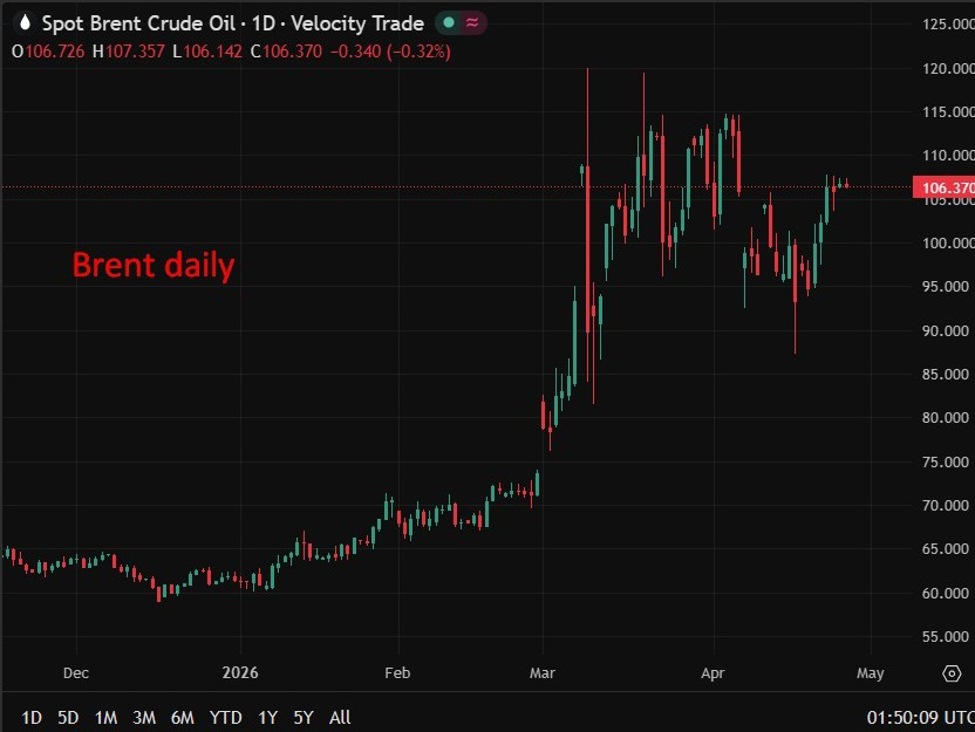
Citi:Raising our base case average Brent crude oil price forecasts to $110/95/80/BBL for 2Q/3Q/4Q 2026Flows could easily remain disrupted through the end of June, which could see Brent oil reach $150/bbl This article was written by Eamonn Sheridan at investinglive.com. 🔗 Source 💡 DMK Insight Citi’s revised Brent crude price forecasts signal a potential supply crunch ahead, and here’s why that’s crucial for traders right now: With projections hitting $150/bbl if disruptions persist through June, traders need to brace for volatility. This isn’t just about oil; it could ripple through energy stocks and commodities. If Brent approaches that $150 mark, expect correlated assets like energy ETFs and oil-related equities to react sharply. Keep an eye on the daily charts for Brent; a breakout above recent highs could trigger a wave of buying, while a failure to hold above key support levels might prompt profit-taking. But here’s the flip side: if these forecasts are overly optimistic and supply stabilizes sooner than expected, we could see a rapid correction. Traders should monitor OPEC+ announcements and geopolitical developments closely, as these could shift market sentiment quickly. Watch for key levels around $110 and $150 in Brent, as they could define the next trading range. 📮 Takeaway Watch Brent crude closely; a break above $150 could trigger significant buying, while a failure to hold above $110 may lead to profit-taking.
Preview: Bank of Japan rate decision knife-edge, Japan inflation runs hotter than expected
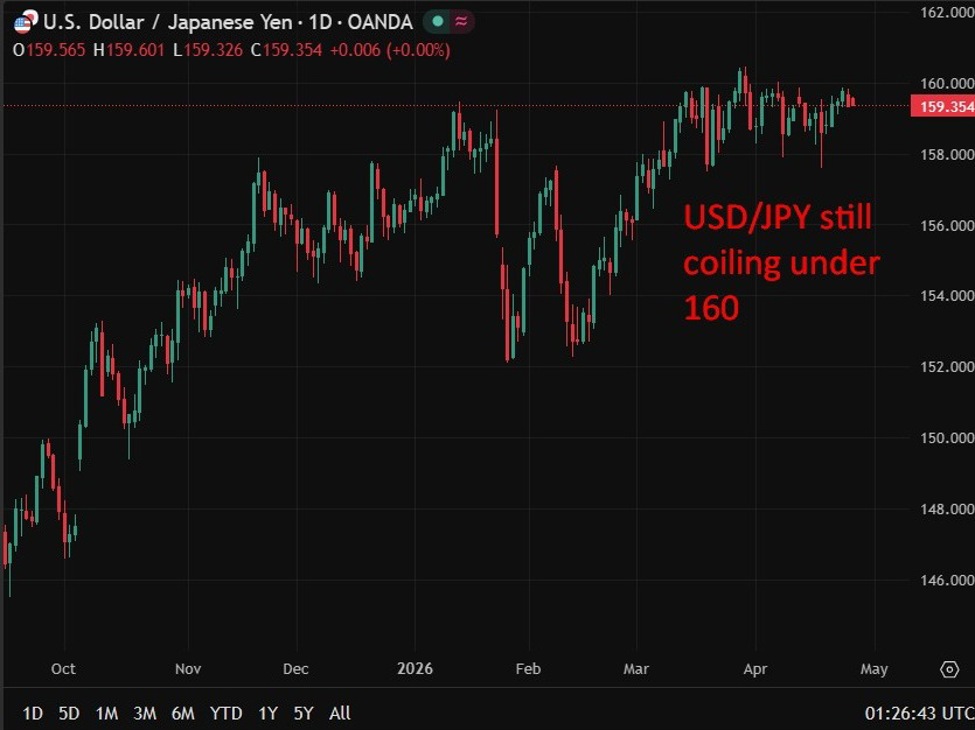
ING says Japan’s March CPI beat forecasts and inflation will accelerate further, complicating the BoJ’s rate decision on April 28 and keeping an April hike on the table despite market consensus for a hold. Earlier previews with a conflicting view:Preview: BOJ expected to stay on hold next week but deliver hawkish signal on June moveBOJ may lean more hawkishly to ease pressure on the yen – NomuraNote, Bank of Japan Governor Ueda will not physically attend the meeting. Ueda will attend by phone due to health reasons. SummaryJapan headline CPI rose 1.5% year-on-year in March, above the 1.4% market consensus and up from 1.3% in FebruaryCore CPI excluding fresh food accelerated for the first time in five months to 1.8%, beating the 1.5% consensusExcluding government energy subsidies and social welfare effects, inflation is running well above 2%ING expects Tokyo CPI to rise to 1.7% year-on-year in April, with both headline and core inflation seen climbing back above 2% from MayShunto wage negotiations delivered growth above 5%, with small and medium enterprise increases also firmING expects the BoJ’s FY2026 inflation forecast to be revised up sharply from 1.9% to 2.4%, and FY2027 from 2.0% to 2.2%GDP outlook expected to be trimmed from 1.0% to 0.7% for FY2026, but still seen above potentialMarkets widely expect the BoJ to hold on April 28; ING maintains a non-consensus call for a possible hikeIf BoJ holds, ING expects communication to strongly signal a June hikeING has 50 basis points of hikes pencilled in by end of 2026Japan’s inflation is running hotter than expected and broadening across the economy, putting the Bank of Japan in an increasingly uncomfortable position ahead of its rate decision on Tuesday and keeping alive the possibility of a surprise hike that markets have largely dismissed.Headline consumer price inflation rose 1.5% year-on-year in March, above both the 1.4% market consensus and the 1.3% recorded in February, according to ING. Core inflation excluding fresh food accelerated for the first time in five months to 1.8%, well above the 1.5% consensus. On a month-on-month basis, the index rose 0.4% on a seasonally adjusted basis, with goods prices up 0.6% and services adding 0.2%, suggesting price pressures are becoming increasingly broad-based.Government intervention is masking the true scale of the problem. Energy subsidies and social welfare programmes pushed down prices for gasoline, utilities and education, each falling between 4.8% and 5.5%. Strip those policy effects out and inflation is running well above 2%, ING said, a picture that will only become clearer in the months ahead. The bank expects Tokyo CPI to rise to 1.7% year-on-year in April and for both headline and core measures to climb back above 2% from May onward.Several structural forces are amplifying the inflation outlook. This year’s shunto wage negotiations delivered growth above 5%, with small and medium-sized enterprises also seeing firm increases. Businesses facing higher input costs from both a weak yen and rising global energy prices are expected to pass those costs through to consumers, particularly in April when retail price adjustments typically occur at the start of the Japanese fiscal year. Producer and import prices have also risen sharply, adding further pipeline pressure.The labour market is providing little relief for the BoJ. ING expects the unemployment rate to edge down to 2.5%, with monthly activity data set to rebound after the previous month’s declines. The bank does not believe the energy shock has had a significant negative impact on production so far, leaving the growth picture broadly resilient even as inflation accelerates.All of this complicates Tuesday’s rate decision considerably. Markets have moved to price in a hold after local reports suggested the BoJ would not act in April, citing uncertainty around the Middle East situation. ING pushes back on that consensus, arguing that recent data shows the energy shock is having a more prolonged and larger impact on inflation than on growth — a distinction the BoJ’s own quarterly outlook report, due on decision day, is likely to reflect. ING expects the bank’s FY2026 inflation forecast to be revised sharply higher from 1.9% to 2.4%, and the FY2027 forecast lifted from 2.0% to 2.2%, while the GDP outlook for FY2026 is trimmed only modestly from 1.0% to 0.7%.With real interest rates remaining deeply negative and inflation expectations at risk of becoming unanchored, ING believes the BoJ faces a genuine dilemma. If it holds on Tuesday, the bank expects the accompanying communication to deliver a strong signal that a hike is coming in June. Either way, ING has 50 basis points of tightening pencilled in by the end of 2026. – ING’s non-consensus call for an April BoJ hike, if correct, would likely trigger a sharp yen rally and a sell-off in Japanese government bonds, catching markets significantly off-side given the near-universal expectation of a hold. Even if the BoJ stays on hold as markets expect, ING’s analysis suggests the communications accompanying the decision will be closely scrutinised for signals of a June hike. The upward revision to the BoJ’s inflation outlook — ING expects the FY2026 forecast to be lifted from 1.9% to 2.4% — would represent a meaningful hawkish shift that could reprice rate expectations across the curve. With real interest rates remaining deeply negative and wage growth running above 5% following this year’s shunto negotiations, the fundamental case for tightening is strengthening even as the Middle East situation clouds the near-term growth outlook. For currency markets, the yen remains vulnerable to a hawkish surprise This article was written by Eamonn Sheridan at investinglive.com. 🔗 Source 💡 DMK Insight Japan’s March CPI exceeding forecasts is a game changer for traders: it raises the stakes for the BoJ’s upcoming rate decision. With inflation pressures mounting, the Bank of Japan might be forced to reconsider its stance, which could lead to volatility in the yen and Japanese equities. If the BoJ does hike rates on April 28, it could signal a shift in monetary policy that traders need to prepare for. Keep an eye on the USD/JPY pair;
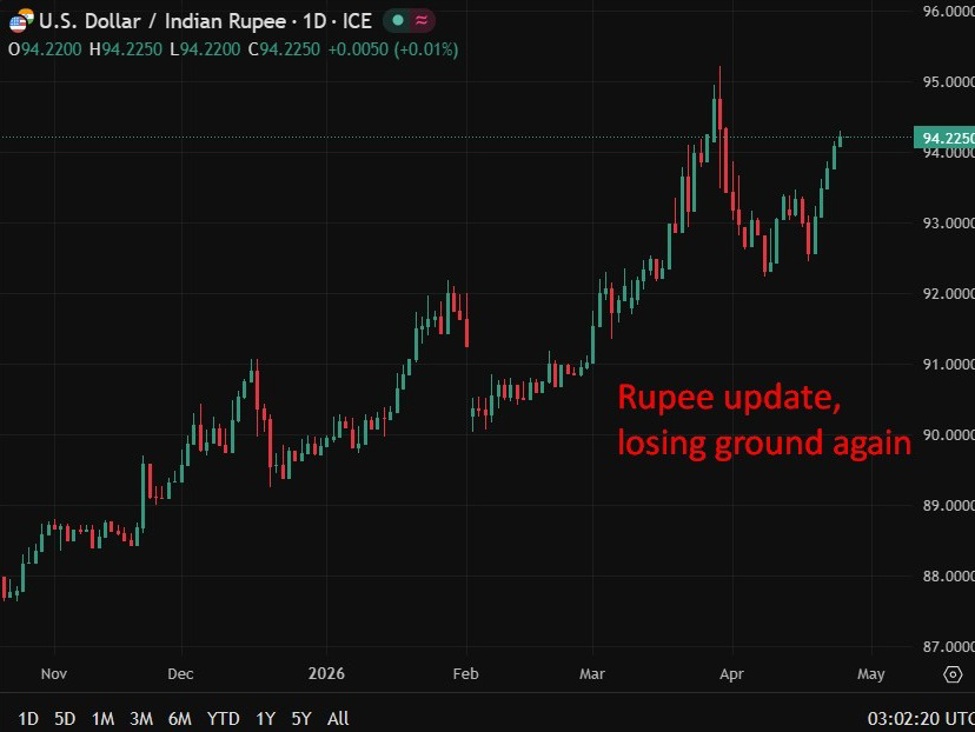
India signs New Zealand free trade deal as Modi accelerates global FTA push
India and New Zealand have signed a free trade agreement in Delhi, granting 100% duty-free access for Indian exporters and securing an estimated $20 billion in New Zealand investment commitments.SummaryIndia and New Zealand signed a Free Trade Agreement in Delhi, eliminating and lowering tariffs across a range of goodsNew Zealand grants 100% duty-free access to Indian exporters under the dealAgreement includes an estimated $20 billion in investment commitments from New ZealandDeal adds to India’s expanding FTA network, which includes agreements or active negotiations with the EU, UK and OmanIndia has historically been cautious on free trade agreements, making the current pace of deal-making a significant strategic shiftIndia is the world’s fifth largest economy and one of the fastest growing major markets, making FTA access increasingly attractive to trading partnersNew Zealand’s economy is heavily export-oriented, with dairy, meat, wool and horticulture among its key export sectors likely to benefit from Indian market accessIndia’s IT services, pharmaceuticals, textiles and manufactured goods sectors are among the primary beneficiaries of duty-free access to New ZealandSource: VariousIndia and New Zealand have signed a Free Trade Agreement in Delhi, granting full duty-free access to Indian exporters and securing an estimated $20 billion in investment commitments from Wellington, in the latest milestone in what is becoming one of the most ambitious trade expansion programmes of any major economy.The deal lowers and eliminates tariffs across a broad range of goods and represents a significant deepening of economic ties between two countries that have historically had a limited trade relationship. For New Zealand exporters, the agreement opens preferential access to a market of 1.4 billion people and one of the world’s fastest growing major economies. For India, the deal adds another important partner to a rapidly expanding network of bilateral trade agreements that is reshaping the country’s position in global commerce.India’s willingness to pursue free trade agreements at this pace marks a notable departure from its historically cautious approach to trade liberalisation. For much of the past two decades, New Delhi was reluctant to open its domestic market to foreign competition, withdrawing from the Regional Comprehensive Economic Partnership in 2019 amid concerns about Chinese import competition and the impact on local industry. That caution has given way to a far more proactive stance under the current government, driven by a recognition that deep trade ties are essential to sustaining the foreign investment flows and export growth needed to support India’s development ambitions.The New Zealand deal sits alongside a series of agreements and negotiations that underline the scale of that shift. India has finalised or is in advanced talks on free trade agreements with the United Kingdom, the European Union and Oman, a combination that would give Indian exporters preferential access to some of the world’s wealthiest consumer markets. The EU deal in particular, if concluded, would be transformative in scale, covering a trading relationship worth hundreds of billions of dollars annually.For New Zealand, the agreement is part of a broader effort to diversify trade relationships at a time of heightened global uncertainty. Wellington has long sought improved access to the Indian market for its primary sector exports, including dairy, meat, wool and horticulture, though the terms of agricultural access in FTAs with India have historically been a sticking point given New Delhi’s sensitivity around farm sector competition. The $20 billion investment commitment signals that New Zealand sees the relationship as extending well beyond goods trade into longer-term capital deployment.India’s export sectors set to benefit from duty-free access to New Zealand include information technology services, pharmaceuticals, textiles, engineering goods and processed foods. While New Zealand is a relatively small economy, the symbolic and structural value of the deal lies less in its immediate scale and more in what it represents — a country that once shied away from trade commitments now signing agreements with partners across every major region of the world, building the kind of diversified trade architecture that underpins long-term economic resilience.—–The India-New Zealand FTA is the latest evidence of New Delhi’s accelerating effort to embed itself in a web of bilateral trade agreements that reduce dependence on any single market and diversify its export base. The $20 billion investment commitment from New Zealand is a meaningful headline figure, though the more significant long-term impact lies in the structural opening of new export channels for Indian manufacturers, agricultural producers and services firms. For New Zealand, the deal secures preferential access to one of the world’s fastest-growing consumer markets at a time when Wellington is actively seeking to diversify its trade relationships. The broader context is important, India is simultaneously negotiating or finalising agreements with the EU, UK and Oman, a pace of deal-making that signals a strategic shift in New Delhi’s trade posture away from the caution that characterised its approach for much of the past decade. For markets, the cumulative effect of India’s FTA expansion is a gradual but meaningful improvement in its attractiveness as a manufacturing and export hub, with implications for foreign direct investment flows and supply chain diversification away from China. This article was written by Eamonn Sheridan at investinglive.com. 🔗 Source 💡 DMK Insight India’s new free trade agreement with New Zealand could reshape trade dynamics in the Asia-Pacific region. For traders, this development signals potential shifts in commodity prices and currency valuations. With 100% duty-free access for Indian exporters, we might see a surge in exports, particularly in sectors like agriculture and textiles. This could strengthen the Indian Rupee against the New Zealand Dollar, especially if the $20 billion investment from New Zealand flows into infrastructure and technology sectors. Traders should keep an eye on the NZD/INR pair for volatility, especially around key economic data releases from both countries. On the flip side, while this agreement is a win for India, it could lead to increased competition for local producers in New Zealand, potentially impacting their currency if economic growth slows. Watch for any shifts in trade balances or economic indicators that could signal a change in market sentiment. Overall, this
investingLive Asia-Pacific FX news wrap: Trump, Iran both signal proposals despite stall
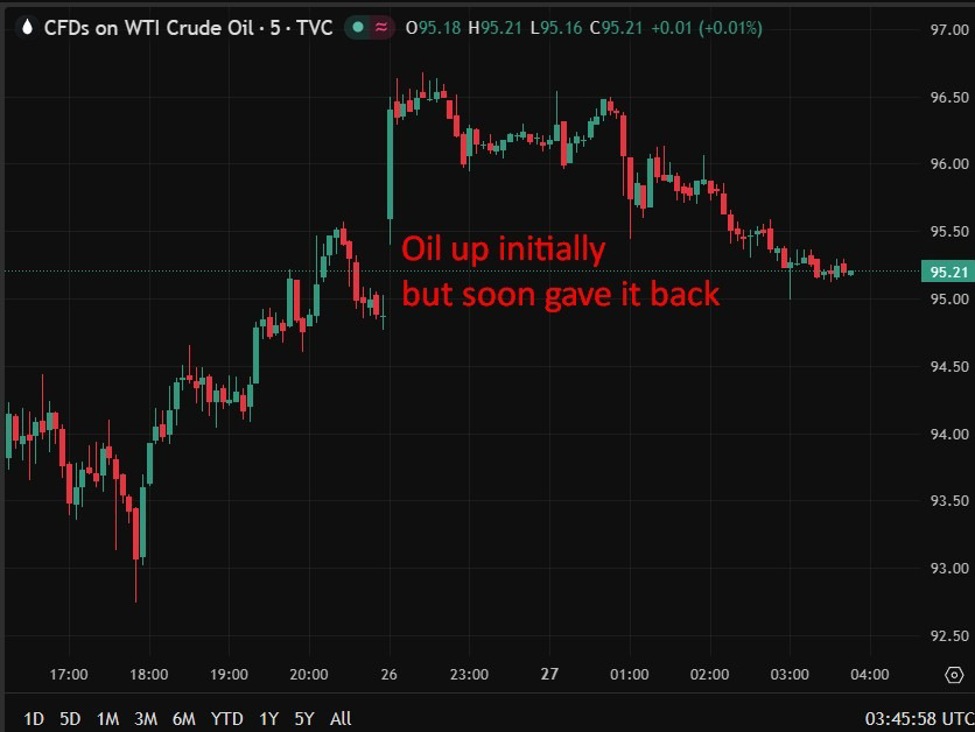
India signs New Zealand free trade deal as Modi accelerates global FTA pushPreview: Bank of Japan rate decision knife-edge, Japan inflation runs hotter than expectedCiti says oil flow disruption could continue, Brent could hit US$150 / barrelChina industrial profits surge at fastest pace since September in boost for economyIran proposes Hormuz deal without nuclear talks in bid to break US negotiation deadlockPeople’s Bank of China sets yuan reference rate at 6.8579 (vs. estimate at 6.8282)Heads up for Japan market holiday this week, and then three the following weekChina imports set to overtake exports for first time since 2021 on AI chip surgeTrump’s 60 Minutes interview has nothing on his war on Iran so farGoldman Sachs raises Q4 2026 oil forecasts. Mid East output loss drive big inventory drawUS futures (Globex) are open. Oil up, stocks down on US-Iran talks stallingIran’s FM said had discussion with Oman on ways to ensure safe transit in Hormuz StraitReports a cargo ship has been attacked south of Bab al-Mandab Strait. Second front openingAn hour after the Globex open Trump will be speaking in an interview on 60 MinutesNorthern Japan early morning earthquake. M6.1Reports that Iran presents three-phase peace framework, with nuclear talks held to lastMonday open FX (unlike the closed Strait of Hormuz). Indicative rates 27 April 2026Trump: Iran war’s end will come very soon and it will be victoriousNewsquawk Week in Focus: Fed, BoJ, BoE, ECB, BoC, US PCE, GDP and ISM mfg. PMITrump cancels Pakistan trip for Kushner and WitkoffPakistan talks: Iran delivered both their demands and reservations about US demandsAt a glance:Oil opened higher on Globex bids but gains were unwound through the sessionTrump cancelled envoy trip to Pakistan and maintained naval blockade; Iran kept Hormuz closed, lifting oil in Sunday evening US trade; gold and stocks fell on the newsTrump struck a measured tone, saying he was willing to negotiate with Iran by phoneIran passed a new proposal via Pakistani mediators to reopen Hormuz and lift the blockade first, with nuclear talks to follow at a later stageIranian FM Araghchi visited Oman, meeting Sultan Haitham bin Tariq to discuss ending the war, regional stability and safe Hormuz transit; presented a “workable framework” for a permanent end to the conflictReports of a cargo ship attacked south of Bab al-Mandab Strait, raising fears of a second front opening in the Iran conflictAxios publication of the Iran-US proposal gave risk assets a boost and trimmed oil prices; regional equities and US equity index futures on Globex gainedLebanon-Israel ceasefire has broken down with both sides continuing missile exchangesUSD opened higher early in the session but reversed lowerOil markets opened the week on the front foot, with buyers pushing prices higher on Globex at the Sunday open, but the gains proved short-lived as the session wore on and the initial risk premium was gradually unwound.The weekend had set a cautious tone. Trump’s decision to cancel the planned trip by envoys Steve Witkoff and Jared Kushner to Islamabad, combined with Iran’s continued effective closure of the Strait of Hormuz, had driven oil higher in Sunday evening US trade, with gold and equities moving lower as investors weighed the implications of a deepening stalemate.Trump’s own messaging was less hawkish than his actions implied, however. The US president signalled he was prepared to negotiate with Iran by telephone, a remark that took some of the edge off the geopolitical risk premium and suggested Washington had not entirely closed the door on a diplomatic path forward.Behind the scenes, Iran had passed a new proposal to the White House via Pakistani mediators, offering to reopen the Strait of Hormuz and lift the naval blockade first, with nuclear negotiations to follow at a later stage. The proposal is designed to bypass deep internal divisions within the Iranian leadership over the scope of nuclear concessions Tehran is willing to offer. Iranian Foreign Minister Abbas Araghchi reinforced the diplomatic push with a visit to Muscat, where he met Sultan Haitham bin Tariq to discuss ending the war and advancing regional stability. Araghchi presented what was described as a workable framework for a permanent end to the conflict, with Oman’s role as a key mediator front and centre. Safe transit through the Strait of Hormuz was high on the agenda.Adding to the tension, reports emerged of a cargo ship being attacked south of the Bab al-Mandab Strait, raising concerns that a second front is opening in the broader conflict with Iran and that shipping disruption may extend well beyond Hormuz.The mood in markets shifted when the Iran proposal received wider mainstream coverage following Axios publishing the story. The broader pickup in coverage gave risk assets a meaningful boost, trimming oil prices from their earlier highs while lifting regional equities and US equity index futures on Globex, as traders reassessed the probability of a diplomatic breakthrough.Elsewhere, the Lebanon-Israel ceasefire has broken down, with both sides exchanging missile fire in a further deterioration of the regional security picture. The US dollar opened firmer early in the session but reversed course and pressed lower as the day progressed. —Still to come:President Trump is set to convene a Situation Room meeting with his senior national security and foreign policy advisers on Monday to assess the deadlocked Iran negotiations and weigh potential next steps in the conflict. This article was written by Eamonn Sheridan at investinglive.com. 🔗 Source 💡 DMK Insight India’s new free trade deal with New Zealand could reshape regional trade dynamics, and here’s why that matters: As Modi accelerates his global FTA push, this agreement signals India’s intent to deepen economic ties and diversify trade partnerships. For traders, this could mean increased demand for Indian exports, particularly in sectors like textiles and agriculture. Watch how this impacts the Indian Rupee (INR) against major currencies; a strengthened INR could affect forex positions, especially for those trading USD/INR. Additionally, if Japan’s inflation continues to run hot, as suggested by the Bank of Japan’s upcoming rate decision, it could lead to volatility in the yen, impacting cross-border trade

Iran foreign minister says to continue talks with Oman on Strait of Hormuz
This ties back to the earlier headline, where Araghchi spoke about “important discussions” with Oman on the Strait of Hormuz. He now says that Iran and Oman have agreed to “continue consultations on the strait with expert-level talks”. This ties to the earlier headline that Iran is perhaps trying to work out a proposal for safe transit of the waterway.While the headline sounds positive and may mark a break of the hard line that Iran has been holding, it is best to be reminded that Tehran officials will not give away too much leverage over the situation. As a reminder, their ace card is control over the Strait of Hormuz. And to give that up before any agreement on the nuclear agenda would be wishful thinking.If anything else, expect any “reopening” of the strait to be very limited in nature. In other words, it is a bit part concession that Iran wants to offer up in exchange for the US breaking its naval blockade. It isn’t to say that Iran is giving up control of the strait entirely. So, keep that in mind.Risk trades are still taking a more positive cue from the latest development though. S&P 500 futures are now up 0.1% after dropping by around 0.3% earlier in the day. Meanwhile, WTI crude has also eased a touch from a high of $96.68 at the start of the day to $95.35 currently. This article was written by Justin Low at investinglive.com. 🔗 Source 💡 DMK Insight Tensions in the Strait of Hormuz are heating up, and here’s why that matters for traders: any disruption in this critical shipping lane could spike oil prices. With Iran and Oman engaging in “expert-level talks,” the potential for conflict or miscommunication increases, which could lead to volatility in the oil market. Traders should keep a close eye on Brent crude prices, as any escalation could push them above key resistance levels. Look, the broader context here is that the Strait of Hormuz is a vital artery for global oil supply, accounting for a significant percentage of the world’s oil trade. If Iran feels cornered or if negotiations break down, we could see a rapid price spike. This situation could also ripple through related markets, impacting currencies like the Iranian rial and oil-sensitive economies. Watch for any news updates or statements from either side, as they could trigger immediate market reactions. In terms of strategy, consider monitoring the 70 and 75 USD levels for Brent crude; a breach above these could signal a bullish trend. Keep your risk management tight, as the volatility could be significant in the coming days. 📮 Takeaway Watch Brent crude closely; a breach above 70 USD could signal a bullish trend due to rising tensions in the Strait of Hormuz.

FX option expiries for 27 April 10am New York cut
There are just a few to take note of on the day, as highlighted in bold below.The first being for EUR/USD at the 1.1700 level. Trading sentiment continues to be largely driven by the dollar and broader risk mood for the most part. In that regard, US-Iran headlines remain the key driver in terms of influencing price action.The dollar was a little stronger on the return from the weekend. That comes as US-Iran talks continue to stall with Pakistan unable to push for more progress. However, some reports of Iran perhaps looking to offer some concession on the Strait of Hormuz is helping to soften the blow. And that is reaffirmed by a meet up between Iran foreign minister Araghchi and Oman officials.As such, the dollar has lost some ground and we’re back to trading in a more tense mood ahead of European trading.Circling back to EUR/USD, the expiries may not have too much of an impact overall. That as the more important downside technical level right now is the 200-day moving average at 1.1675. The key level is what is helping to limit the downside push for now and will remain a key fixture as we look to start the new week.Then, there is one for USD/JPY at the 159.00 level. Similarly, the expiries don’t tie much to any technical significance. As such, the impact should be rather muted as dollar sentiment continues to be the bigger factor in driving price action.The pair remains underpinned as the yen itself is unable to get off the floor. However, intervention risks are helping to cap any further upside momentum closer to the 160.00 mark for the time being.For more information on how to use this data, you may refer to this post here. This article was written by Justin Low at investinglive.com. 🔗 Source 💡 DMK Insight EUR/USD is hovering around the 1.1700 level, and here’s why that matters: traders are feeling the pressure from dollar strength and global risk sentiment. The ongoing US-Iran headlines are adding volatility, which could impact not just the euro but also broader forex pairs. If the dollar continues to gain traction, we might see EUR/USD break below 1.1700, triggering stop-loss orders and potentially cascading down to the next support level. On the flip side, if geopolitical tensions ease, we could see a rebound, making this a critical watchpoint for swing traders. Keep an eye on the daily chart for any signs of reversal or continuation patterns, as these could dictate short-term trading strategies. For now, monitor the dollar index and any shifts in risk appetite, as these will likely dictate the next moves in EUR/USD. The real story is how external factors like geopolitical tensions can swing sentiment rapidly, so stay alert. 📮 Takeaway Watch for EUR/USD at the 1.1700 level; a break could lead to further declines, while stability may signal a rebound.
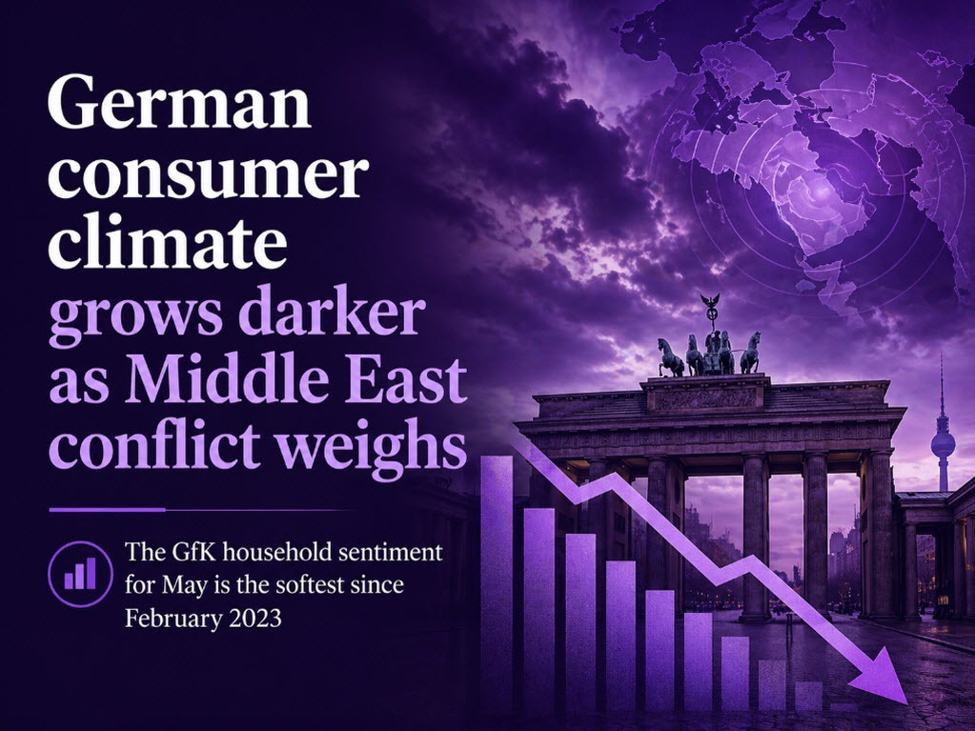
Germany May GfK consumer sentiment -33.3 vs -29.3 expected
Prior -28.0; revised to -28.1The German consumer climate worsens to a three-year low as the fallout from the Middle East conflict continues to take a toll on Europe’s largest economy.In particular, higher energy prices and in turn higher inflation is translating into a major worry for German households. And that is reflected by a nosedive in income expectations, which fell from -6.3 in April to -24.4 going into May. Economic expectations also declined further, down from -6.9 in April to -13.7 going into May.On the latter, we’re pretty much circling levels last seen back during the Russia-Ukraine crisis in 2022. So, that’s a clear enough signal to how dire the outlook is as we look to the months ahead. And especially as the Middle East conflict shows no signs of easing just yet.GfK notes that:”Income expectations are collapsing as a result of rising inflation. Against this backrop, people also consider the current time to be less favourable for major purchases.” This article was written by Justin Low at investinglive.com. 🔗 Source 💡 DMK Insight Germany’s consumer climate hitting a three-year low is a big deal for traders right now. With the ongoing Middle East conflict driving energy prices up, inflation is becoming a real concern for households. This could lead to reduced consumer spending, which is a critical driver for economic growth. Traders should keep an eye on the DAX index and related assets, as a sustained downturn in consumer sentiment could lead to bearish trends. If the DAX breaks below key support levels, it might trigger further selling pressure. On the flip side, if energy prices stabilize, we could see a rebound in consumer confidence, but that’s a big ‘if.’ Watch for any shifts in energy prices and how they correlate with consumer sentiment data. The next few weeks will be crucial as we gauge the impact of these economic indicators on the broader market. 📮 Takeaway Monitor the DAX closely; a break below key support could signal further declines amid worsening consumer sentiment.

Bitcoin analysis today: is BTC preparing for a breakout, or a failed push into resistance?
Bitcoin Near $80K: Bulls Stay Resilient, But Short-Term Pressure Builds as the New Week BeginsBitcoin futures are starting the new week close to the major $80,000 level, and traders are asking the obvious question: is BTC preparing for a real breakout, or is this another failed push into resistance?For now, the answer is nuanced.Bitcoin futures are not in a broad bearish breakdown. The contract is still slightly positive on the session, trading near 78,140, up around 0.16% at the time of writing. That matters. The broader daily picture has not collapsed, and bulls have not fully lost control.But the last few hours tell a more cautious story. The pressure is concentrated mainly in the latest 4-hour window, and especially in the most recent hour, where Bitcoin failed to hold higher accepted value after pushing closer to the $80K area.Key takeaways for Bitcoin traders and investorsBitcoin futures are still near the $80K breakout zone.The broader daily view is not yet bearish.Short-term pressure has increased in the last 4 hours.Bulls need to reclaim 78,750, then 79,250, to repair the setup.A clean $80K breakout likely needs value acceptance above resistance, not just a fast spike.Macro sentiment is mixed, with better China data supporting risk appetite, while Middle East tensions keep a risk-off bid alive.Macro backdrop: Risk-on data from China, risk-off caution from the Middle EastThe new trading week begins with market sentiment balancing between improving economic signals from Asia and lingering geopolitical uncertainty in the Middle East. For crypto and traditional asset investors, this creates a roadmap for both risk-on and risk-off scenarios.On the positive side, China’s latest industrial profit data gave global growth expectations a boost. As reported on InvestingLive, China industrial profits surged at the fastest pace since September, suggesting that stimulus measures may be starting to filter through to the real economy.That matters for Bitcoin because a stronger Chinese economy often supports broader risk appetite. When investors feel more confident about global growth, high-beta assets, commodities, equities, and crypto can all benefit from risk-on flows.But the positive China impulse is being offset by geopolitical caution. Markets remain alert to developments around the Strait of Hormuz, after the Iran foreign minister said talks with Oman on the Strait of Hormuz would continue.Any disruption, or even fear of disruption, in such a vital maritime route can trigger a risk-off response. That often supports oil prices and the US Dollar, while weighing on speculative assets, including Bitcoin, at least temporarily.So the macro setup is not one-directional. Bitcoin is getting some support from broader risk appetite, but traders should not ignore the geopolitical risk premium.Bitcoin is not broken, but the short-term structure weakenedEarlier, Bitcoin futures showed signs of repair. Buyers had built value around the 79,250-79,750 region, which kept the $80K breakout scenario alive.That changed on the lower timeframes.The 30-minute structure showed accepted value shifting lower from 79,750 toward 79,250, then 78,750, and later closer to 78,250. That kind of value migration matters because it shows sellers were able to move the market lower and hold some ground, at least intraday.Still, this should not be overstated. The broader daily chart remains unfinished, and Bitcoin futures are not deeply negative. This is more accurately described as short-term pressure inside a still-resilient broader setup.My current Bitcoin futures readMy current Bitcoin futures prediction score is:Final score for Bitcoin Today: -1.5 to -2.0What about for the rest of the week? Stay tuned to investingLive.comReliability grade: Medium-low to MediumThat score reflects short-term deterioration, not a confirmed daily bearish breakdown.The latest evidence says bulls have lost control of the immediate push toward $80K. But it does not yet say that the larger bullish repair has completely failed.Crypto outlook: Bulls remain resilientDespite the macro tug-of-war, the internal structure of the crypto market remains relatively robust.Yes, political headlines can still create volatility. One recent example is the report that Trump will address top Trump meme coin holders at a Mar-a-Lago crypto summit. These headlines can drive attention, speculation, and short-term noise across the crypto space.But for long-term Bitcoin investors, the bigger picture remains more important than meme coin headlines or intraday volatility.The single chart for Bitcoin long-term investors, which I posted last week, still suggests bulls are fine. On-chain and broader market behavior continue to suggest that long-term holders are not rushing for the exit. That does not guarantee a straight move higher, and it does not mean short-term pullbacks should be ignored. But it does mean the current weakness should be viewed in context.For a deeper dive, I also show in my simple video why Bitcoin long-term investors are still in a constructive position, and what to watch if that begins to change.What bulls need to reclaimThe first important level is 78,750.If Bitcoin futures can reclaim that area quickly, the current weakness may still be treated as a sharp intraday pullback rather than a failed breakout attempt.The next level is 79,250. A move back above that zone would suggest buyers are rebuilding control. If price can then rotate back toward 79,750, the $80K breakout scenario becomes much more credible again.For investors and swing traders, the key is not just whether Bitcoin touches $80K. The stronger signal would be whether Bitcoin can hold value near or above that area after testing it.What would make the setup more bearish?The bearish case strengthens if Bitcoin futures remain below 78,750 and continue to fail under 79,250.That would suggest the market is no longer simply pausing below $80K, but actively accepting lower prices after the failed push.A deeper warning would come if the daily chart starts accepting below the 78,250-78,750 zone. That would shift the discussion from short-term pressure to a more meaningful failed repair.Bitcoin outlook as the new week beginsThe most accurate description right now is this:Bitcoin futures are still close to $80K and not broadly broken, but the latest 4-hour and 1-hour action shows sellers have regained short-term control.That makes the next reclaim attempt important. Bulls need to recover 78,750 and 79,250 to keep the $80K breakout case alive. If they cannot, the