
 Bitcoin
  Ethereum
  Tether
  XRP
XRP  BNB
BNB  USDC
USDC  Solana
  TRON
TRON  Lido Staked Ether
  Figure Heloc
ETH’s price may drop 15% or more in the coming days as it paints a convincing bearish reversal pattern on its daily chart. 🔗 Source 💡 DMK Insight ETH’s bearish reversal pattern is a red flag for traders right now. With ETH currently at $2,317.96, a potential drop of 15% could see it testing critical support levels around $1,965. This bearish sentiment aligns with broader market trends, where many altcoins are also showing weakness. If ETH breaks below this support, it could trigger further selling pressure, not just in ETH but across the crypto market, impacting related assets like BTC and major DeFi tokens. Traders should keep an eye on volume indicators; a spike in selling volume could confirm the bearish trend. On the flip side, if ETH manages to hold above $2,200, it might attract some dip-buyers looking for a rebound. But right now, the momentum is clearly leaning bearish, and traders should be cautious about entering long positions until we see a clear reversal signal. Watch for the next few daily closes to gauge market sentiment. 📮 Takeaway Monitor ETH closely; a drop below $2,200 could trigger a 15% decline, while holding above it might attract buyers.

Western Union to Launch Solana-Based Stablecoin Plus ‘Stable Card’ Next Month
The USDPT stablecoin launching next month will serve as an alternative to SWIFT for agent settlements rather than consumer transactions. 🔗 Source 💡 DMK Insight The upcoming USDPT stablecoin could disrupt traditional settlement systems, and here’s why that matters: By positioning itself as an alternative to SWIFT for agent settlements, USDPT is targeting a niche that could significantly streamline cross-border transactions. This move comes at a time when the global financial system is increasingly scrutinizing the efficiency and costs associated with traditional banking methods. Traders should be aware that if USDPT gains traction, it could lead to a shift in how liquidity flows in forex markets, particularly affecting major currency pairs that rely on SWIFT for transactions. But there’s a flip side: while this innovation could enhance efficiency, it also raises questions about regulatory scrutiny and the stability of new stablecoins. If USDPT faces challenges in adoption or regulatory hurdles, it could lead to volatility in related assets, including other cryptocurrencies and stablecoins. Keep an eye on how major financial institutions react to this launch, as their participation could either validate or undermine USDPT’s credibility. Watch for any announcements or partnerships leading up to the launch next month, as these could provide insights into its potential impact on the market. 📮 Takeaway Monitor USDPT’s launch next month for potential shifts in forex liquidity and watch for institutional reactions that could signal broader market implications.

France Charges 88, Including Minors, in Crypto ‘Wrench Attack’ Crackdown
France has recorded 135 crypto-linked incidents since 2023, amid a nationwide surge in so-called “wrench attacks.” 🔗 Source 💡 DMK Insight France’s 135 crypto-linked incidents this year highlight a growing trend in security risks for traders. Wrench attacks, where thieves target crypto ATMs and exchanges, are becoming more frequent, raising concerns about the safety of assets. For traders, this isn’t just a security issue; it could impact market sentiment and liquidity. If fear spreads, we might see increased volatility in crypto prices as traders react to the potential for losses. Keep an eye on how this affects trading volumes and whether exchanges implement stricter security measures. If incidents continue to rise, it could lead to regulatory scrutiny, affecting the broader market. On the flip side, this could also create opportunities for traders who can capitalize on short-term price dips caused by panic selling. Watch for key support levels in major cryptocurrencies; if they hold, it might signal a buying opportunity amidst the chaos. 📮 Takeaway Monitor crypto trading volumes and support levels closely; rising security incidents could lead to volatility and potential buying opportunities.

Morning Minute: NFTs Storm Back, Led by Bored Apes
Bitcoin made its highest weekly close since January. Western Union is launching a stablecoin. And NFTs are making a major comeback. 🔗 Source 💡 DMK Insight Bitcoin’s highest weekly close since January signals renewed bullish sentiment, but traders should tread carefully. This uptick could be influenced by Western Union’s stablecoin launch, which may attract institutional interest and increase liquidity in the crypto space. However, with NFTs making a comeback, we might see a shift in capital flows, as traders could pivot towards these digital assets, potentially sidelining Bitcoin in the short term. It’s crucial to monitor Bitcoin’s price action around key resistance levels, particularly if it approaches previous highs. A breakout could lead to a surge, but a failure to maintain momentum might trigger profit-taking. Keep an eye on the broader market sentiment and any regulatory news surrounding stablecoins, as these could impact Bitcoin’s trajectory. Watch for Bitcoin’s performance in the coming weeks; a sustained close above recent highs could signal a stronger bullish trend, while a drop below support levels could indicate a reversal. 📮 Takeaway Watch Bitcoin’s resistance levels closely; a sustained close above recent highs could signal further bullish momentum.

Major central banks are up against a very tough task in navigating monetary policy next
The central bank bonanza returns to town this week and will feature plenty of big names on the agenda. The BOJ, BOC, Fed, BOE, and ECB will be stepping up to the plate but are all expected to keep interest rates unchanged.The hot topic is the Middle East war and we are now officially nine weeks into that. And yet with all the talk of progress, the Strait of Hormuz remains closed and physical oil prices remain at lofty levels. Sure, the price we’re seeing on our screens may be less alarming but the prices exchanged for physical barrels and what consumers are paying at the pumps are totally different.And it is very much the latter that is going to become a major issue for central banks. That especially if the status quo is prolonged and higher energy prices become more embedded into other parts of the economy.To keep things simple, central banks are very much considering raising interest rates now to counter surging inflation pressures from the jump in energy prices. Some are even already considering taking a more proactive step but have slowly peeled away from that now, although it has already shifted market expectations.This is what I don’t like about it. Monetary policy is ill-equipped to tackle a supply shock and/or negative demand shock. And that is precisely what we are seeing now as oil and gas prices go through the roof. The feed through to inflation is driven by cost-push factors, something which central banks detest.Yet, they may still feel the need to act just because. It is their mantra to counter aggressive inflation expectations and to keep things in check.However, raising interest rates will not help do anything to resolve the situation with the Strait of Hormuz. It does nothing to stop the war in the Middle East and disruption to key energy facilities in the Gulf region.So, all this does is basically just double down on crushing demand as households struggle and increases the risks of economic stagnation or even a recession. That especially if the conflict continues to extend for a few more weeks/months. The toll faced by consumers and businesses are very much exponential to the timeline here.If policymakers are not careful and act too hastily, they might even risk triggering stagflationary pressures. And that would be a total disaster after having treaded the needle to carefully bring inflation pressures down after the Russia-Ukraine conflict back in 2021-22.That brings us to the second part of the whole issue though. It is that the early communication from central banks have already set the tone that they might feel the need to respond accordingly. Even if not explicit, moving away from the previous path of cutting interest rates to opening up the hawkish door is a strong enough signal.And that is seeing markets now move to price in a couple more rate hikes for the remainder of the year.The fear now is that if policymakers realise that monetary policy cannot solve the energy shock problem, what happens if they don’t deliver on the necessary rate hikes?With how markets have positioned themselves in the past weeks, this will mean a loosening of financial conditions. That after markets have already done the work by tightening them in pricing in rate hikes.Credibility concerns aside, this is a potentially dangerous situation as it risks inflation running away especially if we start to see second-round effects come into play. That particular risk is what central banks are very much afraid of, even if the Middle East conflict is to end today.And the issue then becomes how much do they have to raise interest rates to deal with it?A quick example is the ECB having already cut its deposit facility rate to 2.00% coming into this year. And policymakers have gauged that the neutral range is seen somewhere around 1.75% to 2.25% roughly. So even with two 25 bps rate hikes, that will bring the deposit facility rate to 2.50%. That is just borderline above neutral and marginally restrictive. Is that really enough to get inflation back down, especially if we’re dealing with the risk of second-round effects?A token gesture in raising interest rates before trying to move back to cut them again next year feels like a fool’s errand. And frankly speaking, the optics just look bad for the kind of risk they are taking with that.As such, central banks are definitely in a very tough spot to avoid acting too early or acting too late. Either move can be argued to be a “wrong” one down the road, depending on how things play out.And the risk of that misstep is sending the economy on a recession spiral or an inflation one. It’s a tough task to balance that out.For now though and for this week, staying put seems to be the right step. The question is though, as the war prolongs and inflation pressures continue to ramp up, how long can central banks afford to keep waiting on the sidelines? This article was written by Justin Low at investinglive.com. 🔗 Source 💡 DMK Insight Central banks are holding rates steady, but geopolitical tensions could shake things up. With the BOJ, BOC, Fed, BOE, and ECB all likely to maintain their current rates, traders should focus on the potential market volatility stemming from the ongoing Middle East conflict. While interest rates staying unchanged might seem like a non-event, the backdrop of geopolitical uncertainty could lead to sudden shifts in risk appetite. If tensions escalate, we could see a flight to safety, impacting currencies like the USD and JPY, while commodities like gold might attract more buyers. Keep an eye on how these central bank meetings influence market sentiment, especially in the forex space. Watch for any unexpected comments or signals that could hint at future policy changes, as these could create trading opportunities. Traders should monitor key levels in major currency pairs, particularly USD/JPY and EUR/USD, as they react to both central bank statements and geopolitical developments. The

Trump's 60 Minutes interview has nothing on his war on Iran so far
Trump’s interview on 60 Minutes. Trump says he is unsure he was the target in the Hilton hotel attack.Earlier:Trump: Iran war will come very soon and it will be victoriousHe’s been saying this for weeks. This article was written by Eamonn Sheridan at investinglive.com. 🔗 Source 💡 DMK Insight Trump’s recent comments about an impending war with Iran could shake up market sentiment, especially in energy sectors. If traders are taking his words seriously, we might see volatility in oil prices as tensions escalate. Historically, geopolitical threats have led to spikes in crude oil, impacting not just energy stocks but also currencies tied to oil production. Keep an eye on WTI crude; a breakout above recent resistance levels could signal a bullish trend. On the flip side, if the market perceives his statements as bluster, we could see a quick reversal, especially in related equities. Watch for any immediate reactions in the oil market and consider how this might affect broader indices. If oil prices surge, look for correlated moves in the Canadian dollar and other oil-dependent currencies. The next few days will be crucial for gauging market sentiment and potential trading opportunities. 📮 Takeaway Monitor WTI crude oil prices closely; a breakout above key resistance could signal significant market shifts in response to geopolitical tensions.
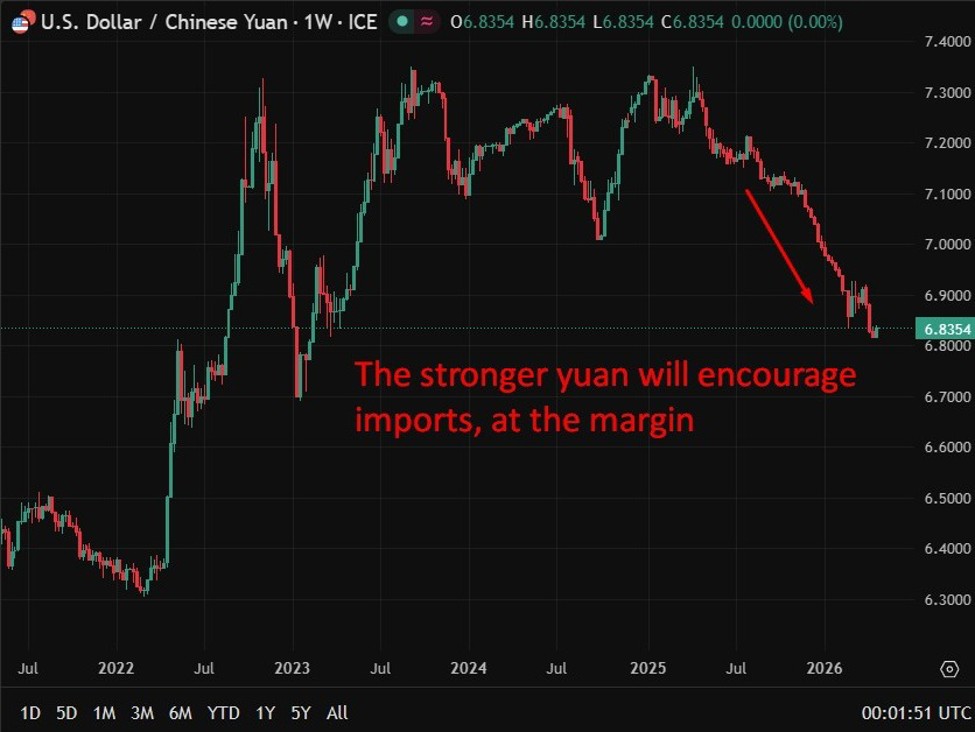
China imports set to overtake exports for first time since 2021 on AI chip surge
China’s import growth is forecast to hit a five-year high of 5% in 2026, overtaking export growth for the first time since 2021, driven by a surge in AI-related chip purchases. (Info via Bloomberg, gated).SummaryChina import growth forecast upgraded to 5% in 2026, a five-year high, more than double the 2.4% predicted in March, per Bloomberg poll of 17 economistsImport growth now expected to overtake export growth for the first time since 2021Export growth also revised higher to 4.9% from 3.6%China’s goods trade surplus forecast at just over $1.2 trillion, barely above 2025’s record levelIntegrated circuit imports soared 54% year-on-year in March, accounting for nearly a third of total import growthChip volume rose only 14%, suggesting surging prices accounted for much of the value increase, per Pantheon MacroeconomicsChina’s total imports rose 23% in Q1 2026 year-on-year; exports climbed 15%Yuan has strengthened close to 7% against the dollar over the past year, boosting purchasing powerOil and gas import values expected to fall 14% and 18% respectively in April due to reduced Strait of Hormuz traffic, per Pantheon MacroeconomicsChina identified as world’s largest supplier of AI-related goods but remains a net importer of advanced chipsRising global demand for EVs and solar panels seen as a tailwind for Chinese exportersEconomists have sharply upgraded their forecasts for China’s import growth, now expecting foreign purchases to outpace export expansion for the first time since 2021, as a global artificial intelligence investment boom drives surging demand for high-end chips and advanced manufacturing equipment.According to a Bloomberg poll of 17 economists conducted this month, China’s imports are forecast to grow 5% in 2026, a five-year high and more than double the 2.4% gain predicted as recently as March. The revision follows four consecutive years of import stagnation and decline and reflects a structural shift in China’s trade dynamics driven primarily by the country’s heavy reliance on cutting-edge technologies linked to AI development.The unexpected scale of the import surge became clear in first-quarter trade data, which showed imports climbing 23% year-on-year and exports rising 15%. The value of integrated circuits imported by China soared 54% in March from a year earlier, accounting for nearly a third of total import growth, even as import volumes rose a more modest 14%, according to estimates from Pantheon Macroeconomics. The gap between value and volume growth points to sharply higher chip prices as a significant driver alongside rising demand.The global AI spending boom, forecast to reach $2.5 trillion this year, has become a major engine of trade across Asia. While China has emerged as the world’s largest supplier of AI-related goods, it remains a net importer of certain critical technologies, particularly advanced semiconductors. Taiwan and South Korea, which supply the bulk of China’s AI-related chip imports, have both reported surging export volumes to China in recent months, underlining how the AI cycle is reshaping regional trade patterns.Beyond chips, several other factors are supporting China’s import growth. The yuan has strengthened by close to 7% against the dollar over the past year, lifting the purchasing power of Chinese households and businesses. A rally in metal prices has also inflated the import value of copper and aluminium products.Export growth has also been revised higher, to 4.9% from a previous estimate of 3.6%, partly reflecting inadvertent benefits from the Iran war. Rising global demand for green energy products is helping Chinese carmakers and solar panel manufacturers make further inroads in overseas markets, while China’s supply chains have proven more resilient to the energy shock than those of many other Asian economies.With import and export growth now running broadly in line, China’s goods trade surplus is projected at just over $1.2 trillion for 2026, barely above last year’s record level and a marked contrast to the rapid expansion seen over the previous two years.The near-term outlook is not without risk, however. Reduced traffic through the Strait of Hormuz is expected to weigh on energy import values in the months ahead, with Pantheon Macroeconomics forecasting sequential declines of 14% and 18% in oil and gas import values respectively in April. Weak domestic consumption also remains a structural drag, with economists noting that China’s recovery continues to rely heavily on external demand rather than any meaningful revival in household spending.—The sharp upward revision to China’s import forecasts carries significant implications for global trade flows and commodity markets. A narrowing of China’s trade surplus reduces one of the key pressure points in international trade relations, though at over $1.2 trillion the surplus remains historically elevated. The AI-driven chip import boom is a direct boon for Taiwan and South Korean exporters, and signals that the global AI investment cycle continues to underpin Asian trade even amid the energy disruption caused by the Iran war. The yuan’s near-7% appreciation against the dollar adds further purchasing power to Chinese buyers, potentially sustaining import momentum. On the downside, the expected 14-18% sequential decline in oil and gas import values in April from reduced Hormuz traffic is a near-term headwind that could complicate the import growth picture in coming months. For energy markets specifically, the data reinforces that China’s crude appetite is under pressure from both the Hormuz disruption and subdued domestic consumption. This article was written by Eamonn Sheridan at investinglive.com. 🔗 Source 💡 DMK Insight China’s import growth hitting 5% by 2026 is a game changer for global markets. This shift, driven by AI-related chip purchases, signals a potential pivot in trade dynamics. For traders, this could mean increased demand for semiconductor stocks and related tech sectors. If imports outpace exports, it might also affect currency valuations, particularly the yuan, as trade balances shift. Keep an eye on how this impacts commodities tied to tech production, like copper and rare earth elements. But here’s the flip side: while this growth is promising, it could also lead to inflationary pressures domestically, which might prompt the Chinese government to adjust monetary policy. Watch for any signals from the PBOC that could affect the yuan’s strength. Overall, traders should monitor semiconductor stocks closely and
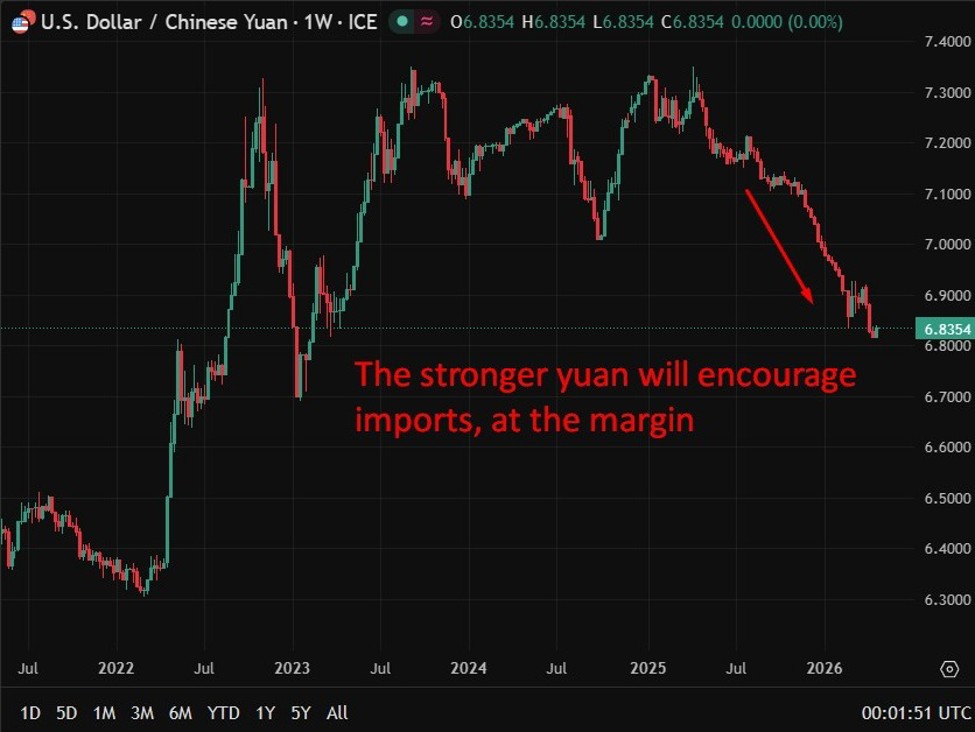
PBOC is expected to set the USD/CNY reference rate at 6.8282 – Reuters estimate
Earlier:China imports set to overtake exports for first time since 2021 on AI chip surge-The People’s Bank of China is due to set the daily USD/CNY reference rate at around 0115 GMT (2115 US Eastern time), a fixing that remains one of the most closely watched signals in Asian foreign exchange markets. China operates a managed floating exchange rate system, under which the renminbi (yuan) is allowed to trade within a prescribed band around a central reference rate, or midpoint, set each trading day by the PBOC. The current trading band permits the currency to move plus or minus 2% from the official midpoint during onshore trading hours. Each morning, the PBOC determines the midpoint based on a range of inputs. These include the previous day’s closing price, movements in major currencies, particularly the US dollar, broader international FX conditions, and domestic economic considerations such as capital flows, growth momentum and financial stability objectives. The midpoint is not a purely mechanical calculation, allowing policymakers discretion to guide market expectations. Once the midpoint is announced, onshore USD/CNY is free to trade within the allowable band. If market pressures push the yuan toward either edge of that range, the central bank may step in to smooth volatility. Intervention can take the form of direct buying or selling of yuan, adjustments to liquidity conditions, or guidance through state-owned banks. As a result, the daily fixing is often interpreted as a policy signal rather than just a technical reference point. A stronger-than-expected CNY midpoint is typically read as a sign the PBOC is leaning against depreciation pressure, while a weaker fixing for the CNY can indicate tolerance for a softer currency, often in response to dollar strength or domestic economic headwinds.In periods of heightened global volatility, such as shifts in US rate expectations, trade tensions or capital flow pressures, the fixing takes on added significance. For investors, it provides insight into Beijing’s currency priorities, balancing competitiveness, capital stability and financial market confidence. This article was written by Eamonn Sheridan at investinglive.com. 🔗 Source 💡 DMK Insight China’s shift to importing more than it exports for the first time since 2021 is a game-changer for forex traders. This trend, driven by a surge in AI chip imports, signals a potential weakening of the yuan as demand for foreign currency rises. Traders should keep an eye on the USD/CNY reference rate set by the People’s Bank of China. If the rate is fixed higher, it could indicate a deliberate strategy to manage yuan depreciation, impacting not just forex markets but also commodities linked to China’s economic health. A weakening yuan might also ripple through global markets, affecting assets like gold and oil, which are often inversely correlated with the dollar. But here’s the flip side: if this trend leads to increased domestic production and innovation, it could stabilize the yuan in the long run. Watch for the USD/CNY rate closely; any significant moves could trigger volatility in related markets. Keep an eye on the daily charts for potential breakout levels around recent highs and lows to gauge market sentiment. 📮 Takeaway Monitor the USD/CNY reference rate closely; a higher fixing could signal yuan weakness, impacting forex and commodity markets significantly.
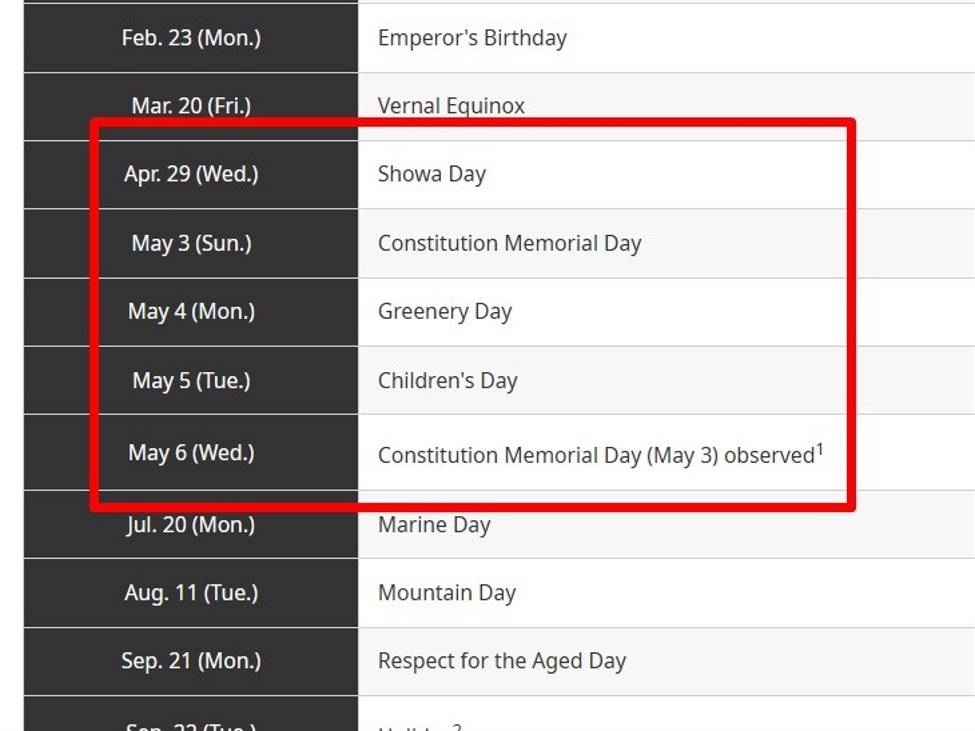
Heads up for Japan market holiday this week, and then three the following week
Tomorrow we get the Bank of Japan:Preview: BOJ expected to stay on hold next week but deliver hawkish signal on June moveBOJ may lean more hawkishly to ease pressure on the yen – NomuraHolidays follow on Wednesday then Monday, Tuesday and Wednesday next week (Golden Week). This article was written by Eamonn Sheridan at investinglive.com. 🔗 Source 💡 DMK Insight The Bank of Japan’s upcoming meeting is crucial for yen traders: here’s why. With expectations that the BOJ will maintain its current stance but signal a hawkish shift for June, traders should brace for volatility. The yen has been under pressure, and a more aggressive tone could lead to a stronger currency, impacting forex pairs like USD/JPY. If the BOJ hints at tightening, it could trigger a rally in the yen, especially as we head into Golden Week, when liquidity may thin out. Keep an eye on the 130 level for USD/JPY; a break below could signal a shift in sentiment. But don’t overlook the flip side—if the BOJ fails to deliver any substantial hawkish signals, the yen could weaken further, leading to a potential short opportunity for those looking to capitalize on a bearish trend. Watch for the BOJ’s language closely; any mention of inflation concerns or economic stability could provide clues on their future direction. The market’s reaction could unfold quickly, so be ready to adjust your positions accordingly. 📮 Takeaway Monitor the 130 level in USD/JPY closely; a hawkish signal from the BOJ could trigger a significant move in the yen.
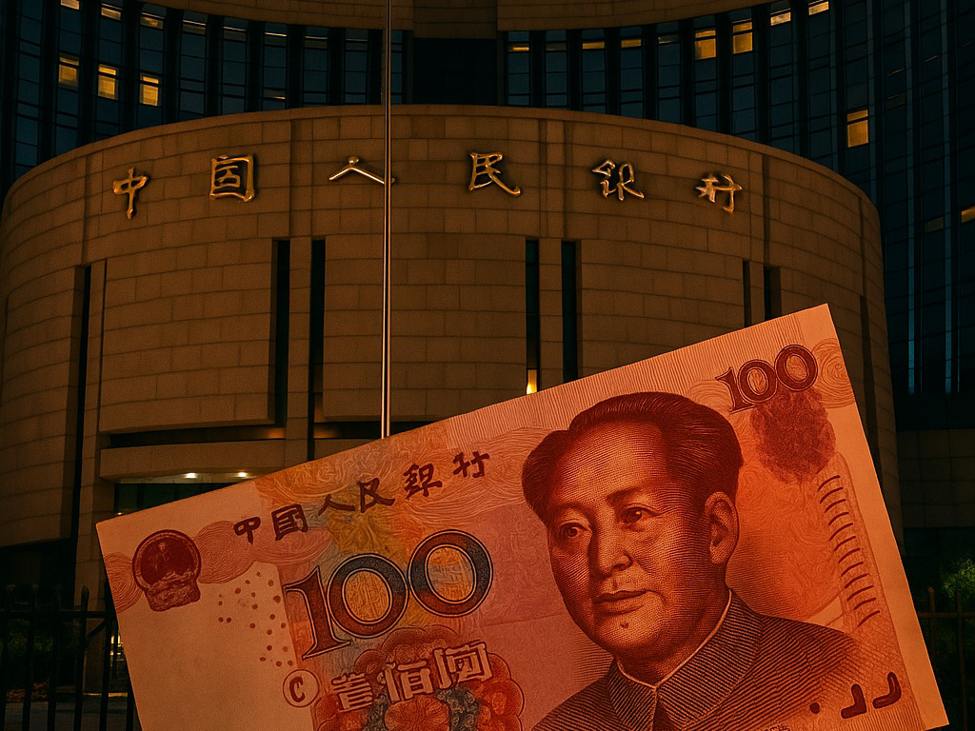
People’s Bank of China sets yuan reference rate at 6.8579 (vs. estimate at 6.8282)
PBOC CNY reference rate setting for the trading session ahead.The PBOC allows the yuan to fluctuate within a +/- 2% range, around this reference rate.Injects 218.5bn yuan via 7-day reverse repos in open market operates today. Unchanged rate of 1.4%. This article was written by Eamonn Sheridan at investinglive.com. 🔗 Source 💡 DMK Insight The PBOC’s recent actions signal a strategic move to stabilize the yuan amid ongoing economic pressures. Injecting 218.5 billion yuan through reverse repos while maintaining the interest rate at 1.4% indicates a commitment to liquidity support. This could be a response to weakening economic indicators or external pressures, especially with the yuan’s fluctuation cap of +/- 2%. Traders should watch for how this liquidity injection impacts the yuan’s strength against major currencies, particularly the USD. If the yuan starts to test the upper limit of its fluctuation range, it could trigger volatility in forex pairs. Additionally, this move might influence commodities priced in yuan, like gold, as a weaker yuan could lead to higher import costs. On the flip side, if the yuan strengthens unexpectedly, it could signal a shift in market sentiment that might catch traders off guard. Keep an eye on the daily trading range and any shifts in the PBOC’s policy stance, as these could provide critical insights into future market movements. 📮 Takeaway Watch the yuan’s performance against the USD; any breach of the +/- 2% range could signal increased volatility in forex markets.