
 Bitcoin
  Ethereum
  Tether
  BNB
BNB  XRP
XRP  USDC
USDC  Solana
  TRON
TRON  Lido Staked Ether
  Figure Heloc
Baker Hughes: Total rig count 543 versus 552 last weekOil rigs 409 versus 414 last weekNat Gas 127 versus 131 last week.Despite the higher prices, rigs decline in the current week. Go figure. This article was written by Greg Michalowski at investinglive.com. 🔗 Source 💡 DMK Insight Rig counts are down despite rising prices, and here’s why that’s crucial for traders: The latest Baker Hughes report shows a drop in the total rig count to 543 from 552, with oil rigs down to 409 and natural gas rigs at 127. This decline is counterintuitive given the recent uptick in oil prices, which typically incentivizes more drilling activity. A falling rig count can signal that producers are becoming more cautious, possibly due to concerns over demand or operational costs. For traders, this could mean a tightening supply in the future, which might support higher prices in the medium term. Look at the broader context: if we see continued declines in rig counts, it could lead to a supply crunch, especially if demand remains stable or increases. Keep an eye on the price action around key resistance levels in oil, as a sustained rally could trigger a shift in producer sentiment. On the flip side, if prices start to falter, the rig count could drop further, leading to a potential oversupply situation. Watch for any shifts in sentiment from major producers or changes in OPEC’s strategy, as these could significantly impact both oil and natural gas markets. 📮 Takeaway Monitor the rig count closely; a continued decline could signal a tightening supply, impacting oil prices significantly in the coming weeks.
Trump signals to allies no immediate plans for Iran invasion
I don’t know how much anyone believes any of this. On the dawn of this war, Trump was saying they were planning for negotiations and Marco Rubio was going to the Middle East. That this news was also leaked suggests that it was deliberately leaked.There has been a kneejerk lower in oil on this but that’s from the highs of the day. Just before the headlines, WTI was up $4.31 to $98.77 so this could just be an effort to cool pump prices for the weekend.The report says:The Trump administration is signaling to allies that it has no immediate plans for a ground invasion of Iran, even as it deploys thousands of troops to the Middle East, people familiar with the matter said.The people, who asked not to be identified discussing private deliberations, cautioned that President Donald Trump could change his mind at any moment or go ahead with an attack. They said the troops could serve a variety of roles, including to help with evacuations of American citizens but also to create a sense of strategic ambiguity about US intentions.A US Marine unit was pulled from Japan and should be arriving in the Middle East now while another was deployed from California and should arrive in mid-April or sooner.The ground troops could be a feint or could give Trump optionality if needed. At the moment, the US appears to be pursuing the negotiations route but it’s not clear how willing Iran is to offer any concessions, and has now publicly said it wants control over Hormuz.Iran may also be seeing the rising price of oil and falling stock markets and calculating that could put additional pressure on Trump to give in to their demands. The S&P 500 was last down 1.1% and the Nasdaq hit a six-month low today.A separate report just crosses cites an Israeli media source and says operations may continue for another four weeks. That’s a timeline that truly strains the global energy market should Hormuz remain closed, and given that it will take time to restart production. This article was written by Adam Button at investinglive.com. 🔗 Source

Nasdaq falls below 21,000 for the first time since August. TSLA shares down more than 3%
The mood in markets continues to deteriorate into the weekend. I don’t know if that’s pricing in the chance of a weekend escalation or it’s a realization the war could go on for another month (or longer) and that could cripple energy markets. Tech had been vulnerable to AI narratives unwinding all year and it’s worsening now.I worry that we’re still a long way from pricing in a global recession, energy shock and rate hikes. The market has shown patience with the war but Marco Rubio today indicated another two to four weeks. At the outset, Trump said 4-5 weeks and then repeatedly (including yesterday) said the US was ahead of schedule. That’s just not the case and the market is now indicating that it’s losing faith in the White House to wrap this up and get the oil flowing.The Nasdaq is down 1.9% on the day.The good news is that Iran is expected to float a proposal to the White House today or tomorrow and that could be the starting point for actual negotiations. We shall see.In terms of movers, the MAG7 looks like this:Meta (META): down 4.5%Amazon (AMZN): down 3.4% Microsoft (MSFT): down 2.0% Alphabet (GOOGL): down 2.4% Nvidia (NVDA): down 2.0%Tesla (TSLA): down 3.3% Apple (AAPL): up 1.2%Microsoft is particularly ugly and is down 35% from the high in October. You have to wonder if they announce a cut to capex at some point.The chart I want to highlight though is TSLA, which is at the lowest since September. Despite that, it still trades at extremely lofty multiples. The consensus for this year is just $2.02 in earnings, putting the P/E multiple at 177x.Just crossing now.Iran’s foreign minister writes: Israel has hit 2 of Iran’s largest steel factories, a power plant and civilian nuclear sites among other infrastructure. Israel claims it acted in coordination with the U.S. Attack contradicts POTUS extended deadline for diplomacy. Iran will exact HEAVY price for Israeli crimesUgly stuff. This article was written by Adam Button at investinglive.com. 🔗 Source 💡 DMK Insight Market sentiment is souring, and here’s why that matters: traders need to brace for volatility. The ongoing geopolitical tensions are weighing heavily on market psychology, especially as fears of prolonged conflict could disrupt energy supplies. If traders are pricing in a weekend escalation, we might see a spike in volatility, particularly in energy stocks and commodities. The tech sector, already jittery from AI narratives, could face further pressure as investors shift towards safer assets. Watch for key support levels in energy markets; a breach could trigger a cascade effect across correlated sectors. On the flip side, this could present buying opportunities for those willing to go against the grain. If the market overreacts to negative news, look for potential rebounds in oversold assets. Keep an eye on sentiment indicators and the VIX for signs of panic selling. The next few days will be crucial; monitor how markets react to any weekend developments. 📮 Takeaway Watch for energy market support levels; a breach could signal broader market volatility, impacting tech and commodities significantly.
WTI crude oil touches $100 per barrel. Eyes on steel as Iran vows revenge
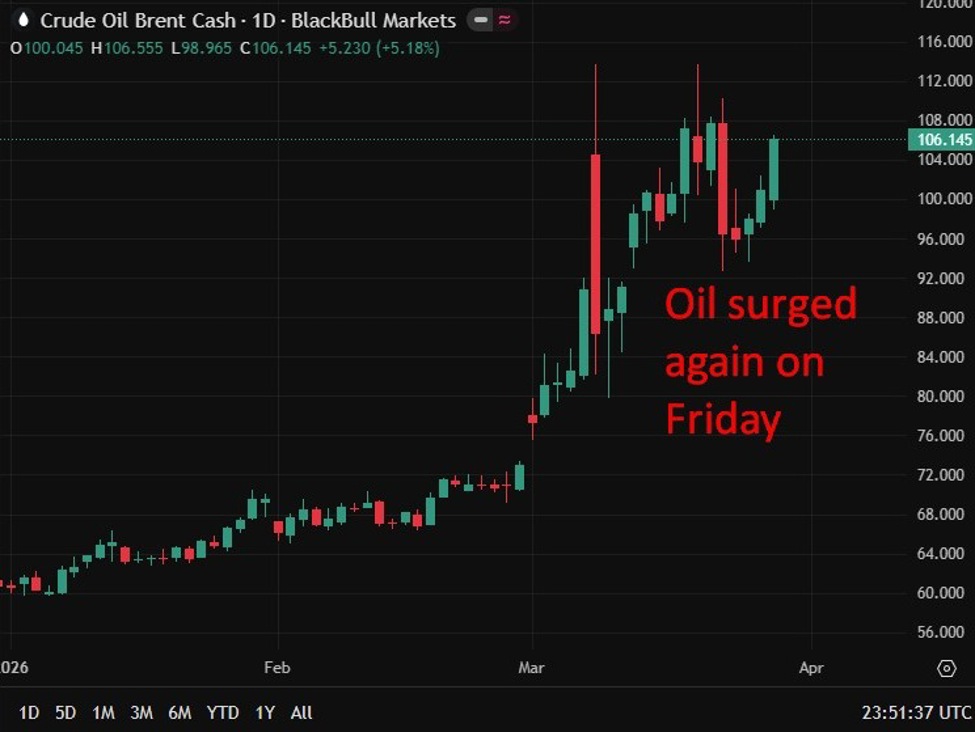
The market continues to bid up oil. WTI settled up $5.16 to $99.64 but shortly before settlement it hit $100 per barrel for the first time since Monday, when Trump pushed back his deadline.The market is increasingly seeing longer timelines on resolving this war.Eyes are also on the steel market. A US-Israeli strike occurred today on a large Iranian steel plant. In response, Iran has just released a target list of steel plants it will hit in the coming hours.Kuwait Steel (United Steel Industrial Corporation) — Kuwait City, KuwaitEMSTEEL Group (United Iron and Steel Company) — Abu Dhabi, UAEYehuda Steel Ltd. — Ashdod, IsraelSaudi Iron & Steel Co. (Hadeed) — Al Jubail City, Eastern Saudi ArabiaFoulath Holding — Khalifa bin Salman Port, BahrainQatar Steel QPSC — Mesaieed Port, QatarThe messages showing the various plants look like this:What strikes me first is that Qatar is on the list. They had sent some less-aggressive messages about Iran and there was some speculation they had reached a deal to minimize hostilities but that doesn’t appear to be the case based on these messages.The largest facilities are in Saudi Arabia and produce about 7.0 Mt of steel annually. Combined, the facilities make about 15 Mt of steel, which is mostly rebar, billet and construction steel. The Bahrain facilities also produces 13 million tons of premium iron-ore pellets, making it the world’s largest DR merchant pelletizing producer.For some sense of size, the largest US producer is Nucor, which produces 30 Mt across 26 facilities in the US.In terms of the global economy, taking steel production off line wouldn’t be too big of a problem as it can be redirected from China, India and Turkey, which all have substantial overcapacity. This article was written by Adam Button at investinglive.com. 🔗 Source 💡 DMK Insight Oil’s recent surge to $100 a barrel is a game changer for traders: With WTI closing at $99.64, the market’s bullish sentiment is driven by geopolitical tensions and uncertainty. This uptick isn’t just a blip; it’s indicative of a broader trend where traders are adjusting their expectations for a prolonged conflict, which could lead to sustained high prices. For those in the energy sector, this means recalibrating strategies—considering long positions in oil-related assets or ETFs. But here’s the flip side: as oil prices rise, inflationary pressures could increase, impacting consumer spending and potentially slowing economic growth. Watch for how this affects correlated markets, particularly steel, which is sensitive to energy costs. Key levels to monitor include the psychological $100 mark and any resistance that might form around it. Traders should also keep an eye on inventory reports and OPEC’s next moves, as these could provide further volatility. In the coming weeks, expect fluctuations as the market digests these developments, so stay nimble and ready to adjust your positions accordingly. 📮 Takeaway Watch for WTI oil prices around $100; a sustained break above could signal further bullish momentum, impacting related sectors like steel.
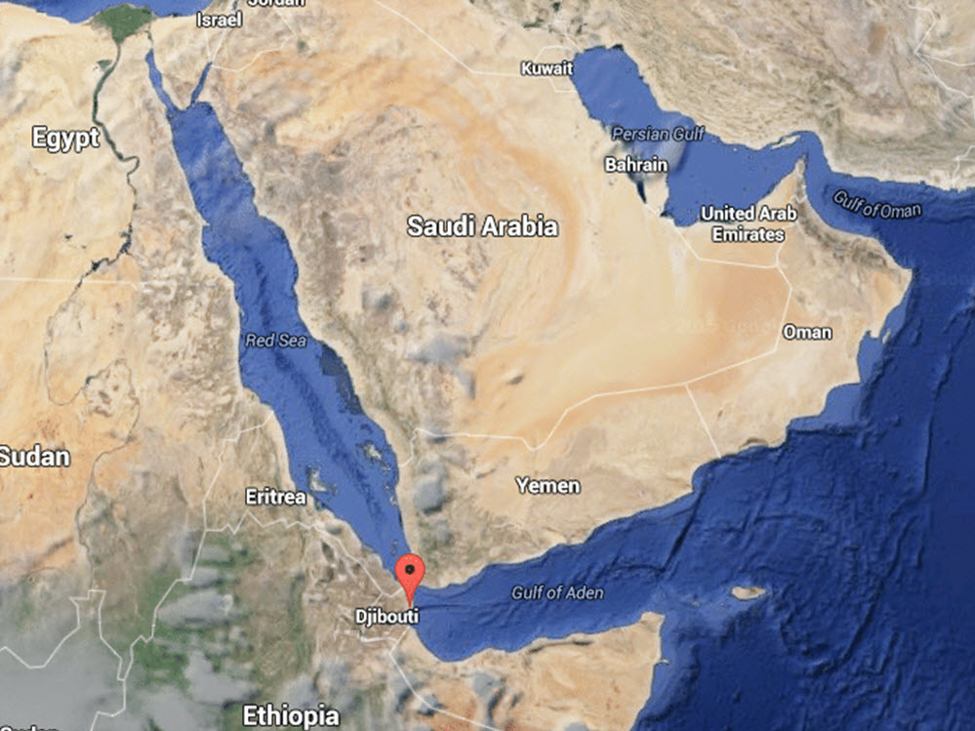
Houthis in Yemen announce entry into the conflict if any alliance joins the US and Israel
This day just keeps getting worse.At the start of trading Monday it looked like Trump was on track to get some kind of ceasefire by now. Instead, we have talk of bombing steel plants and now this.The Houthis in Yemen say they will enter the conflict on the side of Iran if any alliance joins the US and Israel. The possible chokepoint now is the the Bab el-Mandeb Strait, which they could try to blockade. If so, it’s not as devastating as the Strait of Hormuz because the traffic can go through the Suez canal. But it makes the trip significantly longer as the Saudi oil redirected to the pipeline in the Red Sea would now have to travel through the Mediterranean and then around Africa.Saudi Arabia has also indicated it could enter into the war and that could mean a showdown between the Iran-backed Houthis and Saudi Arabia, who have already been fighting at various levels for 11 years.With this announcement, we are seeing WTI crude back over $100 as all signs point to escalation rather than ceasefire.Soon we will start to find out how this is hitting the global economy with gasoline and diesel prices spiking. In places, there are already signs of shortages and I can’t see those improving any time soon.Update: Earlier reports said they would enter the war but the later statement made it clear that they will enter if others join the US and Israel. It looks like this is aimed at deterrence. This article was written by Adam Button at investinglive.com. 🔗 Source 💡 DMK Insight Geopolitical tensions are spiking, and here’s why that matters for traders: escalating conflicts can lead to volatility in oil and commodity markets. With the Houthis entering the fray, we could see a significant impact on supply chains, especially if oil prices react to fears of disruptions. Traders should keep an eye on crude oil futures, which often respond sharply to such news. If tensions escalate, we might see oil prices testing key resistance levels, potentially above recent highs. But it’s not just oil; related assets like gold could also see increased buying as investors seek safe havens. The market’s reaction to these developments could set the tone for the week, especially as traders digest any further news on the conflict. Watch for key economic indicators that could be influenced by these geopolitical events, such as U.S. inventory reports or OPEC announcements. The real story is how quickly the market shifts from optimism to fear, so stay alert for sudden price movements in both oil and gold as the situation unfolds. 📮 Takeaway Monitor crude oil futures closely; any escalation in conflict could push prices above key resistance levels, impacting trading strategies this week.

Major US stock indices close lower. Major indices close lower for the 5th week.
The major US stock indices are closing lower for the day and lower for the week. The decline this week is the 5th consecutive weekly decline. The S&P decline is the worst string in 4 years.A look at the closing levels shows:Dow industrial average-793.78 or -1.73% at 45166.33. S&P index fell -108.49 or -1.67% at 6368.67.NASDAQ index fell -459.72 points or -2.15% at 20948.36.For the trading week:Dow industrial average fell -0.90%S&P index fell -2.12%NASDAQ index -3.23%From the recent highs, both the Dow and the NASDAQ index are down over 10%..Dow industrial average is down -10.58% from the January highS&P index is down -9.05%NASDAQ index is down -12.72%As a point of comparison in 2025, the corrective move from the February high to the April/May low saw the: Dow industrial average fell -18.74%S&P index fell -21.35%NASDAQ index fell -26.48%Looking at the weekly chart of the major indices, the Dow industrial average has reached it 38.2% retracement of the move up from the April low at 45202.60, and is also testing a swing area near 45073.63. The price is trading at its lowest level since September 2025.For the S&P index, it remains above the 38.2% retracement at 6174.38 and also a swing level between 6147 and 6212. That area is around 3% to 3.5% away. Another down week could have prices near that level next week.For the NASDAQ index, the price is still above its 38.2% retracement of the move up from the April low comes in at 20, 491.86. That is within a swing area between 20,204 and 20,560 (see yellow area on the chart below). The low of that swing area is about 3.4% away from current levels.Once again, the corrective declines from last year were much greater than what would project if the aforementioned the support levels are reached and hold support. So there is room to roam if the market continues to be pushed by the inability to solve the war in Iran, and higher oil prices continue to pressure the economies and and growth potential. This article was written by Greg Michalowski at investinglive.com. 🔗 Source 💡 DMK Insight The S&P’s fifth consecutive weekly decline signals serious market weakness, and here’s why that’s crucial for traders: With the Dow down 793.78 points, or 1.73%, at 45166.33, this marks the worst stretch for the S&P in four years. Such a prolonged downturn can lead to increased volatility as traders reassess their positions. This trend isn’t just a blip; it reflects broader economic concerns, including potential interest rate hikes and inflation fears. Traders should be wary of short positions, as a rebound could occur if the market finds support around key levels. Watch for the S&P to test the 4300 mark, which could act as a psychological barrier. If it breaks below this level, expect further selling pressure. On the flip side, this could create buying opportunities for those looking to enter at lower prices. Institutions might start accumulating shares if the market shows signs of stabilization. Keep an eye on volume trends and any news that could shift sentiment, as these will be critical in determining the next moves. 📮 Takeaway Watch for the S&P to test the 4300 level; a break below could trigger more selling, while stabilization might offer buying opportunities.
investingLive Americas market news wrap: Oil prices surge as war worries mount
Iran expected to deliver counter-proposal to the US today – reportTrump signals to allies no immediate plans for Iran invasionHouthis in Yemen announce entry into the conflict to support IranSecretary of State Rubio said that the war with Iran will continue for another 2-4 weeksUMich final March consumer sentiment 53.3 vs 54.0 expectedECB Schnabel: There is no need to rush into actionPhiladelphia Fed Pres. Paulson: Fed has made notable progress bringing inflation downMore from Paulson: Impact of Iran War comes as inflation has been highFed’s Barkin: Even before oil shock, progress on inflation was stallingIran hackers claim the breach of Kash Patel’s personal emailBaker Hughes total rig count falls to 543 from 552 last weekMarkets:WTI crude oil up $5.59 to $100.07S&P 500 down 1.7% to 6368Gold up $135 to $4513US 10-year yields up 3.6 bps to 5.00%Bitcoin down 4.2%USD leads, GBP lagsIt was an ugly one for most markets today, with the exception of gold and oil. The Nasdaq fell to a six month low as war worries extended throughout the day. The positive backdrop of Trump extending his deadline to strike power facilities yesterday ultimately failed. The thinking is that the 10 day extension will add more pain and that a deal doesn’t look promising.As oil steadily climbed it pushed yields higher and equities lower. Compounding the pain in stocks is an intensifying selloff in tech stocks led by some of the highest flyers this year and last. That looks like a deleveraging move as the uncertainty around the economy grows. Early on in the conflict, there was trust this would wrap up in Trump’s 4-5 week timeline but we just completed Week 4 and Rubio today said 2-4 more weeks.Late in the day, the report about Houthis entering the war was questioned. US negotiator Steve Witkoff said he thinks there will be meetings with Iran this week and that Trump wants a peace deal. I guess all that is going to depend what Trump puts on the table. In an optimistic world maybe there is a way Iran gives up nuclear material in exchange for peace and sanctions relief. With that, Trump could also claim he stopped Iran from getting a nuclear weapon.The market is also likely fearful of a US escalation over the weekend. The report about the US not using ground troops barely had an effect on the market as everything is quickly discounted as possible mis-information.In terms of movers, the MAG7 looks like this:Meta (META): down 4.0%Amazon (AMZN): down 4.0% Microsoft (MSFT): down 2.5% Alphabet (GOOGL): down 2.5% Nvidia (NVDA): down 2.2%Tesla (TSLA): down 2.8% Apple (AAPL): down 1.6% This article was written by Adam Button at investinglive.com. 🔗 Source 💡 DMK Insight Tensions in the Middle East are heating up, and here’s why that matters for traders: With Iran set to deliver a counter-proposal to the US, market volatility could spike, especially in oil and forex markets. The Houthis’ involvement adds another layer of complexity, potentially impacting oil supply routes. Traders should keep an eye on crude oil prices, as any escalation could push prices higher, impacting inflation and central bank policies globally. The recent consumer sentiment reading from UMich at 53.3 indicates a bearish outlook, which could lead to risk-off sentiment in the markets. If traders are holding positions in energy stocks or commodities, now’s the time to reassess risk exposure. On the flip side, if diplomatic solutions emerge, we could see a quick reversal in oil prices and a strengthening of the dollar. Watch for key levels in crude oil around recent highs, and keep an eye on geopolitical news for sudden shifts. The next few weeks are critical; volatility is likely to increase, so be prepared for rapid market movements. 📮 Takeaway Monitor crude oil prices closely; any escalation in Iran tensions could push prices above recent highs, impacting inflation and market sentiment.
Trump jokes about Hormuz as war drags on, markets slide and NATO doubts resurface
Trump joked about the “Strait of Trump” as the Iran war enters month two, with Hormuz disruptions persisting. Mixed signals on talks continue, while US stocks fell for a fifth week and NATO commitment concerns resurfaced.SummaryTrump joked about the “Strait of Trump,” underscoring its central role in the Iran war and global oil flows Conflict enters second month with no clear resolution; risks of prolonged disruption remain high Mixed signals from Iran on negotiations continue to muddy the diplomatic outlook Trump struck a relaxed tone despite US equities extending losses to a fifth straight week NATO comments raise fresh doubts about US commitment to alliance amid geopolitical strain Nasdaq closes at lowest level in six months, highlighting risk-off sentimenU.S. President Donald Trump placed the Strait of Hormuz firmly at the centre of market and geopolitical focus, jokingly referring to the critical energy chokepoint as the “Strait of Trump” during remarks in Miami Friday afternoon, while reiterating that Iran must reopen the vital shipping route. Trump got a laugh with his light hearted:Iran has to “open up the Strait of Trump — I mean, Hormuz.” The comments come as the Iran conflict moves into its second month, with little sign of resolution. The war has evolved into a prolonged and complex standoff, with both military and economic dimensions intensifying. Iran retains the ability to disrupt or effectively block transit through Hormuz, a route that typically handles around 20 million barrels of oil per day, sustaining a significant risk premium across global energy markets.At the same time, the diplomatic picture remains highly uncertain. Washington continues to signal that talks with Tehran are progressing, with Trump stating that Iran is negotiating and seeking a deal. However, Iranian officials have repeatedly denied that formal negotiations are taking place, instead framing communications as indirect or routed through intermediaries. The conflicting narratives have added to market volatility and reinforced the sense that a clear off-ramp remains elusive.Trump appeared notably relaxed in his public remarks despite mounting market pressure. U.S. equities have now posted a fifth consecutive weekly decline, marking the longest losing streak in nearly four years, while the Nasdaq has fallen to its lowest level in six months. The divergence between market stress and political tone has not gone unnoticed by investors.Adding to the geopolitical backdrop, Trump also questioned the United States’ commitment to NATO, suggesting Washington does not necessarily “have to be there” for the alliance if European members fail to provide support. The remarks introduce a further layer of uncertainty for global security arrangements at a time when markets are already grappling with war-driven energy disruptions and fragile risk sentiment. This article was written by Eamonn Sheridan at investinglive.com. 🔗 Source 💡 DMK Insight The ongoing tensions in the Strait of Hormuz are more than just geopolitical banter; they’re impacting global markets. With the Iran war entering its second month and disruptions in oil supply routes, traders need to keep a close eye on energy prices, particularly crude oil. The uncertainty surrounding NATO’s commitment adds another layer of risk, which could lead to increased volatility in both the stock and forex markets. If oil prices spike, expect correlated movements in energy stocks and currencies of oil-exporting nations. The recent decline in US stocks for five consecutive weeks signals a bearish sentiment that could be exacerbated by rising oil prices. Traders should monitor key levels in crude oil, particularly if it approaches resistance points that could trigger further sell-offs in equities. The real story here is how these geopolitical tensions could lead to a risk-off sentiment among investors, prompting a flight to safe-haven assets like gold or the US dollar. Watch for any major announcements regarding NATO or further developments in the Iran situation, as these could shift market dynamics quickly. 📮 Takeaway Keep an eye on crude oil prices and NATO developments; a spike could trigger broader market volatility and impact energy stocks significantly.
Dow Jones Industrial Average enters correction territory as Hormuz fears fuel selloff
The Dow Jones Industrial Average (DJIA) tumbled on Friday, shedding roughly 510 points or 1.1% to fall below 45,500 and officially enter correction territory. 🔗 Source

South Korea: Trade resilience and energy-driven CPI – DBS
DBS Group Research sees South Korea’s March exports remaining in double-digit growth, supported by strong AI and data centre demand, higher memory prices and supply shortages, leading to a wider trade surplus despite rising import costs. 🔗 Source 💡 DMK Insight South Korea’s March exports are expected to show double-digit growth, and here’s why that matters: Strong demand for AI and data centers is driving this surge, alongside higher memory prices and ongoing supply shortages. For traders, this could signal a bullish trend for South Korean tech stocks and related sectors, especially if the trade surplus widens as projected. Keep an eye on the implications for the Korean won and how it might react to these export figures. If the won strengthens, it could impact forex pairs like USD/KRW, making it a critical watchpoint. But there’s a flip side—rising import costs could squeeze margins for companies reliant on foreign goods, which might dampen overall market sentiment. Traders should monitor key levels in tech stocks and the won, particularly if we see volatility around the March export release. Watch for any shifts in memory prices as well, as they could ripple through the semiconductor sector and influence broader market dynamics. 📮 Takeaway Watch for South Korea’s March export figures; a strong showing could boost tech stocks and the won, impacting USD/KRW significantly.