 Bitcoin
  Ethereum
  Tether
  BNB
BNB  XRP
XRP  USDC
USDC  Solana
  TRON
TRON  Lido Staked Ether
  Figure Heloc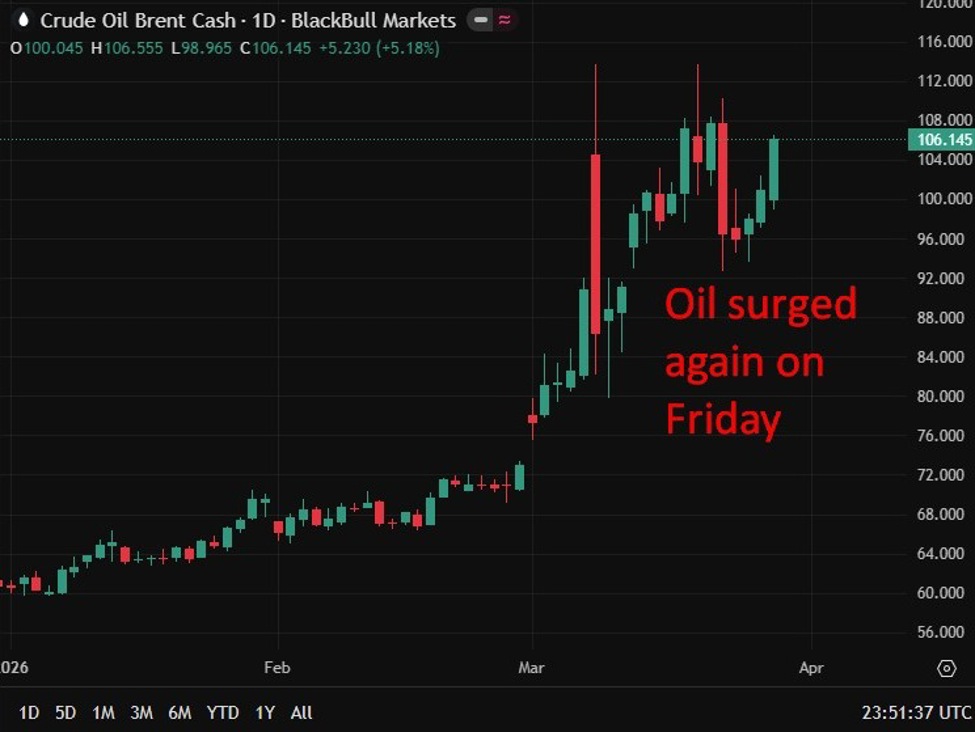
Trump joked about the “Strait of Trump” as the Iran war enters month two, with Hormuz disruptions persisting. Mixed signals on talks continue, while US stocks fell for a fifth week and NATO commitment concerns resurfaced.SummaryTrump joked about the “Strait of Trump,” underscoring its central role in the Iran war and global oil flows
Conflict enters second month with no clear resolution; risks of prolonged disruption remain high
Mixed signals from Iran on negotiations continue to muddy the diplomatic outlook
Trump struck a relaxed tone despite US equities extending losses to a fifth straight week
NATO comments raise fresh doubts about US commitment to alliance amid geopolitical strain
Nasdaq closes at lowest level in six months, highlighting risk-off sentimenU.S. President Donald Trump placed the Strait of Hormuz firmly at the centre of market and geopolitical focus, jokingly referring to the critical energy chokepoint as the “Strait of Trump” during remarks in Miami Friday afternoon, while reiterating that Iran must reopen the vital shipping route. Trump got a laugh with his light hearted:Iran has to “open up the Strait of Trump — I mean, Hormuz.” The comments come as the Iran conflict moves into its second month, with little sign of resolution. The war has evolved into a prolonged and complex standoff, with both military and economic dimensions intensifying. Iran retains the ability to disrupt or effectively block transit through Hormuz, a route that typically handles around 20 million barrels of oil per day, sustaining a significant risk premium across global energy markets.At the same time, the diplomatic picture remains highly uncertain. Washington continues to signal that talks with Tehran are progressing, with Trump stating that Iran is negotiating and seeking a deal. However, Iranian officials have repeatedly denied that formal negotiations are taking place, instead framing communications as indirect or routed through intermediaries. The conflicting narratives have added to market volatility and reinforced the sense that a clear off-ramp remains elusive.Trump appeared notably relaxed in his public remarks despite mounting market pressure. U.S. equities have now posted a fifth consecutive weekly decline, marking the longest losing streak in nearly four years, while the Nasdaq has fallen to its lowest level in six months. The divergence between market stress and political tone has not gone unnoticed by investors.Adding to the geopolitical backdrop, Trump also questioned the United States’ commitment to NATO, suggesting Washington does not necessarily “have to be there” for the alliance if European members fail to provide support. The remarks introduce a further layer of uncertainty for global security arrangements at a time when markets are already grappling with war-driven energy disruptions and fragile risk sentiment.
This article was written by Eamonn Sheridan at investinglive.com.
💡 DMK Insight
The ongoing tensions in the Strait of Hormuz are more than just geopolitical banter; they’re impacting global markets. With the Iran war entering its second month and disruptions in oil supply routes, traders need to keep a close eye on energy prices, particularly crude oil. The uncertainty surrounding NATO’s commitment adds another layer of risk, which could lead to increased volatility in both the stock and forex markets. If oil prices spike, expect correlated movements in energy stocks and currencies of oil-exporting nations. The recent decline in US stocks for five consecutive weeks signals a bearish sentiment that could be exacerbated by rising oil prices. Traders should monitor key levels in crude oil, particularly if it approaches resistance points that could trigger further sell-offs in equities. The real story here is how these geopolitical tensions could lead to a risk-off sentiment among investors, prompting a flight to safe-haven assets like gold or the US dollar. Watch for any major announcements regarding NATO or further developments in the Iran situation, as these could shift market dynamics quickly.
📮 Takeaway
Keep an eye on crude oil prices and NATO developments; a spike could trigger broader market volatility and impact energy stocks significantly.