
 Bitcoin
  Ethereum
  Tether
  BNB
BNB  XRP
XRP  USDC
USDC  Solana
  TRON
TRON  Lido Staked Ether
  Figure Heloc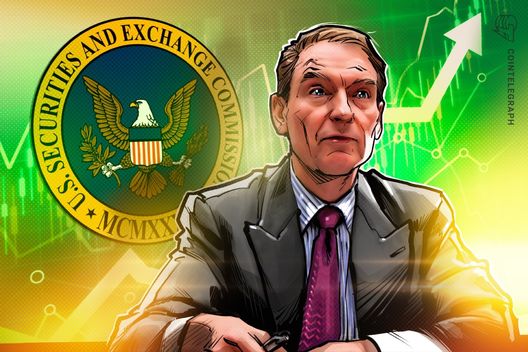
SEC chair Paul Atkins says the regulator should review giving a range of exemptions to crypto companies to allow “bespoke pathways” to raise money. 🔗 Source 💡 DMK Insight SEC chair Paul Atkins’ call for tailored exemptions could reshape crypto fundraising strategies. This move signals a potential shift in regulatory stance, which might encourage innovation and attract institutional interest. If crypto firms can navigate these ‘bespoke pathways,’ we could see a surge in new projects and funding rounds, impacting market liquidity. Traders should keep an eye on how this develops, especially in the context of ongoing regulatory scrutiny. Watch for reactions from major players in the crypto space, as they may adjust their strategies based on these new opportunities. Additionally, if this leads to a more favorable environment for fundraising, it could bolster the prices of related assets, particularly altcoins that thrive on new project launches. However, there’s a flip side—if the exemptions are too restrictive or complex, it might deter smaller players from participating. Traders should monitor the SEC’s next steps closely, especially any announcements regarding specific exemptions or guidelines, as these could create volatility in the market. Key levels to watch will be the reaction of major cryptocurrencies to this news, particularly Bitcoin and Ethereum, which often set the tone for the broader market. 📮 Takeaway Watch for SEC announcements on exemptions; they could significantly impact crypto fundraising and related asset prices in the coming weeks.

Coin Center urges SEC to prioritize rulemaking over no-action letters
The Washington, D.C.-based nonprofit cryptocurrency policy think tank argued that no-action letters within the crypto industry lead to fragmentation and uneven treatment. 🔗 Source 💡 DMK Insight The call for clarity on no-action letters in crypto is a big deal for traders. Fragmentation in regulatory treatment can create unpredictable market conditions, impacting everything from liquidity to price volatility. If certain projects receive leniency while others face scrutiny, it could lead to a mispricing of risk across the board. Traders should be wary of assets that might be affected by sudden regulatory shifts, especially those that rely heavily on these no-action letters for operational stability. Keep an eye on how this debate unfolds, as it could influence major players in the market. If the SEC or other regulatory bodies decide to standardize their approach, it could either bolster confidence in the market or trigger a sell-off if perceived as overly restrictive. Watch for any announcements or changes in policy over the next few weeks, as these could serve as key indicators of market direction. 📮 Takeaway Monitor regulatory developments closely; any shift in no-action letter policies could significantly impact asset prices and trading strategies in the coming weeks.

Key US senator eyes breakthrough for stalled crypto bill this week
The Senate Banking Committee has been looking to advance its crypto market structure bill since postponing a markup in January. 🔗 Source 💡 DMK Insight The Senate Banking Committee’s push to advance the crypto market structure bill is a pivotal moment for traders. This development could signal increased regulatory clarity, which many in the market have been anticipating. A well-defined regulatory framework might attract institutional investors who have been hesitant due to the current ambiguity. If the bill passes, it could lead to a surge in trading volumes and volatility, especially in major cryptocurrencies like Bitcoin and Ethereum. Traders should keep an eye on the timing of any potential vote or markup, as this could create significant price movements. However, there’s a flip side: if the bill faces delays or amendments that introduce stricter regulations, it could dampen market sentiment. Watch for key levels in Bitcoin around its recent support and resistance zones, as these could be tested in the wake of any news. The next few weeks are crucial, so stay alert for updates from the Senate. 📮 Takeaway Monitor the Senate’s actions closely; a positive outcome could trigger significant price movements in major cryptocurrencies, especially if Bitcoin tests its support levels.

UK lawmakers seek moratorium on crypto donations to political parties
A UK parliamentary committee urged an immediate moratorium on crypto political donations until stronger safeguards are in place. 🔗 Source 💡 DMK Insight The UK committee’s call for a moratorium on crypto political donations is a significant red flag for the market. This move could signal increased regulatory scrutiny, which often leads to heightened volatility in crypto assets. Traders should be aware that such restrictions might not only affect the crypto sector but could also ripple into related markets, particularly those tied to political funding and lobbying. If this moratorium gains traction, it could set a precedent for other countries, further complicating the landscape for crypto transactions. Watch for potential reactions from major cryptocurrencies, as any negative sentiment could push prices down, especially if key support levels are breached. Keep an eye on the daily charts for Bitcoin and Ethereum; a break below recent support levels could trigger a wave of selling. On the flip side, this could also present a buying opportunity if the market overreacts. If prices dip significantly, consider looking for entry points around key Fibonacci retracement levels. The real story is how traders react to this news—monitor sentiment closely in the coming days. 📮 Takeaway Watch for Bitcoin and Ethereum’s daily support levels; a breach could signal increased selling pressure amid regulatory fears.
Japan firms set for strong wage hikes as labour shortages persist, outlook uncertain
Japan wage growth remains strong, but Middle East risks cloud sustainability.Info via Reuters. Summary:Major Japanese firms set to deliver strong pay hikes in annual wage talksWage growth momentum extends into a fourth consecutive yearEarly deals include Mitsubishi Motors agreeing to +5.1% pay riseRengo unions seeking +5.94% vs +6.09% last year (actual +5.25%)Labour shortages continue to drive corporate willingness to raise wagesMiddle East conflict and rising oil prices pose downside risks to outlookJapan’s largest companies are set to deliver another year of robust wage increases as annual “shunto” labour negotiations conclude, extending a run of strong pay growth into a fourth consecutive year. The outcome reflects persistent labour shortages and growing pressure on firms to retain workers, even as uncertainty surrounding the global outlook begins to build.Major corporates, including Toyota and Hitachi, are finalising agreements with unions this week, with several firms already moving quickly to meet wage demands in full. Mitsubishi Motors, for example, agreed to an average pay increase of 5.1% in late February, one of the earliest settlements on record, highlighting the strength of wage momentum across the corporate sector.Japan’s largest labour union group, Rengo, is seeking an average wage increase of 5.94% this year, slightly below last year’s 6.09% demand, which ultimately resulted in a 5.25% rise, the largest increase in more than three decades. Early indications suggest that companies are again willing to deliver meaningful pay gains, supported by solid profits and ongoing labour market tightness.Importantly, this year’s wage negotiations have so far remained relatively insulated from external pressures such as higher U.S. tariffs. Instead, domestic factors, particularly labour scarcity and the need to sustain consumption, have dominated corporate decision-making.However, attention is increasingly shifting to whether this pace of wage growth can be sustained beyond 2026. The escalation of conflict in the Middle East has driven a sharp rise in energy prices, raising concerns about margin compression and slowing economic activity. Higher input costs could weigh on corporate profitability and, in turn, limit firms’ ability to continue delivering large pay increases in future rounds.In the current environment, the wage outcome carries significant macro implications. Sustained pay growth is a critical pillar of Japan’s reflation narrative and a key condition for the Bank of Japan to continue normalising policy. While this year’s negotiations reinforce confidence in the wage cycle, the outlook is becoming more uncertain as global risks intensify.For now, Japan’s wage momentum remains intact, but its durability will depend increasingly on how firms navigate rising costs and a more volatile external backdrop. —The BoJ is expected to remain on hold tomorrow:BOJ’s Ueda says inflation rising toward 2% ahead of policy meeting – recapJapan officials signal vigilance on yields, fiscal policy and FX as yen weakness persists This article was written by Eamonn Sheridan at investinglive.com. 🔗 Source 💡 DMK Insight Japan’s wage growth is on a solid upward trend, but geopolitical tensions in the Middle East could derail this momentum. The recent news of major Japanese firms, like Mitsubishi Motors, agreeing to significant pay hikes—5.1%—is a positive sign for consumer spending and economic growth. This marks the fourth consecutive year of wage growth, which could bolster the Japanese economy and support the yen in the forex market. However, the looming risks from the Middle East, including potential disruptions in oil supply and increased volatility, could overshadow these domestic gains. Traders should keep an eye on how these geopolitical factors might impact Japan’s export-driven economy and the yen’s strength. For those trading in forex, the USD/JPY pair could be particularly sensitive to these developments. If wage growth leads to increased consumer confidence, we might see a stronger yen, but any escalation in Middle East tensions could trigger a flight to safety, benefiting the dollar. Watch for key levels around 145.00 for USD/JPY as a potential pivot point in the coming weeks. 📮 Takeaway Monitor USD/JPY around 145.00; strong wage growth could support the yen, but Middle East risks may create volatility.
Australia leading index steady. Growth outlook softens to below trend on rate hikes & war
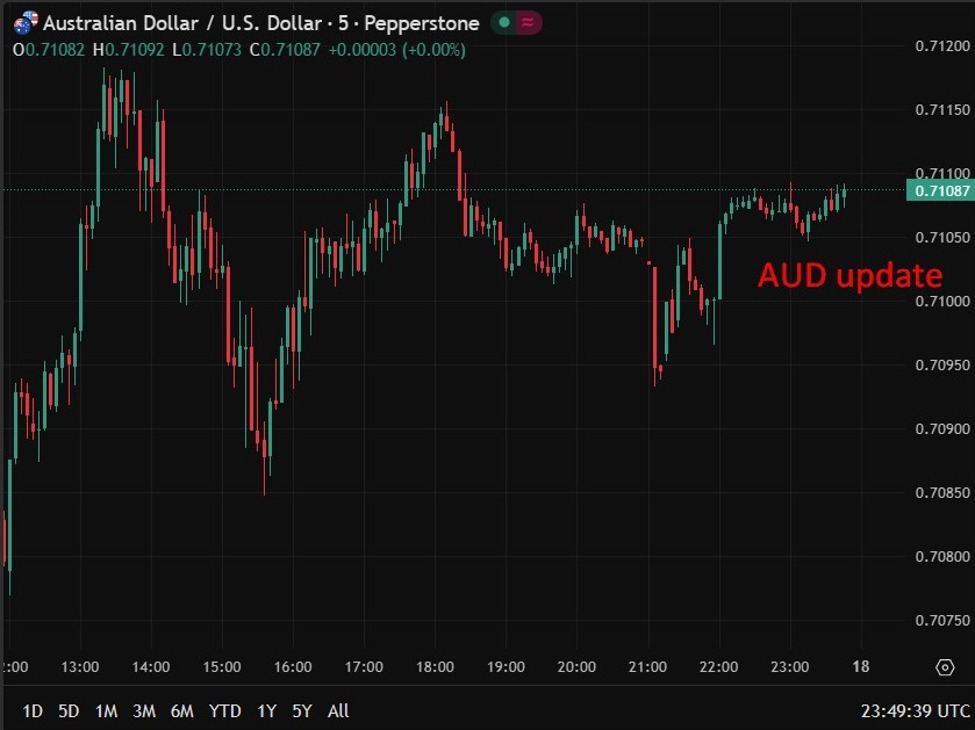
Australia’s leading index holds just above trend, but momentum is fading as headwinds build.Summary:Westpac–Melbourne Institute Leading Index held at +0.08% in February (unchanged from January)Down from +0.13% in September, signalling moderating momentumGrowth remains slightly above trend but losing paceFinancial components (ASX cooling) offset by commodities and hours workedRBA rate hikes and Middle East conflict expected to weigh furtherWestpac sees GDP slowing to ~2.0% in 2026 (from 2.5% in 2025)Australia’s growth outlook is showing early signs of softening, with the Westpac–Melbourne Institute Leading Index holding steady at +0.08% in February on a six-month annualised basis, unchanged from January but down from stronger readings late last year.The index, which provides a guide to economic activity three to nine months ahead, suggests that momentum remains slightly above trend in early 2026. However, the modest pace of growth and recent trajectory point to a gradual loss of momentum as headwinds begin to build.The current reading marks a step down from +0.13% recorded in September, with the moderation largely driven by developments in financial markets. In particular, the contribution from the S&P/ASX 200 has weakened significantly, shifting from a positive +0.19 percentage points contribution to broadly neutral. Forward signals suggest equities may soon become a drag on the index, reflecting softer market sentiment and tighter financial conditions.Partially offsetting this has been support from higher commodity prices and stronger hours worked, which have helped keep the index in positive territory. However, these supports may prove insufficient as broader macro pressures intensify.Westpac expects the combination of recent interest rate hikes by the Reserve Bank of Australia and the economic fallout from the Middle East conflict to weigh more heavily on activity in the months ahead. Higher borrowing costs are already beginning to constrain demand, while elevated energy prices and global uncertainty are likely to dampen both business and consumer confidence.As a result, Westpac forecasts Australia’s GDP growth to slow to around 2.0% in 2026, down from 2.5% in 2025, a pace considered below trend for the economy. While early signals of this slowdown are evident in the February reading, the impact is expected to become more pronounced in coming months as policy tightening and external shocks fully feed through.In the current environment, the Leading Index underscores a key shift: while the Australian economy has remained resilient, the balance of risks is tilting toward slower growth. With financial conditions tightening and global uncertainties rising, the outlook is increasingly one of moderation rather than expansion. This article was written by Eamonn Sheridan at investinglive.com. 🔗 Source 💡 DMK Insight Australia’s leading index is showing signs of fatigue, and here’s why that matters: The Westpac–Melbourne Institute Leading Index holding at +0.08% indicates that while growth is still slightly above trend, the momentum is clearly waning. This stagnation, down from +0.13% in September, suggests that traders should brace for potential shifts in market sentiment. The cooling ASX, coupled with rising headwinds from RBA rate hikes, could lead to increased volatility in both equities and commodities. If the index continues to decline, it might trigger a reassessment of risk across the board, particularly in sectors sensitive to interest rates. Look for key levels in the ASX and commodities markets; a sustained drop in the leading index could push the ASX below critical support levels, prompting a broader sell-off. Traders should monitor the RBA’s next moves closely, as any indication of a pause or shift in rate policy could either stabilize or further destabilize the market. Keep an eye on the upcoming economic data releases, as they could provide insight into whether this trend continues or reverses. 📮 Takeaway Watch the ASX closely; a sustained decline in the leading index could signal a broader market pullback, especially if it drops below key support levels.
Japan exports beat forecasts but lose momentum from prior surge
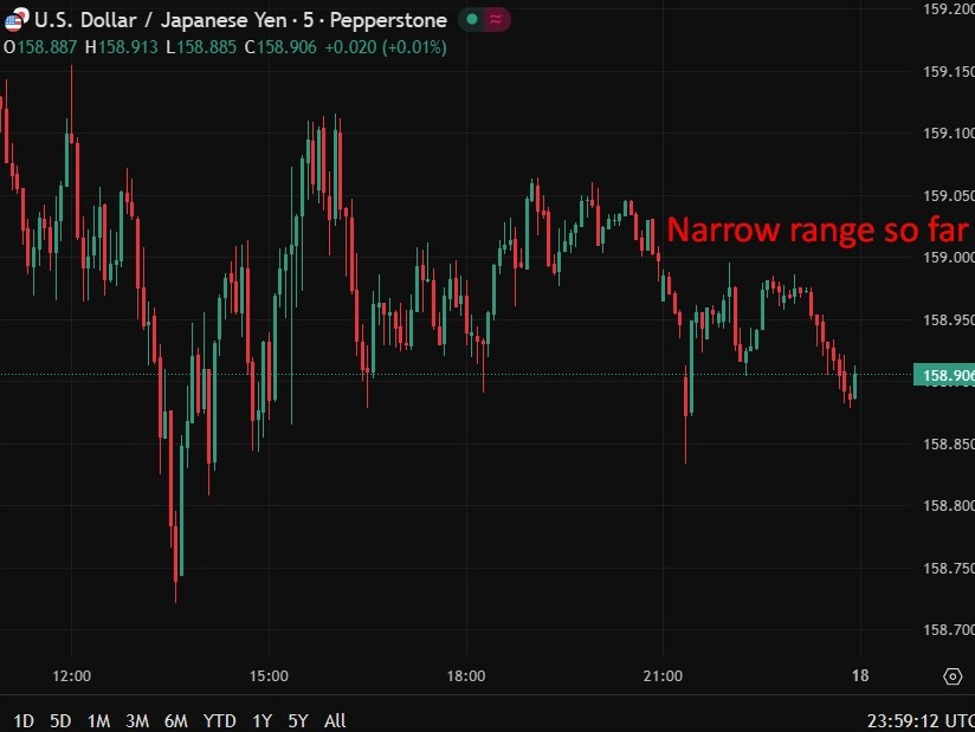
Japan swings to trade surplus as exports beat expectations despite weak China demand.Summary:Japan February exports +4.2% y/y (exp. +1.6%, prior +16.8%)Imports +10.2% y/y (exp. +11.5%, prior -2.5%)Trade balance +¥57.3bn (exp. -¥483.2bn, prior -¥1.15tn)Exports to China -10.9% y/y, US -8% y/yExports to EU +14% y/y, Asia +2.8% y/yData shows mixed external demand with sharp regional divergenceJapan’s trade balance unexpectedly returned to surplus in February, with Ministry of Finance data showing a surplus of ¥57.3 billion, sharply beating expectations for a ¥483.2 billion deficit and improving significantly from the ¥1.15 trillion deficit recorded in January.The surprise surplus was driven in part by stronger-than-expected export performance. Exports rose 4.2% year-on-year, comfortably exceeding the 1.6% gain anticipated by markets. However, the result still marked a notable slowdown from January’s robust 16.8% expansion, indicating that while external demand remains positive, momentum is moderating.On the import side, growth accelerated to 10.2% year-on-year, rebounding from a 2.5% contraction in January but coming in slightly below expectations of an 11.5% increase. The pickup in imports likely reflects higher energy costs and resilient domestic demand, although the softer-than-expected print suggests some moderation in underlying activity.A key feature of the report was the divergence across export destinations. Shipments to China fell sharply by 10.9% year-on-year, highlighting ongoing weakness in Japan’s largest trading partner and reinforcing concerns around China’s domestic demand. Exports to the United States also declined, down 8% year-on-year, suggesting softer momentum in another key market.In contrast, exports to the European Union surged 14% year-on-year, providing a significant offset, while shipments to the broader Asian region rose a more modest 2.8%. This uneven regional performance underscores the fragmented nature of global demand conditions.In the current environment, the data paints a mixed picture for Japan’s external sector. While the return to a trade surplus and the upside surprise in exports are supportive at the margin, the sharp slowdown from prior growth rates and weakness in key markets such as China and the US point to emerging headwinds.For policymakers, the report reinforces the delicate balance facing the Bank of Japan. External demand remains a key support, but its sustainability is increasingly uncertain amid geopolitical tensions, rising energy costs, and uneven global growth. The data is unlikely to materially shift the BOJ’s near-term stance but adds to the narrative of a gradually softening external backdrop.—Earlier:Japan manufacturers sentiment hits four-year high, but outlook dims on Middle East risksJapan firms set for strong wage hikes as labour shortages persist, outlook uncertainComing tomorrow, BOJ expected on hold:BOJ’s Ueda says inflation rising toward 2% ahead of policy meeting – recapJapan officials signal vigilance on yields, fiscal policy and FX as yen weakness persists This article was written by Eamonn Sheridan at investinglive.com. 🔗 Source 💡 DMK Insight Japan’s unexpected trade surplus could shift market sentiment around the yen and related assets. With February exports rising 4.2% year-over-year against expectations of just 1.6%, this suggests resilience in Japan’s economy despite a 10.9% drop in exports to China. The trade balance of +¥57.3 billion, a stark contrast to the anticipated deficit, indicates stronger-than-expected demand from other regions, particularly the EU, where exports surged 14%. This could bolster the yen in the short term, especially if traders perceive Japan as less vulnerable to China’s economic slowdown. However, the overall mixed data—imports rising 10.2% while exports to major partners like the US fell—highlights potential vulnerabilities. Traders should keep an eye on the yen’s performance against the dollar and euro, particularly around key technical levels. A sustained move above ¥130 could signal further strength, while a drop below ¥135 might prompt caution. Watch for reactions from institutional players who might adjust their positions based on these developments, as they could influence volatility in both forex and equity markets. 📮 Takeaway Monitor the yen closely; a move above ¥130 could indicate bullish momentum, while a drop below ¥135 may signal caution among traders.
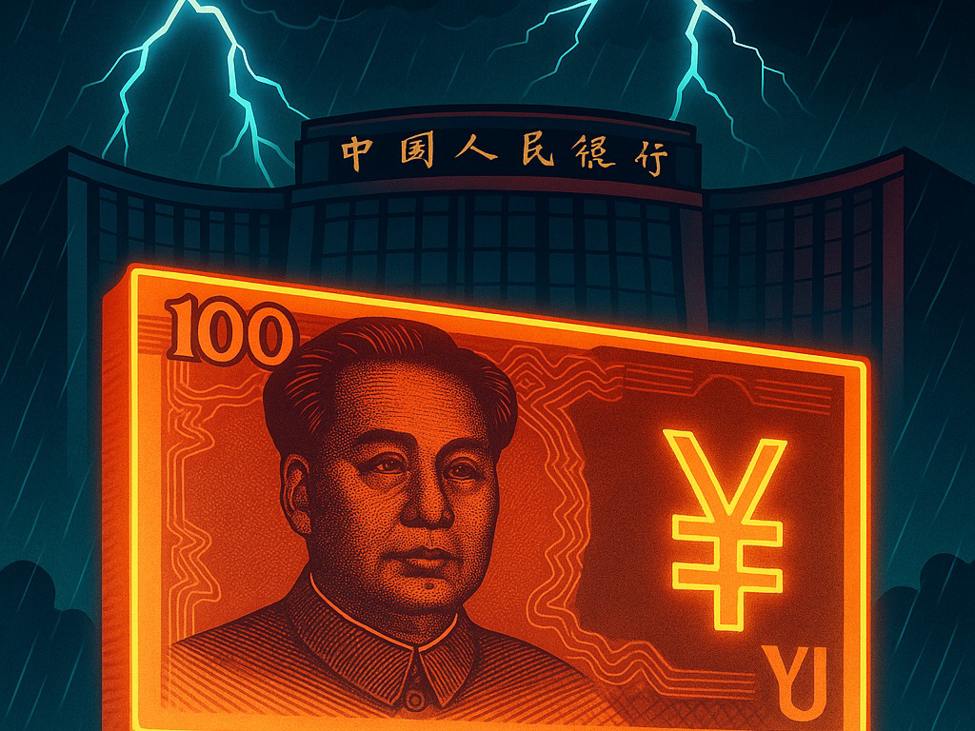
PBOC is expected to set the USD/CNY reference rate at 6.8798 – Reuters estimate
The People’s Bank of China is due to set the daily USD/CNY reference rate at around 0115 GMT (2115 US Eastern time), a fixing that remains one of the most closely watched signals in Asian foreign exchange markets. China operates a managed floating exchange rate system, under which the renminbi (yuan) is allowed to trade within a prescribed band around a central reference rate, or midpoint, set each trading day by the PBOC. The current trading band permits the currency to move plus or minus 2% from the official midpoint during onshore trading hours. Each morning, the PBOC determines the midpoint based on a range of inputs. These include the previous day’s closing price, movements in major currencies, particularly the US dollar, broader international FX conditions, and domestic economic considerations such as capital flows, growth momentum and financial stability objectives. The midpoint is not a purely mechanical calculation, allowing policymakers discretion to guide market expectations. Once the midpoint is announced, onshore USD/CNY is free to trade within the allowable band. If market pressures push the yuan toward either edge of that range, the central bank may step in to smooth volatility. Intervention can take the form of direct buying or selling of yuan, adjustments to liquidity conditions, or guidance through state-owned banks. As a result, the daily fixing is often interpreted as a policy signal rather than just a technical reference point. A stronger-than-expected CNY midpoint is typically read as a sign the PBOC is leaning against depreciation pressure, while a weaker fixing for the CNY can indicate tolerance for a softer currency, often in response to dollar strength or domestic economic headwinds.In periods of heightened global volatility, such as shifts in US rate expectations, trade tensions or capital flow pressures, the fixing takes on added significance. For investors, it provides insight into Beijing’s currency priorities, balancing competitiveness, capital stability and financial market confidence. This article was written by Eamonn Sheridan at investinglive.com. 🔗 Source 💡 DMK Insight China’s daily USD/CNY reference rate is about to drop, and here’s why that matters: The People’s Bank of China’s setting of the USD/CNY rate is a crucial indicator for traders, especially in the context of ongoing economic pressures and trade dynamics. A weaker yuan could signal increased export competitiveness but may also raise concerns about capital outflows and inflationary pressures domestically. Traders should keep an eye on the broader implications for commodities and emerging markets, as a depreciating yuan often leads to volatility in these sectors. If the reference rate comes in significantly lower than expected, it could trigger a sell-off in the yuan and related assets, impacting not just forex but also commodities like gold and oil, which are often inversely correlated with a stronger dollar. Look for the reaction in the USD/CNY pair around the fixing time, and monitor any shifts in sentiment that could ripple through to other Asian currencies. A break above key resistance levels in USD/CNY could indicate a stronger dollar trend, while a failure to hold those levels might suggest a short-term correction. Watch for any comments from the PBOC following the fixing, as they often provide insights into future monetary policy direction. 📮 Takeaway Keep an eye on the USD/CNY reference rate fixing; a significant drop could trigger volatility across forex and commodity markets, impacting trading strategies immediately.

Projectile strikes near Iran’s Bushehr nuclear plant, no damage reported
Projectile hits near Iran’s Bushehr nuclear plant, raising risks without immediate damage.Summary:IAEA says a projectile struck the Bushehr nuclear power plant siteNo damage to the facility and no injuries reportedStrike occurred near, not within, critical nuclear infrastructureBushehr is Iran’s only operational nuclear power plantIncident highlights rising risk to nuclear facilities amid conflictAdds to geopolitical risk premium despite no immediate escalationA projectile struck the premises of Iran’s Bushehr nuclear power plant on Tuesday evening, according to the International Atomic Energy Agency (IAEA), marking a concerning escalation in the proximity of military activity to critical nuclear infrastructure. Iranian authorities informed the agency of the incident, which reportedly caused no damage to the facility and resulted in no injuries to staff.Initial assessments indicate that the strike occurred in an area adjacent to the plant rather than directly impacting core nuclear operations. Radiation levels remain normal, and the IAEA has confirmed there is no immediate safety risk. However, the event underscores the growing dangers posed by the ongoing conflict in the Middle East, where infrastructure, including energy and transport, has increasingly come under threat. The Bushehr facility holds particular strategic importance. Located along Iran’s southern coast on the Persian Gulf, approximately 17 km southeast of the city of Bushehr, it is the country’s only operational nuclear power plant and generates around 1,000 megawatts of electricity. Constructed with Russian assistance after initial work began in the 1970s, the plant is a key component of Iran’s civilian nuclear energy programme and is monitored under international oversight.The plant’s coastal location adds to its geopolitical sensitivity. Situated near the Persian Gulf and not far from the Strait of Hormuz, a critical chokepoint for global oil flows, any incident involving Bushehr carries implications far beyond Iran’s domestic energy supply.In the current environment, the incident is significant less for its immediate physical impact and more for what it signals. The Middle East conflict has already disrupted oil production, shipping routes, and energy infrastructure. A strike involving a nuclear facility, even without damage, raises the stakes considerably, increasing the risk of miscalculation or unintended escalation.From a market perspective, the development reinforces the geopolitical risk premium embedded in energy prices. While the absence of damage limits immediate fallout, the proximity of military action to nuclear infrastructure is likely to heighten investor sensitivity to further escalation scenarios.Ultimately, the Bushehr incident serves as a reminder of how quickly risks can evolve in the current environment. Even near-misses involving nuclear assets can shift sentiment, particularly when markets are already navigating tight energy supply and elevated geopolitical uncertainty. This article was written by Eamonn Sheridan at investinglive.com. 🔗 Source 💡 DMK Insight The projectile strike near Iran’s Bushehr nuclear plant raises geopolitical tensions, and here’s why that matters: Even though there was no immediate damage or injuries, the incident underscores the fragility of nuclear security in a volatile region. Traders should keep an eye on oil and gas markets, as escalated tensions could lead to supply disruptions. Historically, geopolitical events have triggered price spikes in crude oil; for instance, similar incidents in the Middle East have often resulted in immediate price reactions. If tensions escalate, watch for Brent crude to test resistance levels around recent highs. On the flip side, if the situation stabilizes, we might see a pullback in energy prices, offering a potential buying opportunity for traders looking to capitalize on dips. Keep an eye on the IAEA’s next statements and any military responses, as these could provide clearer signals for market movements. Immediate watchpoints include oil price fluctuations and any shifts in U.S. or European sanctions against Iran. 📮 Takeaway Monitor Brent crude resistance levels closely; geopolitical tensions could trigger price spikes or pullbacks in the energy market.

India is working with Iran to secure safe passage for key fuel shipments through Hormuz,
India scrambles to secure LPG shipments through Hormuz as energy shortages intensify.Summary:India prioritising safe passage for 6 LPG tankers and 2 crude tankers via Strait of HormuzShips carry ~270,000 tonnes of LPG, critical amid domestic shortages22 India-flagged vessels remain stranded in the GulfIncludes LPG, crude oil, and LNG carriersIndia sources ~90% of LPG imports from Middle EastHormuz disruption severely impacting households, industry, and energy securityIndia is urgently working to secure safe passage for key fuel shipments through the Strait of Hormuz, prioritising six liquefied petroleum gas (LPG) tankers carrying around 270,000 tonnes of cooking fuel as the country grapples with an emerging supply crunch.According to officials familiar with the discussions, New Delhi is engaged in negotiations with Iran to facilitate the transit of these vessels, which have been stranded amid the effective closure of the strategic waterway. The shipments are being prioritised over crude oil and liquefied natural gas cargoes due to the immediate impact of LPG shortages on households, restaurants, and small businesses.India remains heavily dependent on Middle Eastern supply, sourcing roughly 90% of its LPG imports from the region. The disruption to flows through Hormuz, a critical chokepoint for global energy trade, has therefore had an outsized impact. The six LPG vessels form part of a broader group of 22 India-flagged ships currently stuck in the Persian Gulf, including four crude tankers and one LNG carrier.The urgency of the situation is underscored by recent developments. India previously secured safe transit for two LPG tankers carrying a combined 92,000 tonnes, equivalent to roughly one day of national demand. However, the scale of current disruptions suggests that supply pressures will persist without a sustained reopening of shipping routes.The government is also seeking passage for additional energy shipments, including crude and LNG cargoes chartered by major firms such as Indian Oil Corp., Bharat Petroleum, Hindustan Petroleum, Petronet LNG, and Reliance Industries. While access to discounted Russian crude has helped cushion the impact on oil supply, gas markets remain particularly strained, with LNG rationing already imposed on industrial users following disruptions to Qatari exports.In the current environment, the situation highlights the fragility of global energy supply chains. For India, one of the world’s largest energy importers, the Hormuz disruption represents a direct threat to energy security and domestic price stability.More broadly, the episode reinforces how quickly geopolitical tensions can translate into real-economy impacts. Even temporary disruptions to key transit routes can create acute shortages, forcing governments to intervene directly to secure critical supplies. Until shipping lanes normalise, risks to both regional and global energy markets are likely to remain elevated. This article was written by Eamonn Sheridan at investinglive.com. 🔗 Source 💡 DMK Insight India’s urgent efforts to secure LPG shipments through the Strait of Hormuz highlight a critical energy crisis. With 270,000 tonnes of LPG at stake, this situation isn’t just about immediate supply; it reflects broader geopolitical tensions that could ripple through global energy markets. Traders should keep an eye on how this impacts crude oil prices, especially if disruptions escalate. The 22 stranded vessels signal potential supply chain issues, which could lead to price spikes in energy commodities. If tensions rise further, we might see volatility in related assets like natural gas and even equities linked to energy sectors. Watch for any updates on shipping routes and geopolitical developments, as these could shift market sentiment quickly. Immediate price levels to monitor would be the reaction of crude oil futures, particularly if they breach key resistance levels in the coming days, signaling a broader market response to these supply constraints. 📮 Takeaway Keep an eye on crude oil futures for potential volatility as India secures LPG shipments; any disruptions could lead to significant price movements.