
 Bitcoin
  Ethereum
  Tether
  BNB
BNB  XRP
XRP  USDC
USDC  Solana
  TRON
TRON  Lido Staked Ether
  Figure Heloc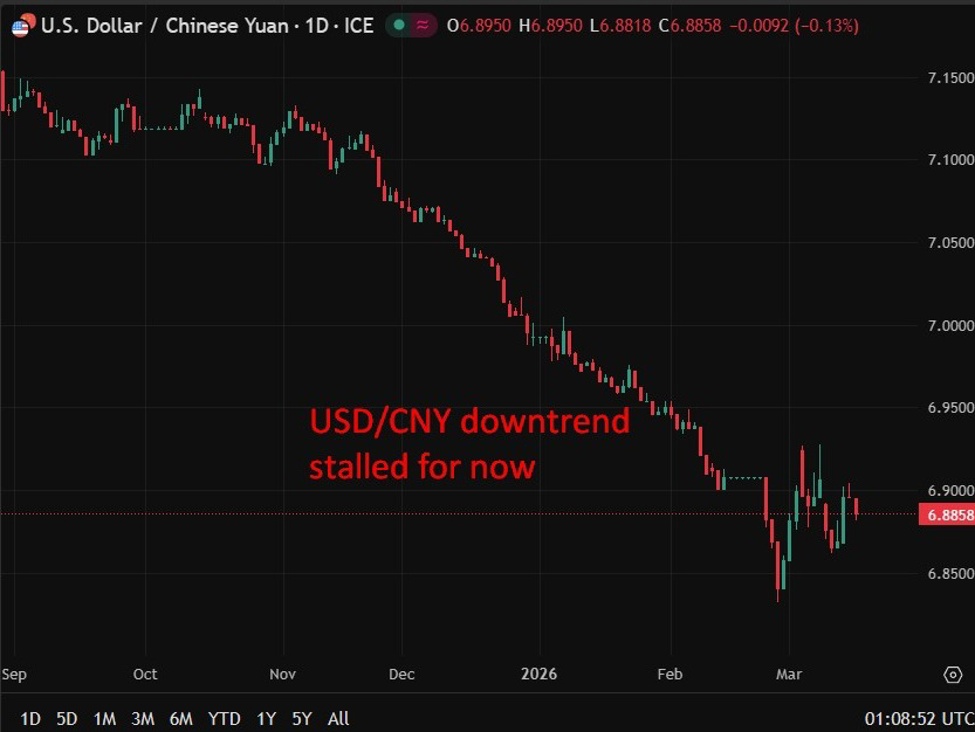
The PBOC allows the yuan to fluctuate within a +/- 2% range, around this reference rate. PBOC injects 20.5bn yuan in 7-day reverse repos at 1.4% (unchanged) in open market operations This article was written by Eamonn Sheridan at investinglive.com. 🔗 Source 💡 DMK Insight The PBOC’s recent actions signal a cautious approach to yuan stability amid global volatility. Injecting 20.5 billion yuan through reverse repos at a steady 1.4% shows their commitment to liquidity while maintaining control over currency fluctuations. This +/- 2% fluctuation range indicates they’re trying to balance market forces without letting the yuan depreciate too much, which could spook investors. Traders should keep an eye on how this impacts USD/CNY pairs, especially if the yuan approaches the upper or lower limits of that range. If the yuan weakens significantly, it could lead to broader implications for emerging markets and commodities, particularly those priced in dollars. On the flip side, if the yuan strengthens, it might signal confidence in the Chinese economy, which could attract foreign investment. Watch for any shifts in the PBOC’s policy or unexpected market reactions, especially in the next week as traders digest this liquidity move. 📮 Takeaway Monitor the USD/CNY pair closely; a move towards the 2% fluctuation limits could trigger significant trading opportunities.
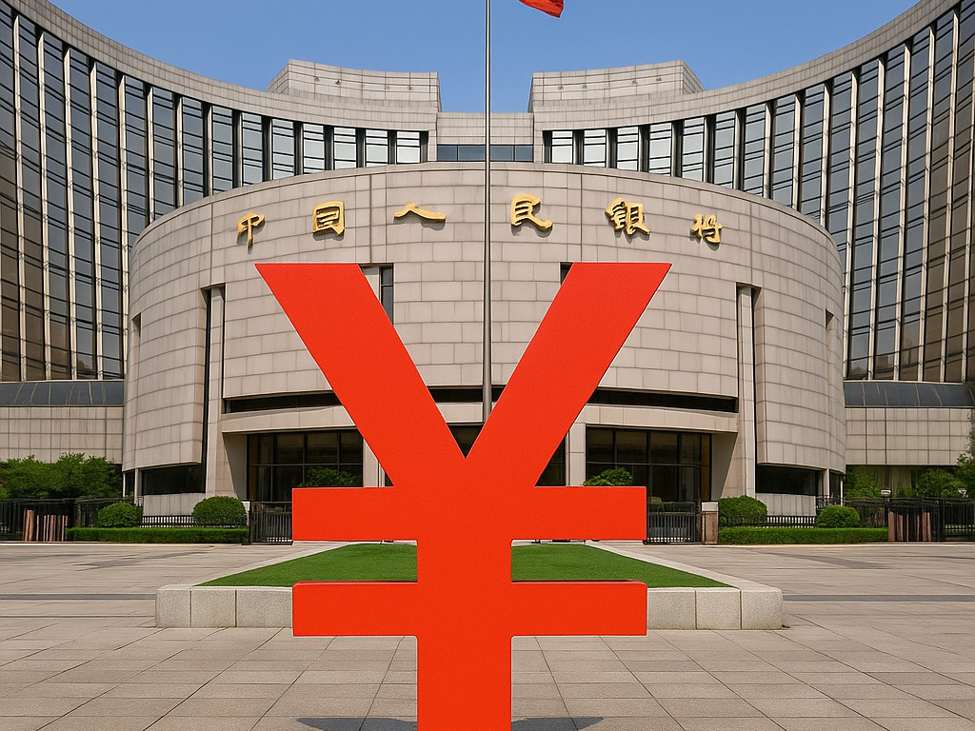
China firms ramp up FX hedging as yuan strength threatens export earnings
Chinese firms boost FX hedging to record levels as yuan strength pressures exporters.Summary:Chinese firms ramp up FX hedging as yuan strengthensNet forward settlement contracts hit record $107bn in FebruaryHedging surge reflects concern over export competitivenessYuan strength driven by dollar weakness, firm PBoC fixing, and improved US-China tiesStrong export performance also contributing to FX conversion flowsSignals corporates actively managing currency risk amid volatilityBloomberg reports that Chinese companies are significantly increasing their use of foreign exchange derivatives to hedge currency risk, as a strengthening yuan begins to weigh on export competitiveness. Data from the State Administration of Foreign Exchange (SAFE) showed that net outstanding forward settlement contracts reached a record $107 billion in February, underscoring a sharp rise in corporate hedging activity.The surge reflects growing concern among exporters that further yuan appreciation could erode margins, particularly as global demand conditions remain uneven. By locking in exchange rates through forward contracts and other derivatives, firms are seeking to protect earnings against adverse currency moves.Several factors have contributed to the yuan’s recent strength. A softer US dollar has been a key driver, alongside improved sentiment around US-China relations, which has supported capital flows and reduced depreciation pressure on the currency. At the same time, the People’s Bank of China has maintained relatively firm daily fixings, reinforcing expectations of currency stability or gradual appreciation.Strong export performance has also played a role. Robust trade flows have increased foreign currency inflows, prompting companies to convert more proceeds into yuan, further supporting the currency and amplifying the need for hedging. This dynamic creates a feedback loop in which stronger exports bolster the yuan, which in turn pressures exporters to hedge more aggressively.In the current environment, the rise in hedging activity is notable for what it signals about corporate behaviour. Rather than relying on policy support alone, firms are proactively managing currency exposure, suggesting a more mature and risk-aware approach to FX volatility.From a broader perspective, the development highlights the tension between currency strength and export competitiveness in China’s economy. While a firmer yuan can reflect underlying economic resilience and attract capital inflows, it also poses challenges for exporters operating on thin margins.For markets, the record level of hedging points to expectations that yuan strength may persist in the near term, even as policymakers balance stability with the need to support growth. This article was written by Eamonn Sheridan at investinglive.com. 🔗 Source 💡 DMK Insight Chinese firms are hedging FX like never before, and here’s why that matters: With net forward settlement contracts hitting a staggering $107 billion in February, this surge signals serious concern among exporters about maintaining competitiveness as the yuan strengthens. The yuan’s rise is largely fueled by a weaker dollar and supportive actions from the People’s Bank of China, alongside improving US-China relations. For traders, this trend could lead to increased volatility in both the yuan and related currency pairs, especially if these firms start adjusting their positions in response to market shifts. But don’t overlook the potential ripple effects. A strong yuan could pressure other Asian currencies, impacting forex pairs like USD/JPY or AUD/CNY. Traders should keep an eye on key resistance levels in the yuan, particularly if it approaches historical highs. Monitoring the PBoC’s policy moves and any shifts in US economic indicators will be crucial in predicting the yuan’s trajectory. Watch for any signs of a reversal in export performance, as that could trigger a wave of adjustments in hedging strategies. 📮 Takeaway Keep an eye on the yuan’s resistance levels and monitor PBoC actions; a strong yuan could impact USD/JPY and AUD/CNY significantly.
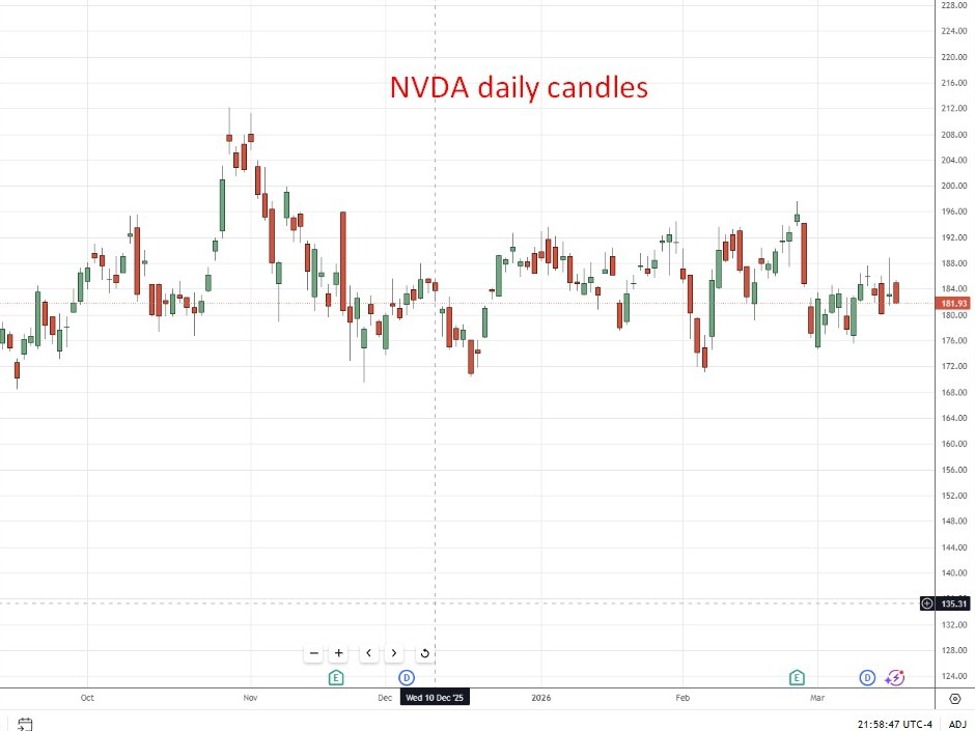
China approves Nvidia H200 AI chip sales as licences granted to multiple firms
China clears Nvidia H200 chip sales, signalling tentative thaw in tech restrictions.Summary:China approves purchases of Nvidia H200 AI chipsLicences granted for multiple Chinese customers, per source (Reuters)CEO Jensen Huang confirms orders and regulatory clearanceNvidia had awaited approvals from both US and Chinese authoritiesProduction of H200 chips set to restart after earlier haltSignals easing friction in US–China tech flows at the marginChinese authorities have approved the purchase of advanced H200 artificial intelligence chips from Nvidia by multiple domestic companies, according to a source cited by Reuters, marking a notable development in the complex regulatory landscape governing high-end semiconductor trade between the United States and China.The move comes after months of uncertainty, during which Nvidia had been awaiting export licences and regulatory clearance from both Washington and Beijing. Nvidia Chief Executive Jensen Huang confirmed that the company has now received approvals for “many customers in China” and has already secured purchase orders, signalling a resumption of commercial activity in a key market.The H200 chip, designed for high-performance AI workloads, sits at the centre of global competition in artificial intelligence and advanced computing. Its availability to Chinese firms suggests that, while broader export controls remain in place, there is still scope for limited engagement under tightly managed conditions.Nvidia had previously halted production of the H200 amid regulatory uncertainty, reflecting the sensitivity of the technology and the evolving policy stance on both sides. Huang indicated that manufacturing is now being restarted, pointing to improved visibility following the latest approvals.In the current environment, the development is significant not only for Nvidia but also for the broader semiconductor and AI ecosystem. China remains a critical market for advanced chips, and access to such hardware is essential for maintaining competitiveness in areas such as machine learning, cloud computing, and industrial automation.However, the approval does not signal a full easing of US-China technology tensions. Instead, it highlights a more nuanced dynamic, where selective approvals coexist with broader restrictions. Policymakers continue to balance national security concerns with commercial interests, resulting in a fragmented and evolving regulatory framework.For markets, the news is modestly positive for Nvidia and the semiconductor sector more broadly, reinforcing expectations of resilient demand for AI infrastructure. At the same time, it underscores that geopolitical risk remains a key factor shaping the trajectory of global tech supply chains. This article was written by Eamonn Sheridan at investinglive.com. 🔗 Source 💡 DMK Insight Nvidia’s H200 chip approval in China could shift market dynamics significantly. This news is crucial for traders as it signals a potential easing of tech restrictions between the U.S. and China, which has been a major concern for investors. The approval allows Nvidia to resume production and sales, likely boosting its stock and impacting related sectors like semiconductor manufacturing and AI technology. Traders should keep an eye on Nvidia’s stock performance, especially if it breaks above recent resistance levels. If it can hold above its previous highs, we might see a bullish trend that could ripple through the tech sector, affecting companies like AMD and Intel as well. However, it’s worth noting that while this is a positive development, geopolitical tensions can still create volatility. Traders should monitor any further regulatory changes or comments from authorities that could impact this newfound momentum. Key levels to watch for Nvidia are its recent highs and any significant volume spikes that could indicate strong buying interest. 📮 Takeaway Watch Nvidia closely; if it breaks above recent highs, it could signal a bullish trend in tech stocks, but stay alert for geopolitical risks.
Fed set to hold as Deutsche Bank flags geopolitics clouding outlook
Neutral-to-hawkish hold: focus on oil and geopolitics may keep rate-cut expectations contained, supporting USD and front-end yields if inflation risks are seen as skewed higher.Summary:Deutsche Bank expects the Federal Reserve to leave rates unchangedStatement tweaks likely modest, with labour data language smoothedJanuary–February payroll volatility to be downplayedGeopolitical risks expected to feature more prominentlyOil prices seen as key channel impacting financial conditionsInflation risks tilted slightly higher in the near termJerome Powell unlikely to signal policy shiftNear-term outlook expected to remain broadly unchangedThe Federal Reserve is widely expected to leave interest rates unchanged at its March policy meeting, with economists at Deutsche Bank anticipating a steady hand amid heightened geopolitical uncertainty.According to the bank’s preview, policymakers are likely to make only minor adjustments to the post-meeting statement, reflecting a desire to avoid overreacting to mixed incoming data. In particular, recent labour market signals are expected to be smoothed in the communication, following conflicting nonfarm payrolls readings across January and February that have complicated the near-term employment outlook.Instead, greater emphasis is expected to be placed on rising geopolitical tensions, which Deutsche Bank believes will be acknowledged as a source of increased uncertainty and a potential driver of short-term upside risks to inflation. The bank highlights that developments in energy markets, particularly oil prices, are likely to be central to the Fed’s evolving assessment of inflation dynamics.During the press conference, Chair Jerome Powell is expected to frame recent global developments as primarily feeding through to the economy via financial conditions. Higher energy costs, in particular, could tighten conditions indirectly, even without additional rate hikes.However, Deutsche Bank does not expect Powell to signal any meaningful shift in the policy trajectory. While acknowledging the evolving risk backdrop, the Fed is likely to maintain its current stance, balancing persistent inflation concerns against signs of uneven economic momentum.Overall, the message is expected to reinforce a “wait-and-see” approach, with policymakers remaining data-dependent while closely monitoring geopolitical developments and their potential spillover into inflation and broader financial conditions. This article was written by Eamonn Sheridan at investinglive.com. 🔗 Source 💡 DMK Insight The Fed’s neutral-to-hawkish stance is crucial for traders right now as it signals potential stability in USD and front-end yields. With Deutsche Bank predicting rates will remain unchanged, the focus shifts to inflation risks and geopolitical tensions. If inflation is perceived as a rising threat, we could see support for the USD, especially against currencies like the Euro and Yen. Traders should keep an eye on labor data, particularly any shifts in payroll volatility from January to February, as this could influence Fed sentiment. The market’s reaction to these data points will be key, especially if they deviate from expectations. But here’s the flip side: if geopolitical risks escalate, they could overshadow economic indicators, leading to unexpected volatility. So, while the Fed’s hold might suggest a calm market, underlying tensions could create opportunities for swing traders looking to capitalize on sudden price movements. Watch for any changes in front-end yields as a signal of market sentiment shifting in response to these developments. 📮 Takeaway Monitor labor data closely; any surprises could shift Fed expectations and impact USD strength against other currencies.
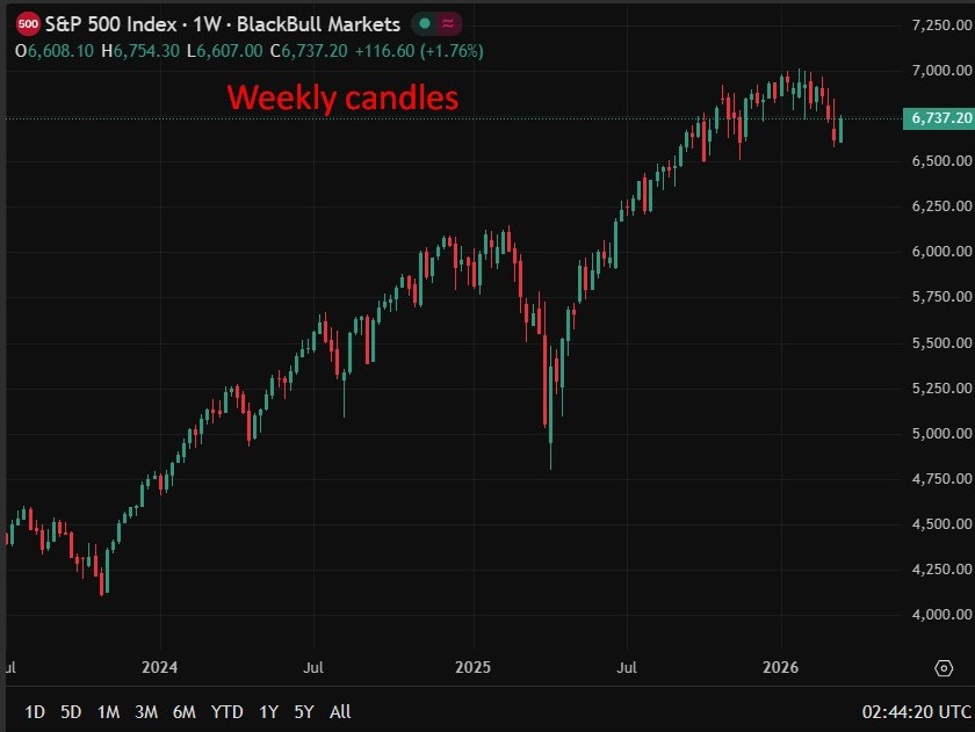
Barclays flags strongest stock buy signal in a year as sentiment resets
Bullish tactical signal: light positioning and washed-out sentiment raise the risk of a sharp upside squeeze in equities, potentially lifting the S&P 500 despite ongoing macro and geopolitical uncertainty.Summary:Barclays signals strongest equity buy opportunity in ~1 yearEquity Timing Indicator drops to -8.3, “highly attractive” zoneHistorically linked to strong short-term equity returnsWeak sentiment and positioning seen as supportive backdropCredit spreads and momentum deterioration triggered signalPotential for “sharp beta squeeze” highlightedLight hedge fund and CTA exposure could amplify upsideBroader Wall Street turning more constructive on equitiesUS equities are flashing their most compelling buy signal in nearly a year, according to a new note from Barclays, adding to a growing chorus on Wall Street that the recent bout of volatility may be nearing its end.In analysis reported by Bloomberg, the bank’s Equity Timing Indicator (BETI) has dropped to -8.3, its lowest level since the market turbulence sparked by tariff tensions in April last year. The reading places the gauge firmly within a range that Barclays associates with “highly attractive” entry points for equities.The indicator aggregates a wide range of inputs — including market internals, positioning, sentiment and macroeconomic conditions — to identify tactical turning points. Historically, readings below -7 have coincided with supportive conditions for equity rallies. Data cited by the bank shows that when BETI falls between -8 and -7, the S&P 500 has delivered average forward returns of around 6.6% over a 42-day horizon, with a strong positive hit rate.According to Alex Altmann, Barclays’ global head of equities tactical strategies, the latest signal reflects a combination of factors. These include a deterioration in momentum for the S&P 500, widening high-yield credit spreads, and a sharp unwind in bullish sentiment, as captured by the bank’s Equity Euphoria Indicator.Despite these headwinds, Altmann argues that the current setup is supportive for equities. He points to relatively subdued positioning among both systematic and discretionary investors, which could leave markets vulnerable to a rapid upside move if sentiment turns.In particular, the bank highlights the potential for a “sharp beta squeeze,” where equities rally strongly even without significant participation from fast-money investors. With commodity trading advisers holding roughly neutral or slightly short positions and hedge fund exposure sitting in the lower percentiles of recent ranges, any shift in sentiment could trigger accelerated buying.The call comes as US equities attempt to stabilise following recent choppy trading driven by geopolitical tensions and broader macro uncertainty. Other major institutions, including Goldman Sachs, Morgan Stanley and JPMorgan, have also struck a more constructive tone, pointing to resilient earnings and less stretched valuations as potential support for a rebound. This article was written by Eamonn Sheridan at investinglive.com. 🔗 Source 💡 DMK Insight Light positioning in equities suggests a potential upside squeeze is brewing. With Barclays highlighting a significant equity buy opportunity, the S&P 500 could see a rebound, especially given its current Equity Timing Indicator at -8.3, which historically aligns with strong short-term gains. This scenario is particularly interesting amidst the backdrop of macroeconomic and geopolitical uncertainties, as traders often react to sentiment shifts. If we see a surge in buying pressure, it could trigger a cascading effect, lifting not just the S&P 500 but also related assets like ETFs and sector-specific stocks. Watch for key resistance levels around recent highs; a break above those could confirm the bullish sentiment. However, it’s worth noting that while sentiment is washed out, the market can remain irrational longer than traders expect. Those with short positions might be caught off guard, leading to a rapid short-covering rally. Keep an eye on volume and market breadth for confirmation of any upward movement in the coming days. 📮 Takeaway Monitor the S&P 500 for a potential breakout above recent highs, especially with the Equity Timing Indicator at -8.3 indicating a buy opportunity.
investingLive Asia-Pacific FX news wrap: Oil price drift a little lower. Iraq/KRG pipeline
Barclays flags strongest stock buy signal in a year as sentiment resetsFed set to hold as Deutsche Bank flags geopolitics clouding outlookChina approves Nvidia H200 AI chip sales as licences granted to multiple firmsChina firms ramp up FX hedging as yuan strength threatens export earningsPBOC sets USD/ CNY mid-point today at 6.8909 (vs. estimate at 6.8798)India is working with Iran to secure safe passage for key fuel shipments through Hormuz,Projectile strikes near Iran’s Bushehr nuclear plant, no damage reportedJapan exports beat forecasts but lose momentum from prior surgeAustralia leading index steady. Growth outlook softens to below trend on rate hikes & warJapan firms set for strong wage hikes as labour shortages persist, outlook uncertainJapan manufacturers sentiment hits four-year high, but outlook dims on Middle East risksIraq, KRG agree to resume Ceyhan oil exports as Hormuz disruption tightens supplyRBA hikes to 4.10%. Split decision. Inflation risks & demand pressures. Where to now?Recap: RBA lifts rate to 4.1%. Split decision. Inflation risks & capacity pressures buildPrivate survey inventory shows a huge headline crude oil build much larger than expectedUS weighs easing Venezuela oil sanctions to boost supply amid global disruptionsUS major indices close higher for the 2nd consecutive day. Gains led by small-cap stocks.investingLive Americas market news wrap: A divergence appears between oil and stocksAt a glance:Iran launches retaliatory strikes after Larijani killingOil slips despite tensions, no fresh escalation signalsIraq and the Kurdistan Regional Government agreed to resume Ceyhan oil exportsMixed US inventory data: crude build, gasoline drawJapan exports slow; US auto shipments and China demand weakenJapan–US to announce ¥11tn+ investment packageFX subdued ahead of Fed; BoJ decision due ThursdayBoth Fed and BoJ expected to hold policy steadyChina firms reportedly approved to buy Nvidia H200 chipsWar-driven inflation risks rising, but growth headwinds buildingIran launched retaliatory strikes on Israel and US-linked assets following the killing of security chief Ali Larijani in an airstrike, though oil prices edged lower as markets saw no clear sign of further escalation or de-escalation. Price action was also weighed by mixed US private inventory data, with a larger-than-expected crude build offset by a deeper-than-forecast draw in gasoline. Official inventory data will follow on Wednesday morning US time. Iraq and the Kurdistan Regional Government agreed to resume Ceyhan oil exports.In Japan, export growth slowed, reflecting weaker auto shipments to the US and softer demand from China amid Lunar New Year disruptions. Separately, Japan and the US are expected to unveil a joint statement outlining more than ¥11 trillion in additional investment commitments, marking a second tranche of economic cooperation.Major FX pairs traded in subdued ranges ahead of today’s Federal Open Market Committee (FOMC) decision, with markets also looking ahead to the Bank of Japan policy announcement on Thursday (Japan time). Both central banks are widely expected to leave rates unchanged.In tech, multiple Chinese firms were reportedly granted approval to purchase NVIDIA H200 AI chips, suggesting some easing at the margin in cross-border semiconductor flows.Looking ahead, once the Fed decision passes, attention is likely to shift more fully to the economic implications of the Iran conflict. While the policy tone may lean hawkish with renewed emphasis on inflation risks, particularly via energy, there is a growing recognition that downside risks to employment and household income are also building. This article was written by Eamonn Sheridan at investinglive.com. 🔗 Source 💡 DMK Insight Barclays just issued its strongest stock buy signal in a year, and here’s why that matters: a reset in sentiment could lead to significant market movements. With the Fed likely to hold rates steady, traders should keep an eye on how this affects equities, especially in tech sectors buoyed by China’s approval of Nvidia’s AI chip sales. The ramp-up in FX hedging by Chinese firms indicates a proactive approach to counteract yuan strength, which could impact export earnings and, subsequently, global markets. This is a crucial moment for traders to assess their positions, particularly in sectors sensitive to geopolitical shifts and currency fluctuations. Watch for key levels in the USD/CNY pair as the PBOC sets the mid-point today; a strong yuan could pressure export-heavy stocks. On the flip side, while the bullish sentiment from Barclays is encouraging, geopolitical tensions remain a wildcard. Traders should be cautious of potential volatility spikes, especially if unexpected news emerges from the geopolitical landscape. Keeping an eye on the daily charts for major indices will be essential in the coming days. 📮 Takeaway Monitor the USD/CNY mid-point set by the PBOC today, as a strong yuan could impact export earnings and market sentiment significantly.

Oil price surge sees momentum being tested, are markets too complacent?
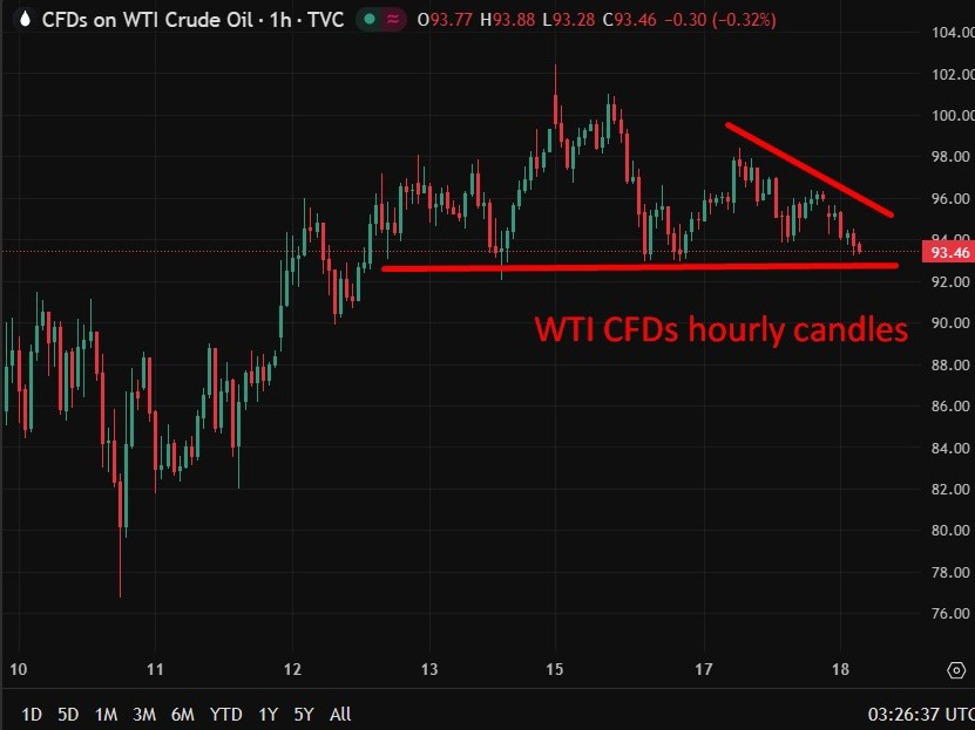
US stocks posted back-to-back daily gains in trading yesterday for the first time since the end of February. And S&P 500 futures are looking poised again, up another 0.4% today. The better market mood yesterday came despite oil prices holding higher but today, we are starting to see a drop in oil after this headline here: Iraq, KRG agree to resume Ceyhan oil exports as Hormuz disruption tightens supplyWTI crude oil is down well over 3% on the day and the near-term chart is one to keep an eye out for:We are starting to see WTI crude oil drop back to test its 200-hour moving average (blue line) once more. After the IEA intervention last week, that was the key near-term level that held and supported a bounce in oil prices back to $100. Now, that same level is called upon again. Break below and the near-term bias shifts to being more bearish instead. So, this is a major and important near-term level for buyers to hold.A firmer break could reaffirm the sentiment change in broader markets as we see stocks go up and bond yields go down this week. All that being said, are markets being too complacent about the Middle East situation?For now, it seems that traders are still betting on the conflict ending sooner rather than later. That as US president Trump continues to say that the war timeline remains on schedule and to be wrapped up “in a couple of weeks”. However, that’s not to say that the Strait of Hormuz will see an abrupt reopening and key energy facilities in the Gulf region pick up at full speed immediately. It will take more time for that, likely weeks or even months to go back to normal.Even with the more positive headline from the reopening of the Iraq-Turkey Pipeline (ITP), that is still a mere drop in the bucket compared to any solution that is needed to lift the blockade in the Strait of Hormuz. At maximum capacity, the ITP provides a 1.2 million barrels per day cover or ~0.5% of total global supply. That is nowhere near the ~20% and almost 21 million barrels per day worth of transit via the Strait of Hormuz.The big question now is, are market players actually underestimating the level of disruption and potential for the US-Iran conflict to drag on further? If so, that might come back to bite at the misplaced optimism we’re seeing so far this week. This article was written by Justin Low at investinglive.com. 🔗 Source 💡 DMK Insight US stocks are showing signs of resilience with back-to-back gains, but the oil price drop could shift sentiment. The S&P 500 futures are up 0.4%, indicating bullish momentum, yet this comes amid rising oil prices, which typically weigh on market sentiment. If oil continues to decline, it could provide a tailwind for equities, but traders should be cautious. The last time we saw such a streak was in February, and the market’s reaction to oil price fluctuations could be a key indicator moving forward. Watch for any significant support levels in the S&P 500 around recent highs; a break above could signal further gains. However, it’s worth noting that the market’s optimism might be short-lived if economic data doesn’t support this rally. Keep an eye on upcoming reports and how they might impact investor sentiment. The interplay between oil prices and stock performance could create volatility, so be ready to adjust positions accordingly. 📮 Takeaway Monitor S&P 500 levels closely; a break above recent highs could signal further upside, especially if oil prices continue to decline.
FX option expiries for 18 March 10am New York cut
There is perhaps just one to take note of on the day, as highlighted in bold below.That being for USD/JPY at the 159.00 level. The drop yesterday owes much to a loss in momentum for the dollar, as broader risk sentiment picked up across markets. That is continuing today but the major currencies space is yet to really respond so far.The expiries don’t tie in to any technical significance but keeps in between the 100 and 200-hour moving averages at least. The bookends of the key near-term levels are at 158.66 and 159.20 currently. So, that could see price action hold thereabouts until we get a firmer directional move later in the day.For some context, USD/JPY has not dropped below both its key hourly moving averages since one month ago. As such, the lower bound highlighted above will be a key level to watch in the session ahead. That will tie in to dollar sentiment and also the broader market mood in general. As such, those two key drivers will still override the impact of any expiries this week.In terms of data watch, there won’t be anything meaningful in Europe. So, the focus turns towards the continuation of the central bank bonanza. For today, we’ll have the Bank of Canada and the more eagerly eyed Federal Reserve policy decisions up on the agenda.That will be a key consideration besides the latest happenings in the Middle East and oil prices of course.For more information on how to use this data, you may refer to this post here.Head on over to investingLive (formerly ForexLive) to get in on the know! This article was written by Justin Low at investinglive.com. 🔗 Source
NASDAQ analysis today: Nasdaq futures show bullish repair as buyers defend key support
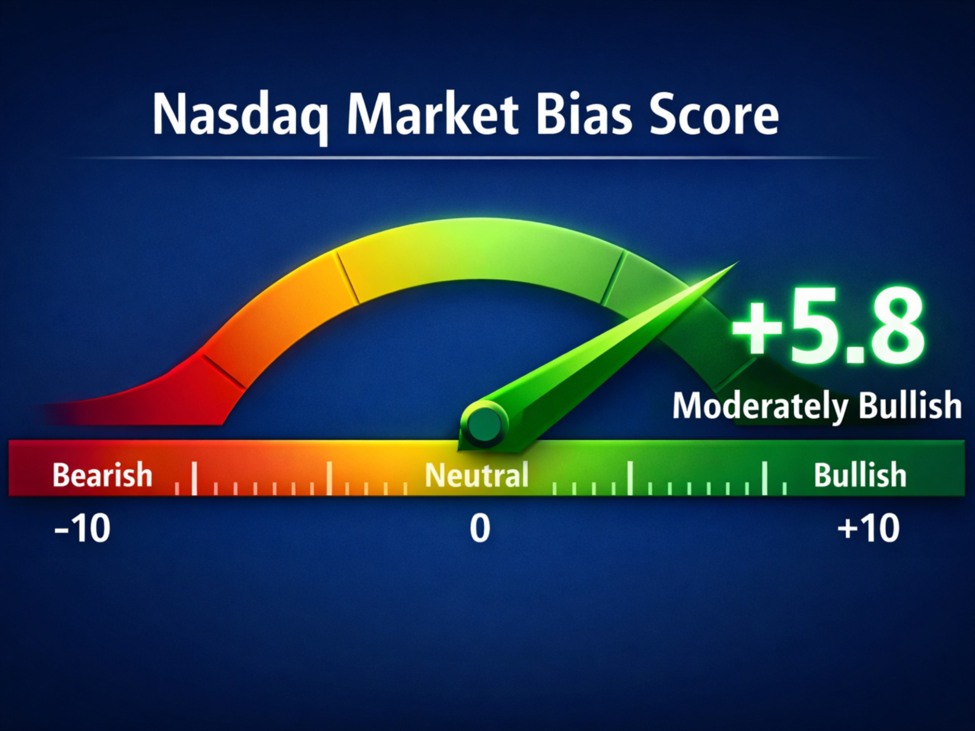
NQ analysis: order flow points to a bullish repair, but not a runaway breakoutNasdaq price prediction today leans bullish, with a market bias score of +5.8 at investingLive.co, as order flow improves and the Point of Control shifts higher. The recovery looks real, but this still needs to prove it can turn into a lasting trend rather than just a sharp repair move.The financial markets are currently humming with a renewed sense of optimism, offering a melodic blend of recovery and high-tech ambition. Investors are finding a rhythmic beat in the recent US major indices closing higher, a move fueled significantly by a resurgence in small-cap stocks that suggests a broadening of market breadth. This upward swing is harmonizing perfectly with major corporate milestones, such as the Amazon stock rebound driven by a robust AWS growth narrative. For those scanning the horizon for a definitive “go” signal, the air is thick with anticipation as Barclays flags the strongest buy signal in over a year, suggesting that the recent sentiment reset has cleared the stage for a potential sustained rally.Beyond the traditional equity theater, the Artificial Intelligence and digital asset sectors are providing some of the most compelling solos of the season. The hardware backbone of the AI revolution received a major boost with news that China approved Nvidia H200 sales, easing geopolitical friction and opening new revenue channels for the semiconductor giant. Simultaneously, the crypto landscape is adding its own upbeat tempo to the mix; while Bitcoin stabilizes at impressive levels, Ethereum is leading a crypto rally that has analysts revising their forecasts upward. Whether you are tracking silicon or satoshis, the current market composition suggests a period of vibrant activity where technology and renewed investor confidence are playing in perfect sync.What you need to know is that Nasdaq futures are starting to tell a more encouraging story.After an earlier period of weakness, the market is no longer behaving like a clean downside continuation. Instead, recent trading points to a bullish repair phase, where buyers are gradually reclaiming lost ground and defending higher levels with improving quality. For traders looking for Nasdaq analysis today, that is an important distinction. This is not yet a full breakout environment, but it is also no longer the kind of structure that invites aggressive bearish confidence.That puts the market in an interesting spot. The tone has improved, the internal behavior has improved, and the path higher remains open, but only if buyers continue to hold the key zones that now matter most.Nasdaq price prediction today: why the bias is bullish, but not extremeThe current market bias score is +5.8, which points to a moderately bullish outlook.That score reflects a market where buyers have clearly improved the structure, but not one that has fully graduated into a high-conviction momentum trend. In other words, this is a bullish read with discipline. The evidence is good enough to respect, but not so one-sided that traders and investors should treat it as a guaranteed upside runaway.The best way to describe the current setup is this: Nasdaq futures are showing a healthier recovery profile, and that recovery has enough substance to matter.Why this Nasdaq move looks healthier than a simple bounceOne of the most constructive parts of the recent Nasdaq futures behavior is that pullbacks have not done as much damage as bears would normally want to see. When a market rallies and then gives back only limited ground, that often suggests selling pressure is being absorbed rather than fully taking control.That is what makes this stock market analysis more interesting than a headline-driven rebound.The medium-term structure has been the strongest piece of the puzzle. It shows that the market has not only bounced, but has also started to do more business at higher prices. That matters because real trend repair is not just about price ticking up. It is about whether the market begins to accept those higher levels as fair value.What Point of Control means, and why traders should careA useful concept here is the Point of Control, often shortened to POC.For newer traders and investors, the Point of Control is the price level where the most trading activity took place over a given period. You can think of it as the market’s busiest zone, or the area where buyers and sellers did the most business. Because of that, it often acts as a reference point for value.Why does this matter?If the Point of Control starts shifting higher over time, it usually means the market is becoming more comfortable doing business at higher prices. That is often a constructive signal. If it shifts lower, it can suggest weakening demand and lower value acceptance.In the recent Nasdaq futures structure, the medium-term Point of Control climbed from roughly 24,513 to 25,013. On the shorter-term view, it also pushed higher from about 24,988 to 25,138. That is important because it suggests the market is not only bouncing, but is also relocating value upward.For traders, that can be a clue that buyers are gaining traction. For investors, it can help distinguish a healthy repair phase from a weak rebound that lacks real sponsorship.A simple order flow explanation for traders and investorsOrder flow is another term that sounds technical, but the core idea is straightforward.Order flow looks at how buying and selling pressure actually enters the market. Instead of focusing only on where price closes, it asks a deeper question: were buyers truly pressing the market higher, or did price rise without much real commitment? On the other side, were sellers genuinely in control, or did a pullback fail to attract strong downside pressure?This is why order flow can be so useful in Nasdaq analysis and price prediction.A market can rise on the chart and still look weak internally if the buying is thin and vulnerable. A market can also pull back and still look healthy if selling pressure fails to create real damage. That second case is closer to what we are seeing now. The recent evidence suggests that downside

Is the dollar run higher beginning to run out of gas?
Amid a better risk mood so far this week, the dollar has also struggled a fair bit. The fate of the currency seems tied to oil prices, which are also losing a bit of traction despite WTI crude keeping above $90 levels. Likewise, the dollar might still be trading well higher compared to where we were at the start of the month but is the momentum starting to wane?Well, things are certainly heating up as we get into European trading later with these two key charts to keep an eye out for. The first being EUR/USD as it ramps back up above 1.1500 this week:The currency pair has not traded back above both its key hourly moving averages since the US-Iran conflict started. The near-term momentum was tested last week but the 200-hour moving average (blue line) held firmly. Now, we’re starting to see price action run back up against the key level again today. That is seen at 1.1546 currently.A firm break above that will shift the near-term bias to being more bullish instead. So, that will be a key shift in sentiment to be mindful of as we are also seeing stocks keep higher this week with bond yields dropping.Next up, we also have USD/JPY facing up against a similar dilemma:The currency pair is also pushed down towards its 200-hour moving average (blue line), seen at 158.66 currently. Similar to EUR/USD above, a firm break below this one will see the near-term bias shift to being more bearish instead.In other words, dollar buyers will lose further momentum as sellers seize near-term control after weeks of not doing so. In the case of USD/JPY, it has not traded below both its key hourly moving averages in four weeks. So, that will mark a material shift in trading sentiment.As things stand, the Middle East conflict remains the number one thing to watch out for. And the dollar’s fate is very much tied to that and oil price developments still. But for now, traders are looking for some scope of improved market optimism it would seem. However, is that conviction and bias misplaced? That remains to be seen.Besides that, currency traders and the dollar especially will have to keep an eye out for the Fed decision later today too. So, remember to mark that down in your calendars. This article was written by Justin Low at investinglive.com. 🔗 Source 💡 DMK Insight The dollar’s recent struggles highlight a crucial interplay with oil prices, and here’s why that matters: As oil prices hover above $90, any decline could further weaken the dollar, especially if risk sentiment improves. Traders should keep an eye on how this dynamic unfolds, as a sustained drop in oil could trigger a broader sell-off in the dollar. This correlation is particularly relevant for those trading USD pairs, as movements in oil often influence inflation expectations and, consequently, Fed policy. If oil dips significantly, we might see the dollar index testing key support levels, which could open up short opportunities for savvy traders. On the flip side, if oil prices stabilize or rebound, the dollar could regain strength, making it essential to monitor both markets closely. Watch for any news or data that could impact oil supply or demand, as these will likely ripple through to the dollar’s performance. Keeping an eye on the daily charts for both oil and the dollar index will provide insight into potential trading setups. 📮 Takeaway Monitor oil price movements closely; a drop below $90 could signal further dollar weakness, impacting USD pairs significantly.