Bitcoin
  Ethereum
  Tether
  XRP
XRP  BNB
BNB  USDC
USDC  Solana
  TRON
TRON  Lido Staked Ether
  Figure Heloc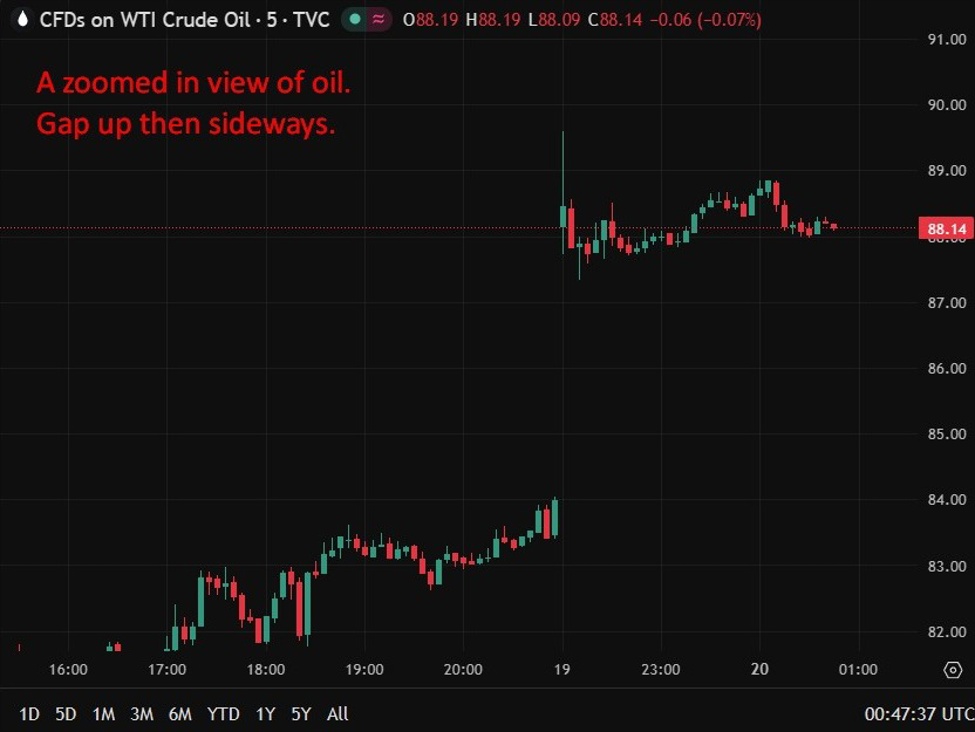
US envoy Waltz said all options, including strikes on Iran infrastructure, remain on the table ahead of talks, signalling continued pressure and keeping escalation risks elevated despite diplomatic efforts.Summary:The United States stepped up its messaging campaign over the weekend, with Ambassador Mike Waltz delivering a coordinated series of interviews and statements that reinforced a hardline stance ahead of planned talks with Iran.Speaking across major US media outlets, Waltz signalled that all options remain on the table, including further strikes on Iranian infrastructure if negotiations fail. He defended previous targeting decisions, arguing that the Iranian Revolutionary Guard Corps embeds military assets within civilian infrastructure, making such sites legitimate targets in the conflict.Waltz also framed recent US actions as having materially weakened Tehran’s position, stating the Iranian government has been pushed into disarray by American strikes and is now facing increasing diplomatic isolation. He suggested that Iran lacks leverage in the current standoff and will ultimately be compelled to negotiate, reiterating Washington’s objective of the complete dismantling of Iran’s nuclear program.On the economic front, Waltz made clear the administration’s view that Iran should not be allowed to use the Strait of Hormuz as a pressure point. He argued the Iranian regime cannot hold the global economy hostage over nuclear disputes, while also emphasising that under the current US naval blockade, control over access to the Strait effectively rests with Washington.Waltz reinforced that targeting infrastructure remains a live option should talks fail, underscoring a willingness to escalate pressure further if required. The messaging appears designed to strengthen the US negotiating position ahead of discussions in Islamabad, where Vice President JD Vance is expected to lead the American delegation.US ramps up coordinated messaging ahead of Iran talks
Waltz says “all options on the table,” including infrastructure strikes
US claims Iran weakened, diplomatically isolated
Goal remains full dismantling of Iran nuclear program
Hormuz framed as under US-controlled blockade
Escalation risk remains high if talks failTaken together, the remarks signal a dual-track approach: pushing forward with diplomacy while maintaining a credible threat of further military escalation. For markets, the tone suggests negotiations will take place under significant pressure, with risks skewed toward renewed escalation if progress proves limited.—The messaging reinforces a high-pressure negotiation backdrop, not de-escalation. Markets should interpret this as the US entering talks from a position of strength while keeping escalation risk elevated. This supports a continued risk premium in oil, particularly given the explicit linkage to Hormuz control. Unless rhetoric softens, downside in crude may remain limited, with volatility driven by headlines around negotiations.
This article was written by Eamonn Sheridan at investinglive.com.
💡 DMK Insight
Escalating tensions with Iran could shake up oil prices and related markets. Ambassador Waltz’s comments about potential strikes signal that the U.S. isn’t backing down, which keeps geopolitical risks front and center. Traders should watch for volatility in crude oil, especially if tensions escalate further. Oil prices often react sharply to geopolitical news, and any military action could send prices soaring. Look at the $90 per barrel level for WTI as a key resistance point; a breach could trigger further buying. But here’s the flip side: if diplomatic efforts yield results, we could see a rapid pullback in oil prices. Keep an eye on the upcoming talks and any statements from both U.S. and Iranian officials. The market’s reaction to these developments could be swift, so staying nimble is crucial. Monitor the daily charts for oil, as well as any shifts in sentiment from major players in the market, including hedge funds and institutional investors.
📮 Takeaway
Watch for crude oil prices around $90 per barrel; escalating tensions could push prices higher, while successful diplomacy might lead to a quick pullback.