 Bitcoin
  Ethereum
  Tether
  XRP
XRP  BNB
BNB  USDC
USDC  Solana
  TRON
TRON  Lido Staked Ether
  Figure Heloc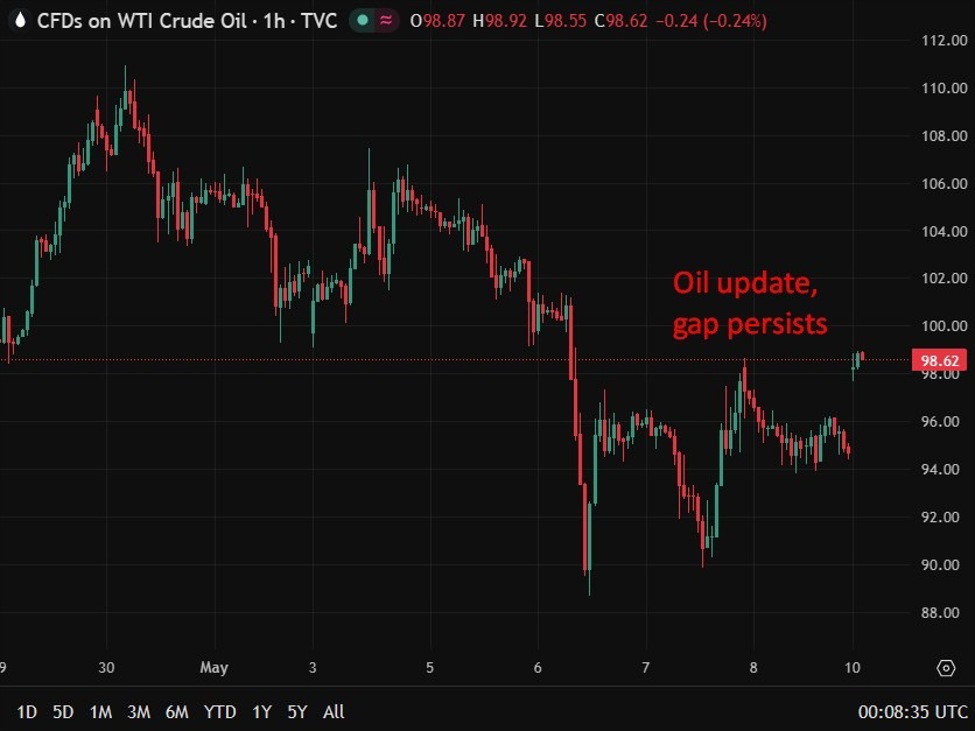
The UK and France will co-chair a 40-nation defence ministers’ meeting Tuesday on plans to restore Hormuz shipping, hours after Iran warned any foreign warships would face a decisive response.Summary:The UK and France will on Tuesday co-chair a virtual meeting of more than 40 nations to advance military plans for a multinational mission to restore navigation through the Strait of Hormuz, per a British defence ministry statement reported by AFPUK Defence Secretary John Healey and French Defence Minister Catherine Vautrin will jointly chair the meeting, which follows a two-day gathering of military planners in London in AprilFrance has dispatched its nuclear-powered aircraft carrier the Charles de Gaulle to the Middle East region, while the UK announced on Saturday it was sending the destroyer HMS DragonBoth countries described the deployments as pre-positioning ahead of any formal international protective mission, according to AFPIran’s deputy foreign minister Kazem Gharibabadi warned that British and French warships, or those of any other country, would meet a decisive and immediate response, and asserted that only Iran can establish security in the straitFrench President Emmanuel Macron said France had never envisaged a naval deployment inside the Strait of Hormuz itself, and that any security mission would be coordinated with IranBefore the war began on February 28, around one fifth of the world’s oil transited the Strait of Hormuz; that flow has been severely curtailed since Iran largely closed the waterwayBritain and France will on Tuesday co-chair an emergency defence ministers’ meeting involving more than 40 nations to advance concrete military plans for restoring commercial shipping through the Strait of Hormuz, the British government announced, as Iran issued a stark warning that any foreign warships entering the region would face an immediate and decisive response.UK Defence Secretary John Healey and French Defence Minister Catherine Vautrin will jointly chair the virtual gathering, which the British defence ministry described as the multinational mission’s first ministerial-level meeting. It follows a two-day session of military planners held in London in April, at which the practical framework for a protective naval mission was thrashed out. Healey said the process was now converting diplomatic agreement into actionable military plans designed to restore confidence for commercial vessels transiting the strait.The diplomatic push is backed by a tangible military build-up. France has already deployed its nuclear-powered aircraft carrier the Charles de Gaulle to the Middle East, while Britain announced on Saturday that it was sending the destroyer HMS Dragon to the region. Both governments have been careful to characterise the movements as pre-positioning rather than active deployment, with a British defence ministry spokesperson describing HMS Dragon’s despatch as prudent planning to ensure readiness when conditions permit a formal protective mission to begin.Iran moved quickly to signal its opposition. Deputy foreign minister Kazem Gharibabadi warned that British and French vessels, or those of any other nation, would be met with a decisive and immediate response, and reiterated Tehran’s position that security in the strait is exclusively Iran’s prerogative to provide. The warning came directly alongside the British announcement, underscoring the degree to which Tehran is monitoring and reacting to Western military signalling in real time.France introduced a further layer of nuance. President Emmanuel Macron, speaking to journalists in Nairobi, said Paris had never contemplated a naval operation inside the strait itself and that any mission France participated in would be coordinated with Iran. He also restated his opposition to a blockade from any party, and his commitment to ensuring ships can pass freely without being subjected to any form of toll or levy on their transit.The backdrop to all of this is the severe disruption to global energy markets that has followed Iran’s effective closure of the strait since the outbreak of the war on February 28. Before hostilities began, roughly one fifth of the world’s entire oil supply moved through the waterway. That flow has been reduced to a trickle, sending prices sharply higher and prompting the improvised dark-shipping workarounds documented in recent days. The United States subsequently imposed its own blockade of Iranian ports in response, compounding the supply shock. Whether Tuesday’s ministerial meeting translates into a mission that can genuinely restore normal transit, and whether Iran can be brought to accept or at least tolerate such a presence, remains the central question hanging over the global oil market.—The convening of a 40-nation defence ministers’ meeting signals that Western efforts to reopen the Strait of Hormuz are moving from planning into a more operationally credible phase, which in theory points toward eventual supply restoration through the world’s most critical oil chokepoint. However, Iran’s explicit threat of a decisive and immediate response to any foreign naval presence materially raises the risk of a direct military confrontation, which would represent a severe escalation for energy markets. Macron’s public clarification that France has not envisaged a combat deployment in the strait and that any mission would be coordinated with Iran introduces a notable ambiguity around the mission’s actual scope and teeth, which traders will weigh carefully. The pre-positioning of the Charles de Gaulle and HMS Dragon is being framed as contingency planning rather than imminent action, but the presence of a nuclear-powered carrier and a destroyer in the region adds a layer of military tension that keeps the geopolitical risk premium in crude firmly supported.
This article was written by Eamonn Sheridan at investinglive.com.
💡 DMK Insight
Tensions in the Strait of Hormuz are escalating, and here’s why that matters for traders: geopolitical risks can lead to volatility in oil prices and related markets. With Iran’s warning against foreign warships, traders should keep a close eye on crude oil futures, as any military action could disrupt shipping routes and spike prices. Historically, similar tensions have led to price surges in oil, impacting not just energy stocks but also currencies tied to oil exports, like the Canadian dollar and Norwegian krone. For those trading oil, watch the $80 per barrel level on WTI crude; a breach could signal a bullish trend. Additionally, keep an eye on the broader market sentiment—if tensions escalate, we might see a flight to safety in gold and the US dollar. The real story here is how quickly these geopolitical developments can shift market dynamics, so be prepared for rapid changes. Monitor news from the meeting closely, as any announcements could trigger immediate price movements in both oil and related assets.
📮 Takeaway
Watch for crude oil prices around $80 per barrel; any escalation in Hormuz tensions could trigger significant volatility.