Bitcoin
  Ethereum
  Tether
  XRP
XRP  BNB
BNB  USDC
USDC  Solana
  TRON
TRON  Lido Staked Ether
  Figure Heloc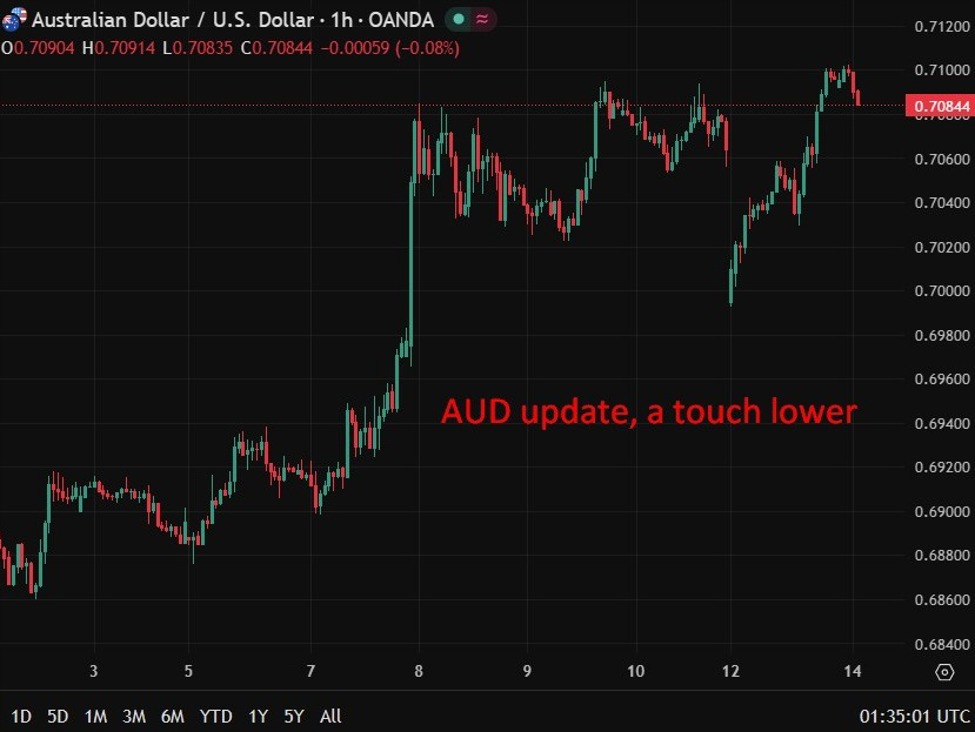
Australian business confidence collapses as energy shock crushes outlook.Earlier:RBA’s Hauser warns of stagflation risk as energy shock hits economy. says not sure interest rates are at the right level to tame inflation, adds rates need to bring inflation to the 2-3% target and that Q2 headline inflation is around 5% due to fuel costsSummary:Business confidence plunges to -29 (from 0 prior). Drops to its lowest since the pandemic.
Second largest monthly drop on record
Business conditions down to +6 (prior +7)
Sales ease slightly (+11 vs +12)
Profits fall to +1 (from +4)
Cost pressures surge, margins squeezedAustralian business confidence collapsed in March, posting one of the sharpest deteriorations on record as firms reacted to the economic shock stemming from the Iran war and surging energy prices.The NAB Business Confidence Index plunged 29 points to -29 in March, down from 0 in February. The scale of the decline ranks as the second largest monthly fall in the survey’s history, comparable to periods of acute financial stress, and signals a rapid and broad-based deterioration in sentiment across the business sector.In contrast, business conditions held steady at +6, highlighting a growing disconnect between current activity and forward-looking expectations. While firms are still reporting reasonable operating conditions, confidence has collapsed as they brace for a more challenging environment ahead.Underlying details point to mounting cost pressures and margin compression. Sales eased slightly but remained relatively firm at +11, down from +12, while profitability deteriorated more sharply, with the profits index falling to +1 from +4. This suggests businesses are increasingly struggling to absorb rising input costs.Purchase costs surged at a quarterly pace of 3%, driven in part by higher energy prices, but firms appear to be finding it difficult to pass these increases through to consumers. Retail price growth slowed to 0.5% from 0.9%, indicating limited pricing power and intensifying pressure on margins.The backdrop is further complicated by tighter monetary policy, with the RBA having raised rates again in March to 4.1%, alongside expectations that fuel-driven inflation could push headline CPI toward 5% in the second quarter.Taken together, the data paints a stark picture, businesses are still operating at reasonable levels today, but confidence has effectively collapsed as firms anticipate a sharp deterioration in conditions ahead.
This article was written by Eamonn Sheridan at investinglive.com.
💡 DMK Insight
Australian business confidence is plummeting, and here’s why that’s crucial for traders: The Reserve Bank of Australia’s (RBA) Hauser’s warning about stagflation signals a potential economic downturn, which could lead to increased volatility in both forex and commodity markets. With headline inflation at 5% and the RBA uncertain about interest rates, traders should brace for possible rate adjustments that could impact the AUD significantly. If energy prices continue to rise, we might see a further decline in business sentiment, which could trigger a bearish trend in the Australian dollar against major currencies like the USD. Look for key technical levels around recent support and resistance zones. If the AUD/USD breaks below a critical support level, it could indicate a stronger bearish sentiment. Keep an eye on the upcoming inflation reports and any comments from the RBA, as these will be pivotal in shaping market expectations. The real story here is how these economic indicators could ripple through related markets, particularly commodities tied to energy prices, which are already under pressure. Traders should monitor the energy sector closely for potential trading opportunities or hedges against the AUD’s movements.
📮 Takeaway
Watch for AUD/USD to break below key support levels; a bearish trend could intensify if inflation remains high and business confidence continues to falter.