
 Bitcoin
  Ethereum
  Tether
  BNB
BNB  XRP
XRP  USDC
USDC  Solana
  TRON
TRON  Lido Staked Ether
  Figure Heloc
ICYMI, NBC with the rep[ort that Saudi Arabia blocked U.S. military use of a key airbase and airspace, forcing Trump to pause Project Freedom, his plan to escort ships through the Strait of Hormuz, within 36 hours of launch.Summary:Trump’s Project Freedom, announced over the weekend as a plan to escort commercial ships safely through the Strait of Hormuz, was halted roughly 36 hours after it began after Saudi Arabia informed the U.S. it would not allow military aircraft to operate from Prince Sultan Airbase or through Saudi airspace to support the mission, according to two U.S. officialsA phone call between Trump and Saudi Crown Prince Mohammed bin Salman failed to resolve the dispute, leaving the president with no choice but to pause the operation to preserve U.S. military access to critical Gulf airspace, per the same officialsOther Gulf allies including Qatar and Oman were also caught off guard by the announcement, with the U.S. coordinating with Oman only after Trump had already made the operation public, according to a Middle Eastern diplomat cited in the reportingThe U.S. military had been positioning additional ships in the Gulf for transit when the order to stop came through; U.S. Central Command had earlier confirmed two U.S.-flagged vessels completed the passage as part of the operation, per officialsTrump framed the pause as temporary, saying Project Freedom would be suspended to allow time to determine whether a peace agreement could be finalised, per his social media postSaudi Arabia said it was supportive of Pakistan’s diplomatic efforts to broker a deal between Iran and the U.S., and a Saudi source said Trump and Crown Prince Mohammed bin Salman had been in regular contact, per NBC News President Donald Trump’s plan to use U.S. military force to escort commercial ships through the Strait of Hormuz collapsed within 36 hours of launch after Saudi Arabia withdrew permission for American forces to use a critical airbase and fly through its airspace, according to two U.S. officials familiar with the matter.Project Freedom, announced by Trump on social media on Sunday, took Gulf allies by surprise and angered Riyadh. In response, Saudi Arabia informed Washington it would not permit U.S. military aircraft to operate from Prince Sultan Airbase, southeast of the capital, or to use Saudi airspace in support of the mission. A subsequent call between Trump and Crown Prince Mohammed bin Salman did not resolve the impasse, leaving the president with little choice but to stand the operation down to protect American access to infrastructure it relies on across the region.The geography of the Gulf makes allied cooperation non-negotiable for operations of this kind. U.S. military aircraft, including fighter jets, refuelling tankers and support planes, require permission to base and fly through the territory of key regional partners. Saudi Arabia and Jordan are critical for basing, Kuwait for overflight, and Oman for both overflight and naval logistics. Without that network intact, the defensive air umbrella needed to protect ships transiting the strait could not be sustained.Qatar and Oman were also not consulted before Trump’s announcement, with the U.S. coordinating with Oman only after the operation had already been made public. A Middle Eastern diplomat said there was no anger on Oman’s part, but confirmed the sequencing. Trump spoke with Qatar’s emir after Project Freedom had already begun.Two U.S.-flagged vessels completed the passage through the strait under the operation before it was halted. The U.S. military had been preparing additional ships for transit when the stop order came through.Trump framed the pause as short-term, tying it explicitly to the status of peace negotiations with Iran. Tehran is expected to deliver its response Thursday to a U.S. peace framework, a 14-point memorandum covering nuclear enrichment, sanctions relief and the restoration of free Strait of Hormuz transit. With the military option now effectively off the table pending Gulf ally realignment, a negotiated settlement has become the primary route to reopening the waterway and unwinding the energy price shock that has been reverberating through global markets since the conflict began. —The revelation that Saudi Arabia effectively vetoed a U.S. military operation by withdrawing base and airspace access is a significant signal about the limits of Washington’s freedom of action in the Gulf, with direct implications for how quickly the Strait of Hormuz can be reopened to commercial shipping. Energy markets will note that the U.S. military umbrella underpinning safe transit through the strait is more dependent on Gulf ally cooperation than previously understood, meaning any deterioration in those relationships adds a persistent risk premium to crude. The pause also keeps the supply disruption in place while Iran-U.S. negotiations continue, sustaining the inflationary pressure on oil that central banks from Ottawa to Tokyo have been flagging this week. A diplomatic resolution remains the cleaner path to normalising the waterway, but Thursday’s expected Iranian response to the U.S. peace proposal now carries even greater market weight given that the military alternative has proven unworkable without regional buy-in. This article was written by Eamonn Sheridan at investinglive.com. 🔗 Source 💡 DMK Insight So, Saudi Arabia just blocked U.S. military access to a crucial airbase, and here’s why that matters: this move could escalate tensions in the Middle East, impacting oil prices and broader market sentiment. With Trump’s Project Freedom on hold, the potential for disruptions in the Strait of Hormuz—where a significant portion of the world’s oil supply passes—could lead to volatility in energy markets. Traders should keep an eye on crude oil futures, especially if tensions rise further. Look, this isn’t just about military strategy; it’s about the ripple effects on global supply chains and investor sentiment. If oil prices spike, expect correlated assets like energy stocks and ETFs to react. The market’s already jittery, and this news could push Brent crude above key resistance levels. Watch for any developments in the next few days, as geopolitical tensions often lead to rapid price movements. In the short term, monitor the 70 and 75 levels on Brent crude for potential breakout points, as these could signal
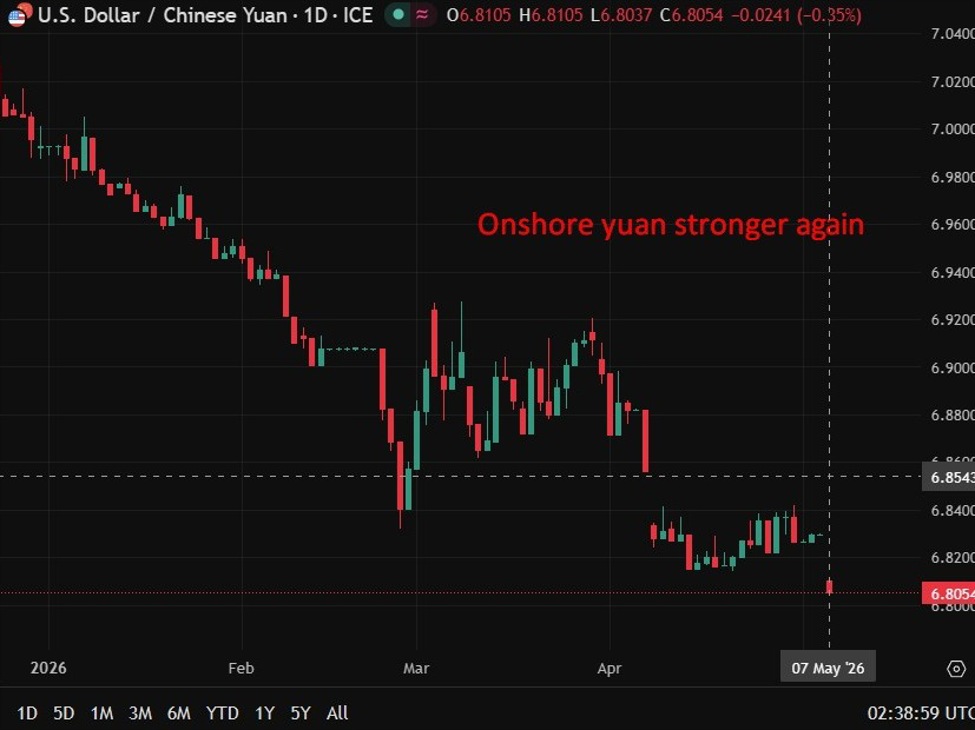
China loan curbs, yuan surge and holiday spending in focus as Beijing juggles pressures
China’s financial regulator has quietly told major banks to suspend new loans to five U.S.-sanctioned Iranian oil refiners, while the yuan surged to its strongest PBOC fixing since March 2023 amid easing Middle East tensions. Summary:China’s National Financial Regulatory Administration verbally instructed the country’s largest lenders to suspend new yuan-denominated loans to five refineries recently sanctioned by the U.S. for their ties to Iranian oil, though existing credit was not to be called in, according to Bloomberg citing people familiar with the matter; Reuters could not immediately verify the reportThe guidance, delivered before May 1, stands in direct contrast to a May 2 notice from China’s Ministry of Commerce telling firms to disregard U.S. sanctions, marking the first use of China’s blocking measures introduced in 2021 to protect firms from what Beijing considers unwarranted foreign intervention, per Reuters reportingAmong the firms under review is Hengli Petrochemical, China’s largest private refiner, which was sanctioned by the U.S. Treasury in April over allegations it purchased billions of dollars in Iranian crude, according to the same reportingChinese consumer spending during the Labor Day holiday rose 14.3% year-on-year, slightly ahead of the Lunar New Year increase, though economists at Societe Generale and Pantheon Macroeconomics cautioned the boost was likely temporary given a soft labour market, elevated youth unemployment and ongoing property sector weakness, per preliminary dataThe People’s Bank of China set its yuan fixing at 6.8487 per dollar on Thursday, the strongest level since March 2023, with the currency gaining in both onshore and offshore trade, according to CFETS dataMUFG analyst Lloyd Chan attributed Asian currency strength to reduced appetite for further Middle East escalation, adding that an Iranian acceptance of a U.S.-backed deal and gradual Strait of Hormuz reopening could extend gains across Asia FX, per MUFG commentary China is navigating a delicate balancing act on multiple fronts, with its financial regulator quietly restricting loans to Iran-linked refiners even as Beijing publicly tells firms to ignore U.S. sanctions, while the yuan climbed to its strongest central bank fixing in over two years and holiday consumer data offered a cautiously positive but ultimately inconclusive read on the domestic recovery.The most consequential development for energy markets was the reported guidance from the National Financial Regulatory Administration, which verbally instructed China’s largest lenders to suspend new yuan-denominated loans to five refineries recently hit by U.S. sanctions over their handling of Iranian crude. Existing credit lines were to remain in place, but no new lending was to be extended while banks reviewed their exposure. Hengli Petrochemical, China’s largest private refiner and one of the firms named in U.S. Treasury sanctions imposed in April, was specifically identified as being under review.The directive sits in uncomfortable tension with a notice issued by China’s Ministry of Commerce on May 2, which instructed Chinese firms to disregard U.S. sanctions. That notice represented Beijing’s first deployment of blocking measures introduced in 2021 to shield domestic companies from what China characterises as illegitimate foreign interference. The simultaneous existence of a public defiance posture and a private compliance instruction reflects the degree to which Chinese financial institutions remain exposed to the threat of secondary sanctions, a risk that U.S. Treasury Secretary Scott Bessent had already put on notice last month when he warned two unnamed Chinese banks that processing Iranian transactions would trigger consequences.For Iranian crude flows, the lending curbs represent a meaningful new obstacle. Sanctioned refiners have already encountered difficulties securing crude deliveries and have reportedly resorted to selling refined products under alternative names to circumvent restrictions. A sustained tightening of credit access would compound those pressures and could reduce China’s appetite for Iranian barrels at a time when the market is already disrupted by the Strait of Hormuz closure.-On currency markets, the PBOC set its daily yuan fixing at 6.8487 per dollar on Thursday, the firmest level since March 2023. The yuan strengthened in both onshore and offshore trade, with the dollar briefly touching its weakest intraday level against the currency since February 2023. MUFG analysts linked the move to broader Asian currency gains, attributing the shift to reduced market appetite for further Middle East escalation. He added that a formal Iranian acceptance of a U.S.-backed peace framework and a gradual reopening of the Strait of Hormuz would provide additional support to Asian currencies at the dollar’s expense.-Consumer data from the Labor Day holiday offered a surface-level positive with spending rising 14.3% year-on-year, marginally ahead of the Lunar New Year pace. Economists were measured in their response, with analysts at Societe Generale and Pantheon Macroeconomics cautioning that retail momentum was likely to fade once the holiday effect dissipated, given persistent structural headwinds including a soft labour market, high youth unemployment and a property sector that continues to weigh on household confidence.—The NFRA’s quiet guidance to restrict lending to sanctioned refiners, running directly counter to the Commerce Ministry’s public instruction to ignore U.S. sanctions, points to behind-the-scenes Chinese anxiety about secondary sanctions exposure that could have significant implications for Iranian crude flows. If China’s largest private refiners face sustained credit restrictions, Iranian oil export volumes face a meaningful new headwind, which would tighten an already disrupted crude market. The yuan’s move to its strongest fixing since March 2023 adds a further dimension, with MUFG linking Asian currency strength to reduced Middle East escalation risk and flagging that a Strait of Hormuz reopening could extend the dollar’s weakness further. Holiday spending data, while headline-positive, was tempered by economists who cautioned that structural drags including youth unemployment and property sector weakness remain intact. This article was written by Eamonn Sheridan at investinglive.com. 🔗 Source 💡 DMK Insight China’s move to halt loans to Iranian refiners is a big deal for traders right now. This decision reflects not just local regulatory shifts but also broader geopolitical dynamics, especially as the yuan strengthens. A stronger yuan could impact commodities priced in dollars, making oil more expensive for U.S. buyers. Traders should keep an eye on how this affects oil prices and related currencies, particularly if tensions

Trump advisers fear political price of Iran war fuel costs ahead of midterms
Trump advisers are privately worried the Iran war’s fuel cost surge will cost Republicans at November’s midterms, as U.S. airlines face a 30% jump in fuel bills and airfares hit $570 for a domestic round trip, the Wall Street Journal (gated) reports.Summary:Trump administration advisers are privately concerned that surging fuel costs stemming from the Iran war will carry a political price for Republicans in November’s midterm elections, with many eager to end the conflict before prices damage the party’s standing, according to people familiar with the matter cited by the Wall Street JournalU.S. airlines spent more than $5 billion on fuel in March, a 30% increase from a year earlier, with jet fuel prices roughly doubling in the weeks following the outbreak of the conflict, according to government data cited by the Wall Street JournalThe average domestic round-trip economy airfare rose 21% year-on-year to $570 in March, according to Airlines Reporting Corp. data cited in the report, with carriers raising ticket prices and cutting unprofitable routes in responseAirlines for America president Chris Sununu, a former New Hampshire governor, has warned the administration that even a full reopening of the Strait of Hormuz would take months to translate into lower ticket prices, with elevated fares expected to persist through summer and autumn, per the Wall Street JournalSpirit Airlines collapsed in part because the sustained jet fuel price surge derailed its plan to emerge from bankruptcy, with the Trump administration and the carrier failing to agree on a federal financial lifeline of up to $500 million, according to the reportA group of budget airlines separately sought $2.5 billion in federal assistance to offset higher fuel costs, while 63% of Americans blamed Trump for rising gas prices in a poll conducted by NPR, PBS and Marist, per the Wall Street JournalPresident Trump’s advisers are privately alarmed that the fuel cost surge driven by the Iran war is becoming a political liability capable of damaging Republicans at November’s midterm elections, the Wall Street Journal reported, as the airline industry intensifies its lobbying of the White House to bring the conflict to a swift close.The concern inside the administration reflects the scale of the economic disruption flowing from the de facto closure of the Strait of Hormuz since the U.S.-Israeli attack on Iran in late February. Jet fuel prices roughly doubled in the weeks following the outbreak of hostilities and have remained at elevated levels, adding billions of dollars in costs to U.S. carriers and pushing airfares sharply higher ahead of the summer travel season. Many advisers are said to be eager to end the war in time for prices to begin moderating before voters go to the polls, according to people familiar with the matter cited by the Wall Street Journal.The airline industry has been among the most vocal in communicating those pressures to the administration. Chris Sununu, former New Hampshire governor and president of the industry group Airlines for America, has met in recent weeks with National Economic Council Director Kevin Hassett, Transportation Department representatives and senior White House officials. Sununu’s message has been consistent: the war must end soon or the economic fallout will worsen. Administration officials, he told the Wall Street Journal, understand the urgency.The numbers underline why. U.S. airlines spent more than $5 billion on fuel in March alone, a 30% increase from a year earlier, according to government data. The average domestic round-trip economy fare climbed 21% year-on-year to $570 in March, according to Airlines Reporting Corp. Carriers have been raising prices and cutting routes that are no longer viable at current fuel costs, though so far bookings have held up. Sununu cautioned that a Strait of Hormuz reopening would not produce immediate relief, warning that elevated ticket prices should be expected through summer and autumn given how long it takes cost reductions to flow through to consumers.The war claimed one direct industry casualty in Spirit Airlines, which cited the sustained fuel price surge as a factor that derailed its plan to emerge from chapter 11 bankruptcy after the Trump administration and the carrier failed to agree on federal support of up to $500 million. Budget carriers more broadly have sought $2.5 billion in federal assistance and written to lawmakers requesting tax relief.The political backdrop is stark. A poll by NPR, PBS and Marist found that 63% of Americans placed a great deal or significant blame on Trump for rising gas prices, with more than eight in ten saying fuel costs were straining their finances. Trump has defended the war’s economic costs, saying earlier this week that higher oil prices were a small price to pay for eliminating Iran’s nuclear capability. But with crude falling below $100 a barrel on Wednesday following reports of progress toward a peace framework, and Iran expected to deliver its response to a U.S. proposal on Thursday, the administration’s urgency to reach a deal appears to be growing by the day.—The political urgency now openly attached to fuel costs inside the Trump administration adds a new dimension to the Iran peace negotiations, suggesting the White House has domestic electoral incentives to reach a deal well before November that go beyond the purely strategic calculus. For energy markets, the acknowledgement that crude needs to fall meaningfully before the midterms implies sustained pressure on the administration to pursue a diplomatic resolution, reinforcing the bullish case for a near-term deal and the bearish implications for oil if one materialises. Airlines remain acutely exposed in the near term, with the industry warning that even a full Strait of Hormuz reopening would take months to feed through to lower ticket prices, meaning jet fuel demand destruction and flight culling could persist well into the autumn travel season regardless of how quickly a deal is struck. This article was written by Eamonn Sheridan at investinglive.com. 🔗 Source 💡 DMK Insight Rising fuel costs are a ticking time bomb for the GOP ahead of the midterms. With U.S. airlines facing a staggering 30% increase in fuel bills, the implications for
investingLive Asia-Pacific FX news wrap: Trump has seen the NFP number and he is happy
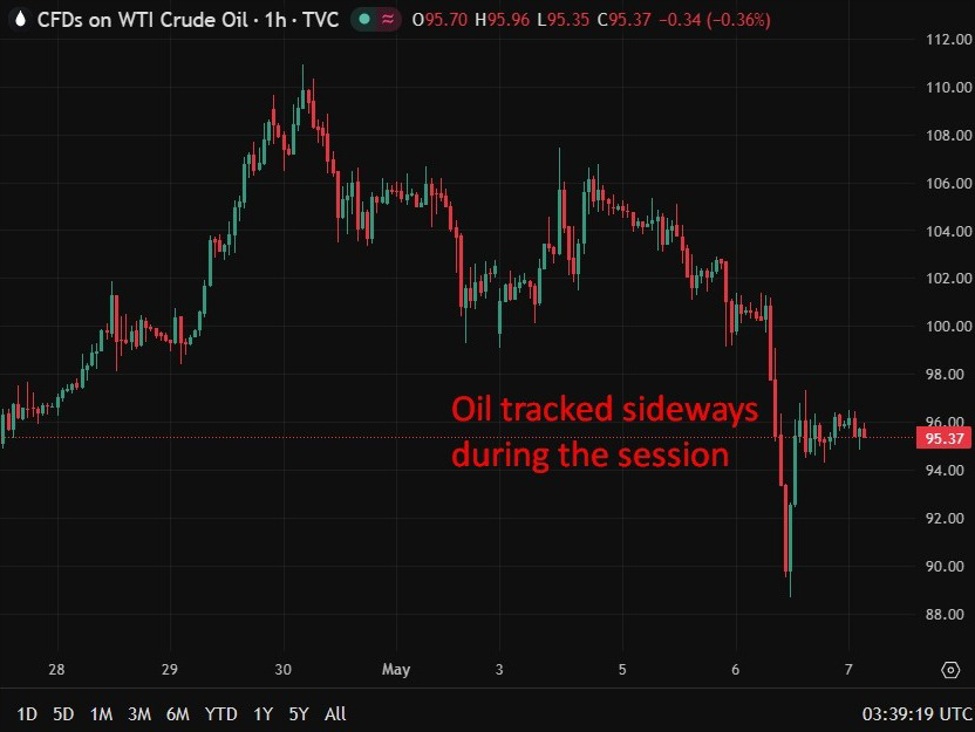
Trump advisers fear political price of Iran war fuel costs ahead of midtermsChina loan curbs, yuan surge and holiday spending in focus as Beijing juggles pressuresICYMI – Saudi base ban forced Trump to pause Strait of Hormuz shipping operationAustralian March 2026 trade balance -1840mn (expected 4.250mn suprlus)PBOC sets USD/ CNY reference rate for today at 6.8487 (vs. estimate at 6.8087)Iran to deliver response Thursday to U.S. war-ending proposal via Pakistan mediatorsJapan’s Mimura yen verbal intervention again – says closely watching FXBOJ March minutes says rates will be raised in line with improvements in economy, pricesEU parliament negotiator says trade deal work is not yet done as May talks loomOil insider trading fears after volume spike precedes Axios Iran report (rinse, repeat)Bank of Canada head Macklem warns consecutive rate hikes possible if oil prices stay highYen intervention risks failure as Iran war clouds Japan’s currency defenceRBNZ Gov Breman expects higher near term inflation and weak growthBessent to raise weak yen with Japanese officials in Tokyo meetings next weekinvestingLive Americas FX news wrap 6 May Risk-on rally lifts stocks; oil falls on peaceAxios – There’s still a chance Trump could renew military action ahead of his China tripSummary:Nikkei 225 surges 4%-plus to record high above 62,000, nearing 63,000, on return from Golden WeekIran peace deal optimism, JGB rally and tech/earnings gains drive the moveYuan hits strongest level vs dollar in more than three years; PBOC fixing firmest since March 2023AUD and NZD hold near highs on equity bull run and easing Middle East fearsOil price cooling pulling bond yields lower, lessening rate hike pressure regionallyTrump social media post on jobs sparks chatter he may have seen strong NFP data earlyAustralia posts first trade deficit since late 2017 at -$1.8bn in March; imports surge 14.1% month-on-month driven by data centre equipment up 204% and fuel up 54%; exports fall 2.7%U.S. equity futures little changed, consolidating near all-time highsJapan’s Nikkei 225 returned from its extended Golden Week break to catch up with the global equity rally that had built in its absence, bursting through 62,000 to fresh all-time highs and approaching the 63,000 level. The move, which extended more than 4%, was fuelled by a combination of Iran war de-escalation optimism, a rally in Japanese government bonds and solid corporate earnings, with tech names providing additional lift in a session that felt broadly risk-on across the region.The Iran backdrop was the dominant theme. With Tehran expected to deliver its response Thursday to a U.S. peace framework and crude prices falling below $100 a barrel on Wednesday, markets moved to price a more benign outcome, pulling bond yields lower in the process and easing some of the rate hike pressure that has shadowed equities (to little effect!) in recent weeks. Analysts noted that economic, political and strategic constraints leave the U.S. strongly incentivised to preserve the ceasefire and pursue a negotiated resolution by late May or shortly after, adding that with no military solution readily available, de-escalation remains the most attractive pathway for Washington.China’s yuan rose to its strongest level against the dollar in more than three years, supported by the peace deal optimism and a robust PBOC fixing at 6.8487, its firmest since March 2023. The Australian and New Zealand dollars held near recent highs, with cooling oil prices and lower yields removing some of the worst-case inflation scenarios that had been weighing on the region’s rate outlook.Australia’s trade data provided a jarring counterpoint to the optimistic mood. The country recorded its first trade deficit since late 2017, coming in at minus $1.8 billion in March as imports surged 14.1% month-on-month, driven by a 204% spike in data centre-related equipment and a 54% jump in fuel costs. Exports fell 2.7%. For the March quarter, import spending rose 2.5% while export revenue declined 1.2%, a combination that will draw attention to the structural shifts underway in Australia’s trade account as the data centre investment theme accelerates.In the U.S., equity futures traded near the flat line, consolidating around all-time highs ahead of Friday’s non-farm payrolls report. A social media post from Trump striking an optimistic tone on the jobs market sparked regional speculation that he may have had early sight of a strong NFP print, though the chatter remained unverified. This article was written by Eamonn Sheridan at investinglive.com. 🔗 Source 💡 DMK Insight Rising fuel costs from geopolitical tensions could shake up market sentiment ahead of the midterms. With Trump’s advisers concerned about the political fallout from the Iran conflict, traders should keep an eye on how this impacts oil prices and related assets. If tensions escalate, we might see crude oil prices spike, which could ripple through the broader markets, affecting everything from consumer spending to inflation rates. The yuan’s surge amid China’s loan curbs is also noteworthy; a stronger yuan could impact export competitiveness, influencing forex pairs like USD/CNY. Traders should monitor key levels in oil and currency markets, especially as we approach significant political events. Watch for volatility in oil prices and any shifts in consumer sentiment as we head into the midterms, as these could dictate trading strategies in the coming weeks. 📮 Takeaway Keep an eye on oil prices and USD/CNY levels as geopolitical tensions rise, especially ahead of the midterms—these could drive market volatility.

Today's Bitcoin analysis for traders
Bitcoin Futures Analysis Today: BTC Tests Key Support After Failed Breakout AttemptBitcoin futures are trading at an important decision area today, with BTC MAY26 currently near 81,160 on the 200 Range Volumetric chart. The broader structure is no longer cleanly bullish after price failed to sustain above the upper value area, but bears have not yet confirmed a full breakdown either.For Bitcoin traders today, the key question is simple: does BTC hold the 81,105 to 80,965 support zone, or does it accept below it and open the door toward lower naked levels?This analysis is based on the current BTC MAY26 200 Range Volumetric chart and the active value-area map provided for today.The global landscape is currently dominated by a high-stakes diplomatic gamble as Trump advisers fear the political price of an Iran war and rising fuel costs ahead of the 2026 midterms. This anxiety has prompted a pivot toward diplomacy, with Iran expected to deliver a response to a U.S. war-ending proposal via Pakistan this Thursday. The potential for de-escalation fueled a surge in traditional markets, where the Nasdaq and S&P closed at record levels and the Dow broke 50K before backing off into the close. Traders are now watching to see if this “risk-on” momentum can be sustained by a formal breakthrough in negotiations.In the digital asset space, Ethereum technical analysis shows bulls crossing up this important resistance earlier this week, signaling a potential breakout from a long-standing downward bull flag. This move has shifted the focus to the $2,420 level, which must now serve as a foundation for further gains toward the $3,000 psychological target. While the record-breaking performance in equities provides a supportive backdrop for crypto, participants are cautioned to monitor whether price holds above this newly reclaimed support. A failure to consolidate here could result in a “fakie” or false breakout, potentially sending the asset back into a range-bound struggle as geopolitical news continues to oscillate.tradeCompass Summary Map for today’s Bitcoin futures tradersCurrent price: 81,160Main bullish recovery threshold: 82,175Primary bearish activation zone: below 80,965Current value POC: 81,395Current value VAL: 81,105May 4 VAH: 80,965May 4 POC: 80,415May 4 naked VWAP: 79,920May 4 naked VAL: 79,515Primary bias right now: Mildly bearish, but not a confirmed breakdown yet.Key idea: Bitcoin rejected the upper value area after trading into the 83,000s, but the current price is now testing a strong support cluster around 81,105 to 80,965. This is a reaction zone, not open air. Bears need acceptance below 80,965 to gain stronger control.Bitcoin futures market state todayThe current Bitcoin futures structure is best described as:Neutral balance turning mildly bearish, with support reaction risk.The bullish side previously had a valid repair attempt. BTC moved from the high 79,000s into the 82,000s and briefly pushed above 83,000. During that phase, accepted value moved higher, and buyers showed enough strength to challenge the upper side of the range.However, the move above the value area did not hold. After reaching the 83,000 to 83,450 region, Bitcoin rotated lower and is now back near the lower side of the active value area.That tells traders that the upper breakout attempt has failed for now. But a failed breakout is not automatically a full bearish breakdown. Location matters, and BTC is currently testing a meaningful support cluster rather than trading far below value.Why 81,105 to 80,965 is the key support zone for Bitcoin futures todayThe most important area for Bitcoin traders today is the zone between:81,105, the current visible value area low80,965, the May 4 value area highThis creates a clear support and acceptance test. Current price at 81,160 is just above that zone, which means the market is sitting almost exactly on the decision line.If Bitcoin holds this area, sellers may have only created a failed upper test followed by a normal rotation back into value. In that case, BTC could stabilize and attempt to reclaim the current POC at 81,395.If Bitcoin breaks and accepts below 80,965, the story changes. That would mean BTC has not only failed above value, but also lost the prior upper value boundary from May 4. That would give bears a cleaner path toward lower reference levels.Bearish trade plan for Bitcoin futures todayThe bearish case becomes more attractive only if price starts accepting below 80,965.A quick pierce below that level is not enough. Bitcoin often hunts liquidity around obvious levels, especially near prior value boundaries. Traders should watch whether price can stay below 80,965, build lower value, and avoid quickly reclaiming the support zone.If that happens, the downside map becomes clearer.Bearish activation zoneBelow 80,965, especially if the market fails to reclaim it after a retest.Bearish target 1: 80,415The first downside target is the May 4 POC at 80,415.This is a logical magnet because it represents the most accepted price from the May 4 profile. If BTC loses the May 4 VAH, price may naturally rotate toward that prior accepted center of gravity.Bearish target 2: 79,920The second downside target is the May 4 naked VWAP at 79,920.This is especially important because it has not been touched since. Naked VWAP levels can act as unfinished business for the market, especially after a failed attempt higher. If BTC breaks the support cluster and sellers remain in control, this level becomes a realistic downside magnet.Bearish target 3: 79,515The deeper bearish target is the May 4 naked VAL at 79,515.This is a more aggressive target and would likely require a stronger breakdown below 80,965 and a failure to stabilize near 80,415 or 79,920.Bullish recovery plan for Bitcoin futures todayThe bullish case is not dead, but it needs repair.The first important recovery step is a reclaim of the current POC at 81,395. If BTC can trade back above 81,395 and hold there, it would show that the current support test near 81,105 to 80,965 is being defended.That would weaken the immediate bearish case.The stronger bullish threshold is 82,175, the current visible VAH. A move back above 82,175 would suggest Bitcoin is no longer simply reacting from support, but actively trying to reclaim the upper side of

US senator teases Boeing airplane purchases when Trump and Xi meet next week
As a reminder, US president Trump is scheduled to meet with China president Xi Jinping next week on 14-15 May. The meeting will take place in Beijing and will mark the first time since a US president has travelled to China since 2017. There will be a lot of things to talk about and we’re already starting to see the groundwork get laid out this week.US senator, Steve Daines, has led a delegation to Beijing – which includes senators Maria Cantwell, Deb Fischer, Mike Lee, and Jerry Moran. They are meeting with key Chinese officials including top diplomat Wang Yi today. The visit will also reportedly include some visits to tech businesses in Shanghai.Daines is a familiar face in dealing with China, with this being his seventh trip to the east since being elected to Congress. He was part of a management role in Procter & Gamble in the past, working in a capacity to launch American brands to compete against Chinese products in China itself. So, there’s that for a little background.The latest headlines from the meet up today sees Daines say that “we want to de-escalate and not decouple”. Adding that the US and China will work together on the basis of mutual respect.He doesn’t deny that there are discrepancies on trade between the two sides at the moment though. That as he says that “we will have some trade issues”. However, that is the whole point of his visit and mid-level discussions before Trump and Xi sit down to put on a show next week.Daines did say that “perhaps we could see some more Boeing airplanes purchased”. So, that’s a bit of a teaser on what to expect.The Trump-Xi summit will no doubt be a show of de-escalation and an effort to stabilise the relationship between the US and China. That especially after the more tumultuous period following the tariffs war last year.As for any trade deals signed, don’t expect that to make a material difference or suggest a major breakthrough in trade. Both sides will agree to put on a show and sign off on things. But when it comes to actually delivering on them, it is always a whole different issue.Remember the Phase One trade deal during Trump’s first term? That was a big deal at the time but is long forgotten by now and Beijing certainly didn’t bother to entertain the details of the deal barring some goodwill gestures in the first few months. This article was written by Justin Low at investinglive.com. 🔗 Source 💡 DMK Insight So, Trump’s upcoming meeting with Xi is a big deal for traders right now. This is the first presidential visit to China in six years, and it’s happening at a time when tensions between the two nations are still high. Investors are gonna be watching for any hints on trade agreements or policy shifts that could impact markets. The implications for forex and commodities are significant. If the talks yield positive outcomes, we could see a rally in risk assets, particularly in the Asia-Pacific region. Conversely, any negative rhetoric could lead to a flight to safety, boosting the dollar and gold. Traders should keep an eye on the USD/CNY pair and commodities like oil, which often react to geopolitical developments. Here’s the thing: while mainstream coverage might focus on the potential for a trade deal, the real story could be in how these discussions affect investor sentiment across global markets. Watch for volatility spikes around the meeting dates, especially on May 14-15, as traders react to news and statements from both sides. 📮 Takeaway Monitor the USD/CNY pair and commodities for volatility around Trump’s meeting with Xi on May 14-15; sentiment shifts could create trading opportunities.

FX option expiries for 7 May 10am New York cut
There are a few expiries to take note of on the day, as highlighted in bold below.The first ones are for EUR/USD at the 1.1700 to 1.1715 levels. The expiry levels don’t tie too much to any technical significance but could act as a bit of an additional floor close by to some key technical levels.The key hourly moving averages are seen at 1.1716-23 currently, with buyers holding near-term control of the pair. The topside continues to see offers and resistance closer to 1.1800. So for any potential downside move, the expiries could help to limit the price extensions in the session ahead. That especially if the underlying risk mood remains more positive, helping to pin down the dollar.Then, there is one for USD/JPY at the 156.00 level. That said, I wouldn’t expect the expiries here to factor into play whatsoever. The currency pair remains heavily dictated by the market mood and also intervention by Japan’s ministry of finance. The latter in particular has been a constant fixture in the past week, with the latest move seen yesterday here.It wasn’t enough to secure a break below 155.00 though and the currency pair bounced back up right after to settle above 156.00 for now. And that is despite the dollar even weakening after markets turned more optimistic on US-Iran developments. Trouble, trouble for the Japanese yen.And lastly, there is a large chunk of expiries for AUD/USD at the 0.7250 level. They don’t tie to any technical significance but could be an anchor for price action in keeping movement more sticky in European trading. But as things stand, dollar and risk sentiment remain bigger drivers of price action so those will have a bigger influence than the expiries as we look to the session ahead.For now, the overall mood is calmer with the dollar little changed and risk trades settling after the strong gains overnight. So, we’ll see what the day ahead brings and if there are more US-Iran headlines to work with.For more information on how to use this data, you may refer to this post here. This article was written by Justin Low at investinglive.com. 🔗 Source 💡 DMK Insight EUR/USD expiries are clustering around 1.1700 to 1.1715, and here’s why that matters: While these levels don’t have strong technical backing, they could provide a temporary floor as traders position ahead of the expiries. This could lead to increased volatility as we approach the expiry time, especially if the price hovers near these levels. Keep an eye on how the market reacts; a bounce off this range could signal short-term buying interest, while a break below might trigger stop-loss orders and further selling pressure. It’s also worth noting that these expiries could impact correlated assets like the DXY index. If EUR/USD holds above 1.1700, it might suggest a weaker dollar, which could ripple through other dollar pairs. Conversely, if we see a drop below this range, it could strengthen the dollar and create a bearish sentiment across the board. Watch for any sudden movements as the expiry time approaches, as they could provide trading opportunities. 📮 Takeaway Monitor EUR/USD closely around the 1.1700 to 1.1715 levels today; expiries could trigger volatility and trading opportunities.
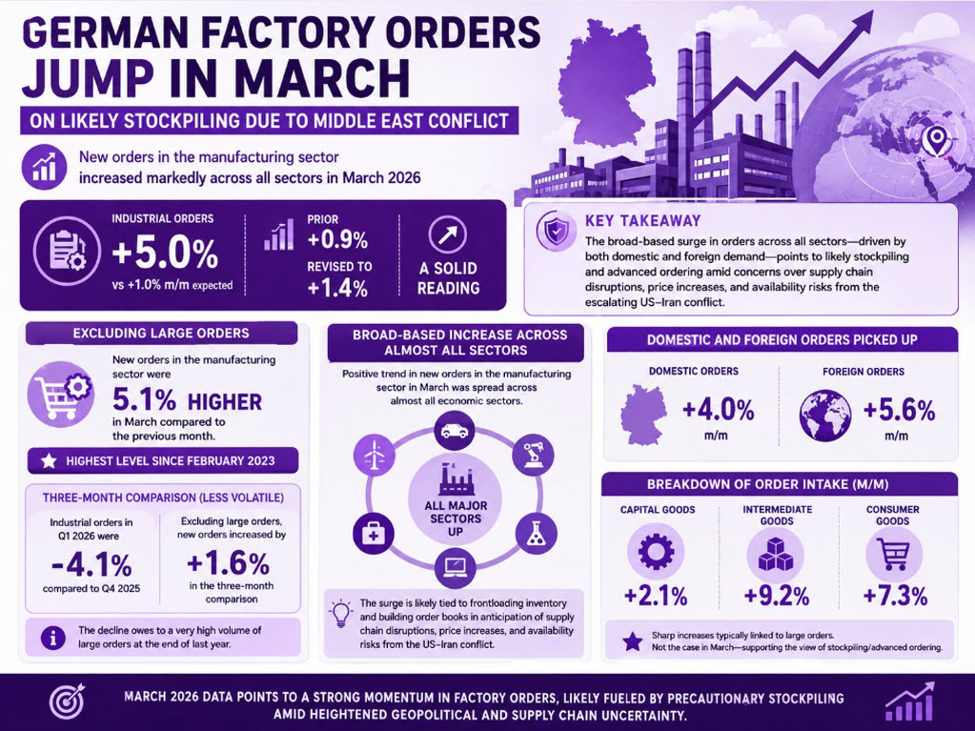
German factory orders jump in March on likely stockpiling due to Middle East conflict
Industrial orders +5.0% vs +1.0% m/m expectedPrior +0.9%; revised to +1.4%That’s a solid reading and even when you look at the details in excluding large orders, new orders in the manufacturing sector were 5.1% higher in March compared to the previous month. That marks the highest level since February 2023.The less volatile three-month comparison does show that industrial orders in Q1 2026 were down 4.1% compared to Q4 2025 though. That being said, it owes to a caveat amid a very high volume of large orders at the end of last year. Excluding large orders, new orders increased by 1.6% in the three-month comparison.Of note, the positive trend in new orders in the manufacturing sector in March was spread across almost all economic sectors. However, you have to wonder how much of this is tied to frontloading inventory and running up the orderbook in fear that supply chain issues will strike in the coming weeks/months amid the US-Iran conflict.Both domestic and foreign orders also picked up by 4.0% and 5.6% respectively on the month.The additional breakdown shows that the order intake for capital goods was 2.1% higher in March. Meanwhile, the order in take for intermediate goods was 9.2% higher and consumer goods being 7.3% higher on the month.Those reflect some sharp increases, which you’d typically associate with large orders (the more volatile component). However, that is not the case in March. So, I’d be more inclined to tie all of that to stockpiling and advanced ordering in anticipation of price increases and availability issues. This article was written by Justin Low at investinglive.com. 🔗 Source 💡 DMK Insight Solid industrial orders data could signal a bullish trend for SOL and related assets. With industrial orders rising 5.0% against a 1.0% expectation, this suggests stronger economic activity, which often correlates with increased demand for cryptocurrencies like SOL. Traders should note that such positive economic indicators can lead to heightened investor confidence, potentially driving prices higher. If SOL can maintain momentum above the $89 level, it might attract more buying interest, especially from institutional players looking for exposure to growth sectors. However, keep an eye on the broader market sentiment. If inflation concerns resurface or if the Fed hints at tightening, it could dampen the bullish outlook. Watch for SOL’s performance around key technical levels, particularly if it approaches $92, as this could be a pivotal point for breakout or reversal strategies. The next few weeks will be crucial for confirming whether this economic data translates into sustained upward movement in SOL and related markets. 📮 Takeaway Monitor SOL’s price action around $89 and $92; strong industrial orders could fuel bullish momentum if sustained.

ECB's Nagel: The ECB is likely to hike rates unless the outlook improves markedly
The ECB is likely to hike rates unless the outlook improves markedlyThis is the exact same thing he said on Monday, so there’s nothing to see here. The ECB has already signalled that a rate hike in June is coming unless the war ends and oil prices fall significantly before then.The market is pricing in a 72% probability of a rate hike at the next meeting. It’s not 100% because there’s still a good chance that the war really ends before then and once the Strait of Hormuz is reopened, oil prices will almost surely fall quickly.That’s why US-Iran headlines continue to be the main driver of basically every asset class. The global economy depends on the Strait of Hormuz. This article was written by Giuseppe Dellamotta at investinglive.com. 🔗 Source 💡 DMK Insight The ECB’s insistence on a June rate hike is a clear signal for traders: prepare for volatility. With the central bank holding firm unless there’s a drastic change in the geopolitical landscape or oil prices, traders need to keep a close eye on these external factors. A rate hike could strengthen the euro, impacting forex pairs like EUR/USD, where a break above recent resistance levels could trigger bullish momentum. Conversely, if the situation remains stagnant, we might see a bearish reaction from the euro as traders price in uncertainty. It’s worth noting that the market often overreacts to central bank signals, so a contrarian approach could be beneficial. If the ECB fails to deliver on the expected hike, we could see a swift reversal in euro strength. Watch for key economic indicators and oil price movements leading up to June, as these will be pivotal in shaping market sentiment and positioning ahead of the decision. 📮 Takeaway Keep an eye on oil prices and geopolitical developments; a June rate hike could strengthen the euro, impacting EUR/USD trading strategies.

Gold rebounds strongly as hope for the end of the war returns. What's next?
FUNDAMENTAL OVERVIEWGold rallied strongly yesterday following several positive developments on the US-Iran front. In fact, the bullish momentum got triggered by Trump pausing Project Freedom so that the US could work to finalise a deal with Iran. The pause was of course interpreted as another step towards a deal. Later in the European session, we got an Axios report saying that US and Iran were getting close to a one-page memo to end the war and that US officials were expecting Iran’s response to several key points in the next 48 hours. Tonight, we got reports that Iran was expected to deliver a response via Pakistani mediators today. In the short-term, a resolution and the reopening of the Strait will likely support gold on falling oil prices and increased rate cut bets as inflation worries would ease. After that though, the focus will quickly turn back to the Fed and the economic data. With the end of the war, the increase in economic activity could keep inflation higher for longer and eventually even require rate hikes to bring it sustainably back to the 2% target that the Fed has been missing since 2021. And that will set the stage for the next big crash. GOLD TECHNICAL ANALYSIS – DAILY TIMEFRAMEOn the daily chart, we can see that gold recovered all the losses since last week on the latest US-Iran developments. The price is still trading right in the middle of the two key trendlines, so there’s not much we can glean from this timeframe. We need to zoom in to see some more details. GOLD TECHNICAL ANALYSIS – 4 HOUR TIMEFRAMEOn the 4 hour chart, we can see the price broke above the strong resistance zone around the 4,650 and extended the gains as more buyers piled in on the breakout. The natural target is the April high around the 4,891 level. The sellers will need the price to fall back below the 4,650 level to regain control and position for a drop into the 4,350 level next.GOLD TECHNICAL ANALYSIS – 1 HOUR TIMEFRAMEOn the 1 hour chart, we can see the minor consolidation after the breakout formed an upward triangle with the price currently breaking out. The buyers will likely increase the bullish bets here into the 4,891 level next, while the sellers will be better off waiting for the price breaking below the minor upward trendline to extend the pullback into the 4,650 support. The red lines define the average daily range for today. UPCOMING CATALYSTSToday we get the latest US Jobless Claims figures and an Iran’s response to US’s war-ending proposal is expected to come via Pakistani mediators. Tomorrow, we conclude the week with the US NFP report and University of Michigan Consumer Sentiment survey. This article was written by Giuseppe Dellamotta at investinglive.com. 🔗 Source 💡 DMK Insight Gold’s recent rally is more than just a reaction to geopolitical news—it’s a signal of shifting market sentiment. The pause in Project Freedom suggests a potential easing of tensions, which historically boosts gold as a safe haven. Traders should note that this bullish momentum could attract more institutional interest, especially if gold continues to hold above key resistance levels. If we see a sustained push past recent highs, it could trigger further buying, especially from retail investors looking to capitalize on the trend. However, it’s worth questioning whether this rally is sustainable; geopolitical developments can be fickle, and any sudden shifts could lead to volatility. Watch for gold to maintain its position above significant support levels to confirm this bullish trend. The next few days will be crucial as traders assess the implications of these developments on broader market dynamics, including potential impacts on the dollar and equities. 📮 Takeaway Keep an eye on gold’s support levels; a sustained rally above recent highs could signal further bullish momentum, especially with geopolitical tensions easing.