
 Bitcoin
  Ethereum
  Tether
  XRP
XRP  BNB
BNB  USDC
USDC  Solana
  TRON
TRON  Lido Staked Ether
  Figure Heloc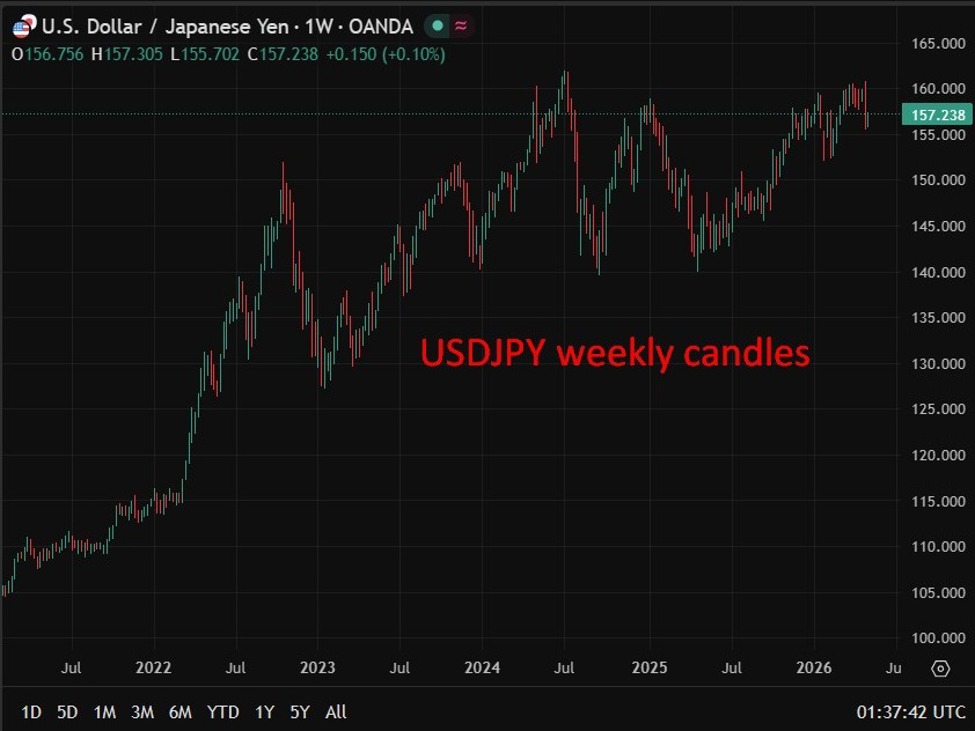
Rabobank is maintaining its forecast for USDJPY to end the year at lower levels, citing Japan’s structural shifts, while flagging the Strait of Hormuz timeline as a key assumption underpinning the call.Summary:Rabobank has maintained its forecast for USDJPY to finish the year at lower levels, based primarily on structural changes underway within Japan, per the bank’s noteThe yen has been a weak performer year to date, continuing to be weighed down by its reputation as a funding currency, according to RabobankRabobank cautioned that currency intervention tends to be ineffective at reversing established trends and can create opportunities for speculators to add to positions at more attractive levels, per the noteThe bank’s year-end yen call is conditioned on the Strait of Hormuz reopening within weeks rather than months, with that timeline described as a key assumption in the baseline forecast, according to Rabobank
Rabobank is holding its forecast for the yen to strengthen against the dollar by year-end, maintaining conviction in a structural Japan thesis even as the currency has remained one of the poorest performers in foreign exchange markets through 2026, with the Strait of Hormuz closure identified as the primary risk to that call.The yen has struggled to escape its long-standing reputation as a funding currency, a designation that keeps it under pressure in risk-on environments as investors borrow cheaply in yen to deploy into higher-yielding assets elsewhere. That dynamic has persisted through the year to date, frustrating what Rabobank has consistently framed as a multi-year structural re-rating story rooted in changes taking place within Japan itself. The bank has not specified which structural shifts underpin its optimism, but the broader market context points to the Bank of Japan’s gradual policy normalisation and the domestic inflation dynamics that have accompanied it as the likely drivers of the longer-term yen constructive view.On intervention, Rabobank struck a notably sceptical note. The bank argued that currency intervention, while capable of engineering a short-term turn, is more likely to represent a temporary disruption to an established trend than a durable reversal. In that framing, intervention becomes less a policy tool and more an entry point, potentially offering speculators the chance to add to existing positions at more favourable levels rather than forcing them to cover.The most significant conditionality in the note concerns the Strait of Hormuz. Rabobank’s year-end USDJPY downside forecast rests on an assumption that the waterway reopens within weeks rather than over a period of several months. The yen’s behaviour under an extended Hormuz closure is materially different from its behaviour in a world where energy supply disruption resolves relatively quickly, and the bank’s willingness to flag that dependence explicitly reflects how central the geopolitical timeline has become to near-term currency forecasting across asset classes.—Rabobank’s decision to hold a year-end yen strengthening forecast despite persistent underperformance reflects a conviction trade rather than a momentum call, and the distinction matters for positioning. If the structural Japan thesis is correct but the Hormuz closure extends beyond the weeks assumed in the baseline, the yen faces a prolonged period of further weakness before any fundamental turn materialises, handing carry traders additional runway. The note’s implicit warning that intervention is more likely to create entry opportunities for speculators than to force a durable trend reversal is a direct signal to short-side players that dips may be buyable. USDJPY direction in the second half of the year will hinge heavily on whether Hormuz reopens on Rabobank’s assumed timetable, making the strait as consequential for FX markets as it is for energy.
This article was written by Eamonn Sheridan at investinglive.com.
💡 DMK Insight
Rabobank’s forecast for USDJPY to close lower this year is a signal for traders to reassess their positions. The emphasis on Japan’s structural shifts suggests a long-term trend that could impact the currency pair significantly. With geopolitical factors like the Strait of Hormuz in play, traders should be wary of volatility spikes. If USDJPY breaks below key support levels, it could trigger further selling pressure. Look for confirmation on the daily charts; a sustained move under 140 could signal a deeper bearish trend. On the flip side, if the pair holds above this level, it might indicate a temporary pullback rather than a full reversal. Keep an eye on economic indicators from Japan and the U.S. that could influence this outlook, particularly any shifts in monetary policy or trade relations. The next few weeks are crucial, so monitoring these developments will be key to navigating potential market shifts.
📮 Takeaway
Watch for USDJPY to hold below 140; a break could signal deeper bearish momentum, while support could indicate a temporary pullback.