Bitcoin
  Ethereum
  Tether
  XRP
XRP  BNB
BNB  USDC
USDC  Solana
  TRON
TRON  Lido Staked Ether
  Figure Heloc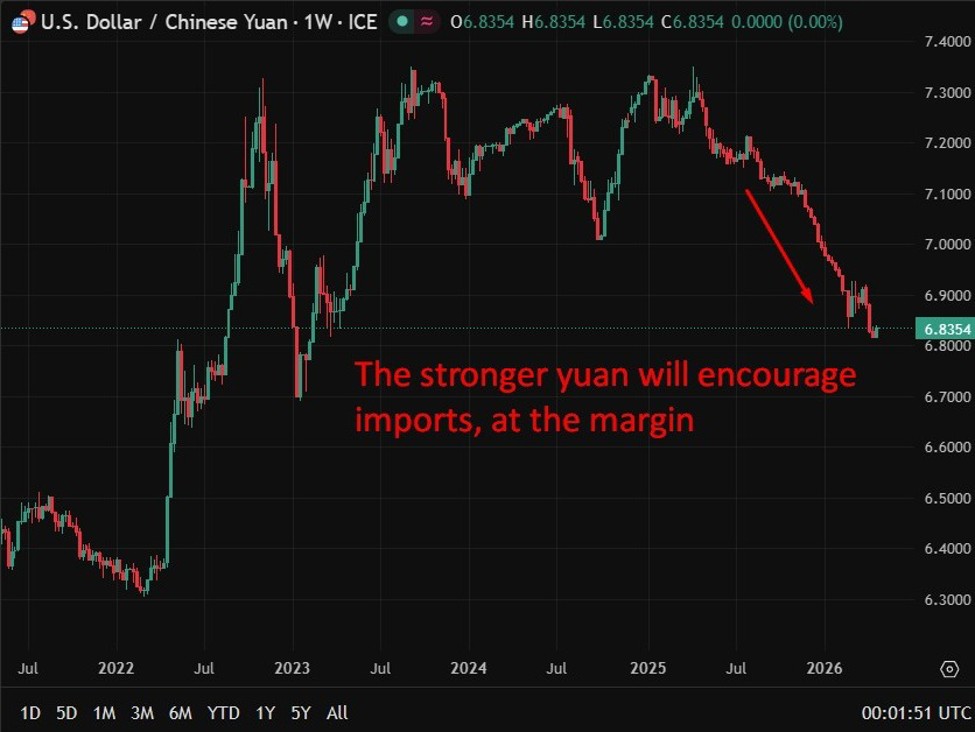
China’s import growth is forecast to hit a five-year high of 5% in 2026, overtaking export growth for the first time since 2021, driven by a surge in AI-related chip purchases. (Info via Bloomberg, gated).SummaryChina import growth forecast upgraded to 5% in 2026, a five-year high, more than double the 2.4% predicted in March, per Bloomberg poll of 17 economistsImport growth now expected to overtake export growth for the first time since 2021Export growth also revised higher to 4.9% from 3.6%China’s goods trade surplus forecast at just over $1.2 trillion, barely above 2025’s record levelIntegrated circuit imports soared 54% year-on-year in March, accounting for nearly a third of total import growthChip volume rose only 14%, suggesting surging prices accounted for much of the value increase, per Pantheon MacroeconomicsChina’s total imports rose 23% in Q1 2026 year-on-year; exports climbed 15%Yuan has strengthened close to 7% against the dollar over the past year, boosting purchasing powerOil and gas import values expected to fall 14% and 18% respectively in April due to reduced Strait of Hormuz traffic, per Pantheon MacroeconomicsChina identified as world’s largest supplier of AI-related goods but remains a net importer of advanced chipsRising global demand for EVs and solar panels seen as a tailwind for Chinese exportersEconomists have sharply upgraded their forecasts for China’s import growth, now expecting foreign purchases to outpace export expansion for the first time since 2021, as a global artificial intelligence investment boom drives surging demand for high-end chips and advanced manufacturing equipment.According to a Bloomberg poll of 17 economists conducted this month, China’s imports are forecast to grow 5% in 2026, a five-year high and more than double the 2.4% gain predicted as recently as March. The revision follows four consecutive years of import stagnation and decline and reflects a structural shift in China’s trade dynamics driven primarily by the country’s heavy reliance on cutting-edge technologies linked to AI development.The unexpected scale of the import surge became clear in first-quarter trade data, which showed imports climbing 23% year-on-year and exports rising 15%. The value of integrated circuits imported by China soared 54% in March from a year earlier, accounting for nearly a third of total import growth, even as import volumes rose a more modest 14%, according to estimates from Pantheon Macroeconomics. The gap between value and volume growth points to sharply higher chip prices as a significant driver alongside rising demand.The global AI spending boom, forecast to reach $2.5 trillion this year, has become a major engine of trade across Asia. While China has emerged as the world’s largest supplier of AI-related goods, it remains a net importer of certain critical technologies, particularly advanced semiconductors. Taiwan and South Korea, which supply the bulk of China’s AI-related chip imports, have both reported surging export volumes to China in recent months, underlining how the AI cycle is reshaping regional trade patterns.Beyond chips, several other factors are supporting China’s import growth. The yuan has strengthened by close to 7% against the dollar over the past year, lifting the purchasing power of Chinese households and businesses. A rally in metal prices has also inflated the import value of copper and aluminium products.Export growth has also been revised higher, to 4.9% from a previous estimate of 3.6%, partly reflecting inadvertent benefits from the Iran war. Rising global demand for green energy products is helping Chinese carmakers and solar panel manufacturers make further inroads in overseas markets, while China’s supply chains have proven more resilient to the energy shock than those of many other Asian economies.With import and export growth now running broadly in line, China’s goods trade surplus is projected at just over $1.2 trillion for 2026, barely above last year’s record level and a marked contrast to the rapid expansion seen over the previous two years.The near-term outlook is not without risk, however. Reduced traffic through the Strait of Hormuz is expected to weigh on energy import values in the months ahead, with Pantheon Macroeconomics forecasting sequential declines of 14% and 18% in oil and gas import values respectively in April. Weak domestic consumption also remains a structural drag, with economists noting that China’s recovery continues to rely heavily on external demand rather than any meaningful revival in household spending.—The sharp upward revision to China’s import forecasts carries significant implications for global trade flows and commodity markets. A narrowing of China’s trade surplus reduces one of the key pressure points in international trade relations, though at over $1.2 trillion the surplus remains historically elevated. The AI-driven chip import boom is a direct boon for Taiwan and South Korean exporters, and signals that the global AI investment cycle continues to underpin Asian trade even amid the energy disruption caused by the Iran war. The yuan’s near-7% appreciation against the dollar adds further purchasing power to Chinese buyers, potentially sustaining import momentum. On the downside, the expected 14-18% sequential decline in oil and gas import values in April from reduced Hormuz traffic is a near-term headwind that could complicate the import growth picture in coming months. For energy markets specifically, the data reinforces that China’s crude appetite is under pressure from both the Hormuz disruption and subdued domestic consumption.
This article was written by Eamonn Sheridan at investinglive.com.
💡 DMK Insight
China’s import growth hitting 5% by 2026 is a game changer for global markets. This shift, driven by AI-related chip purchases, signals a potential pivot in trade dynamics. For traders, this could mean increased demand for semiconductor stocks and related tech sectors. If imports outpace exports, it might also affect currency valuations, particularly the yuan, as trade balances shift. Keep an eye on how this impacts commodities tied to tech production, like copper and rare earth elements. But here’s the flip side: while this growth is promising, it could also lead to inflationary pressures domestically, which might prompt the Chinese government to adjust monetary policy. Watch for any signals from the PBOC that could affect the yuan’s strength. Overall, traders should monitor semiconductor stocks closely and consider how this import growth could ripple through related markets over the next few years.
📮 Takeaway
Watch semiconductor stocks and the yuan as China’s import growth could reshape trade dynamics and impact currency valuations in the coming years.