 Bitcoin
  Ethereum
  Tether
  XRP
XRP  BNB
BNB  USDC
USDC  Solana
  TRON
TRON  Lido Staked Ether
  Figure Heloc
It’s a brand new week but the main focus in markets stay on the Middle East. The US-Iran conflict drags on further and the latest development is that US president Trump delivered a warning over the weekend for Iran to “reopen” the Strait of Hormuz. Trump gave a 48-hour ultimatum, which will run its course late in the day today.Iran has so far responded that they will not back down and are willing to escalate things further. So, that’s leaving us to where we are now as the crisis in the region extends. As we go on longer, higher oil prices continue to become more entrenched for global economies and restarting the normalisation process in energy market itself will take a much longer time.In turn, inflation fears will just continue to boil and that’s inflicting pain in the bond market. Yields are surging higher and not just in the US, we’re seeing the same everywhere. 10-year Treasury yields are up to 4.41%, a marked climb from 3.95% at the end of February. That as the conversation shifts from Fed rate cuts to Fed rate hikes instead. The curve has essentially shifted and quite dramatically in just a span of a few weeks.It’s the same in other places too. 10-year gilt yields have also surged up near 5% at the end of last week, its highest since 2008. That also comes as short-term yields in the UK i.e. 2-year yields have jumped over 100 bps alone in March.In Europe, 10-year bund yields have also moved up to 3.05% – its highest since 2011. The same for 10-year yields in France, with it rising to 3.76% – also the highest since 2011.I would argue that the main issue here is how quickly the bond market has had to reprice the central bank and inflation outlook. And that’s bound to uncover a lot of exposed positions and pain points in broader markets as well. Equities already will not like the sight of war but now have to deal with one of its most hated pain points, that being higher yields.Selling upon selling can get painful very quickly and as warned last week, may even trigger margin calls and spread over to precious metals too. And today, gold is down near 3% to $4,365 while silver is down 3% to $65.70 currently. From Friday:”Besides the point in equities, keep an eye out for the likes of precious metals too. If you think the heavy selling at one point yesterday was bad, wait until we see stocks trigger stops on any further break lower from this point. That can cascade further to margin calls and trigger more volatile selling in the likes of gold and silver as market players need to front up the cash.”If the Middle East conflict drags on further and oil gets comfortable way above the $100 mark, be sure to strap yourselves in for an extremely bumpy ride. There’s not going to be any shelter for market players if this keeps up. This article was written by Justin Low at investinglive.com. 🔗 Source 💡 DMK Insight The escalating US-Iran tensions are a major risk factor for traders right now. With President Trump’s ultimatum regarding the Strait of Hormuz, we could see volatility spike in oil and related markets. The Strait is a critical chokepoint for global oil supply, and any disruption could lead to significant price movements. Traders should keep an eye on crude oil futures, especially if prices approach key resistance levels. If tensions escalate, we might see a surge in safe-haven assets like gold and the US dollar, while riskier assets could take a hit. Watch for any developments over the next 48 hours, as this ultimatum could trigger immediate market reactions. Also, consider how this situation might affect broader geopolitical sentiment, which often influences forex pairs tied to oil-exporting nations. On the flip side, if Iran responds diplomatically, we could see a relief rally in risk assets. So, it’s crucial to stay alert and adjust positions accordingly based on how this plays out in the coming days. 📮 Takeaway Monitor crude oil prices closely this week; any disruption in the Strait of Hormuz could trigger significant volatility.

IRGC says ready to respond to any threat with same level of disruption and force
Iran’s Islamic Revolutionary Guard Corps (IRGC) have come out to say that they will be “determined to respond to any threat at the same level as it creates in terms of deterrence”. Adding that if the US decides to “hit electricity, then we will hit electricity”. And if the US plans attacks on power plants, then Iran will respond by striking Israel’s power plants and regional facilities that supply electricity to US bases.This of course is a response to US president Trump’s warning over the weekend. Trump delivered a 48-hour ultimatum to Iran on Saturday, calling for the reopening of the Strait of Hormuz. And if not, he will order the US military to “hit and obliterate” Iran’s power plants – starting with “the biggest one first”.He didn’t specifically name it but it likely points to the Bushehr nuclear power plant, which had already been partially damaged last week. That or the Damavand power station (natural gas plant) close to Tehran. Or perhaps he will call the order to strike both targets. So, we’ll see.With Trump delivering that ultimatum on Saturday, the 48-hour clock will run out at the end of today. As such, we can only wait and see if he will walk the walk after talking the talk.Iran had also warned over the weekend that they could continue to target other key infrastructure across the Gulf region, such as water desalination facilities. That is something that they already began outlining last week already here. That was after the South Pars gas field was attacked of course. This article was written by Justin Low at investinglive.com. 🔗 Source 💡 DMK Insight Tensions between the US and Iran are escalating, and here’s why that matters for traders: geopolitical instability often leads to volatility in oil and forex markets. The IRGC’s statement about responding to US threats indicates a potential for military action, which could disrupt oil supply chains. Given that oil prices are sensitive to geopolitical events, traders should keep an eye on crude oil futures, especially if prices start to approach key resistance levels. Moreover, the forex market could react sharply, particularly with currencies tied to oil-exporting nations. If the situation escalates, we might see the Iranian rial weaken further, impacting regional currencies. Traders should monitor the situation closely, especially around key economic indicators or announcements from the US that could provoke further responses from Iran. Watch for oil prices around recent highs—if they breach those levels, it could signal a broader risk-off sentiment across markets. 📮 Takeaway Keep an eye on crude oil prices and geopolitical developments; a breach of recent highs could trigger significant market reactions.

FX option expiries for 23 March 10am New York cut
There aren’t any major expiries to take note of for the day, with the full list seen below.There is a large-ish one for EUR/USD at the 1.1600 mark but it likely won’t factor much into play. That as the broader market sentiment right now is more focused on inflation fears as the Middle East conflict looks set to drag on further.US president Trump delivered a 48-hour ultimatum to Iran, calling for the reopening of the Strait of Hormuz. That deadline will end later today but so far, Iran has not shown any signs of relenting.As such, markets are growing even more anxious amid higher bond yields as major central banks shift to factoring in rate hikes this year. That’s leading to broad-based selling in other markets too with stocks getting crushed and precious metals also losing out on a double whammy i.e. no more supportive rate cuts and potential margin calls being triggered.In essence, there’s almost no shelter when we get into this phase of the crisis and markets are selling off everywhere. The dollar is one of the better bets as everyone is hunting for cash. So, that’s the biggest driver impacting trading sentiment in the major currencies space today.The expiries above will have minimal impact, with traders staying focused on risk sentiment as well as headline risks. It’s still all about the US-Iran conflict currently. There is just no other game in town.For more information on how to use this data, you may refer to this post here.Head on over to investingLive (formerly ForexLive) to get in on the know! This article was written by Justin Low at investinglive.com. 🔗 Source 💡 DMK Insight With no major expiries today, traders should focus on inflation fears impacting market sentiment. The EUR/USD expiry at 1.1600 might seem significant, but with inflation concerns dominating the narrative, it’s likely to be overshadowed. Inflation data can lead to volatility, especially if it deviates from expectations. Traders should keep an eye on economic indicators, particularly CPI releases, as they could trigger sharp moves in currency pairs. Watch for any shifts in the EUR/USD around the 1.1600 level; a break below could signal further bearish momentum, while a bounce might indicate support. Given the current climate, positioning for volatility could be wise, especially in the forex market where sentiment can shift rapidly based on macroeconomic news. Keep your charts ready for potential breakout patterns as traders react to inflation data in the coming days. 📮 Takeaway Monitor inflation data closely; a break below 1.1600 in EUR/USD could signal further downside risk.

Precious metals continue to bleed out as US-Iran conflict stirs up negative trifecta
Gold is down another 4% today as it closes in on $4,300 while silver is down 6% on the day as nears $64. It’s starting to get rough out there as precious metals are hit by a trifecta of negative factors.The US-Iran conflict might have seemed like a good reason for precious metals to gain on geopolitical tensions. That was the case in January amid tensions between the US and Venezuela. But when higher oil prices start coming into the picture, this is a totally different ball game.The first negative factor is a major shift in big picture outlook for markets. For over two years now, precious metals could fall back on major central banks cutting interest rates as a key upside driver. However, the scrip has flipped on its head now. As inflation fears creep in, central banks are now having to quickly pivot to rate hikes instead. And that’s a big change for trading sentiment in precious metals as well.The latest drag last week was a significant one. And that is where the second factor comes in, that being a technical one. The drop on Friday had a lot riding on it as we see both gold and silver drop below their respective 100-day moving averages (red line). That’s the first meaningful break below that for gold since 2023 and for silver, it’s the first since a brief dip in April 2025. That aside, it’s also the first material technical break below the key level for silver since 2023 as well.And the charts are looking really, really rough at the moment.For gold, it is already running a break below the 2 February low with some minor support closer to $4,275. Otherwise, we look to be in for a deeper rout here with eyes on the 200-day moving average (blue line) at $4,091 next.For silver, it is now taking a run at the 6 February low near the $64 level. A firm break below that opens up the floodgates towards the 200-day moving average (blue line) closer to $57.45 at the moment.The technical signs are certainly compelling, in the sense that it would not be wise to try and pick at bottoms here. And in other words, it looks like there will be more pain to come before things get better.Adding to all this is the third factor and that is added selling in the likes of bonds and stocks. In the past year, precious metals have been a favoured position undertaking for leveraged trades. But when we see a broader market selloff such as this one and especially one that looks like it can turn really bad for stocks too, be very mindful of the impact of margin calls. From Friday:”Besides the point in equities, keep an eye out for the likes of precious metals too. If you think the heavy selling at one point yesterday was bad, wait until we see stocks trigger stops on any further break lower from this point. That can cascade further to margin calls and trigger more volatile selling in the likes of gold and silver as market players need to front up the cash.” This article was written by Justin Low at investinglive.com. 🔗 Source 💡 DMK Insight Gold’s drop to near $4,300 and silver’s plunge towards $64 signal serious bearish sentiment in precious metals right now. The current market turmoil is driven by a combination of geopolitical tensions, rising interest rates, and a strengthening dollar, creating a perfect storm for these assets. Traders should note that gold and silver often react inversely to dollar strength; as the dollar gains traction, these metals typically lose appeal. If gold breaks below $4,250, it could trigger further selling pressure, while silver’s support around $60 is also critical. A breach here could lead to a cascade effect, pushing prices even lower. On the flip side, if geopolitical tensions escalate, we might see a flight to safety that could temporarily boost demand for gold and silver. But for now, the technical indicators suggest a bearish outlook. Keep an eye on the dollar index and any news from the US-Iran situation, as these could shift market sentiment quickly. 📮 Takeaway Watch for gold’s support at $4,250 and silver’s at $60; a break below these levels could lead to significant further declines.
Goldman Sachs now sees ECB delivering a rate hike in April meeting
Goldman Sachs is joining in on the bandwagon in revising their call ahead of the ECB meeting next month. They had previously forecast the central bank to keep interest rates steady throughout this year. So, the change mirrors that of JP Morgan and Barclays from last week as both also expect the ECB to move in April.The firm cites inflation risks driven by the conflict in the Middle East, with higher energy prices being the major pain point.European natural gas prices have surged considerably higher in the past week, although coming off the boil at least on Friday. That being said, they are still roughly double the ECB staff projections for the year ahead. As such, it makes whatever the central bank had forecast or plan for pretty much go out the window.And with the ECB already sitting on the fence prior to the US-Iran conflict, surging gas prices in Europe will just add to more pain points on stubborn inflation especially in the likes of the German economy. That was the main issue for the central bank over the past six months or so.Hence, adding the Middle East developments have naturally shifted market pricing to lean towards aggressive rate hikes by the ECB next. The odds of a 25 bps rate hike for April now stand at ~71% with a rate hike by at least June pretty much fully priced in. This article was written by Justin Low at investinglive.com. 🔗 Source 💡 DMK Insight Goldman Sachs shifting its interest rate outlook signals a potential pivot in ECB policy, and here’s why that matters: With major players like JP Morgan and Barclays already adjusting their forecasts, traders should brace for volatility ahead of the ECB meeting next month. If the ECB hints at a rate hike, it could strengthen the euro and impact forex pairs like EUR/USD significantly. This change in sentiment reflects broader economic indicators, including inflation trends and employment data, which traders need to monitor closely. Keep an eye on the 1.05 level for EUR/USD; a break above could indicate bullish momentum, while a failure to hold could lead to a retracement. But don’t overlook the flip side—if the ECB maintains a dovish stance, it could lead to a sell-off in the euro and a flight to safety in USD-denominated assets. The market’s reaction to these forecasts could set the tone for the rest of the month, so stay alert for any comments from ECB officials that could provide further clarity on their direction. Watch for any shifts in market sentiment as we approach the meeting date. 📮 Takeaway Monitor the 1.05 level for EUR/USD as ECB policy shifts could trigger significant volatility in the forex market next month.
Market outlook for the week of 23rd-27th March
Monday starts quietly, with no significant events scheduled for the FX market. Overall, it’s a light week for data, with the main focus likely to remain on developments in the Middle East. On Tuesday, Japan will release its national core CPI y/y, while the Eurozone, the U.K., and the U.S. will publish flash manufacturing and services PMIs. In addition, the U.S. will release the ADP employment change and the Richmond manufacturing index. On Wednesday, attention will turn to inflation data from Australia and the U.K. Thursday brings U.S. unemployment claims, and on Friday the U.K. will release retail sales m/m, while the U.S. will publish the revised University of Michigan consumer sentiment and inflation expectations. Some FOMC members are expected to deliver remarks during the week, and traders will be watching closely for signals on the future path of monetary policy. Markets continue to expect rate cuts by the end of the year, in line with the Fed’s projections, although concerns about stagflation have increased due to elevated energy prices and potential supply disruptions. The U.S. may be less vulnerable than other regions, but the labor market remains a key area of concern, showing signs of softening. If uncertainty persists, it could weigh further on hiring. While the Fed is not expected to raise the federal funds rate, policymakers are likely to emphasize a cautious, data-dependent approach. In Japan, the consensus for national core CPI y/y is 1.7% versus 2.0% previously. Markets will closely monitor the release to assess whether inflation remains below the BoJ’s 2% target or begins to reaccelerate as the rising global energy prices and a weaker yen could increase import costs. At the latest meeting, the Bank of Japan kept policy unchanged, with Governor Ueda highlighting the importance of wage developments and underlying inflation trends, particularly in the context of ongoing geopolitical uncertainty. On Tuesday, attention will focus on PMI data, particularly in the U.K., the eurozone, and the U.S., to assess how the Middle East conflict is affecting business activity, costs and confidence. One of the key aspects to watch will be whether rising energy prices are feeding into inflation, and to what extent companies are passing those costs on to consumers. At the same time, the data will be monitored for signs of weakening demand and sentiment, as geopolitical uncertainty could weigh on growth. Supply chain disruptions, especially through energy routes, will also be an important theme, with delivery times serving as an early warning signal for potential production constraints. From a regional perspective, the eurozone and Japan appear particularly exposed due to their energy dependence, while the U.K. and the U.S. face a combination of inflationary pressures and softer confidence. Overall, the surveys should help markets determine whether the shock is primarily inflationary or increasingly growth-negative. In Australia, the consensus is for inflation to hold steady at 3.8% y/y in the February CPI reading, with only a modest monthly increase. Seasonal patterns point to softer overall price pressures, supported by declines in fuel and travel-related costs. However, these declines are being offset by continued increases in areas such as education, housing, and utilities, keeping underlying inflation relatively firm, analysts from Westpac noted. The trimmed mean measure is also expected to remain steady at around 3.4% annually, suggesting that core pressures are still sticky, even though momentum has eased slightly in recent months. As a reminder, the RBA raised rates by 25 bps to 4.10% at its most recent meeting, in a narrowly split decision. Policymakers highlighted ongoing capacity constraints and rising inflation expectations driven in part by higher energy prices, while signaling that further tightening could remain on the table depending on how risks evolve. In the U.K., both CPI y/y and core CPI y/y are expected to remain unchanged at 3.0% and 3.1%, respectively. A near-term dip in inflation towards 2% is unlikely to alter the outlook, as the impact of higher gas prices on electricity bills is not expected to be fully reflected until Q3. For now, analysts from ING expect the BoE to enter an extended pause. This article was written by Gina Constantin at investinglive.com. 🔗 Source 💡 DMK Insight With a quiet start to the week, traders should keep an eye on geopolitical tensions and upcoming economic data. The lack of significant events today means that market sentiment could be swayed by external factors, particularly developments in the Middle East. As we approach Tuesday’s core CPI release from Japan, traders should be prepared for potential volatility in the JPY. A higher-than-expected CPI could strengthen the yen, impacting pairs like USD/JPY and EUR/JPY. Meanwhile, the Eurozone and U.K. data later in the week could also create ripples across the FX market, especially if inflation figures deviate from expectations. It’s worth noting that while the current environment seems calm, the geopolitical landscape can change rapidly, leading to sudden market movements. Traders should monitor key levels in major currency pairs and be ready for quick adjustments. Watch for any shifts in sentiment that could arise from Middle Eastern developments, as these could influence risk appetite and lead to increased volatility across the board. 📮 Takeaway Keep an eye on Tuesday’s Japan core CPI release and geopolitical developments, as they could trigger volatility in JPY and related currency pairs.
Japan's largest union group Rengo sees average wage hike of 5.26% this fiscal year
For some context, the fiscal year 2025 preliminary figure was 5.46%. That was then watered down to 5.25% once we got the final confirmation of the exact average wage hike. It is a normal practice for that to happen, so expect more of the same this time around too. As such, this preliminary 5.26% will be much softer even if it is showing that it is higher than the 5.25% final figure from fiscal year 2025.As a reminder, the average wage hike in 2023 was 3.80%. And in 2024, it was 5.10% before the 5.25% figure in 2025.Overall, it’s still a strong number relative to what we have seen in the past from Japan. And this makes it three straight fiscal years now that the average wage hike has come above 5%. That in my view and surely to many, is the threshold that needs to hold in order for the BOJ to lay the groundwork to pursue further rate hikes.So, the central bank has pretty much gotten the green light and confirmation on that. However, policymakers might have just missed their timing window as the Middle East conflict has now thrown a spanner into the works.The BOJ wants the inflation trend in Japan to be driven by stronger wage pressures. However, rising oil prices now will complicate things amid cost-push inflation creeping into the economy. And that is something that the BOJ is actively trying to avoid.Adding to that is the US-Iran conflict and higher oil prices will just weigh further on the yen currency and overall economic output, as higher day-to-day costs for businesses and households weigh. That kind of backdrop will also be a challenging one for the central bank to try and hike rates into. This article was written by Justin Low at investinglive.com. 🔗 Source 💡 DMK Insight So the fiscal year 2025 wage hike just got revised down to 5.25%, and here’s why that matters: this adjustment could signal a shift in labor market dynamics that traders need to watch closely. Lower wage growth often indicates a cooling economy, which can impact consumer spending and, subsequently, corporate earnings. If companies are facing higher costs without corresponding revenue growth, we might see pressure on stock prices, especially in sectors sensitive to labor costs like retail and services. But there’s a flip side to consider: if wage growth is slowing, it could lead to a more dovish stance from the Fed, potentially keeping interest rates lower for longer. This could support equities in the short term, particularly growth stocks that thrive in a low-rate environment. Traders should keep an eye on key economic indicators like unemployment rates and consumer confidence, as these will provide further context on the labor market’s health. Watch for any significant market reactions around upcoming economic reports, especially if they deviate from expectations. 📮 Takeaway Monitor the impact of the revised wage growth on consumer spending and corporate earnings, especially in retail and service sectors, as economic indicators are released.
US futures drop hard as the AI party gets a dose of reality
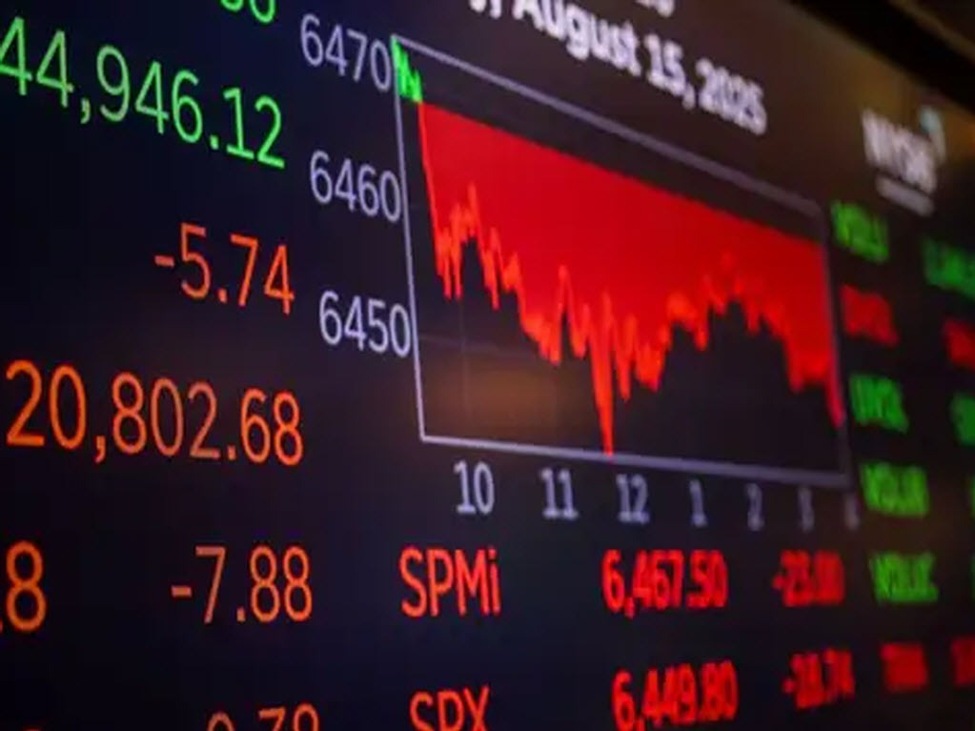
It’s looking rough out there and there is not much of any room for shelter. There is a rout in bonds, stocks, and precious metals all put together as surging oil prices and the Middle East conflict drags on. This is when you have to start thinking of margin calls as pointed out last week here.US futures are down in the dumps again today, extending losses as we get into European trading. S&P 500 futures are now down 1.0% with Nasdaq futures down 1.3%. That follows from the Friday dump, which was a significant one in reaffirming the technical breakdown for tech shares especially last week.Both the S&P 500 and Nasdaq have firmly broken below their respective 200-day moving averages (blue line), and also the technical floor set out by their October and November lows respectively. That’s a massive blow on the charts to dip buyers, signaling a material shift in momentum.This would mark the first time since early May last year that both the S&P 500 and Nasdaq traded below both of its key daily moving averages. And before that, you have to go all the way back to October 2023 for price action to see a brief dip below those two key levels. And if you want to consider a more significant timeline in which stocks were struggling below the key levels, it was all the way back during 2022. That is to say before the AI rally came about.Since then, it’s been a generational run for equities in the past three years. And the start of this year wasn’t all too bad either. But as we see the AI rally run into many challenging factors driving exhaustion, the US-Iran conflict looks to be the trigger siren to end the party. That as higher oil prices risk becoming entrenched and translating into higher inflation. In turn, that has materially shifted major central bank expectations with rate hikes now being on the table.With the way the charts are developing as seen above, things look like they may turn much uglier before they get any better for Wall Street. And if $100 oil prices are already spooking investors, wait until we see real fear creep in when the war isn’t over in one to two months and oil prices risk doubling from here. This article was written by Justin Low at investinglive.com. 🔗 Source 💡 DMK Insight With ETH at $2,049.48, the current market turmoil is a wake-up call for traders. Rising oil prices and ongoing geopolitical tensions are creating a ripple effect across asset classes, leading to increased volatility. This environment could trigger margin calls, especially for those over-leveraged in positions. If ETH breaks below key support levels, say around $2,000, we could see a cascade of selling as traders rush to cut losses. Keep an eye on correlated assets like Bitcoin, which often follows ETH’s lead. The broader market context suggests that risk-off sentiment is prevailing, making it crucial to reassess your exposure and consider tightening stop-loss orders. Here’s the thing: while some might see this as a buying opportunity, the risk of further declines is significant. Watch for any signs of stabilization or reversal in oil prices, as that could provide a clearer direction for crypto markets. Immediate focus should be on the $2,000 level for ETH—if it holds, it might offer a bounce, but if it breaks, expect increased pressure. 📮 Takeaway Watch for ETH to hold above $2,000; a break below could trigger significant selling pressure and margin calls.

Gold suffers worst selloff since January crash amid tightening financial conditions
FUNDAMENTAL OVERVIEWGold bounced on Thursday after a couple of de-escalatory looking news turned the risk sentiment around. Unfortunately, the mood soured on Friday as Wall Street Journal reported that the US was sending warships and thousands of additional marines to the Middle East despite Trump’s assurances that he won’t put American boots on the ground in Iran. CBS news later doubled down on the reports saying that Trump’s administration was making heavy preparations for potential use of ground troops in Iran. Over the weekend, Trump issued an ultimatum to Iran to reopen the Strait of Hormuz within 48 hours or face strikes on key infrastructure. The ultimatum is set to expire this late evening, but it doesn’t look like Iran is going to follow through at all, so that will keep traders on edge.For now, tighter financial conditions and the hawkish repricing are weighing on gold. This pressure is likely to persist unless we get a clear de-escalation between the US and Iran.GOLD TECHNICAL ANALYSIS – DAILY TIMEFRAMEOn the daily chart, we can see that gold eventually broke out of the trendline around the 4,650 level and extended the drop into new lows as the major trendline around the 4,000 level came into sight. If the price gets there, we can expect the buyers to step in with a defined risk below the 3,883 level to position for a rally back into new all-time highs. The sellers, on the other hand, will look for a break lower to increase the bearish bets into the 3,400 level next.GOLD TECHNICAL ANALYSIS – 4 HOUR TIMEFRAMEOn the 4 hour chart, we have a downward trendline defining the bearish momentum. If we get a pullback, we can expect the sellers to lean on the trendline with a defined risk above it to keep pushing into new lows. The buyers, on the other hand, will look for a break higher to pile in for a rally back into the 4,700 level.GOLD TECHNICAL ANALYSIS – 1 HOUR TIMEFRAMEOn the 1 hour chart, we have another minor downward trendline defining the bearish momentum on this timeframe. If we get a pullback, we can expect the sellers to lean on the trendline with a defined risk above it to keep pushing into new lows, while the buyers will look for a break higher to pile in for a rally into the next trendline. The red lines define the average daily range for today. UPCOMING CATALYSTSTomorrow we have the US PMIs. On Thursday, we get the latest US Jobless Claims figures. As a reminder, the focus is mainly on the US-Iran war, so keep an eye on the headlines. This article was written by Giuseppe Dellamotta at investinglive.com. 🔗 Source

Oil prices remain in the spotlight as Trump's ultimatum could lead to new highs
FUNDAMENTAL OVERVIEWOil prices continue to consolidate around the recent highs as the US-Iran war enters the fourth week. On Friday, the Wall Street Journal reported that the US was deploying warships and thousands of additional Marines to the Middle East, despite Trump’s earlier assurances that he wouldn’t put American boots on the ground in Iran.CBS News later reinforced those reports, saying the administration was making significant preparations for the possible use of ground troops in Iran.Over the weekend, Trump issued an ultimatum to Iran to reopen the Strait of Hormuz within 48 hours or face strikes on key infrastructure. That deadline is set to expire later today, and it doesn’t appear Iran is willing to comply, which will keep traders on edge.Until we get a real de-escalation, the path of least resistance for oil prices remains to the upside, with limited room for a meaningful correction.CRUDE OIL TECHNICAL ANALYSIS – DAILY TIMEFRAMEOn the daily chart, we can see that crude oil is consolidating between the 93.00 support and the 100.00 handle. There’s not much we can glean from this timeframe, so we need to zoom in to see some more details. CRUDE OIL TECHNICAL ANALYSIS – 4 HOUR TIMEFRAMEOn the 4 hour chart, we can see more clearly the consolidation between the 93.00 support and the 102.47 level. The buyers will likely continue to step in around the support with a defined risk below it to keep pushing into new highs, while the sellers will look for a break below the support to pile in for a drop back into the 80.00 handle next.CRUDE OIL TECHNICAL ANALYSIS – 1 HOUR TIMEFRAMEOn the 1 hour chart, there’s not much else we can add here as traders will likely continue to play the range until we get a breakout on either side. The red lines define the average daily range for today.UPCOMING CATALYSTSTomorrow we have the US PMIs. On Thursday, we get the latest US Jobless Claims figures. As a reminder, the focus is mainly on the US-Iran war, so keep an eye on the headlines. This article was written by Giuseppe Dellamotta at investinglive.com. 🔗 Source 💡 DMK Insight Oil prices are holding steady near recent highs, and here’s why that matters for traders: With the US-Iran conflict escalating, geopolitical tensions are driving volatility in energy markets. Traders should keep an eye on how these developments impact oil supply and demand dynamics. As oil prices consolidate, any further military actions could trigger sharp price movements, especially if they disrupt supply routes. For those trading oil-related assets or currencies, understanding the correlation with broader market sentiment is crucial. Additionally, keep an eye on technical levels; if oil breaks above key resistance points, it could signal a bullish trend that might spill over into related markets like energy stocks or even currencies tied to oil exports. On the flip side, if tensions de-escalate or if there’s a significant diplomatic breakthrough, we could see a rapid correction in oil prices. Traders should monitor the news closely and consider using options strategies to hedge against sudden price swings. Watch for key price levels in oil futures and related equities, as these will guide your trading decisions in the coming weeks. 📮 Takeaway Monitor oil prices closely; any escalation in the US-Iran conflict could push prices above key resistance levels, impacting related assets significantly.