
 Bitcoin
  Ethereum
  Tether
  XRP
XRP  BNB
BNB  USDC
USDC  Solana
  TRON
TRON  Lido Staked Ether
  Figure Heloc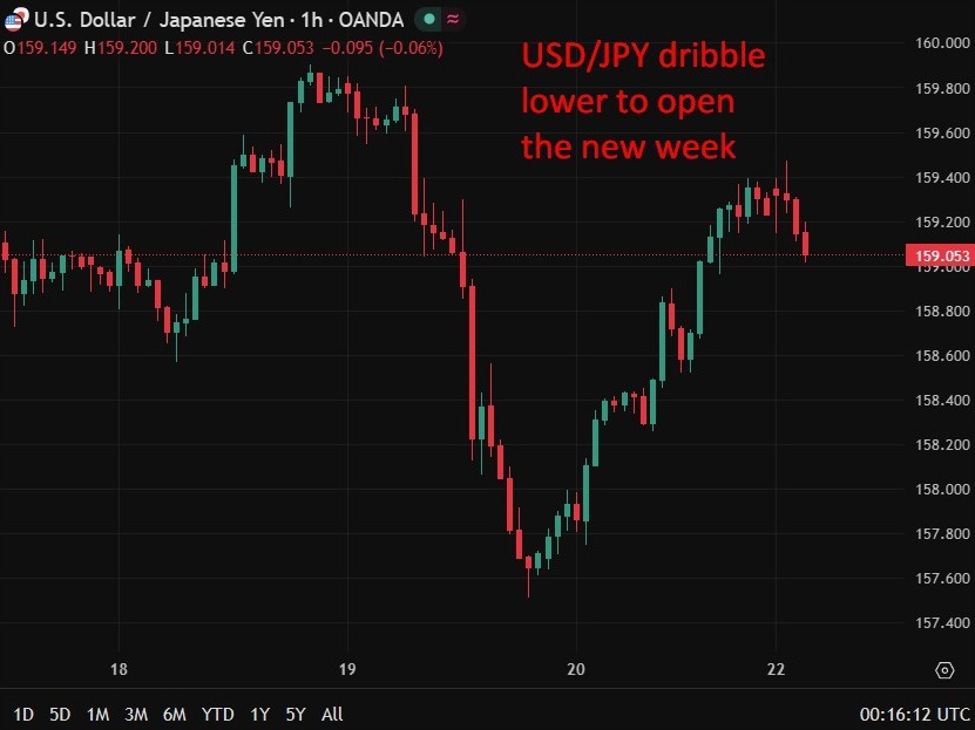
Japan ramps up FX warnings as oil-driven volatility pressures the yen, with authorities signalling readiness to intervene while also deploying fiscal support to offset rising energy costs.Summary:Japan signals readiness to act against FX volatility Top currency diplomat Mimura flags impact of oil-driven speculation on FX Comments reinforce concern over rapid yen moves amid global energy shock Government also preparing fiscal response via fuel subsidies Japan to deploy ~¥800bn from reserves to curb gasoline prices Policy mix reflects dual pressure from weak yen and rising energy costs Intervention risk remains elevated if FX moves become disorderlyJapanese authorities have stepped up their warning on foreign exchange volatility, signalling a readiness to act as global energy-driven market moves spill into currency markets.Japan’s top currency diplomat, Atsushi Mimura, said the government is prepared to take action “on all fronts” in response to excessive FX volatility, underscoring growing concern over the pace and drivers of yen moves. He also highlighted that speculative activity in oil markets is increasingly feeding through into foreign exchange, linking recent currency fluctuations to broader geopolitical and energy price dynamics.The remarks come at a time when global markets are grappling with a sharp rise in oil prices amid escalating tensions in the Middle East. For Japan, which is heavily reliant on energy imports, the combination of higher oil prices and a weaker yen presents a double hit, pushing up import costs and intensifying inflation pressures.Authorities appear increasingly sensitive to the risk that speculative flows, rather than fundamentals, are driving currency moves. Analysts say this distinction is key, as it often determines whether officials escalate verbal warnings into direct intervention in the FX market.Alongside its currency stance, the Japanese government is also preparing fiscal measures to cushion the domestic impact of rising energy costs. According to local media reports, around ¥800 billion will be deployed from budget reserves to help stabilise gasoline prices, signalling a coordinated effort to manage both market volatility and household cost pressures.The combination of verbal intervention and fiscal support highlights the balancing act facing policymakers. While authorities aim to prevent disorderly currency moves, they are also seeking to mitigate the economic fallout from higher energy prices without destabilising public finances.Market participants say the latest comments reinforce the risk of potential intervention if yen weakness accelerates further or becomes detached from underlying economic conditions. With oil markets remaining volatile and geopolitical risks elevated, the yen is likely to remain highly sensitive to both commodity price swings and policy signals in the near term.—Japan’s “top currency diplomat” refers to the senior Finance Ministry official responsible for overseeing foreign exchange policy, typically the Vice Finance Minister for International Affairs. This role involves coordinating FX policy, issuing verbal warnings, and authorising currency intervention when needed. While the Bank of Japan executes interventions operationally, decisions are led by the Finance Ministry, making this position the key public voice on yen policy. This article was written by Eamonn Sheridan at investinglive.com. 🔗 Source 💡 DMK Insight Japan’s FX warnings are a big deal for traders right now—here’s why. With the yen under pressure from oil-driven volatility, the Bank of Japan’s readiness to intervene could lead to significant market movements. Traders should keep an eye on the yen’s performance against major currencies, especially if oil prices continue to fluctuate. The potential for intervention means that any sudden shifts in the yen could be met with swift action from authorities, impacting positions in both forex and commodities markets. If oil prices rise further, the yen could weaken, prompting a sell-off that might trigger intervention. Watch for key levels around recent lows in USD/JPY, as a break could signal a more aggressive response from Japanese officials. On the flip side, if oil prices stabilize, we might see a rebound in the yen, which could catch many traders off guard. Keep an eye on economic indicators related to energy costs and any fiscal measures announced by the government, as these could provide clues about future volatility and intervention timing. 📮 Takeaway Monitor USD/JPY closely; any break below recent lows could prompt immediate intervention from Japan, impacting your forex strategies.
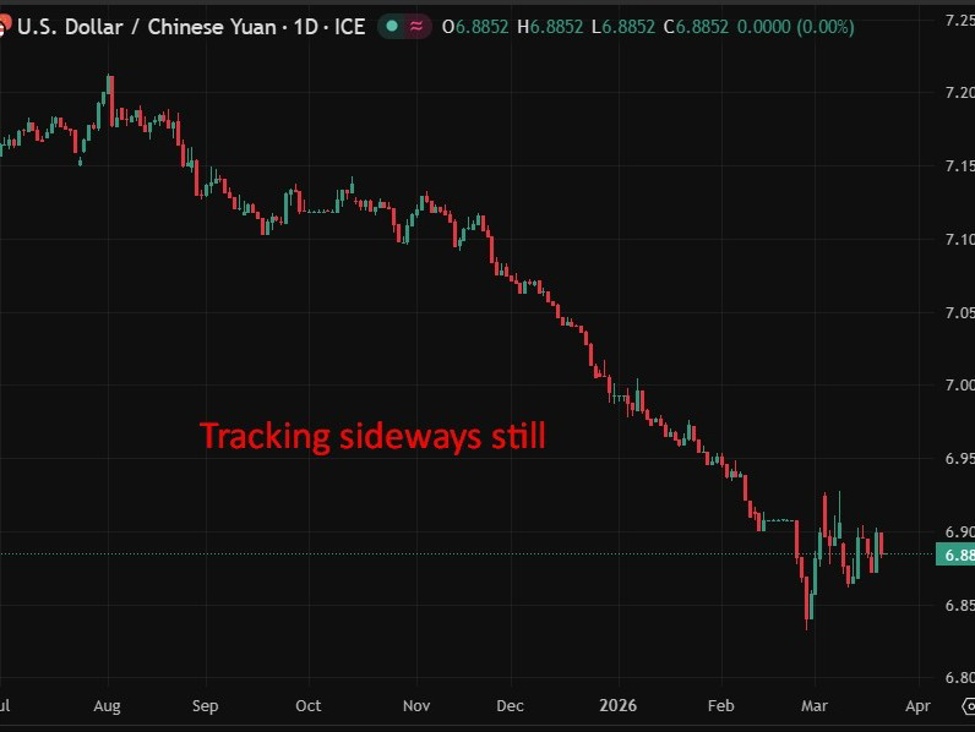
PBOC is expected to set the USD/CNY reference rate at 6.8928 – Reuters estimate
The People’s Bank of China is due to set the daily USD/CNY reference rate at around 0115 GMT (2115 US Eastern time), a fixing that remains one of the most closely watched signals in Asian foreign exchange markets. China operates a managed floating exchange rate system, under which the renminbi (yuan) is allowed to trade within a prescribed band around a central reference rate, or midpoint, set each trading day by the PBOC. The current trading band permits the currency to move plus or minus 2% from the official midpoint during onshore trading hours. Each morning, the PBOC determines the midpoint based on a range of inputs. These include the previous day’s closing price, movements in major currencies, particularly the US dollar, broader international FX conditions, and domestic economic considerations such as capital flows, growth momentum and financial stability objectives. The midpoint is not a purely mechanical calculation, allowing policymakers discretion to guide market expectations. Once the midpoint is announced, onshore USD/CNY is free to trade within the allowable band. If market pressures push the yuan toward either edge of that range, the central bank may step in to smooth volatility. Intervention can take the form of direct buying or selling of yuan, adjustments to liquidity conditions, or guidance through state-owned banks. As a result, the daily fixing is often interpreted as a policy signal rather than just a technical reference point. A stronger-than-expected CNY midpoint is typically read as a sign the PBOC is leaning against depreciation pressure, while a weaker fixing for the CNY can indicate tolerance for a softer currency, often in response to dollar strength or domestic economic headwinds.In periods of heightened global volatility, such as shifts in US rate expectations, trade tensions or capital flow pressures, the fixing takes on added significance. For investors, it provides insight into Beijing’s currency priorities, balancing competitiveness, capital stability and financial market confidence. This article was written by Eamonn Sheridan at investinglive.com. 🔗 Source 💡 DMK Insight The upcoming USD/CNY reference rate fixing is crucial for traders navigating Asian forex markets. With the People’s Bank of China setting the rate, expect volatility around 0115 GMT. This fixing can influence not just the CNY but also related currencies and commodities, especially if it deviates from market expectations. Traders should keep an eye on the broader economic indicators from China, as any signs of economic weakness could lead to a weaker renminbi, impacting exports and global trade dynamics. If the rate comes in significantly lower than anticipated, it could trigger a sell-off in the CNY and related assets, while a stronger rate might bolster confidence in the Chinese economy. Watch for reactions in commodities like copper and oil, which often correlate with Chinese demand. The real story is how this rate setting could ripple through the forex market, especially for those holding positions in emerging market currencies. Keep your charts ready and monitor the USD/CNY closely; any significant moves could set the tone for the rest of the trading day. 📮 Takeaway Watch the USD/CNY reference rate fixing closely; deviations from expectations could trigger significant volatility in the CNY and related currencies.
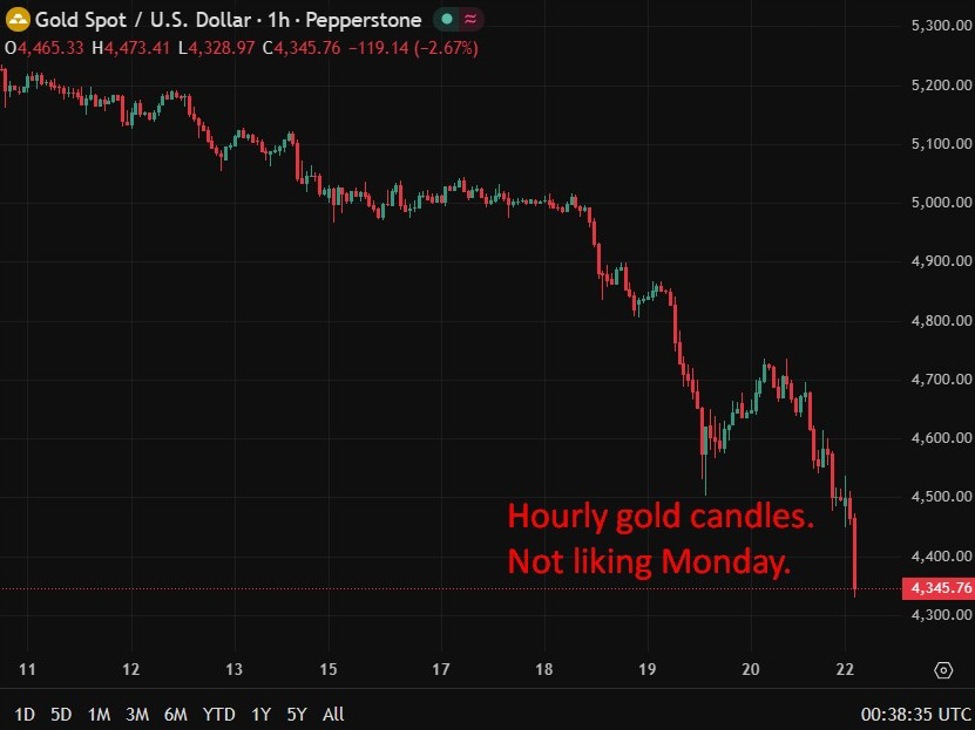
Gold gets smashed as oil shock lifts yields, boosts dollar, and crushes rate-cut hopes.
Summary:Gold is under pressure from a stronger US dollar and higher Treasury yields Markets are repricing for fewer rate cuts and possible renewed tightening Oil shock is lifting inflation fears, which is pushing real-rate expectations higher Safe-haven demand is rotating partly into the US dollar rather than gold Profit-taking is also likely after gold’s powerful multi-month rally Reuters reported gold fell 1.8% on Friday amid higher yields and dollar strength Despite the pullback, gold remains historically elevated after record-setting gains The next move depends on whether yields keep rising faster than geopolitical fear supports bullion Gold is being hit by a classic but brutal mix of macro forces: a stronger US dollar, rising Treasury yields, and a sharp repricing of global interest-rate expectations as the Middle East war drives oil higher and revives inflation fears.While bullion would normally be expected to thrive during a geopolitical crisis, the current market backdrop has complicated that traditional safe-haven story. Gold fell 1.8% on Friday to around $4,560 an ounce after news of additional US troop deployments to the Middle East helped lift the dollar and bond yields. The metal, which offers no yield, tends to struggle when investors can earn more from cash and government bonds. As the war has pushed oil sharply higher, investors have started abandoning hopes for monetary easing and instead pricing in a more hawkish central-bank path. US 10-year Treasury yields rose to around 4.39%, while the dollar index strengthened as markets sought safety and began reassessing inflation risks. In that environment, gold loses one of its biggest tailwinds: expectations of falling rates. This matters because the current shock is not a simple “risk-off equals gold up” setup. It is increasingly being treated as an energy-driven inflation shock. Higher oil means stickier inflation, and stickier inflation means rates may stay higher for longer, or in an extreme scenario, central banks may even need to lean tighter again. That dynamic is bearish for non-yielding assets at the margin, even if geopolitical anxiety remains elevated. There is likely also an element of profit-taking. Gold has had an enormous run. Record highs in late December 2025, and several major banks had already lifted long-term forecasts this year, including JPMorgan and UBS. When a market is crowded and heavily in profit, it becomes more vulnerable to sharp air pockets once the macro backdrop turns less supportive. That does not mean the broader bull story is dead. Geopolitical stress, elevated oil, and structural demand for hard assets can still support bullion over time. But in the short run, gold is being treated less as a pure crisis hedge and more as an asset caught between safe-haven demand and the headwind of rising yields.What’s hitting gold at present? The key factors look to be:Gold’s biggest problem right now is real-rate pressure. The market is shifting from “central banks will cut” to “central banks may need to stay restrictive for longer,” and that lifts the opportunity cost of holding bullion. Reuters explicitly linked Friday’s drop to a stronger dollar and higher yields. Second, the US dollar is absorbing some of the haven bid, the dollar gaining as conflict risks intensified, which can cap or reverse gold gains because bullion is priced in dollars. Third, the oil shock is inflationary in the wrong way for gold near-term. Inflation can be gold-positive over the long run, but when it causes markets to price out cuts and push yields up immediately, bullion can sell off first. Fourth, after a huge rally, positioning and profit-taking are likely making the move more violent than the headlines alone would suggest. Reuters has documented both the earlier record highs and the large bank forecast upgrades that helped frame gold as a crowded bullish trade.Where to now? Near term, gold probably trades off a tug-of-war between yield pressure and fear pressure.If oil keeps pushing higher, bond yields keep climbing, and markets continue to price fewer cuts or even renewed tightening, gold could stay heavy or remain stuck in a volatile consolidation phase. That is the cleaner bearish scenario for the metal. But there is another path. If the conflict worsens enough to damage broader risk sentiment, destabilise credit, or undermine confidence in financial assets more broadly, gold could regain its crisis bid even with yields elevated. In other words, mild-to-moderate geopolitical stress has recently helped the dollar more than gold, but a deeper shock could flip that balance back in bullion’s favour. That inference is consistent with gold rising during earlier phases of the conflict when safe-haven demand was more dominant. So the short version is this: gold’s next leg depends on whether the market focuses more on higher rates or on outright systemic fear. This article was written by Eamonn Sheridan at investinglive.com. 🔗 Source 💡 DMK Insight Gold’s recent struggles highlight a critical shift in market dynamics: a stronger US dollar and rising Treasury yields are reshaping safe-haven preferences. With the markets recalibrating expectations for fewer rate cuts, traders should keep a close eye on how inflation fears, particularly from oil price shocks, are influencing real-rate expectations. This environment could lead to increased volatility in gold prices as profit-taking occurs and demand shifts towards the dollar. If gold breaks below key support levels, it might trigger further selling pressure, while a resurgence in inflation could reignite interest in gold as a hedge. Watch for gold’s performance around critical technical levels, especially if it approaches recent lows, as this could signal a broader trend shift. Additionally, keep an eye on Treasury yields; a sustained rise could further dampen gold’s appeal. In this context, the real story is how traders react to these macroeconomic signals. If the dollar continues to strengthen, gold could face significant headwinds, while any signs of renewed inflation could create a buying opportunity for those looking to hedge against currency risk. 📮 Takeaway Watch gold closely; a break below key support levels could signal further downside, especially if Treasury yields keep rising.
PBOC sets USD/ CNY reference rate for today at 6.9041 (vs. estimate at 6.8928)
The PBOC allows the yuan to fluctuate within a +/- 2% range, around this reference rate. PBOC injects 8bn yuan in 7-day reverse repos at 1.4% (unchanged) in open market operations This article was written by Eamonn Sheridan at investinglive.com. 🔗 Source 💡 DMK Insight The PBOC’s latest move to inject 8bn yuan through reverse repos signals a commitment to stabilize the yuan amid volatility. With the yuan allowed to fluctuate within a +/- 2% range, traders should be on alert for potential breakouts or reversals. The unchanged 1.4% rate indicates the central bank’s cautious approach, likely aimed at maintaining liquidity without spurring inflation. This could impact forex pairs like USD/CNY, especially if the yuan tests the upper or lower bounds of its trading range. If the yuan weakens significantly, it could trigger capital outflows, affecting broader market sentiment. Keep an eye on the 7-day reverse repo rate as a key indicator of PBOC’s monetary policy direction. Traders should also monitor any geopolitical developments that could influence the yuan’s stability, as these could lead to increased volatility in the forex market. 📮 Takeaway Watch for USD/CNY movements around the yuan’s +/- 2% range; a breakout could signal significant trading opportunities.

Saudi Aramco cuts Asia oil supply as Hormuz disruption tightens market
Summary:Saudi Aramco cuts April crude supply to Asian buyers Supplies constrained due to Hormuz disruption from Iran conflict Buyers told to lift only Arab Light crude from Yanbu terminal Shift reflects reliance on Red Sea export route via East-West pipeline Limited pipeline and terminal capacity forcing supply rationing Heavier crude grades likely harder to supply amid disruption Asian refiners face feedstock mismatch and potential output cuts Move underscores tightening physical oil market conditions Saudi Aramco has reduced crude oil allocations to Asian buyers for April, highlighting the growing strain on global energy supply chains as disruptions in the Strait of Hormuz continue to ripple through markets.According to sources familiar with the matter, the world’s largest oil exporter has notified at least some term customers in Asia that they will receive lower volumes than requested for April loadings. In a further sign of tightening logistics, buyers have also been told that cargoes will be limited to Arab Light crude shipped from the Red Sea port of Yanbu, rather than the broader slate of grades typically available from Gulf export terminals. The changes reflect the ongoing impact of the Iran conflict, which has severely disrupted shipping through the Strait of Hormuz, a critical artery that normally handles a significant share of global oil flows. In response, Saudi Arabia has increasingly relied on its East-West pipeline to reroute crude to Yanbu, bypassing the Gulf altogether.However, this workaround comes with clear constraints. While the pipeline provides a vital alternative route, its effective capacity is well below the volumes typically shipped through Hormuz, forcing Aramco to ration supply among customers. Analysts note that the shift toward Arab Light crude also suggests limitations in the ability to move heavier grades, which are often preferred by Asian refiners.The supply adjustments are already feeding into broader market tightness. Regional refiners, particularly in Asia, are facing a mismatch between available crude grades and their processing configurations, raising the risk of reduced refinery runs or increased reliance on alternative suppliers.The development underscores how logistical bottlenecks, rather than outright production shortages, are becoming a key driver of market dynamics. Even where oil remains available in the ground, the ability to transport it efficiently to end-users has become increasingly constrained.With Saudi Arabia long seen as a stabilising force in global oil markets, the decision to cut allocations highlights the severity of the current disruption and reinforces expectations of continued volatility in physical crude markets.What happens next?The immediate focus will be on whether supply constraints deepen or stabilise.If disruptions in the Strait of Hormuz persist, further allocation cuts from Saudi Arabia, and potentially other Gulf producers, are likely. The key bottleneck remains export infrastructure rather than production capacity, meaning even modest improvements in security or shipping access could quickly ease pressure.However, risks remain skewed to the upside for oil prices. The reliance on Yanbu and the East-West pipeline creates a concentration risk, particularly as these routes have already come under threat. Any sustained disruption to Red Sea infrastructure would represent a significant escalation, potentially removing one of the last functioning outlets for Gulf crude.For Asian buyers, the situation could lead to a scramble for alternative supply, including West African, US, or Latin American barrels, likely at higher cost. Refiners may also be forced to adjust operations to process lighter crude grades, impacting margins and product output.Over the medium term, the current crisis is likely to accelerate structural changes in global oil logistics, with greater emphasis on diversified export routes, storage capacity, and supply chain resilience. However, these adjustments take time, meaning near-term markets are likely to remain tight and highly sensitive to geopolitical developments.In short, unless Hormuz flows are restored quickly, the current situation points to continued supply rationing, elevated price volatility, and a sustained geopolitical risk premium in oil markets. This article was written by Eamonn Sheridan at investinglive.com. 🔗 Source 💡 DMK Insight Saudi Aramco’s decision to cut April crude supply to Asia is a game changer for oil traders right now. The disruption in the Hormuz Strait due to the Iran conflict is tightening supply, forcing buyers to lift only Arab Light crude from the Yanbu terminal. This shift highlights the fragility of the Red Sea export route, and with limited pipeline capacity, we could see further supply rationing. Traders should be aware that this could lead to upward pressure on crude prices, especially if tensions escalate. Keep an eye on Brent and WTI benchmarks, as any spike could trigger a wave of buying or selling. On the flip side, if the situation stabilizes, we might see a quick correction. Watch for any news from the region that could signal a de-escalation. For now, the key levels to monitor are the resistance around recent highs and any support that could form if prices pull back. Immediate volatility is likely, so stay nimble. 📮 Takeaway Watch for crude price movements around key resistance levels as supply cuts from Saudi Aramco could trigger significant volatility in the coming weeks.
IEA warns Middle East crisis worse than 1970s oil shocks, eyes stock releases
IEA warns crisis worse than 1970s shocks as Hormuz disruption drives global energy strain.Summary:IEA warns Middle East crisis is “severe” and escalating Birol says situation worse than both 1970s oil crises combined Reopening Strait of Hormuz seen as the single biggest solution IEA consulting governments on potential further strategic oil releases No fixed oil price trigger for additional stock releases Fuel shortages emerging as a growing issue across Asia Australia flagged as actively boosting fuel stockpiles Signals risk of prolonged global energy disruptionThe International Energy Agency (IEA) has issued a stark warning on the global energy outlook, describing the current Middle East crisis as more severe than the oil shocks of the 1970s and signalling that further coordinated intervention may be required.IEA Executive Director Fatih Birol said the situation has reached a critical point, with disruptions to supply chains and shipping routes creating mounting pressure across global energy markets. He emphasised that the most effective solution would be the reopening of the Strait of Hormuz, a vital chokepoint through which a significant portion of the world’s oil supply normally flows.The warning comes as markets continue to grapple with the fallout from escalating conflict in the region, which has effectively constrained flows through Hormuz and triggered sharp increases in oil prices. Analysts say the scale of disruption is already comparable to major historical energy shocks, with knock-on effects being felt across fuel supply chains, particularly in Asia.Birol noted that the IEA is actively consulting with governments around the world to assess whether additional releases from strategic petroleum reserves may be necessary. While the agency has previously coordinated stock releases to stabilise markets, he stressed that there is no predefined oil price level that would automatically trigger further action, underscoring the complexity of the current الأزمة.The impact is becoming increasingly visible at the consumer level, with fuel shortages emerging in parts of Asia as supply constraints intensify. Countries heavily reliant on imported energy are facing rising costs and logistical challenges, prompting governments to consider emergency measures to secure supply.Australia was highlighted as one country actively working to increase fuel stock levels, reflecting broader efforts among energy-importing nations to build buffers against further disruptions. Birol did add that he isn’t worried about Oz fuel stocks yet. The developments point to a deepening global energy crisis, with policymakers facing difficult choices between managing inflationary pressures, ensuring energy security, and stabilising financial markets. Analysts say the combination of supply constraints, geopolitical risk, and policy uncertainty is likely to keep energy markets volatile in the near term, with potential spillovers across inflation, growth, and central bank policy expectations.Quick explainer: What is the IEA?The International Energy Agency (IEA) is a Paris-based intergovernmental organisation that coordinates energy policy among major economies, particularly in response to supply disruptions. Originally established after the 1970s oil shocks, the IEA plays a key role in monitoring global energy markets and organising coordinated releases of strategic oil reserves among member countries to stabilise supply and prices during crises. This article was written by Eamonn Sheridan at investinglive.com. 🔗 Source 💡 DMK Insight The IEA’s warning about a worsening energy crisis is a game changer for traders right now. With SOL currently at $86.08, the implications of escalating tensions in the Middle East could ripple through various markets, especially energy and related assets. If the Strait of Hormuz remains disrupted, we could see oil prices spike, which historically correlates with increased volatility in cryptocurrencies like SOL. Traders should keep an eye on how this geopolitical tension affects energy stocks and commodities, as they often lead the charge in market sentiment. If oil prices break above key resistance levels, expect a potential sell-off in risk assets, including cryptocurrencies, as investors seek safety. Watch for any announcements regarding the reopening of the Strait of Hormuz; that could be a pivotal moment for market direction. On the flip side, if the situation stabilizes, SOL could see a rebound as traders look for value in the crypto space amid broader market corrections. Keep an eye on the $80 support level for SOL; a break below could signal further downside risk. 📮 Takeaway Monitor the $80 support level for SOL; geopolitical tensions could drive volatility in energy markets and impact crypto prices significantly.
ICYMI: Fitch sees Brent at $120 if Hormuz closure persists in 2026
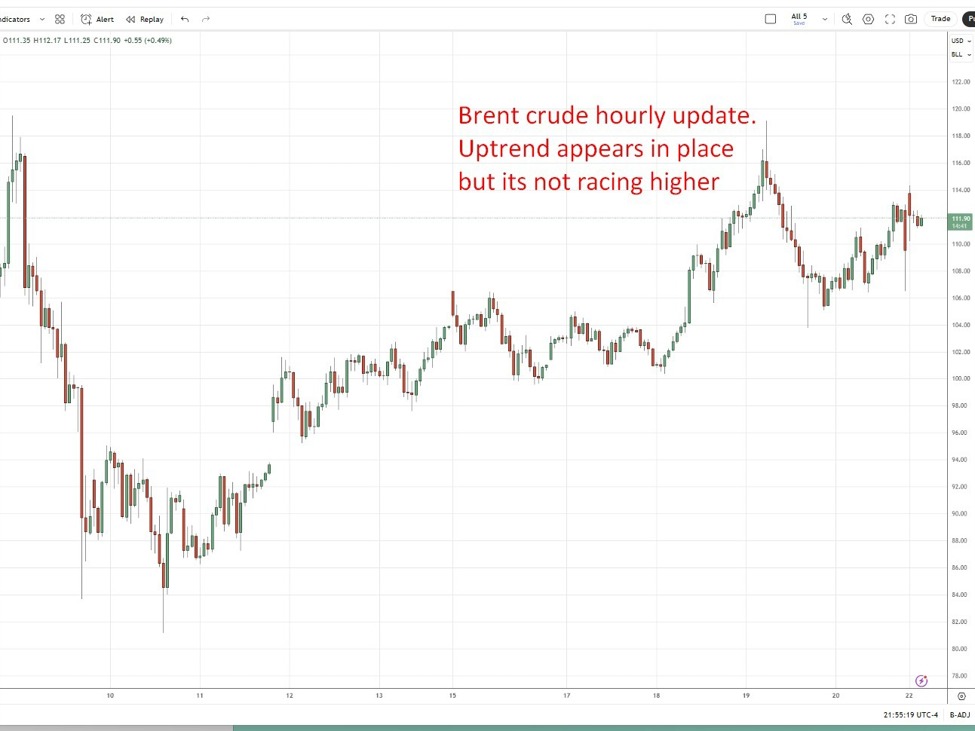
Fitch’s note from Friday. Scenarios highlight the scale of upside risk to oil prices, with prolonged Hormuz disruption potentially driving Brent toward $120 and keeping markets volatile.Summary:Fitch outlines oil price scenarios tied to duration of Hormuz closure Brent seen averaging $120/bbl in 2026 under six-month disruption Three-month closure scenario points to ~$100/bbl average Base case remains $70/bbl, assuming only temporary disruption Prices could spike to $130–$170/bbl during extended closure Estimated loss of ~15mb/d in transit volumes through Hormuz Demand destruction expected in prolonged disruption scenarios IEA reserve releases seen cushioning near-term supply shockFitch Ratings has outlined a range of oil price scenarios for 2026, highlighting how the duration of disruption in the Strait of Hormuz could significantly reshape the global energy outlook.In its latest analysis, the agency estimates that Brent crude could average as high as $120 per barrel next year if the Strait remains effectively closed for six months. A shorter, three-month disruption would still push prices materially higher, with Brent seen averaging around $100 per barrel for 2026.Both scenarios mark a sharp departure from Fitch’s base case, which assumes a more temporary disruption and forecasts an average price of $70 per barrel. That baseline incorporates a near-term spike driven by the current crisis, followed by a gradual easing as supply conditions normalise and prices fall back toward $60 per barrel by year-end.Under the more severe disruption scenarios, however, price dynamics become significantly more volatile. Fitch expects oil to spike sharply during the period of closure, with prices potentially averaging between $130 and $170 per barrel in a prolonged six-month disruption. Even in a shorter disruption scenario, prices are seen holding near $130 during the peak before easing back toward $90 per barrel later in the year.The core driver behind these projections is the scale of supply disruption. Fitch estimates that a closure of the Strait would remove around 15 million barrels per day of transit volumes from the market, even assuming some limited flows continue.To balance the market under these conditions, the agency expects a combination of demand destruction and supply-side responses. In the three-month scenario, demand is projected to fall by around 2.5%, while a six-month disruption could trigger a deeper contraction of roughly 5.5%. Additional releases from strategic reserves — including those coordinated by the International Energy Agency — are also assumed to help offset the shock.Despite these mitigating factors, Fitch emphasises that oil markets are likely to remain highly volatile. The geopolitical risk premium remains elevated, and uncertainty around the duration of the conflict and the extent of supply disruption continues to dominate the outlook.What happens next? The key variable for markets now is duration.If the Strait of Hormuz is reopened relatively quickly, the oil market may follow something close to Fitch’s base case, a sharp but temporary spike followed by a retracement as supply chains normalise and strategic reserves are deployed.However, if disruption persists beyond a few months, the dynamics shift meaningfully. A prolonged closure would force a deeper rebalancing of the market through demand destruction, higher prices, and more aggressive policy responses. In this scenario, oil would likely trade with a sustained geopolitical premium, with spikes above $130 becoming more frequent.Markets will also closely monitor the effectiveness of mitigation measures. Strategic reserve releases, alternative export routes such as Saudi Arabia’s East-West pipeline, and supply responses from non-Gulf producers could help stabilise prices at the margin — but are unlikely to fully offset the loss of Hormuz flows.Another key risk is escalation. If infrastructure outside Hormuz, such as Red Sea routes or key export terminals, comes under sustained pressure, the supply shock could deepen further, pushing prices toward the upper end of Fitch’s projections.Ultimately, the path of oil prices will hinge on whether the current الأزمة remains a contained disruption or evolves into a more prolonged structural shift in global energy flows. For now, markets are likely to remain highly sensitive to both geopolitical developments and signs of supply adjustment. This article was written by Eamonn Sheridan at investinglive.com. 🔗 Source 💡 DMK Insight Fitch’s warning about potential oil price spikes is a game changer for traders right now. With the possibility of Brent hitting $120/bbl due to disruptions in the Hormuz Strait, traders need to brace for volatility. A prolonged closure could not only inflate prices but also impact related markets like energy stocks and currencies tied to oil exports. If you’re trading oil, keep an eye on the $120 resistance level; breaking through could trigger a wave of speculative buying. Also, consider how this scenario might affect inflation expectations and central bank policies, especially if oil prices surge unexpectedly. On the flip side, if the disruption is resolved sooner than expected, we could see a sharp correction. So, watch for news updates on the situation in Hormuz and adjust your positions accordingly. Keeping tabs on inventory reports and OPEC’s response will also be crucial as we navigate these turbulent waters. 📮 Takeaway Monitor Brent crude closely; a sustained breach above $120 could signal a new trading range, while any resolution in Hormuz may lead to a sharp price correction.
Japan weighs cutting inflation-linked bond buybacks as demand rises
Japan’s potential reduction in inflation-linked bond buybacks reflects rising inflation expectations and stronger demand, signalling a tentative shift away from its deflationary past.Summary:Japan considering reducing buybacks of inflation-linked bonds Move driven by rising investor demand amid higher inflation expectations Break-even inflation rate rises above 1.9% Planned buybacks for April–June cut to ¥15bn per operation Down from ¥20bn monthly purchases in Q1 Issuance volume likely unchanged at ¥250bn Reflects improving demand and less need for market support Signals shifting inflation dynamics in Japan Japan is weighing a reduction in its buybacks of inflation-linked government bonds, reflecting growing investor demand as inflation expectations continue to rise.According to sources familiar with the matter cited by Reuters, the Ministry of Finance is considering scaling back its regular repurchase operations for inflation-linked bonds, with planned buybacks of around ¥15 billion each for April and June. This would mark a notable reduction from the ¥20 billion monthly buybacks conducted in the first quarter of the year.The potential adjustment comes as market conditions for inflation-linked securities improve. Japan’s break-even inflation rate, a key market-based gauge of expected inflation, has recently climbed above 1.9% for the first time, signalling a shift in investor sentiment and making inflation-protected assets increasingly attractive.Inflation-linked bonds are designed to shield investors from rising prices, with both principal and coupon payments adjusted in line with consumer price inflation. As expectations for inflation strengthen, demand for such securities tends to increase, reducing the need for government intervention to support market liquidity.The move also reflects a broader evolution in Japan’s inflation dynamics. For much of the past two decades, the country struggled with deflation, which limited the appeal of inflation-linked instruments and at times forced authorities to halt issuance altogether. Since their reintroduction in 2013 as part of efforts to reflate the economy, the government has actively supported the market through buybacks and principal guarantees.However, the recent rise in inflation expectations, which predated but has been reinforced by the global energy shock linked to the Middle East conflict, suggests a more durable shift may be underway. Analysts say the increased demand for inflation-linked bonds indicates that investors are beginning to price in a more sustained period of price pressures.Despite this improvement, officials are proceeding cautiously. The Ministry of Finance is expected to consult market participants before finalising any changes, while issuance volumes are likely to remain unchanged for now, ensuring continued supply to meet demand.The adjustment in buyback operations can be seen as a gradual step toward normalising market conditions, as policymakers respond to evolving inflation expectations while maintaining flexibility in an uncertain macro environment.What happens next? The key question is whether this marks the beginning of a more structural shift in Japan’s inflation regime.If inflation expectations continue to rise, particularly as higher energy prices feed through the economy, demand for inflation-linked bonds is likely to remain strong, potentially allowing the government to further reduce its market support over time.This would reinforce the narrative that Japan is moving away from its long-standing deflationary environment, with implications for broader policy settings. In such a scenario, the Bank of Japan may face increasing pressure to continue normalising policy, particularly if inflation proves more persistent.However, the transition remains fragile. Economists note that while inflation expectations have improved, underlying domestic demand is still recovering, and the risk of a reversal cannot be ruled out. If inflation momentum fades or economic growth weakens, authorities may need to step back in to support the market.From a market perspective, reduced buybacks could also affect pricing dynamics, potentially leading to higher real yields if demand does not fully absorb the reduced official support. At the same time, stronger demand for inflation protection could continue to compress break-even rates, depending on investor positioning.In short, the move signals progress, but not yet a definitive break from Japan’s past. The trajectory of inflation, energy prices, and global conditions will determine whether this shift becomes entrenched or proves temporary. This article was written by Eamonn Sheridan at investinglive.com. 🔗 Source 💡 DMK Insight Japan’s shift in inflation-linked bond buybacks is a game changer for traders: The potential reduction in these buybacks signals a significant change in monetary policy, reflecting rising inflation expectations that could reshape the bond market landscape. With the break-even inflation rate now above 1.9%, investors are clearly anticipating a more inflationary environment, which could lead to higher yields on bonds. This is crucial for traders who are currently positioned in fixed-income assets, as a rise in yields typically inversely affects bond prices. Moreover, this move could ripple through related markets, impacting equities and currencies. A stronger inflation outlook might lead to speculation about tighter monetary policy, which could strengthen the yen against other currencies. Traders should keep an eye on the 1.9% break-even rate as a key level; if it continues to rise, expect volatility in both bond and forex markets. Watch for any official announcements regarding buyback plans for April–June, as they could provide immediate trading opportunities. 📮 Takeaway Monitor the break-even inflation rate above 1.9% and any announcements on bond buybacks, as they could trigger significant market shifts.
Warsh faces turbulent Fed transition as inflation, politics and oil shock collide.
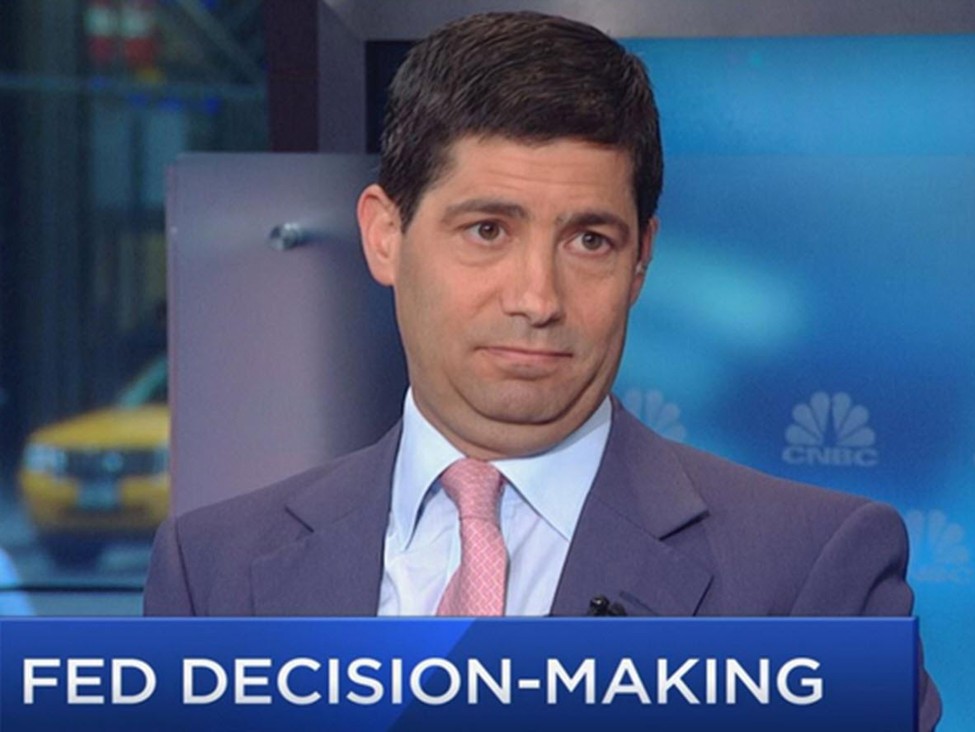
Warsh’s potential Fed leadership comes at a uniquely difficult moment, with rising inflation, political pressure, and transition uncertainty complicating the policy outlook.Info comes via the Wall Street Journal, gated. Summary:Kevin Warsh faces unusually complex Fed leadership transition Confirmation stalled amid political dispute over Powell probe Oil shock and rising inflation complicate policy outlook Markets now pricing hikes over cuts despite prior dovish expectations Trump pressure for lower rates adds political tension Warsh previously signalled sharp break from Powell-era policy Risk of perceived political influence on Fed decisions rising Transition uncertainty grows as Powell may remain in roleKevin Warsh’s potential transition to Federal Reserve chair is shaping up to be one of the most complex and politically charged handovers in decades, as rising inflation, an energy shock, and a stalled confirmation process collide.Warsh, who had previously signalled support for lower interest rates, now faces a dramatically altered economic backdrop. Inflation pressures were already building before the escalation in the Middle East drove oil prices higher, and markets have since shifted expectations toward the possibility of further rate increases rather than cuts in the near term.At the same time, his confirmation remains uncertain. A political standoff linked to a Justice Department investigation involving current Fed Chair Jerome Powell has delayed proceedings, leaving open the possibility that Powell could remain in the role even after his term expires. This raises the prospect of an overlapping or delayed leadership transition, adding to institutional uncertainty.The situation is further complicated by political pressure from President Donald Trump, who has made clear that he expects lower interest rates. Analysts say this creates a difficult balancing act for Warsh, who must navigate between presidential expectations, a Federal Open Market Committee that has grown more cautious on rate cuts, and a macro environment increasingly shaped by inflation risks.Unlike previous Fed transitions, Warsh has publicly criticised the policy direction under Powell, calling for a more fundamental shift in approach. Historically, incoming Fed chairs have emphasised continuity to reassure markets, even when planning longer-term changes. Warsh’s more confrontational stance has raised questions about how smoothly the transition can be managed.The current macro backdrop adds to the challenge. Central banks typically look through oil shocks, assuming that higher inflation is offset by weaker growth. However, after several years of above-target inflation, policymakers may be less confident that price pressures will quickly fade, increasing the risk that inflation expectations become entrenched.This leaves the Fed facing a familiar dilemma: whether to prioritise inflation control or support growth. For Warsh, the challenge is heightened by the political context, with any policy easing likely to be scrutinised for signs of political influence.While some economists argue that the broader economic environment remains stable, others note that the combination of geopolitical risk, inflation uncertainty, and leadership ambiguity creates a uniquely difficult starting point for any incoming Fed chair.What happens next? The immediate focus is on the timing and outcome of Warsh’s confirmation.If the process remains stalled, Powell could continue to lead the Fed beyond his term expiry, prolonging uncertainty around policy direction. This would likely reinforce a “wait-and-see” stance in markets, with traders focusing more on incoming data than leadership expectations.If Warsh is confirmed, attention will shift quickly to whether his policy stance aligns with current market conditions. While he had previously leaned toward rate cuts, the evolving inflation outlook, particularly if energy prices remain elevated, may force a more cautious or even hawkish approach.Markets will also be watching for signs of institutional cohesion. Any perception of division within the Federal Open Market Committee, or between the Fed and the White House, could increase volatility across rates, FX, and risk assets.The biggest macro variable remains inflation. If oil-driven price pressures prove temporary, the Fed may still be able to pivot toward easing later. However, if inflation proves persistent, policymakers could be forced to prioritise price stability, even at the cost of weaker growth.In that scenario, Warsh could find himself taking a very different policy path than the one he initially signalled, highlighting how rapidly the economic landscape has shifted. This article was written by Eamonn Sheridan at investinglive.com. 🔗 Source 💡 DMK Insight Warsh stepping into a potential Fed leadership role could shake up markets, especially with inflation on the rise. Traders need to keep a close eye on how this transition unfolds. Warsh’s leadership might signal a shift in monetary policy, which could impact interest rates and, by extension, the forex market. If inflation continues to rise, we could see the Fed adopting a more hawkish stance, which would strengthen the dollar against other currencies. This is crucial for forex traders, particularly those holding positions in pairs like EUR/USD or GBP/USD. Additionally, the ongoing political disputes surrounding Powell’s probe could create volatility across equity and commodity markets, especially oil, which is already feeling the pressure from inflationary concerns. Here’s the thing: if Warsh’s confirmation gets delayed further, it might lead to increased uncertainty, causing traders to hedge their positions. Watch for key inflation data releases and Fed meeting minutes in the coming weeks, as these will provide insight into the central bank’s direction and potential market reactions. 📮 Takeaway Keep an eye on inflation data and Fed meeting minutes; a hawkish shift could strengthen the dollar and impact forex pairs significantly.
investingLive Asia-Pacific news wrap: Trump's 48 hour ultimatum. Iran warns of retaliation
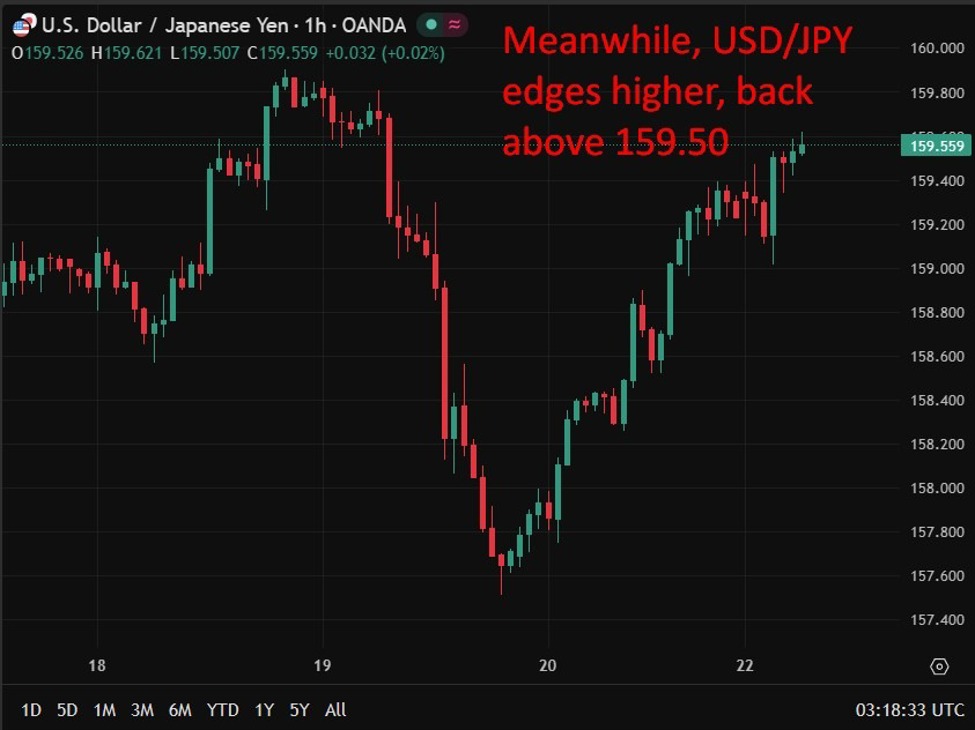
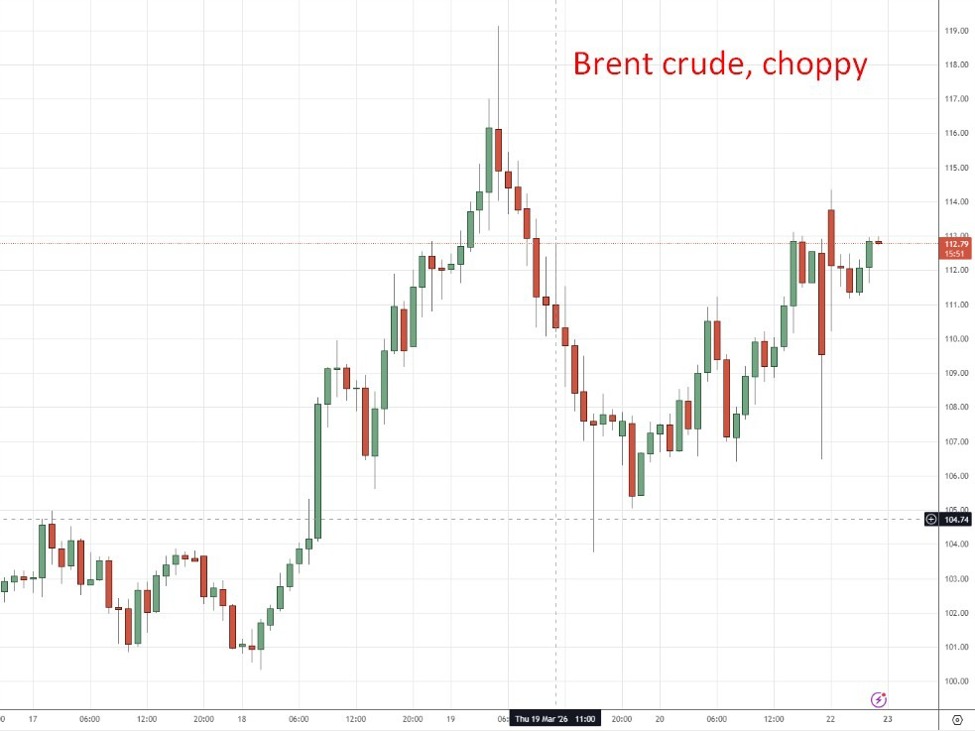
Warsh faces turbulent Fed transition as inflation, politics and oil shock collide.Japan weighs cutting inflation-linked bond buybacks as demand risesICYMI: Fitch sees Brent at $120 if Hormuz closure persists in 2026IEA warns Middle East crisis worse than 1970s oil shocks, eyes stock releasesSaudi Aramco cuts Asia oil supply as Hormuz disruption tightens marketPBOC sets USD/ CNY reference rate for today at 6.9041 (vs. estimate at 6.8928)Gold gets smashed as oil shock lifts yields, boosts dollar, and crushes rate-cut hopes.Japan flags FX intervention risk. Oil shock drives yen volatility and policy response.Saudi pipeline bypass eases oil shock, here’s what’s next for global supply.UK calls emergency COBRA meeting as Iran war lifts inflation and gilt yieldsGoldman Sachs lifts 2026 oil forecasts: Brent $85, WTI $79 on Hormuz riskPrivate credit stress reemerges as Blackstone fund posts rare loss and withdrawals rise.Crude oil jumps higher after Trump’s flaccid threats and Iran’s revenge responseNew Zealand outlook cut to negative by Fitch as debt concerns mountGulf shipping risks rise after blast near vessel off UAE Sharjah coastOil rises as Trump ultimatum to Iran fuels Hormuz escalation risksMonday open indicative forex prices, 23 March 2026Trump: We are very close to meeting our objectives in IranTrump issues 48-hour ultimatum to Iran over Hormuz reopening Iran threatens retaliation targeting US and Gulf energy infrastructure IEA warns crisis worse than 1970s oil shocks, flags supply losses USD firms in thin trade; USD/JPY back above 159.50 Asian FX weak, KRW hits lowest since 2009 Gold sharply lower, falling below $4,340 Oil spikes at open, then trades choppy Risk sentiment weak; Asian equities sell off broadlyMarkets opened the week on edge, dominated by escalating geopolitical tensions following US President Donald Trump’s 48-hour ultimatum to Iran to reopen the Strait of Hormuz or face potential strikes on key infrastructure. The deadline, set to expire Monday evening in New York, has placed markets on high alert for further escalation.Iran responded forcefully, warning that any US action would trigger retaliatory strikes targeting American and Israeli-linked energy assets across the Gulf, along with desalination pand power plants in its neighboring GCC countries. Officials also reiterated the risk of a prolonged or indefinite closure of the Strait of Hormuz, raising the prospect of a sustained disruption to global oil flows.The energy shock narrative was reinforced by International Energy Agency chief Fatih Birol, who described the situation as “very severe” and potentially worse than the oil crises of the 1970s. Birol noted that current disruptions are estimated at around 11 million barrels per day, exceeding the combined losses of the two major oil shocks of that era, with some analysts suggesting the figure could be closer to 13 million barrels per day. The IEA is now consulting governments on the potential release of additional strategic oil reserves.In early trade, the US dollar firmed in thin liquidity conditions, before broader FX markets settled into relatively contained ranges. USD/JPY pushed back above 159.50, while commodity-linked currencies including the AUD and NZD remained under pressure. The Korean won was a notable mover, weakening to its lowest level since March 2009.Gold came under heavy selling pressure, falling sharply below $4,340 as rising yields and a stronger dollar offset safe-haven demand. Oil prices initially surged on the Globex open, reflecting heightened geopolitical risk, before trading in a more volatile and choppy pattern.Risk sentiment across Asia remained fragile. Equity markets extended declines, with Japan’s Nikkei 225 falling sharply back below 52,000, Hong Kong’s Hang Seng dropping more than 3%, and China’s Shanghai Composite down over 2%. This article was written by Eamonn Sheridan at investinglive.com. 🔗 Source 💡 DMK Insight The convergence of inflation pressures, political instability, and oil supply shocks is setting the stage for heightened market volatility. With the Fed’s transition under Warsh, traders need to keep a close eye on how these factors influence monetary policy. The potential for rising oil prices, especially if Brent hits $120 due to geopolitical tensions, could exacerbate inflation, prompting the Fed to act more aggressively. This could lead to a stronger dollar, impacting forex pairs like EUR/USD and commodity prices. Moreover, the IEA’s warning about a crisis worse than the 1970s oil shocks suggests that energy stocks and related commodities could see significant price movements. Traders should monitor key levels in oil and inflation indicators, as these will dictate market sentiment and trading strategies in the coming weeks. On the flip side, if the Fed adopts a more dovish stance amid these pressures, we could see a rally in risk assets, but that seems unlikely given the current environment. Watch for any Fed statements or economic data releases that could signal a shift in policy, particularly in the next FOMC meeting. 📮 Takeaway Keep an eye on Brent crude prices and Fed signals; a rise above $120 could trigger aggressive Fed action impacting forex and commodities.