 Bitcoin
  Ethereum
  Tether
  BNB
BNB  XRP
XRP  USDC
USDC  Solana
  TRON
TRON  Lido Staked Ether
  Figure Heloc
US Pres. Trump is speaking on Iran and says:Not happy with Iran, but were talks expected Friday.Has not made a decision on Iran and not happy with how they negotiate.Iran cannot have nuclear weapon.There may or may not be a regime change in Iran.Wants to make a deal with Iran.Asked about using military force in Iran, “don’t want to but sometimes you have toIran isn’t saying the golden words “No nuclear weapon”the price of crude oil has traded to the highest level going back to the beginning of August 2025. The high price today reached $67.83. The current price is trading at $66.57. The price is back below the 50% of the range since the 2025 high at $66.74. This article was written by Greg Michalowski at investinglive.com. 🔗 Source 💡 DMK Insight Trump’s remarks on Iran are stirring the geopolitical pot, and here’s why that matters for traders: The uncertainty surrounding Iran’s nuclear ambitions and potential regime change could lead to volatility in oil prices and related markets. If tensions escalate, we might see crude oil spike, impacting not just energy stocks but also currencies tied to oil exports like the Canadian dollar. Traders should keep an eye on the WTI crude oil price, especially if it approaches key resistance levels. The market’s reaction to Trump’s comments could also influence broader risk sentiment, affecting equities and safe-haven assets like gold. On the flip side, if negotiations progress positively, we could see a dip in oil prices, which might provide buying opportunities in related sectors. Watch for any developments in the coming days, particularly around Friday, as that could set the tone for the next week. Keeping tabs on the geopolitical landscape will be crucial for positioning in both forex and commodities markets. 📮 Takeaway Monitor WTI crude oil prices closely; any spike could signal increased volatility in energy and related markets this week.

Why private equity stocks are getting wrecked today
I don’t think anyone will be shedding a tear for the declines in private equity stocks but Blue Owl (which is notorious for software loans): -6%Jefferies -10.3%Apollo -8.4%KKR -7.3%Ares -7.1%Goldman Sachs -7%Morgan Stanley 6.6%The fundamental pitch of private equity is leveraged lending and buyouts. There were buyouts of software companies and clients of these firms are holding unlisted shares in these companies.What are those companies worth now? Many of them aren’t even making any money but had large multiples of revenues but suddenly those multiples are collapsing. Even if companies are good, they’re getting tossed out because software is toxic.Now some of these companies (like Blue Owl) will argue that they’re lending against 30% of the value of these companies on terms of three years or less. But even if those loans turn out ok, the refinancing terms are going to be brutal in 2-3 years, if they can finance at all. Software companies don’t have assets to borrow against so the private ‘equity’ side will get wiped out if any of these loans end in default. One of the parts of the market that are going to get caught up in this is life insurers and college endowments who were hoodwinked by private equity into taking allocations to software. They’re even getting caught in the cross fire.What’s particularly tough in all this is how opaque it all is. That makes it tough to find a bottom or get a sense of how things are changing in real-time. Even results of public companies are being ignored because the market is looking 1-2 years out on a presumption of AI disrupting them.Why today?The trigger today was that UK firm MFS failed. It’s a mortgage lender but warned there could be a $1.3 billion shortfall in the collateral backing their loans, partly through double-pledging of assets. Barclays, Jefferies and Apollo’s Atlas are among their lenders, arguing that loan due diligence has been lackluster.If that’s the case — or if fraud is widespread — then the losses could be huge. Jefferies was also exposed to First Brands last year, which collapsed in fraud.Looking at the shares of private equity, there is some real fear unfolding. KKR is down almost 50% from early 2025 and is threatening to take out the Liberation Day lows.As Warren Buffett famously said:“When you see cockroaches in the kitchen, there are probably a lot more in the walls.”For now, everyone is throwing out the kitchen sink.The line here is whether these losses are going to be held in proper banks or just private equity. The drops in bank stocks today are worrisome.Long time Wells Fargo bank analyst Mike Mayo highlights that it will be six weeks before bank earnings and that right now everyone is “guilty until proven innocent” though he thinks the large banks will be fine over a one-year horizon. This article was written by Adam Button at investinglive.com. 🔗 Source 💡 DMK Insight Private equity stocks are taking a hit, and here’s why traders should care: declining valuations in leveraged lending could signal broader market instability. With Blue Owl down 6% and Jefferies plummeting 10.3%, the trend reflects a tightening credit environment that’s affecting not just private equity but potentially tech stocks tied to these buyouts. If leveraged lending continues to falter, we could see ripple effects across sectors, particularly in tech where many companies rely on these financing structures. Traders should keep an eye on the performance of related assets, especially software stocks that have been buoyed by private equity interest. Watch for key support levels in the broader market; if indices start breaking down, it could trigger a wave of selling. The real story here is whether this is a temporary blip or the start of a more significant downturn in private equity and tech valuations. Keep your charts handy and monitor the upcoming earnings reports from these firms for further clues. 📮 Takeaway Watch for support levels in tech stocks; a continued decline in private equity could lead to broader market weakness, especially if leveraged lending tightens further.

AUDUSD Technicals: AUDUSD closing with a more bullish bias. What would tarnish the bias?
As the trading week comes to a close, the AUDUSD is higher on the week and continues to trade above a key cluster of moving averages, including the 100-hour moving average at 0.7093, the 200-hour moving average at 0.7078, and the 100-bar moving average on the 4-hour chart at 0.7070.Holding above this moving average cluster keeps buyers firmly in control. A move below would begin to tilt the short-term bias to the downside, but sellers would still have additional work to do to fully shift momentum.More specifically, the price would need to break and remain below the early-February lows between 0.7014 and 0.7025. That zone has repeatedly acted as a floor — serving as support this week, last week, and previously on February 9 — making it a key downside control level. A sustained move below that area would strengthen the bearish case materially.On the topside, the February high at 0.7146 came within 11 pips of the February 2023 high at 0.7157. These levels represent the immediate upside targets heading into the new trading week. A break above this resistance zone would open the door for further upside momentum and a broader bullish extension. This article was written by Greg Michalowski at investinglive.com. 🔗 Source 💡 DMK Insight AUDUSD is holding above crucial moving averages, and here’s why that matters: With the pair trading above the 100-hour MA at 0.7093 and the 200-hour MA at 0.7078, there’s a bullish sentiment building. This cluster of support suggests that buyers are stepping in, which could lead to further upside. If the price can maintain above these levels, we might see a test of higher resistance levels, potentially around 0.7120 or even 0.7150 in the coming sessions. On the flip side, a drop below 0.7070, where the 100-bar MA on the 4-hour chart sits, could trigger a wave of selling, reversing the current bullish trend. Traders should keep an eye on these key levels as they indicate market sentiment and potential price action. Also, consider the broader context: if the USD continues to weaken due to economic data or geopolitical tensions, that could further support the AUD. Watch for any news that might impact the USD, as it could create volatility in the AUDUSD pair. Overall, the next few days are crucial for establishing whether this bullish momentum can sustain itself or if a reversal is on the horizon. 📮 Takeaway Monitor the AUDUSD closely; holding above 0.7093 could lead to a test of 0.7120, while a drop below 0.7070 may signal a bearish reversal.
Major US stock indices close lower. S&P and NASDAQ index down for the month
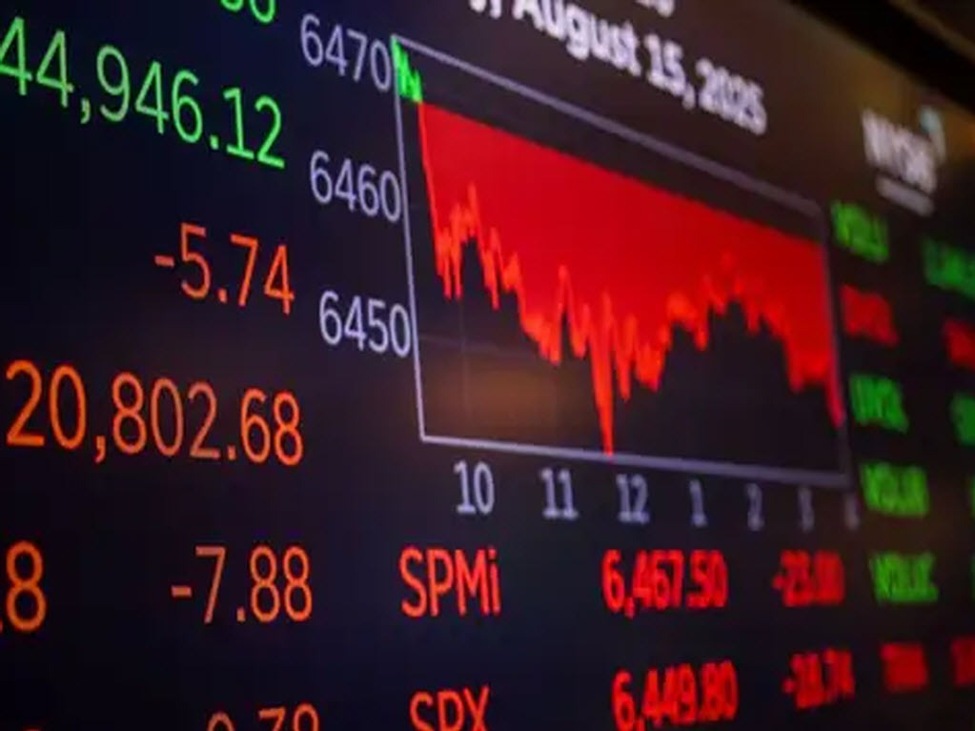
Both the S&P index only NASDAQ index closed lower for the month. The S&P fell -0.87% after a gain of 1.37% in the month of January. The NASDAQ index-3.38%. That was its worst month since March 2025. The Dow industrial average rose by a modest 0.17%. For the trading day, the major indices are all closing lower:Dow industrial average -1.05%S&P index -0.43%NASDAQ index -0.92%.For the trading week:Dow industrial average -1.31%S&P index -0.44%NASDAQ index -0.95%Some of the loser this week: Consumer & Retail WeaknessWhirlpool: -19.00% — largest decline; cyclical consumer demand concerns and rate sensitivity weighing on appliances.Macy’s Inc: -11.78% — continued pressure on discretionary retail spending outlook.Dollar Tree: -5.98% — defensive retail also seeing margin and consumer-trend worries.Best Buy: -3.92% — electronics demand uncertainty persists.Nike: -4.91% — growth expectations moderating.High-Beta Growth & Tech SellingFirst Solar: -18.51% — clean energy names hit hard amid rate/yield volatility.Zoom Video: -18.11% — growth multiple compression continues.NVIDIA: -6.65% — profit-taking despite strong AI narrative.Synopsys: -5.90%Broadcom: -3.92%Micron: -3.69%➡️ Semis and AI leaders saw rotation and valuation pressure, not outright fundamental deterioration.Financials Under PressureAmerican Express: -10.80%PNC Financial: -9.00%Wells Fargo: -8.21%Bank of America: -6.13%Morgan Stanley: -5.09%Citigroup: -5.02%Goldman Sachs: -6.72%➡️ Lower yields and macro uncertainty weighed broadly on banks and credit-sensitive names.Travel & Cyclicals Rolling OverUnited Airlines Holdings: -5.95%Southwest Airlines: -5.45%Delta Air Lines: -5.37%American Airlines: -3.83%➡️ Cyclical reopening trades softened as growth expectations cooled.Industrials / DefenseRaytheon: -17.17% — notable individual weakness within defense.For the trading month, the biggest losers (selected highlights)Crypto & Crypto-Linked Assets Hit HardBTCUSD: -26.48%Grayscale Bitcoin Trust (BTC): -26.39%Bitcoin Futures: -26.05%Robinhood Markets: -26.64%Strategy (MicroStrategy): -18.27%➡️ A broad risk unwind in crypto spilled into crypto-levered equities and trading platforms as momentum reversed sharply.High-Growth Tech & AI Names Repriced LowerSnowflake: -22.09%Zoom Video: -23.16%CrowdStrike: -20.72%Palo Alto Networks: -18.95%Synopsys: -19.04%AMD: -20.80%Microsoft: -18.46%IBM: -18.42%Intuit: -24.07%➡️ Investors rotated out of long-duration growth and AI leaders, reflecting valuation compression rather than a single catalyst. Speculative / High-Beta Growth Under PressureSoFi Technologies: -27.80%Trump Media & Technology Group: -21.31%➡️ Higher-beta retail favorites were among the hardest hit as risk appetite faded.☀️ Cyclicals & Industrials WeakeningFirst Solar: -20.97%Raytheon: -36.14% (largest decline of the group)➡️ Cyclical and policy-sensitive sectors saw aggressive repositioning.🏥 Defensive Growth Also Pulled LowerBoston Scientific: -18.06%➡️ Even higher-quality defensive growth names were not immune, signaling broad market de-risking.Biggest winners this month (selected highlights)🔌 AI Infrastructure & Connectivity LeadersCorning: +44.24% — strongest performer; beneficiary of data-center and fiber demand tied to AI buildout.Ciena Corp: +35.51% — networking infrastructure strength as bandwidth demand accelerates.Dell Technologies: +26.11%Arm Holdings: +15.91%Taiwan Semiconductor: +9.46%➡️ Capital spending tied to AI infrastructure and hardware buildout remained a dominant market theme.Industrials, Transport & Cyclical ReboundFedEx: +23.01%Caterpillar: +15.50%Southwest Airlines: +20.53%Marriott International: +9.48%➡️ Investors rotated toward real-economy cyclicals, signaling confidence in economic resilience. Energy StrengthOccidental Petroleum: +18.45%Baker Hughes: +15.22%Exxon Mobil: +9.91%Chevron: +9.90%➡️ Rising commodity expectations and steady cash-flow stories supported energy stocks.Healthcare & Defensive GrowthModerna: +18.26%Merck & Co: +15.77%Biogen: +9.70%Stryker: +8.32%➡️ Healthcare attracted flows as investors balanced growth exposure with defensive positioning.Consumer & Media WinnersTapestry: +23.38%Target: +11.80%Walmart: +9.73%Netflix: +13.71%Live Nation Entertainment: +9.86%Paramount Skydance: +19.14%Twitter Inc: +9.19%➡️ Select consumer and entertainment names benefited from improving sentiment and positioning shifts.Overall Monthly Takeaway for the winnersThe winners this month reveal a clear rotation beneath the market surface:AI spending broadened beyond software into infrastructure and hardware.Investors favored cash-flow-generating cyclicals and energy over speculative growth.Healthcare and defensive growth attracted diversification flows.The market rewarded tangible earnings visibility and real-economy exposure.Overall Monthly Takeaway for the losersThis month’s losers point to a clear regime shift in market positioning:Crypto weakness led the risk-off move, dragging related equities sharply lower.AI and software leaders experienced valuation resets after extended upside runs.Selling was systematic and cross-sector, not tied to one industry.Markets rotated away from momentum, leverage, and long-duration growth assets. This article was written by Greg Michalowski at investinglive.com. 🔗 Source 💡 DMK Insight The S&P and NASDAQ’s monthly declines signal potential volatility ahead for equities. With the S&P down 0.87% and NASDAQ plummeting 3.38%, traders should brace for further corrections. This marks NASDAQ’s worst month since March 2025, indicating a shift in market sentiment that could affect tech stocks and growth sectors. The modest rise in the Dow, up 0.17%, suggests a flight to safety among investors, which could lead to sector rotation. Keep an eye on key support levels for the S&P around its recent lows; a break below could trigger more selling pressure. Additionally, monitor economic indicators like inflation and interest rates, as these will likely influence market direction in the coming weeks. The real story is how these indices react in the next few trading sessions—watch for any bounce back or continued weakness, especially in tech-heavy portfolios. 📮 Takeaway Watch for S&P support levels; a break below recent lows could trigger further selling pressure in equities.

investingLive Americas FX news wrap 27 Feb: Inflation, credit stress, & geopolitics weigh
Major US stock indices close lower. S&P and NASDAQ index down for the monthWhy private equity stocks are getting wrecked todayTrump: Not happy with Iran but more talks expected on FridayAtlanta Fed GDPNow growth estimate for Q1 3.0% versus 3.1% lastIran strikes loom large over today’s tradeSilver sprints higher, gains more than 5%US December construction spending +0.3% vs +0.3% expectedTech sector under pressure: Energy and healthcare offer a safe havenCanada Q4 GDP -0.6% vs 0.0% expectedUS January PPI final demand Y/Y +2.9% vs +2.6% expectedThe USD is little changed to start the NA session. What next technically?Germany February preliminary CPI +1.9% vs +2.0% y/y expectedHow have interest rate expectations changed after this week’s events?investingLive European markets wrap: Dollar steady, risk trades on edge amid cautious moodThe North American session evolved into a steady shift toward caution as markets moved away from early stability and into a broader risk-off tone. What began as a data-driven session ultimately turned into a reassessment of risk across multiple fronts — inflation persistence, emerging credit concerns, and rising geopolitical uncertainty.Equity markets struggled to gain traction throughout the day, with sellers gradually taking control as investors digested stronger-than-expected inflation data and signs of stress building beneath the surface of financial markets. By the close, the major US indices finished lower, capping a difficult February for growth-oriented stocks.The NASDAQ led declines for the month with a decline of -3.3%, highlighting continued pressure on valuation-sensitive sectors, while the Dow showed relative resilience as capital rotated toward more defensive and cyclically stable names. The broader message from equities was clear: investors are becoming less comfortable with the assumption of imminent Federal Reserve easing, and the concerns about AI pace continuing.Inflation back in focusThe catalyst reinforcing caution for inflation came from the latest US producer price data. January PPI surprised to the upside (2.9% versus 2.6% expected), reminding markets that inflation pressures remain sticky even as growth stays firm.This combination is particularly challenging for risk assets. Strong growth normally supports equities, but when accompanied by persistent inflation, it instead implies policy may remain restrictive longer than investors had anticipated.Supporting data painted a picture of an economy that is slowing only modestly:Atlanta Fed GDPNow: Q1 growth estimate eased slightly to 3.0% from 3.1%US construction spending: +0.3% (in line with expectations)The takeaway was not economic weakness — but rather economic resilience that delays rate cuts, a dynamic markets increasingly view as unfavorable for equities.Credit concerns emerge beneath the surfaceWhile macro data shaped the backdrop, the most notable equity theme came from sharp selling in private-equity-linked firms. Shares across the sector fell aggressively, signaling rising investor concern about leveraged finance exposure and private credit valuations.Key declines included:Jefferies −10.3%Apollo −8.4%KKR −7.3%Ares −7.1%Goldman Sachs −7%The selling followed warnings tied to collateral shortfalls and leveraged loan exposure, reviving fears that higher interest rates are beginning to pressure financing structures built during the ultra-low-rate era.Importantly, markets reacted not just to one event, but to what it potentially represents — hidden fragility within private credit markets.Geopolitics adds another layer of uncertaintyAt the same time, geopolitical risks intensified as headlines surrounding potential Iran-related strikes circulated through the session. The uncertainty helped keep risk appetite contained and added an additional inflation premium through energy-market sensitivity.The geopolitical backdrop reinforced defensive positioning rather than triggering panic, but it contributed to the steady erosion of equity momentum as the day progressed.Commodities respond: silver surgesOne of the clearest expressions of the day’s macro shift appeared in commodities markets.Silver surged more than 6%, benefiting from a combination of forces:renewed inflation concerns after PPI,safe-haven demand amid geopolitical tensions,continued structural industrial demand tied to electrification themes.Gold also remained firmly supported, reflecting growing demand for real assets as investors hedge both inflation and macro uncertainty.Cross-market messageAcross asset classes, markets appeared to be transitioning away from the early-year “soft landing with rapid easing” narrative toward a more complex late-cycle environment.The session revealed several emerging themes:Higher-for-longer rate expectations returningCredit sensitivity becoming a market focusRotation away from leverage and duration riskDemand increasing for inflation hedges and real assetsRather than a single catalyst driving markets, the day reflected a convergence of pressures — inflation persistence, financial-system stress signals, and geopolitical risk — each reinforcing the others.Bottom lineThe North American session marked a subtle but important shift in tone. Economic data continues to show resilience, but that strength is now working against risk assets by keeping monetary policy restrictive. At the same time, cracks appearing in leveraged finance and rising geopolitical tensions are encouraging investors to reduce exposure to riskier segments of the market.In short, markets are beginning to trade less on optimism about growth and more on risk management and capital preservation — a transition that often defines the later stages of a cycle. This article was written by Greg Michalowski at investinglive.com. 🔗 Source 💡 DMK Insight Major US indices closing lower signals a potential shift in market sentiment, and here’s why that matters: The S&P and NASDAQ are down for the month, indicating a bearish trend that could affect traders’ strategies, especially those focused on tech and growth stocks. With the Atlanta Fed’s GDPNow growth estimate for Q1 slightly revised down to 3.0%, concerns about economic momentum are creeping in. This could lead to increased volatility as traders reassess their positions ahead of upcoming earnings reports. On the flip side, private equity stocks are taking a hit today, which might present a buying opportunity for those willing to take on risk, especially if they believe in a rebound. Silver’s recent gains are noteworthy, especially as it often serves as a hedge against market uncertainty. Traders should keep an eye on the $24 level for silver, as a breakout could signal further upside. Overall, with geopolitical tensions like the looming Iran strikes, traders need to be cautious. Watch for any shifts in sentiment that might impact the broader market, especially as we approach key economic data releases. 📮 Takeaway Keep an eye on silver around $24 for potential upside, and watch for shifts in sentiment as indices struggle this month.

A technical look at some of the major currency pairs heading into the new trading week
In the video above, I take a deep dive into some of the major currency pairs from a technical perspective as the week comes to a close and the new week and month starts. In the video, I take a look at the:EURUSDGBPUSDUSDJPYUSDCHFUSDCAD and AUDUSDPrepare for the new week with a clear understanding of the bias,, the risks and the targets. This article was written by Greg Michalowski at investinglive.com. 🔗 Source 💡 DMK Insight As we wrap up the week, the technical setups across major currency pairs are signaling potential volatility ahead. The EUR/USD and GBP/USD are both at critical support levels, which could dictate their direction for the coming week. If EUR/USD holds above recent lows, it might attract buyers looking for a rebound, while a break below could trigger further selling pressure. Similarly, GBP/USD is flirting with its own support, and a decisive move could lead to a swift reaction from both retail and institutional traders. USD/JPY remains a key player, with its correlation to U.S. Treasury yields making it sensitive to any shifts in monetary policy sentiment. Traders should keep an eye on the upcoming economic data releases, as these could act as catalysts for movement in these pairs. Here’s the thing: while many are focused on the immediate price action, the broader context of interest rate differentials and geopolitical tensions could create hidden opportunities. Watch for any unexpected news that could shake up the market, especially around the U.S. jobs report next week, which could influence the dollar’s strength significantly. 📮 Takeaway Monitor the EUR/USD and GBP/USD support levels closely; a break could lead to increased volatility, especially with the U.S. jobs report on the horizon.

US and Israel Launch Broad Strike Wave in Iran
According to Israeli Media: A Broad US–Israel Strike Campaign in Iran and Markets May Be Entering a Full Geopolitical WeekIn the last hour, Israeli media is describing a large-scale, coordinated strike campaign inside Iran, framed not as a limited tactical action but as the opening phase of a broader, multi-day operation. The attack started about 1 hour and 15 minutes ago.The emphasis in the coverage is clear: this is not only about symbolic targets. It is about degrading operational military capacity – particularly missile infrastructure that poses a direct threat to Israel – while simultaneously signaling that senior regime structures in Tehran are no longer insulated.For markets, this distinction is critical. This is not just a daily headline event. It has the potential to define the entire trading week.US and Israel’s Attacks in Iran: What Is Being ReportedAccording to Israeli media outlets and televised briefings:1. A Wide Target BankThe reported target list includes:Central Tehran sitesRegime-linked compoundsMilitary command and intelligence facilitiesMissile bases and infrastructureSites associated with defense industriesLocations in Isfahan, Kermanshah, Qom, Tabriz, Bushehr and other citiesThe concentration of reported activity in central Tehran is notable. Commentators highlighted that in previous confrontations, strikes in the capital escalated later in the timeline. This time, central Tehran appears involved early.2. Missile Capability SuppressionThe strategic interpretation presented on Israeli broadcasts is that the scale and geography of the strikes indicate a focused attempt to suppress launch capabilities.If missile systems are the core threat, then the broader “missile umbrella” becomes a target:Production facilitiesStorage depotsLaunchersCommand and control nodesAssociated defense industry infrastructureThe objective, as framed in Israeli media, is to reduce the probability and scale of retaliatory missile fire.3. Signaling Toward Regime LeadershipReports referencing areas near high-level leadership compounds in Tehran are being interpreted domestically as a signal: regime structures are not immune.Even if senior figures are not physically present at those sites, the messaging impact is strategic. The narrative being presented is that deterrence boundaries have shifted.4. US CoordinationIsraeli media coverage repeatedly describes the operation as coordinated with the United States. Public American messaging has so far appeared more limited, potentially due to timing and internal communication cycles, but Israeli commentary characterizes the move as a joint alignment rather than a unilateral Israeli action.5. Airspace and Emergency MeasuresAirspace closures and emergency readiness steps underscore that retaliation risk is being treated as real and immediate.Why This Is a Week, Not a DayMarkets price escalation pathways, not just initial events.A single strike often produces:An oil spikeA volatility surgeA defensive bidBut a structured multi-day campaign produces rolling repricing.If additional strike waves unfold, each wave becomes a new data point. The question shifts from “what happened” to:Is retaliation immediate or delayed?Is escalation regional or contained?Are missile systems significantly degraded?Is energy infrastructure at risk?This is why positioning for the week matters more than reacting to the first overnight move.Two Market Paths to Prepare ForPath A: Sustained Risk-OffIf markets conclude escalation risk is persistent:Oil could maintain a geopolitical premiumGold could remain bidVolatility could expand structurallyHigh-beta equities could face pressureIn this regime, liquidity and capital preservation dominate.Path B: Fast Risk-On Reversal (unlikely at this stage)If markets interpret the campaign as strategically contained and retaliation as limited or impaired:Oil spikes may fadeVolatility may compressEquity indices could stabilize quicklyRisk assets may rebound sharplyGeopolitical weeks often produce exaggerated defensive positioning that later unwinds.Preparation must include both scenarios.The Strategic Variable: Retaliation TimingIran has publicly warned that any strike would trigger automatic response. The timeline and scale of that response remain the primary uncertainty variable.Markets will price not the rhetoric, but the observable action.If response appears constrained, markets may pivot faster than headlines suggest.If response broadens, volatility will not be confined to a single session.Traders and investors, this week demands discipline:Treat leverage cautiously.Expect gaps outside regular trading hours.Watch oil and volatility as regime indicators.Avoid chasing first moves.Focus on position sizing over narrative conviction.This is not a one-candle event.If Israeli media assessments are accurate and this is indeed the opening phase of a coordinated campaign, markets are entering a geopolitical regime week.Stay flexible.Stay liquid.Stay tuned for implications on the market at investingLive.com This article was written by Itai Levitan at investinglive.com. 🔗 Source 💡 DMK Insight Geopolitical tensions are spiking with the US-Israel strike campaign in Iran, and here’s why that matters: Traders need to brace for volatility across multiple asset classes, especially oil and gold. Historically, military actions in the Middle East have led to immediate spikes in crude oil prices due to supply concerns. If tensions escalate, we could see WTI crude testing resistance levels around $90, which would impact related markets like energy stocks and ETFs. Additionally, safe-haven assets like gold may see increased buying pressure, potentially pushing prices above $2,000 per ounce. But it’s not just about the immediate reaction; the broader implications could affect forex markets as well. The US dollar often strengthens during geopolitical crises, so keep an eye on USD pairs, particularly against currencies from emerging markets that might be more sensitive to these developments. Watch for any statements from central banks that could signal shifts in monetary policy in response to rising geopolitical risks. Timing is crucial here; the next few days could be pivotal as the situation unfolds. 📮 Takeaway Monitor crude oil prices closely; a breakout above $90 could signal broader market volatility, impacting energy stocks and safe-haven assets like gold.

Bitcoin threatens new breakdown as US PPI sends gold to 1-month high
Hotter US PPI inflation data boosted precious metals but punished Bitcoin bulls, with BTC price downside nearing 3% on the day. 🔗 Source 💡 DMK Insight The recent spike in US PPI inflation is shaking up the crypto market, and here’s why that matters for Bitcoin traders: With BTC dropping nearly 3% to around $65,862, it’s clear that inflation data is weighing heavily on risk assets. Traders often view Bitcoin as a hedge against inflation, but when inflation fears rise, it can lead to a sell-off as investors flock to safer assets like gold. This dynamic is crucial to understand, especially as we approach key support levels. If BTC fails to hold above $65,000, we could see further downside, potentially testing the $62,000 mark. Keep an eye on correlated assets like gold, which may see a rally as Bitcoin struggles. On the flip side, if inflation data stabilizes or shows signs of easing, we could see a rebound in Bitcoin. Watch for any shifts in sentiment around the next inflation report, as that could trigger a significant move in both BTC and precious metals. The immediate focus should be on how BTC reacts to these macroeconomic indicators in the coming days. 📮 Takeaway Watch for BTC to hold above $65,000; a drop below could signal further declines towards $62,000 amid inflation concerns.

Bitcoin to $30K? Analysts debate when and at what price BTC will bottom
Several analysts forecast Bitcoin extending its bear market into late 2026, with potential cycle lows of $30,000 to $45,000 backed by rising exchange reserves. 🔗 Source 💡 DMK Insight Bitcoin’s bear market could drag on until late 2026, and here’s why that’s crucial for traders: With analysts predicting cycle lows between $30,000 and $45,000, the rising exchange reserves signal increased selling pressure. This trend suggests that many holders might be looking to liquidate positions, which could amplify downward momentum. For day traders and swing traders, this means a potential shift in strategy—watch for short opportunities as the market tests these lower levels. If Bitcoin breaches $30,000, it could trigger further sell-offs, leading to cascading effects across the crypto market. But don’t overlook the potential for a contrarian play. If Bitcoin manages to hold above $45,000, it could indicate strong buying interest, possibly setting up a reversal. Keep an eye on the weekly chart for any bullish divergence, which could signal a shift in sentiment. As we approach late 2026, monitor macroeconomic indicators and regulatory news that could sway market sentiment. The real story is how traders react to these levels—be ready to adjust your positions accordingly. 📮 Takeaway Watch for Bitcoin’s price action around $30,000 and $45,000; a breach could signal further declines, while holding above $45,000 may indicate a reversal.

Price predictions 2/27: BTC, ETH, XRP, BNB, SOL, DOGE, BCH, ADA, HYPE, LINK
Bitcoin’s attempt to top $70,000 stalled throughout the week, but analysts believe that the short-term downside will be limited. Will altcoins hold on to their weekly gains? 🔗 Source 💡 DMK Insight Bitcoin’s struggle to break $70,000 is a critical moment for altcoins like LTC, currently at $54.57. If Bitcoin stabilizes, altcoins could maintain their recent gains, but any further dip could lead to profit-taking. Traders should watch for LTC’s support around $52; a drop below this could trigger a sell-off. Conversely, if Bitcoin manages to reclaim momentum, altcoins might see a surge, especially if they break their resistance levels. Keep an eye on Bitcoin’s price action, as it often dictates the broader market sentiment. The interplay between Bitcoin and altcoins is crucial right now, and understanding this dynamic can help traders position themselves effectively for the coming days. 📮 Takeaway Watch LTC closely; if it holds above $52, it could signal further upside, especially if Bitcoin breaks $70,000.