
 Bitcoin
  Ethereum
  Tether
  XRP
XRP  BNB
BNB  USDC
USDC  Solana
  TRON
TRON  Lido Staked Ether
  Figure Heloc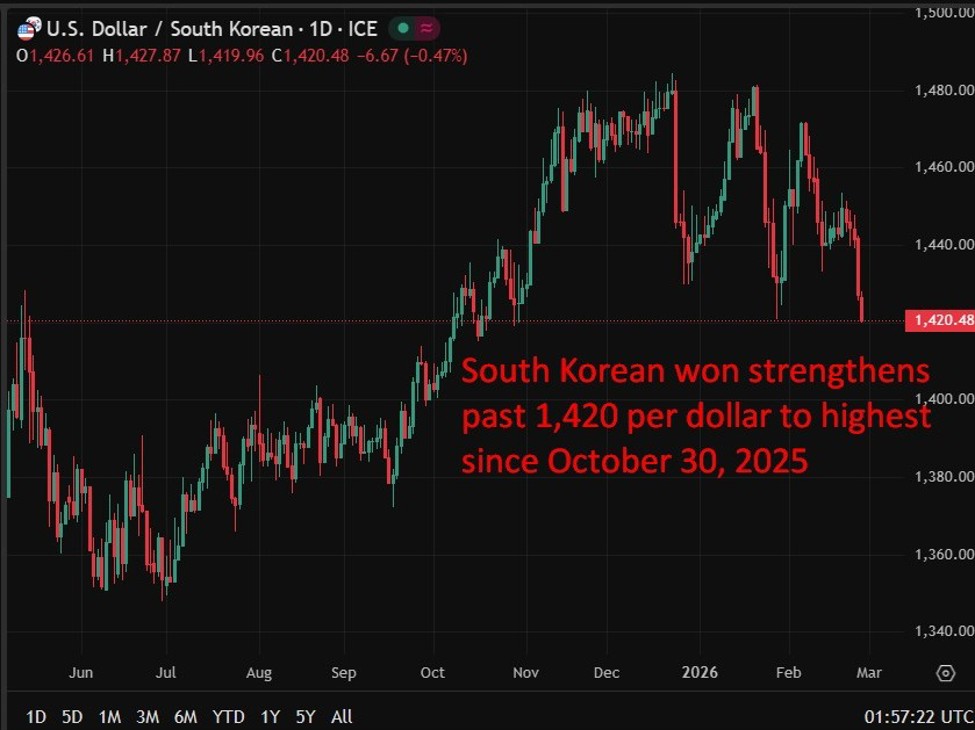
BOK’s new dot plot reinforces a 2.50% hold bias, with only a small minority pricing a cut.Summary:More from the Bank of Korea’s Feb 26 decision: the hold at 2.50% was unanimous.The new six-month “dot plot” shows the board’s centre of gravity is a prolonged hold.16 of 21 dots sit at 2.50%, pointing to a strong bias to keep policy steady.A minority skew slightly dovish: 4 dots at 2.25% imply some scope for one cut.Only 1 dot at 2.75% signals limited appetite for a hike in the next six months.BOK says growth momentum remains favourable, with strong chip exports underpinning activity.Policy stance: support the recovery while closely monitoring inflation and financial stability.Key risks flagged: geopolitics, tariffs, and housing/household debt/FX volatility.On domestic risks: household loans rose only slightly and Seoul housing price gains have slowed.More details from the Bank of Korea’s policy decision earlier confirm a steady-as-she-goes stance — and the new “dot plot” framework leans heavily toward an extended pause.The BOK held its benchmark rate at 2.50% as expected, and it later confirmed the decision was unanimous, underscoring a strong consensus that policy is appropriately set for now. Alongside the decision, the central bank published the first iteration of its expanded forward-guidance scheme, providing a clearer window into policymakers’ near-term rate thinking.The six-month dot plot, based on 21 projections (three per board member), shows the distribution clustered tightly around the current setting. Sixteen of the 21 projections sit at 2.50%, signalling that most policymakers see the base rate unchanged through the next half year. A smaller dovish minority is visible: four projections point to 2.25%, indicating some members see a possible cut scenario if conditions evolve in that direction. By contrast, only one projection sits at 2.75%, suggesting limited conviction behind near-term tightening.On the macro backdrop, the BOK said growth momentum should remain favourable, pointing to strong semiconductor exports as a key support. At the same time, it emphasised it will make policy decisions in a way that supports the economic recovery while closely monitoring changes in domestic and external policy conditions and their knock-on effects for inflation and financial stability.Risk language stayed focused on the usual pressure points. The BOK flagged geopolitical risks and tariffs externally, and reiterated the need for caution on housing prices, household debt and exchange-rate volatility domestically. It added that household loans increased only slightly and that housing price gains around Seoul have slowed, suggesting some moderation — but not enough to declare the financial-stability story resolved. This article was written by Eamonn Sheridan at investinglive.com. 🔗 Source 💡 DMK Insight The Bank of Korea’s unanimous decision to maintain a 2.50% rate signals stability, but here’s why traders should pay attention now: With 16 out of 21 members indicating a preference for a prolonged hold, this reinforces a cautious approach to monetary policy. For forex traders, this could mean a stronger Korean won against currencies that are more susceptible to rate cuts. The current market sentiment around the Bank of Korea’s stance suggests that any unexpected economic data could lead to volatility, especially if it deviates from the expected growth or inflation metrics. Traders should keep an eye on upcoming economic indicators that could sway the BOK’s position, particularly those related to consumer spending and exports. On the flip side, if inflation pressures mount, the BOK might need to reconsider its hold bias, which could lead to a sudden shift in market sentiment. For now, watch the 2.50% level closely; any hints of a rate cut or an unexpected rise in inflation could trigger significant moves in both the forex and crypto markets, particularly in assets correlated with South Korean economic performance. 📮 Takeaway Monitor the 2.50% rate closely; any signs of inflation pressure could lead to volatility in the forex market, especially against the Korean won.
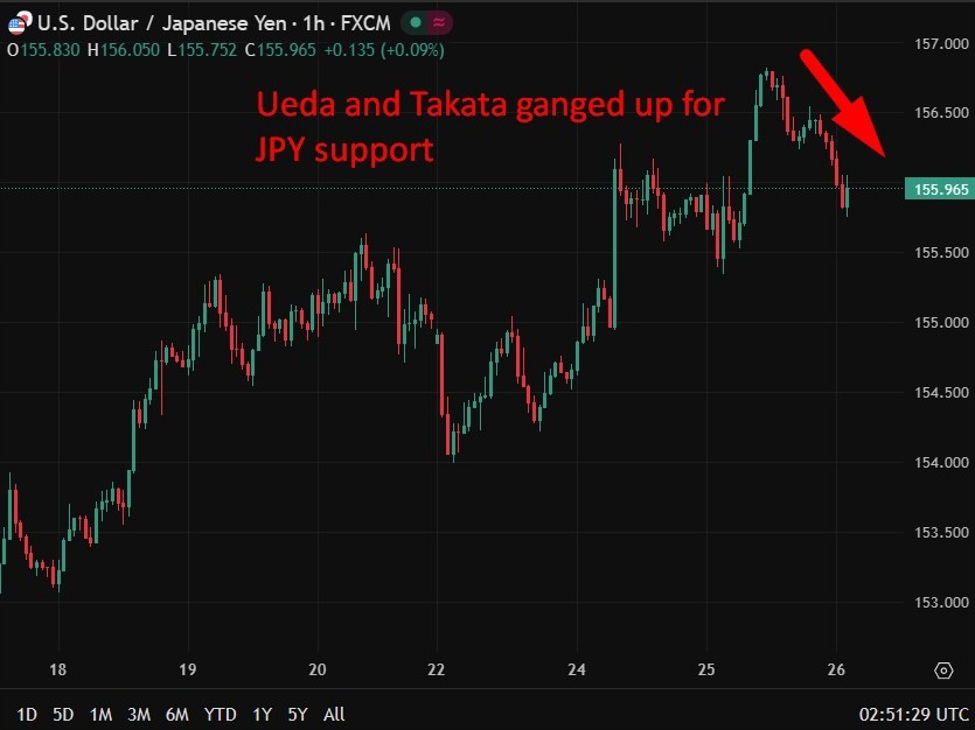
Recap – BOJ hawk Takata flags inflation overshoot risk, yen strengthened on hike signals
Takata warns of inflation overshoot, reinforcing expectations of further BOJ tightening and lifting the yen.Summary:BOJ board member Hajime Takata warned of inflation overshoot risks.Repeated call for gradual further rate hikes.Said Japan has effectively achieved the 2% inflation target.Flagged rising medium- and long-term inflation expectations.Remarks came after PM Sanae Takaichi signalled preference for loose policy.Media framed speech as hawkish pushback — yen strengthened.Financial media coverage has zeroed in on renewed hawkish messaging from Hajime Takata, sending the yen firmer earlier as markets reassessed the trajectory of Bank of Japan tightening.Takata, widely seen as the most hawkish member of the Bank of Japan board, said the BOJ must focus on the risk of an inflation overshoot, arguing that medium- and long-term inflation expectations are rising and price increases are increasingly feeding into second-round effects.He reiterated his view that Japan has effectively achieved the BOJ’s 2% inflation target and that the economy has emerged from prolonged stagnation. Against that backdrop, Takata called for gradual further rate hikes, saying policy should “make a further gear shift” and assume price stability is almost achieved.The timing is notable. His remarks came just a day after Prime Minister Sanae Takaichi signalled a desire for continued accommodative policy, a stance widely interpreted as dovish. Media framed Takata’s speech as a counterbalance — reinforcing policy independence and highlighting inflation risks at a moment of political signalling.Takata also pointed to global forces, including massive fiscal and monetary stimulus and the AI-driven investment boom, as factors that could lift global growth and intensify domestic inflation pressures. He emphasised that deeply negative real borrowing costs are still stimulating credit demand, even after December’s rate hike to 0.75%, a 30-year high.Importantly, Takata rejected the idea of relying heavily on an estimated neutral rate — calling it difficult to measure — and instead advocated steady, incremental tightening.The market reaction reflected the hawkish tilt. The yen strengthened as investors priced a higher probability that the BOJ’s next move will be up rather than an extended pause, particularly after Takata’s unsuccessful push for a 1.0% rate in January. This article was written by Eamonn Sheridan at investinglive.com. 🔗 Source 💡 DMK Insight Takata’s warning about inflation overshooting is a game changer for yen traders right now. With the BOJ potentially tightening further, this could lead to a stronger yen against major currencies. Traders need to watch the USD/JPY pair closely; if the yen strengthens, it could break below key support levels. Takata’s remarks about achieving the 2% inflation target signal that the BOJ is serious about its inflation goals, which could trigger a shift in market sentiment. If inflation expectations rise, we might see a shift in bond yields as well, impacting the broader forex market. Keep an eye on the upcoming economic data releases, as they could provide more context for the BOJ’s next moves and influence trading strategies. But here’s the flip side: if the market overreacts to these comments, we could see a short-term pullback in the yen. Traders should monitor the 145 level on USD/JPY for potential resistance, as a break above could indicate a reversal in the current trend. Watch for any statements from other BOJ officials that might clarify the central bank’s stance in the coming weeks. 📮 Takeaway Watch the USD/JPY pair closely; a break below 145 could signal a stronger yen as BOJ tightening expectations rise.
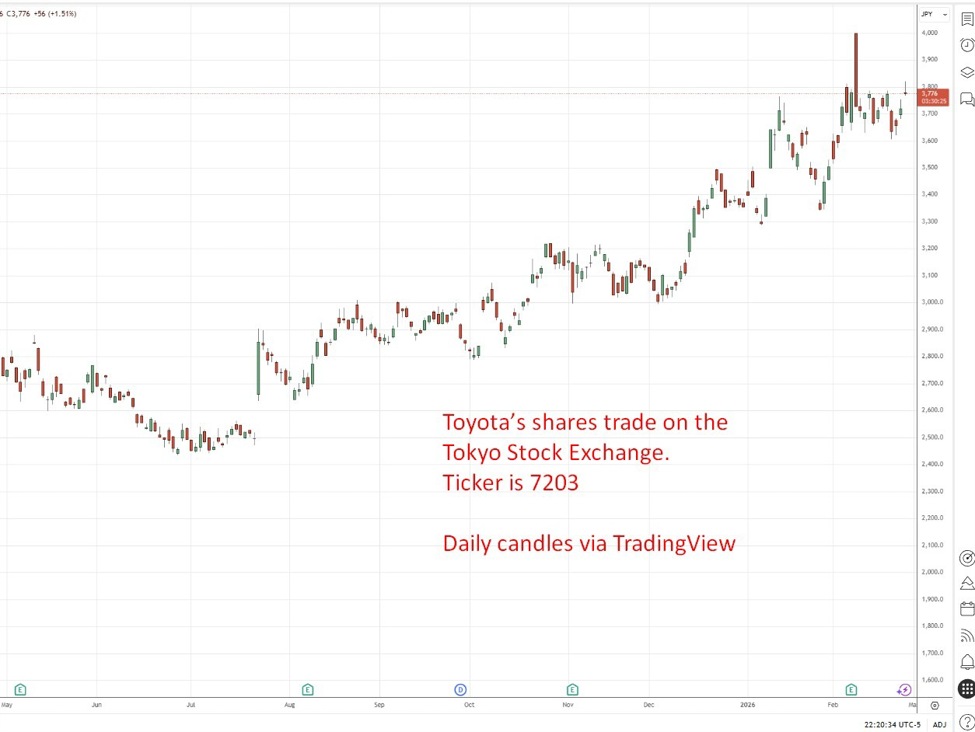
Toyota plans $19bn share unwind in landmark governance reform move – Reuters
Reuters report that Toyota prepares potential $19bn share unwind in major governance reform signal.Summary:Toyota is preparing a potential ¥3 trillion (~$19bn) share sale via financial institutions to unwind cross-shareholdings, sources told Reuters.The plan could take place as early as 2026 but remains subject to change.Toyota may use buybacks to absorb shares; a secondary offering is also possible.Move seen as a landmark step in Japan’s corporate governance reform.Investors have pushed Toyota to improve capital efficiency.Comes amid scrutiny over Toyota Industries tender offer.Japan’s corporate governance reform drive may be heading toward a landmark moment, with Toyota Motor Corp preparing a potential large-scale unwinding of strategic cross-shareholdings worth around ¥3 trillion ($19 billion), according to sources cited by Reuters.The move would involve major banks and insurance companies selling Toyota shares they hold as part of longstanding reciprocal investment arrangements. The total transaction could reach roughly $19 billion, although the final scale will depend on shareholder participation and market conditions. One source indicated the plan could be executed as early as this year, though timing and structure remain fluid and the proposal could still be revised or shelved.Toyota is reportedly considering repurchasing shares through buybacks to facilitate the unwind, while a secondary sale to outside investors is also being explored as an alternative mechanism.Cross-shareholdings, where companies hold shares in business partners to reinforce strategic ties, have long been a feature of Japan’s corporate landscape. However, regulators and the Tokyo Stock Exchange have intensified pressure in recent years for companies to dismantle these arrangements, arguing they weaken shareholder accountability and entrench management. Overseas investors have frequently criticised the practice as inefficient and detrimental to capital discipline.While Toyota has previously stated its intention to gradually reduce such holdings, it has faced mounting investor scrutiny over governance and capital allocation. The potential ¥3 trillion unwind would represent one of the largest such steps taken by a Japanese corporation and could serve as a powerful signal of commitment to reform.The development comes as Toyota navigates other governance challenges, including its ongoing tender offer for Toyota Industries. The offer has encountered resistance from activist investor Elliott, which argues the proposal undervalues the company and lacks sufficient transparency. Toyota recently extended the tender deadline due to limited shareholder support.If executed, the cross-shareholding unwind would mark a significant shift in Japan’s corporate governance landscape. This article was written by Eamonn Sheridan at investinglive.com. 🔗 Source 💡 DMK Insight Toyota’s potential $19 billion share unwind is a game-changer for governance and investor sentiment. The move to unwind cross-shareholdings signals a shift towards greater transparency and shareholder value, which could attract institutional investors looking for more accountability. This governance reform could also set a precedent in Japan, where cross-shareholding has been a norm, potentially influencing other companies to follow suit. For traders, this could mean increased volatility in Toyota’s stock as the market digests the implications of this reform. Watch for price reactions around key levels, especially if the share sale is confirmed sooner than expected. If Toyota opts for buybacks, it could provide a floor for the stock, but the initial reaction might be bearish as the market assesses the dilution impact. Here’s the flip side: while this could be seen as a positive step, it might also raise concerns about Toyota’s financial health if the market perceives the unwind as a necessity rather than a strategic choice. Keep an eye on the ¥3 trillion mark as a critical threshold for sentiment. Traders should monitor Toyota’s stock closely for any announcements and be prepared for potential price swings as this situation develops. 📮 Takeaway Watch for Toyota’s stock reaction around the ¥3 trillion mark as governance reforms unfold, especially if buybacks are announced.
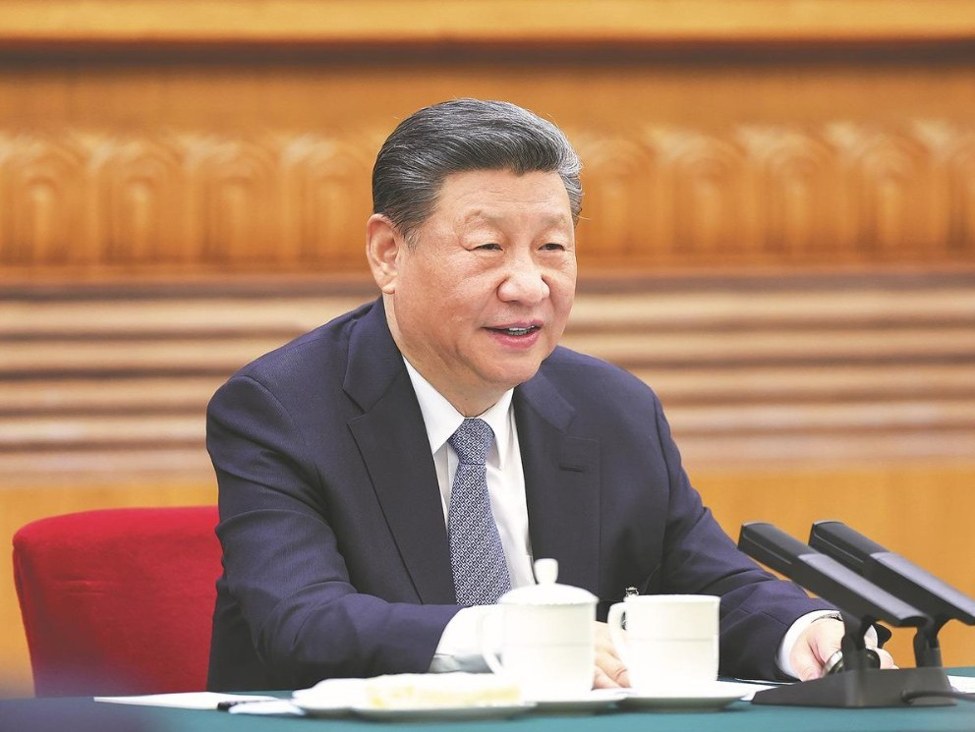
China Two Sessions 2026: growth target, fiscal stance and 15th plan signals in focus
China’s Two Sessions (4–11 March) is shaping up as a “targets + 15th plan signalling” event, more about direction and policy bias than a single mega-stimulus headline.Summary:China’s “Two Sessions” will open in Beijing on 4 March (CPPCC) and 5 March 2026 (NPC), with the headline policy statement coming via the Government Work Report by Premier Li Qiang on 5 March. 2026 is a key “bridge year” into the 15th five-year plan (2026–2030), with authorities preparing plan-related documents for March deliberations and public signalling. Market focus is on whether Beijing marks down the GDP target from “around 5%” to ~4.5%–5%, which would formalise the shift toward “quality/security” framing and lower the bar for big-bang stimulus. A fiscal deficit ratio around ~4% of GDP is widely discussed as the “base case”, with support potentially pushed via special bond issuance / quasi-fiscal channels and targeted spending rather than a headline-deficit surge. Domestic-demand support (trade-ins/vouchers, services consumption, welfare) is expected to feature, but the policy tone is likely to keep emphasising industrial upgrading, innovation and security amid US–China tech friction. Watch for language on the property downturn, local-government finances, and “financial sector serving the real economy” as Beijing tries to lift confidence without reigniting leverage.China’s annual “Two Sessions” will convene in Beijing in early March, with the advisory CPPCC opening on 4 March and the national legislature, the NPC, beginning on 5 March. The focal point for markets is the Government Work Report, delivered by Premier Li Qiang on the NPC’s opening day, which typically sets the year’s headline targets and policy tasks and provides the clearest public read of Beijing’s macro stance. This year matters more than usual because it also serves as the on-ramp to the 15th five-year plan (2026–2030). While the plan’s full detail is built through Party and state processes, officials have already been workshopping plan-related and work-report drafts ahead of March, meaning investors should expect heavier-than-normal signalling on medium-term priorities, especially around industrial upgrading, technology self-reliance and economic security. On the near-term macro call, a key debate is whether Beijing trims the 2026 GDP growth target from “around 5%” to a range closer to 4.5%–5%. A formal step-down would underline the shift toward “high-quality growth” and reduce the political pressure for a large, broad-based stimulus package. Fiscal messaging is likely to balance support and discipline. Analysts broadly look for a headline deficit ratio around recent levels (often discussed near ~4% of GDP), with incremental support delivered through targeted programs and government-linked financing channels rather than a single dramatic deficit expansion. Alongside that, watch for any refreshed language on boosting domestic demand and improving social support, and for cues on how forcefully Beijing wants finance to channel credit into priority “future industries” while containing property and local-debt risks. This article was written by Eamonn Sheridan at investinglive.com. 🔗 Source 💡 DMK Insight China’s upcoming Two Sessions are crucial for traders, signaling potential shifts in economic policy rather than immediate stimulus. The focus will be on the direction of China’s 15th Five-Year Plan, which could impact sectors like commodities and equities. Traders should keep an eye on how these discussions might influence the yuan and related forex pairs, especially if any unexpected policy changes emerge. Given the current global economic climate, any hints at increased spending or infrastructure investment could lead to a short-term rally in Chinese assets. However, it’s worth noting that if the government leans towards austerity, we could see a bearish reaction across markets. Watch for key statements around March 4-5, as they could set the tone for market sentiment in the weeks ahead. Pay attention to the yuan’s performance against the dollar during this period, as it may reflect traders’ expectations of policy shifts. 📮 Takeaway Monitor the yuan’s movement against the dollar around March 4-5 for insights into potential policy shifts from China’s Two Sessions.
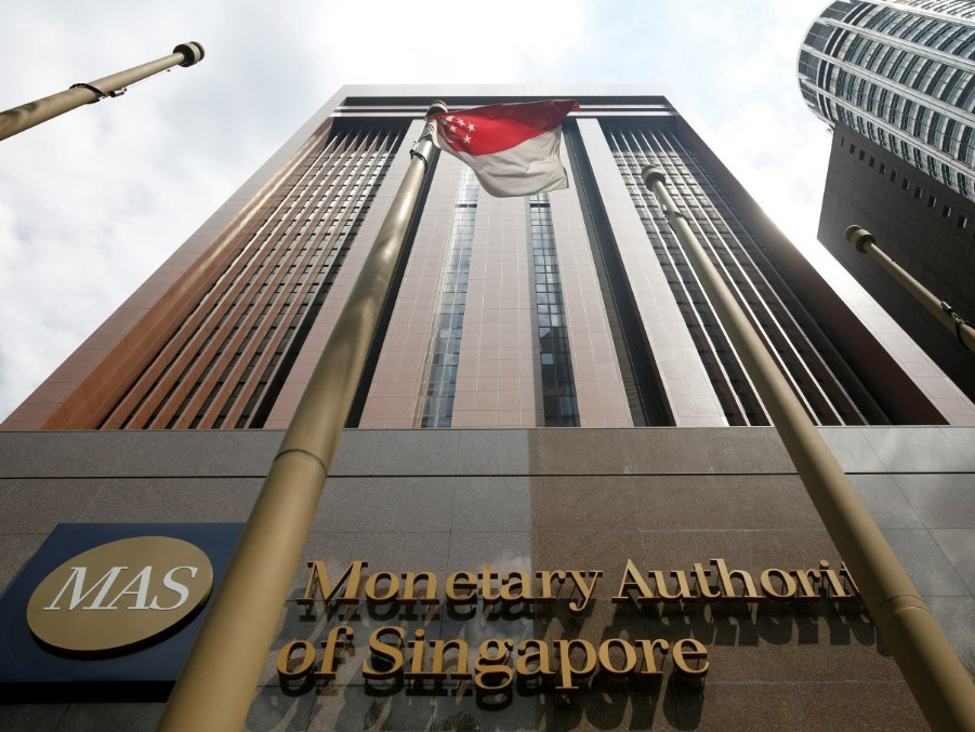
Singapore MAS survey: 2026 GDP seen at 3.6%, April tightening odds rise
Economists upgrade Singapore’s 2026 growth outlook and are increasingly split on whether the MAS will tighten policy at its April 2026 review.Summary:Monetary Authority of Singapore (MAS) Q1 survey (released 25 February 2026) shows economists lift 2026 GDP growth forecast to 3.6% (prev. 2.3%).Nearly 47.4% now expect a policy tightening at the April 2026 MAS review, up sharply from 5.6% previously.Median core inflation forecast rises to 1.5% (from 1.3%); headline inflation seen steady at 1.5%.Government growth range sits at 2–4% (raised in February from 1–3%).Top downside risks: geopolitical tensions, AI bubble burst; upside risk: sustained AI-led tech cycle.The Monetary Authority of Singapore’s quarterly Survey of Professional Forecasters, released on 25 February 2026, showed a notably stronger outlook for the economy this year, with economists raising their median forecast for 2026 GDP growth to 3.6%, up from 2.3% in the previous survey.The poll, sent to 25 economists on February 10 with 22 responses received, does not represent the official views of the MAS but provides a useful gauge of market expectations ahead of the central bank’s April 2026 monetary policy review.The upgraded growth projection compares with the government’s official forecast range of 2% to 4%, which itself was revised higher in February from 1% to 3%. The stronger outlook reflects resilience in Singapore’s externally oriented sectors and expectations of continued support from technology and advanced manufacturing activity.Monetary policy expectations have shifted materially. The survey showed 47.4% of economists now anticipate a tightening move in April, specifically through an increase in the slope of the Singapore dollar nominal effective exchange rate (S$NEER) policy band. That marks a sharp rise from just 5.6% expecting tightening three months ago, underscoring how sentiment has turned as growth forecasts improved. The remainder expect policy settings to be left unchanged.On inflation, economists see modest upward pressure but within manageable bounds. The median forecast for core inflation, MAS’s preferred gauge, increased to 1.5% from 1.3%, while headline inflation is projected to remain at 1.5%. Both measures sit comfortably within the MAS’s official 1%–2% forecast range, suggesting policymakers retain flexibility.Respondents flagged geopolitical tensions and the risk of a bursting artificial intelligence investment bubble as key downside threats. Conversely, a sustained AI-driven technology upcycle remains the primary upside risk to growth.With growth expectations strengthening but inflation contained, the April MAS decision is shaping up as a close call, with currency policy settings likely to remain the central transmission mechanism for any adjustment. This article was written by Eamonn Sheridan at investinglive.com. 🔗 Source 💡 DMK Insight Singapore’s upgraded growth forecast could signal a bullish trend for ETH and regional assets. With the Monetary Authority of Singapore (MAS) hinting at potential policy tightening, traders should watch how this impacts liquidity in the crypto market. An increase in GDP growth to 3.6% suggests a strengthening economy, which often correlates with higher risk appetite among investors. This could lead to increased demand for assets like Ethereum, currently priced at $2,064.77. If the MAS does tighten policy, it might create volatility, but also a more favorable environment for crypto as institutional players seek growth opportunities. However, keep an eye on the 50-day moving average for ETH, as a break above could signal a strong bullish trend. Conversely, if the MAS opts for a dovish stance, it might lead to a sell-off in risk assets. Watch for the April 2026 policy review; it could be a pivotal moment for both Singapore’s economy and the crypto market. 📮 Takeaway Monitor ETH’s movement around the 50-day moving average and prepare for potential volatility around the MAS’s April policy review.
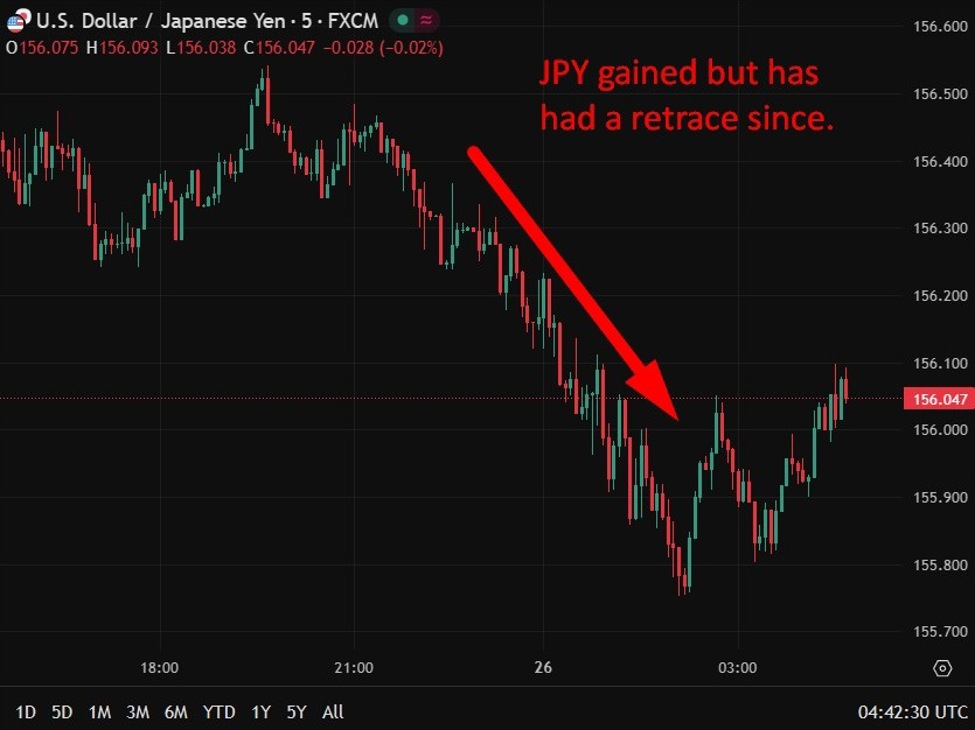
investingLive Asia-Pacific FX news wrap: Hawkish BoJ (Ueda & Takata) boost JPY
Singapore MAS survey: 2026 GDP seen at 3.6%, April tightening odds riseChina Two Sessions 2026: growth target, fiscal stance and 15th plan signals in focusToyota plans $19bn share unwind in landmark governance reform move – ReutersRecap – BOJ hawk Takata flags inflation overshoot risk, yen strengthened on hike signalsBank of Korea dot plot points to prolonged 2.50% hold as chip exports support growthBoJ’s Takata says Japan is near 2% target, backs further gradual rate hikesAustralia Q4 capex beats expectations as renewable investment lifts outlookPBOC sets USD/ CNY central rate at 6.9228 (vs. estimate at 6.8605)Bank of Korea holds rates at 2.50%, introduces Fed-style dot plot guidancePBOC is expected to set the USD/CNY reference rate at 6.8605 – Reuters estimateNvidia’s Huang says markets misjudge AI threat as revenue and guidance smash forecastsNZ business confidence eases but inflation pressures build – ANZ surveyBOJ’s Ueda flags March, April hike chance, says wage gains could hasten 2% targetRubio says Iran pursuing ICBMs, missile issue a “big problem” before talksIMF’s Georgieva says tariffs lifted US goods inflation, backs Fed rate at 3.25%–3.5%IMF sees US growth at 2.4% in 2026, urges deficit cuts as debt heads to 140% GDPBOJ’s Ueda says rates will rise if outlook strengthens, inflation to re-accelerateinvestingLive Americas FX news wrap 25 Feb: The USD moves lower ahead of Nvidia earningsNvidia Q4 crushes, Q1 guide tops Street as AI engine roarsMajor US indices close higher for the 2nd consecutive dayBank of Japan Governor Ueda says will examine the impact of rate hikes so farUS Vice President JD Vance said evidence has been found that Iran is attempting to resume the development of nuclear weapons, raising the geopolitical temperature ahead of renewed talks. Secretary of State Marco Rubio, speaking before discussions in Geneva, said he would not characterise the meeting as anything more than the latest in an ongoing series of conversations. He added that negotiations will eventually need to extend beyond Iran’s nuclear program to include its ballistic missile capabilities, reinforcing Washington’s broader concerns.Despite the rhetoric, oil prices remained rangebound as traders balanced the resumption of US–Iran talks with a substantial build in US crude stockpiles. Gold also traded in tight ranges, suggesting markets are not yet pricing in an immediate escalation risk.In FX, the yen led gains among G10 currencies. Bank of Japan Governor Ueda, in an interview with Yomiuri, reiterated that the Bank remains on track to tighten further if the economic outlook strengthens and inflation re-accelerates. Those gains were reinforced by remarks from BOJ board member Hajime Takata, widely regarded as the most hawkish member of the panel, who warned policymakers must focus on the risk of an inflation overshoot. Takata argued that medium- and long-term inflation expectations are rising and second-round price effects are becoming more evident.AUD and NZD were broadly steady. In New Zealand, the ANZ business survey showed firms facing higher costs and an increasing share expecting to lift wages to attract or retain staff, pointing to persistent underlying inflation pressures.South Korea’s central bank kept its benchmark rate unchanged, citing financial stability risks and solid export performance. The Bank of Korea’s updated dot plot reinforced a 2.50% hold bias, with only a small minority signalling scope for a cut. The Korean won strengthened past 1,420 per dollar to its highest level since late October 2025, while the Taiwan dollar climbed to its strongest since mid-December. China’s offshore yuan also firmed to its strongest level in nearly three years.In equities, Japan’s Nikkei rallied to a fresh all-time high above 59,000, with the Topix also advancing. Chinese markets were softer, with the Hang Seng underperforming amid weakness in tech, consumer discretionary and insurers, while the Shanghai Composite was little changed in the absence of fresh catalysts.US equity futures traded marginally lower. They initially found support after Nvidia beat on both revenue and earnings, but early gains were gradually pared, leaving the stock flat in after-hours trade and broader futures off their highs. This article was written by Eamonn Sheridan at investinglive.com. 🔗 Source

Early market reaction shows that the bar for Nvidia may have gotten even higher
The bar was already set incredibly high for Nvidia going into this week’s earnings call, as it has been for many quarters now. And once again, the chip giant defies concerns to the AI trade with a strong triple beat so to speak. All three of revenue, earnings, and guidance hit their market and then some. And that is keeping optimism on the AI trade in general, although the early market reaction has been more mixed.Nvidia shares rose over 3% in after-hours trading before settling down a fair bit. And US futures in general are also following suit to keep more muted on the day. S&P 500 futures are down 0.1% with Nasdaq futures down 0.3% currently. So, what gives?The early market reaction hints that with the bar already set so high for Nvidia, clearing that is “expected” and fits within the norm these days. While Nvidia still has to do a lot of heavy lifting in keeping market sentiment up, they are often times viewed as the poster boy for the AI rally. As such, “perfection” can be seen as the bare minimum in some sense.However, adding to the more reserved market response so far today is continued geopolitical and trade uncertainty. The US-Iran conflict remains in focus and could yet evolve into military escalation. Meanwhile, Trump’s tariffs are still being met with all sorts of uncertainty with the latest being that perhaps not all countries will be hit with 15% levies – only some. Geez.And on the latter, there’s also the thought of what is going to happen next once the 150 days are up on Section 122. In all likelihood, it won’t be extended and so it remains to be seen what Trump will have up his sleeves next.Circling back to the AI agenda, there’s also some concerns on how the hyperscalers i.e. Google, Meta, Microsoft can keep up on capex spending to support the outlook portrayed by Nvidia. And adding to that, there’s still the whole hardware versus software debate. While the former continues to outperform, the latter is suffering from the continued AI disruption that Nvidia is powering.So while there is optimism on the big names, there is once again perhaps a change to “the rest of the market” problem for investors. Just something to keep in mind. This article was written by Justin Low at investinglive.com. 🔗 Source 💡 DMK Insight Nvidia’s triple beat on earnings, revenue, and guidance is a game changer for traders focused on AI stocks. This strong performance not only reinforces Nvidia’s dominance in the chip sector but also signals robust demand for AI-related technologies. Traders should note how this could impact related sectors, particularly semiconductor stocks and tech indices. The market’s reaction will likely hinge on Nvidia’s guidance, which could set the tone for future earnings in the tech space. If Nvidia’s stock holds above key support levels, it could trigger a bullish sentiment across the sector, attracting both retail and institutional investors. However, there’s a flip side: if the stock fails to maintain momentum, it could lead to profit-taking and increased volatility in the broader market. Watch for Nvidia’s stock to hold above its recent highs, as a failure to do so could indicate a potential pullback. Keep an eye on the semiconductor ETF performance as well, as it could reflect broader market sentiment following this earnings report. 📮 Takeaway Traders should monitor Nvidia’s stock for support levels post-earnings; a failure to hold could signal broader market volatility.

BOJ policymaker Takata: It is currently hard to determine the desirable pace of rate hikes
Does not think that the BOJ is behind the curve for nowBut want to ensure BOJ doesn’t fall behind the curve in addressing inflation risksDifficult to determine the desirable pace of rate hikes and also the terminal ratePace of future rate hikes will depend on economic, price, market developments at the timeThere are pros and cons to a weak Japanese yen currencyThe comments above are more neutral but we’ve already seen his hawkish side earlier in the day here. Adding to the commentary from earlier was BOJ governor Ueda who hinted that the March and April meetings will be live. That is despite prime minister Takaichi’s reported reservations and reluctance in wanting the BOJ to get on with the next rate hike so soon.In terms of market pricing though, traders are not seeing any potential for a policy change on 19 March next month. The odds of there being no change to the policy rate are at ~87% currently. The following meeting on 28 April will be more interesting, with traders pricing in ~54% odds of a 25 bps rate hike.It’s all going to ride on the spring wage negotiations and then seeing if Ueda & co. will have the appetite to deliver on another rate hike before Takaichi’s choice of replacement board members step in.As a reminder, we will be seeing Asahi Noguchi and Junko Nakagawa depart from the central bank at the end of March and June respectively. They will be replaced by Toichiro Asada and Ayano Sato, both of whom are likely to shift the internal debate at the central bank and stall further rate hikes.For some context, Noguchi – while being a dovish member – still sided with the last two rate hikes while Nakagawa is more of a consensus voter in keeping the peace. With Asada and Sato, one can expect both to reflect a more “reformed” dovish approach in aligning more with the government’s goal This article was written by Justin Low at investinglive.com. 🔗 Source 💡 DMK Insight The Bank of Japan (BOJ) is treading carefully on rate hikes, and here’s why that matters: inflation risks are rising, but the central bank’s cautious approach could lead to market volatility. As traders, we need to keep an eye on how the BOJ balances its inflation targets with economic growth. If they signal a shift towards tightening too slowly, we might see the yen weaken further, impacting forex pairs like USD/JPY. The real story is that the BOJ’s decisions could ripple through global markets, especially if they lag behind other central banks in tightening. This could create opportunities for shorting the yen or even trading commodities that benefit from a weaker currency. Watch for any hints from the BOJ on the pace of rate hikes—if they suggest a more aggressive stance, it could lead to a stronger yen and a shift in market sentiment. Keep an eye on economic indicators like inflation data and employment figures in Japan, as these will be crucial in shaping the BOJ’s next moves. 📮 Takeaway Monitor BOJ communications closely; any hints of accelerated rate hikes could strengthen the yen and shift market dynamics.

FX option expiries for 26 February 10am New York cut
There are just a couple to take note of on the board for the day, as highlighted in bold below.They are all for EUR/USD lined up in between the 1.1800 to 1.1825 level. Given the lack of key catalysts in the session ahead, the expiries could act as bookends for price action in European morning trade. That especially now that we’re seeing price nudge back just above the 1.1800 mark on the day.The key hourly moving averages are lined up around 1.1791-06 currently, so that will also provide a bit of a floor in terms of managing the downside. The expiries at 1.1820-25 don’t tie to any technical significance but as mentioned, could act as a magnet to limit the upside potential in the event of any price range extensions.In terms of economic data, the US weekly jobless claims is the only notable thing on the agenda today. As such, traders will be left to their own devices mostly in digesting Nvidia’s earnings, geopolitical concerns, and any further tariff headlines in the day ahead.For more information on how to use this data, you may refer to this post here.Head on over to investingLive (formerly ForexLive) to get in on the know! This article was written by Justin Low at investinglive.com. 🔗 Source 💡 DMK Insight EUR/USD is hovering between 1.1800 and 1.1825, and here’s why that matters right now: With no significant catalysts on the horizon, these expiry levels could dictate short-term price action. Traders should watch for potential volatility as positions are unwound around these key levels. If the pair breaks above 1.1825, it could signal a bullish momentum shift, while a drop below 1.1800 might trigger a bearish response. Given the current market sentiment, this range is crucial for day traders looking to capitalize on short-term fluctuations. But don’t overlook the potential for consolidation; if the pair remains range-bound, it could lead to a buildup of positions that might explode in either direction once a catalyst does appear. Keep an eye on broader market indicators, like U.S. economic data releases, which could impact the euro-dollar dynamic. For now, focus on these levels and prepare for possible breakouts or reversals as traders react to the expiry mechanics. 📮 Takeaway Watch the 1.1800 to 1.1825 range in EUR/USD; a breakout could signal a strong move in either direction.

Gold outlook remains bullish with more room for fresh long positions now – ANZ
With gold now angling for a renewed push above $5,200, ANZ continues to argue for a more bullish rhetoric for the precious metal amid recent developments. Most of the overarching themes underpinning gold have been the same since last year, but ANZ is adding one more to the list. That being a “less crowded” investor positioning after the late January profit-taking round.The firm notes that:”Underlying fundamentals remain intact, as accommodative monetary policy has room to extend through to Q4 2026. We now expect the Fed to resume cuts in Q2 – likely June – and to add another cut in Q4, bringing the terminal rate down to 3% from the current 3.75%. This trajectory will support non-yielding gold.Renewed geopolitical tensions between the US and Iran are set to revive haven demand for gold. And ongoing Russia-Ukraine talks suggest persistent volatility in the geopolitical backdrop. Economic risks linger, with markets yet to see the effects of increased US tariffs; and financial risks are mounting amid concerns around the AI-driven equity rally..Amid these uncertainties, we believe gold remains a compelling hedge against market risks. Investor positioning is less crowded after the latest profit taking, leaving ample room for investors to build fresh long positions.” This article was written by Justin Low at investinglive.com. 🔗 Source 💡 DMK Insight Gold’s potential push above $5,200 could signal a significant shift in market sentiment. With ANZ’s bullish stance, traders need to consider the implications of ongoing economic uncertainties, particularly inflation and geopolitical tensions, which have historically driven gold prices higher. If gold breaks this key level, it could trigger a wave of buying, especially among institutional investors looking for safe-haven assets. Watch for resistance around $5,200; a sustained move above could lead to further upside, possibly testing previous highs. On the flip side, if gold fails to maintain this momentum, it might lead to a quick sell-off, especially if broader market conditions shift towards risk-on sentiment. Keep an eye on related assets like silver and mining stocks, as they often follow gold’s lead. Monitoring the daily chart for volume spikes around this level will be crucial to gauge trader sentiment and potential breakout strength. 📮 Takeaway Watch for gold’s movement above $5,200; a breakout could lead to significant buying pressure, while failure to hold may trigger a sell-off.