
 Bitcoin
  Ethereum
  Tether
  XRP
XRP  BNB
BNB  USDC
USDC  Solana
  TRON
TRON  Lido Staked Ether
  Figure Heloc
A proposed law would require online investment influencers to reveal their holdings and paid promotions, with penalties potentially comparable to market manipulation violations. 🔗 Source 💡 DMK Insight This proposed law could shake up the influencer landscape in trading—here’s why. Requiring online investment influencers to disclose their holdings and paid promotions isn’t just about transparency; it could significantly impact market dynamics. If influencers are forced to reveal their positions, it might lead to a more cautious approach in their recommendations, potentially reducing the hype-driven volatility that often follows their endorsements. Traders should consider how this might affect sentiment, especially in sectors heavily influenced by social media, like meme stocks or certain cryptocurrencies. If influencers start to tread carefully, we could see a shift in trading strategies, particularly among retail investors who often follow these figures blindly. On the flip side, this law could create a more level playing field, but it also raises questions about the authenticity of influencer recommendations. If they’re incentivized to disclose their holdings, will they still provide genuine insights, or will their content become overly cautious? Keep an eye on how this legislation unfolds, as it could lead to increased scrutiny on influencers and potentially impact related assets, especially in the short term. Watch for any announcements or updates on this law, as they could trigger market reactions, particularly in sectors reliant on influencer marketing. 📮 Takeaway Monitor developments on this proposed law, as it could impact influencer-driven trading strategies and market volatility in the near term.

Revolut among 4 companies chosen to test stablecoins in UK sandbox
The UK Financial Conduct Authority selected Monee, ReStabilise, Revolut and VVTX to test stablecoin issuance and payments in its regulatory sandbox beginning in Q1 2026. 🔗 Source 💡 DMK Insight The FCA’s move to test stablecoin issuance is a game-changer for crypto regulation in the UK. Starting in Q1 2026, firms like Revolut and Monee will be under scrutiny, which could set the stage for broader adoption and regulatory clarity. This is crucial for traders, as stablecoins often serve as a bridge between volatile crypto assets and fiat currencies. If successful, these tests could lead to increased institutional confidence and liquidity in the market. Watch for potential ripple effects on related assets, particularly those tied to stablecoins like USDT and USDC, as their use cases may expand. However, there’s a flip side: regulatory hurdles could stifle innovation if the FCA imposes stringent requirements. Traders should keep an eye on the evolving regulatory landscape and any announcements from these firms during the testing phase. Key metrics to monitor include transaction volumes and user adoption rates of the tested stablecoins, which could signal market sentiment and potential price movements in the broader crypto market. 📮 Takeaway Watch for updates from the FCA’s stablecoin tests in Q1 2026, as they could significantly impact market liquidity and regulatory sentiment.

UK security committee chair urges temporary ban on crypto political donations
The Reform UK party was the first to accept crypto donations in May last year, with leader Nigel Farage announcing the group is accepting Bitcoin and other cryptocurrency contributions. 🔗 Source 💡 DMK Insight Reform UK’s acceptance of crypto donations could signal a shift in political funding dynamics. This move not only legitimizes cryptocurrencies in mainstream politics but also opens the door for other parties to follow suit. For traders, this development is worth noting as it could lead to increased demand for Bitcoin and other cryptocurrencies, especially if political campaigns start to adopt crypto as a standard. If we see a surge in political entities embracing digital currencies, it could create a bullish sentiment in the market, pushing prices higher. Keep an eye on Bitcoin’s price action around key levels, as any significant uptick could attract more institutional interest, further solidifying its position as a viable asset class. However, there’s a flip side: if regulatory scrutiny increases as a result of this trend, it could lead to volatility. Traders should monitor any announcements from regulatory bodies regarding crypto in political funding, as this could impact market sentiment significantly. Watch for Bitcoin to hold above its recent support levels to gauge whether this trend will have a lasting impact. 📮 Takeaway Watch Bitcoin’s price action closely; a sustained move above recent support levels could indicate growing institutional interest driven by political crypto adoption.

OCC proposal seeks to settle stablecoin yield debate, clearing way for CLARITY
The OCC’s proposal to implement the GENIUS Act would bar yield on payment stablecoins and introduce a rebuttable presumption against common issuer–affiliate reward structures. 🔗 Source 💡 DMK Insight The OCC’s proposal to bar yield on payment stablecoins is a game-changer for traders: it could significantly alter the landscape of stablecoin investment strategies. By introducing a rebuttable presumption against issuer-affiliate reward structures, the OCC is effectively tightening the regulatory noose around stablecoins, which have been a popular vehicle for yield-seeking investors. This move could lead to a decrease in liquidity and trading volume in the stablecoin market, especially for those that have relied on yield incentives to attract users. Traders should be cautious, as this could trigger a sell-off in stablecoins, impacting related assets like DeFi tokens that depend on stablecoin liquidity. Keep an eye on the USDT and USDC markets for immediate reactions, as they are likely to be the most affected. The flip side? This could also open up opportunities for more compliant and innovative stablecoin solutions that align with regulatory expectations. Watch for developments in this space, as they could create new trading opportunities in the coming weeks. 📮 Takeaway Monitor USDT and USDC closely; a sell-off could signal broader market shifts, especially in DeFi, over the next few weeks.

Gate adds Malta payments license to expand EU fiat and stablecoin rails
The license allows Gate to execute payment transactions in the EU, including direct debits and credit transfers under PSD2 rules. 🔗 Source 💡 DMK Insight Gate’s new EU payment license is a game changer for crypto transactions. This license under PSD2 rules opens the door for more seamless integration of crypto payments in traditional finance. Traders should pay attention to how this could affect liquidity and transaction speeds in the crypto market. With Gate now able to execute direct debits and credit transfers, we might see increased adoption from both retail and institutional investors, potentially driving up trading volumes. This could also ripple through to related assets, particularly those that are already integrated with Gate’s services. But here’s the flip side: while this is a positive development, it could also attract regulatory scrutiny, which might create volatility in the short term. Watch for how Gate’s competitors respond and whether they can keep pace with this regulatory shift. Key metrics to monitor include transaction volumes and any changes in user engagement on Gate’s platform over the next few weeks. 📮 Takeaway Keep an eye on Gate’s transaction volumes and user engagement metrics as they could signal increased crypto adoption in the EU market.
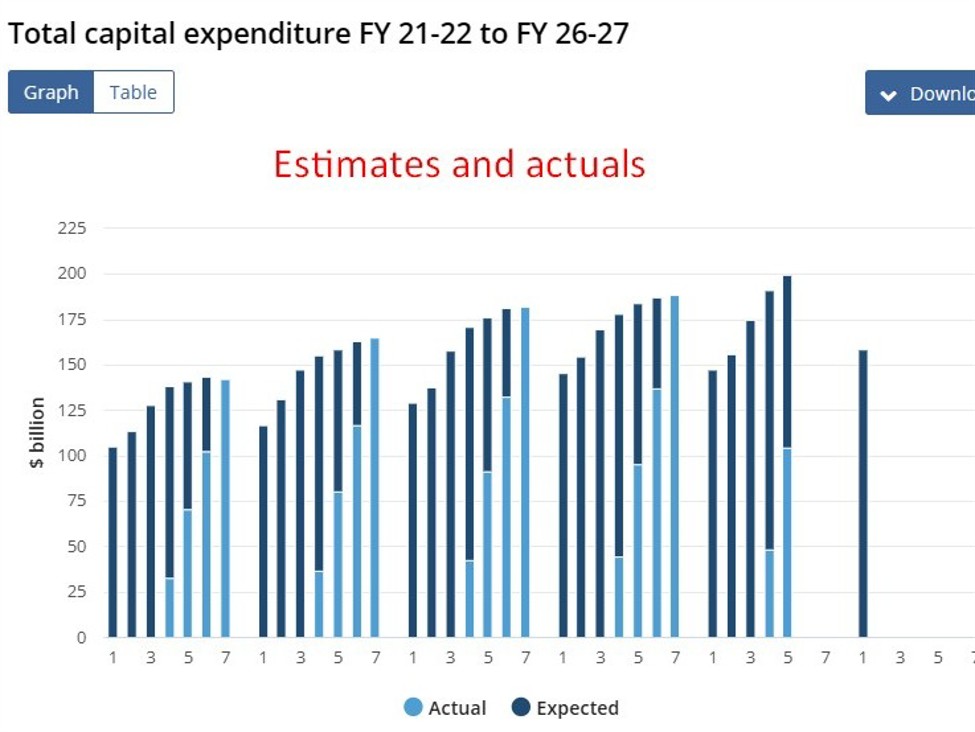
Australian Q4 2025 business capex has fallen from Q3 but has beaten expectations
This is ‘just the data’ post. ADDED: I posted details etc here:Australia Q4 capex beats expectations as renewable investment lifts outlook—Australian Private Capital Expenditure Q4 2025 +0.4% q/qexpected 0%, prior +6.4%CapExp for 2025-26, estimate 5 is AUD199.3bnprior 191.3bnPlant Machinery CapEx -1.7% q.qprior +11.5%Building CapExp +2.3% q/qprior +2.1% This article was written by Eamonn Sheridan at investinglive.com. 🔗 Source 💡 DMK Insight Australia’s Q4 capital expenditure data just beat expectations, and here’s why that matters: The +0.4% quarter-over-quarter increase in private capital expenditure signals a stronger-than-anticipated economic outlook, particularly driven by renewable investments. This could influence the Australian dollar (AUD) positively, especially against the USD, as traders reassess their positions based on economic resilience. The prior quarter’s robust +6.4% growth sets a high bar, but the current figures suggest that while growth is slowing, it’s not stalling. The decline in plant machinery CapEx by -1.7% could indicate caution among businesses, which is worth noting for those trading related sectors. For traders, this data could lead to volatility in the forex market, particularly for AUD/USD pairs. Watch for any shifts in sentiment as traders digest these figures. Key levels to monitor are the AUD/USD resistance around 0.6500 and support near 0.6400. If the AUD strengthens, it could also impact commodity prices, especially in sectors tied to Australian exports like iron ore and coal. Keep an eye on upcoming economic indicators that could further influence these trends. 📮 Takeaway Watch the AUD/USD pair closely; resistance at 0.6500 and support at 0.6400 could dictate short-term trading strategies.
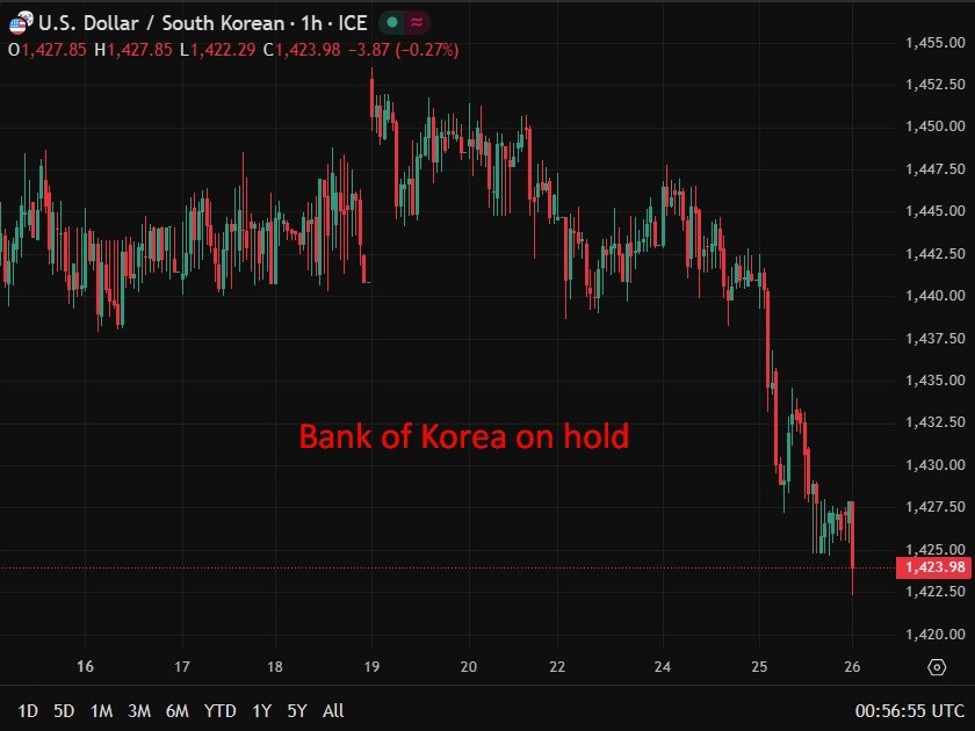
Bank of Korea holds rates at 2.50%, introduces Fed-style dot plot guidance
BOK holds at 2.50% and unveils Fed-style dot plot as policy pause deepens.Summary:Bank of Korea held its benchmark rate at 2.50%, as expected.Decision unanimous among seven-member board.2026 GDP forecast at 2.0%; 2027 growth seen at 1.8%.2025 inflation forecast at 2.2%; 2027 inflation at 2.0%.BOK introduces quarterly “dot plot”-style forward guidance.Move mirrors U.S. Federal Reserve communication framework.The Bank of Korea kept its benchmark interest rate unchanged at 2.50% on Thursday, as widely expected, opting for policy stability amid resilient growth in the semiconductor sector and contained inflation pressures.All 34 economists surveyed by Reuters had forecast a hold, and the central bank’s seven-member monetary policy board delivered a unanimous decision. Policymakers signalled that steady inflation and a chip-driven export recovery give them room to monitor financial stability risks, particularly currency volatility and asset prices — before considering further moves.Updated forecasts show the BOK expects 2026 GDP growth at 2.0% and 2027 growth at 1.8%, pointing to a moderate but steady expansion. Inflation is projected at 2.2% in 2025 before easing to 2.0% in 2027, broadly consistent with the bank’s medium-term target.Governor Rhee Chang-yong will hold a press conference at 0210 GMT/2130 US Eastern time, with markets closely watching for commentary on exchange-rate risks and housing market dynamics.In a significant shift to communications strategy, the BOK is formally expanding its forward guidance framework. Beginning this meeting, it will publish a quarterly interest-rate projection chart, similar to the Federal Reserve’s “dot plot”, revealing anonymous views from all seven board members.Under the new system, each policymaker will provide three projected interest-rate paths over the next six months, resulting in 21 dots per release. The chart will be issued alongside quarterly economic forecasts in February, May, August and November, and will also disclose dissenting votes immediately.The move enhances transparency and aligns the BOK more closely with global central bank communication standards, while reinforcing the current message: policy is on hold, but not on autopilot. Dots cross the Pacific. This article was written by Eamonn Sheridan at investinglive.com. 🔗 Source 💡 DMK Insight The Bank of Korea’s decision to hold rates at 2.50% signals a cautious approach amid slowing growth, and here’s why that matters for traders: With the BOK’s GDP forecasts for 2026 and 2027 at 2.0% and 1.8% respectively, the central bank is clearly prioritizing stability over aggressive growth. This dovish stance could lead to a weaker Korean won, impacting forex traders who are long on the currency. Additionally, the introduction of a dot plot for forward guidance indicates a more transparent approach to monetary policy, which could influence market expectations and volatility in related assets like South Korean equities. Traders should keep an eye on how this affects the broader Asian markets, especially if other central banks follow suit. The immediate focus should be on the 2.50% rate level—any hints of future cuts could trigger significant market movements. On the flip side, if inflation remains contained around the BOK’s forecast of 2.2% for 2025, it might provide a buffer against aggressive rate cuts, offering hidden opportunities for those looking to position themselves ahead of potential market shifts. Watch for any comments from BOK officials that might signal a change in this outlook. 📮 Takeaway Monitor the 2.50% rate level closely; any hints of future cuts could impact the Korean won and related markets significantly.
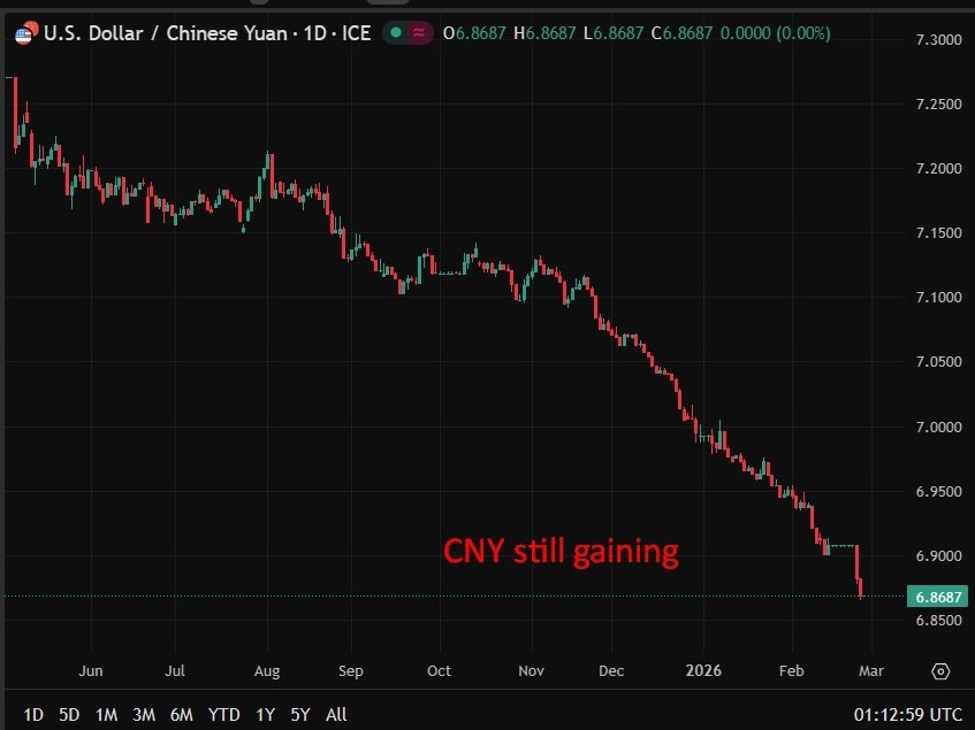
PBOC sets USD/ CNY central rate at 6.9228 (vs. estimate at 6.8605)
The PBOC allows the yuan to fluctuate within a +/- 2% range, around this reference rate. USD/CNY set at 623 pips weaker than the Reuters’ estimate, the biggest spread on record.PBOC injects 320.5bn yuan via 7-day reverse repos at 1.4% in open market operations today. This article was written by Eamonn Sheridan at investinglive.com. 🔗 Source 💡 DMK Insight The PBOC’s recent actions signal a significant shift in yuan management, and here’s why that matters for traders right now: With the yuan’s fluctuation range set at +/- 2%, the USD/CNY spread being 623 pips weaker than estimates indicates heightened volatility. This is the largest spread on record, suggesting that market participants may be underestimating the yuan’s potential movements. The PBOC’s injection of 320.5 billion yuan via reverse repos at 1.4% is a clear attempt to stabilize the currency, but it also raises questions about underlying economic health. Traders should be cautious, as this could lead to increased speculation around the yuan’s strength or weakness in the coming days. Look for key levels around the current USD/CNY rate; if it breaks through recent support or resistance, it could trigger further volatility. Also, keep an eye on related markets like commodities, as fluctuations in the yuan can impact global trade dynamics. The immediate focus should be on how the market reacts to these PBOC measures, especially in the next few trading sessions. 📮 Takeaway Watch for USD/CNY levels closely; a break beyond recent support could signal increased volatility and trading opportunities in the forex market.
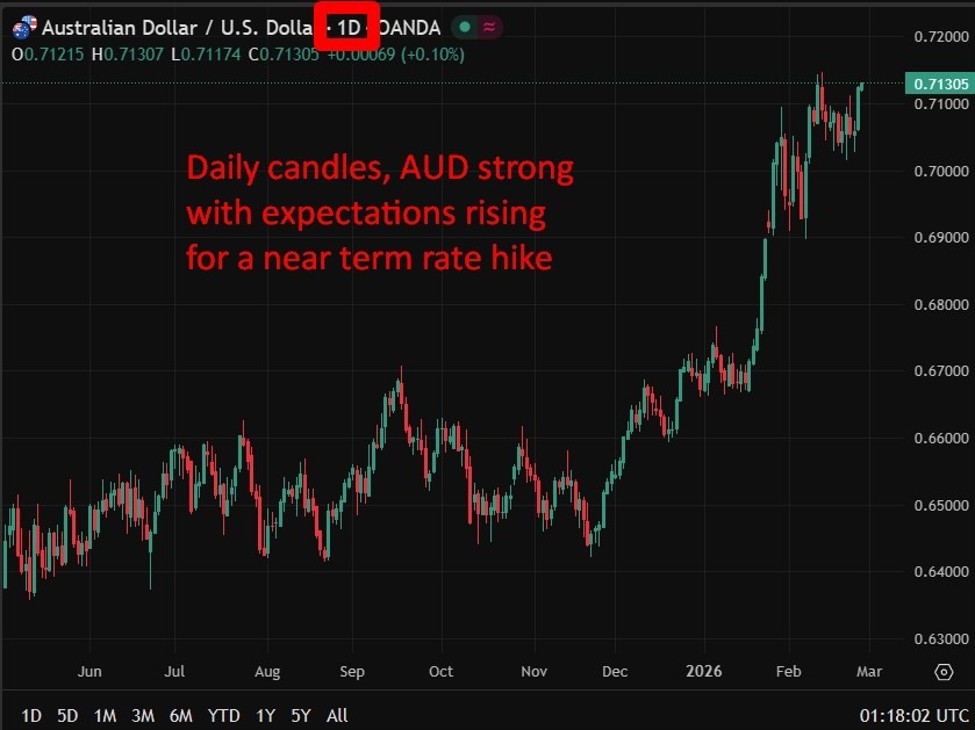
Australia Q4 capex beats expectations as renewable investment lifts outlook
Australian business investment edges higher as renewables drive capex upgrade.Summary:Q4 private capex +0.4% q/q (0% exp), prior +6.4 (data post here)Annual growth accelerated to +7.8% y/y.Buildings & structures +2.3%; equipment -1.7%.Non-mining investment at record high in real terms.2025/26 capex estimate lifted to A$199.3bn (+4.3% revision).First 2026/27 estimate A$158.4bn (~A$160bn pipeline).Strength concentrated in renewables and data centres.Australian private capital expenditure edged higher in the December quarter, delivering a modest upside surprise and reinforcing the resilience of business investment heading into 2026.Data from the Australian Bureau of Statistics showed capex rose 0.4% q/q in Q4 2025, beating expectations for a flat outcome following a sharp 6.4% surge in Q3. Annual growth lifted to 7.8%, with total quarterly spending reaching A$49.3bn, the strongest level since early 2015.The composition of spending was constructive. Investment in buildings and structures rose 2.3%, supported by strength in renewable energy projects, including battery, wind and solar developments. In contrast, plant and machinery investment fell 1.7%, retracing part of the prior quarter’s data-centre-driven surge. Despite the pullback, equipment spending remains up 9.2% across the second half of 2025.Importantly, non-mining investment has now reached a record high in real terms, a positive signal not only for Q4 GDP but also for Australia’s medium-term productivity outlook.Forward indicators were encouraging. Firms upgraded their expected spending for 2025/26 to A$199.3bn, a 4.3% increase on the previous estimate of A$191.3bn. The first estimate for 2026/27 came in at A$158.4bn, suggesting roughly A$160bn in the pipeline.The combination of renewable infrastructure expansion and ongoing digital investment underscores a structural shift in capital allocation across the economy. While quarterly volatility remains evident, the broader trend in private investment appears firm.For policymakers, the data point to sustained domestic demand momentum even as broader economic growth moderates. This article was written by Eamonn Sheridan at investinglive.com. 🔗 Source 💡 DMK Insight Australian business investment is showing resilience, and here’s why that matters for traders: The latest data reveals a 0.4% quarter-on-quarter increase in private capex, despite expectations of stagnation. This uptick, alongside a robust annual growth rate of 7.8%, indicates a strong underlying economic momentum, particularly in the renewables sector. Non-mining investment hitting record highs suggests a shift in capital allocation that could influence various sectors, including construction and technology. Traders should keep an eye on the implications for the Australian dollar and related commodities, as increased investment typically signals confidence in economic stability. However, the decline in equipment investment by 1.7% raises questions about potential weaknesses in operational capacity. This could lead to volatility in sectors reliant on heavy machinery and technology. As we look ahead, the revised capex estimates for 2025/26 at A$199.3 billion and 2026/27 at A$158.4 billion should be monitored closely, as they may impact market sentiment and investment flows. Watch for how these figures influence the Australian dollar against major currencies, particularly if the trend continues into the next quarter. 📮 Takeaway Keep an eye on the Australian dollar’s performance as business investment trends could signal shifts in market sentiment, especially with capex estimates rising.
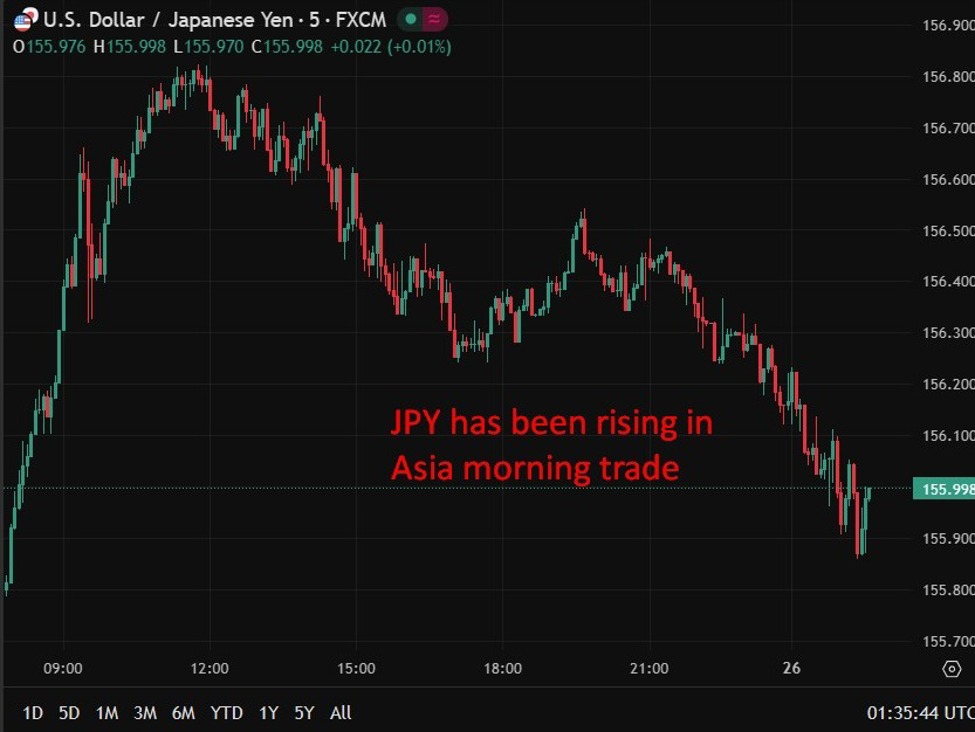
BoJ’s Takata says Japan is near 2% target, backs further gradual rate hikes
Takata says Japan is near 2% inflation “mission accomplished,” backing further gradual BoJ normalisation.—In summary, BoJ Policy Board member Hajime Takata argues Japan is close to meeting the 2% price-stability goal, with the deflationary “norm” largely broken. He sees the global backdrop shifting in 2026 toward stronger growth as monetary and fiscal settings turn more expansionary alongside an AI-investment boom. On tariffs: he says fears of Japan sliding back toward deflation have faded, with limited evidence so far of major damage to capex, exports, profits or FX. Policy: the BoJ lifted the policy rate to ~0.75% in Dec-2025; Takata says real rates remain deeply negative and conditions accommodative. He favours another “gear shift,” and notes he proposed raising the policy rate to 1.0% at the Jan-2026 meeting. He flags the neutral-rate debate as uncertain (“rainbow” / “mountain” analogy) and warns Japan could fall behind the curve if global hikes resume. Balance-sheet exit focus: he stresses JGB-market normalisation and lays out the ongoing reduction path for BoJ JGB purchases—Bank of Japan Policy Board member Hajime Takata struck a more assertive tone on Japan’s inflation regime shift, arguing the economy is now “almost” at the Bank’s 2% price-stability destination and that the policy debate should increasingly assume that achievement. Takata frames 2026 as a global “shifting phase” in which recovery momentum strengthens as economies lean simultaneously on easier monetary and fiscal settings, with the added impulse from heavy AI-related investment. He notes the IMF’s January 2026 WEO update revised global growth higher relative to the tariff-shock downgrade incorporated in April 2025, and he sees policy synchronisation as a powerful cyclical force, similar in direction, if not circumstances, to 2020’s global stimulus mix. On Japan, he argues the expected drag from U.S. reciprocal tariffs announced in April 2025 has so far proved smaller than feared. He lists four channels he has monitored; capex weakness from uncertainty, export softness via a global slowdown, profit compression undermining wage momentum, and yen appreciation tightening financial conditions, and concludes the risk of Japan reverting to deflation has diminished. That conclusion supports a call for continued normalisation. Takata points to the BoJ’s December 2025 rate increase to around 0.75%, but stresses real short-term rates remain “significantly negative,” keeping overall conditions accommodative. He also reveals he proposed lifting the policy rate to 1.0% at the January 2026 meeting, arguing the wage/price “norm” has been dispelled and headline inflation dynamics now matter more than in the deflation era. Finally, he highlights the exit mechanics: a steady reduction in JGB purchases and vigilance around term premia and market functioning as supply to the market rises and investor demand patterns shift, especially at the super-long end. This article was written by Eamonn Sheridan at investinglive.com. 🔗 Source 💡 DMK Insight Japan’s inflation nearing 2% is a game-changer for traders: it signals a shift in BoJ policy. With Takata’s comments, the market’s been buzzing about the potential for the Bank of Japan to normalize its ultra-loose monetary policy. If inflation holds, we could see interest rates rise, impacting the yen and related assets. Traders should keep an eye on USD/JPY; a break above recent resistance levels could trigger a stronger bullish trend. Conversely, if inflation falters, expect volatility as traders reassess their positions. Here’s the kicker: while mainstream coverage focuses on the inflation target, the real story is the potential ripple effects on global markets. A stronger yen could pressure commodities priced in dollars, like oil and gold. Watch for any shifts in the BoJ’s tone in upcoming meetings, as that could provide critical clues for positioning in both forex and equities. The next few months will be pivotal, so stay alert for data releases and central bank communications. 📮 Takeaway Monitor USD/JPY closely; a breakout above resistance could signal a bullish trend as BoJ normalization gains traction.