
 Bitcoin
  Ethereum
  Tether
  XRP
XRP  BNB
BNB  USDC
USDC  Solana
  TRON
TRON  Lido Staked Ether
  Figure Heloc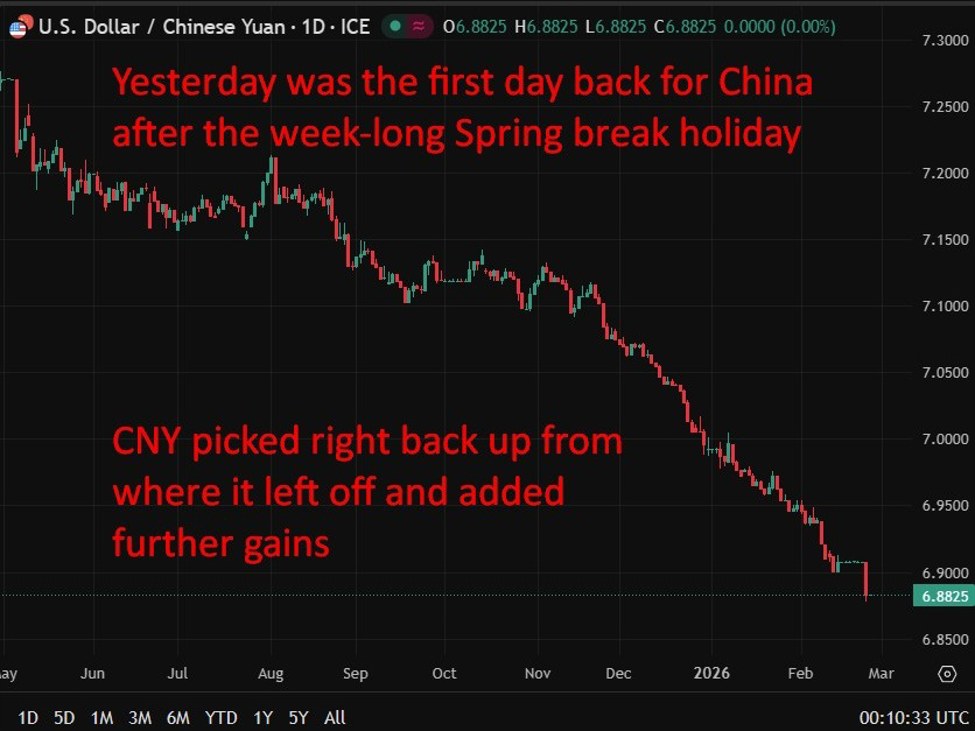
The People’s Bank of China is due to set the daily USD/CNY reference rate at around 0115 GMT (2115 US Eastern time), a fixing that remains one of the most closely watched signals in Asian foreign exchange markets. China operates a managed floating exchange rate system, under which the renminbi (yuan) is allowed to trade within a prescribed band around a central reference rate, or midpoint, set each trading day by the PBOC. The current trading band permits the currency to move plus or minus 2% from the official midpoint during onshore trading hours. Each morning, the PBOC determines the midpoint based on a range of inputs. These include the previous day’s closing price, movements in major currencies, particularly the US dollar, broader international FX conditions, and domestic economic considerations such as capital flows, growth momentum and financial stability objectives. The midpoint is not a purely mechanical calculation, allowing policymakers discretion to guide market expectations. Once the midpoint is announced, onshore USD/CNY is free to trade within the allowable band. If market pressures push the yuan toward either edge of that range, the central bank may step in to smooth volatility. Intervention can take the form of direct buying or selling of yuan, adjustments to liquidity conditions, or guidance through state-owned banks. As a result, the daily fixing is often interpreted as a policy signal rather than just a technical reference point. A stronger-than-expected CNY midpoint is typically read as a sign the PBOC is leaning against depreciation pressure, while a weaker fixing for the CNY can indicate tolerance for a softer currency, often in response to dollar strength or domestic economic headwinds.In periods of heightened global volatility, such as shifts in US rate expectations, trade tensions or capital flow pressures, the fixing takes on added significance. For investors, it provides insight into Beijing’s currency priorities, balancing competitiveness, capital stability and financial market confidence. This article was written by Eamonn Sheridan at investinglive.com. 🔗 Source 💡 DMK Insight The upcoming USD/CNY reference rate fixing is crucial for traders, especially given the current volatility in global markets. As the People’s Bank of China sets this rate, it can significantly influence not just the yuan but also broader forex sentiment. A stronger yuan could signal confidence in China’s economic recovery, while a weaker fix might indicate ongoing concerns about growth. Traders should be on high alert for any deviations from expectations, as these can lead to sharp movements in related currencies like the AUD and NZD, which are often correlated with Chinese economic performance. Watch for the fixing around 0115 GMT; any surprises could trigger immediate trading opportunities or risks, particularly for those holding positions in Asian currencies or commodities tied to China. Keep an eye on the 7.00 level for USD/CNY; a breach could set off a wave of selling or buying pressure depending on the direction. The real story is how this rate impacts market psychology in the coming days, especially with other central banks also making moves. 📮 Takeaway Watch the USD/CNY fixing closely at 0115 GMT; deviations from expectations could lead to significant volatility in Asian forex markets.

Australian January CPI 3.8% y/y (expected 3.7%, prior 3.8%)
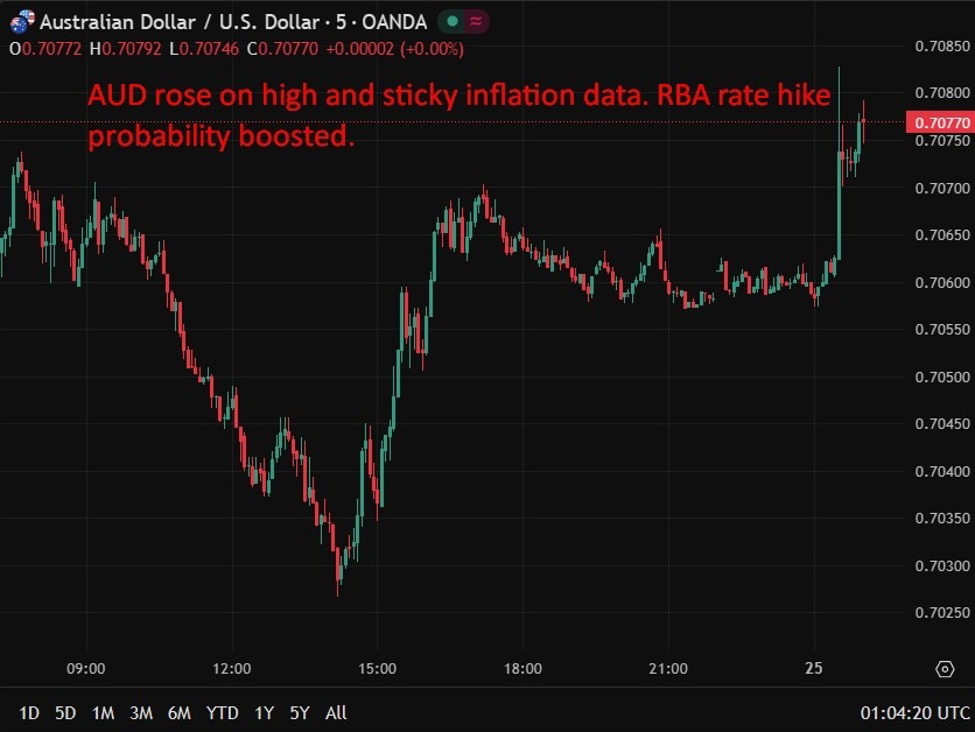
This is just a post for data, I’ll have details and analysis posted separately. Here we go, added:Australia CPI beats estimates, lifting RBA hike odds and boosting Aussie dollarBackground:Australia January CPI preview: core inflation steady, electricity lifts headline This article was written by Eamonn Sheridan at investinglive.com. 🔗 Source 💡 DMK Insight Australia’s CPI beating estimates is a game changer for traders focused on the Aussie dollar. With the RBA likely to hike rates sooner than expected, this could lead to a stronger AUD against major pairs. Traders should watch for a potential breakout above recent resistance levels, especially if the RBA signals a more aggressive stance in upcoming meetings. The immediate impact could ripple through commodity markets, particularly those tied to Australian exports like gold and iron ore. Keep an eye on the daily charts for the AUD/USD; a sustained move above key resistance could trigger further buying interest. But remember, if inflation pressures ease unexpectedly in the coming months, we might see a quick reversal, so stay nimble and monitor economic indicators closely. 📮 Takeaway Watch for AUD/USD to break above recent resistance levels as RBA rate hike odds increase; monitor inflation data closely for potential reversals.
Australia CPI beats estimates, lifting RBA hike odds and boosting Aussie dollar
Firm January inflation keeps the RBA on a tightening footing, lifting May hike expectations and supporting the Australian dollar.Summary:Headline CPI 0.4% m/m; 3.8% y/yTrimmed mean 3.4% y/y, above forecastsGoods inflation firm; services still elevatedHousing major contributorMay hike odds increasedSeparately, construction data weakAustralia’s January inflation data came in on the firm side of expectations, reinforcing the case for further tightening from the Reserve Bank of Australia and lifting the Australian dollar.Figures from the Australian Bureau of Statistics showed monthly CPI rose 0.4% in January, easing from December’s 1.0% surge but above the 0.3% forecast. The annual pace held at 3.8%, slightly above expectations of 3.7%. More importantly for policymakers, core measures accelerated.The trimmed mean rose 0.3% in the month, taking the annual rate to 3.4% from 3.3%, ahead of consensus. The weighted median measure also increased 0.3% month-on-month, leaving the annual pace at 3.6%. At roughly a 3.5–3.6% annualised rate, underlying inflation remains well above the RBA’s 2–3% target band.Price pressures were broad. Housing costs climbed 6.8% year-on-year, food and non-alcoholic beverages rose 3.1%, while recreation and culture increased 3.7%. Goods inflation accelerated to 3.8% annually, while services inflation eased slightly but remained elevated at 3.9%. Excluding volatile items and holiday travel, domestic components such as rents and new dwelling costs showed ongoing strength.Markets interpreted the data as strengthening the case for another near-term hike, with rate probabilities rising for May. Having already lifted rates this month in response to building price momentum late last year, the RBA faces little evidence of a meaningful slowdown in underlying inflation. The monthly data, while more volatile than quarterly prints, add to the sense that price pressures remain persistent.The Australian dollar firmed following the release as traders priced in a higher terminal rate outlook.Separately, fourth-quarter construction work done disappointed, falling 0.1% quarter-on-quarter against expectations for a solid rise. The weak construction figure may weigh modestly on GDP growth, but for now inflation dynamics appear to be dominating the policy narrative.Overall, the data suggest inflation remains sticky, keeping the RBA on a tightening path despite pockets of softness in activity.–RBA 2026 dates. March is the next opportunity for a rate hike, and with such data, why not? Still, the RBA tells us they are wiaiting on quarterly inflation data as confirmation. They are a timid bunch. This article was written by Eamonn Sheridan at investinglive.com. 🔗 Source 💡 DMK Insight January’s inflation data is pushing the RBA closer to a May rate hike, and here’s why that matters: With headline CPI at 0.4% month-over-month and 3.8% year-over-year, the RBA’s tightening stance is solidified. The trimmed mean inflation at 3.4% also exceeds forecasts, indicating persistent inflationary pressures, particularly in goods. This could lead to increased expectations for a rate hike in May, which would likely support the Australian dollar against its peers. Traders should keep an eye on the AUD/USD pair, especially if it approaches key resistance levels. However, the construction data showing weakness could offset some of the bullish sentiment. If the RBA perceives that the economy is slowing, they might hesitate to raise rates aggressively. So, while the immediate outlook favors a rate hike, the broader economic context could introduce volatility. Watch for any shifts in construction data or further inflation reports leading up to the May meeting, as these will be crucial for gauging the RBA’s next steps. 📮 Takeaway Monitor the AUD/USD pair closely; a May rate hike could push it higher, especially if inflation remains firm.
PBOC sets USD/ CNY mid-point today at 6.9321 (vs. estimate at 6.8824)
The PBOC allows the yuan to fluctuate within a +/- 2% range, around this reference rate. PBOC injects 409.5bn yuan via 7-day reverse repos at 1.4% in open market operations today.more to come This article was written by Eamonn Sheridan at investinglive.com. 🔗 Source 💡 DMK Insight The PBOC’s recent injection of 409.5bn yuan signals a proactive stance to stabilize the yuan amidst market volatility. This move, allowing the yuan to fluctuate within a +/- 2% range, is crucial for traders to monitor. It indicates the central bank’s intent to manage liquidity and influence currency strength, especially as global economic pressures mount. For forex traders, this could mean increased volatility in yuan pairs, particularly against the USD. Watch for any shifts in the yuan’s trading range, as a breach of this +/- 2% could trigger significant market reactions. Additionally, the 1.4% rate on reverse repos suggests the PBOC is balancing between stimulating growth and controlling inflation, a delicate act that could impact broader market sentiment. Keep an eye on upcoming economic data releases that could further influence the yuan’s direction. If the yuan weakens beyond the set range, expect potential interventions from the PBOC, which could create trading opportunities or risks depending on your positions. 📮 Takeaway Watch the yuan closely; a breach of the +/- 2% range could lead to significant volatility in forex markets, especially against the USD.
Japan services inflation holds at 2.6%, keeping BOJ hike bias intact
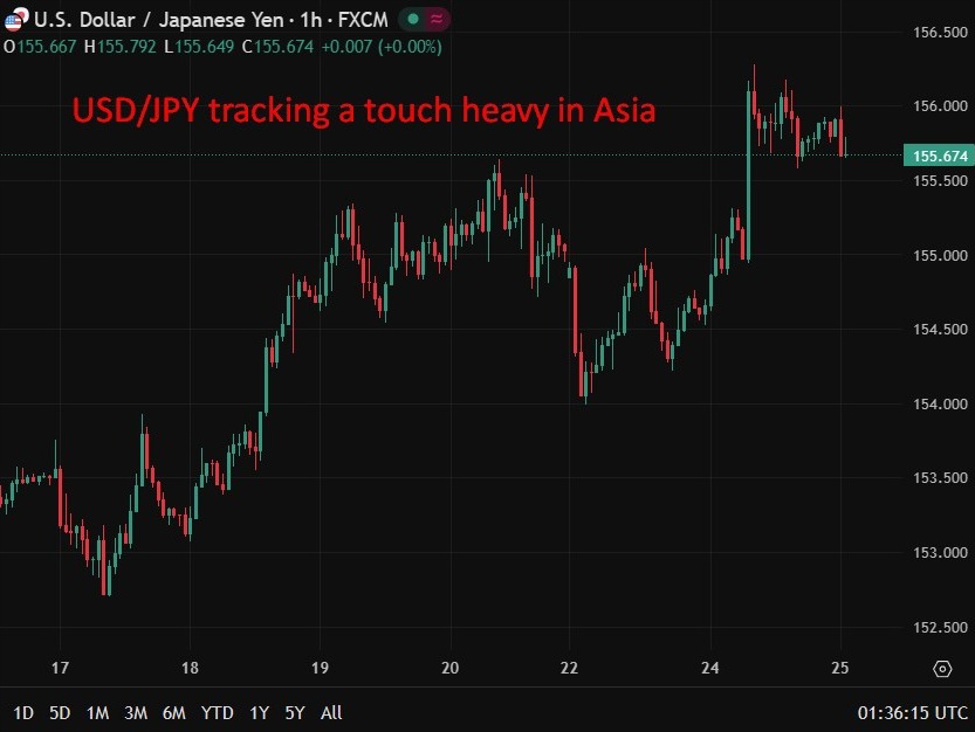
Japan’s services inflation stayed sticky at 2.6%, reinforcing wage pass-through risks and keeping the BOJ on a tightening bias.Summary:Corporate services prices +2.6% y/y in January, unchanged from December’s 2.6%Construction and temp staffing drove increasesGauge supports view of wage-driven inflation persistenceBOJ ended stimulus in 2024Policy rate lifted to 0.75% in DecemberNext hike timing hinges on wage pass-throughJapan’s services-sector inflation held steady in January, reinforcing the Bank of Japan’s view that wage-driven cost pressures are still filtering through the economy and keeping the door open to further rate hikes.The corporate services price index (often viewed as a leading gauge of services inflation) rose 2.6% year-on-year in January, unchanged from December, according to Bank of Japan data. The index tracks the prices firms charge each other for services, offering a timely read on whether higher labour costs are being passed along through service supply chains. The January increase was led by higher charges for construction-related services and temporary staffing, both areas that tend to be sensitive to labour-market tightness and wage trends. With Japan still facing capacity constraints in parts of the workforce, the steady print suggests price-setting behaviour remains consistent rather than easing quickly.The data lands in a policy environment that has shifted meaningfully since the BOJ exited its decade-long stimulus framework in 2024. The central bank lifted short-term interest rates to 0.75% in December as it judged Japan was moving toward durably achieving its 2% inflation goal. Consumer inflation has now been above 2% for nearly four years, and the BOJ has signalled it is prepared to keep tightening if inflation continues rising in a steady way alongside sustained wage gains. Governor Kazuo Ueda has emphasised close monitoring of whether companies continue passing on higher labour costs, as that transmission mechanism is central to deciding the timing of the next move. A steady services-price signal at 2.6% supports the narrative that wage pressures remain present, even if the pace is not accelerating, and will keep markets sensitive to upcoming wage and price indicators.There may be a hiccup in the rate hike path though:The Japanese Yen sinks as PM Takaichi signals opposition to further BoJ rate hikes This article was written by Eamonn Sheridan at investinglive.com. 🔗 Source 💡 DMK Insight Japan’s services inflation holding steady at 2.6% is a big deal for traders right now. This persistent inflation signals that the Bank of Japan (BOJ) might be forced to tighten monetary policy further, especially with wage pressures building from sectors like construction and temp staffing. For traders, this could mean adjusting positions in JPY pairs, as a tighter BOJ stance could strengthen the yen against other currencies. Keep an eye on the USD/JPY; if the BOJ raises rates again, we might see a significant shift in this pair. But here’s the flip side: if inflation starts to cool unexpectedly, it could lead to a reversal in BOJ policy, which would impact JPY negatively. So, watch for any signs of wage growth or shifts in consumer sentiment that could indicate a change in inflation trends. The next BOJ meeting will be crucial, and traders should monitor any economic data releases leading up to it for clues on future rate hikes. 📮 Takeaway Watch the USD/JPY closely; a BOJ rate hike could strengthen the yen, while cooling inflation might reverse that trend.

Advance excerpts of Trump's speech show its lackluster
Generic and non specific comments on investment and manufacturing (manufacturing jobs are lower so far under Trump!).He does mention lower drug prices.Whole stack of stuff not of relevance to markets. Excerpts provided by WSJ (gated). His central economic policy has collapsed. This article was written by Eamonn Sheridan at investinglive.com. 🔗 Source 💡 DMK Insight The current economic commentary is largely disconnected from market realities, and here’s why that matters: traders thrive on actionable insights, not vague statements. With manufacturing jobs reportedly lower, the implications for economic growth and consumer spending could be significant. If the trend continues, we might see a shift in market sentiment that could impact sectors like industrials and consumer discretionary. Lower drug prices might seem beneficial, but they could also signal a broader trend of deflationary pressures that traders need to watch. If inflation expectations wane, it could lead to a risk-off environment, impacting equities and possibly pushing investors towards safe havens like gold or US Treasuries. Keep an eye on key economic indicators like the PMI and consumer confidence metrics in the coming weeks—these will provide clearer signals on whether the market is reacting to these economic shifts or simply ignoring them. In a nutshell, the real story is how these economic policies could influence market dynamics. Traders should be prepared for volatility as sentiment shifts, especially if manufacturing data continues to disappoint. 📮 Takeaway Watch for upcoming PMI and consumer confidence reports; if they trend lower, expect increased volatility in equities and potential flight to safe havens.
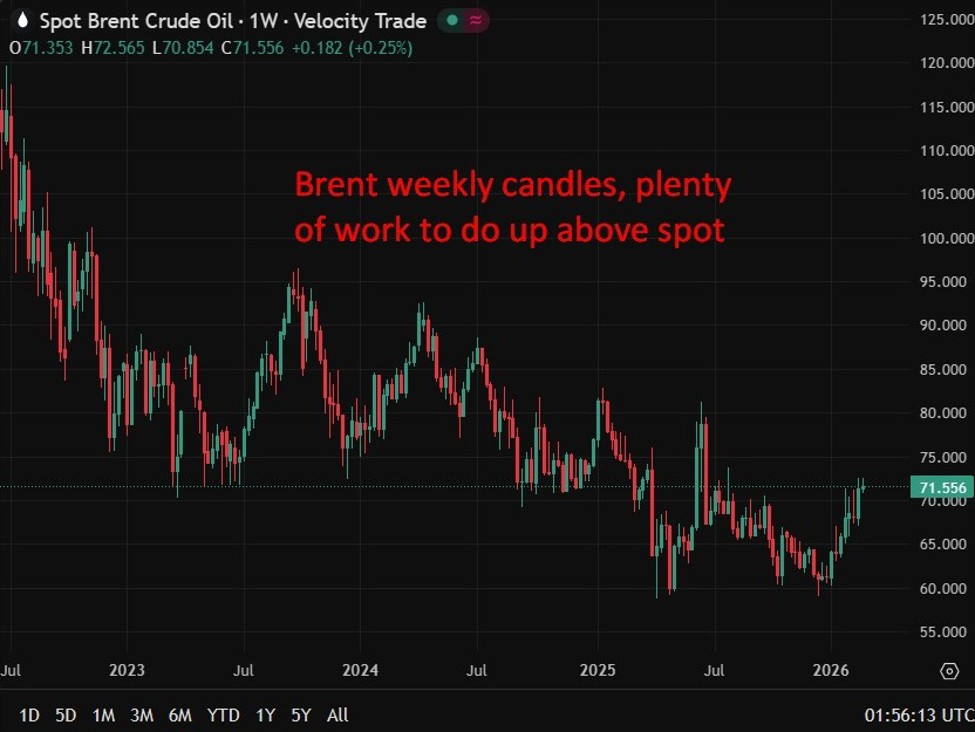
Oil holds near seven-month highs ahead of US-Iran Geneva talks, EIA data awaited
Oil is pinned near seven-month highs as traders weigh US-Iran diplomacy against conflict risk and a potentially heavy US crude stock build.Summary:Brent/WTI hover near seven-month highsUS-Iran talks slated Thursday in GenevaConflict risk sustains a risk premiumIran remains key OPEC producerAPI shows big crude buildGasoline/distillates reportedly declinedEIA data due WednesdayOil prices hovered near seven-month highs on Wednesday as traders balanced the risk of a US-Iran military escalation against hopes that renewed diplomacy could ease supply fears. Brent and WTI were both up around 0.6% on the session, holding close to recent peaks set late last week for Brent and earlier this week for WTI. The market’s resilience reflects an elevated geopolitical risk premium. The United States has been positioning military forces in the Middle East to pressure Iran into negotiations over its nuclear and ballistic missile programs, keeping investors alert to a disruption scenario. Iran is the third-largest crude producer in OPEC, and any broader conflict risked spillovers across a region that accounts for a large share of global oil supply. Attention now turns to a third round of talks scheduled for Thursday in Geneva, where US envoys Steve Witkoff and Jared Kushner are expected to meet an Iranian delegation. Iranian Foreign Minister Abbas Araqchi signalled a deal could be achievable if diplomacy remains the priority, but uncertainty persists over whether Iran will meet the US “zero enrichment” red line. Geopolitical nerves have also been sharpened by reports that Iran has accelerated discussions with China about acquiring anti-ship cruise missiles, which analysts say could enhance Iran’s ability to threaten US naval forces operating near its coastline. Against that backdrop, fundamentals are sending a mixed signal. Market participants are wary that global supply may be running ahead of demand, and overnight US inventory data from the American Petroleum Institute showed a large crude build of 11.43 million barrels for the week ended Feb. 20, even as gasoline and distillate stocks fell. Official EIA data is due later Wednesday and could influence near-term price direction. This article was written by Eamonn Sheridan at investinglive.com. 🔗 Source 💡 DMK Insight Oil’s near seven-month highs are a double-edged sword for traders right now. With US-Iran talks scheduled for Thursday, the market’s on edge, balancing potential diplomatic breakthroughs against the backdrop of rising conflict risks. This uncertainty is keeping a risk premium in play, which could lead to volatility in both oil and related assets like energy stocks. If the EIA data due Wednesday confirms a significant crude stock build, we might see a pullback in prices, especially if it contradicts the current bullish sentiment. Traders should keep an eye on Brent and WTI levels; a break below recent support could signal a shift in momentum. On the flip side, if the talks yield positive outcomes, we could see a surge in oil prices, impacting everything from inflation expectations to broader market sentiment. Watch for how institutional players react to these developments, as their positioning could influence price action significantly in the coming days. 📮 Takeaway Monitor the EIA data on Wednesday for potential shifts in oil prices; a significant build could trigger a pullback below key support levels.
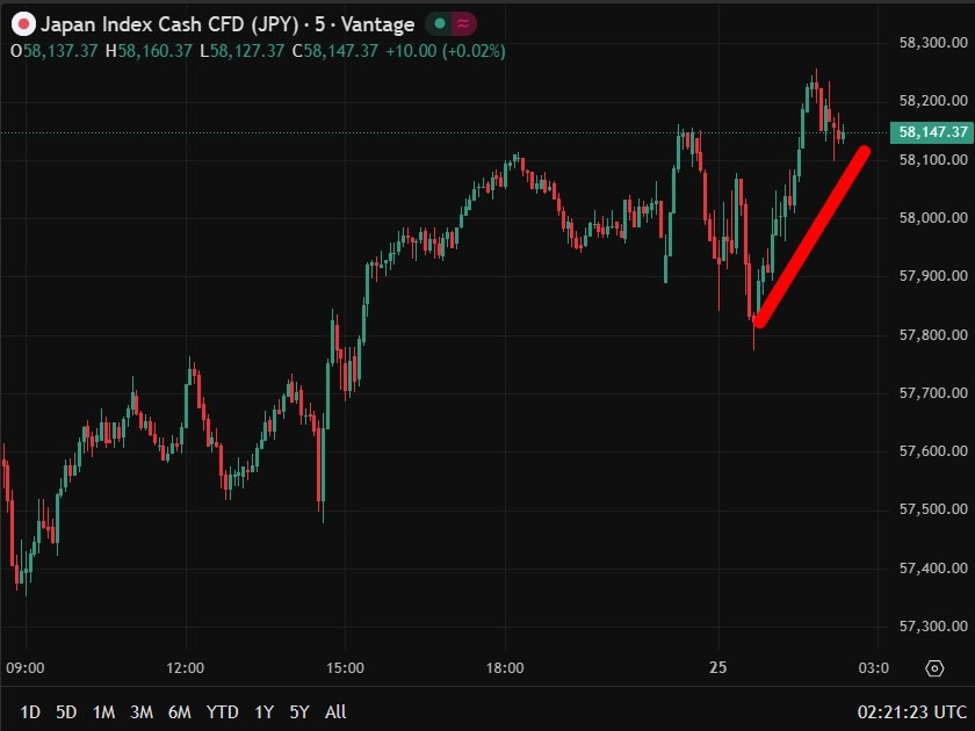
Nikkei hits record high as AI fears fade and yen weakens
Summary:Japan’s Nikkei 225 climbed to a new record high on Wednesday, buoyed by a rebound in technology shares as concerns about artificial intelligence disruption eased and the yen weakened.The benchmark Nikkei rose 1.4% in early trade to 58,100 and above, surpassing its previous peak set earlier this month following Prime Minister Sanae Takaichi’s election victory. The broader Topix index advanced 0.3% to 3,800+ reflecting a more measured gain across the wider market.Technology and semiconductor-related stocks were the primary drivers of the move. Improved sentiment toward AI-linked names in the United States spilled over into Tokyo trading, encouraging investors to rotate back into previously pressured software and chip shares. The easing of global AI-related jitters appeared to support broader risk appetite, particularly in high-beta sectors.Shares of Nomura Research Institute surged as much as 9% before paring gains to trade around 6% higher after announcing new support services tied to Anthropic’s Claude AI platform and plans for deeper collaboration with the US-based lab. The development underscored the ongoing integration of generative AI into Japan’s corporate ecosystem.Currency moves also provided support. The Japanese yen weakened against the dollar early during the session, offering a tailwind to exporters and index heavyweights, though it later retraced part of the decline.Separately, a report suggested Prime Minister Sanae Takaichi had conveyed reservations about further rate hikes during discussions with Bank of Japan Governor Kazuo Ueda. Any perception of a slower pace of monetary tightening would likely be welcomed by equity investors, particularly given the market’s strong run.Market breadth was moderately positive, with 120 gainers versus 105 decliners on the Nikkei.The move highlights the confluence of supportive global tech sentiment, currency dynamics and domestic policy signals underpinning Japan’s equity rally. —Meanwhile, Trump has begun his State of the Union address. Apparently its going to be two hours long and the excerpts I’ve seen don’t have much for markets at all:Advance excerpts of Trump’s speech show its lackluster This article was written by Eamonn Sheridan at investinglive.com. 🔗 Source 💡 DMK Insight Japan’s Nikkei 225 hitting a record high signals a shift in market sentiment, and here’s why that matters: The 1.4% rise to 58,100 indicates renewed confidence in tech stocks, especially as fears around AI disruption subside. This rebound could attract both retail and institutional investors looking for growth, particularly in sectors that benefit from a weaker yen. Traders should keep an eye on the correlation between the Nikkei and the USD/JPY exchange rate; a continued yen weakness could further boost Japanese exports, enhancing corporate earnings. However, it’s worth noting that this surge may also lead to profit-taking in the near term, especially if the market overextends. On the flip side, if global economic indicators shift negatively, we could see a quick reversal. Watch for key support levels around 57,500; a break below that could trigger selling pressure. Additionally, monitor upcoming earnings reports from major tech firms, as they could either validate this bullish trend or provide a reality check. Overall, the Nikkei’s momentum is something to ride, but be prepared for volatility as traders react to broader economic signals. 📮 Takeaway Watch the Nikkei 225 closely; a break below 57,500 could signal a reversal, while continued yen weakness may fuel further gains.
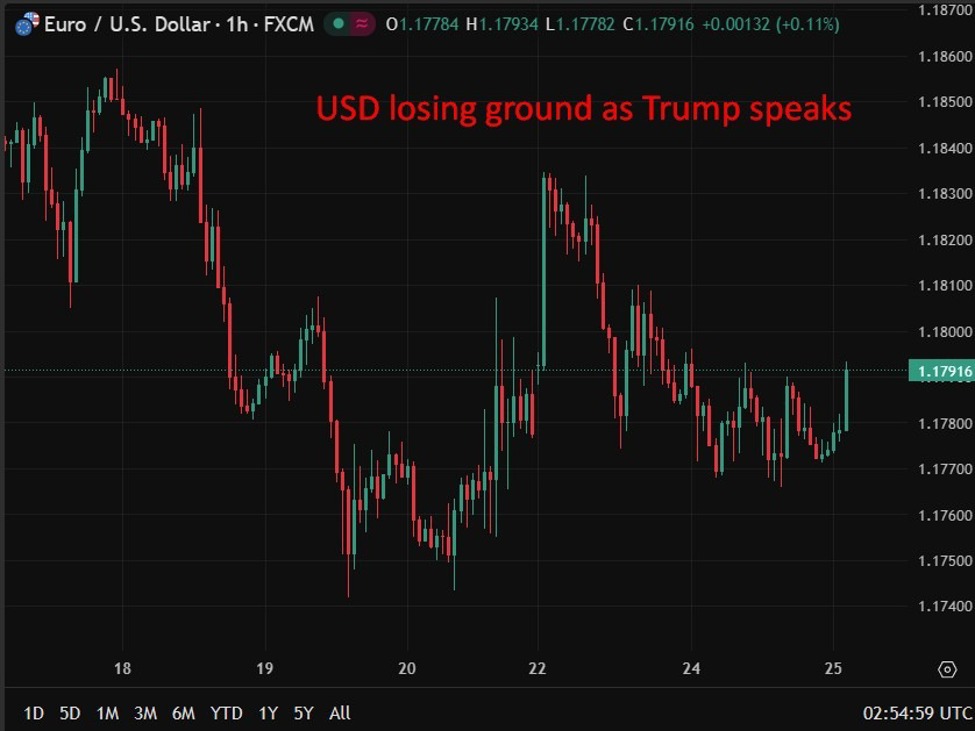
SOTU Trump: Says tariffs stay despite Supreme Court loss, pivots to new global levy
Trump is reframing the Supreme Court tariff loss as a detour, not a derailment, as his team shifts the broad tariff base to Section 122 while keeping key sector and China-related tariffs intact.Summary:Trump addressed tariffs during his SOTU addressSupreme Court ruled IEEPA doesn’t authorise tariffs (Feb 20, 2026) White House pivoted to temporary global tariffs under Section 122 Rate set at 10% for 150 days; administration working toward 15% Many other tariffs (Section 232/301) remain intact Economists question “balance-of-payments crisis” rationale, raising fresh legal risk Refunds and trade-deal durability remain live issues Trump says tariffs stay despite Supreme Court setback — what changed, what didn’tIn his State of the Union address, President Donald Trump called the Supreme Court’s decision against his tariff program “very unfortunate,” but argued tariffs will remain in place, most countries want to keep existing trade deals, and Congress won’t need to act.The backdrop is a major legal loss for the White House on February 20, 2026, when the US Supreme Court ruled that the International Emergency Economic Powers Act (IEEPA) does not authorise the president to impose tariffs. The ruling invalidated a broad swathe of the administration’s emergency-tariff framework and immediately raised questions about refunds, deal continuity and the legal durability of the wider tariff agenda. Crucially, the administration moved quickly to keep a tariff “floor” in place. Within hours of the ruling, Trump issued a new order imposing a temporary global tariff under Section 122 of the Trade Act of 1974 — initially set at 10% for 150 days, with the White House subsequently working to lift the rate to 15% (the statutory ceiling). Section 122 is rarely used and is framed around “serious” balance-of-payments concerns; economists and legal specialists have questioned whether current US conditions meet that test, raising the risk of further litigation. Trump’s claim that tariffs “remain in place” is also helped by the fact that many other tariffs are unaffected by the IEEPA ruling, including Section 232 sector/national-security tariffs and Section 301 trade-action tariffs. In parallel, the administration has indicated it can pursue additional tariff probes under other statutory authorities, supporting the view that the tariff regime is being re-routed rather than dismantled. On trade deals, US officials have signalled that counterparties have not moved to walk away, but governments are watching closely for how the legal reset affects enforcement and timelines. The next market focus is whether Section 122 tariffs are maintained beyond the 150-day window (where congressional involvement can become relevant), and whether refund claims grow as court challenges evolve. This article was written by Eamonn Sheridan at investinglive.com. 🔗 Source 💡 DMK Insight Trump’s pivot on tariffs is a strategic move that could impact market sentiment and trade dynamics. By framing the Supreme Court’s ruling as a mere detour, he’s signaling that the administration remains committed to its protectionist stance, particularly regarding China. This could lead to increased volatility in sectors heavily reliant on imports, as traders react to potential shifts in tariff structures. For traders, this means keeping a close eye on sectors like technology and manufacturing, which are often sensitive to tariff changes. The ongoing uncertainty could create short-term trading opportunities, especially around earnings reports or economic indicators that reflect the impact of these tariffs. Watch for any announcements from the White House regarding specific tariffs or trade negotiations, as these could serve as catalysts for price movements in related stocks or commodities. Additionally, monitor the broader market response—if tariffs are perceived as a threat to economic growth, we might see a risk-off sentiment that affects equities across the board. 📮 Takeaway Keep an eye on tech and manufacturing stocks as tariff discussions evolve; any new announcements could trigger significant market moves.
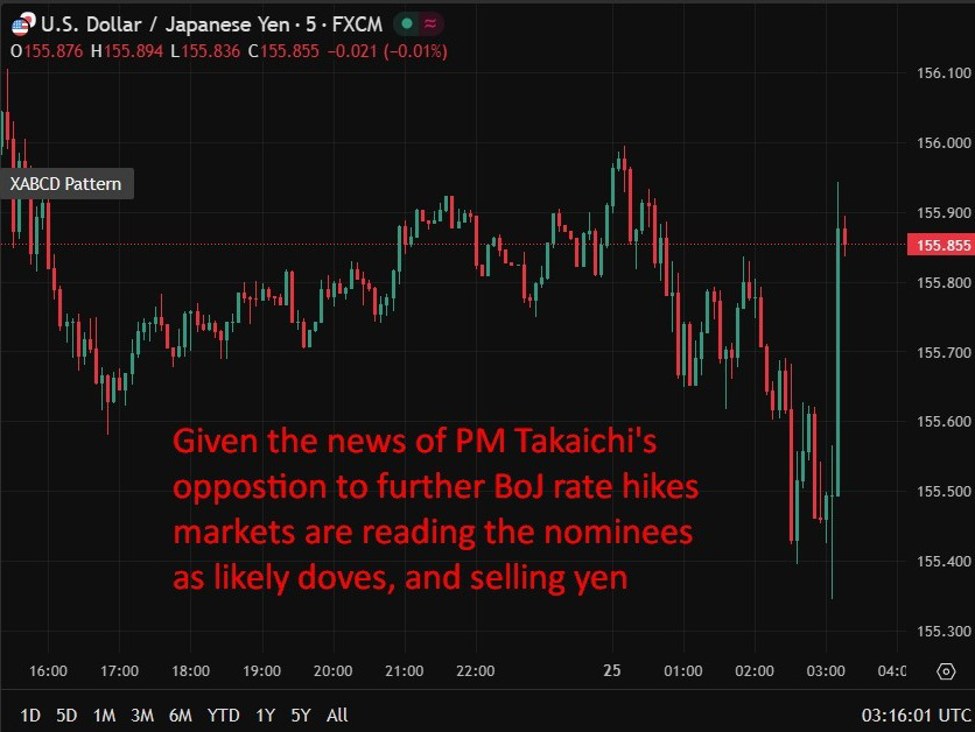
Japan govmt nominates new BOJ board members as rate-hike path comes into focus
Japan’s latest BOJ nominations highlight how board composition could shape the pace of future rate hikes under Takaichi’s administration.Summary:Government nominates Toichiro Asada, Ayano Sato to the Bank of Japan monetary policy boardBoth appointments subject to parliamentary approvalChanges come amid gradual BOJ tighteningBoard balance key to future rate pathMarket wary of overt reflationist tiltMore vacancies due next yearJapan’s government has nominated Toichiro Asada and Ayano Sato as new board members of the Bank of Japan, in appointments that could influence the pace and tone of future interest rate decisions.Official documents show Asada, a professor emeritus at Chuo University, and Sato, a law professor at Aoyama Gakuin University, have been selected to fill two upcoming vacancies on the nine-member policy board. The nominations are expected to be submitted to parliament for approval shortly.The personnel changes come at a sensitive juncture for monetary policy. The BOJ has exited its long-running stimulus framework and raised rates to 0.75%, shifting toward a gradual tightening cycle as inflation holds above its 2% target. The board’s composition has increasingly tilted toward steady rate increases, but upcoming retirements give Prime Minister Sanae Takaichi scope to shape its future direction.One seat becomes vacant in March when Asahi Noguchi, often regarded as the board’s last prominent reflationist voice, steps down. Another opens in June with the retirement of Junko Nakagawa. Analysts had expected an academic to replace Noguchi and a female candidate to succeed Nakagawa, and the nominations appear broadly consistent with that pattern.Market participants are watching closely for signals about the administration’s tolerance for further rate hikes. Some observers had speculated that reflationist-leaning nominees could slow tightening, but others argue the government is unlikely to risk unsettling currency markets by appointing outspoken advocates of prolonged easing. With the yen sensitive to policy expectations, the administration may favour balance rather than confrontation.The appointments also provide an early glimpse into how Takaichi might approach two additional board vacancies next year, when more hawkish members are set to retire. Looking further ahead, she could eventually influence the selection of Governor Kazuo Ueda and his deputies when their terms expire in 2028.Ultimately, the new nominees’ individual policy leanings remain unclear. However, the reshuffle underscores how board composition, not just economic data, will shape the trajectory of Japan’s rate cycle.—Some background to this here:The Japanese Yen sinks as PM Takaichi signals opposition to further BoJ rate hikes This article was written by Eamonn Sheridan at investinglive.com. 🔗 Source 💡 DMK Insight Japan’s BOJ nominations could signal a shift in monetary policy direction, and here’s why that matters: With ADA currently at $0.27, the market’s reaction to these nominations could impact crypto assets, especially those sensitive to macroeconomic shifts. If the new board members lean towards aggressive rate hikes, it could strengthen the yen and create headwinds for risk assets, including cryptocurrencies. Traders should keep an eye on how these appointments influence market sentiment, particularly if the BOJ’s tightening accelerates. The balance of the board is crucial; a more hawkish stance could lead to increased volatility in both forex and crypto markets. But there’s a flip side—if the new members advocate for a more cautious approach, we might see a weaker yen, which could provide a short-term boost to crypto prices as investors seek alternatives. Watch for any statements from the BOJ regarding their future policy direction, as these could serve as key indicators for market movement. The next parliamentary session will be critical, so keep your eyes peeled for developments there. 📮 Takeaway Monitor the BOJ’s upcoming parliamentary session for hints on monetary policy shifts that could impact ADA and other risk assets.