
 Bitcoin
  Ethereum
  Tether
  XRP
XRP  BNB
BNB  USDC
USDC  Solana
  TRON
TRON  Lido Staked Ether
  Figure Heloc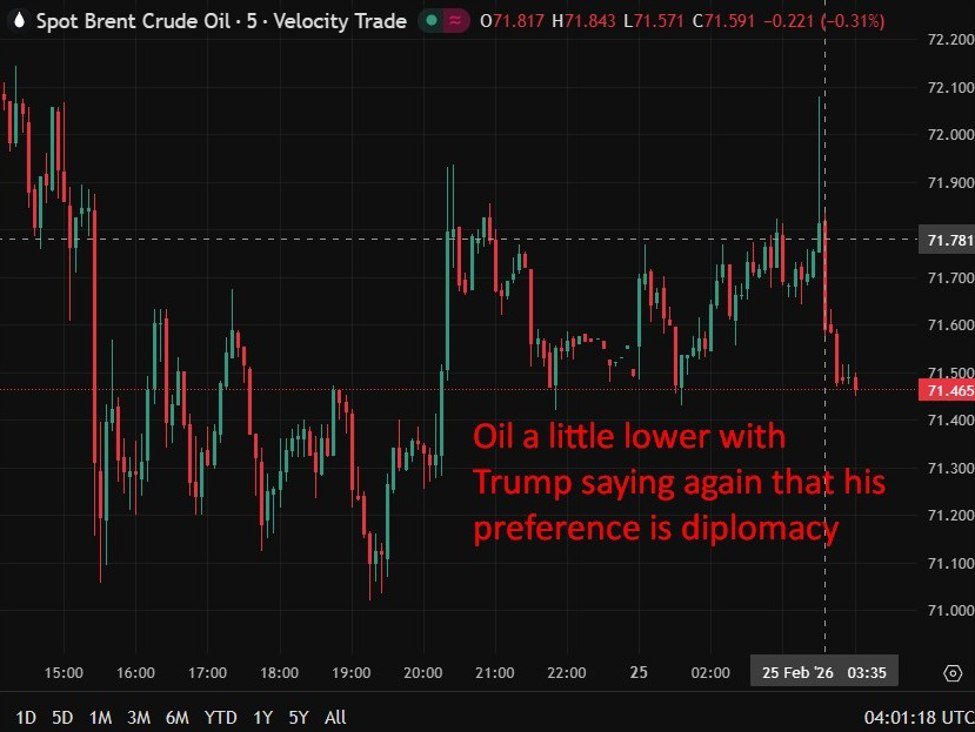
Trump warned Iran is advancing missile and nuclear ambitions despite negotiations, demanding a clear pledge against nuclear weapons in a record-length State of the Union.Summary:Trump accuses Iran of advancing missile capabilitiesClaims Tehran pursuing longer-range systemsSays negotiations ongoing but incompleteSays he prefers diplomacy towards a solutionSeeks explicit renunciation of nuclear weaponsUS forces positioned in regionSpeech sets new length recordPresident Donald Trump used his State of the Union address to accuse Iran of continuing to pursue missile and nuclear capabilities, despite prior US efforts aimed at curbing its weapons programs.Speaking before a joint session of Congress, Trump said Tehran had already developed missiles capable of threatening Europe and US military installations overseas, and was now working on systems that could potentially reach the American mainland. He argued that previous warnings had failed to deter Iran from reviving elements of its weapons development agenda.The president said the United States remains engaged in negotiations with Tehran, which is his preference, but indicated dissatisfaction with the current state of talks. He suggested that while diplomacy is ongoing, he has not yet received what he described as a clear and definitive assurance that Iran would permanently forgo nuclear weapons development, a commitment he characterised as his preferred outcome.Trump’s remarks come at a time of heightened tension in the Middle East, with US forces positioned in the region and diplomatic channels active but fragile. The administration has repeatedly signalled that while it prefers a negotiated solution, it retains other options should talks fail to produce results.The speech also marked a procedural milestone: Trump set a new record for the longest State of the Union address in modern history, underscoring the breadth of topics covered, including foreign policy, trade, domestic security and economic strategy.Markets and foreign-policy observers will now watch closely for any tangible shifts in US-Iran negotiations, particularly whether rhetoric hardens further or gives way to more defined diplomatic benchmarks. This article was written by Eamonn Sheridan at investinglive.com. 🔗 Source
investingLive Asia-Pacific FX news wrap: Nikkei record high, Australian CPI high & sticky
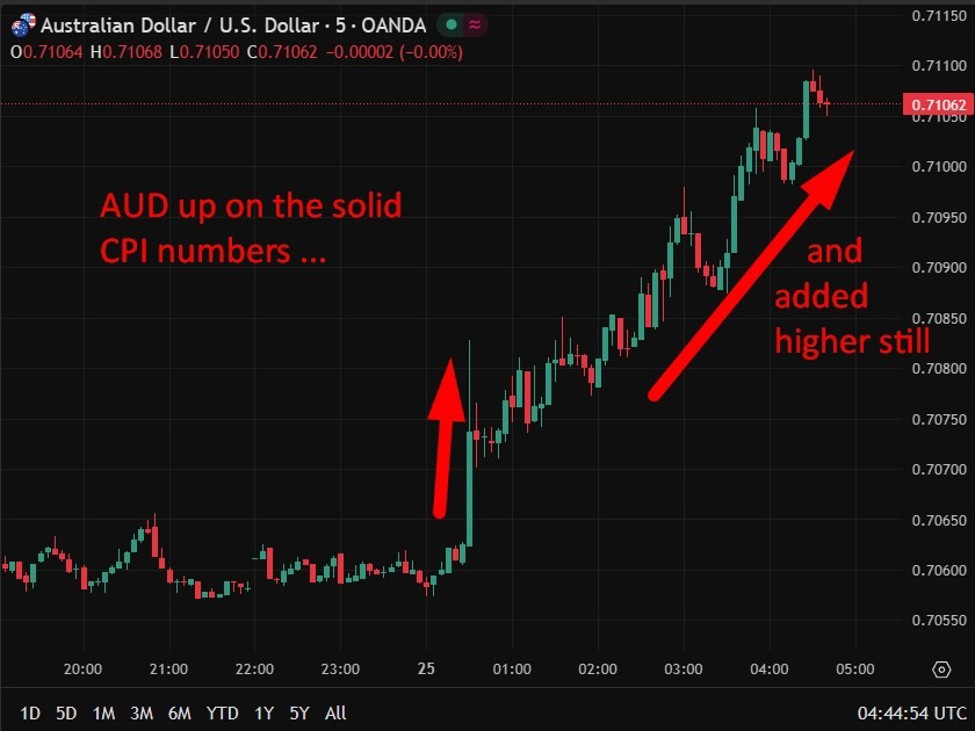
Trump says Iran advancing missile, nuclear programs despite negotiationsJapan govmt nominates new BOJ board members as rate-hike path comes into focusSOTU Trump: Says tariffs stay despite Supreme Court loss, pivots to new global levyNikkei hits record high as AI fears fade and yen weakensOil holds near seven-month highs ahead of US-Iran Geneva talks, EIA data awaitedAdvance excerpts of Trump’s speech show its lacklusterJapan services inflation holds at 2.6%, keeping BOJ hike bias intactPBOC sets USD/ CNY mid-point today at 6.9321 (vs. estimate at 6.8824)Australia CPI beats estimates, lifting RBA hike odds and boosting Aussie dollarAustralian January CPI 3.8% y/y (expected 3.7%, prior 3.8%)Bloomberg: Harvard study finds AI predicts only 71% of active-fund tradesJapan’s Nikkei seen surging to 60,750, extending historic record-breaking runGoldman Sachs: Japan rally has further to run after Takaichi victorySNB sees inflation rising despite possible negative prints, ready to intervene in FX (CHF)Private survey inventory shows a huge headline crude oil build, much larger than expectedIn brief:Australian January CPI firm; core measures accelerateMay RBA hike odds rise; quarterly CPI still keyAUD strengthens on rate expectationsNikkei hits fresh record on tech rebound, softer yenJapan nominates two new BOJ board membersYen gives back gains after nomination headlinesTrump delivers record-length State of the UnionTariffs to remain despite Supreme Court rulingIndian equities see renewed foreign inflowsIt was another active session across Asia-Pacific, driven by impactful data and policy headlines.From Australia, January inflation printed on the firm side of expectations, reinforcing the case for further tightening from the Reserve Bank of Australia and lifting the Australian dollar. Headline CPI held at 3.8% y/y (vs 3.7% expected), while core measures firmed. The trimmed mean rose 0.3% m/m, pushing the annual pace to 3.4% from 3.3%. The weighted median also printed 0.3% m/m, holding at 3.6% y/y. At roughly a 3.5–3.6% annualised rate, underlying inflation remains well above the RBA’s 2–3% target band.Goods inflation accelerated to 3.8% y/y, while services eased slightly but stayed elevated at 3.9%. Markets lifted the probability of another hike in May. That said, the next RBA meeting is March 16–17. However, officials have repeatedly stressed the importance of quarterly CPI, and with the next print due April 29, it suggests policymakers may wait until then for broader confirmation. The Australian dollar rose on the release and has extended gains.In Japan, the Nikkei 225 climbed to a fresh record high, supported by a rebound in tech shares as AI-disruption fears eased and the yen softened. Separately, the government nominated Toichiro Asada and Ayano Sato as new Bank of Japan board members. The appointments could influence the pace of future rate hikes. While the board has leaned toward gradual tightening, Prime Minister Sanae Takaichi’s stance on no further rate hikes has drawn attention. The nominees’ policy leanings remain unclear. The yen initially slipped on the news but the move lacked follow-through.In the US, President Trump delivered the longest State of the Union address on record. While much was not market-sensitive, he reiterated that tariffs will remain in place despite the Supreme Court ruling, with the administration pivoting to Section 122 authority. He also addressed Iran, saying diplomacy remains preferred despite ongoing missile and nuclear concerns. Oil is a touch lower on Trump reiterating his preference for a diplomatic solution.Elsewhere, foreign inflows into Indian equities are on track to exceed domestic institutional buying for the first time in 17 months, aided by improving earnings momentum and more attractive valuations. This article was written by Eamonn Sheridan at investinglive.com. 🔗 Source 💡 DMK Insight Geopolitical tensions are rising as Trump highlights Iran’s missile and nuclear advancements, which could impact oil prices and market sentiment. With oil holding near seven-month highs, traders should be wary of potential volatility in energy markets. The Nikkei’s record high suggests a risk-on sentiment, but a weakening yen could complicate matters for exporters. If tariffs are indeed maintained, as Trump suggests, it could lead to further strain on global trade relations, affecting forex pairs like USD/JPY. Keep an eye on how these geopolitical developments influence crude oil prices, especially if they trigger a supply-side reaction. The market’s reaction to these news items could create trading opportunities, particularly for those looking at energy stocks or commodities. Watch for oil prices to break above key resistance levels, as this could signal further upside. Also, monitor the BOJ’s decisions closely, as any shift in monetary policy could impact the yen’s strength and overall market dynamics. 📮 Takeaway Watch for oil prices to break key resistance levels while monitoring the BOJ’s policy shifts, as geopolitical tensions could lead to increased volatility.

FX option expiries for 25 February 10am New York cut
EUR/USD1.1900 (EUR 5.09 bn)1.1850 (EUR 2.19 bn)1.1800 (EUR 3.91 bn)1.1750 (EUR 1.82 bn)USD/JPY156.00 (US$ 2.92 bn)155.00 (US$ 1.80 bn)GBP/USD1.3550 (GBP 552.83 mn)1.3475 (GBP 448.12 mn)USD/CHF0.7790 (US$ 560.71 mn)0.7725 (US$ 787.67 mn)USD/CAD1.3650 (US$ 646.00 mn)AUD/USD0.7150 (AUD 1.45 bn)0.7100 (AUD 2.44 bn)0.7050 (AUD 1.17 bn)0.7000 (AUD 3.06 bn)NZD/USD0.5950 (NZD 358.26 mn)EUR/GBP0.8810 (EUR 404.08 mn)0.8625 (EUR 652.90 mn)WHAT ARE OPTION EXPIRIES?The FX option expiration price levels refer to the strike prices where option contracts are set to expire. These levels include both calls and puts.When you see “EUR/USD at 1.1600 for €4 billion” it means there is a total of €4 billion worth of options (calls + puts combined) that have a strike price of 1.1600 and are expiring at that specific time (the “New York Cut” at 10:00 AM ET).Traders watch these levels because they often act as a “magnet” for the price. For example, if there’s nothing happening in the market and the price is close to the expiry level, let’s say 30-50 pips away, what you will usually see is the price moving into the expiry level. This happens due to the hedging activity of the market makers (banks, dealers and so on).As the price gets closer to the strike price near expiration, these market makers must aggressively buy or sell the currency to hedge their risk. This hedging activity tends to suppress volatility and keep the price “pinned” close to the strike price until the expiration time passes.RELATED ARTICLES:For more information on how to use this data, you may refer to this post here. This article was written by Giuseppe Dellamotta at investinglive.com. 🔗 Source 💡 DMK Insight The EUR/USD pair is hovering around 1.1900, a critical psychological level, and here’s why that matters: traders need to watch for potential volatility as the market tests this resistance. With significant sell orders stacked at 1.1850 and 1.1800, a break above 1.1900 could trigger a short squeeze, pushing prices higher. Conversely, if the pair fails to maintain this level, we could see a swift move back towards 1.1800, where buying interest is stronger. Meanwhile, the USD/JPY is trading at 156.00, with notable support at 155.00. A breakdown here could lead to increased selling pressure, especially if the broader market sentiment shifts towards risk-off. The GBP/USD is also worth monitoring, as it’s currently at 1.3550, with key support at 1.3475. If the dollar strengthens, we could see a cascade effect across these pairs, particularly if traders react to upcoming economic data or geopolitical developments. Keep an eye on these levels as they could dictate short-term trading strategies. 📮 Takeaway Watch the EUR/USD at 1.1900 for potential breakout or reversal; key levels to monitor are 1.1850 and 1.1800 for support.

Has U.S. inflation started turning higher again?
The average tariff rate on U.S. imports jumped from 2.6% to 13% over the course of 2025, according to the Federal Reserve Bank of New York. On paper, that kind of increase should have pushed inflation higher. Instead, headline inflation actually eased from 2.9% year over year in December 2024 to 2.7% in December 2025. Core inflation, which excludes volatile food and energy prices, also slowed from 3.2% to 2.6%.Did tariffs somehow stop being inflationary?Not exactly. Although foreign exporters did not reduce prices enough to offset the tariffs, U.S. companies, concerned about losing market share, chose to absorb much of the impact, often sacrificing their profit margins to remain competitive rather than passing on the full increase to customers.But that shield appears to be cracking.December’s PCE report showed inflation picking up again, rising 0.4% month over month and 2.9% year over year. Core PCE also increased 0.4% on the month and 3% annually. Importantly, the acceleration was concentrated in core goods excluding food and energy, which climbed 0.4% month over month and 2% year over year. That suggests companies became more willing to pass tariff-related costs on to consumers in December.Inflation expectations are also worth watching. One-year expectations stood at 3.1% in January, while three- and five-year expectations remained at 3%, leaving room for further upside if price pressures continue to build. It is also worth noting that risk assets, including BTCUSD, remain under pressure, as higher inflation could keep the Fed tighter for longer. The same applies to gold and silver prices.What about the Supreme Court ruling declaring Trump’s tariffs illegal?First, the decision concerned tariffs imposed under the International Emergency Economic Powers Act (IEEPA), which covered approximately 60% of the measures introduced. Other tariffs, such as those on steel, aluminum, copper (50%), automobiles and auto parts (25%), furniture (25%), and wood (10-25%), remain in effect.Second, even without the IEEPA, the Trump administration has other legal tools to impose tariffs. In fact, this Saturday, a 15% tariff was introduced under Section 122 of the Trade Act of 1974. In addition, the U.S. president can invoke Sections 201, 301, 338, and 232, each with its own legal requirements.What does this mean for investors?If December’s rebound in PCE wasn’t just a one-off, the Fed may adopt a more cautious approach to rate cuts, which could put additional pressure on markets. The silver lining is that if volatility intensifies, some argue we could see another TACO trade from the president. This article was written by IL Contributors at investinglive.com. 🔗 Source 💡 DMK Insight So, tariffs skyrocketing from 2.6% to 13% should’ve spiked inflation, right? But here’s the kicker: inflation eased instead. This discrepancy raises eyebrows for traders. Typically, higher tariffs lead to increased costs for consumers, which should push inflation up. Yet, the Fed’s data shows a drop in headline inflation to 2.9% year-over-year by December 2024. This could indicate that other factors are at play, perhaps a decrease in consumer demand or improvements in supply chains that offset tariff impacts. For day traders and swing traders, this is a crucial moment to reassess positions in inflation-sensitive assets like commodities or inflation-linked bonds. Keep an eye on the upcoming economic reports for any shifts in consumer sentiment or spending patterns. If inflation continues to decline despite these tariffs, it could signal a broader economic slowdown, impacting everything from equities to forex pairs sensitive to U.S. economic health. Watch for any significant changes in the CPI or PPI in the coming months as these will be key indicators for future trading strategies. 📮 Takeaway Monitor upcoming CPI and PPI reports closely; a continued decline in inflation could signal broader economic shifts affecting multiple asset classes.

Germany Q4 final GDP 0.3% vs 0.3% q/q prelim
Prior 0.0%GDP Y/Y 0.4% vs 0.4% preliminaryPrior 0.3%No changes to the preliminary estimates. The German economy has been recovering gradually due to the expansionary fiscal policies and the ECB rate cuts. The momentum should hold in the first quarter given the strong data we had so far, unless there is a major slump in March. Economists expect the economy to grow about 1.0% in 2026, up from just 0.3% in 2025. This article was written by Giuseppe Dellamotta at investinglive.com. 🔗 Source 💡 DMK Insight Germany’s GDP holding steady at 0.4% is a crucial signal for traders: This stability suggests that the economy is responding well to expansionary fiscal policies and ECB rate cuts. For forex traders, this could mean a stronger Euro against currencies like the USD, especially if the trend continues into the first quarter. Keep an eye on the Euro’s performance around key resistance levels; a break above those could trigger bullish momentum. However, it’s worth questioning whether this growth can sustain itself amid global economic uncertainties. If inflation pressures rise or geopolitical tensions escalate, we might see a shift in sentiment. Traders should monitor upcoming economic indicators closely, particularly any shifts in ECB policy or inflation data, as these could impact market dynamics significantly. Watch for the Euro to react around the 1.10 level against the USD, as a breach could signal a new trend. 📮 Takeaway Watch the Euro around the 1.10 level against the USD; sustained GDP growth could trigger bullish momentum if resistance breaks.

Ex-BoJ Governor Kuroda urges tighter policy; warns Takaichi stimulus could fuel inflation
In an exclusive interview with Reuters, former Bank of Japan chief, Haruhiko Kuroda expressed concerns about potential inflationary upswing coming from Takaichi’s big spending plans and a weak yen. Kuroda is famous for leading the BoJ during the Abenomics era. He launched a massive monetary stimulus in 2013 in an attempt to bring Japan out of deflation. Now, Kuroda is calling for tighter monetary and fiscal policy as the economic context is the opposite of what he experienced in the last decade. “When Abenomics was deployed, Japan was suffering from deflation and a strong yen. Now, Japan is experiencing inflation and a weak yen. Japan needs to move toward tighter fiscal and monetary policy”, he said. Kuroda added that he expects the BoJ to raise rates to around 1.50-1.75% in the coming years if the economy can sustain its momentum.As a reminder, the BoJ held interest rates steady as expected at the last policy meeting and upgraded slightly growth and inflation forecasts due to the expansionary fiscal policies. Governor Ueda didn’t offer anything new in terms of forward guidance as he just repeated that they will keep raising rates if the economic outlook is realised.He also added that April price behaviour will be a factor to mull over a rate hike. This suggests that April is when they expect to deliver another rate hike if the data supports such a move. The market is expecting the next hike in June at the earliest with a total of 47 bps of easing priced in by year-end.The rate hike expectations continue to be pushed further out amid easing Japanese inflation data and Takaichi’s opposition for further tightening. Just yesterday, the yen weakened across the board after Mainichi reported that Prime Minister Takaichi expressed reservations about further rate hikes with BoJ Governor Ueda in their meeting last week.At the moment, it’s hard to envision any change in monetary or fiscal policy in the near-term, so the markets will likely be sticking with the “Takaichi trade” (weak yen, higher bond yields and rising stock market). This article was written by Giuseppe Dellamotta at investinglive.com. 🔗 Source 💡 DMK Insight Kuroda’s warning about inflation and a weak yen is a wake-up call for forex traders. With Takaichi’s spending plans potentially fueling inflation, traders should keep a close eye on USD/JPY movements. If the yen continues to weaken, it could break key support levels, leading to increased volatility. The market’s reaction to Kuroda’s insights could set the tone for upcoming monetary policy discussions, especially as the BoJ navigates its path post-Abenomics. Watch for any shifts in sentiment around the yen and related assets like Japanese equities, which often react to currency fluctuations. This could create both risks and opportunities for those positioned in the forex market, particularly if inflationary pressures materialize more quickly than expected. 📮 Takeaway Monitor USD/JPY closely; a sustained break below key support could signal increased volatility and trading opportunities in the forex market.

Gold's momentum wanes as focus turns to US-Iran talks and NFP report next week
FUNDAMENTAL OVERVIEWGold pared back Monday’s gains yesterday as the price pulled back to retest the broken 5100 level. The bullish momentum from the Friday’s US Supreme Court decision seems to have already waned, which is something we expected given no changes to the big picture. In fact, Trump has already imposed new tariffs under a different law and the tariff deals remain in place. The new levies actually reduce the effective average tariff rate, so at the margin it could be a positive. The market might remain supported in the short-term amid some uncertainty, but I don’t see material changes to justify a rally back to all-time highs, at the moment. The real risks remain a potential US-Iran military escalation which could take gold prices to new highs or a hawkish repricing on stronger US data which would have a negative effect on the market. Fed’s Waller mentioned that he would change his dovish stance in case the strong January’s jobs data is repeated in February, so next week’s NFP report is going to be a key risk event for gold. GOLD TECHNICAL ANALYSIS – 4 HOUR TIMEFRAMEOn the 4 hour chart, we can see the price pulled back to retest the broken resistance now turned support around the 5100 level. The buyers stepped in around the support with a defined risk below it position for a rally into new all-time highs. The sellers will want to see the price falling back below the support to pile in for a drop into the trendline. GOLD TECHNICAL ANALYSIS – 1 HOUR TIMEFRAMEOn the 1 hour chart, we can see a minor upward defining the bullish momentum on this timeframe. The buyers will likely continue to lean on the trendline and the 5100 support to keep pushing into new highs, while the sellers will look for a break below the support to extend the pullback into the next trendline around the 5000 level. The red lines define the average daily range for today. UPCOMING CATALYSTSTomorrow we get the latest US Jobless Claims figures and the third round of US-Iran talks. On Friday, we conclude the week with the US PPI report. This article was written by Giuseppe Dellamotta at investinglive.com. 🔗 Source 💡 DMK Insight Ethereum’s recent price action at $1,914.34 signals a critical moment for traders: the bullish sentiment from the Supreme Court decision is fading. The pullback to retest the $5,100 level indicates that traders are reassessing their positions. With the bullish momentum already waning, it’s crucial to watch for further support or resistance levels. If ETH fails to hold above this key level, we could see a deeper correction, potentially triggering stop-loss orders and cascading effects across the crypto market. Keep an eye on related assets like Bitcoin, which often moves in tandem with Ethereum. A sustained drop below $1,900 could signal a shift in sentiment, prompting a reevaluation of long positions. On the flip side, if ETH can reclaim and hold above $1,950, it might reignite bullish interest, especially with institutional players looking for entry points. Watch for volume spikes around these levels to gauge market sentiment and potential reversals. 📮 Takeaway Monitor Ethereum closely; a drop below $1,900 could trigger further selling, while a reclaim above $1,950 might reignite bullish momentum.

The Australian dollar weakens as RBA's Bullock signals patience on judging policy
We recognized in February that inflation was too highThe economy is in quite a good position, policy judgments are difficultHave to be patient in judging policyThere’s been some weakness in the Australian dollar after her comments. It looks like she doesn’t want to overreact to near-term data and take a more patient approach.As a reminder, the RBA hiked the Cash Rate by 25 bps at the last meeting bringing it back to 3.85%. The central bank delivered a hawkish surprise as it signalled two more rate hikes by year-end compared to just one expected by the market at the time.Today, we got the monthly Australia’s CPI and the Trimmed Mean Y/Y beat expectations coming in at 3.4% vs 3.3% prior. The data triggered a hawkish reaction with the Australian dollar rallying across the board on higher March rate hike odds (24%).After Bullock’s comments, traders pared back their bets, with the probabilities of a back-to-back rate hike in March now standing at 13%. The RBA focuses mainly on the quarterly CPI, which is due in April. If the data continues to surprise to the upside, a rate hike in May will be a guarantee. This article was written by Giuseppe Dellamotta at investinglive.com. 🔗 Source 💡 DMK Insight The RBA’s cautious stance on inflation is shaking the Aussie dollar, and here’s why that matters: With the Australian dollar showing weakness following recent comments, traders need to consider how the RBA’s patience could impact monetary policy. The central bank’s reluctance to overreact to short-term data suggests a longer-term view on inflation, which could lead to a more stable interest rate environment. This could attract investors looking for less volatility, but it also means the Aussie might struggle against stronger currencies if global sentiment shifts. Keep an eye on key levels for the AUD/USD pair; a break below recent lows could signal further downside. Additionally, watch for any shifts in commodity prices, as Australia’s economy is heavily tied to its exports. If commodities rally, it could provide some support for the Aussie, but if inflation remains stubborn, the RBA might have to pivot sooner than expected, creating volatility. Traders should monitor the upcoming inflation data closely, as any surprises could lead to rapid movements in the forex markets, particularly for the AUD. 📮 Takeaway Watch the AUD/USD closely; a break below recent lows could indicate further weakness if inflation data surprises negatively.

Eurozone January final CPI +1.7% vs +1.7% y/y prelim
Prior +2.0%Core CPI +2.2% vs +2.2% y/y prelimPrior +2.3%No changes to the preliminary estimates. Compared with December 2025, annual inflation fell in twenty-three Member States, remained stable in one and rose in three.In January 2026, the highest contribution to the annual euro area inflation rate came from services (+1.45%), followed by food, alcohol & tobacco (+0.51%), non-energy industrial goods (+0.09%) and energy (-0.39%).ECB policymakers have been repeating they are in a “good place” on policy and they will not respond to small or short-term deviations from the 2% inflation target. The market is pricing just a 20% probability of a rate cut by year-end, and for that to rise, we will likely need a negative shock like another serious trade war with the US or a hawkish Fed pivot that triggers a selloff in stock markets. This article was written by Giuseppe Dellamotta at investinglive.com. 🔗 Source 💡 DMK Insight Core CPI holding steady at 2.2% is a mixed bag for traders: it signals stability but raises questions about future monetary policy. With inflation showing signs of moderation across the euro area, particularly in services, traders should keep an eye on how central banks might react. If inflation remains stable, it could lead to a more cautious approach from the ECB, impacting interest rates and, consequently, the euro’s strength against other currencies. This stability might also affect risk sentiment in equity markets, as investors weigh the implications for growth. Watch for any shifts in market expectations around ECB policy meetings, as they could trigger volatility in both forex and equity markets. However, don’t overlook the potential for a contrarian view: if inflation starts to creep back up in the coming months, it could lead to a hawkish pivot from the ECB, which would shake up the current market dynamics. Keep an eye on the 2.3% threshold as a potential breakout point for inflation expectations, which could influence trading strategies significantly. 📮 Takeaway Monitor the 2.3% inflation level closely; a breakout could signal a shift in ECB policy and impact euro trading strategies.
The catalyst: AI data centers & stellar guidance
Keysight Technologies (KEYS) delivered a masterclass in fundamental performance yesterday, reporting a “double beat” that exceeded Earnings Per Share (EPS) expectations by 8.75% and revenue estimates by 3.89%. 🔗 Source 💡 DMK Insight Keysight’s strong earnings report is a game changer for traders focused on tech stocks. The 8.75% EPS beat and 3.89% revenue increase signal robust demand in the tech sector, which could attract institutional investors looking for growth. This performance not only reinforces Keysight’s market position but also sets a bullish tone for similar companies in the tech space. Traders should keep an eye on related stocks, especially those in the semiconductor and electronic testing sectors, as they might experience upward momentum following this news. However, it’s worth noting that a strong earnings report can lead to profit-taking, especially if the stock has run up prior to the announcement. Watch for any pullbacks around key support levels, as these could present buying opportunities. If Keysight can maintain its upward trajectory, it could pave the way for a broader tech rally, but volatility is likely as traders react to this news in the coming days. 📮 Takeaway Monitor Keysight’s price action around key support levels; a sustained rally could signal broader tech sector strength.