
 Bitcoin
  Ethereum
  Tether
  XRP
XRP  BNB
BNB  USDC
USDC  Solana
  TRON
TRON  Lido Staked Ether
  Figure Heloc
The Japanese yen has been declining against most major currencies throughout the entire session as Takaichi’s opposition for further rate hikes put downward pressure on the currency.There’s nothing in the near-term that could support the yen, unless we get a very hot Tokyo CPI report on Friday. As things stand, the yen should continue to weaken as rate hikes get delayed amid Takaichi’s pressure and benign inflation data. The USD/JPY pair broke above a key technical trendline today and opened the door for a rally into the 159.00 handle where we got strong verbal intervention from Japanese officials last month and eventually the “rate checks” that caused the massive selloff.We still have a key swing level at 157.65 that could act as resistance, but unless we get some negative shock that triggers a dovish repricing in Fed interest rate expectations, we can expect the pair to eventually breach the level and reach the 159.00 handle. The two main risks for now are the US-Iran nuclear talks tomorrow and the US NFP report next Friday. A military escalation could trigger severe risk-off with US stocks and bond yields falling, which could favour the JPY. On the data front, Fed’s Waller mentioned that he would change his dovish stance in case the strong January’s jobs data is repeated in February, so if we get another strong NFP, the hawkish repricing would drive the pair even higher. This article was written by Giuseppe Dellamotta at investinglive.com. 🔗 Source 💡 DMK Insight The yen’s decline is a direct response to Takaichi’s stance against rate hikes, and here’s why that matters: With the Bank of Japan’s current dovish outlook, traders should brace for continued weakness in the yen unless the upcoming Tokyo CPI surprises to the upside. A hot CPI could shift sentiment and prompt speculation about potential policy changes, but until then, the yen remains vulnerable. This trend could impact forex pairs like USD/JPY, which traders should monitor closely for breakout opportunities or reversals. If USD/JPY breaks above recent highs, it could signal further downside for the yen, while a CPI miss might provide a short-term bounce. Also, keep an eye on correlated assets like Japanese equities, which often move inversely to the yen. If the yen weakens further, it could bolster export-driven stocks, creating a mixed trading environment. The real story is that without a significant catalyst, the yen’s bearish trend is likely to persist, making it essential to watch the CPI report closely this Friday for any potential shifts in market sentiment. 📮 Takeaway Watch for the Tokyo CPI report on Friday; a strong reading could provide short-term support for the yen, while a miss may lead to further declines.

Renewed uncertainty around tariffs weighs on the Indian Rupee amid Trump threats
FUNDAMENTAL OVERVIEWUSD:The US dollar weakened across the board on Friday after the US Supreme Court struck down Trump’s reciprocal tariffs. The resulting policy uncertainty is what is likely to have weighed on the greenback, even though nothing has really changed.Trump has already imposed new tariffs under a different law and USTR Greer has stated that the tariff deals remain in place and they will be honoured. Moreover, the new levies actually reduce the effective average tariff rate.The dollar recouped most of the losses, but it might remain rangebound for now as traders await new catalysts and further developments. The real risks remain a potential US-Iran military escalation which could boost the greenback on severe risk-off mood or a hawkish repricing on stronger US data which would have a positive effect on the USD. Fed’s Waller placed a great deal on next week’s NFP report. INR:The Indian Rupee remains on a bearish structural trend against the US dollar. After a short-term boost from the US-India trade deal that reduced tariffs to 18%, the INR restarted its downward trend.The US Supreme Court ruling on Trump’s tariffs on Friday triggered a positive spike in the Rupee on expectations of lower tariffs, but after Trump quickly reimposed them using different laws, the gains were pared back.This created some uncertainty in the short-term and both countries have decided to defer trade talks that were due this week “until both sides are able to study the implications of recent developments”.Trump has threatened to impose higher tariffs on countries that “play games” with recent trade deals, so it wouldn’t be surprising to see him doing something crazy out of the blue. This is a risk that could keep weighing on the Rupee. USDINR TECHNICAL ANALYSIS – DAILY TIMEFRAMEOn the daily chart, we can see that USDINR has been creeping up slowly as dip-buyers started to pile in near the lower bound of the channel. The target remains the top trendline around the 93.00 handle. The sellers will want to see the price breaking below the lower bound of the channel to open the door for new lows with the 89.50 level as the first target.USDINR TECHNICAL ANALYSIS – 4 HOUR TIMEFRAMEOn the 4 hour chart, we can see that the price broke above the key resistance zone around the 91.00 handle and got stuck in a consolidation. The spike lower was caused by the US Supreme Court ruling, which was quickly faded. The buyers will likely continue to step in around the 91.00 support to keep pushing into new highs, while the buyers will look for a break lower to target a pullback into the lower bound of the channel.USDINR TECHNICAL ANALYSIS – 1 HOUR TIMEFRAMEOn the 1 hour chart, there’s not much we can add here as traders will likely continue to play the range until we get a breakout on either side. UPCOMING CATALYSTSTomorrow we get the latest US Jobless Claims figures and the third round of US-Iran talks. On Friday, we conclude the week with the US PPI report. This article was written by Giuseppe Dellamotta at investinglive.com. 🔗 Source 💡 DMK Insight The US dollar’s recent weakness signals potential volatility ahead, and here’s why traders should pay attention: With the Supreme Court’s decision to strike down Trump’s reciprocal tariffs, uncertainty is creeping back into the market. While the dollar dipped, it’s crucial to note that Trump’s new tariffs remain in play under different legislation. This could lead to a tug-of-war for the dollar, especially as traders assess the implications for inflation and trade relations. If the dollar continues to weaken, we might see a shift in capital flows, impacting not just forex pairs but also commodities like gold, which often benefit from a weaker dollar. Watch for key support levels around recent lows, as a break could trigger further selling pressure. On the flip side, if the dollar finds strength again, it could signal a return to risk-off sentiment, affecting equities and crypto markets. Keep an eye on economic indicators like upcoming inflation data, which could provide clarity on the Fed’s next moves. For now, monitor the dollar index closely, especially if it approaches significant technical levels that could dictate the next trend. 📮 Takeaway Watch the dollar index closely; a break below recent support could lead to increased volatility in forex and commodities.

Binance CEO accuses WSJ of defamation over Iran sanctions report
Two major news outlets published similar reports on Monday claiming that Binance had fired or suspended employees involved in an investigation into crypto going to Iranian entities. 🔗 Source 💡 DMK Insight Binance’s reported employee firings over Iranian ties could shake trader confidence in crypto exchanges. The implications of this news are significant, especially as regulatory scrutiny intensifies globally. Traders should be wary of potential sell-offs in Binance’s native token, BNB, as negative sentiment could ripple through the broader market. If Binance faces further regulatory actions, it might lead to increased volatility across major cryptocurrencies, particularly those heavily traded on the platform. Keep an eye on BNB’s price action; a drop below key support levels could trigger panic selling. On the flip side, this situation might present a buying opportunity for those looking at long-term positions in crypto, especially if the market overreacts. Watch for institutional responses, as they often set the tone in times of uncertainty. The next few days will be crucial for gauging market sentiment and potential recovery patterns. 📮 Takeaway Monitor BNB closely; a drop below key support levels could signal increased volatility and potential sell-offs across the crypto market.

ESMA warns crypto perpetual derivatives likely fall under CFD rules
The EU authority tracking compliance under the MiCA framework issued a warning to those marketing crypto derivatives as “perpetual futures or perpetual contracts.” 🔗 Source 💡 DMK Insight The EU’s warning on crypto derivatives is a game-changer for traders in this space. Perpetual futures have gained traction, but this regulatory scrutiny could lead to increased volatility. Traders should brace for potential shifts in liquidity and market sentiment as compliance becomes a focal point. If the EU tightens regulations, we might see a dip in trading volumes, particularly in derivatives markets, which could ripple through to spot prices. Keep an eye on how major exchanges respond—if they start delisting or altering their offerings, it could signal a broader market adjustment. Here’s the kicker: while some might see this as a negative, it could also present buying opportunities if prices drop. Watch for key support levels in related assets, especially if we see a sell-off in derivatives. The next few weeks will be crucial as traders react to this news and adjust their strategies accordingly. 📮 Takeaway Monitor how major exchanges adapt to the EU’s warning on perpetual futures; a shift could create buying opportunities if prices dip significantly.

US senator launches probe into Binance over Iran, Russia sanctions claims
Binance rejected the allegations, saying it flags suspicious activity, enforces strict compliance procedures and does not permit Iranian users on the platform. 🔗 Source 💡 DMK Insight Binance’s denial of allegations about Iranian users is crucial for market sentiment. With regulatory scrutiny intensifying, especially in the crypto sector, traders need to keep an eye on compliance-related news. If Binance can effectively demonstrate its compliance measures, it might stabilize its user base and trading volumes. However, if the allegations gain traction, we could see a ripple effect impacting not just Binance but also other exchanges, as traders may reassess their risk exposure. Watch for any shifts in trading volume or price action in major cryptocurrencies like Bitcoin and Ethereum, as these could signal broader market reactions to regulatory news. Here’s the thing: if Binance faces significant penalties or operational restrictions, it could lead to increased volatility across the crypto market. Keep an eye on Binance’s trading pairs and any announcements regarding compliance measures, as these could be pivotal in the coming days. 📮 Takeaway Monitor Binance’s compliance updates closely; any negative developments could trigger volatility in major cryptocurrencies like Bitcoin and Ethereum.

Private survey inventory shows a huge headline crude oil build, much larger than expected
Via oilprice.com:— Oil markets swung in both directions on Tuesday but ultimately closed lower as signs of improving US-Iran relations weighed on prices. WTI and Brent futures were volatile overnight, briefly edging higher during the European session amid limited oil-specific headlines. Sentiment shifted sharply, however, after Iran’s Deputy Foreign Minister stated that Tehran is prepared to take whatever steps are necessary to secure a deal with Washington, while warning that a strike on Iran would be a serious gamble. The remarks pressured crude to intraday lows, with prices continuing to drift lower into the close.Earlier support had come from comments at the White House suggesting President Trump prioritises diplomacy with Iran, though force remains an option if required. On the supply side, Russia’s Transneft reportedly reduced crude intake by 250,000 barrels per day following an attack on a key pumping station. Meanwhile, Venezuela is said to be preparing larger export cargoes from March, including expanded shipments to India.Expectations I had seen:headline crude oil +1.5mn barrelsdistillates -1.6mn bblsgasolina -0.6mn bblsThis data point is from a privately-conducted survey by the American Petroleum Institute (API).It’s a survey of oil storage facilities and companiesThe official report is due Wednesday morning US time.The two reports are quite different.The official government data comes from the US Energy Information Administration (EIA)Its based on data from the Department of Energy and other government agenciesWhereas information on total crude oil storage levels and variations from the previous week’s levels are both provided by the API report, the EIA report also provides statistics on inputs and outputs from refineries, as well as other significant indicators of the status of the oil market, and storage levels for various grades of crude oil, such as light, medium, and heavy.the EIA report is held to be more accurate and comprehensive than the survey from the API This article was written by Eamonn Sheridan at investinglive.com. 🔗 Source 💡 DMK Insight Oil prices are feeling the heat from US-Iran talks, and here’s why that’s crucial for traders: The recent volatility in WTI and Brent futures reflects a market grappling with geopolitical tensions. As news of improving US-Iran relations surfaces, traders are reassessing supply dynamics, which could lead to increased Iranian oil exports. This potential influx could significantly impact global supply, especially if sanctions are eased. Traders should keep an eye on the $70 mark for WTI and $75 for Brent, as these levels could serve as psychological barriers. If prices break below these points, we might see a cascade effect, triggering stop-loss orders and further downward pressure. But here’s the flip side: if negotiations falter or tensions escalate again, we could see a sharp rebound in prices. The market is sensitive to any news, so monitoring headlines closely is essential. Additionally, keep an eye on the broader economic indicators, like US inventory levels and OPEC’s production decisions, which could also sway market sentiment. For now, watch for any developments in the talks and how they might influence trading strategies in the coming weeks. 📮 Takeaway Watch for WTI to hold above $70 and Brent above $75; any breach could signal further declines amid US-Iran negotiations.
SNB sees inflation rising despite possible negative prints, ready to intervene in FX (CHF)
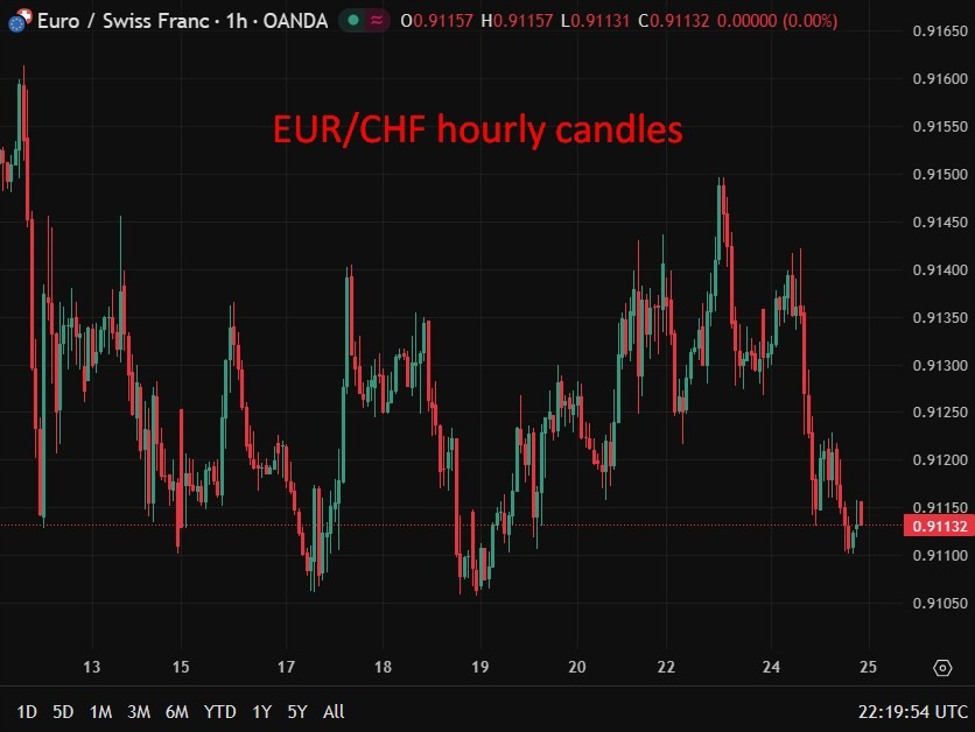
Martin Schlegel is the Chairman of the Governing Board of the Swiss National Bank (SNB).He took over as chairman in 2024 and leads the SNB’s three-member Governing Board, which sets Switzerland’s monetary policy.He spoke Tuesday. Schlegel downplayed short-term deflation risks, keeps medium-term inflation focus, and leaves FX intervention on the table.Summary:SNB expects inflation to rise from current ultra-low levelsTemporary negative prints possible, not a policy alarmInflation at 0.1%, bottom of 0–2% target rangePolicy rate at 0%; FX intervention remains an optionUS tariffs weighing on parts of Swiss industrySchlegel said Switzerland could experience temporary months of negative inflation but stressed that such readings would not automatically trigger concern from policymakers, as the central bank remains focused on medium-term price stability.Speaking in Zurich, Schlegel noted that inflation remains extremely subdued, with January’s annual reading at just 0.1%, the lower edge of the SNB’s 0–2% target range. While acknowledging that inflationary pressures have barely shifted, he said the central bank expects price growth to pick up in the months ahead. A handful of negative prints would not constitute an alarm signal, he added, underscoring that monetary policy decisions are guided by broader trends rather than short-term fluctuations.With the policy rate currently at 0%, the SNB’s room for conventional easing is limited. Earlier this month, Schlegel described the combination of low inflation and a zero policy rate as a challenging environment. Against that backdrop, he reiterated that the SNB stands ready to intervene in foreign exchange markets if necessary to ensure price stability.On the global front, Schlegel warned that US tariffs and heightened uncertainty have weighed on economic growth, though many sectors have proven more resilient than anticipated. Around one in four Swiss companies surveyed by the SNB report negative effects from tariffs, with engineering firms among the most exposed. While some businesses have shifted parts of their production to countries facing lower US tariffs, or directly to the United States, many firms have yet to implement countermeasures.Overall, Schlegel’s remarks reinforced a steady policy stance, with the SNB prepared to act if needed but not alarmed by short-term volatility in inflation data. This article was written by Eamonn Sheridan at investinglive.com. 🔗 Source 💡 DMK Insight Schlegel’s comments on deflation and inflation are crucial for forex traders right now. By downplaying short-term deflation risks, he signals confidence in the Swiss economy, which could strengthen the Swiss Franc (CHF) against major currencies. Traders should note that a focus on medium-term inflation suggests potential tightening measures ahead, which could lead to volatility in the forex markets. If the SNB shifts its stance, expect reactions from institutions and retail traders alike, particularly if the CHF breaks key resistance levels. Watch for any shifts in economic indicators that could prompt the SNB to intervene in the FX market, especially if inflation data deviates from expectations. The real story is how these insights could ripple through related assets, like European equities, which often correlate with CHF movements. Keep an eye on the upcoming inflation reports and any comments from other central banks that could influence the SNB’s decisions. 📮 Takeaway Monitor Swiss inflation data closely; a shift could trigger CHF volatility and impact related forex pairs.
Goldman Sachs: Japan rally has further to run after Takaichi victory
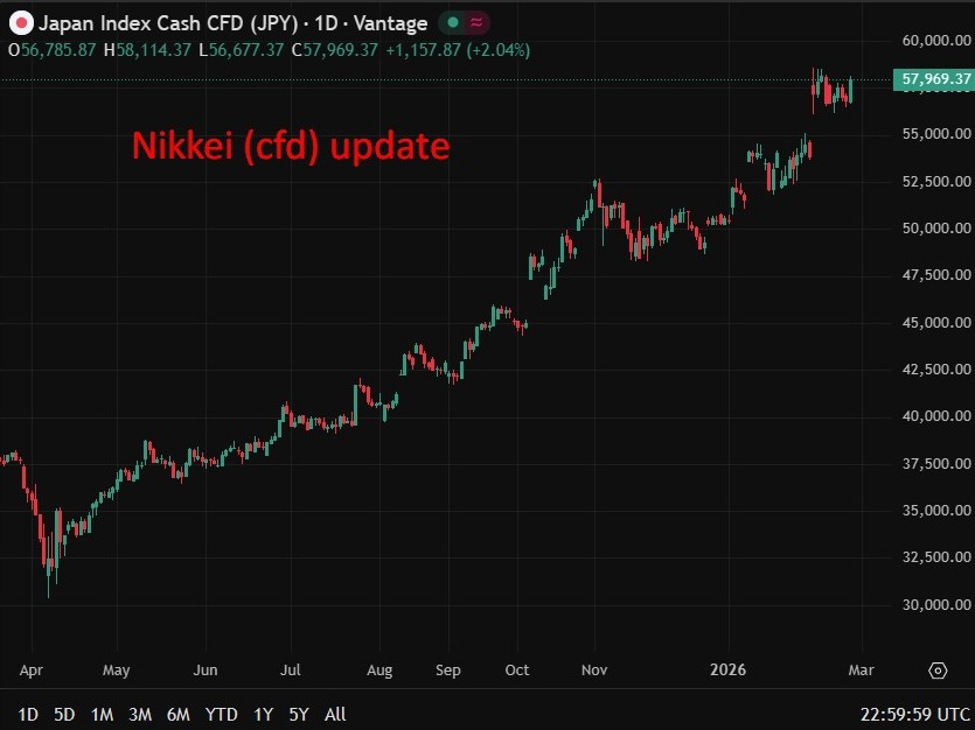
Goldman sees Japan’s rally extending on political stability and reform momentum — but sustainable gains hinge on ROE delivery.Summary:Takaichi’s landslide boosts political stabilityHistory suggests post-election multiple expansionGovernance reform key to next legROE improvement central to re-ratingFiscal concerns easing post-electionForeign positioning improving, not stretchedReform delivery now criticalJapanese equities could have further upside following Prime Minister Sanae Takaichi’s decisive snap election victory, according to Bruce Kirk, Chief Japan Equity Strategist at Goldman Sachs Research.Kirk argues the result is “extremely consequential” for both political stability and equity valuations. Historically, when an LDP-led coalition secures a two-thirds supermajority, markets have delivered an average 20% gain in the first three months, followed by further multiple expansion over the subsequent nine months. The key driver is reduced political risk: a strong mandate increases the likelihood of longer leadership tenure, policy continuity, and a lower equity risk premium — dynamics that typically attract foreign capital.Near term, investors will look for clarity on defence, economic security and US-Japan relations, particularly ahead of the upcoming Takaichi–Trump summit. But the more durable catalyst lies in structural reform and corporate governance. While governance reform regained momentum in 2023 and shareholder returns have surged to ¥40–45 trillion annually from ¥6–7 trillion pre-Abenomics, return on equity has stalled around 9–10%. For a sustainable valuation re-rating, Kirk says investors need tangible ROE improvement through stronger shareholder returns, growth investment, M&A consolidation and deeper restructuring.Fiscal policy remains a watchpoint. Concerns centred on a proposed temporary cut to the food consumption tax. However, the scale of Takaichi’s victory may actually reduce the risk of populist fiscal measures, easing pressure in FX and rates markets.Foreign positioning is improving but not stretched. Mutual funds remain underweight Japan, and renewed outperformance versus US equities could pull in further allocations.Risks include policy missteps that unsettle bonds or FX, unexpected leadership change, global shocks, and the absence of normal market corrections. Still, Goldman believes Japan remains in the upward phase of its cycle, with reform delivery now the critical next step.—This was interesting from Japan yesterday and has equity market implications:The Japanese Yen sinks as PM Takaichi signals opposition to further BoJ rate hikes This article was written by Eamonn Sheridan at investinglive.com. 🔗 Source 💡 DMK Insight Japan’s political stability could fuel a rally in equities, but watch ROE closely. Goldman’s analysis highlights that the recent political developments, particularly Takaichi’s victory, are likely to enhance investor confidence. This could lead to a multiple expansion similar to past post-election trends. However, the real test will be whether companies can deliver on return on equity (ROE) improvements. Traders should monitor ROE metrics closely, as sustained gains in Japanese stocks will depend on this key performance indicator. If firms fail to show tangible improvements, the rally could stall. Additionally, easing fiscal concerns and improving foreign positioning suggest a favorable environment for Japanese equities. But remember, the market’s reaction can be volatile, especially if ROE disappoints. Keep an eye on key earnings reports and economic indicators that could impact ROE projections. The next few months will be crucial for determining if this rally has legs or if it’s just a short-term bounce. 📮 Takeaway Watch for ROE improvements in Japanese equities; failure to deliver could halt the rally despite political stability.
Japan’s Nikkei seen surging to 60,750, extending historic record-breaking run
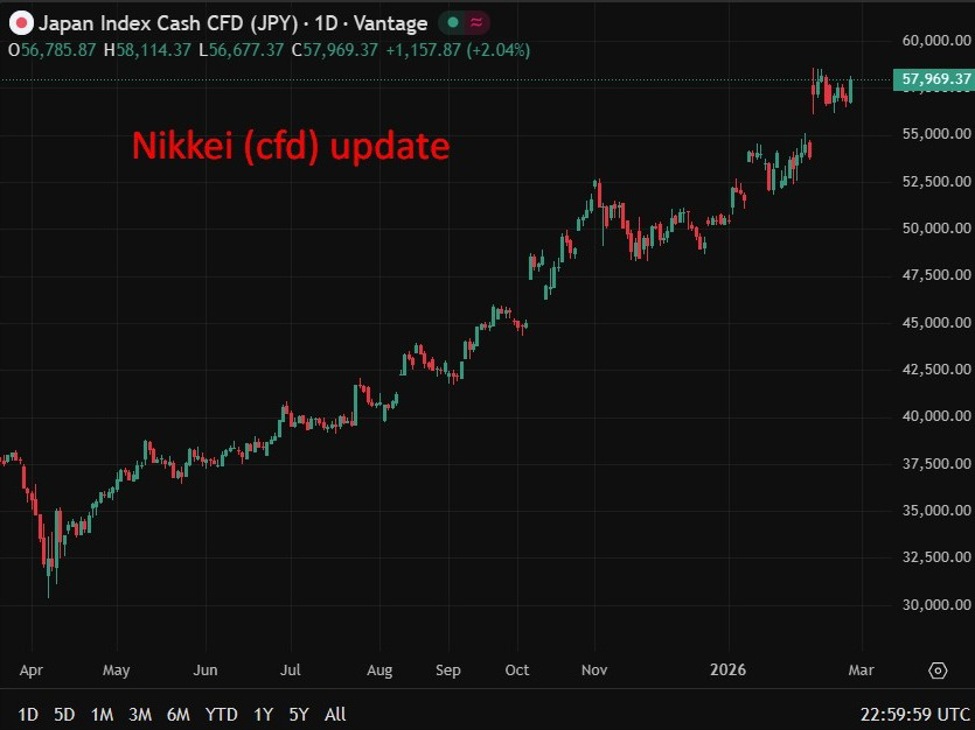
Strategists see near-term consolidation for the Nikkei before earnings growth and foreign inflows drive a break above 60,000 by 2027.Summary:Nikkei seen at 57,500 by mid-2026Forecast lifted from November poll60,750 projected by mid-2027Foreign inflows acceleratingAI theme supportive but selectiveCorrection risk viewed as limitedJapan’s Nikkei 225 is expected to trade largely sideways in the near term before resuming its upward trajectory and breaking through the 60,000 milestone by mid-2027, according to a Reuters poll of equity strategists.The benchmark, which has risen more than 13% year-to-date, recently touched a record intraday high above 58,000 following Prime Minister Sanae Takaichi’s landslide snap election victory. Strong corporate earnings and expectations of supportive fiscal policy have underpinned sentiment, helping lift the median mid-2026 forecast to 57,500, up modestly from current levels but significantly higher than projections made late last year.While analysts see limited upside through June, they broadly anticipate a period of consolidation rather than a meaningful pullback. The rapid advance in recent months has heightened valuation concerns, but strategists expect time, rather than price weakness, to ease stretched conditions. By end-2026, the index is seen approaching 58,500, before climbing toward 60,750 by mid-2027.Foreign inflows remain a key pillar of the bullish medium-term view. Government data show overseas investors were net buyers of ¥1.42 trillion in Japanese equities in the week to February 14, the largest weekly inflow since October, reinforcing momentum as global allocators increase exposure. A solid domestic earnings backdrop is expected to keep attracting capital.Artificial intelligence continues to support selected sectors, particularly semiconductors, chip equipment and data-centre infrastructure, as long as US hyperscalers maintain spending. However, some technology segments, including software, have seen heavier selling amid concerns about AI-driven disruption.Looking ahead, most analysts view the risk of a 10% correction over the next three months as low. Even if US equities experience volatility, any spillover into Japan is expected to be contained.Overall, the consensus points to consolidation near record highs before a renewed earnings-driven push toward fresh milestones. This article was written by Eamonn Sheridan at investinglive.com. 🔗 Source 💡 DMK Insight The Nikkei 225’s forecast suggests a sideways trend until 2026, but here’s why that matters now: With the index currently around 57,500 and projected to hit 60,000 by 2027, traders should be cautious of consolidation phases. This could mean limited volatility in the near term, which often leads to lower trading volumes. However, foreign inflows are picking up, indicating institutional interest that could support a breakout. The AI theme is also a double-edged sword; while it can drive growth, it’s selective and may not benefit all sectors equally. Watch for earnings reports that could provide catalysts for movement. On the flip side, if the Nikkei fails to maintain momentum, we could see a correction that might catch traders off guard. Key levels to monitor are the 57,500 support and the psychological 60,000 resistance. Keeping an eye on foreign investment trends and sector performance will be crucial for positioning ahead of potential shifts. The immediate focus should be on earnings announcements in the coming months, as they could set the tone for the index’s trajectory. 📮 Takeaway Watch the Nikkei 225 closely around the 57,500 level; earnings reports in the coming months could trigger significant movement.

Bloomberg: Harvard study finds AI predicts only 71% of active-fund trades
Harvard-led research suggests AI can replicate most active-fund trading patterns, leaving true alpha concentrated in a smaller set of non-routine decisions.Summary:AI model predicted 71% of fund tradesNeural network trained on 1990–2023 dataUnpredictable trades linked to outperformanceRoutine activity appears systematicLarger, competitive funds less predictableActive-fee justification under scrutiny(ps. I bolded the really interesting part below)A new academic study led by researchers at Harvard Business School suggests that much of active fund management follows patterns sophisticated algorithms can learn, raising fresh questions about the value of stock-picking fees.The working paper, titled Mimicking Finance and published via the National Bureau of Economic Research, uses a neural-network model trained on rolling five-year windows between 1990 and 2023. Drawing on fund characteristics, investor flows, stock attributes and macroeconomic data, the system was able to predict roughly 71% of mutual fund trading decisions, whether a manager would buy, sell or hold a stock over a given quarter.The findings suggest that a large share of day-to-day portfolio adjustments reflects systematic responses to flows, market signals and peer positioning rather than purely idiosyncratic insight. In effect, machines appear capable of replicating much of the industry’s common playbook.However, the study’s most revealing insight lies in what the model could not anticipate. The remaining 29% of trades, those that departed from detectable patterns, were more closely associated with outperformance. That implies that genuine alpha may reside in the smaller set of non-routine decisions that deviate from formulaic behaviour.The authors argue that machine-learning tools are better suited than traditional linear factor models to capture the complex ways managers react to shifting conditions. Yet the model predicts trade direction, not size, and further refinements are planned.Predictability also varies across managers. Larger funds, higher-fee strategies and teams operating in more competitive environments tended to be less predictable, while longer-tenured managers or those overseeing multiple products were more so.For the active management industry, already under pressure from low-cost passive products tracking benchmarks such as the S&P 500, the implications are economic rather than existential. If most routine trades can be anticipated algorithmically, fee justification may increasingly hinge on the narrower slice of genuinely discretionary decisions that deliver excess returns.The study underscores a broader distinction: while predicting market moves remains notoriously difficult, predicting professional behaviour may be far easier.Source: Bloomberg (gated) This article was written by Eamonn Sheridan at investinglive.com. 🔗 Source 💡 DMK Insight AI’s ability to predict 71% of fund trades is a game changer for active management. This research highlights a crucial shift in how traders might view active funds. If AI can replicate routine trading patterns, the justification for high active fees comes into question. Traders should be wary of funds that rely heavily on predictable strategies, as they may struggle to deliver true alpha. The implication here is that smaller, more agile funds that can make non-routine decisions might outperform larger competitors. This could lead to a reallocation of capital towards these nimble funds, impacting their performance metrics and fee structures. Watch for how fund managers respond to this research. If they start emphasizing unique, unpredictable strategies, it could signal a broader trend in the market. Keep an eye on fund flows and performance metrics over the next quarter to gauge shifts in investor sentiment towards active versus passive management. 📮 Takeaway Monitor fund flows and performance metrics closely; a shift towards smaller, agile funds could reshape active management strategies in the coming months.