
 Bitcoin
  Ethereum
  Tether
  BNB
BNB  XRP
XRP  USDC
USDC  Solana
  TRON
TRON  Lido Staked Ether
  Figure Heloc
Polymarket’s lawsuit challenges state authority and could redefine whether the CFTC controls US prediction markets or whether states set their own rules. 🔗 Source 💡 DMK Insight Polymarket’s lawsuit could shake up the regulatory framework for prediction markets, and here’s why that matters: If the CFTC loses its grip, we might see a surge in decentralized prediction markets, which could attract more liquidity and participation. For traders, this means potential volatility in related assets like ETH, currently at $1,954.24, as speculation ramps up. Keep an eye on how this legal battle unfolds, as it could set a precedent impacting not just prediction markets but also broader crypto regulations. If states gain more control, we might see a patchwork of regulations that could complicate trading strategies and market access. But there’s a flip side—if the CFTC maintains authority, it could reinforce existing frameworks, leading to stability in the market. Watch for key developments in the lawsuit over the next few weeks, as any significant ruling could trigger sharp price movements in ETH and other related assets. Traders should monitor sentiment shifts and adjust their positions accordingly, especially if we see a breakout or breakdown around the $1,900 support level. 📮 Takeaway Watch for developments in Polymarket’s lawsuit; a ruling could impact ETH’s price volatility, especially around the $1,900 support level.

Ripple CEO confirms White House meeting between crypto, banking reps
Trump administration officials held a similar event last week to discuss stablecoin yield within a market structure bill under consideration in Congress. 🔗 Source 💡 DMK Insight The recent discussions by Trump administration officials about stablecoin yield highlight a growing interest in regulatory frameworks that could reshape the crypto landscape. This matters now because as Congress considers a market structure bill, traders should brace for potential volatility in stablecoins and related assets. If regulations favor stablecoin yield, we might see increased institutional interest, which could drive prices up, particularly for major stablecoins like USDC or USDT. However, there’s a flip side: if the regulations are too restrictive, it could stifle innovation and lead to a sell-off in the crypto market. Traders should keep an eye on how these discussions evolve, especially as they could impact the broader market sentiment. Watch for key price levels in stablecoins and related cryptocurrencies, as any regulatory news could trigger significant price movements. The next few weeks will be crucial as the bill progresses, so staying informed on these developments is essential for making timely trading decisions. 📮 Takeaway Monitor stablecoin price movements closely as regulatory discussions unfold; significant volatility could arise based on the outcome of the market structure bill.

SEC leaders seek to clarify how tokenized securities interact with existing regulation
Paul Atkins and Hester Peirce spoke at ETHDenver on Wednesday on the future of regulation at the SEC and its response to crypto market volatility. 🔗 Source 💡 DMK Insight The SEC’s focus on crypto regulation is heating up, and here’s why that matters: With ETH currently at $1,954.24, traders should be paying close attention to any regulatory developments that could impact market sentiment. Paul Atkins and Hester Peirce’s comments at ETHDenver signal a potential shift in how the SEC might respond to ongoing volatility in the crypto space. If the SEC leans towards stricter regulations, we could see increased selling pressure, especially if ETH breaks below key support levels. On the flip side, if they adopt a more lenient stance, it could provide a bullish catalyst for ETH and other altcoins. Traders should monitor the upcoming regulatory announcements closely, as they could trigger significant price movements. Keep an eye on the $1,900 support level for ETH; a breach could lead to further declines, while a bounce could signal a buying opportunity. The real story is how institutional players might react to these regulatory signals, as their participation could either stabilize or exacerbate volatility in the market. 📮 Takeaway Watch ETH closely around the $1,900 support level; regulatory news could trigger significant price movements in the coming days.
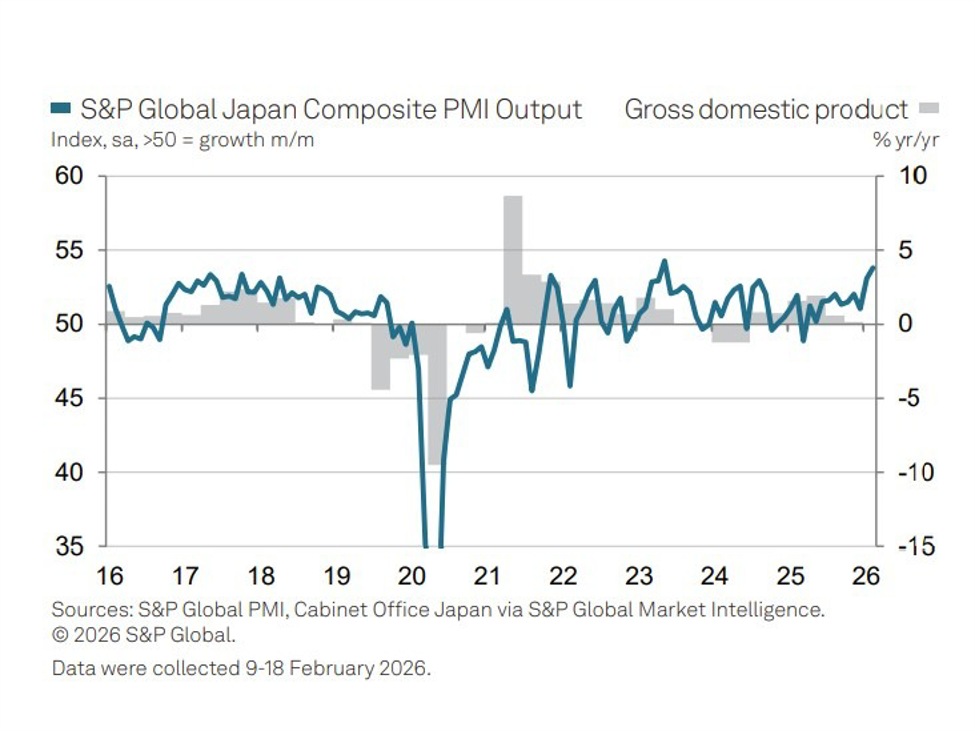
Japan flash PMIs rise in February; composite hits 53.8, exports surge
Japan’s February flash PMIs strengthened across the board, with composite output rising to 53.8 and manufacturing gaining momentum. Export demand surged, backlogs hit record highs and price pressures firmed, while business confidence improved.Summary:Composite PMI: 53.8 (Jan 53.1), fastest growth since May 2023.Services PMI: 53.8 (Jan 53.7), quickest pace since May 2024.Manufacturing PMI: 52.8 (Jan 51.5), strongest since January 2022.Composite new orders rose at the fastest rate since May 2023.Export orders surged at the quickest pace in eight years.Employment growth remained solid; factory hiring strongest in over four years.Backlogs rose at a record pace (series began September 2007).Input costs and selling prices both accelerated; output prices at 21-month high.Business confidence climbed to a 15-month high.Earlier from Japan: Japan inflation slows to 1.5% in January, core measures ease. What will the BoJ think?Japan’s private sector growth strengthened in February, with all three S&P Global flash PMI readings improving from January and signalling the fastest overall expansion in nearly three years.The S&P Global Flash Japan Composite PMI Output Index rose to 53.8 from 53.1 in January, marking the strongest pace of expansion since May 2023 and extending the current growth streak to 11 months.Momentum broadened across sectors. The Flash Japan Services PMI Business Activity Index edged up to 53.8 from 53.7, its fastest reading since May 2024. More notably, the Flash Japan Manufacturing PMI climbed sharply to 52.8 from 51.5, the strongest level since January 2022, pointing to a firmer and more balanced recovery.New business growth accelerated in line with output. Composite new orders rose at the fastest rate since May 2023, with services seeing the strongest increase in 22 months. Manufacturers reported their steepest rise in sales since early 2022, supported by stronger underlying demand and new product launches.External demand was a standout. Composite export orders expanded at the fastest pace in eight years, driven primarily by a rebound in goods exports.Employment continued to rise at a solid pace, although slightly softer than January’s multi-year record. Factory payrolls expanded at the quickest rate in just over four years, while services hiring moderated somewhat. Despite increased staffing, capacity pressures intensified: backlogs of work rose at the fastest pace since the composite series began in September 2007.Price pressures also ticked higher. Input costs increased at a slightly sharper rate overall, with stronger cost inflation in services offsetting softer pressures in manufacturing. Output charge inflation hit a 21-month high, with services firms showing greater pricing power than factories.Looking ahead, optimism improved. Business sentiment reached a 15-month high, with firms citing stronger domestic and overseas demand, semiconductor and AI-related investment, product innovation and supportive political conditions following Prime Minister Sanae Takaichi’s recent landslide election victory.The data reinforce a narrative of broadening growth momentum in Japan’s economy, even as inflation dynamics and Bank of Japan policy remain closely watched. This article was written by Eamonn Sheridan at investinglive.com. 🔗 Source 💡 DMK Insight Japan’s February flash PMIs are signaling robust economic activity, and here’s why that matters: The composite PMI rising to 53.8 indicates a strengthening economy, which could lead to increased demand for Japanese exports. This uptick in manufacturing and services suggests that businesses are not only recovering but also expanding, which is crucial for traders focused on Japanese equities and the yen. With export demand surging and backlogs at record highs, we might see upward pressure on the Nikkei 225 and the USD/JPY pair. Traders should keep an eye on the 53.8 level in PMIs as a benchmark for future growth expectations. But let’s not overlook potential risks. While the data looks promising, price pressures firming could lead to inflation concerns, which might prompt the Bank of Japan to reconsider its ultra-loose monetary policy sooner than expected. This could create volatility in the forex market, especially for the yen. Watch for any comments from BOJ officials in the coming weeks that might hint at policy shifts. Overall, the immediate focus should be on how these PMIs influence market sentiment and trading strategies around Japanese assets. 📮 Takeaway Monitor the 53.8 PMI level closely; a sustained rise could boost Japanese equities and the yen, but watch for inflation signals that might shift BOJ policy.
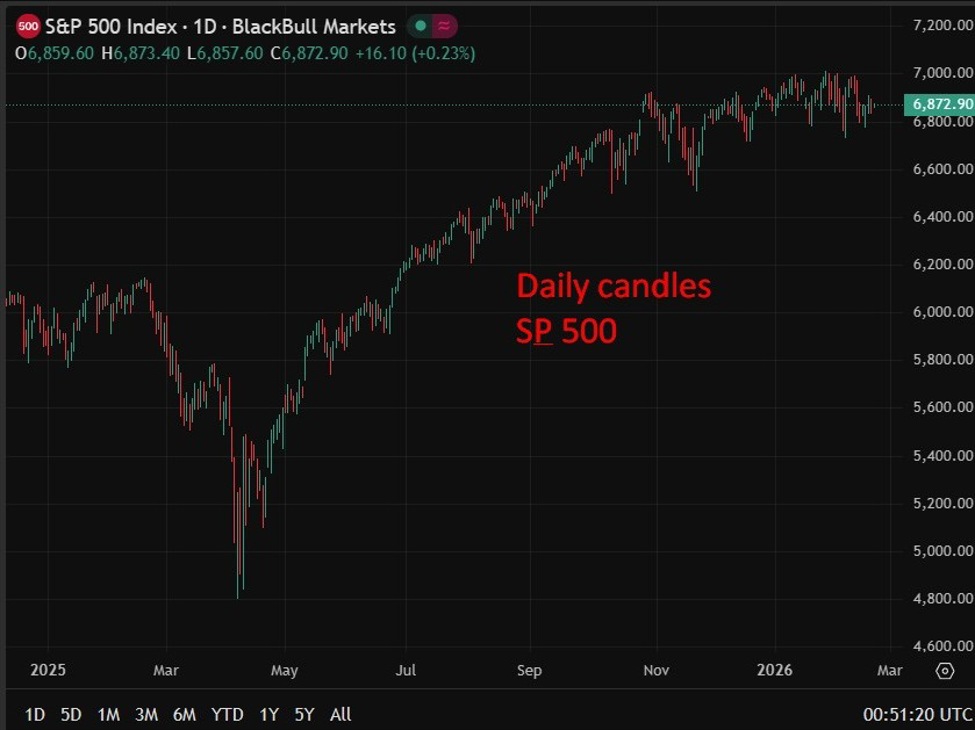
Supreme Court tariff ruling nears; JPM maps S&P 500 swings across four scenarios
A Supreme Court decision on key Trump tariffs is expected in the current opinion window (with Feb 20 highlighted), and JPMorgan’s trading desk outlines sharply different equity outcomes depending on whether tariffs are upheld, struck down, or swiftly replaced. With ~$124bn in customs duties through January, fiscal incentives may reinforce rapid “replacement” efforts if IEEPA tariffs are curtailed.Summary:Markets are braced for a U.S. Supreme Court ruling on key Trump-era tariffs as early as Friday 20 Feb, with additional opinion days Tue 24 Feb and Wed 25 Feb also flagged. JPMorgan’s trading desk scenario tree assigns 64% odds to “struck down + immediately replaced,” limiting net upside after an initial spike (desk estimate).JPM’s framework also assigns 26% to “tariffs upheld” (risk-off), 9% to “struck down after midterms,” and 1% to “struck down with no replacement.”The U.S. has taken in roughly $124bn in customs duties through January FY2026-to-date, highlighting the fiscal stakes. If the Court curbs the IEEPA pathway, the administration may pivot quickly to other authorities (e.g., Section 232/301/122), keeping effective tariff pressure higher than a simple “strike down” headline suggests.A long-awaited U.S. Supreme Court decision on the legality of President Donald Trump’s most sweeping tariffs could land as soon as this week, setting up potentially outsized cross-asset moves for equities, rates and the dollar. The Court has scheduled opinion days for Friday, 20 February, with additional opinion release dates Tuesday, 24 February and Wednesday, 25 February, a window that has kept markets on alert after weeks of “any day now” speculation. Against that backdrop, JPMorgan’s trading desk has circulated a probability-weighted playbook for how equities might react. The desk’s distribution is best read as scenario framing rather than a forecast.JPM trading-desk scenario tree (desk estimates)64%: Tariffs struck down and immediately replaced → S&P 500 +0.1% to +0.2% after an initial +0.75% to +1.0% spike26%: Tariffs upheld → S&P 500 -0.3% to -0.5%, with larger yield-curve moves9%: Tariffs struck down after midterms → S&P 500 +1.25% to +1.5%, Russell 2000 outperforms1%: Tariffs struck down with no replacement → S&P 500 +1.5% to +2.0%, Russell 2000 outperformsThe intuition is straightforward: the more the ruling reduces the expected effective tariff rate and the longer that reduction lasts, the more supportive it is for risk assets, especially domestically oriented small caps. Conversely, an “upheld” outcome risks a near-term hit to sentiment and a sharper repricing in rates as markets reassess inflation, growth and policy constraints.Why the “replace immediately” case mattersA central market argument is that even if the Supreme Court strikes down tariffs imposed under the International Emergency Economic Powers Act (IEEPA), the administration may be able to reconstitute similar levies under different legal authorities (though with different process, scope, and timelines). Coverage ahead of the decision has repeatedly flagged potential alternatives such as Section 232 (national security), Section 301 (unfair trade practices), and other tools like Section 122, which could be used to restore tariff pressure quickly and cap the equity upside from a headline “strike down.” That “headline vs. effective rate” distinction is why the desk’s base case is not the most bullish branch. It also fits the broader market narrative: tariff regimes can shift how trade happens more than they shrink deficits outright, and the policy/legal endgame may be messy, involving partial findings, multiple opinions, and follow-on actions by the White House and Congress.The fiscal angle adds pressureTariffs are no longer a side-show line item. U.S. government data show customs duties totaling about $124bn through January (fiscal year to date), underscoring why a court-driven disruption could have budget implications—and why policymakers may be incentivised to find replacement mechanisms if a major tariff channel is constrained.What to watch on the tapeIn practice, the first market move may come from positioning and headline interpretation: whether the ruling is read as (1) a clean removal, (2) a partial trimming, or (3) a legal procedural limitation that still leaves wide latitude. The second move is likely to be about “replacement speed”—how quickly the administration signals alternative tariff plans and under which authority. That’s where the JPM desk’s “spike then fade” logic in the 64% branch comes from. This article was written by Eamonn Sheridan at investinglive.com. 🔗 Source 💡 DMK Insight The upcoming Supreme Court decision on Trump tariffs could shake up markets, and here’s why: If tariffs are upheld, expect a potential boost in equity markets tied to domestic manufacturing, which could lead to a bullish sentiment in sectors like industrials and materials. Conversely, striking them down might unleash a wave of volatility, particularly in import-heavy sectors, as traders reassess profit margins and cost structures. With ETH currently at $1,954.24, keep an eye on how crypto reacts to these macroeconomic shifts. Tariff changes could influence investor sentiment across risk assets, including cryptocurrencies, as traders look for safe havens or risk-on plays. Here’s the flip side: if the tariffs are swiftly replaced with new measures, it could create uncertainty, leading to a mixed market reaction. Traders should monitor the February 20 date closely, as it could serve as a catalyst for significant price movements across equities and crypto alike. Watch for ETH to break key support or resistance levels around $1,900 and $2,000, respectively, as these could signal broader market trends. 📮 Takeaway Watch for the Supreme Court’s decision on tariffs around February 20; it could trigger significant volatility in both equities and ETH, especially around $1,900 and $2,000 levels.
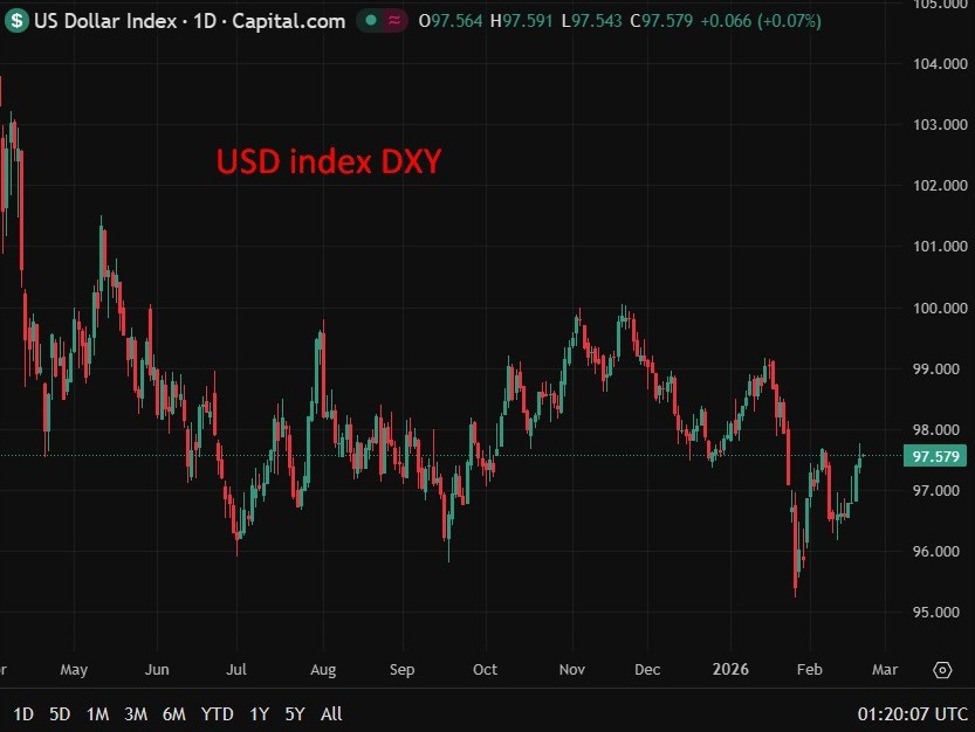
USD gains on strong US data unlikely to last; policy uncertainty, political risks to cap
MUFG says recent dollar gains driven by stronger U.S. data and cautious Fed minutes are unlikely to last. Political uncertainty and concerns about Fed independence under President Trump may keep investor sentiment toward the greenback fragile.Summary:MUFG’s Derek Halpenny says recent U.S. dollar strength is unlikely to be sustained.Durable goods, housing and industrial production data all beat expectations.Fed minutes showed caution over further rate cuts, supporting the greenback.Halpenny argues dollar sentiment remains fragile under President Trump.Policy unpredictability and rhetoric around Fed independence weigh on outlook.National Economic Council Director Kevin Hassett criticised New York Fed tariff analysis.Halpenny sees such criticism as an example of potential White House interference riskThe U.S. dollar’s rebound following stronger-than-expected economic data and hawkish-leaning Federal Reserve minutes is unlikely to prove durable, according to MUFG Bank’s Derek Halpenny.The greenback firmed after a run of upside surprises in key activity indicators. Data on durable goods orders, housing activity and industrial production all exceeded expectations, reinforcing the view that U.S. growth momentum remains resilient. In addition, minutes from the latest meeting of the Federal Reserve highlighted caution among policymakers over delivering further interest rate cuts, suggesting a more patient approach to easing.While that combination typically supports the dollar through higher yield expectations and growth outperformance, Halpenny argues the broader backdrop leaves the currency vulnerable.He contends that investor sentiment toward the dollar is likely to remain fragile as long as Donald Trump remains in office, citing policy unpredictability and recurring tensions around central bank independence. In his view, political noise risks overshadowing near-term data strength.Halpenny pointed specifically to comments from National Economic Council Director Kevin Hassett, who criticised analysis from the New York Fed regarding tariffs. The episode, he suggested, serves as an example of how the White House could challenge or pressure institutional independence, a factor that can weigh on foreign investor confidence.Markets remain sensitive to any perceived erosion of Fed autonomy, particularly at a time when monetary policy credibility plays a central role in anchoring inflation expectations and sustaining capital inflows.In that context, MUFG argues that while cyclical data surprises may generate episodic dollar strength, structural and political risks could cap upside and contribute to ongoing volatility.Because its Friday, here’s a Dolla This article was written by Eamonn Sheridan at investinglive.com. 🔗 Source 💡 DMK Insight The recent dollar strength might be a short-lived reaction, and here’s why that matters: MUFG’s analysis highlights that while stronger U.S. economic data has temporarily bolstered the dollar, underlying political uncertainties and questions about the Fed’s independence could undermine this momentum. Traders should be cautious; if sentiment shifts due to political developments or Fed policy changes, we could see a rapid reversal. Key levels to watch include the dollar index’s recent highs, which, if breached, could trigger further buying, but a failure to hold these gains might lead to a sell-off. Moreover, the implications extend beyond the dollar itself—currencies like the euro and yen could react sharply to any signs of dollar weakness, especially if economic data from Europe or Japan surprises to the upside. Here’s the flip side: if the Fed signals a more hawkish stance despite political pressures, we could see a stronger dollar in the short term. Keep an eye on upcoming economic releases and Fed communications for clues on the dollar’s trajectory. The immediate watchpoint is the dollar index; if it falls below recent support levels, it could signal a broader trend reversal. 📮 Takeaway Watch the dollar index closely; a drop below recent support could indicate a shift in sentiment, impacting related currencies like the euro and yen.

El-Erian flags private credit ‘canary in the coal mine’ as fund freezes redemptions
Blue Owl permanently restricted withdrawals from its $1.6bn private-debt fund, selling $1.4bn of loans at 99.7% of par and planning a 30% NAV distribution in Q1. El-Erian questioned whether it’s an early warning sign for private credit, though not a 2008-scale threat.Summary:$1.6bn Blue Owl Capital Corp. II fund permanently restricts investor withdrawals.Blue Owl sold $1.4bn of loans, including $600m from the restricted fund.Loans sold at 99.7% of par, signalling pricing resilience.Firm plans to return 30% of NAV of the frozen fund in Q1 via capital distributions.Public BDCs sold $400m each in loans as part of the transaction.Shares of Blue Owl Capital fell about 10%, down over 25% YTD.BDC discounts: OBDC at 81% of NAV, OTF at 73% of NAV.Mohamed El-Erian calls it a potential “canary-in-the-coal-mine” moment, though not 2008-scale systemic risk.A $1.6 billion private-debt fund managed by Blue Owl is permanently restricting redemptions, escalating investor scrutiny of liquidity risks in the fast-growing private credit sector and sending shares of its investment manager sharply lower.Blue Owl Capital Corp. II, a non-listed retail-focused business development company (BDC) that lends to middle-market firms, will no longer allow investors to withdraw funds. Instead, it plans to distribute capital quarterly, beginning with a 30% return of net asset value in Q1, the firm said Wednesday.The move follows the sale of $1.4 billion in loans to four large public pension and insurance investors. Of that amount, approximately $600 million came from the restricted Blue Owl Capital Corp. II fund. The loans were sold at 99.7% of par value, which Blue Owl highlighted as evidence of strong buyer confidence in its direct lending platform.Barclays analysts described the transaction as “not a forced sale,” adding that disposing of private credit assets effectively at par is positive for the credit profile of its BDCs.Still, markets reacted sharply. Shares of Blue Owl Capital (OWL) dropped roughly 10% on Thursday, deepening losses to more than 25% year to date, according to FactSet data.Blue Owl’s publicly traded vehicles were also involved in the asset sales. The $16.5bn Blue Owl Capital Corp. (OBDC) and the $6.2bn Blue Owl Technology Finance (OTF) each sold $400m in loans as part of the broader $1.4bn transaction.Valuation pressure has been building. OBDC was recently trading at 81% of NAV, while Blue Owl Technology Finance traded at 73% of NAV, reflecting investor scepticism toward private credit valuations—particularly in the software sector, where AI-driven disruption has clouded growth outlooks.The redemption halt also revives comparisons to past liquidity stress events. Former Pimco CEO Mohamed El-Erian asked whether the episode represents a “canary-in-the-coalmine” moment akin to the collapse of two Bear Stearns hedge funds in August 2007.El-Erian wrote that the private credit boom in advanced economies may have “gone too far overall,” while noting substantial differences across firms. He also referenced the risk of a “market for lemons” dynamic, where information asymmetry can undermine investor confidence in asset quality.However, he tempered concerns by emphasising that systemic risk today is nowhere near the magnitude of 2008, though he warned that a “significant, and necessary, valuation hit” could be looming for specific assets.The episode underscores a structural tension in private credit: offering retail-style liquidity in vehicles holding inherently illiquid middle-market loans. With rates higher and growth uneven, investor scrutiny of pricing, liquidity management and valuation marks appears to be intensifying. This article was written by Eamonn Sheridan at investinglive.com. 🔗 Source 💡 DMK Insight Blue Owl’s withdrawal restrictions could signal deeper issues in private credit markets, and here’s why that matters right now: With ETH currently at $1,954.24, the implications of this fund’s actions extend beyond private debt. If liquidity issues are brewing in private credit, it could lead to broader market volatility, impacting risk assets like cryptocurrencies. Traders should keep an eye on ETH’s support levels around $1,900; a break below could trigger further selling pressure. El-Erian’s comments suggest caution, but the lack of a 2008-scale threat means we might not see panic selling—yet. Still, this situation could affect institutional sentiment towards crypto, especially if they start reallocating funds away from riskier assets. On the flip side, if the market perceives this as an isolated incident, ETH could stabilize and even rally if it holds above key support. Watch for any shifts in trading volume or sentiment in the coming days, as these could provide clues on how traders are positioning themselves in response to this news. 📮 Takeaway Monitor ETH’s support at $1,900 closely; a drop below could signal increased volatility in crypto markets.
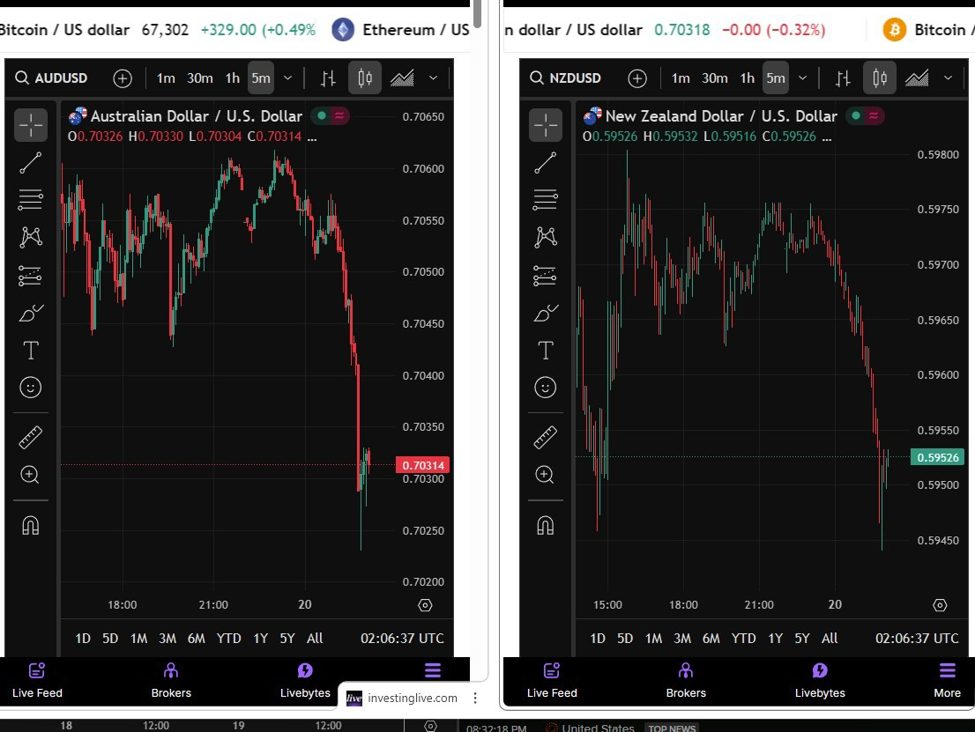
NZD, AUD fall as RBNZ says inflation returning to target, no preset path
RBNZ signals steady hand on rates, nudging NZD lower and dragging AUD with it.Summary:NZD and AUD both fall, with Kiwi leading declines during Asian trade.RBNZ Governor Breman says inflation likely already back inside target band in Q1.RBNZ confident inflation will return to the 2% midpoint within 12 months.Policy is not on a pre-set course, decisions remain data dependent.Chief Economist Paul Conway says the RBNZ “won’t be trigger happy” with rate hikes.Tone reads steady-to-dovish at the margin despite confidence on inflation trajectoryThe New Zealand and Australian dollars weakened in Asian trade following remarks from Reserve Bank of New Zealand officials that, while broadly constructive on inflation, signalled no urgency to tighten policy further.RBNZ Governor Breman said the path back to 2% inflation “has been bumpy,” but added that inflation is expected to already be back within the target range in the first quarter of this year. She reiterated confidence that inflation will return to the 2% midpoint within the next 12 months.Crucially for markets, Breman emphasised that being forward-focused does not imply policy is on a pre-set course. The central bank will adjust plans as new information arrives, maintaining flexibility in response to evolving data.RBNZ Chief Economist Paul Conway reinforced that message, stating the Bank “won’t be trigger happy” with rate hikes, a line that appeared to weigh on the Kiwi at the margin.The tone suggests the RBNZ sees inflation progress as broadly on track, reducing the need for aggressive follow-up tightening unless data surprise to the upside. That combination, confidence in disinflation alongside a cautious tightening stance, can dampen short-term rate expectations and pressure the currency.The Australian dollar moved lower alongside the Kiwi, reflecting regional FX correlation and broader risk sentiment rather than any direct domestic catalyst.The Reserve Bank of Australia recently delivered its first rate hike in roughly two years and markets continue to price the risk of further increases.Be sure to be following us, we had Breman’s comments hours ago. This article was written by Eamonn Sheridan at investinglive.com. 🔗 Source 💡 DMK Insight RBNZ’s steady rate stance is a game-changer for NZD and AUD traders right now. With the Reserve Bank of New Zealand signaling confidence in inflation returning to target, the NZD’s decline could be a short-term reaction rather than a long-term trend. Traders should note that the RBNZ’s commitment to maintaining rates might create a divergence in monetary policy between New Zealand and Australia, especially if the RBA shifts its stance. This could lead to increased volatility in the NZD/AUD pair, making it a prime candidate for day trading. Keep an eye on the 0.90 level for potential support in AUD/NZD, as a bounce here could indicate a reversal. On the flip side, if inflation data from New Zealand continues to surprise positively, the NZD could regain strength quickly. Watch for any shifts in sentiment from the RBA, as that could also impact the AUD’s trajectory. Overall, the next few weeks will be crucial for both currencies as traders digest these signals and adjust their positions accordingly. 📮 Takeaway Monitor the NZD/AUD pair closely; a break below 0.90 could signal further declines, while any positive inflation data from NZ could reverse the trend.
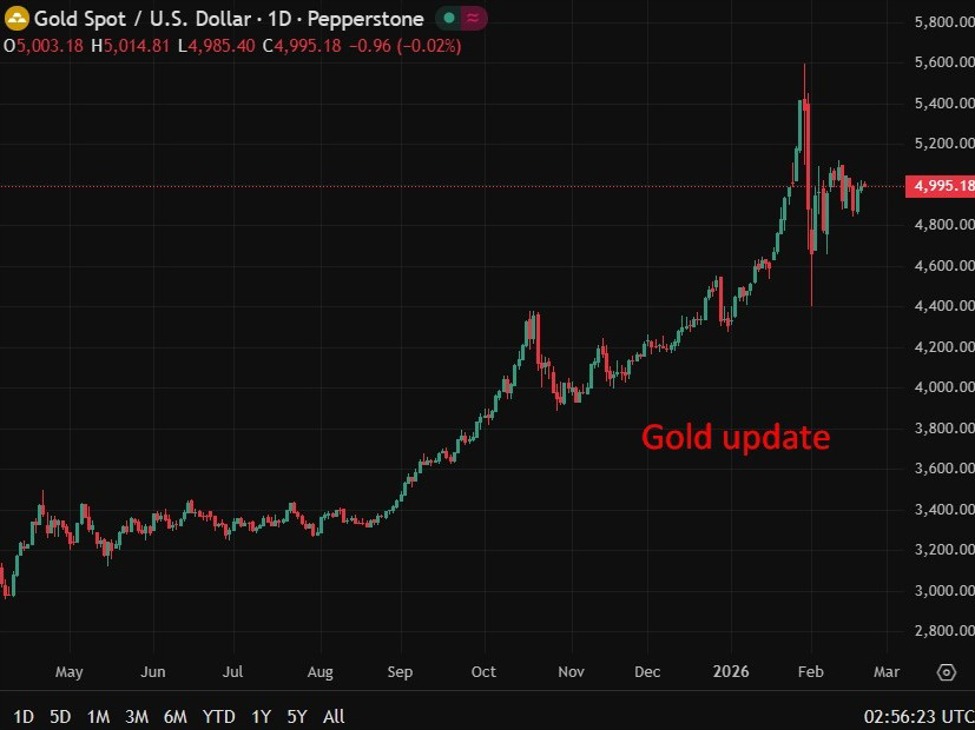
Goldman: Gold to grind higher to $5,400/oz by end-2026 on strong demand
Goldman sees gold grinding higher to $5,400/oz by end-2026, with upside skew from diversification.Summary:Goldman expects central bank gold buying to re-accelerate in 2026 at the pace seen in 2025.This is in a conservative base case that assumes no additional private-sector diversification beyond current trends.Goldman’s core view: central bank demand plus private investors adding exposure mainly in response to Fed rate cuts supports a steady rise.House forecast: gold to “slowly grind higher” to $5,400/oz by end-2026.Goldman flags significant upside risk if private-sector diversification increases, especially via call-option structures.Medium-term trajectory remains upward, but with potentially elevated volatilityGoldman Sachs expects the gold market’s structural bid to remain intact through 2026, driven primarily by central bank demand and a more cyclical pickup in private investor participation tied to the Fed easing cycle.In its 2026 outlook, Goldman says it expects central bank gold buying to re-accelerate at the pace seen in 2025, even under a conservative base case that assumes no additional private-sector diversification beyond what is already embedded in current flows. In other words, the bank’s base case does not rely on a fresh wave of private actors rotating reserves or portfolios into gold; it assumes official-sector demand does most of the heavy lifting.Taken together, Goldman argues that (1) central bank buying and (2) private investors adding exposure largely in response to Fed rate cuts should be sufficient to push prices higher over time. The bank characterises the path as a “slow grind” rather than a straight-line surge, projecting gold to reach $5,400 per troy ounce by end-2026.However, Goldman sees meaningful asymmetry around that forecast. It highlights significant upside risk if private-sector diversification does expand materially, particularly if expressed through call-option structures, which can amplify upside participation and accelerate price moves during momentum phases.Net, Goldman’s medium-term trajectory for gold remains upward, but it explicitly warns that the ride could be choppy: the trend may be higher, yet volatility could stay elevated, especially around Fed policy pivots, risk shocks, and any renewed diversification wave. This article was written by Eamonn Sheridan at investinglive.com. 🔗 Source 💡 DMK Insight Goldman’s bullish gold forecast to $5,400/oz by 2026 is a game changer for traders. With central banks expected to ramp up their gold purchases, this could create a significant upward pressure on prices. If you’re trading gold, keep an eye on the $2,000/oz mark as a psychological level; a sustained break above could trigger more aggressive buying. The potential for diversification into gold from private sectors could also amplify demand, making it crucial to monitor any shifts in institutional sentiment. Plus, if inflation continues to linger, gold’s appeal as a hedge will only grow. But here’s the flip side: if central banks pivot away from gold or if economic conditions stabilize, we might see a pullback. So, watch for any signs of policy changes or economic indicators that could influence central bank strategies. The next few months will be pivotal, especially as we approach 2026, so stay alert for any shifts in buying patterns or market sentiment. 📮 Takeaway Watch for gold to break above $2,000/oz; sustained momentum could lead to Goldman’s $5,400/oz target by 2026.
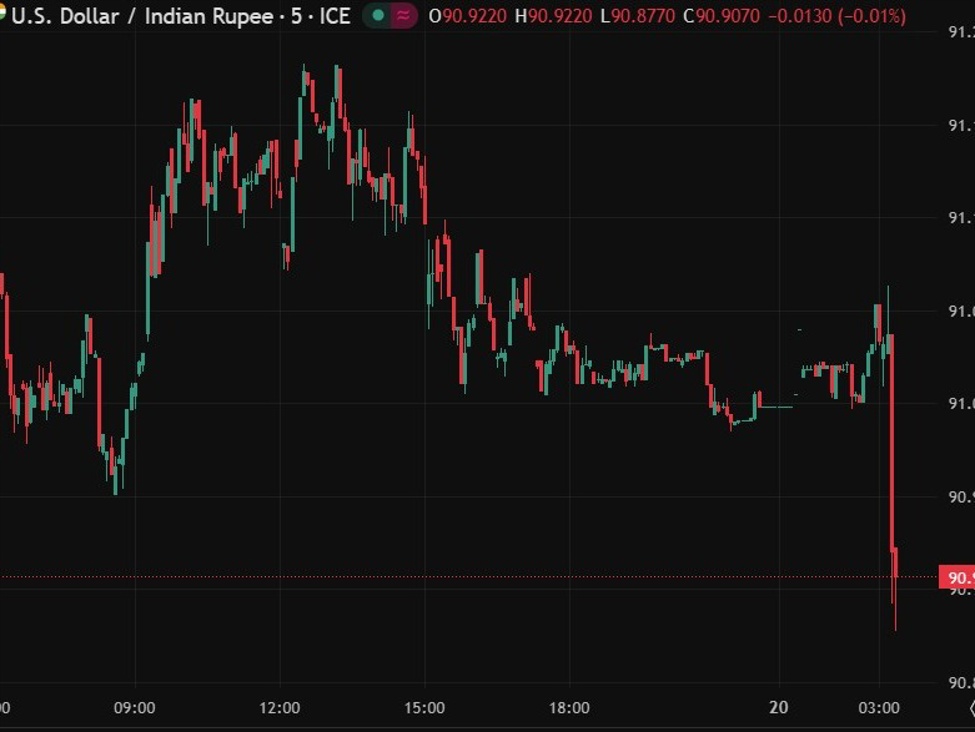
FX INTERVENTION: Reports the Reserve Bank of India is selling USD/INR to support the rupee
INR tests 91 but steadies as suspected RBI selling checks holiday-thinned, NDF-led pressure.Summary:INR last: 90.9450 on the interbank matching system after briefly slipping past 91.Traders said the Reserve Bank of India likely sold U.S. dollars before the local spot open to prevent a cleaner break above 91/$. Offshore 1-month NDF had pointed to an open around 91.02–91.06, versus 90.6675 prior close, before the onshore market steadied. Thursday’s move was exacerbated by thin liquidity due to a Mumbai market holiday (Feb 19). Reuters notes strong dollar-buying appetite in NDF weighed on INR on Thursday; traders also flagged a major public sector bank on the bid. Broader backdrop: firm USD, higher oil, softer risk tone and ongoing focus on geopolitics—factors that typically pressure INR.The Indian rupee opened Friday on the back foot but recovered modestly after traders said the Reserve Bank of India likely sold U.S. dollars ahead of the local spot market open, an intervention seen as aimed at preventing a sustained break beyond the psychologically important 91-per-dollar level.In early pricing, the rupee was last indicated around 90.9450, after having slipped past 91 in the prior session. Traders said the currency had initially looked set to open weaker near 91.05–91.08, before stabilising closer to 90.95 as suspected RBI dollar supply appeared. Reuters separately noted the offshore 1-month NDF had implied an opening range around 91.02–91.06, compared with 90.6675 at the previous close. Thursday’s rupee weakness was amplified by thin liquidity because Mumbai, India’s main FX trading hub, was shut for a local holiday on Feb 19, leaving price discovery more exposed to offshore flows. Traders highlighted strong dollar-buying appetite in the NDF market as a key driver pushing INR through 91 in otherwise light conditions.-Why INR has been a little weakEven outside holiday distortions, INR has been contending with a mix of familiar headwinds:Global USD support: A firmer dollar tone and cautious Fed messaging can reinforce demand for dollars versus EM FX. Reuters flagged the dollar’s strong weekly performance as a weight on INR. Oil sensitivity: India’s status as a major crude importer makes INR vulnerable when oil rises; Reuters noted firmer oil as part of the pressure mix. Hedging and importer demand: Routine importer hedging and episodic corporate dollar bids tend to show up quickly when USD/INR approaches round-number levels like 91. Event risk/geopolitics: Renewed Middle East tensions (including U.S.–Iran risks) can lift the dollar and oil simultaneously, an uncomfortable combination for INR.-What to watch nextMarket focus remains on whether the RBI continues to lean against a move beyond 91. Reuters has previously reported traders seeing RBI presence around the 90.70–90.80 area, suggesting officials are sensitive to the pace and optics of depreciation rather than defending a single fixed level. If offshore NDF demand remains heavy and oil stays firm, USD/INR may continue to probe the topside, though suspected RBI supply could keep the move orderly. This article was written by Eamonn Sheridan at investinglive.com. 🔗 Source 💡 DMK Insight The INR’s recent struggle around the 91 mark highlights the RBI’s active role in stabilizing the currency. With the INR currently at 90.9450, the RBI’s intervention suggests they’re keen to prevent a breach above 91, which could trigger further selling pressure. This is especially relevant given the holiday-thinned market, where liquidity is low and volatility can spike. Traders should watch for any signs of sustained pressure above 91, as that could lead to a more significant downward move in the INR, impacting related assets like the USD/INR pair. On the flip side, if the INR can hold below 91, it might attract buying interest, especially if global risk sentiment improves. Keep an eye on the offshore 1-month NDF rates, as they can provide insight into market expectations for the INR’s direction. The immediate focus should be on whether the RBI continues its dollar sales, as this will dictate short-term price action. 📮 Takeaway Watch for the INR’s ability to hold below 91; a breach could lead to increased volatility and impact USD/INR trading strategies.