
 Bitcoin
  Ethereum
  Tether
  BNB
BNB  XRP
XRP  USDC
USDC  Solana
  TRON
TRON  Lido Staked Ether
  Figure Heloc
Jason Calacanis says he’s spending about $110,000 a year on an AI agent that runs at a fraction of capacity, raising doubts about replacing human workers. 🔗 Source 💡 DMK Insight So Jason Calacanis is dropping $110,000 a year on an AI agent that barely runs at full capacity, and here’s why that matters for traders: it highlights the ongoing skepticism around AI’s ability to replace human labor effectively. This situation reflects broader market trends where companies are investing heavily in AI, yet the returns on that investment are still uncertain. For traders, this could signal a potential slowdown in tech stocks that are heavily reliant on AI hype. If major players in the tech sector are struggling to see tangible benefits from AI, it could lead to a reassessment of valuations across the board. Keep an eye on stocks like NVIDIA and Microsoft, which have been at the forefront of AI development. On the flip side, this could create opportunities in sectors that are less reliant on AI or those that focus on human-centric services. Watch for any shifts in sentiment that could impact tech stock performance in the coming weeks, especially as earnings reports roll in. If companies report disappointing results tied to AI investments, we might see a broader market correction. 📮 Takeaway Monitor tech stocks like NVIDIA and Microsoft for potential volatility as skepticism around AI effectiveness grows, especially during upcoming earnings reports.
White House, Banks and Crypto Groups Resume Talks on Stablecoin Rewards
Stablecoin incentives remain a key unresolved issue as lawmakers seek to advance digital-asset market-structure legislation. 🔗 Source 💡 DMK Insight Stablecoin incentives are still a hot topic, and here’s why it matters for SOL: With SOL currently at $83.54, any regulatory clarity could significantly impact its adoption and price trajectory. Lawmakers are grappling with how to structure stablecoin regulations, which could either bolster or hinder the broader crypto market. If favorable legislation emerges, it could lead to increased institutional interest in SOL and other altcoins, driving prices higher. Conversely, stringent regulations might stifle innovation and lead to a sell-off, especially if traders perceive increased risk. Keep an eye on the upcoming legislative sessions; they could serve as catalysts for price movements. SOL’s recent price action suggests it’s in a consolidation phase, so a breakout above $85 could signal bullish momentum, while a drop below $80 might trigger stop-losses and further selling pressure. Watch for how lawmakers address stablecoin incentives—this could ripple through the entire crypto ecosystem, affecting not just SOL but also related assets like USDC and DAI. 📮 Takeaway Monitor SOL closely; a breakout above $85 could signal bullish momentum, while a drop below $80 may trigger selling pressure.
“SEC’s Push for Regulatory Clarity at ETHDenver Conference Signals a Shift in Tokenized Securities Landscape”
📰 DMK AI Summary During the ETHDenver conference, SEC Chair Paul Atkins and Commissioner Hester Peirce expressed the agency’s interest in clarifying how tokenized securities align with existing federal securities laws. They highlighted the importance of providing developers and investors with regulatory certainty to address concerns about cryptocurrency market volatility. While discussing potential digital asset regulation amid a proposed market structure bill in Congress, both speakers emphasized the significance of enabling market participants to make informed decisions based on clear regulatory guidelines. 💬 DMK Insight Atkins and Peirce’s statements reflect the SEC’s commitment to adapting to the evolving landscape of digital assets and cryptocurrencies, aiming to establish a more structured regulatory framework. The discussion at ETHDenver underlines the need for regulatory clarity to enhance transparency and accountability in the crypto market. As the industry continues to mature, such initiatives could contribute to fostering investor confidence and sustainable growth in the sector. 📊 Market Content While the SEC’s focus on clarifying regulations for tokenized securities may bring greater stability and transparency to the crypto market, ongoing discussions around the proposed market structure bill in Congress could potentially reshape the regulatory landscape for digital assets. Traders and investors should closely monitor these developments as they could impact market dynamics and investor sentiment in the near future.

Australian Executive Accused of Selling Cyber Secrets to Russia for Crypto
U.S. prosecutors say the former defense contractor executive took about $1.26 million in crypto to transfer sensitive exploit tools tied to Five Eyes intelligence work. 🔗 Source 💡 DMK Insight This crypto-related legal case is a stark reminder of the regulatory scrutiny looming over the market. The involvement of sensitive intelligence tools in a crypto transaction highlights the intersection of national security and digital assets, which could lead to increased regulatory pressure. Traders should be aware that such high-profile cases can trigger volatility, especially in the crypto space, as they may prompt lawmakers to tighten regulations. If this case gains traction, it could affect market sentiment and lead to a sell-off in crypto assets, particularly those perceived as risky. Keep an eye on how this unfolds, as it could influence trading strategies, especially for those holding positions in cryptocurrencies that are already under scrutiny. Watch for any statements from regulatory bodies in the coming weeks, as they may signal shifts in policy that could impact trading conditions. The potential for increased regulation could also ripple through related markets, such as tech stocks or cybersecurity firms, which might see heightened interest or volatility based on the outcomes of this case. 📮 Takeaway Monitor regulatory developments closely; any new policies could impact crypto volatility and trading strategies significantly.
Risk-Off Capital Shifts Toward Tokenized Assets as DeFi Pulls Back
Capital is rotating out of DeFi into tokenized assets as experts say the shift reflects maturing markets, not capitulation. 🔗 Source 💡 DMK Insight Capital is shifting from DeFi to tokenized assets, and here’s why that matters: This rotation signals a maturation in the crypto markets, indicating that traders are looking for more stability and utility in their investments. As DeFi projects face regulatory scrutiny and volatility, tokenized assets—especially those linked to real-world assets—are gaining traction. This could lead to a more robust market structure, attracting institutional investors who prefer lower-risk profiles. Traders should keep an eye on the performance of tokenized assets compared to DeFi tokens, as this trend could reshape portfolio strategies. But don’t overlook the potential risks. If this shift is perceived as a lack of confidence in DeFi, it could trigger further sell-offs in that sector. Watch for key price levels in major DeFi tokens; a break below recent support could signal deeper issues. In contrast, if tokenized assets continue to gain momentum, they might establish new support levels that could provide entry points for savvy traders. Keep an eye on market sentiment and regulatory developments, as these will heavily influence the pace of this transition. 📮 Takeaway Monitor the performance of tokenized assets versus DeFi tokens; a break below key support levels in DeFi could signal deeper issues.

Custodia CEO Says Trump Family Crypto Ties Are Part of Clarity Act Problem
At ETH Denver, Caitlin Long said the ethics controversy around Trump-linked crypto projects has complicated Senate support. 🔗 Source 💡 DMK Insight Caitlin Long’s comments at ETH Denver highlight a growing concern that could impact crypto legislation. The ethics controversy surrounding Trump-linked projects is creating a rift in Senate support, which could stall or alter proposed regulations. For traders, this is crucial because regulatory clarity—or the lack thereof—can significantly influence market sentiment and price movements. If Senate support wanes, we might see increased volatility in Ethereum and related assets, especially if traders react to news cycles. Watch for ETH’s price around $1,900 as a potential support level; a break below could trigger further selling pressure. On the flip side, if any bipartisan support emerges despite these controversies, it could lead to a rally. Traders should keep an eye on sentiment indicators and news flow, as these will be key in navigating the choppy waters ahead. 📮 Takeaway Monitor ETH around $1,900 for potential support; regulatory news could drive volatility in the coming weeks.
Silicon Valley Engineers Charged With Theft of Google, Tech Trade Secrets
Three engineers are accused of stealing sensitive mobile processor and cryptography files from Google and two other companies. 🔗 Source 💡 DMK Insight This theft of sensitive tech files could shake investor confidence in major tech firms, especially in the semiconductor and cybersecurity sectors. As these engineers allegedly pilfered crucial mobile processor and cryptography data, it raises questions about the security protocols in place at these companies. For traders, this incident might lead to increased volatility in related stocks, particularly those in the semiconductor space, as investors reassess risk exposure. If the market reacts negatively, we could see a dip in prices for companies like NVIDIA or AMD, which are heavily reliant on proprietary technology. Moreover, this situation might trigger a broader conversation about cybersecurity measures across the tech industry, potentially impacting firms involved in security solutions. Keep an eye on any immediate price reactions in these sectors, especially if news breaks about the legal proceedings or further implications for the companies involved. Watch for key support and resistance levels in related stocks, as they could provide trading opportunities in the wake of this news. 📮 Takeaway Monitor semiconductor stocks for volatility; any significant price dips could signal buying opportunities, especially if support levels hold.
Bitcoin ETFs Lose Another $166M as Five-Week Withdrawals Near $4B
Bitcoin ETF outflows near $4 billion over the past five weeks, as experts debate whether the streak signals a reset or structural weakness. 🔗 Source 💡 DMK Insight Bitcoin ETF outflows hitting $4 billion in five weeks is a red flag for traders. This trend raises questions about market sentiment and could indicate a broader risk-off environment. If investors are pulling money out of ETFs, it might suggest they’re losing confidence in Bitcoin’s near-term prospects, especially as ETH is currently at $1,945.53. Traders should watch for potential support levels around $1,900 for ETH, as a breakdown could trigger further selling pressure. The debate on whether this is a reset or a sign of structural weakness is crucial; if it’s the latter, we could see more volatility across the crypto space. On the flip side, this could present a buying opportunity if the market stabilizes. Keep an eye on institutional behavior, as they often lead the charge in such scenarios. If they start accumulating again, it could signal a reversal. Watch for any significant news or regulatory updates that might influence sentiment in the coming weeks. 📮 Takeaway Monitor ETH support at $1,900 and watch for institutional buying signals to gauge market sentiment.

Indian Rupee weakness looks to be resuming after a key technical breakout. What's next?
FUNDAMENTAL OVERVIEWUSD:The US dollar is now trading higher against most major currencies after another slate of strong US data this week and the US-Iran tensions potentially supporting the greenback. The market is still pricing 57 bps of easing by year-end but the crowded bearish positioning on the US dollar requires strong reasons for the greenback to keep falling. There’s no such reason right now as we are seeing the US data surprising to the upside. Fed speakers are also sounding like the bar for further cuts was set high and they would need very clear improvement on the inflation side to consider a rate cut.Today, we get the Flash US PMIs and the US Q4 GDP. The greenback might get another boost from strong data, especially on the PMIs front. We have also the potential US Supreme Court decision on Trump’s tariffs. If the Court were to rule against the tariffs, we might see the US dollar weakening on positive global growth expectations.INR:The Indian Rupee remains on a bearish structural trend against the US Dollar, but the recent positive developments on the tariffs and inflation front gave the INR a short-term boost. In fact, the US and India finally reached a trade deal and President Trump announced that he will lower the tariffs from 25% to 18%. The RBI held interest rates steady at the last meeting and last week we saw inflation rising to 2.75% in January from 1.33% in December. This should push rate cuts aside for the time being as inflation is now inside the 2-6% tolerance band of the 4% target. The downtrend in the Rupee seems to be resuming as the good news got priced in. The focus has now turned to the US Supreme Court. If the US Supreme Court rules against Trump’s tariffs we could see another strong rally in the Indian Rupee. On the other hand, if the Court were to keep the tariffs in place, nothing should change as the market has already adjusted to the tariffs. USDINR TECHNICAL ANALYSIS – DAILY TIMEFRAMEOn the daily chart, we can see that USDINR has been consolidating at the lower bound of the channel as the dip-buyers continued to step in to position for a rally into the upper bound of the channel around the 93.00 handle. The bullish momentum now looks to be gathering pace as we got a key technical breakout on the lower timeframe. The sellers will want to see the price breaking below the lower bound of the channel to open the door for new lows with the 89.50 level as the first target.USDINR TECHNICAL ANALYSIS – 4 HOUR TIMEFRAMEOn the 4 hour chart, we can see that the price broke above the key resistance zone around the 91.00 handle. The buyers piled in on the breakout to target the 93.00 handle next. If the were to retest the resistance now turned support, we can expect the buyers to continue to step in with a defined risk below the support to keep pushing into new highs. The sellers, on the other hand, will want to see the price falling back below the support to pile in for a drop into the lower bound of the channel targeting a breakout.USDINR TECHNICAL ANALYSIS – 1 HOUR TIMEFRAMEOn the 1 hour chart, there’s not much we can add here although we can see that we have a minor upward trendline defining the bullish momentum. If we get a pullback into the support, the buyers might want to place their stop loss below the trendline as the pullback could extend into it. The sellers, on the other hand, will likely pile in on every break lower to target the lower bound of the channel. UPCOMING CATALYSTSToday we conclude the week with the US Q4 GDP, the US PCE price index for December, the US Flash PMIs and the potential US Supreme Court decision on Trump’s tariffs. This article was written by Giuseppe Dellamotta at investinglive.com. 🔗 Source 💡 DMK Insight The US dollar’s recent strength against major currencies signals a shift in market sentiment that traders need to watch closely. Strong US economic data is boosting the dollar, but the looming geopolitical tensions with Iran could add volatility. With the market pricing in 57 basis points of easing by year-end, the crowded bearish positions on the dollar suggest a potential squeeze if the greenback continues to rally. Traders should monitor key levels, particularly if the dollar index approaches resistance around recent highs. If it breaks through, expect a shift in sentiment that could impact correlated assets like gold and emerging market currencies. On the flip side, if geopolitical tensions escalate, we might see a flight to safety that could further bolster the dollar, contradicting the current bearish outlook. Keep an eye on upcoming economic releases and geopolitical developments, as they could trigger significant moves in the dollar and related markets. 📮 Takeaway Watch for the dollar index’s resistance levels; a breakout could trigger a short squeeze against crowded bearish positions.
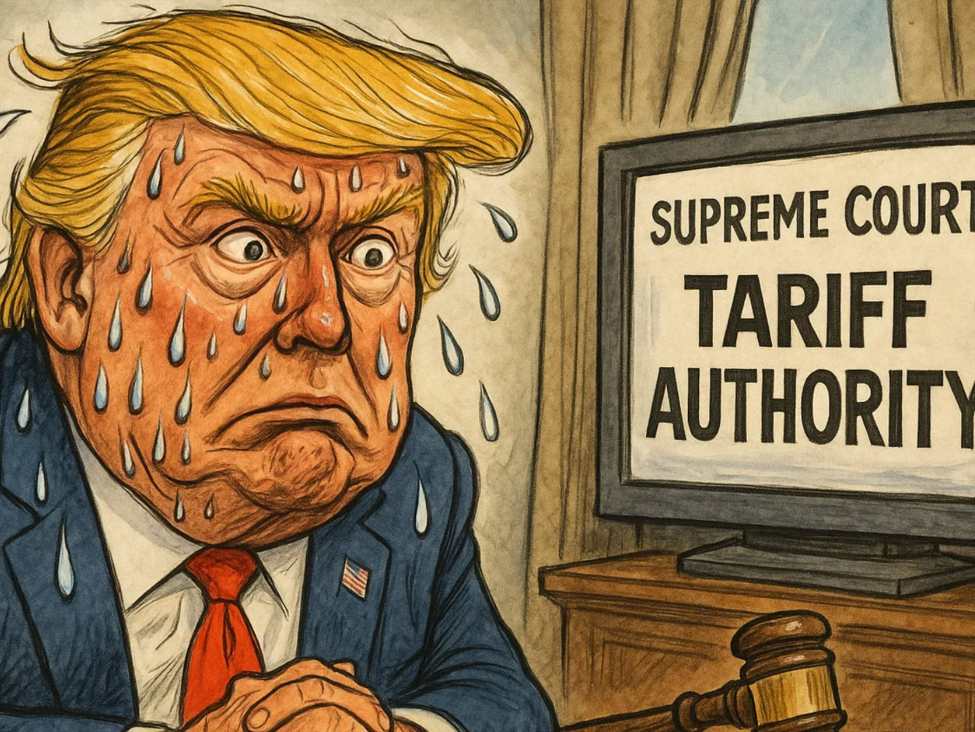
US tariffs refund could top $175 billion if the Supreme Court rules against Trump
The group is the one managing the infamous Penn Wharton Budget Model (PWBM), which provides fiscal budget projections and economic analysis of major US legislation without advocacy. And by their estimates, the US could owe over $175 billion in tariff refunds should the Supreme Court rule against Trump’s broad emergency tariffs.As a reminder, the Supreme Court will be rendering opinions and decisions later today. And that means a ruling on Trump’s tariffs could be on the agenda. There will not be any confirmation of that of course in the lead up to what is announced on decision days. So, just take note of that.After the one today, there will be more decision days next week on 24 and 25 February. As an added reminder, the court has until June to make a decision. But given the importance and weight of Trump’s tariffs, it is expected that they might announce a verdict sooner rather than later.Circling back to the PWBM estimate of over $175 billion, that is nothing to scoff at. That amount itself will exceed the total 2025 fiscal outlays from the Department of Transportation (~$128 billion) and Department of Justice (~$45 billion) combined.And that will also eat heavily into tariffs revenue, in which the Congressional Budget Office estimates at about $300 billion annually over the next decade.Now, I just want to say that the whole process of “refunding” is not going to be an easy task. In fact, there are going to be a lot of complications not just from a monetary perspective but from a legal one. Some food for thought:Who deserves to get paid first in terms of refunds? What is the order of any payout?Do consumers and retailers deserve a clawback too? That especially since tariffs have clearly passed through to them.What happens to the federal budget in just taking out the $175 billion now?And what if the US administration decides to offer “duty credits” instead of paying the full amount out? This article was written by Justin Low at investinglive.com. 🔗 Source 💡 DMK Insight The potential $175 billion in tariff refunds could shake market sentiment significantly. If the Supreme Court rules against Trump’s emergency tariffs, it won’t just impact government budgets; it could ripple through sectors reliant on trade policies. Traders should be aware that this could lead to volatility in related markets, especially in commodities and sectors like manufacturing that are sensitive to tariff changes. Keep an eye on how this plays out in the coming weeks, as any ruling could trigger immediate reactions in stock prices and forex pairs tied to the US dollar. The broader implications for inflation and consumer spending could also alter trading strategies, particularly for those holding long positions in affected sectors. On the flip side, if the ruling favors the administration, we might see a short-term boost in market confidence, but the long-term effects on trade relations could still weigh heavily. Watch for key economic indicators and market reactions as the ruling date approaches, as this could be a pivotal moment for traders looking to position themselves ahead of potential market shifts. 📮 Takeaway Monitor the Supreme Court’s ruling on tariffs closely; a negative outcome could trigger significant market volatility and impact sectors reliant on trade.