
 Bitcoin
  Ethereum
  Tether
  BNB
BNB  XRP
XRP  USDC
USDC  Solana
  TRON
TRON  Lido Staked Ether
  Figure Heloc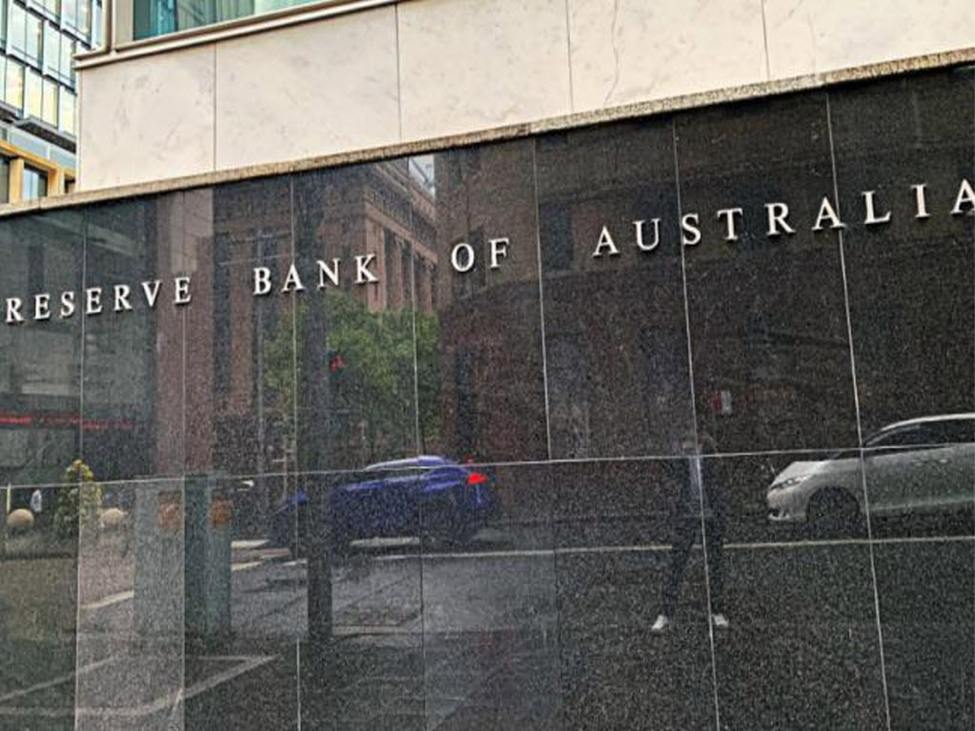
Reserve Bank of Australia minutes feature on the event agenda, preview here. Otherwise it could well be a bit dreary here today. This article was written by Eamonn Sheridan at investinglive.com. 🔗 Source 💡 DMK Insight The Reserve Bank of Australia’s minutes are set to drop soon, and here’s why that matters: traders need to brace for potential volatility. The RBA’s insights could signal shifts in monetary policy that impact the Australian dollar and broader forex markets. If the minutes reveal a hawkish stance, we might see the AUD strengthen against major pairs, especially if inflation concerns are highlighted. Conversely, a dovish tone could lead to a sell-off in the AUD, particularly against currencies like the USD and JPY. Look for key levels around recent support and resistance zones in AUD/USD and AUD/JPY. If the RBA hints at future rate hikes, watch for the AUD/USD to test resistance levels above 0.6500. On the flip side, if the minutes suggest a more cautious approach, we could see a drop below 0.6400. Traders should also keep an eye on correlated assets like commodities, as shifts in the AUD often reflect changes in commodity prices, particularly gold and iron ore. The immediate impact could unfold within the next few hours after the release, so stay alert for market reactions. 📮 Takeaway Watch for the RBA minutes today; a hawkish tone could push AUD/USD above 0.6500, while a dovish stance might see it drop below 0.6400.
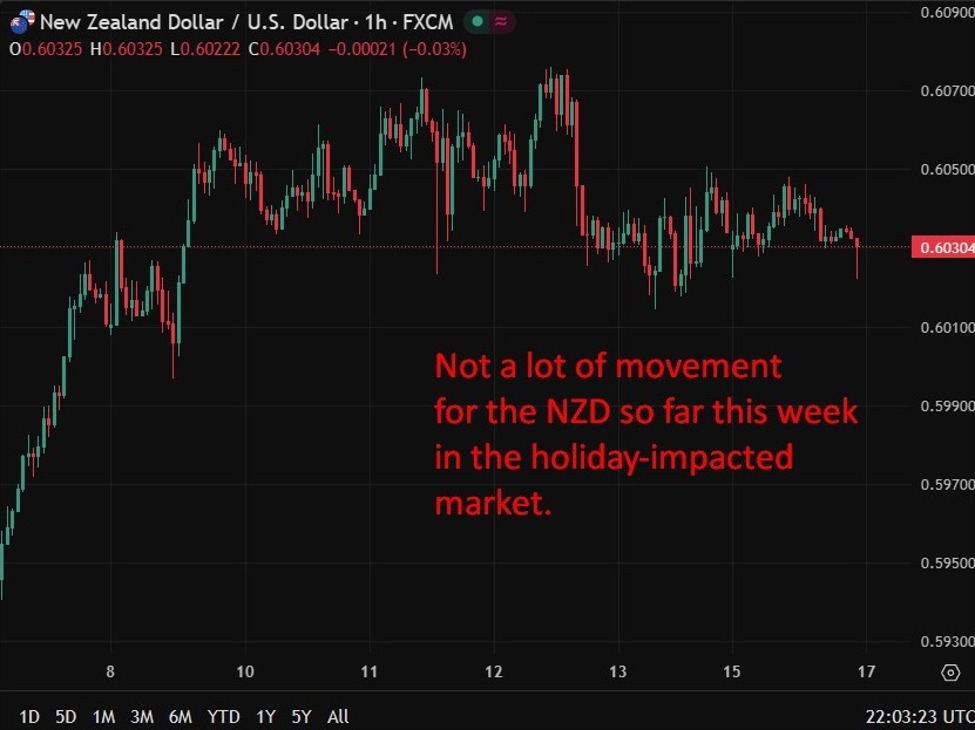
RBNZ expected to hold rates as higher food price inflation adds limited pressure
The RBNZ is expected to hold rates steady, but a recent lift in food price inflation adds nuance. Markets will focus on the tone of the statement, with the NZD at risk if policymakers sound more relaxed about inflation.SummaryReserve Bank of New Zealand meets Wednesday, 18 February 2026; policy widely expected to remain on hold.statement due 2pm New Zealand time (0100 GMT / 2000 US Eastern time on Tuesday 17 February)Recent inflation data showed some renewed firmness, with food prices posting a noticeable jump.Headline pressures are not yet viewed as enough to force immediate tightening.Statement tone will be closely watched for hints on persistence in domestic inflation.NZD vulnerable to downside if the Bank leans dovish or emphasises growth risks.The Reserve Bank of New Zealand is set to deliver its latest policy decision on Wednesday, 18 February, with markets widely expecting the Official Cash Rate to remain unchanged.Recent inflation data have added a layer of interest to the meeting. While overall price growth remains broadly consistent with a gradual disinflation trend, the latest figures showed a renewed lift in food price inflation. New Zealand Food Prices in January +2.5% m/mprior 0.3%+4.6% y/y (prior +4%)Food prices make up nearly 19 percent of the consumer price index.The move was not extreme, but it was noticeable enough to remind markets that price pressures have not fully disappeared. Food costs can be volatile, yet sustained strength in this component has the potential to influence inflation expectations if it persists.Despite this, the broader picture does not yet appear strong enough to compel the RBNZ into a rate increase. Economic momentum has been uneven, and policymakers are likely to balance signs of lingering inflation against ongoing risks to household demand and business confidence.The key for markets may lie less in the decision itself and more in the accompanying statement. If the Bank highlights upside risks from domestic price pressures, including food and services inflation, expectations for future tightening could firm modestly. However, if policymakers lean into concerns about growth or signal confidence that inflation will continue to ease over time, rate expectations may soften.Currency markets are sensitive to tone shifts. With positioning already cautious, a statement that fails to reinforce a tightening bias could leave the New Zealand dollar vulnerable to a modest pullback. Conversely, any suggestion that inflation risks remain skewed to the upside may help stabilise the currency.For now, the baseline remains a steady hand, watchful, data-dependent and alert to both inflation persistence and downside growth risks. This article was written by Eamonn Sheridan at investinglive.com. 🔗 Source 💡 DMK Insight The RBNZ’s decision to hold rates steady could be a double-edged sword for the NZD. While a stable rate might initially seem supportive, rising food price inflation could signal underlying economic pressures. If the RBNZ’s statement leans towards a more relaxed stance on inflation, traders might see the NZD weaken as market sentiment shifts. Keep an eye on the tone of the announcement—if they downplay inflation risks, it could trigger a sell-off in the NZD. On the flip side, if they acknowledge inflation concerns, it could bolster the currency as traders anticipate future rate hikes. Watch for key levels around recent support and resistance zones in the NZD/USD pair, as these will be critical in gauging market reactions post-announcement. The immediate impact will likely be felt on the daily charts, but the long-term implications could shape trading strategies for weeks to come. 📮 Takeaway Monitor the RBNZ’s statement on February 18—any relaxed tone on inflation could weaken the NZD significantly.
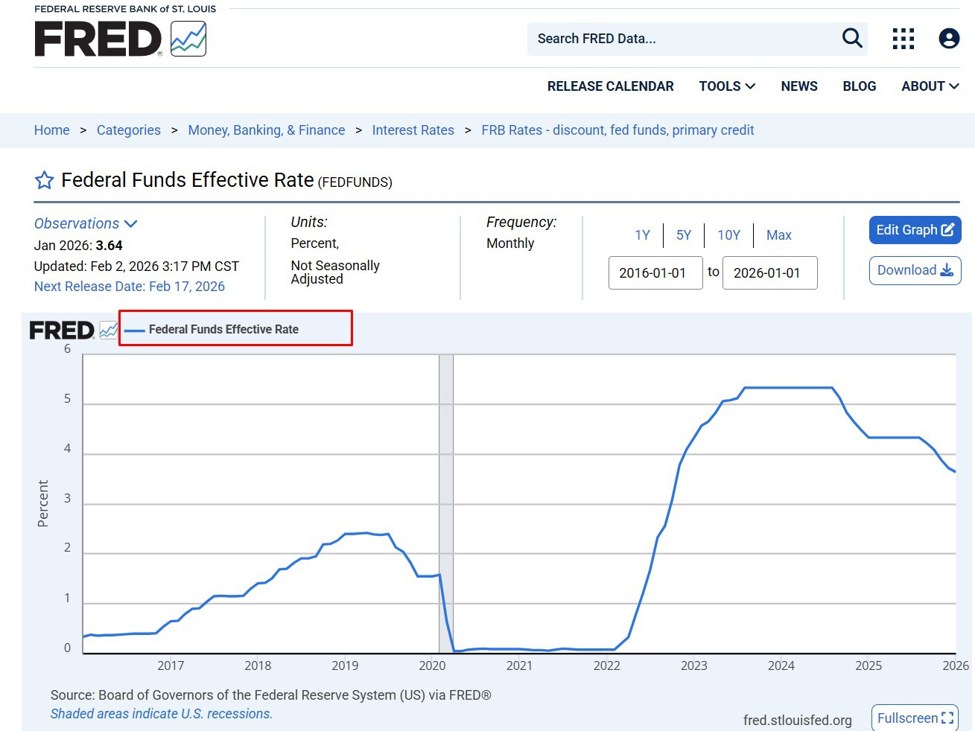
Soft landing looks more plausible, but the Fed isn’t ready to call it done.
Soft landing looks more plausible, but the Fed isn’t ready to call it done.This is via the Wall Street Journal (gated), I’ve summarised. Summary:Key US macro “vital signs” are aligned: inflation is easing, jobs are holding up, and growth remains solid.Core CPI slowed to 2.5% y/y in January, while unemployment edged down to 4.3%.The Fed’s preferred inflation gauge is running closer to 3%, keeping officials wary that progress could stall above 2%.Job gains have been modest and narrow, leaving the labour market potentially more fragile than headline prints suggest.Risks run both ways: a consumer slowdown or AI-linked corporate cost-cutting on one side, and resilient demand keeping inflation sticky on the other. The US economy is showing the clearest combination of falling inflation, steady employment and firm growth seen since before the pandemic, reviving hopes that a “soft landing” may be within reach. Recent data have strengthened the case that inflation can cool back toward the Federal Reserve’s 2% goal without the economy slipping into recession, even as policymakers and forecasters remain cautious about declaring success.January’s inflation report showed underlying price pressures continuing to moderate. Core consumer prices were up 2.5% from a year earlier, the lowest since 2021. Some of that improvement has been influenced by technical factors, but the reading also suggested less of the early-year reflation pattern that unsettled markets in recent years. On the jobs side, the unemployment rate ticked down to 4.3%, and payrolls rose by around 130,000, pointing to a labour market that is cooling but not cracking.Still, confidence remains restrained because the Fed’s preferred inflation measure has been running nearer 3% than 2%, and progress has been uneven since mid-2025. Several forecasters expect inflation to prove sticky this year as tariff-related costs filter through supply chains and into retail pricing. That backdrop has shifted the Fed’s concern from a renewed inflation surge to the risk that inflation settles above target.There are also questions about labour-market durability. Revised data indicate job creation last year was modest by historical standards and concentrated in a narrow set of sectors. The unemployment rate has been stable partly because firms have slowed hiring without moving to widespread layoffs, a balance that could shift quickly if growth or corporate profitability stumbles.Potential triggers include cost-cutting among companies disrupted by the AI-driven reshuffle of winners and losers, or a sustained market drawdown that dents household wealth and spending. But the bigger near-term inflation risk may be the opposite: consumers staying resilient enough to keep services inflation firm and price pressures lodged above 2%. Under the surface, shelter inflation appears to be cooling, yet non-housing services remain sticky, and tariff-sensitive goods categories have shown signs of re-acceleration.The economy is closer to a soft landing than many believed possible a few years ago, but the outcome is not locked in. If growth holds up, political pressure for rate cuts could intensify even if the traditional case for easing is weak. With leadership change at the Fed approaching, the next phase may hinge as much on policy choices as on the incoming data. This article was written by Eamonn Sheridan at investinglive.com. 🔗 Source 💡 DMK Insight The Fed’s cautious stance amidst improving macro indicators is a double-edged sword for traders. With SOL currently at $85.06, the potential for a soft landing could boost risk assets, but the Fed’s reluctance to signal an end to rate hikes keeps volatility high. Traders should watch for how SOL reacts to broader market sentiment, especially if inflation continues to ease and job growth remains strong. If SOL can break above recent resistance levels, it could signal a bullish trend, but any hawkish comments from the Fed could lead to quick sell-offs. Keep an eye on the $90 resistance level; a sustained break above could attract more buyers, while a dip below $80 might trigger stop-losses and further downside. Here’s the thing: while the macro picture looks promising, the Fed’s indecision could lead to choppy trading conditions. Traders should monitor the upcoming CPI data and Fed statements closely for any shifts in sentiment. 📮 Takeaway Watch SOL closely around the $90 resistance; a break could signal bullish momentum, while a drop below $80 may trigger selling pressure.
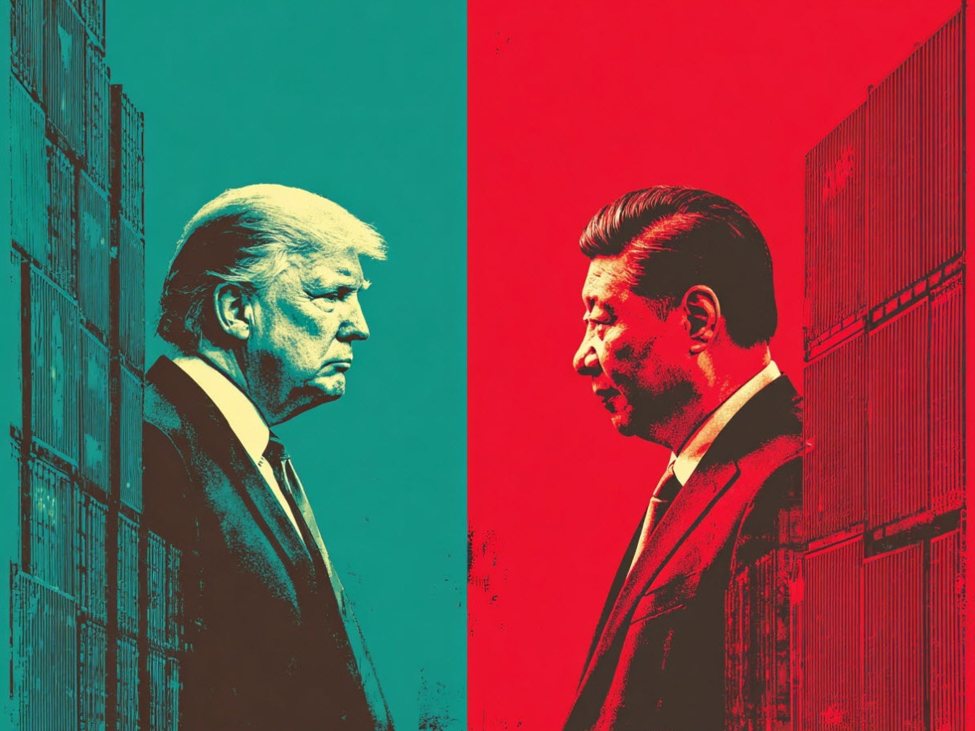
ICYMI: China to remove tariffs on imports from 53 African nations from May 1
China will implement zero tariffs on imports from 53 African countries from May 1, broadening earlier waivers and deepening economic ties, in contrast to the US administration’s more protectionist tariff stance.Summary:China to eliminate tariffs on imports from 53 African nations from May 1, 2026.Policy applies to all countries with diplomatic ties to Beijing, expanding beyond least-developed economies.Move framed as deepening economic ties and expanding market access for African exports.Comes as Washington under Donald Trump increases tariffs and trade barriers.Highlights contrasting trade strategies between Beijing and the US.China will remove tariffs on imports from 53 African countries beginning May 1, 2026, in a sweeping trade initiative designed to deepen economic ties across the continent and reinforce Beijing’s influence in the Global South.President Xi Jinping announced the policy in a message to the African Union Summit in Addis Ababa, confirming that all African nations with diplomatic relations with China will receive zero-tariff treatment. The measure significantly expands earlier arrangements that had applied primarily to the continent’s least-developed economies.State media said the policy would be accompanied by efforts to negotiate additional joint economic partnership agreements and further broaden market access through upgraded trade facilitation mechanisms, including expanded “green channel” processes aimed at speeding African exports into China.The initiative represents one of Beijing’s most comprehensive tariff liberalisations toward a single region and underscores China’s longer-term strategy of anchoring trade, infrastructure and commodity relationships across Africa. China has already established itself as the continent’s largest trading partner, and tariff-free access could further increase flows of agricultural goods, minerals and manufactured products into the Chinese market.The announcement also lands against a sharply different global trade backdrop. In Washington, the administration of President Donald Trump has intensified tariff measures, arguing that higher import duties are necessary to protect domestic industries and rebalance trade. Recent US tariff actions have raised concerns about renewed inflationary pressures and supply-chain costs.By contrast, Beijing’s move signals an outward-facing posture, positioning China as a proponent of market access and South-South trade integration. The policy could strengthen diplomatic alignment while reinforcing supply chains for key commodities.The practical economic impact will depend on utilisation rates and product composition, but the symbolic message is clear: at a time of rising protectionism in parts of the developed world, China is leaning into tariff liberalisation to consolidate influence across emerging markets. This article was written by Eamonn Sheridan at investinglive.com. 🔗 Source 💡 DMK Insight China’s zero tariffs on imports from 53 African countries could reshape trade dynamics significantly. This move, effective May 1, 2026, signals a strategic pivot towards strengthening economic ties with Africa, contrasting sharply with the U.S.’s protectionist policies. For traders, this could mean increased commodity flows from Africa, impacting related markets like metals and agricultural products. Keep an eye on how this affects supply chains and pricing in those sectors. Additionally, the potential for increased investment in African economies could lead to currency fluctuations, particularly in the African currencies involved. But here’s the flip side: while this could boost trade volumes, it also raises questions about the sustainability of these economic ties and whether they might lead to over-reliance on specific markets. Traders should monitor developments closely, especially any shifts in currency valuations or commodity prices as the May deadline approaches. 📮 Takeaway Watch for shifts in commodity prices and African currency valuations as May 2026 approaches, given the potential impact of China’s tariff elimination.
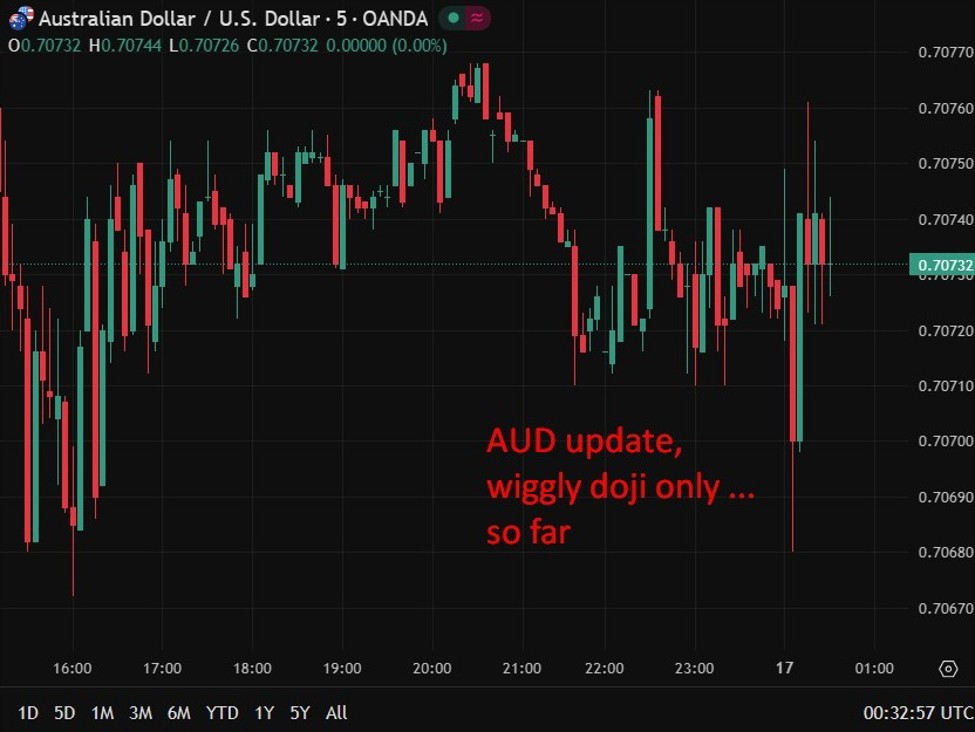
RBA minutes show inflation risks ‘shifted materially’ behind February rate hike
RBA minutes show the February rate hike was driven by stronger-than-expected data, persistent broad-based inflation and easing financial conditions, with policymakers emphasising data dependence and no preset rate path.Board judged risks to inflation and employment had “shifted materially”, strengthening case for February hike.Members agreed inflation would likely stay above target too long without a policy response.Cash rate lifted 25bp to 3.85%; holding was considered but hike deemed stronger option.No preset path for rates; future decisions explicitly data dependent.Demand exceeding supply, labour market still tight, financial conditions seen as having eased.Minutes from the Reserve Bank of Australia’s February meeting show policymakers concluded a rate rise was necessary after judging that risks to both inflation and employment had shifted in a more concerning direction.Board members agreed that, absent a policy response, inflation would likely remain above the 2–3% target band for too long. Data since the prior meeting had generally surprised on the upside, reinforcing concerns that price pressures were proving more persistent than expected.Although the option of leaving the cash rate unchanged at 3.60% was discussed, members ultimately agreed that the stronger case was to lift rates by 25 basis points to 3.85%. The decision was unanimous and reflected a view that excess demand in the economy was unlikely to correct if policy settings remained unchanged.The minutes highlight that demand is now clearly exceeding aggregate supply and is forecast to do so for some time. Inflation was described as broad-based, with pressures unlikely to ease sufficiently without tighter policy. Labour market conditions were also seen as firm, with downside risks having diminished and labour costs still elevated.Financial conditions were another focus. Members noted that conditions had eased materially, with banks lending freely and credit growth strong. House prices and mortgage lending had accelerated, prompting concern that policy was no longer as restrictive as assumed, even accounting for the recent appreciation in the Australian dollar.At the same time, the board stressed uncertainty. Risks were judged to be present on both sides of the outlook, and members acknowledged it was not possible to have a high degree of confidence in any specific future path for the cash rate. Incoming data would determine whether further tightening was required.The broader global backdrop was also seen as more resilient than anticipated, supported in part by strong AI-related investment. For now, the RBA’s message is clear: policy has tightened in response to persistent inflation, but the next move remains contingent on how the data evolve.—From the day:RBA unanimous 25bp hike, lifts inflation forecasts and signals more tightening in 2026RBA governor Bullock says that inflation pulse is too strongRBA governor Bullock says the Australian economy is in a good positionPlenty since then:Bullock says RBA needs tighter policy as capacity constraints lift inflation risksRBA’s Hauser says inflation too high, vows action to return to target. AUD jumps.Bullock: higher AUD and rates will cool demand, RBA open to more hikes if neededRBA’s Sarah Hunter says labour market tight, inflation to stay above target This article was written by Eamonn Sheridan at investinglive.com. 🔗 Source 💡 DMK Insight The RBA’s recent minutes reveal a hawkish stance, and here’s why that matters: stronger-than-expected data and persistent inflation are pushing rates higher. Traders should note that the emphasis on data dependence suggests volatility in the forex market, particularly for AUD pairs. If inflation remains above target, we could see further rate hikes, which would strengthen the Australian dollar against its peers. This is crucial for day traders and swing traders who are looking to capitalize on short-term movements. Watch for key economic releases that could sway RBA decisions, as these will likely impact AUD/USD and AUD/JPY significantly. The shift in risk assessment indicates that the RBA is prepared to act aggressively if inflation persists, which could lead to a cascading effect on global markets, especially in commodities tied to the Australian economy. Keep an eye on the upcoming inflation data releases; a surprise could trigger sharp moves in the AUD. If inflation data comes in hotter than expected, it could push the AUD higher, breaking through resistance levels, while a miss could see it retrace quickly. 📮 Takeaway Watch for upcoming inflation data; a stronger reading could push AUD higher, impacting AUD/USD and AUD/JPY significantly.
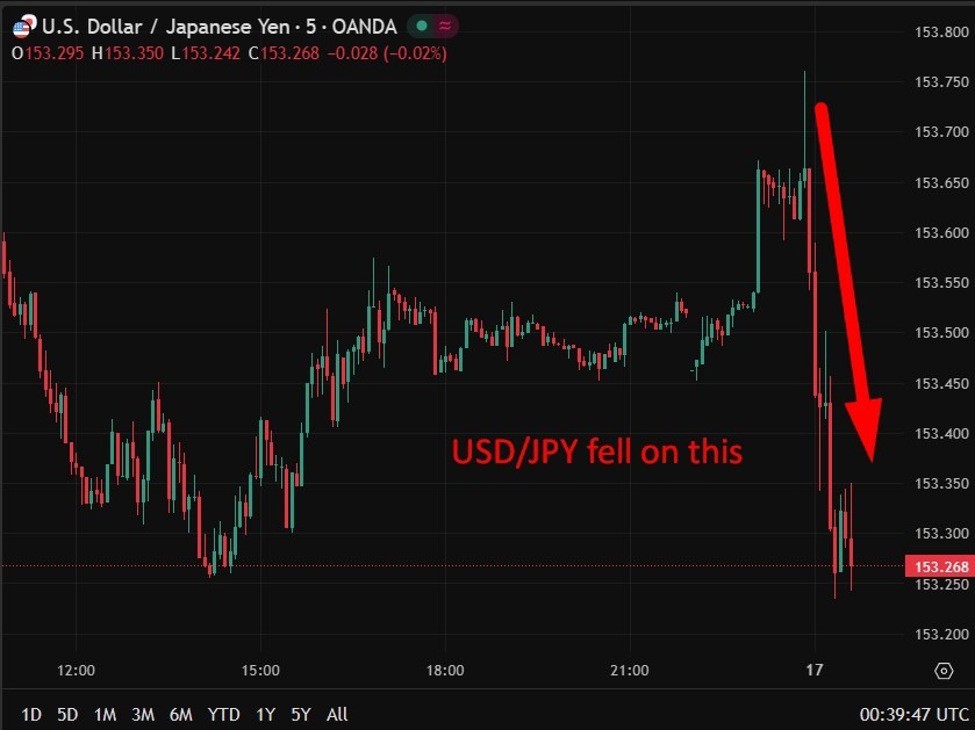
BOJ likely to raise rates 25bp April, former board member says. Gradual move toward 1.25%
A former BOJ board member says April is the most likely timing for the next rate hike, as policymakers await wage data and updated forecasts, signaling a cautious but ongoing normalization process.This comes via Bloomberg (gated)Former BOJ board member Seiji Adachi says April is the most likely timing for the next rate hike.March move seen as risky due to limited confirmation on wages and inflation trends.April meeting will include wage negotiation outcomes, Tankan surveys and updated forecasts.PM Sanae Takaichi unlikely to block hikes due to market sensitivity, particularly yen risks.BOJ seen as more proactive, potentially lifting rates toward 1.25% as normalization progresses.The Bank of Japan is increasingly likely to deliver its next interest rate increase in April rather than March, according to former board member Seiji Adachi, who argues policymakers will prefer firmer confirmation on wages and inflation before acting again.Speaking to Bloomberg, Adachi said a March hike would rely too heavily on forward-looking expectations rather than verified data. By contrast, the late-April policy meeting will give officials access to a fuller set of indicators, including results from annual wage negotiations, updated business and household sentiment surveys, and the central bank’s revised economic outlook report.The timing matters. Japan’s large firms are not expected to conclude key wage agreements until late March, meaning the board meeting that ends March 19 would likely precede meaningful clarity on pay trends. Sustained wage growth is a central pillar of the BOJ’s normalization strategy, underpinning confidence that inflation can be maintained around its 2% target without renewed deflation risks.Adachi’s comments come as current board members have signaled that further tightening is in the pipeline following December’s rate increase, which lifted the policy rate to 0.75%, the highest level in roughly three decades. More hawkish voices within the board have hinted that spring could be an appropriate window for additional action.Political risks appear manageable for now. Prime Minister Sanae Takaichi, fresh from a decisive election victory, is not expected to obstruct the normalization process. According to Adachi, overt pressure to delay rate hikes could unsettle financial markets and weaken the yen, an outcome policymakers would prefer to avoid. After her first post-election meeting with Governor Kazuo Ueda, no specific policy requests were reported.Adachi also suggested the BOJ has shifted toward a somewhat more proactive stance since his departure last year. Less emphasis is being placed on the lower bound of estimates for Japan’s neutral rate, implying a desire to rebuild policy space after years of ultra-loose settings.While he sees scope for rates to rise toward 1.25%, he is less certain about moves beyond that level, given Japan’s modest potential growth rate. Recent data showing subdued annualized GDP growth reinforce the view that tightening will proceed cautiously. For the BOJ, returning rates to around 1.25% would mark a symbolic completion of its exit from crisis-era deflation policies — but the path there remains deliberately measured. This article was written by Eamonn Sheridan at investinglive.com. 🔗 Source 💡 DMK Insight The BOJ’s potential rate hike in April could shake up the forex markets, especially for pairs involving the yen. With ADA currently at $0.28, traders should keep an eye on how this news impacts broader market sentiment. A rate hike could strengthen the yen, leading to volatility in crypto and forex pairs. If the BOJ follows through, expect a ripple effect on risk assets, including cryptocurrencies like ADA. The market’s reaction to wage data and forecasts will be crucial, so monitoring these indicators in the coming weeks is essential. If ADA holds above $0.25, it could signal resilience against potential yen strength, but a dip below that level might indicate bearish sentiment. Watch for the April timeline and any shifts in wage data—these could be pivotal for both forex and crypto trading strategies. 📮 Takeaway Keep an eye on ADA’s support at $0.25 as the BOJ’s April rate hike approaches; volatility could spike based on wage data outcomes.

Reminder, China, Singapore & Hong Kong markets are all closed today, Tuesday, February 17
I’ve been posting this information late last week and earlier this week, but ICYMi. Summary:Lunar New Year 2026 (Year of the Horse) falls on Tuesday 17 Feb.Mainland China markets are scheduled to be closed Feb 16–23, reopening Tue Feb 24.Hong Kong is closed Feb 17–19, and reopens Fri Feb 20.Singapore (SGX) is closed Feb 17–18.China is running an extended nine-day Spring Festival holiday (Feb 15–23) with officials expecting a record travel surge, supportive for consumption narratives, but liquidity will be thin.Lunar New Year 2026 lands on Tuesday 17 February and, as usual, it will reshape trading conditions across mainland China, Hong Kong and Singapore, with liquidity effects often as important as the headlines.Onshore, China’s equity market enters its biggest scheduled trading interruption of the year.The Shenzhen Stock Exchange calendar shows the market closed from Monday 16 February through Monday 23 February, resuming Tuesday 24 February.The Shanghai Stock Exchange (SSE) will be closed for the 2026 Lunar New Year (Spring Festival) from Monday, February 16, 2026, to Monday 23 Feb 2026 (inclusive) Reopens: Tuesday 24 Feb 2026With A-shares shut, price discovery shifts offshore (CNH, H-shares, ADRs, commodities proxies), while onshore macro/credit headlines can “bottle up” and reprice quickly when domestic trading resumes.This year the macro overlay is the extended nine-day public holiday (Feb 15–23) and a policy push to encourage spending and travel, with officials projecting a record travel rush. That tends to support short-term themes in consumer, travel, catering, duty-free and tourism names, while also lifting scrutiny on high-frequency indicators (mobility, domestic flight bookings, hotel occupancy, box office, and retail receipts) as a real-time read on confidence.Hong Kong becomes the key regional venue for China beta during the A-share closure. HKEX lists half-day trading on Monday 16 February (Lunar New Year’s Eve) and full market holidays Tuesday 17 through Thursday 19 February, with normal trade resuming Friday 20 February. Expect thinner depth, wider spreads and a higher sensitivity to CN headlines.Singapore also sees disrupted liquidity. SGX notes half-day trading on 16 February, with the market closed 17–18 February. Regionally, the practical market impact is a short window where positioning gets lighter, volatility can be jumpy on small flows, and “reopen gaps” become a feature, especially if FX or commodities move sharply while China is closed. This article was written by Eamonn Sheridan at investinglive.com. 🔗 Source 💡 DMK Insight The upcoming Lunar New Year holiday is a significant event for traders, especially those focused on Asian markets. With mainland China and Hong Kong markets closing from February 16 to 23, liquidity could drop sharply, impacting volatility across various assets. Traders should be aware that this period often leads to reduced trading volumes and can create erratic price movements in both crypto and forex markets. Moreover, the Year of the Horse could bring a shift in sentiment, as historical patterns suggest that certain sectors may perform better during this time. For instance, commodities tied to consumer spending in China, like gold and silver, might see increased interest as the holiday approaches. Keep an eye on how major pairs like USD/CNY react leading up to the holiday, as any unexpected moves could signal broader market shifts. The real story is that while many traders might overlook this holiday, it can create hidden opportunities for those who prepare. Watch for any pre-holiday positioning by institutional players, as they might adjust their strategies ahead of the closures. 📮 Takeaway Monitor USD/CNY and commodity movements as Lunar New Year approaches; expect volatility from February 16 to 23 due to market closures.
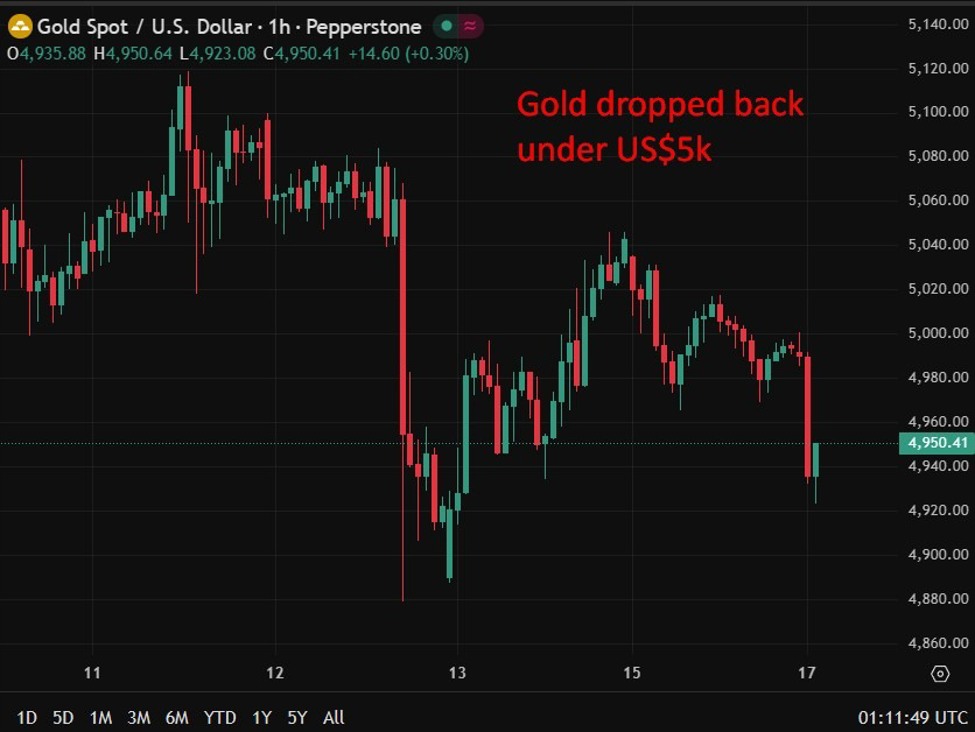
Gold and silver both lower into thin Asia trade
An update on these two losing ground. There is no fresh news driving price. This article was written by Eamonn Sheridan at investinglive.com. 🔗 Source 💡 DMK Insight So, these two assets are losing ground without any fresh news, and here’s why that matters: traders often look for catalysts to justify price movements. When there’s no news, it raises questions about the underlying strength of these assets. Are they simply following broader market trends, or is there something more concerning at play? In a stagnant environment, technical levels become crucial. If these assets break below key support levels, it could trigger further selling pressure, especially from retail traders who might panic without any positive news to hold onto. Conversely, if they manage to hold their ground, it could signal resilience, attracting buyers looking for value. Keep an eye on the daily charts for any signs of reversal or continued weakness. The flip side is that sometimes, a lack of news can lead to a buildup of pent-up demand. If traders start seeing value at lower prices, we could see a rebound. Watch for volume spikes as a potential indicator of this shift. Overall, monitor the support levels closely and be prepared for volatility as traders react to the absence of news. 📮 Takeaway Watch for key support levels on the daily charts; a break could signal further declines, while resilience might attract buyers.
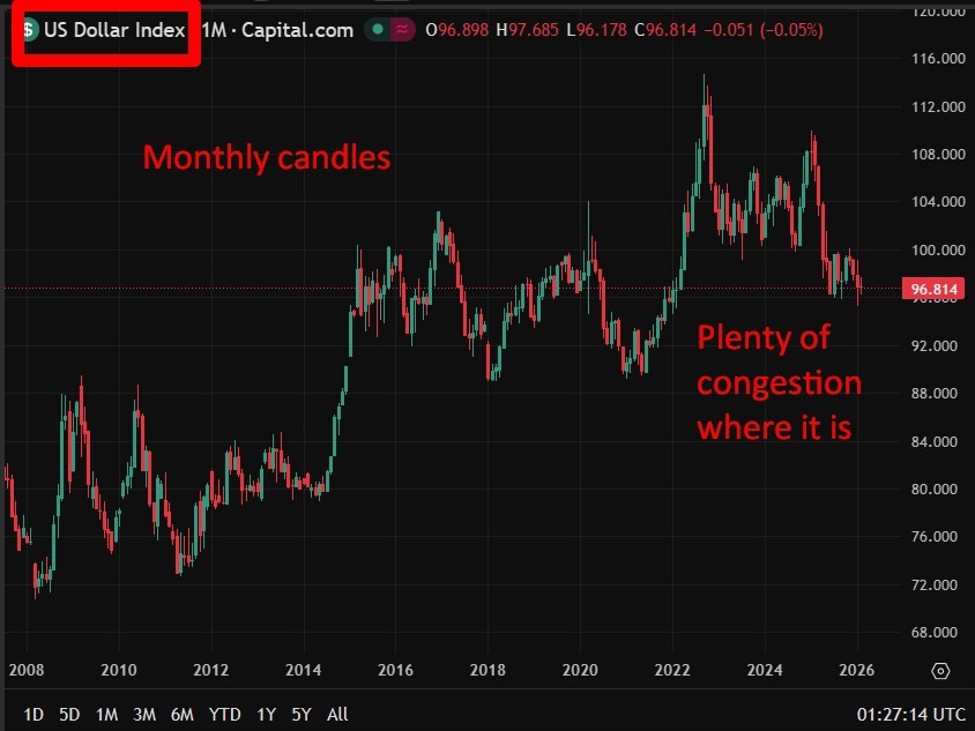
US dollar positioning hits record underweight in Bank of America survey
Dollar positioning has reached its most negative level on record in Bank of America’s survey, reflecting broad expectations of US softness and potential Fed easing, with labour market risks seen as the main catalyst for further weakness.Summary:Investor positioning in the US dollar has fallen to its most negative level since at least January 2012.Net exposure to the greenback is at a record underweight in Bank of America’s latest survey.Short positioning exceeds previous bearish extremes, including last April’s lows.Concerns over Fed independence have eased, but this has not revived demand for the dollar.Survey respondents see further US labour market weakness as the key downside risk for the currency.Investor sentiment toward the US dollar has turned decisively bearish, with positioning now at the most underweight level on record in Bank of America’s FX and rates sentiment survey, which dates back to January 2012.The February survey shows net exposure to the dollar falling to unprecedented lows, with short positioning, effectively bets that the currency will decline, reaching its most extreme level in more than 14 years. Exposure has dropped below the previous trough seen last April, underscoring the scale of the shift in conviction against the greenback.The positioning reflects a broad consensus that the dollar faces downside risks. Market participants appear to be leaning toward a softer outlook for US growth and inflation, alongside expectations that Federal Reserve policy could ease over time. Notably, concerns about the Fed’s institutional independence have diminished following President Donald Trump’s nomination of Kevin Warsh as the next Fed Chair. However, the easing of those political anxieties has not translated into renewed appetite for US assets or a rebound in dollar demand.Instead, respondents to the survey cite further deterioration in the US labour market as the primary catalyst that could drive the currency lower. While headline employment data have remained relatively stable, any meaningful softening in hiring or a rise in unemployment could reinforce expectations of rate cuts and widen interest rate differentials against the dollar.At the same time, such extreme positioning introduces asymmetry. When market consensus becomes heavily one-sided, currency moves can become more volatile, particularly if incoming data or Fed communication challenge prevailing assumptions. A surprise upside inflation print or firmer labour market data could force rapid short-covering.For now, however, the message from positioning data is clear: investors are aligned for a weaker dollar. Whether that trade extends or reverses will depend largely on the evolution of US macro data and signals from the Federal Reserve in coming months. This article was written by Eamonn Sheridan at investinglive.com. 🔗 Source 💡 DMK Insight The US dollar’s positioning is at an all-time low, and here’s why that matters: Bank of America’s latest survey shows a significant shift in sentiment, with investors increasingly bearish on the dollar. This negative positioning suggests that traders are bracing for a potential economic slowdown in the US, driven by concerns over the labor market. If the Fed does ease, as many expect, it could lead to further dollar depreciation, impacting not just forex markets but also commodities priced in dollars. Watch for how this sentiment plays out in the coming weeks, especially with key economic indicators like employment data and inflation reports on the horizon. If the dollar continues to weaken, we might see a rally in gold and other safe-haven assets, which could be a strategic play for traders looking to hedge against dollar risk. On the flip side, this extreme negativity could set the stage for a short squeeze if the dollar unexpectedly strengthens due to positive economic surprises. Keep an eye on the 100-day moving average for the dollar index as a critical level; a bounce from here could trigger a shift in sentiment. The real story is how quickly traders adjust their positions as new data comes in. 📮 Takeaway Monitor the dollar index around the 100-day moving average; a bounce could signal a shift in sentiment amid bearish positioning.
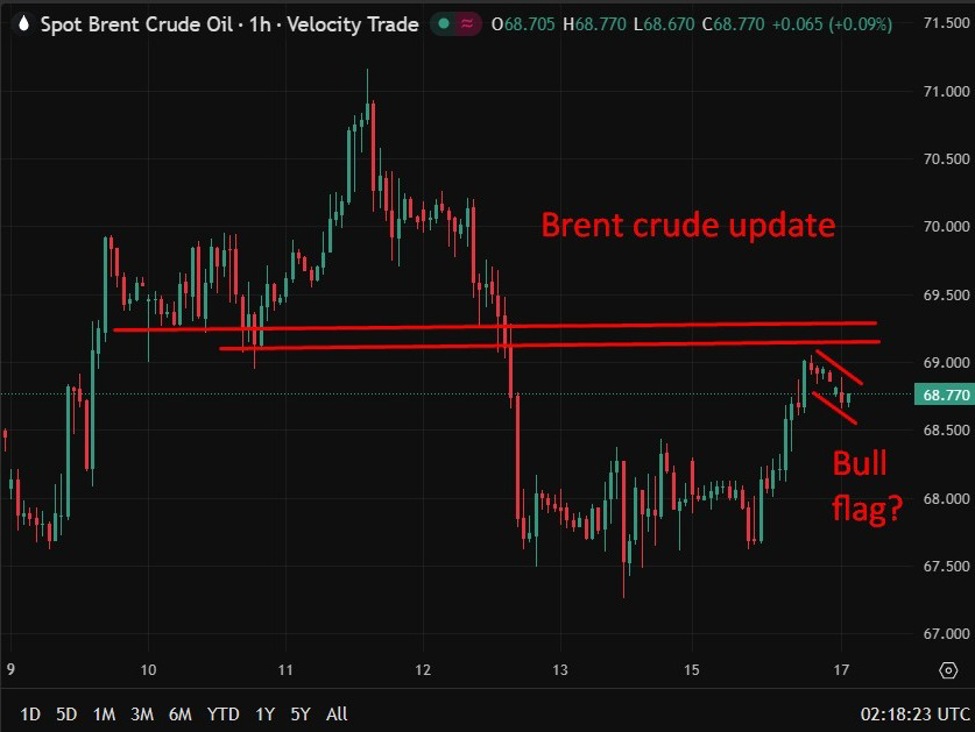
Oil steady as Iran drills near Strait of Hormuz ahead of US talks
Oil prices remain steady as Iran’s Strait of Hormuz drills heighten supply risk ahead of US nuclear talks, while OPEC+ output decisions and prospects for diplomatic progress temper upside.Summary:Oil prices steady as Iran conducts naval drills near the Strait of Hormuz ahead of US nuclear talks.President Donald Trump signals indirect involvement in Geneva discussions, reiterates tough stance.Brent holds near $68–69; WTI trades around mid-$63s amid holiday-thinned liquidity in Asia.OPEC+ seen preparing for possible output increases from April if supply disruptions persist.Base-case outlook from some banks sees eventual Iran and Russia-Ukraine deals weighing on prices toward $60 Brent.Oil prices were broadly steady in thin trade as investors weighed the risk of supply disruptions after Iran launched naval drills near the Strait of Hormuz just ahead of fresh nuclear talks with the United States.Brent crude hovered near the upper-$60s per barrel, while US West Texas Intermediate traded in the low-$60s, with price action partly distorted by the US Presidents Day holiday and Lunar New Year closures across much of Asia. Mainland China, Hong Kong, Singapore, South Korea and Taiwan were among markets observing holidays, limiting liquidity.The focus remains squarely on geopolitics. Iran’s military exercises in the Strait of Hormuz, a critical chokepoint through which a significant share of global oil exports transit, have injected a degree of risk premium into prices. The waterway is a primary export route for major Gulf producers including Saudi Arabia, the United Arab Emirates, Kuwait and Iraq, as well as Iran itself.President Donald Trump said he would be indirectly involved in the Geneva talks, expressing optimism that Tehran wants an agreement, though recent remarks advocating regime change added a layer of unpredictability to the diplomatic backdrop.Market participants broadly view the current pricing as reflecting a modest geopolitical premium. Should tensions ease, whether through progress in US-Iran discussions or developments in the Russia-Ukraine conflict, that premium could unwind quickly. Conversely, any escalation or breakdown in negotiations could tighten supply expectations and push prices higher.Supply dynamics within OPEC+ also remain in focus. Some analysts argue that if disruptions to Russian flows keep Brent in the $65–70 range, the producer alliance may tap spare capacity and increase output from April, particularly as the group positions for peak summer demand. Reports suggest OPEC+ is already leaning toward resuming gradual supply increases.Longer term, some forecasts assume both a US-Iran accommodation and progress in Russia-Ukraine negotiations by mid-year, which could add barrels back to the market and weigh on Brent toward the low-$60s.For now, oil sits in a holding pattern — supported by geopolitical risk but capped by expectations of eventual supply normalization. This article was written by Eamonn Sheridan at investinglive.com. 🔗 Source 💡 DMK Insight Oil prices are holding steady, but here’s why traders should pay attention: geopolitical tensions in the Strait of Hormuz could spark volatility. Iran’s naval drills are a clear signal of heightened supply risks, especially with the Strait being a critical chokepoint for global oil transport. While OPEC+ output decisions and potential diplomatic progress may provide some stability, any misstep in negotiations could lead to a sudden spike in prices. Traders should keep an eye on key resistance levels, particularly if prices approach recent highs. Additionally, the interplay between these geopolitical developments and broader economic indicators, like U.S. inventory data, could create trading opportunities. Watch for any shifts in sentiment as the market reacts to news from the U.S. regarding nuclear talks, as this could lead to rapid price movements. On the flip side, if diplomatic efforts succeed, we might see a pullback in prices as supply concerns ease. But for now, the risk of disruption is tangible. Keep your charts open and monitor the daily price action closely, especially around key support and resistance levels. 📮 Takeaway Watch for oil price reactions as geopolitical tensions rise; key levels to monitor are recent highs and lows, especially during U.S. nuclear talks.