
 Bitcoin
  Ethereum
  Tether
  XRP
XRP  BNB
BNB  USDC
USDC  Solana
  TRON
TRON  Lido Staked Ether
  Figure Heloc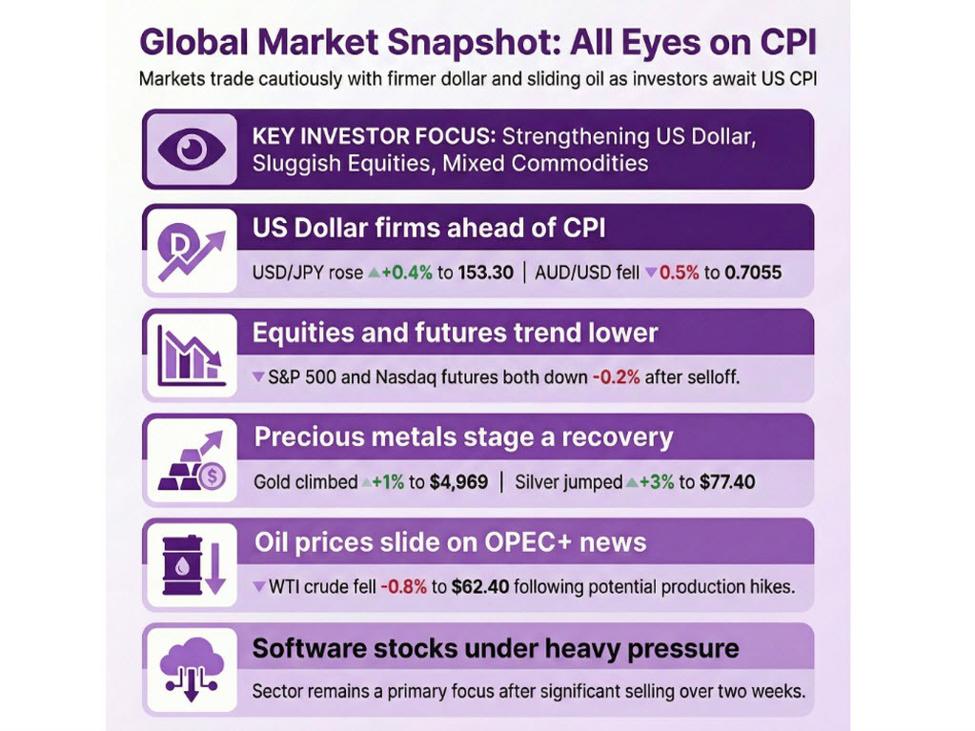
US CPI preview:What is the distribution of forecasts for the US CPI?US January CPI report to offer a cleaner read on inflation developments?Headlines:US futures drop lower as equities look to end the week with a whimperGold at risk of another selloff as traders turn their focus to the US CPI reportHow have interest rate expectations changed after this week’s events?Oil prices dip on report that OPEC+ may resume oil output hikes from AprilEU trade surplus shrinks further in 2025 as US exports tumble while Chinese imports surgedChina holds roundtable meeting with big German companies in BeijingTrump reportedly weighs up plans to scale back on steel and aluminium tariffsUS Treasury secretary Bessent says that metals tariffs decision will be up to TrumpECB policymaker Kazāks: Now is not the time to move interest ratesSwitzerland January CPI +0.1% vs +0.1% y/y expectedSpain January final CPI +2.3% vs +2.4% y/y prelimEurozone Q4 GDP second estimate +0.3% vs +0.3% q/q prelimChina January M2 money supply +9.0% vs +8.4% y/y expectedMarkets:Dollar slightly firmer; USD/JPY up 0.4% to 153.30, AUD/USD down 0.5% to 0.7055European indices slightly lower at the balance; S&P 500 futures down 0.2%, Nasdaq futures down 0.2%Precious metals recover slightly after a quick and sharp drop yesterdayGold up 1.0% to $4,969, silver up 3.0% to $77.40Oil down on report that OPEC+ may resume production hikes in AprilWTI crude oil down 0.8% to $62.40US 10-year yields flat at 4.105%Bitcoin up 1.9% to $67,055There were plenty of headlines to move the session along but none of which mattered all too much, as markets have their sole focus on the US CPI report coming up later today. That’s the key risk event and will be the deciding US data release this week, after markets struggled for firm direction following the non-farm payrolls on Wednesday.It will be a big one to wrap up the week, with it being a long weekend in the US as well as extended holidays in China next week.In terms of market action, there wasn’t anything that stood out in particular in European trading. The dollar kept firmer in a more solid position, with EUR/USD ranging around 1.1850-60 for the most part. Large option expiries at 1.1850 is helping to keep things in check there.Meanwhile, USD/JPY is seen up 0.4% to 153.30 and AUD/USD is down 0.5% to 0.7055 as the dollar kept steadier throughout.Besides that, equities were sluggish with US futures keeping a drag on overall risk sentiment. The focus stays on the AI disruption and software stocks in general. And that is weighing on the market mood on the session. European indices are down across the board with US futures also keeping lower by around 0.2% on the day.In other markets, precious metals are up slightly after the sharp and sudden drop in US trading yesterday. It’s not indicative of much with market players eyeing volatility in risk trades as well with having to focus on the reaction to the US CPI report later. Gold is up 1% on the day to $4,969 with silver up 3% to $77.40.Late on in the session, oil was a notable mover with prices falling after a Reuters report highlighting that OPEC+ may hike production again in April. WTI crude oil dropped from $63.00 to $62.40 now as it moves to test the 200-day moving average again.Elsewhere, Bitcoin is seen up nearly 2% to just above $67,000 but remains poised for a fourth consecutive weekly drop.Well, it’s all riding on the US CPI report next to see if there will be more drama in ending the week. This article was written by Justin Low at investinglive.com. 🔗 Source 💡 DMK Insight US CPI data is looming, and here’s why it matters: inflation readings could dictate market direction. With US futures dropping, traders are clearly nervous ahead of the January CPI report. A cleaner read on inflation could either bolster or undermine the current market sentiment, especially for equities and commodities like gold. If the CPI comes in higher than expected, we might see a further selloff in gold, which is already at risk. Watch for key levels around recent lows in gold prices, as a break could trigger more aggressive selling. On the flip side, if inflation shows signs of cooling, it could provide a much-needed boost to equities. Traders should keep an eye on the 10-year Treasury yield as well; a spike could signal a shift in risk appetite. The immediate impact of the CPI report will be crucial, but the longer-term implications on monetary policy will be even more significant. Watch for volatility in the hours following the release, especially in the gold and equity markets. 📮 Takeaway Monitor the January CPI report closely; a higher reading could trigger a selloff in gold and equities, while a lower reading might stabilize markets.

US consumer price index data coming up next. What to watch for
It’s a mixed up week with non-farm payrolls already passed but CPI scheduled for today. It’s a big one as it could re-frame the debate about how many rate cuts are possible. Notably, despite the strong non-farm payrolls on Wednesday, the market isn’t convinced the Fed will hold. Year-end pricing for rate cuts is up to 59 bps from 48 bps last week.I think the shift in pricing is more-reflective of what’s been happening in stock markets as AI disruption is priced in, particularly in software stocks. The market might be looking at layoffs, economic disruption and multiple contraction. The Fed has been responsive to equity declines in the past, for better or worse.On CPI, the headline is expected to rise +0.3% m/m and 2.5% y/y. Core is also seen at +0.3% and +2.5%.We have some great previews on the report:What is the distribution of forecasts for the US CPI?This one notes that there is somewhat of a skew towards a higher y/y reading in core and headline.US January CPI report to offer a cleaner read on inflation developments?From Justin:As always, the focus will stay on core prices when taking in the report as a whole. And if the annual estimate continues to keep in the middle range between 2% to 3%, it will be tough to see the Fed taking on a much more dovish stance than what they are sticking with currently.In another note:JPMorgan’s US Market Intelligence desk said weaker retail sales and high-frequency indicators have increased the importance of the CPI release, adding that a hawkish CPI print is more likely than a dovish outcome, but does not expect a strong market reaction to a stagflationary reading.Here is the chart: This article was written by Adam Button at investinglive.com. 🔗 Source 💡 DMK Insight CPI data today could shift market sentiment significantly regarding Fed rate cuts. Despite strong non-farm payrolls, traders are skeptical about the Fed’s next moves. If CPI comes in higher than expected, it could reinforce the idea that rate cuts might be further off than some anticipate, leading to volatility across equities and forex markets. Watch for how the dollar reacts; a stronger CPI could push the dollar higher, impacting pairs like EUR/USD and GBP/USD. Conversely, a lower CPI might fuel speculation for earlier rate cuts, potentially boosting risk assets. Keep an eye on the 1.10 level for EUR/USD and 1.25 for GBP/USD as key resistance points. The market’s reaction to this data could set the tone for the rest of the month, so be prepared for sharp moves based on the outcome. 📮 Takeaway Watch today’s CPI release closely; a higher reading could delay rate cuts and strengthen the dollar, impacting major currency pairs.
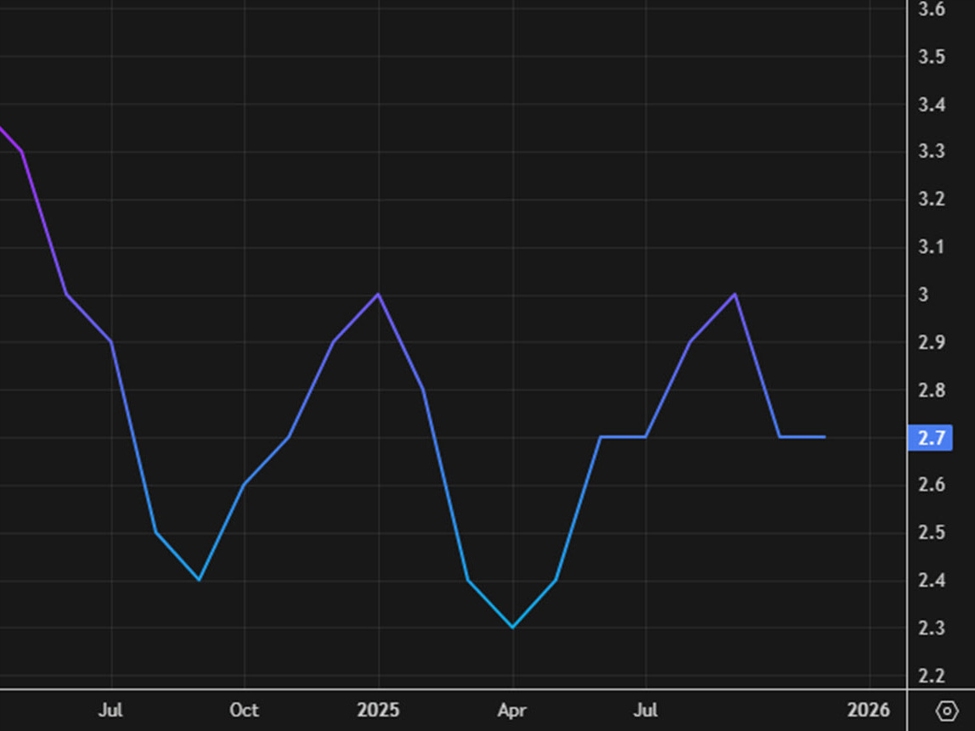
US January CPI +2.4% y/y vs +2.5% expected
Prior was +2.7%m/m CPI +0.2% vs +0.3% expected Prior m/m reading was +0.3%Real weekly earnings +0.5% vs -0.3% prior (revised to -0.5%)Core inflation :Ex food and energy +2.5% vs +2.5% y/y expectedPrior ex food and energy +2.5%Core m/m +0.3% vs +0.3% exp Prior core m/m +0.2%Core goods +1.1%Core services +2.9% y/ySupercore +2.7% y/yUnrounded numbers:Core +0.281% m/m seasonally adjusted, +0.437% NSAThere has been a slight dovish shift in Fed pricing following the data and we can see that in a softer US dollar as well. S&P 500 futures are now flat, erasing the earlier decline.Notably, October CPI data was not collected due to a government shutdown, and November data collection began later than usual, capturing more seasonal holiday discounting. Economists widely cautioned that these disruptions may have artificially depressed the readings. Meat prices were a standout concern, soaring 8.9% annually — the sharpest increase since 2022 — with raw ground beef up nearly 15%. While the cooler-than-expected report was welcomed by markets and supported the case for continued Fed rate cuts, analysts stressed that the December report would provide a clearer picture of underlying inflation trends.On a two-month basis (September to November), the all items index rose 0.2% seasonally adjusted, with core CPI also up 0.2% over that span, implying roughly 0.1% monthly readings for both October and November. Shelter costs, typically one of the stickiest inflation components, rose just 0.2% over the two-month period, slowing sharply from a 3.6% annual pace in September to 3.0% in November. Food prices increased 2.6% annually, down from 3.1% in September, while the energy index jumped 4.2% year-over-year, driven by a 6.9% surge in electricity costs.The Bureau of Labor Statistics reported that the Consumer Price Index for All Urban Consumers (CPI-U) rose 2.7% on an annual basis in November 2025, a notable deceleration from the 3.0% pace recorded in September. Core CPI, which strips out volatile food and energy costs, increased 2.6% year-over-year — its lowest reading since March 2021. This article was written by Adam Button at investinglive.com. 🔗 Source 💡 DMK Insight CPI data just dropped, and it’s a mixed bag—here’s what it means for traders: The latest CPI figures show a m/m increase of 2.7%, slightly above expectations of 0.3%. While core inflation remains steady at 2.5% y/y, the real weekly earnings jumped 0.5%, indicating some wage growth. This could signal a potential shift in consumer spending patterns, which traders need to keep an eye on. If inflation persists or accelerates, the Fed might feel pressured to adjust interest rates sooner than anticipated, impacting both forex and crypto markets. Watch for how this data influences the USD; a stronger dollar could lead to bearish trends in commodities and crypto. Key levels to monitor are the 2.5% core inflation benchmark and the 0.3% core m/m figure. If inflation exceeds these levels in future reports, expect volatility in related assets, particularly in the forex market where currency pairs like EUR/USD could react sharply. Keep an eye on upcoming Fed statements for clues on their next moves. 📮 Takeaway Traders should watch for inflation trends above 2.5% and potential Fed responses, as these could drive volatility in USD and related markets.

Canadian consumer spending dipped in January – RBC cardholder data
It might be the result of a brutally cold winter so far but Canadian consumer spending dipped in January, according to the latest spending tracker from RBC.Using cardholder data, Canada’s largest bank indicated that spending fell across discretionary goods, services and essentials in the month.The bank downplayed the decline, noting that it came after a particularly strong December.December had been an especially strong for goods tied to holiday shopping, and January largely retraced some of those earlier gains. The reversal points to a normalization following elevated year-end spending rather than a sudden deterioration in household demand.Essentials spending also declined in January, extending softer tone already evident from late 2025. By contrast, discretionary services spending edged lower, but remained the most resilient of the three major groupingsThe bank also cited severe winter weather noting that spending fell in Ontario on peak storm days. Another soft area was housing-related spending in light of the persistent slide in housing prices in much of the country.RBC demonstrated the storm related dips: This article was written by Adam Button at investinglive.com. 🔗 Source 💡 DMK Insight Canadian consumer spending dipped in January, and here’s why that matters for traders: A decline in discretionary spending can signal broader economic weakness, which might impact risk assets like cryptocurrencies and equities. If consumers are tightening their belts, it could lead to reduced demand for higher-risk investments, including ADA, currently priced at $0.28. Traders should keep an eye on how this trend evolves, especially with the upcoming economic indicators that could further influence market sentiment. But don’t overlook the flip side—if the dip is temporary and spending rebounds in the following months, it could create a buying opportunity for ADA and other assets. Watch for key resistance levels around $0.30 and support near $0.25. If ADA breaks through these levels, it could indicate a shift in sentiment, either bullish or bearish, depending on the direction. Keep an eye on the next consumer spending report for more clues on market direction. 📮 Takeaway Monitor ADA closely around $0.30 resistance and $0.25 support as Canadian spending trends unfold; they could signal significant price movements.
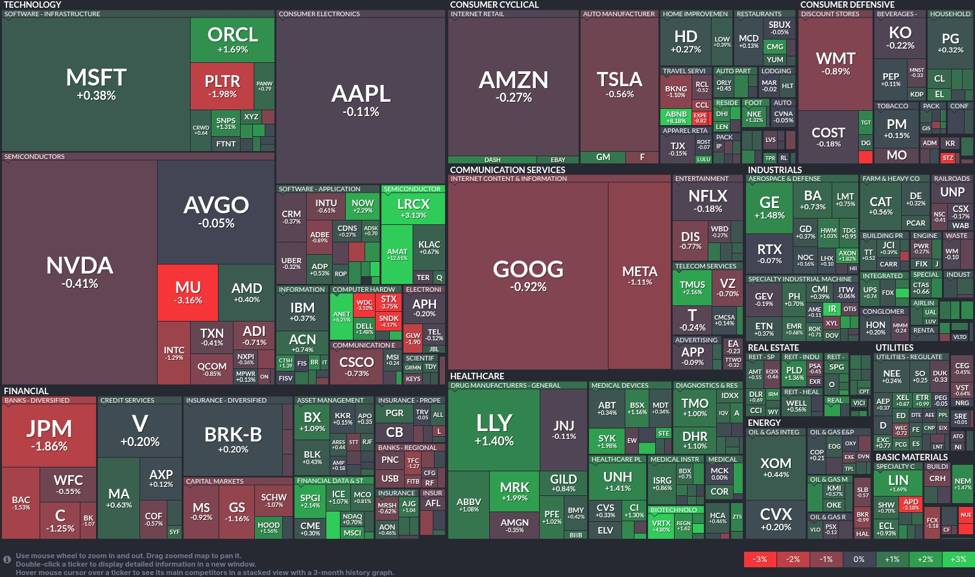
Market struggles with mixed signals: Technology and healthcare sector highlight
Sector Overview: A Mixed Day Across the MarketThe stock market today showcases a complex landscape, with varied performances across sectors. Leading the charge, the healthcare sector is basking in green, while technology shows a mix of highs and lows.📈 Healthcare: Eli Lilly (LLY) surged by 1.40%, riding on positive sentiments, while Merck (MRK) continues its upward trend with a 1.92% increase. Collectively, these gains underscore robust investor confidence in drug manufacturers.📉 Technology: Mixed emotions run through technology stocks, with Oracle (ORCL) experiencing a promising 1.69% rise, but Nvidia (NVDA) dwindling slightly by 0.41%. The semiconductor space struggles as Micron (MU) slips by 3.16%, revealing investor caution.🏦 Financials: The financial sector faces downward pressure, notably with JPMorgan Chase (JPM) plunging by 1.86%, reflecting ongoing market hesitancy amidst economic adjustments.🍏 Consumer and Retail: Major players like Amazon (AMZN) and Walmart (WMT) show minor setbacks, dropping 0.27% and 0.89% respectively, possibly signaling consumer sentiment shifts as the holiday shopping season approaches.Market Mood and Trends: Navigating Uncertain WatersTodays’ market reveals a cautiously optimistic mood, as investors gauge economic indicators and sector-specific news. While some tech giants simmer, healthcare’s strength offers glimpses of stability amidst turbulent times. This mixed sentiment could dictate forthcoming market behavior, with investors eyeing upcoming federal policies and quarterly earnings.Strategic Recommendations: Seeking Balance in VolatilityGiven the current market dynamics, investors should consider fortifying portfolios by embracing diversified strategies. Pay close attention to:Healthcare: The sector appears poised for growth, suggesting potential long-term investments.Technology: Exercise caution as semiconductors underperform, focusing instead on resilient players like Oracle.Financials: Monitor developing economic policies that may influence banking stocks adversely.Stay tuned to InvestingLive.com for real-time updates and insights as the week unfolds, ensuring you’re equipped to make informed decisions amidst the market’s twists and turns. This article was written by Itai Levitan at investinglive.com. 🔗 Source 💡 DMK Insight Healthcare stocks are on the rise, and here’s why that matters for traders: Eli Lilly’s 1.40% jump signals strong investor confidence, likely driven by recent positive news or earnings. This uptick in healthcare could be a bellwether for the sector, especially as it contrasts with the mixed performance in technology. Traders should keep an eye on the broader market sentiment—if healthcare continues to outperform, it might attract more capital, leading to a potential rotation out of tech. Look for key levels in Eli Lilly; if it breaks above recent highs, it could trigger further buying. Conversely, if tech stocks start to recover, it might indicate a shift in risk appetite among investors. Watch for earnings reports and economic indicators that could impact these sectors, particularly any news that could sway healthcare policies or tech regulations. The next few trading sessions will be crucial in determining if this trend holds or reverses. 📮 Takeaway Monitor Eli Lilly’s price action closely; a break above recent highs could signal further bullish momentum in healthcare.

The haven from the AI disruption might be a HALO
It’s not a proper investing theme until there is an acronym.I’ve been writing for a few weeks about old economy stocks making a comeback but it’s been tough to frame exactly the kinds of companies that are best built for what’s coming. The market is frightened by disruption and that’s why software stocks have seen a massive re-rating lower, with many falling 30-50% in a few weeks. There’s a cottage industry developing in commentating on which software companies will actually be disrupted by AI but to me, it’s tough to say in the software and tech space as the essential function of AI is intelligence and all these white collar companies are powered by brains not steel.In contrast, money has flowed into sectors and companies that won’t be disrupted by AI. I like the framing of HALO from Compound Advisors, which stands for Heavy Assets, Low Obsolescence.The asset part is self-explanatory and the ‘low obsolescence’ means that they can’t be disrupted by AI. Here are a few names they highlight:Phillips 66 and Corning and Applied Materials and Vulcan Materials and Delta and Caterpillar and Ventas and Hershey may have very little to do with each other based on conventional GICS classification. But in my classification system, updated for today, they are all HALOIn the past, the market liked asset light models because they required less debt and had better margins. When you layer growth onto that, it results in supercharged profitability. That’s led to 30-50x multiples in a crowded space but is quickly reversing as disruption is priced in.Asset heavy companies have been slow to grow because of huge capital requirements but since we’re in a rate cutting cycle, that debt is less burdensome and that could be durable in an era of structurally high unemployment. It also means that the companies are virtually impossible to disrupt — no one is building a new coast-to-coast railway.In addition (and I’ve made this point before), venture capital for the past 15 years has been so focused on tech and software that there is no money or expertise for developing startup heavy asset firms. The VC desert is the new moat.But that’s not all. The low margin nature of these businesses has always been a drag on multiples but now I think it’s an opportunity. These companies can’t really be disrupted by AI but they can benefit from it.Picture a company with a $10 billion asset base with revenues of $2 billion and 3% margins. Think utilities, pipelines, ports, commodity producers, railways, airlines and refineries. The opportunity with AI is to improve efficiency. Even boosting margins by 1 percentage point in these companies can be a huge lift to profitability and cash generation. I would particularly look at companies with high employee counts or a high reliance on consultants/sub-contractors that can be trimmed. For these companies, AI is an optimization tool. If an airline can squeeze 2% fuel savings routing, dispatch, and operations then it’s not revolutionary but it’s a tailwind. If a refinery can optimize the fuel mix, monitor operations or better schedule downtime, it’s meaningful.A SaaS company running 40% margins doesn’t have much fat to optimize. But a pipeline operator or airline running 2-5% margins has enormous operational surface area where small AI-driven efficiencies compound into meaningful earnings growth.That’s why I prefer to focus on the low margin aspect.I would rather call them HALM — High Assets Low Margin — but that’s not as catchy.I like the framing of CNBC’s Mike Santoli yesterday who talked about eye-watering capex from companies like Microsoft, Meta, Alphabet and OpenAI:”The hyperscalers are spending $700 billion. That better be killing something or what are we doing here?”How about this? Tangible Assets, Not Killable or TANK stocks.Or maybe MOAT stocks: Massive Operations, Asset-Thick.How about RAMP: Real Assets, Margin Potential.In any case, you get the idea. This article was written by Adam Button at investinglive.com. 🔗 Source 💡 DMK Insight Look, the fear of disruption is real, and it’s shaping how traders view old economy stocks. As the market grapples with uncertainty, investors are flocking to companies with stable fundamentals, which could signal a shift in trading strategies. This trend isn’t just about nostalgia; it’s about seeking safety in a volatile environment. Companies that have historically weathered economic storms are gaining traction, suggesting a potential rotation from high-growth tech stocks to more traditional sectors. But here’s the kicker: while old economy stocks might seem like a safe bet, they could also be at risk if the broader market sentiment shifts again. Traders should keep an eye on key indicators like earnings reports and economic data releases that could sway investor confidence. Watch for any signs of a reversal in tech stocks, as that could trigger a rapid reallocation of capital back into growth sectors. The real story is how these dynamics play out in the coming weeks, especially as we approach critical earnings seasons. 📮 Takeaway Monitor earnings reports closely; a shift back to tech could impact old economy stocks significantly in the next few weeks.
The Friday trade returns. US stocks make a recovery
US stocks have turned around nicely today led by the Russell 2000, which is up 1.8%. The S&P 500 and Nasdaq are both up 0.6% and eyes are on software stocks. The IGV software ETF is up 2.3% after an utterly bruising performance so far this year.I’m careful not to lean too hard on this index because 20% of it is Microsoft and I see it as more of a disrupter than a disruptee. That said, it’s been beaten up as well.If you look at the chart, it’s found some support at last week’s lows and if that continues to hold, the bulls could pile back in. Here are some beaten up software names that are doing well today:Salesforce +3.4%WDAY +1.8%NOW +4%Moody’s +3.4%SPGI +2.7%In the bigger picture, it’s still the old economy and mining stocks that are leading the way today.NEM +6.9%Ingersoll Rand +6.5%Vistra +4.5%Freight companies are also bouncing back from yesterday’s AI disruption puke.Looking at the chart, there is a range from roughly 6800-7000 and that’s the space to watch.I tend to think the downside is more vulnerable because the AI trade isn’t going away but it’s the kind of chart where you wait for a break rather than picking sides. Next week’s calendar is far lighter on both economic data and earnings. That could help to cool volatility but I should note that the Supreme Court is back in session so the tariff decision could come. This earnings season was something of a disaster as even companies that reported beats often saw their stocks beaten up. I worry that MSFT’s 12% drop on earnings was a powerful signal that nothing is safe. This article was written by Adam Button at investinglive.com. 🔗 Source 💡 DMK Insight The Russell 2000’s 1.8% jump signals a potential shift in market sentiment, especially for small-cap stocks. With the S&P 500 and Nasdaq also in the green, traders should consider the implications for sector rotation. The 2.3% rise in the IGV software ETF suggests a rebound in tech, which has been under pressure. This could indicate a broader recovery, but it’s crucial to watch for resistance levels around recent highs. If the Russell can maintain momentum, it might attract more institutional interest, particularly if economic indicators remain favorable. However, keep an eye on the volatility index (VIX) for any signs of market anxiety that could derail this rally. The real story is whether this uptick can sustain itself or if it’s just a dead cat bounce in a still-uncertain environment. 📮 Takeaway Watch the Russell 2000 for continued strength; a close above its recent highs could signal a broader market recovery.
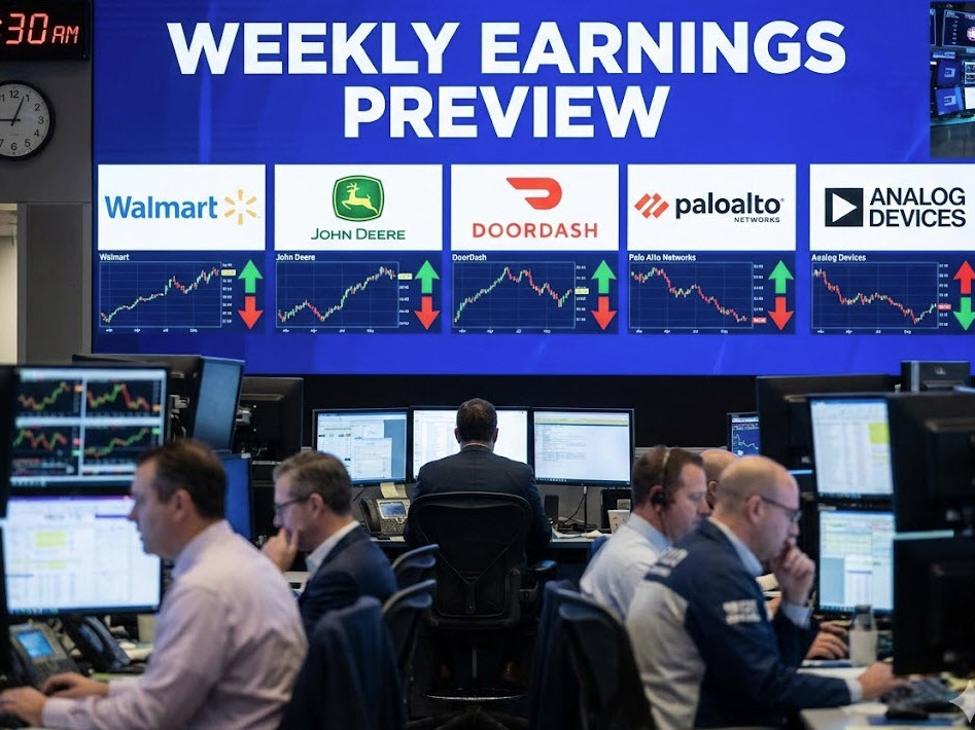
The earnings calendar cools next week but we get a look at the consumer giant
We are done with the big banks and Big Tech. Now we get the real economy. Next week’s earnings calendar is a tug-of-war between the resilient service-spending consumer and the battered industrial/goods sector.Here is the playbook for the week.Walmart (WMT)Thursday (Before Open) If “General Merch” (electronics, clothes, home goods) is positive, the consumer is feeling confident. If growth is purely from Grocery (inflation-driven necessities), the consumer is gasping for air. On inflation, watch for comments on deflation in goods. If Walmart mentions “rolling back prices” aggressively to move inventory, that’s a disinflationary signal for the Fed (and bearish for margins).2. DoorDash (DASH)Wednesday (After Close)Everyone says the consumer is “stretched,” yet they are still paying $30 for a lukewarm burrito delivered to their door. If frequency holds up despite rising fees, it confirms that the “convenience economy” is inelastic. This is why services inflation (core PCE) refuses to die. A miss here would be the first real sign that the middle-class consumer is finally cutting discretionary “vices.”John Deere (DE)Thursday (Before Open)Management has already hinted that 2026 will be the “bottom” of the cycle and the market has taken that to heart with a huge run-up in the stock price lately. If they further guide for strength, it signals that the industrial recession is ending. If they cut guidance further due to “tariff uncertainty” or weak export demand, the global growth narrative takes a hit.Palo Alto Networks (PANW)Tuesday (After Close)Is AI sucking all the oxygen (and budget) out of the room? Is anything safe? Cybersecurity is usually the last thing companies cut and it should be growing due to AI threats. If Palo Alto shows “billings fatigue” or longer sales cycles, it means CIOs are slashing core budgets to fund their AI experiments. That is a warning sign for the broader software sector (IGV), which has already been suffering.Analog Devices (ADI)Wednesday (Before Open)Unlike Nvidia (AI), ADI sells chips for cars, factories, and 5G towers. This is the “old school” economy chipmaker. We need to hear that the “inventory correction” is over. If ADI says customers are finally restocking industrial chips, it’s a bullish signal for manufacturing.6. Wayfair (W)Home builders quietly hit a record high on Friday on rate cut hopes. You don’t buy new furniture if you aren’t moving houses. Wayfair is a direct proxy for existing home sales, which were battered this week. Watch the Active Customer Count, this metric has been bleeding for quarters. If this stabilizes, it suggests the “housing freeze” is thawing and people are finally accepting 6% mortgage rates as the new normal. Opendoor (Thursday after close) is another housing proxy to watch.Full run down:MondayUS and Canadian markets are closed for holidays.TuesdayBefore the open: Energy Transfer, Medtronic, SunCoke EnergyAfter the close: Hecla Mining, Palo Alto Networks, Cadence Design Systems, Devon Energy, EQT, SSR Mining, Toll Brothers, Kenvue, MKS Instruments, FirstEnergyWednesdayBefore the open: Analog Devices, SolarEdge, Garmin, Moody’s, Liberty Global, ProPetro, Constellium, Verisk, Fiverr, ICLAfter the close: Kinross Gold, Carvana, Coeur Mining, Pan American Silver, DoorDash, Figma, Royal Gold, Equinox Gold, eBay, RemitlyThursdayBefore the open: Walmart, First Majestic Silver, Quanta Services, John Deere, Lemonade, Klarna, Visteon, Wayfair, Endava, NICEAfter the close: Opendoor, Transocean, Newmont, Akamai, CompoSecure, Live Nation, Sprouts Farmers Market, Texas Roadhouse, CentraGold, AXTFridayBefore the open: AngloGold Ashanti, Telix Pharmaceuticals, Portland General Electric, PPL, Oil States International, FET (Forum Energy Technologies), Lamar Advertising, Hudbay Minerals, Western Union, Cogent Communications This article was written by Adam Button at investinglive.com. 🔗 Source 💡 DMK Insight Next week’s earnings could shift market sentiment dramatically, especially with Walmart’s results on deck. The tug-of-war between resilient consumer spending in services and the struggling industrial sector is crucial. If Walmart’s earnings show strength in general merchandise, it could signal that consumer confidence remains intact, potentially boosting related retail stocks. Conversely, a disappointing report might highlight broader economic weaknesses, impacting not just retail but also sectors tied to consumer spending. Traders should keep an eye on Walmart’s performance as it could set the tone for the week, especially with the S&P 500’s recent fluctuations around key support levels. Watch for a reaction in consumer discretionary stocks and related ETFs, as they could be directly influenced by Walmart’s results and guidance. Also, keep an eye on the broader economic indicators like consumer sentiment and industrial production data, which could provide context for the earnings reports and market direction. 📮 Takeaway Watch Walmart’s earnings on Thursday; a strong report could lift consumer stocks, while a miss might signal broader economic concerns.

Fed's Goolsbee sees encouraging and concerning parts of the CPI report
Chicago Fed President Austan Goolsbee spoke with Yahoo Finance today and had some notable comments:Encouraging and concerning parts in latest CPIWe are still seeing pretty high services inflationHopes we’ve seen the peak impact of tariffsThe job market has been steady, only modest coolingRates can still go down but need to see progress on inflationConsumers should hold up if the jobs market is stable and inflation easesI don’t know how restrictive Fed policy isHigh services inflation is worrisomeWe are not on a path back to 2% inflation, stuck around 3%December CPI came in slightly cooler than expected, with headline inflation rising 0.2% month-over-month versus the 0.3% consensus, while the year-over-year rate held at 2.5%. Core inflation matched expectations at 2.5% annually and 0.3% monthly. Real weekly earnings flipped positive at +0.5%, a notable improvement from the prior revised -0.5%. Supercore printed at 2.7% year-over-year. Markets reacted with a modest dovish repricing of Fed expectations, pressuring the dollar lower. In the bond market, the notable move this week has been in the long end, following a surprisingly strong auction and the turmoil in equities. Thirty-year yields have slid to 4.70% from 4.90% this week.The US economic calendar was busy this week but quiets considerably next week, in part due to the President’s Day holiday on Monday. On Tuesday we get the Empire FEd and NAHB housing market index. Wednesday we get durable goods and housing starts. Thursday we get initial jobless claims as usual and Friday is the PCE report.There is a smattering of Fedspeak throughout the week but it’s tough to imagine that any of it will make any real waves given the data dependence that most policymakers are preaching. This article was written by Adam Button at investinglive.com. 🔗 Source 💡 DMK Insight Goolsbee’s comments on inflation and the job market signal mixed signals for traders right now. While he acknowledges persistent services inflation, which could keep the Fed cautious, the steady job market suggests that a drastic rate cut isn’t imminent. Traders should be wary of how these factors might influence the upcoming CPI reports and Fed meetings. If inflation remains stubborn, it could lead to volatility in both equities and bonds, especially if the market starts pricing in a more hawkish stance from the Fed. Keep an eye on the 10-year Treasury yield as it often reacts to these economic indicators. A breakout above recent highs could signal a shift in sentiment, impacting risk assets across the board. On the flip side, if the job market shows signs of cooling, it might provide the Fed with the leeway to lower rates sooner than expected. This could create a buying opportunity in sectors sensitive to interest rates, like tech and real estate. Watch for the next CPI release and any Fed commentary for clearer direction. 📮 Takeaway Monitor the upcoming CPI data closely; if inflation remains high, expect volatility in equities and bonds, especially around key Fed meetings.

US Supreme Court says next Friday will be a decision day
The US House voted against tariffs this week and the Senate is expected to follow suit. They will surely be vetoed by President Trump but that move gives some cover to the Supreme Court ahead of its big decision on tariffs.The court today announced that Feb 20, 24 and 25 will all be ‘decision days’ or days when they will render opinions. As a reminder, they don’t pre-announce which cases they will be ruling on, so it could be tariffs and it could be one of the other dozens of cases before the court.Officials have until June to make a decision but given the gravity of the tariffs, it’s expected to come sooner. The decisions are rendered at 10 am ET or just afterwards so on those three days we will be standing by and markets will be holding their breath.Previously, administration officials have signaled they could easily reconstitute tariffs but more recently, they toned down that rhetoric, highlighting that it could be difficult. That’s a rare change of rhetoric and indicates the court decision could actually lower tariffs. If that’s the case, it would clear the way for further Fed rate cuts and provide a double dose of good news for US companies. The Major Questions DoctrineCritical in the decision will be the reasoning of the court, particularly if that extends to some of the other measures the White House is considering. One of the avenues the court could go is the “major questions doctrine”, something conservative justices pushed for in the Biden administration.Under the doctrine, the Supreme Court has rejected agency claims of regulatory authority when the underlying claim of authority concerns an issue of “vast economic and political significance” and Congress has not clearly empowered the agency with authority over the issueChallengers say this is a textbook major questions case. IEEPA shouldn’t be read to give the president this power precisely because it would have such vast economic and political significance — and under the major questions doctrine, if Congress wants to give the president sweeping authority over matters of major economic and political significance, it has to say so clearly. Justice Barrett asked a pointed question: whether the government could identify any other place in the US Code where the phrase “regulate importation” had been used to confer tariff-imposing authority. The Solicitor General struggled to answer.When the government argued the major questions doctrine doesn’t apply to foreign affairs, Justice Sotomayor shot back: “We have never applied it to foreign affairs, but this is a tariff. This is a tax.”That kind of reasoning might apply to any attempts to reconstitute tariffs if it’s the reason tariffs are struck down. This article was written by Adam Button at investinglive.com. 🔗 Source 💡 DMK Insight The House’s rejection of tariffs could signal a shift in trade policy, and here’s why that’s crucial for traders right now: With the Senate likely to follow suit, this development might provide a temporary reprieve for markets sensitive to trade tensions. If President Trump vetoes these tariffs, it could stabilize investor sentiment, particularly in sectors like manufacturing and agriculture, which have been under pressure from ongoing trade disputes. Traders should keep an eye on how this plays out, especially as the Supreme Court’s decision on tariffs looms on February 20, 24, and 25. A favorable ruling could further bolster market confidence, while an unfavorable one might reignite volatility. But don’t overlook the flip side—if the veto doesn’t happen and tariffs are implemented, we could see a sharp sell-off in affected sectors. Watch for key price levels in related equities and commodities, as they might react swiftly to any news. The real story is how these political maneuvers could ripple through the broader market, impacting everything from forex pairs to commodity prices. Stay alert for any shifts in sentiment as the Supreme Court dates approach. 📮 Takeaway Monitor the Supreme Court’s tariff decision dates—February 20, 24, and 25—as they could significantly impact market sentiment and sector performance.