
 Bitcoin
  Ethereum
  Tether
  XRP
XRP  BNB
BNB  USDC
USDC  Solana
  TRON
TRON  Lido Staked Ether
  Figure Heloc
PBOC’s emphasis on overnight repo rate sparks talk of policy framework shift.Summary:PBOC elevates focus on overnight repo rateMonthly report reordered to highlight overnight benchmarkPotential shift away from 7-day reverse repo focusOvernight rate already trading close to policy rateSignals possible evolution in policy frameworkThe People’s Bank of China has sharpened its focus on the overnight money market rate, fuelling speculation that Beijing may be preparing to recalibrate its operational policy framework.In its latest monthly report, the PBOC reordered its discussion of short-term rates, placing greater emphasis on overnight repo movements rather than the traditional seven-day reverse repo rate that has long been treated as its primary policy reference. The shift follows earlier guidance from the central bank indicating it would seek to keep short-term funding costs more closely aligned with its stated policy stance.Analysts see the move as more than cosmetic. By highlighting overnight conditions, the most immediate gauge of liquidity in the interbank market, the PBOC may be signalling a preference to anchor policy transmission at the shortest end of the curve. The overnight rate has already traded within 10 basis points of the official policy rate in more than half of 2025 trading sessions, suggesting de facto alignment is already occurring.A formal pivot from the seven-day reverse repo to an overnight benchmark would represent a structural evolution in China’s monetary operations. The seven-day rate has historically provided the clearest signal of policy intent, particularly during liquidity injections or tightening phases. However, a tighter corridor around the overnight rate could enhance control over short-term volatility and improve transmission to broader funding markets.Such a shift would also bring China’s framework closer to global central bank practice, where overnight benchmarks typically anchor policy implementation.While the PBOC has not explicitly declared a change in its primary target, the report’s reordering and operational signals suggest the groundwork for a more flexible, overnight-focused system may already be underway.People’s Bank of China Governor Pan Gongsheng This article was written by Eamonn Sheridan at investinglive.com. 🔗 Source 💡 DMK Insight The PBOC’s shift to spotlight the overnight repo rate could signal a significant policy evolution. This change matters because it suggests a potential pivot in monetary policy that could impact liquidity and borrowing costs in the Chinese economy. Traders should keep an eye on how this affects the yuan and related markets, especially if the overnight rate starts diverging from the 7-day reverse repo. If the overnight rate continues to trade close to the policy rate, it could indicate tighter monetary conditions, which might lead to volatility in both forex and equity markets. Watch for reactions from major players in the forex market, as shifts in PBOC policy often ripple through global markets, affecting risk sentiment and capital flows. On the flip side, if this adjustment leads to a more stable financial environment, it could bolster confidence in Chinese assets. So, keep an eye on the upcoming monthly reports and any comments from PBOC officials for further guidance on this evolving narrative. 📮 Takeaway Monitor the overnight repo rate closely; a sustained divergence from the 7-day reverse repo could signal tighter monetary conditions impacting the yuan and global markets.
USS Ford strike group will join USS Lincoln carrier strike group in Persian Gulf
USS Gerald R. Ford carrier strike group redirected from Caribbean to Middle East, extending deployment into spring.Summary:USS USS Gerald R. Ford and escort ships will be rerouted from the Caribbean to the Middle East, delaying their return home until late April or early May. This redeployment will see the Ford strike group join the USS Abraham Lincoln carrier strike group in the Persian Gulf, as part of heightened U.S. pressure on Iran. The Ford’s extended mission began June 24 when it left Norfolk, Va. for Europe, was rerouted to the Caribbean as part of U.S. Southern Command operations, and is now being redirected again.The United States Navy’s USS Gerald R. Ford aircraft carrier and its accompanying escort ships have been ordered to shift from their current deployment in the Caribbean to the Middle East, where they are expected to remain through late April or early May. The decision, communicated to the carrier’s crew on Thursday by U.S. officials, marks an extraordinary extension and redirection of what was initially scheduled as a routine overseas deployment. The Ford strike group’s deployment began on June 24, when the carrier departed Norfolk, Virginia for a planned European cruise. Instead, the carrier was first rerouted to the Caribbean under U.S. Southern Command operations, joining dozens of other warships in one of the largest U.S. maritime presences in the region in decades. Its mission was tied to enhanced pressure against transnational criminal networks and geopolitical tensions in Latin America. Now, as tensions with Iran remain high under the current U.S. administration’s strategic posture, the Ford strike group will join the USS Abraham Lincoln carrier strike group already in the Persian Gulf. This reinforcement is part of a broader military positioning linked to Washington’s resurgent pressure campaign on Tehran’s leadership, reflecting strategic signalling as much as operational intent. Aircraft carriers like the Ford are central to U.S. power projection, equipped to provide air, sea, and missile strike capabilities from international waters without requiring host-nation basing rights.While Pentagon officials have not publicly confirmed the redeployment details, multiple U.S. sources familiar with internal discussions described the shift in orders. The Ford’s new assignment underscores both the intensity of current geopolitical pressures and the strategic value Washington places on maintaining a formidable aircraft carrier presence across multiple theaters of operation. This pic is of neither, I know. This article was written by Eamonn Sheridan at investinglive.com. 🔗 Source 💡 DMK Insight The USS Gerald R. Ford’s redeployment to the Middle East could impact oil prices and geopolitical stability. With tensions in the region already high, this move signals a potential escalation that traders should monitor closely. Historically, military presence in the Middle East has led to spikes in oil prices, especially if conflicts arise. For those trading oil futures or related equities, keeping an eye on Brent and WTI crude prices is essential, as any disruptions could lead to significant volatility. Additionally, this situation may affect broader market sentiment, particularly in energy stocks and ETFs. Watch for key resistance levels in oil prices, as a breach could trigger a bullish trend. The timing of this deployment, extending into spring, suggests that traders should prepare for potential market reactions in the coming weeks, especially around any announcements or developments in the region. 📮 Takeaway Keep an eye on oil prices as the USS Gerald R. Ford’s redeployment could trigger volatility; monitor resistance levels closely in the coming weeks.
investingLive Asia-Pacific FX news wrap: Yen swings on official remarks
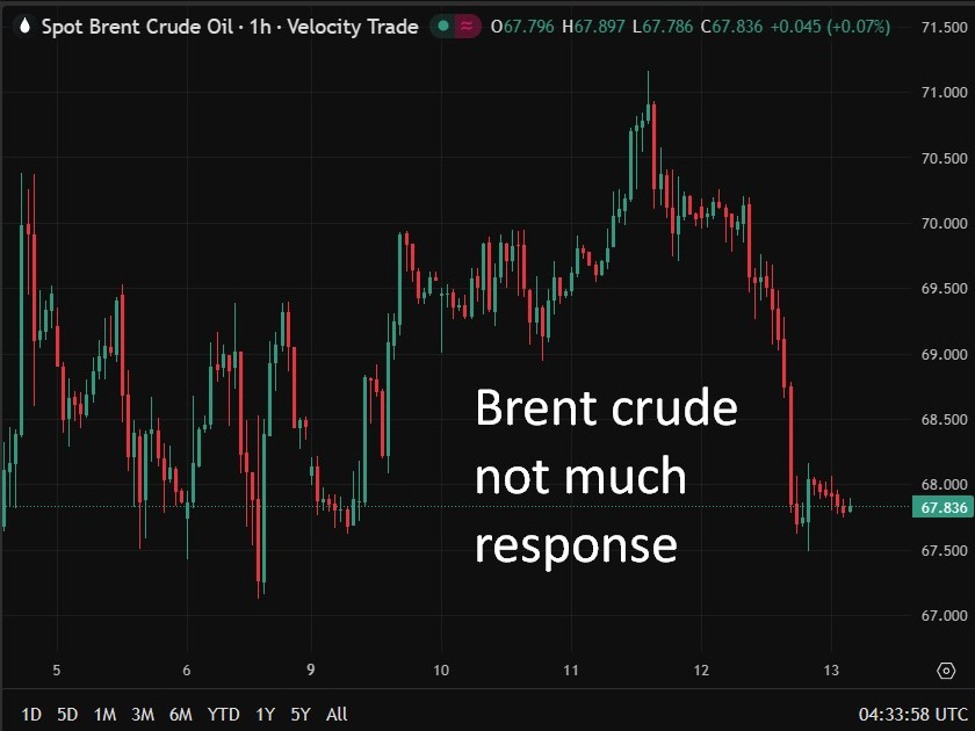
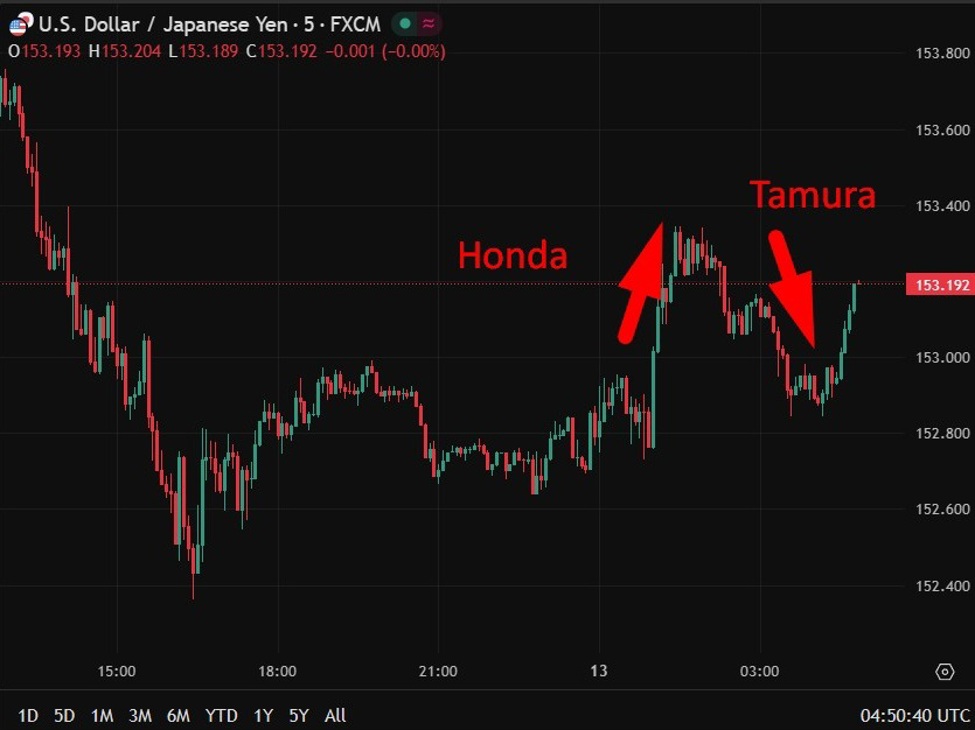
USS Ford strike group will join USS Lincoln carrier strike group in Persian GulfPBOC’s focus on overnight rate fuels speculation of policy shiftBOJ’s Tamura says inflation sticky, sees scope to judge target met by springChina housing market struggles despite “three red lines” removal. 62/70 cities price fallsNZ inflation expectations mixed ahead of likely RBNZ on hold decision February 18China house prices continue their death spiral: January -3.1% y/y and -0.4% m/mPBOC sets USD/ CNY reference rate for today at 6.9398 (vs. estimate at 6.9045)Bank of Japan (BOJ) likely to avoid March rate hike, Japan PM adviser saysJapan seizes Chinese fishing vessel in EEZ, arrests captain amid rising tensionsJapan advances U.S. investment package talks but negotiations remain toughNew Zealand manufacturing PMI eases to 55.2 but signals solid expansion (vs. January 56.1)US January CPI preview: Core seen easing, but sticky monthly keeps Fed cut timing in playUBS: SNB unlikely to fight franc rally, sees EUR/CHF at 0.95 in 12 monthsWeekend risk: Lagarde to speak at Munich Security Conference as ECB stays data-dependentWestpac sees lift in NZ inflation expectations ahead of February RBNZ meetingEconomic and event calendar in Asia Friday, February 13, 2026 – we hear from the RBNZAt a glance:Japan seizes Chinese vessel, adding geopolitical tensionBOJ adviser signals no rush for March hike; USD/JPY reboundsChina home prices deepen decline across 62 citiesFX mostly rangebound ahead of US CPIUSS Gerald R. Ford redeployed to Middle East; oil mutedEU aviation regulator extends Iran airspace warningGold and silver firmRBNZ decision next week; inflation expectations mixedJapanese equities ease after strong weekly gainsJapan seized a Chinese fishing vessel inside its exclusive economic zone off Nagasaki and arrested the skipper after the boat allegedly fled inspection. The move risks adding fresh strain to already tense Tokyo–Beijing relations, particularly against the backdrop of ongoing trade and security friction between the two countries.On the monetary front, an adviser to Prime Minister Sanae Takaichi said the government does not necessarily need to appoint reflationists to upcoming Bank of Japan board vacancies. He added the BOJ may see scope to raise rates later this year but is unlikely to move in March. The remarks were interpreted as reducing the probability of a near-term hike, providing a modest headwind for the yen. USD/JPY bounced toward 153.30 in response.Later more hawkish comments from BoJ Board member Tamura saw the yen gain back, USD/JPY down to circa 152.85.From China, new home prices fell 0.4% month-on-month and 3.1% year-on-year in January, marking the steepest annual drop in seven months. Price declines were recorded in 62 of 70 cities surveyed, highlighting persistent weakness in the property sector despite policy easing and the removal of developer debt caps.Major FX pairs against the US dollar traded largely sideways in subdued ranges as traders await US CPI data due at 8:30 a.m. US Eastern time on Friday.Geopolitically, the USS Gerald R. Ford carrier strike group will be redirected from the Caribbean to the Middle East, joining the USS Abraham Lincoln in the Persian Gulf as pressure on Iran intensifies. Crude oil showed little reaction, with expectations of a second carrier presence having built in recent weeks. Separately, the European Union Aviation Safety Agency extended its recommendation that airlines avoid Iranian airspace through March 31, citing elevated risks.Gold and silver edged higher.Japanese equities, including the Nikkei and Topix, pulled back slightly after solid gains earlier in the week, tracking Wall Street’s Thursday weakness. Asia-Pac stocks: Japan (Nikkei 225) -0.68%Hong Kong (Hang Seng) -1.79% Shanghai Composite -0.70%Australia (S&P/ASX 200) -1.37%Looking ahead, attention turns to the February 18 Reserve Bank of New Zealand policy decision, where a hold is widely expected. Inflation expectations data released today showed mixed signals. This article was written by Eamonn Sheridan at investinglive.com. 🔗 Source 💡 DMK Insight Geopolitical tensions are rising with the USS Ford and Lincoln strike groups in the Persian Gulf, and here’s why that matters: Traders need to pay attention to how this military presence could impact oil prices and broader market sentiment. Increased military activity often leads to volatility in energy markets, particularly crude oil, which is already sensitive to geopolitical events. If tensions escalate, we could see a spike in oil prices, affecting not just energy stocks but also inflation expectations globally. On the flip side, the PBOC’s focus on overnight rates hints at a potential policy shift, which could influence the yuan and impact forex markets. Traders should monitor key levels in oil and the yuan, especially if the situation escalates. With the Bank of Japan’s comments on inflation being ‘sticky,’ there’s a chance that global markets might react to any shifts in monetary policy. Keep an eye on the 62/70 cities in China where housing prices are falling; this could signal broader economic issues that might ripple through commodities and equities. Watch for oil prices around key resistance levels and any shifts in forex pairs involving the yuan and yen. 📮 Takeaway Monitor oil prices closely for potential spikes due to geopolitical tensions, especially if they breach key resistance levels in the coming days.

Trump reportedly weighs up plans to scale back on steel and aluminium tariffs
The report says that the US president is planning to roll back some tariffs on steel and aluminium goods, largely as a move to bolster his public image ahead of the November midterm elections. As a reminder, Trump slapped steel and aluminium imports with tariffs of up to 50% last year and even expanded that to cover a wide range of household goods made from other metals such as washing machines and ovens.The sources noted that the commerce department and US trade officials are of the view that tariffs were hurting consumers quite significantly by raising prices for goods. And that has created some outrage among voters in what they feel is now seen as an affordability crisis.As such, the softer stance seems to be a move that is to avoid further political backlash. That in hopes of boosting Trump’s approval ratings ahead of the midterm elections at the end of the year.The US administration is reported to be now reviewing the list of products affected by the levies and plans to exempt some items. Adding to that, they will also put off from making the list longer than it currently is and instead launch more targeted national security probes into specific goods.The latter point is a notable one as the earlier tariffs had no proper breakdown and everything and anything was just punished with levies. I mean when bicycle parts are also included in the list of goods needing to be tariffed as part of “national security”, it does say something about the inclusion process.Anyway, all of this reinforces the point that Trump is still one to walk back on tariffs after talking up a big game. If not for the stock market, then it is at least to make sure that he is still able to appease his voter base.However, the back and forth policy shifts here once again reaffirms that there is no coherent and consistency when it comes to policy administration by the US. And that is something that markets have been punishing the dollar for since last year.The full report can be found here (may be gated). This article was written by Justin Low at investinglive.com. 🔗 Source 💡 DMK Insight Tariff rollbacks on steel and aluminum could shake up market dynamics significantly. With the midterm elections approaching, this move seems more about optics than economics. If tariffs are reduced, we might see a short-term boost in related sectors, particularly construction and manufacturing, as costs could drop. Traders should keep an eye on how this impacts commodity prices and related equities. For instance, if steel prices soften, companies like U.S. Steel and Nucor could see increased buying interest. But here’s the flip side: if the market perceives this as a desperate attempt to sway voters, it could lead to volatility in the broader market, especially if economic indicators don’t support a recovery. Watch for reactions in the S&P 500 and industrial sector stocks, as they could reflect broader sentiment on this policy shift. Key levels to monitor would be the resistance around recent highs in steel prices and the performance of related ETFs over the coming weeks. 📮 Takeaway Watch for potential volatility in steel and aluminum stocks as tariff rollbacks could impact prices; monitor S&P 500 and industrial sector reactions closely.

Another twist to the tale involving China-Japan geopolitical tensions?
The story from earlier: Japan seizes Chinese fishing vessel in EEZ, arrests captain amid rising tensionsThe legality of the situation might not matter all too much. That especially since China and Japan are already in quite the state of conflict since Japan prime minister Takaichi took over. Her remarks on Japan potentially needing to intervene militarily on the Taiwan situation did not go down well with Beijing and that has since caused relations to sour dramatically in recent months.Considering the backdrop, the latest development above surely won’t sit well with China. That no matter if Japan was acting within its own rights to take such action. In a time when the relationship between the two is rather sensitive, anything that can be spun into a controversial take will be used as some reasoning to strike back.Since the start of the year, China has already moved to curb rare earth exports and also banning exports of goods with potential military uses to Japan. And as a reminder, China has also urged citizens not to travel to Japan to try and inflict economic pain on Japan amid lower tourism income.With tensions remaining high in the East China Sea, expect Beijing to respond once again here. This looks to be the “new normal” in terms of China-Japan relations, even if it has only really escalated to this stage for a few months.However, it is best to stay in the know with the headlines just in case it really bubbles up into something major – more so than it already is now. This article was written by Justin Low at investinglive.com. 🔗 Source 💡 DMK Insight Rising tensions between Japan and China could have significant implications for regional markets, especially in commodities and currencies. As Japan’s seizure of a Chinese fishing vessel escalates diplomatic strains, traders should keep an eye on how this affects the Japanese yen and related assets. Increased geopolitical risk often leads to volatility in forex markets, particularly for currencies tied to commodity exports. If tensions escalate further, we might see a flight to safety, pushing investors toward the yen or gold. On the flip side, if the situation stabilizes, risk-on sentiment could boost equities in the region. Traders should monitor key levels in USD/JPY, especially if it approaches recent highs or lows, as these could signal shifts in market sentiment. Additionally, watch for any official statements from both governments that could influence market reactions in the short term. The next few days will be crucial as the situation develops, so staying alert to news updates is essential. 📮 Takeaway Watch USD/JPY closely for volatility as geopolitical tensions between Japan and China escalate; key levels could signal major market shifts.
US futures drop lower as equities look to end the week with a whimper
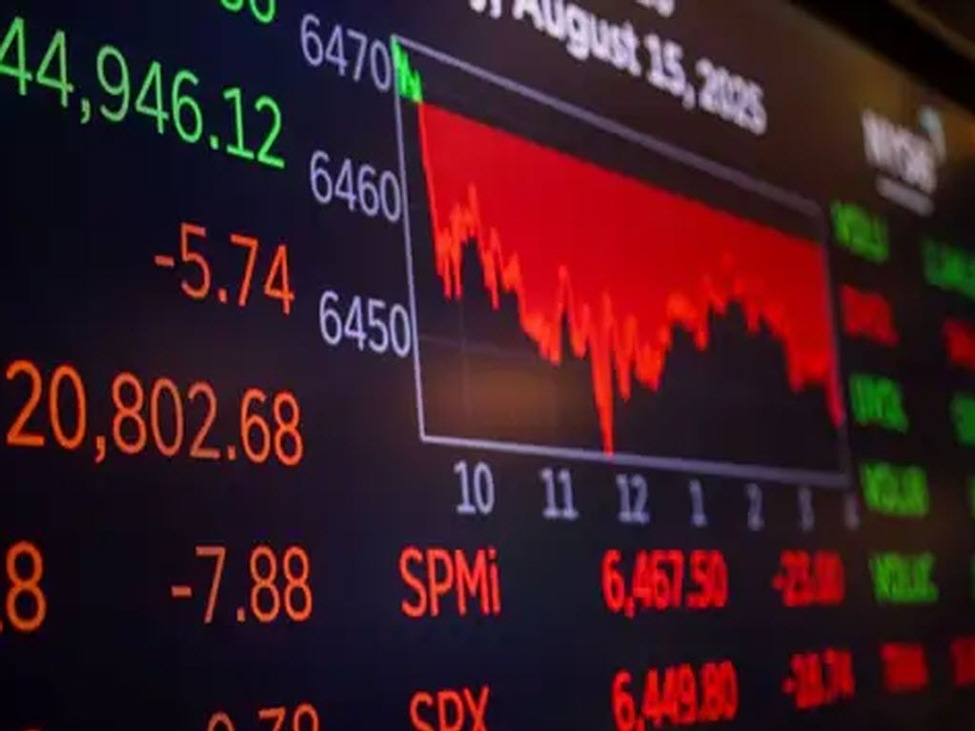
We’re starting to see the pressure build up again as we look to European morning trade today. That after the heavy selling in Wall Street amid continued concerns on the AI trade and potential disruptions surrounding the technology itself. It’s creating quite a vortex of volatility, and it is one that might take some time to work out.S&P 500 futures are now down 0.4% with Nasdaq futures down 0.5% on the day. Meanwhile, Dow futures are down 0.3% currently.Here’s the S&P 500 performance breakdown snapshot for yesterday:And here’s the one for the Nasdaq:The big names creating a drag are all pretty much overlapping, as it is a tech-driven rout. But what is interesting about all of this is that despite all the concerns and recent pessimism, the S&P 500 is still just less than 2.5% away from its record high after the close yesterday. By that metric, it really doesn’t look like a market that is in trouble whatsoever.However, sentiment is rather fragile and that can lead to exacerbated moves on the charts when push comes to shove.Right now, the S&P 500 is closing in on its 100-day moving average once again and that is a key technical level to take note of. It has helped to arrest previous declines and challenges to the upside momentum. However, a firm break this time around alongside a handful of triggers for sellers to work with could result in a sharp correction lower on a break.The Nasdaq has already taken out the same key technical level last week and the drop yesterday reinforces the momentum after a brief bounce on Monday. So, a coinciding break from the S&P 500 might be just the right trigger point for sellers to go in search of a stronger retracement lower for stocks to end the week. This article was written by Justin Low at investinglive.com. 🔗 Source 💡 DMK Insight Volatility is creeping back into the markets, and here’s why it matters: Wall Street’s heavy selling signals a broader risk-off sentiment that could spill over into European trading today. The concerns around AI technology are not just noise; they reflect deeper anxieties about the sustainability of tech valuations. Traders should keep an eye on how this sentiment affects correlated assets like tech stocks and cryptocurrencies, which often mirror each other’s volatility. If the pressure continues, we could see significant moves in both directions. Watch for key support and resistance levels in major indices, as a break below recent lows could trigger further selling. On the flip side, this could also present a buying opportunity for contrarian traders looking to capitalize on oversold conditions. Keep an eye on the VIX for spikes in volatility, which could indicate panic selling or a potential reversal. The immediate focus should be on how European markets react to Wall Street’s lead, especially in the tech sector, as they open today. 📮 Takeaway Watch for European market reactions today; a break below key support levels could signal further downside, while oversold conditions may present buying opportunities.

FX option expiries for 13 February 10am New York cut
There is just one to take note of on the day, as highlighted in bold below.That being a rather large one for EUR/USD at the 1.1850 level. The expiries hold close to the 200-hour moving average of 1.1846 currently and that together, that could keep a floor on price action in the session ahead. The expiries could also act as a bit more of a magnet, with the key near-term level having been where buyers stepped in after the non-farm payrolls drop.So, the two when put together could lock in EUR/USD price action in European trading barring any major headline surprises. That before we get to the US CPI report later in the day of course.Besides that, there are some notable ones for USD/JPY but they aren’t likely to factor much into play given the spot price currently.And if you notice, the Monday board is rather empty and that is because it will be a long weekend in the US. Monday will observe a US holiday in both stocks and the bond market, so that will keep things quieter once the hustle and bustle from the inflation data later settles down.For more information on how to use this data, you may refer to this post here.Head on over to investingLive (formerly ForexLive) to get in on the know! This article was written by Justin Low at investinglive.com. 🔗 Source 💡 DMK Insight EUR/USD is flirting with a critical support level at 1.1850, and here’s why that matters: With the current price hovering near the 200-hour moving average of 1.1846, traders should be on high alert. If this level holds, it could act as a solid floor, potentially triggering a bounce back towards recent highs. However, a break below could open the floodgates for further downside, especially with volatility in forex markets often spiking around key technical levels. Keep an eye on how ETH, currently at $1,956.77, reacts; a strengthening dollar could weigh on crypto prices as well. The flip side? If EUR/USD manages to hold above 1.1850, it could signal a short-term bullish sentiment, attracting more buyers. Watch for any economic data releases or geopolitical events that might impact the euro or dollar, as these could shift market dynamics quickly. The next few hours are crucial, so set alerts around this level and be ready to adjust your positions accordingly. 📮 Takeaway Monitor the EUR/USD level at 1.1850 closely; a break could lead to significant downside, while a hold may trigger a bullish reversal.

ECB policymaker Kazāks: Now is not the time to move interest rates
Now is not the time for the ECB to move interest ratesWe are in a good position to move interest rates in any way if neededWe have yet to see the full impact of recent euro appreciationPolicymakers are on monitoring mode with regards to the euro strengthThere are concerns that a strong euro might be reflective on dollar weakness, uncertaintyThe remarks on their policy stance aren’t anything surprising. The ECB remains sidelined at the moment and for the foreseeable future amid ongoing concerns on inflation still.As for the remarks on the euro, it once again says a lot about the situation when almost every policymaker at the central bank has to comment about it. That not only speaks to their concerns about the currency but it also speaks to the urgency and how the current level is something that markets have to be mindful of as well.As a reminder, ECB vice president Luis de Guindos had previously coined the 1.20 level for EUR/USD as one that is “complicated” for the central bank. And that seems to be the key line in the sand in terms of the pain threshold for the ECB. This article was written by Justin Low at investinglive.com. 🔗 Source 💡 DMK Insight The ECB’s cautious stance on interest rates signals potential volatility for the euro and related markets. With the euro appreciating recently, traders should be wary of how this could impact export-driven sectors and inflation dynamics. The ECB’s monitoring mode suggests they’re not ready to act, which could lead to a divergence in monetary policy compared to other central banks. This could create opportunities for forex traders, especially those looking to capitalize on euro fluctuations against the dollar or pound. If the euro continues to strengthen without a corresponding rate hike, we might see a squeeze on exporters, which could ripple through equities tied to those sectors. Keep an eye on key levels for the euro; a break above recent highs could trigger further bullish sentiment, while a reversal might indicate a shift in ECB policy expectations. Watch for any comments from ECB officials in the coming weeks that could hint at their next moves, especially as inflation data rolls in. 📮 Takeaway Monitor the euro’s performance closely; a break above key resistance levels could signal further strength, impacting forex strategies significantly.

Switzerland January CPI +0.1% vs +0.1% y/y expected
Prior +0.1%Core CPI +0.5% y/yPrior +0.5%Slight delay in the release by the source. The monthly estimate points to another negative reading (-0.1%), missing slightly on estimates this time around. That will be a slight concern looking out to the year ahead. This marks a fifth consecutive negative monthly estimate after recording flat inflation in August last year.That being said, the focus will stay on core inflation. And the monthly estimate there at least shows a +0.1% reading. So, there is a bit of comfort for the SNB in trying to deal with deflation pressures. Core annual inflation is seen steady at +0.5%, so that continues to afford the central bank some breathing room for now.As a reminder, the current backdrop sees the SNB wanting to avoid negative interest rates for as much as they can and for as long as they can get away with. And that means any further significant declines in pressures will be most welcome, at least for the time being.However, a stronger Swiss franc currency is making it very tough for the SNB to try and manage that. EUR/CHF has broken below the 0.92 threshold last month, marking fresh lows for the currency pair.The Swiss central bank has tried ever so hard in preventing excessive franc strength to breach that level since 2024. But amid heightened geopolitical tensions globally and both the dollar and yen falling out of favour as haven currencies, it has made the franc the only safe spot in town for currency traders to hedge against global risks. This article was written by Justin Low at investinglive.com. 🔗 Source 💡 DMK Insight Core CPI’s slight miss at +0.5% y/y raises eyebrows for traders: here’s why. The latest Core CPI data showing a +0.5% year-over-year increase, while slightly below expectations, signals persistent inflationary pressures that could influence Fed policy. With five consecutive months of negative readings, traders should be wary of how this trend might impact interest rates and overall market sentiment. If inflation remains sticky, the Fed may have to reconsider its stance on rate hikes, which could lead to volatility in both the forex and crypto markets. Look for key levels around the recent highs in the dollar index and major currency pairs. If the dollar strengthens due to a hawkish Fed response, it could put downward pressure on crypto assets. Conversely, if inflation fears lead to a risk-off sentiment, we might see a flight to safety, impacting equities and crypto alike. Keep an eye on the upcoming Fed meetings and any shifts in market expectations regarding rate hikes, as these will be crucial for positioning in the coming weeks. 📮 Takeaway Watch for how the market reacts to the Core CPI miss; key levels to monitor include the dollar index and major currency pairs for potential volatility.

Spain January final CPI +2.3% vs +2.4% y/y prelim
Prior +2.9%HICP +2.4% vs +2.5% y/y prelimPrior +3.0%The numbers here are slightly softer than what the initial estimates indicated. And they reflect a material decline in headline annual inflation to start the new year.That being said, core prices still represent the most important detail in this report and it is the one thing that the ECB focuses on the most. In that regard, core annual inflation in Spain is seen keeping steady in January at 2.6%. That is unchanged from what we saw in December.As such, core inflation is telling the story that price pressures in Spain are still holding up and keeping above the 2% threshold. That will keep policymakers at the central bank guarded with the story in Germany also shaping up to be a similar one. This article was written by Justin Low at investinglive.com. 🔗 Source 💡 DMK Insight Inflation data just came in softer than expected, and here’s why that matters: The decline in headline annual inflation to 2.4% from 3.0% signals a potential easing in monetary policy, which could impact interest rates and, consequently, forex and crypto markets. Traders should focus on core inflation, as it remains a critical indicator for central bank actions. If core prices continue to show resilience, we might see volatility in the dollar and risk assets. Additionally, this could lead to a shift in sentiment among institutional investors, who often react to inflation trends. Keep an eye on the upcoming economic indicators, especially any shifts in the Federal Reserve’s stance. If inflation pressures ease further, we could see a bullish trend in equities and cryptocurrencies, while the dollar might weaken. Watch for key levels in the USD index and major currency pairs, as well as crypto assets that are sensitive to macroeconomic changes. The next few weeks will be crucial for positioning ahead of potential market shifts. 📮 Takeaway Monitor core inflation closely; if it remains stubborn, expect volatility in the dollar and risk assets, particularly in the next few weeks.