
 Bitcoin
  Ethereum
  Tether
  XRP
XRP  BNB
BNB  USDC
USDC  Solana
  TRON
TRON  Lido Staked Ether
  Figure Heloc
Software stocks have been under heavy pressure as of late amid concerns of AI disruptions to the space. But yesterday, we’re starting to see that spill over to some other parts of the market you’d least expect. It was quite a blowout in Wall Street: Every industry is one AI headline away from a brutal routAnd while we’re seeing some stocks get annihilated, somehow the S&P 500 is still just 2.5% away from its record high. That speaks a lot about what’s holding up major indices in the US at the moment. But even so, there are going to be nervous hands today with US futures sitting lower and the charts pointing to a test of the 100-day moving average for the index.It’s now a question of whether the individual stock-level blowouts are starting to trickle over. And all of this has stemmed from worries due to AI disruption. Jefferies is weighing in on the matter, arguing that the market reaction may be overblown. However, they are also keeping cautious in not wanting to be buying the dip too early.”We do not agree with the frenzy, but we also know not to stand in the way of position unwinds and flows.”Adding that:”Companies which could show cost advantages from AI would be the winners while companies where the revenue stream is getting impacted would be losers. For now, we would recommend investors investing time and effort in identifying winners and losers, and keep powder dry.”Given the potential for the S&P 500 to break lower technically, it’s a fair call in my books. However, the big caveat in all this is that it is going to take time for firms to sort out their own mess and for markets to try and weed out the bad apples.It’s not as easy as just looking at names and what these companies do and then going with that. If this week’s rout has taught us anything, it is that especially.We’re now in a new phase in the AI trade and the start of the year has shown how quickly the narratives can shift. We’ve moved from focusing on profitability to power and data centers, to investors demanding firms to “show me the money”, and then now this. It’s all about who can integrate AI in the most efficient manner in terms of profitability and capital costs. This article was written by Justin Low at investinglive.com. 🔗 Source 💡 DMK Insight Software stocks are feeling the heat from AI fears, but the ripple effects are broader than expected. As concerns about AI disrupting traditional business models grow, we’re seeing a sell-off not just in tech but across various sectors. This could signal a shift in market sentiment where investors are reassessing risk across the board. For traders, this means keeping an eye on correlated assets—like hardware and cloud services—which might also face pressure as software companies adjust to new competitive landscapes. Watch for key technical levels in the broader indices; if the S&P 500 breaks below its recent support, it could trigger further selling. But here’s the flip side: this could also create buying opportunities in undervalued sectors that aren’t directly tied to AI. If you’re nimble, consider looking at stocks that have been unfairly punished in this wave of fear. Keep an eye on the daily charts for signs of reversal in these areas, especially if the broader market stabilizes. 📮 Takeaway Watch for S&P 500 support levels; a break could lead to more widespread selling, but look for undervalued sectors to capitalize on potential rebounds.

The focus turns to US CPI with Indian Rupee trading in a crucial spot versus the US Dollar
FUNDAMENTAL OVERVIEWUSD:The US Dollar spiked higher following the strong US NFP report on Wednesday as the market pared back slightly Fed rate cut bets, but surprisingly gave back all the gains soon after. Maybe the market is still too convinced of more labour market weakness to come, or it decided to wait for the US CPI. Whatever the reason, the data since the start of the year has been clearly pointing to improving conditions that do not justify further rate cuts. Today, all eyes will be on the US CPI report. The Fed doesn’t see the labour market contributing to inflationary pressures given the lower wage growth and higher productivity, so it could still cut rates solely based on more inflation easing (barring a quick deterioration in the labour market).If we get an in-line or soft CPI, there shouldn’t be much change in terms of market pricing as the two rate cuts expected by the market are already above the Fed’s projection. Nonetheless, we could see a dovish type of reaction in the market with the US dollar coming under some pressure.On the other hand, a hot report will likely trigger a stronger hawkish reaction following the hot NFP report on Wednesday. In this case, the US Dollar would likely rally across the board.INR:The Indian Rupee remains on a bearish structural trend against the US Dollar, but the recent positive developments on the tariffs and inflation front gave the INR a boost. In fact, the US and India finally reached a trade deal and President Trump announced that he will lower the tariffs from 25% to 18%. The RBI held interest rates steady at the last meeting and yesterday we saw inflation rising further in January to 2.75% from 1.33% in December, beating the 2.5% forecast. This should push rate cuts aside for the time being. USDINR TECHNICAL ANALYSIS – DAILY TIMEFRAMEOn the daily chart, we can see that USDINR is rejecting the lower bound of the channel as the dip-buyers continue to step in to position for a rally into the upper bound of the channel around the 93.00 handle. The sellers will want to see the price breaking lower to open the door for new lows with the 89.50 level as the first target.USDINR TECHNICAL ANALYSIS – 4 HOUR TIMEFRAMEOn the 4 hour chart, we can see a strong resistance zone around the 91.00 handle where we have also the confluence with a downward trendline. The buyers will want to see the price breaking higher to increase the bullish bets into new highs. The sellers, on the other hand, will likely step in around the resistance with a defined risk above it to target a break below the lower bound of the channel. USDINR TECHNICAL ANALYSIS – 1 HOUR TIMEFRAMEOn the 1 hour chart, there’s not much we can add here as the buyers will continue to step in around the lower bound of the channel and look for a break above the resistance to increase the bullish bets into new highs. The sellers, on the other hand, will look for short opportunities around the resistance and pile in with more conviction on a break below the lower bound of the channel.UPCOMING CATALYSTSToday we conclude the week with the US CPI report. This article was written by Giuseppe Dellamotta at investinglive.com. 🔗 Source 💡 DMK Insight The US Dollar’s initial spike post-NFP report shows traders’ mixed sentiment about the Fed’s next moves. While the strong jobs data typically supports a stronger dollar, the quick reversal suggests skepticism about sustained labor market strength. This could mean traders are bracing for potential economic slowdowns, which might keep the Fed from aggressive rate hikes. For day traders, this volatility presents opportunities, especially around key levels. Watch the 102.50 resistance on the DXY; a break above could signal renewed bullish momentum, while a drop below 101.00 might trigger further selling. Keep an eye on upcoming economic indicators, as they could shift sentiment again. The real story is how the market reacts to these mixed signals—are we seeing a trend reversal or just a temporary blip? 📮 Takeaway Monitor the DXY around 102.50 for potential breakout opportunities, while watching for economic indicators that could shift Fed rate expectations.

Binance Will List Espresso (ESP) For Spot Trading
Binance will officially list Espresso (ESP) for spot trading on February 12, 2026, marking a pivotal moment for cross-chain synchronization. High-velocity trading commenced following an intense incubation period within Binance The post Binance Will List Espresso (ESP) For Spot Trading appeared first on NFT Evening. 🔗 Source 💡 DMK Insight Binance’s upcoming listing of Espresso (ESP) is a game changer for cross-chain trading dynamics. This listing could spark significant trading volume as traders look to capitalize on the new asset’s potential. Given Binance’s influence, expect a surge in interest, particularly from retail traders eager to explore cross-chain opportunities. The timing is crucial; with the listing set for February 12, 2026, traders should monitor market sentiment leading up to that date. Look for early price action on ESP as a gauge for broader interest in cross-chain assets, which could ripple into related markets like Ethereum and other layer-1 solutions. However, be cautious—new listings can often lead to volatility, so setting stop-loss orders around key levels will be essential to manage risk effectively. Keep an eye on trading volumes and price movements in the days leading up to the launch for actionable insights. 📮 Takeaway Watch for trading volume and price action on Espresso (ESP) leading up to its February 12, 2026 listing; volatility is likely, so manage risk with stop-loss orders.

US credit union regulator proposes stablecoin licensing path
The US National Credit Union Administration proposed a federal licensing regime for payment stablecoin issuers operating through credit union subsidiaries. 🔗 Source 💡 DMK Insight The proposed federal licensing for stablecoin issuers could reshape the crypto payment landscape. This move by the US National Credit Union Administration signals a shift towards regulatory clarity, which could attract institutional interest in stablecoins. Traders should monitor how this affects liquidity and adoption rates, especially among credit unions that might now offer stablecoin services. If implemented, this could lead to increased trading volumes and volatility in related assets, particularly those pegged to fiat currencies. Watch for potential ripple effects on DeFi platforms that rely on stablecoins for liquidity. The real story here is whether this will set a precedent for other regulatory bodies, potentially influencing global stablecoin markets. Keep an eye on developments in the coming weeks, as any regulatory framework could impact trading strategies, especially for those involved in arbitrage or liquidity provision. 📮 Takeaway Watch for regulatory updates on stablecoin licensing; this could significantly impact liquidity and trading strategies in the coming weeks.

Fed paper proposes initial margin weights for crypto-linked derivatives
Traditional risk-weightings and models cannot account for crypto’s high volatility or market behavior, according to a Federal Reserve paper. 🔗 Source 💡 DMK Insight The Fed’s critique of traditional risk models highlights a crucial gap for crypto traders right now. With crypto’s notorious volatility, relying on outdated risk assessments could lead to significant miscalculations in portfolio management. This is especially relevant as we see increased institutional interest in digital assets, which could amplify price swings. Traders should be wary of how these models might misrepresent risk, particularly during high volatility periods. The paper suggests that a more dynamic approach to risk assessment is needed, which could lead to shifts in how institutions allocate capital in the crypto space. Watch for potential changes in trading strategies from institutional players as they adapt to these insights, especially if we see a spike in volatility in the coming weeks. Keep an eye on key technical levels in major cryptocurrencies; a breach of support or resistance could trigger a reevaluation of risk by both retail and institutional traders alike. 📮 Takeaway Monitor how institutional strategies evolve in response to the Fed’s findings, especially during volatile periods, as this could impact major crypto price levels.

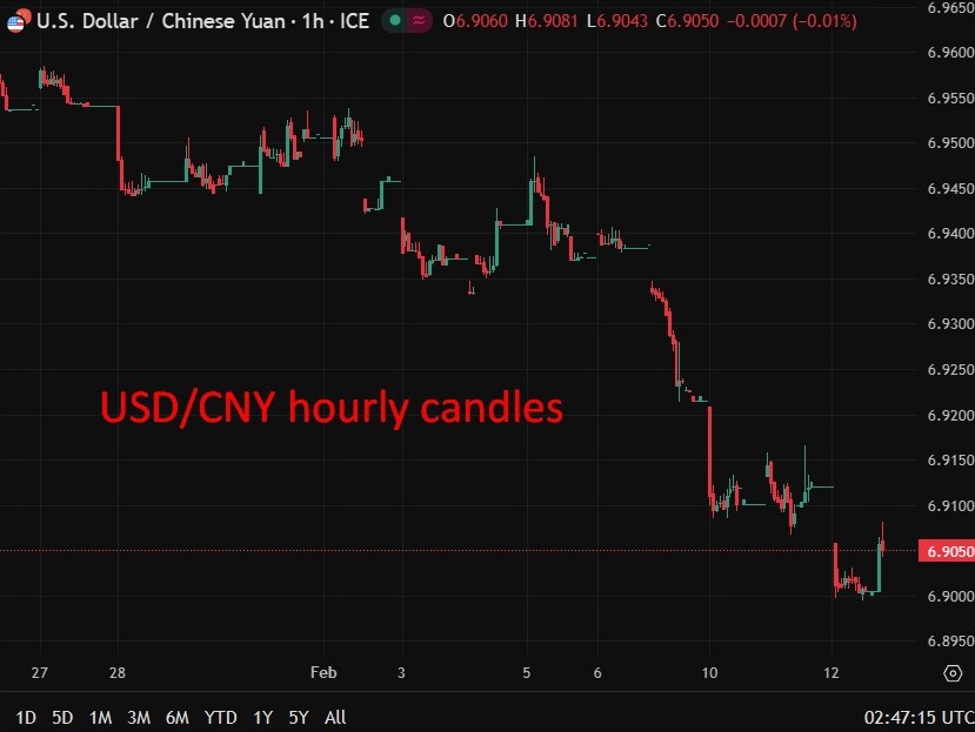
PBOC sets USD/ CNY reference rate for today at 6.9398 (vs. estimate at 6.9045)
The PBOC allows the yuan to fluctuate within a +/- 2% range, around this reference rate. Previous close 6.9033Injects CNY 145bln via 7-day reverse repos with the rate unchnaged at 1.40% This article was written by Eamonn Sheridan at investinglive.com. 🔗 Source 💡 DMK Insight The PBOC’s latest move to inject CNY 145 billion via reverse repos is a clear signal of its intent to manage liquidity amid ongoing economic pressures. With the yuan’s reference rate set at 6.9033 and allowed to fluctuate within a 2% band, traders should keep an eye on how this affects the currency’s volatility. The unchanged reverse repo rate at 1.40% suggests the central bank is maintaining a cautious stance, likely to support economic stability while avoiding excessive depreciation of the yuan. This could impact forex pairs like USD/CNY, especially if traders start to position themselves based on anticipated fluctuations. However, there’s a flip side: if the yuan weakens beyond the 2% threshold, it could trigger further interventions from the PBOC, leading to increased volatility. Watch for any shifts in market sentiment around this reference rate, as it could provide trading opportunities in both the yuan and related assets like commodities that are priced in CNY. 📮 Takeaway Monitor the USD/CNY pair closely; a breach of the 2% fluctuation range could signal significant volatility and trading opportunities.

China house prices continue their death spiral: January -3.1% y/y and -0.4% m/m
China’s housing slump deepens as January prices fall 3.1% y/y, extending multi-year downturn.Summary:Deflationary property trend deepensDeveloper balance sheets remain strainedDebt overhang continues to weigh on sectorPolicy support yet to generate sustained turnaround China’s property downturn showed little sign of stabilising in January, with new home prices falling 3.1% year-on-year, deepening from the prior 2.7% decline. On a monthly basis, prices slipped 0.4%, unchanged from December, underscoring the persistence of downward momentum in the sector.The data reinforces the view that China’s housing market remains entrenched in a multi-year correction. What began as a liquidity squeeze among heavily leveraged developers has evolved into a broader demand slump, with weak buyer confidence, falling sales volumes and declining prices feeding into each other.The sector’s debt burden remains a central pressure point. Years of aggressive expansion funded by high leverage left many developers exposed when authorities tightened financing conditions under the “three red lines” policy framework. High-profile defaults and restructuring efforts have continued to cloud the outlook, while pre-sale funding models have struggled amid slower buyer demand.Policy easing has been incremental rather than aggressive. Authorities have lowered mortgage rates, relaxed purchase restrictions in some cities and encouraged state-backed entities to support unfinished projects. However, these measures have yet to deliver a decisive inflection point. Household sentiment remains cautious, particularly as broader economic growth has moderated and youth unemployment concerns linger.The property sector carries outsized importance in China’s economy, directly and indirectly accounting for a substantial share of GDP, local government revenues and household wealth. Persistent price declines therefore have implications well beyond construction activity, affecting consumer spending, credit growth and financial stability.With monthly declines holding steady and annual falls deepening, January’s figures suggest the sector is still searching for a floor. Markets will continue to watch for stronger fiscal or monetary intervention should deflationary pressures in property intensify further. This article was written by Eamonn Sheridan at investinglive.com. 🔗 Source 💡 DMK Insight China’s housing market is in deeper trouble, and here’s why that matters for global traders: The 3.1% year-on-year drop in new home prices signals a continued deflationary trend that could ripple through related markets, particularly commodities and currencies. A struggling property sector often leads to reduced demand for materials like steel and copper, which could impact their prices. Additionally, the ongoing debt overhang and strained developer balance sheets suggest that any recovery will be slow, keeping investor sentiment cautious. This situation could lead to further easing measures from the Chinese government, but without immediate results, traders should be wary of volatility in the yuan and related assets. Look for key indicators like upcoming policy announcements or shifts in lending rates that could signal a change in the housing market’s trajectory. If prices continue to decline, it might trigger broader economic concerns, affecting global markets. Keep an eye on the 3.1% figure as a benchmark for future price movements and watch for any signs of stabilization in the coming months. 📮 Takeaway Monitor China’s housing market closely; a sustained decline could impact global commodities and the yuan, especially if prices fall further.

NZ inflation expectations mixed ahead of likely RBNZ on hold decision February 18
RBNZ set to hold at 2.25% as inflation expectations send mixed signals and hike bets build for 2026.Summary:RBNZ widely expected to hold OCR at 2.25% on February 18Inflation at 3.1%, above 1–3% target bandRate cuts since 2024 total 325bpHike expectations for end-2026 risingFutures price ~60% chance of hike by Q3 end2-yr inflation expectations ease to 2.4%1-yr expectations tick up to 2.6%The Reserve Bank of New Zealand is widely expected to leave its official cash rate unchanged at 2.25% at its February 18 meeting, with all 31 economists in a Reuters poll forecasting a hold. After aggressively cutting rates by a cumulative 325 basis points since August 2024 to counter recessionary pressures, policymakers now appear set to pause and assess how inflation and growth evolve.Inflation rose to 3.1% in the latest quarterly reading, moving just above the RBNZ’s 1–3% target band and marking its highest level in over a year. At the same time, the economy returned to growth in the third quarter following a prolonged contraction, reinforcing the case for a wait-and-see approach.While consensus sees no immediate move, the debate has shifted toward when tightening might resume. Around 45% of economists surveyed now expect at least one rate hike by the end of 2026, a notable increase from late last year. Futures markets are even more assertive, pricing roughly a 60% probability of a 25bp or larger hike by the end of the third quarter.Recent RBNZ inflation expectations data adds nuance to the outlook. One-year expectations edged up to 2.6% from 2.4%, while two-year expectations — closely watched by policymakers — eased to 2.4% from 2.6%. The moderation in the two-year measure may offer some reassurance that medium-term inflation pressures remain contained, even as short-term expectations firm.Some economists caution that talk of renewed tightening may be premature. While activity data has surprised to the upside, they argue the recovery remains tentative and that inflation pressures are not yet clearly demand-driven.The upcoming decision is therefore likely to emphasise optionality: holding steady for now, while keeping the door open to future tightening should inflation prove persistent. This article was written by Eamonn Sheridan at investinglive.com. 🔗 Source 💡 DMK Insight RBNZ’s decision to hold rates at 2.25% is a pivotal moment for traders navigating mixed inflation signals. With inflation at 3.1%, above the target band, the market’s focus shifts to the rising expectations for rate hikes by 2026. The futures market pricing in a 60% chance of a hike by Q3 indicates that traders are starting to position themselves for a potential shift in monetary policy. This could lead to volatility in the NZD, especially if the RBNZ hints at future tightening. Keep an eye on how the NZD/USD reacts around key support and resistance levels, particularly if inflation data continues to surprise to the upside. A break above recent highs could signal a stronger bullish trend, while failure to maintain momentum could lead to a pullback. Here’s the thing: while the RBNZ is holding steady now, the shifting sentiment around future hikes could create opportunities for traders who can read the tea leaves of economic indicators. Monitor inflation reports closely, as they could drive market sentiment and influence the timing of any rate adjustments. 📮 Takeaway Watch for inflation data and NZD/USD levels; a break above recent highs could signal bullish momentum as rate hike expectations grow.
China housing market struggles despite “three red lines” removal. 62/70 cities price falls
China’s housing slump deepens as January prices post steepest annual drop in seven months. Earlier on this here:China house prices continue their death spiral: January -3.1% y/y and -0.4% m/madding a little more now:Summary:China new home prices fall 0.4% m/m, -3.1% y/y in JanuaryAnnual decline steepest in seven months62 of 70 cities report price dropsResale market weakness persists“Three red lines” policy scrappedDeveloper funding stress continuesWeak housing weighs on consumption and growthChina’s housing downturn deepened in January, with official data showing new home prices falling 0.4% month-on-month and 3.1% from a year earlier. The annual decline accelerated from December’s 2.7% drop, marking the steepest contraction in seven months and reinforcing concerns that the sector has yet to find a durable floor.The weakness was broad-based. Of the 70 cities surveyed, 62 recorded price declines, up from 58 in the prior month. The secondary market also remained under pressure. While month-on-month declines in resale prices moderated slightly, year-on-year falls widened sharply, with tier-one city prices down 7.6% and smaller cities registering declines of more than 6%.The property sector, once a central driver of China’s economic expansion, continues to weigh on household wealth and sentiment. Falling home values have constrained consumer spending at a time when policymakers are attempting to rebalance growth and offset external trade risks. Reviving domestic demand remains a core priority, but the persistent housing slump underscores the difficulty of restoring confidence.Authorities have rolled out a range of supportive measures since the crisis began in 2021, including easing home purchase restrictions, lowering down-payment requirements and cutting mortgage rates. More recently, state media reported that regulators had removed the “three red lines” policy — caps on developers’ leverage ratios that were introduced in 2020 and widely seen as triggering a liquidity squeeze across the industry.Despite the policy shift, funding strains remain acute. Many developers are still burdened by high debt levels and face challenges securing fresh financing. The sector is also adjusting away from the highly leveraged expansion model that powered the previous boom.With price declines broadening and annual falls intensifying, January’s data suggests China’s property sector remains a drag on growth and financial stability. This article was written by Eamonn Sheridan at investinglive.com. 🔗 Source 💡 DMK Insight China’s housing market is in serious trouble, and here’s why that matters for traders: The 3.1% year-over-year drop in new home prices signals a deepening crisis that could ripple through global markets. A declining real estate sector often leads to reduced consumer confidence and spending, which can impact commodities and currencies tied to China, like copper and the Australian dollar. Traders should keep an eye on related assets as this downturn could trigger further sell-offs in markets sensitive to Chinese economic health. Moreover, the ongoing slump could prompt the Chinese government to implement stimulus measures, which might temporarily boost markets but could also lead to longer-term inflation concerns. Watch for any policy announcements in the coming weeks that could shift market sentiment. Technical levels to monitor include key support zones in commodities that often react to Chinese demand, as well as the AUD/USD pair, which could face volatility if the housing crisis worsens. The immediate impact is clear, but the long-term implications could reshape trading strategies across multiple asset classes. 📮 Takeaway Keep an eye on the AUD/USD and commodities linked to China; any stimulus measures could create volatility in the coming weeks.
BOJ’s Tamura says inflation sticky, sees scope to judge target met by spring
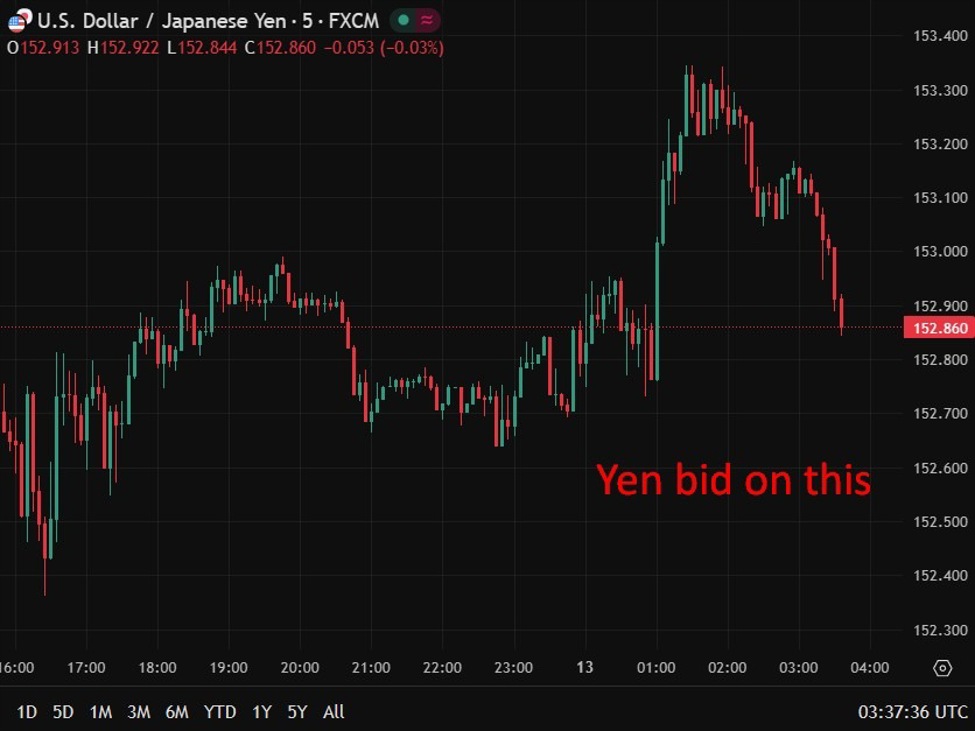
Tamura flags sticky inflation and positive output gap, signalling scope for further BOJ rate hikes.Summary:BOJ’s Tamura says inflation becoming “sticky”Price target may be judged achieved as early as springOutput gap already positiveYen weakness a renewed inflation riskPolicy still accommodative at 0.75%Neutral rate likely at least around 1%Signals scope for further tighteningBank of Japan board member Naoki Tamura delivered remarks that reinforce the case for further policy normalisation, warning that inflation in Japan is becoming increasingly sticky and that the central bank may soon be in a position to judge its 2% price target as sustainably achieved.Tamura said recent inflation dynamics suggest price pressures are stabilising at elevated levels rather than fading. He noted that consumer inflation has been hovering around the 2% target and argued that the Bank may be able to determine as early as this spring that its price objective has been met. Such language marks a notable shift from the long-running focus on deflation risks.He added that Japan’s output gap has already moved into positive territory, signalling capacity constraints and supply-side pressures that are pushing prices higher. Rising food costs are expected to persist, while renewed yen weakness poses upside risks to the inflation outlook via import prices.Against this backdrop, Tamura emphasised that monetary conditions remain accommodative even after the policy rate was lifted to 0.75% in December 2025. He suggested that the cumulative tightening to date has had limited restraining impact on economic activity, with investment and financial conditions still broadly supportive.Crucially, Tamura indicated that the neutral policy rate is likely at least around 1%, implying there remains considerable room for additional rate increases before policy becomes restrictive. This framing signals that further hikes would represent continued normalisation rather than an overt tightening cycle.He stressed the need to scrutinise incoming data carefully to ensure a “smooth landing,” but the overall tone suggests the BOJ is increasingly confident that Japan has exited its deflationary phase.Taken together, the speech reinforces expectations that the Bank of Japan will continue edging rates higher if inflation proves durable. This article was written by Eamonn Sheridan at investinglive.com. 🔗 Source 💡 DMK Insight BOJ’s Tamura just dropped a hint about sticky inflation, and here’s why that matters: With the output gap turning positive, the Bank of Japan might be gearing up for more rate hikes. This could shake up the yen, which is already under pressure. If inflation sticks around, traders should brace for a potential shift in monetary policy that could push rates above the current 0.75%. Keep an eye on the neutral rate, which Tamura suggests is at least around 1%. If the BOJ acts sooner than expected, we could see a stronger yen, impacting not just USD/JPY but also related assets like Japanese equities. But here’s the flip side: if the market overreacts to these signals, we could see volatility spike. Watch for key levels around 145 in USD/JPY; a break above could trigger further yen weakness. For now, monitor inflation reports closely and be ready to adjust positions based on BOJ announcements. Timing is everything here, so stay sharp on any upcoming data releases that could influence the BOJ’s next move. 📮 Takeaway Watch USD/JPY closely; a break above 145 could signal further yen weakness as the BOJ hints at rate hikes.