
 Bitcoin
  Ethereum
  Tether
  XRP
XRP  BNB
BNB  USDC
USDC  Solana
  TRON
TRON  Lido Staked Ether
  Figure Heloc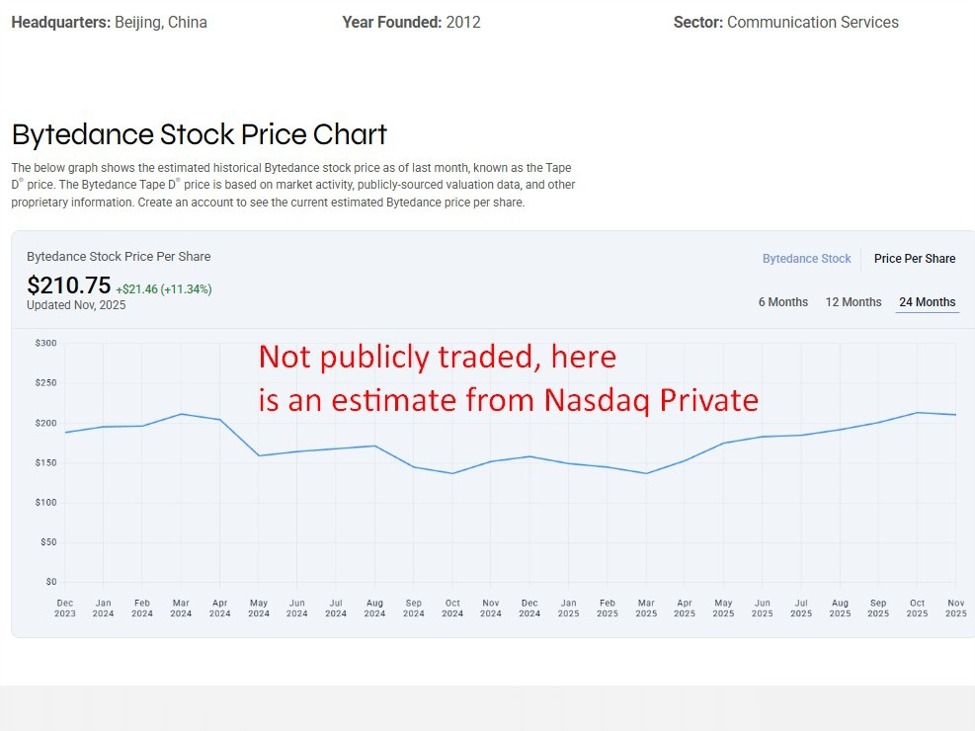
SummaryByteDance plans to lift AI investment sharply in 2026, sources say.Preliminary capex budget is around Rmb160bn ($23bn), up from 2025.About half of spending is earmarked for advanced semiconductors.AI chip access remains uncertain due to US export controls.Move highlights intensifying AI competition between China and the US.TikTok owner ByteDance is planning a significant increase in artificial-intelligence spending in 2026, underscoring the urgency among Chinese technology groups to keep pace with US rivals amid tightening geopolitical and technology constraints.According to people familiar with the matter, the Beijing-based company has preliminarily budgeted around Rmb160bn ($23bn) in capital expenditure for 2026, up from roughly Rmb150bn this year. Around half of the planned spending is expected to be directed toward advanced semiconductors, with approximately Rmb85bn earmarked specifically for AI processors.The proposed increase highlights ByteDance’s determination to scale its AI capabilities across content recommendation, advertising, and generative AI applications, even as access to cutting-edge chips remains uncertain. US export controls have limited Chinese companies’ ability to procure the most advanced processors from firms such as Nvidia, forcing companies to balance stockpiling, alternative sourcing and in-house optimisation.ByteDance has emerged as one of China’s most aggressive investors in AI infrastructure, reflecting the strategic importance of machine learning to its core businesses, including TikTok and its Chinese counterpart Douyin. AI plays a central role in recommendation algorithms, content moderation and advertising efficiency, making compute capacity a critical competitive input.The spending plans also illustrate the broader shift underway among China’s largest internet companies, which are prioritising long-term technological self-sufficiency over short-term margin preservation. As US technology firms ramp up AI investment at an unprecedented pace, Chinese groups are under pressure to respond despite regulatory and supply-chain headwinds.While the budget remains preliminary and subject to change, the scale of the proposed outlay suggests ByteDance is preparing for sustained competition in AI over the coming years. For markets, the plans reinforce expectations that AI-related capital expenditure will remain elevated globally, even as access to advanced hardware becomes increasingly fragmented along geopolitical lines. This article was written by Eamonn Sheridan at investinglive.com. 🔗 Source 💡 DMK Insight ByteDance’s planned $23 billion investment in AI signals a major shift in tech competition. This move, particularly the focus on advanced semiconductors, reflects the escalating rivalry between China and the US in AI technology. For traders, this could impact tech stocks and semiconductor companies, especially if ByteDance successfully navigates US export controls. Keep an eye on related sectors like Nvidia or AMD, which could see volatility based on ByteDance’s chip access and production capabilities. If these companies can capitalize on the demand for AI chips, we might see significant price movements. However, there’s a flip side: if US restrictions tighten further, it could stifle ByteDance’s plans, leading to a ripple effect in the market. Traders should monitor the semiconductor supply chain and any announcements from US regulators that could affect export policies. Watch for key price levels in tech stocks, especially around earnings reports, as these developments unfold. 📮 Takeaway Monitor ByteDance’s semiconductor strategy closely; any setbacks in chip access could impact tech stocks significantly in the coming months.
Japan officials’ warnings have continued to bolster the yen, USD/JPY under 156.50
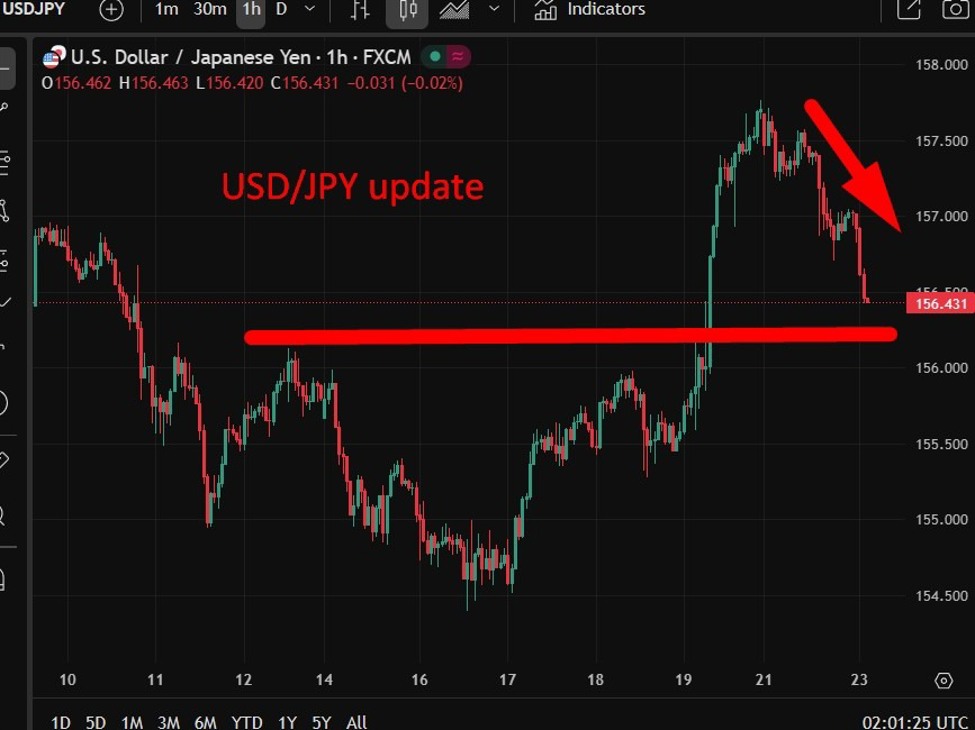
SummaryUSD/JPY has fallen below 156.50 as the yen extended recent gains.Atsushi Mimura expressed deep concern about “one-sided, sudden” FX moves in comments Monday.Mimura flagged readiness to act against excessive volatility.Finance Minister Katayama emphasised Tokyo’s “free hand” to counter speculative swings in comments later on Monday.The Japanese yen continued to strengthen on Tuesday, with the USD/JPY pair sliding below the 156.50 mark, as officials in Tokyo stepped up warnings about “one-sided” and “sharp” currency moves and signalled a readiness to act if volatility becomes excessive.Top currency diplomat Atsushi Mimura voiced “deep concern” on Monday about recent yen fluctuations, describing recent moves as sudden and speculative in nature, language that markets interpreted as a possible prelude to direct FX intervention. Mimura said authorities are prepared to take “appropriate actions against excessive moves,” a phrase that traders widely view as hinting at intervention should the yen’s advance become disorderly. The yen’s bounce this week comes as the Bank of Japan continued normalising policy last week, raising its policy rate to 0.75%, a three-decade high, and narrowing the rate differential with the Federal Reserve. In the aftermath of the Friday BoJ decision markets focused on BOJ Governor Kazuo Ueda’s cautious forward guidance, which lacked clear hints of an imminent further tightening sequence, leaving JPY vulnerable. Mimura’s rhetoric was reinforced later on Monday by Finance Minister Satsuki Katayama, who told Bloomberg that Japan has a “free hand” to address excessive yen volatility and distinguished recent moves from fundamental drivers. She said the latest swings were largely speculative, signalling that authorities are closely watching exchange-rate behaviour and will act if necessary. The growing chorus of official warnings has come against a backdrop of broader market dynamics, safe-haven flows and intervention speculation have lent support to the yen, while traders also remain attentive to evolving Fed rate expectations and geopolitical drivers. A break below 156.20 for USD/JPY has drawn attention, with market participants viewing it as a key level that could usher in further yen strength if official warnings translate into actual market operations. -ADDED:Finance Minister Katayama has declined to comment on forex levels or interest rates. She did say, however, that Japan will take appropriate action and reiterated that they have a “free hand” to respond to excessive moves in JPY. This article was written by Eamonn Sheridan at investinglive.com. 🔗 Source 💡 DMK Insight The USD/JPY drop below 156.50 signals a critical shift in currency dynamics. Mimura’s concerns about sudden FX moves highlight the Japanese government’s readiness to intervene, which could lead to increased volatility in the pair. Traders should watch for any official actions or statements from the Bank of Japan, as these could trigger sharp price swings. The yen’s recent strength suggests a potential trend reversal, especially if it breaks through key resistance levels. If the USD/JPY continues to decline, it could impact related markets, such as commodities priced in dollars, making them more expensive for Japanese buyers. Keep an eye on the 156.00 level; a sustained move below this could open the door for further declines, while a rebound could indicate a buying opportunity for the dollar. The next few sessions will be crucial as traders digest these developments and position themselves accordingly. 📮 Takeaway Watch the 156.00 level closely; a break below could signal further declines in USD/JPY, while any intervention could lead to volatility spikes.
Zandi says US inflation is higher than reported as CPI data quality worsens
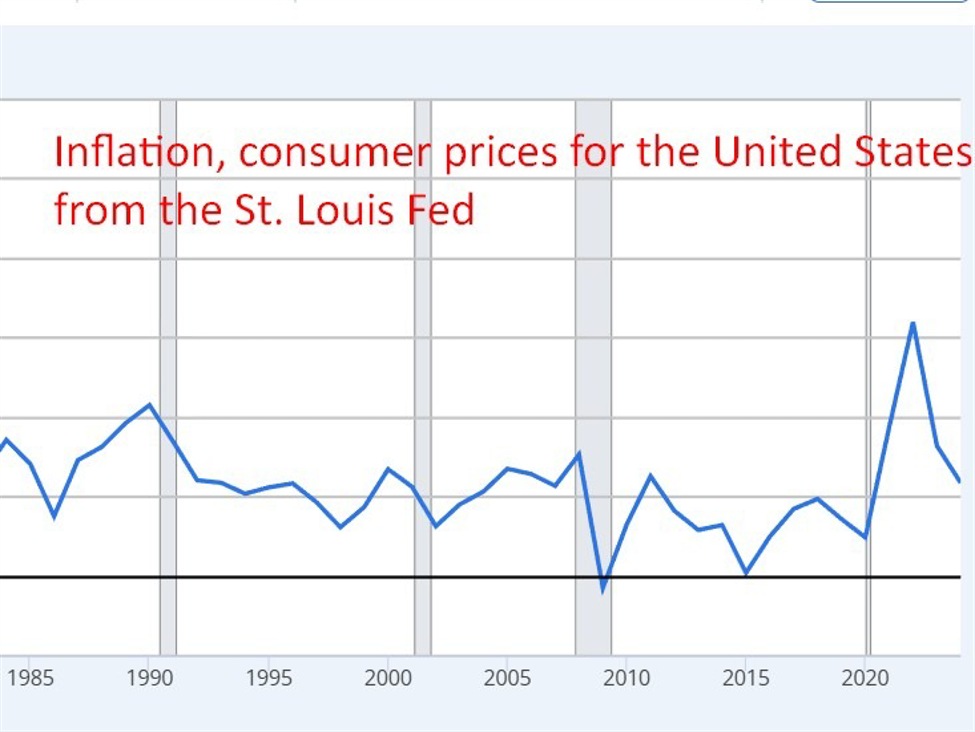
SummaryMark Zandi says official US CPI data significantly understates inflation.Moody’s Analytics estimates November inflation remained near 3%, not 2.7% (Goldman Sachs share concerns) Measurement issues stem from shutdown disruptions and survey timing distortions.CPI data quality has deteriorated due to rising reliance on imputed prices.Underlying inflation remains well above the Fed’s target, Zandi warns.US inflation may be running materially hotter than official data suggest, according to Mark Zandi, who warned that recent consumer price figures released by the Bureau of Labor Statistics are “badly flawed.”In a series of social media posts, Zandi said the BLS estimate showing headline consumer price inflation slowing to 2.7% year-on-year in November significantly understates actual price pressures. Using an alternative methodology, Moody’s Analytics estimates inflation instead remained unchanged at around 3.0%.Zandi said a key problem stems from October’s CPI calculation, when the BLS was unable to conduct its full price survey due to the US government shutdown. In response, the agency assumed prices for most goods and services were unchanged, an assumption Zandi said was unrealistic. Moody’s Analytics replaced those assumptions with private-sector price data where available, and forecasts where necessary, to reconstruct October inflation.He also flagged distortions in November’s CPI data due to delayed survey collection. November pricing patterns are particularly sensitive to timing, Zandi said, with stronger price increases typically seen early in the month before discounting intensifies ahead of the holiday shopping season. Adjusting for this timing bias, Moody’s estimates core CPI inflation at close to 3.0% year-on-year, rather than the lower official reading.Beyond timing issues, Zandi pointed to growing structural weaknesses in CPI measurement. Budget cuts and staffing shortages at the BLS have sharply increased reliance on imputed prices, with nearly one-third of CPI components no longer directly observed, up from roughly one-tenth earlier this year.As a result, Zandi warned that “noise is increasingly drowning out the signal” in inflation data. Abstracting from that noise, he argued inflation remains uncomfortably high and well above the Federal Reserve’s 2% target, with little evidence of sustained disinflation. This article was written by Eamonn Sheridan at investinglive.com. 🔗 Source 💡 DMK Insight Mark Zandi’s take on CPI data is a wake-up call for traders: inflation might be worse than we think. With Moody’s estimating November inflation at around 3%, significantly higher than the reported 2.7%, this discrepancy could impact Fed policy and market sentiment. If inflation is indeed underestimated, we could see a shift in interest rate expectations, which would ripple through both the forex and crypto markets. Traders should keep an eye on the next Fed meeting and any comments from officials regarding inflation metrics. If the Fed reacts to these inflation concerns, we might see volatility in USD pairs and a potential sell-off in risk assets like crypto, which often react negatively to tightening monetary policy. Here’s the thing: while mainstream narratives focus on the current CPI, they might be missing the broader implications of these measurement issues. If underlying inflation remains stubbornly high, it could lead to a more hawkish Fed stance, which traders need to prepare for. Watch for any shifts in market sentiment around the next CPI release and Fed commentary, as these could be pivotal for positioning in both forex and crypto markets. 📮 Takeaway Keep an eye on the next Fed meeting and inflation data; a shift in policy could trigger volatility in USD and crypto markets.
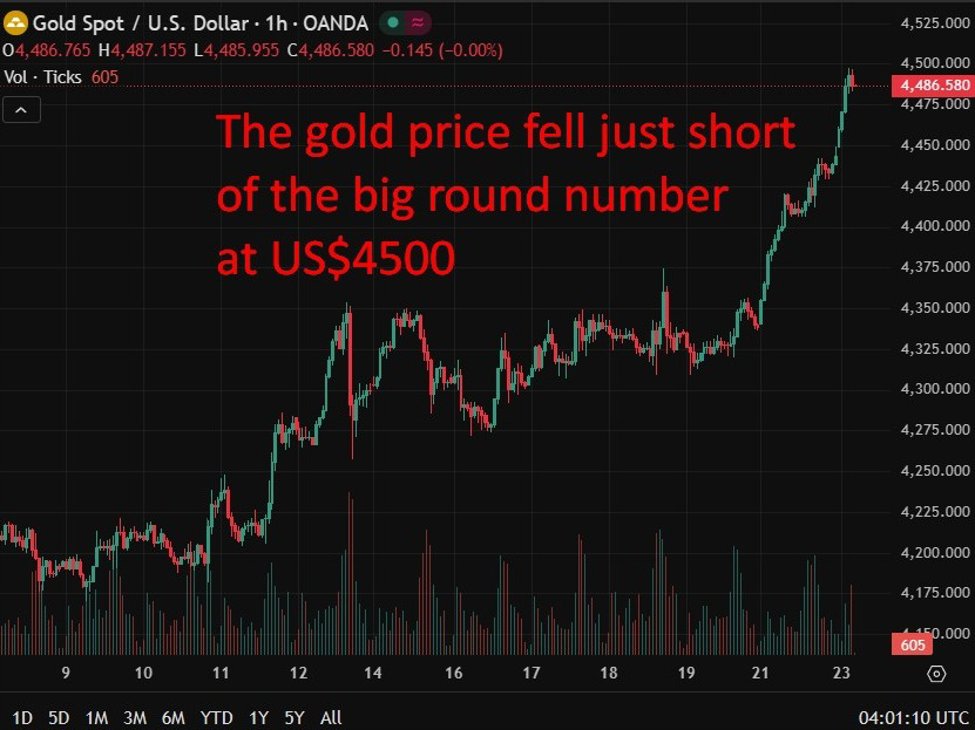
Gold and silver prices have climbed sharply, is there round number resistance ahead?
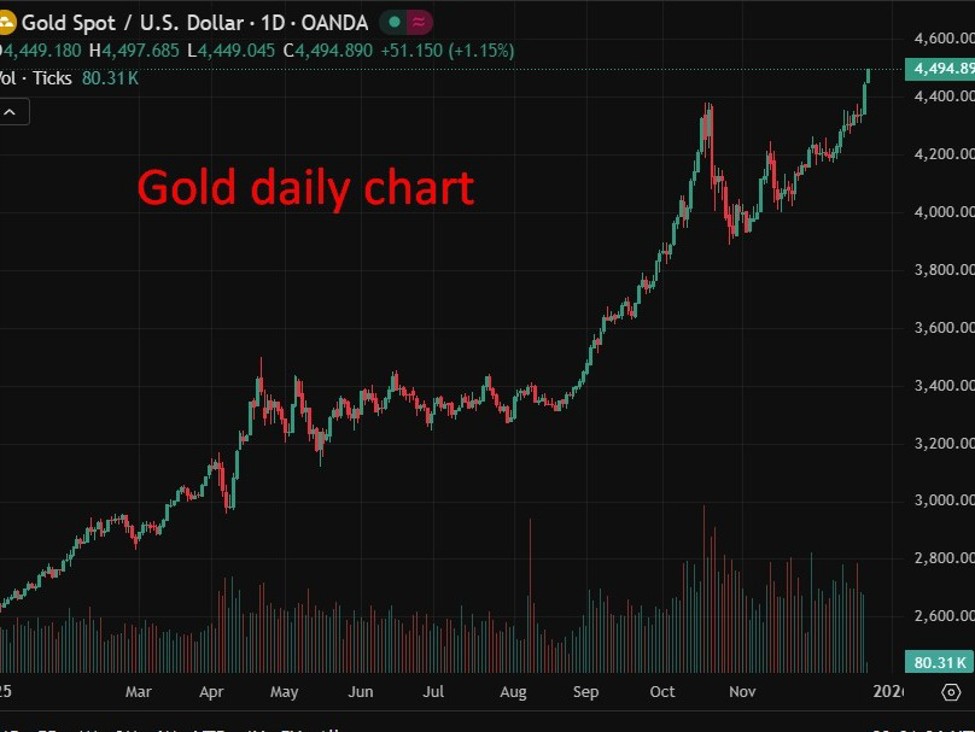
SummaryGold and silver prices have surged amid lower real yields and inflation concerns.Safe-haven demand has risen on geopolitical and macro risk.Central bank policy expectations keep real rates subdued.A softer US dollar boosts commodity demand.ETF inflows signal broader investor rotation into precious metals.Gold and silver prices have climbed sharply in recent sessions, drawing fresh interest from investors seeking protection against inflationary pressures, geopolitical uncertainty and a backdrop of persistently low real yields.A central driver of the rally has been falling real interest rates. As inflation expectations remain elevated relative to nominal bond yields, the opportunity cost of holding non-yielding assets such as gold and silver has diminished. This dynamic has underpinned bullion demand as investors adjust portfolios in anticipation of a more prolonged period of easy financial conditions.Risk sentiment has also played a role. Ongoing geopolitical tensions in Europe and the Middle East, combined with elevated concerns over the pace of global growth, have boosted demand for safe-haven assets. Traditionally, gold is one of the first ports of call during periods of heightened uncertainty, while silver, with both industrial and monetary demand drivers, has benefited from spill-over flows.Currency dynamics have further added fuel to the move. A softer US dollar, pressured by dovish forward guidance and expectations of prolonged low real rates, tends to lift dollar-priced commodities, making bullion cheaper for holders of other currencies.Physical demand trends and ETF flows have also been constructive. Data from bullion ETFs show renewed inflows into gold and silver, suggesting that institutional and retail investors are rotating into precious metals as part of broader risk management strategies.Then charts show prices approaching what appear to be psychologically resistance levels. Round numbers often act this way. For gold right now its US$4500, and for silver US$70. This article was written by Eamonn Sheridan at investinglive.com. 🔗 Source 💡 DMK Insight Gold and silver are on the rise, and here’s why you should care: lower real yields and inflation fears are driving safe-haven demand. With central banks keeping real rates low, the appeal of precious metals is increasing, especially as the US dollar softens. This environment is ripe for traders looking to capitalize on commodity demand. ETF inflows indicate a shift in investor sentiment, suggesting that more capital is flowing into gold and silver. For day traders, monitoring the price action around key resistance levels will be crucial. If gold can break above its recent highs, it could trigger further buying momentum. Conversely, if the dollar strengthens unexpectedly, it might put pressure on these metals. Keep an eye on the upcoming economic data releases that could influence central bank policies. A significant report could shift market sentiment quickly, so be ready to adjust your positions accordingly. 📮 Takeaway Watch for gold to break key resistance levels; a sustained move above recent highs could signal strong bullish momentum.
investingLive Asia-Pacific FX news wrap: Gold & silver new record highs. Yen & yuan higher
Gold and silver prices have climbed sharply, is there round number resistance ahead?Zandi says US inflation is higher than reported as CPI data quality worsensJapan officials’ warnings have continued to bolster the yen, USD/JPY under 156.50ByteDance plans $23bn AI spending push for 2026, boosts AI capex amid chip uncertaintyMusk’s (SpaceX’s) Starlink tops 9 million customers as subscriber growth acceleratesPBOC sets USD/ CNY central rate at 7.0523 (vs. estimate at 7.0267)RBA meeting minutes underline upside inflation risks, leave door ajar to tighteningMUFG sees risk of Swiss National Bank negative rates if Swiss franc stays strongTrump says US may sell or keep seized Venezuelan oilICYMI – Nvidia China shipment plans lift US stocks as AI export policy easesICYMI – Japan says it has “free hand” on FX action, intervention talk that lifted the yenBessent hints at Fed inflation target rethink and possible end to dot plotSummary:Gold and silver surged, with gold nearing US$4,500 and silver pushing toward US$70 on safe-haven demand, lower real yields and US dollar weakness.The yen strengthened further, extending gains after FX warnings from Atsushi Mimura and Satsuki Katayama, pulling USD/JPY down to around 156.30.Japanese equities rose as JGB yields retreated from record highs, with the Topix nearing a record and support from Goldman Sachs’s Japan expansion plans.The onshore yuan firmed in spot trade despite a softer People’s Bank of China fixing, signalling tolerance for gradual CNY strength.The Australian dollar edged higher after Reserve Bank of Australia minutes reinforced a hawkish hold and debate over whether policy is still restrictive.–Precious metals extended their rally again today, with prices surging further. Gold pushed up toward US$4,500 without quite reaching the level as of writing, while silver also climbed sharply, topping out just shy of the US$70 handle.Currencies also reflected a defensive tilt, with both the Japanese yen and the Chinese yuan strengthening. Yen gains continued following verbal intervention earlier in the week from Japan’s top currency diplomat Atsushi Mimura and Finance Minister Satsuki Katayama. The renewed warning against speculative and one-sided FX moves helped push USD/JPY down to around 156.30.Japanese equities rose, aided by a pullback in domestic bond yields after a sharp spike earlier in the week. The Topix climbed to 3,422, moving closer to its recent record high of 3,434.6, while the tech-heavy Nikkei lagged amid lingering valuation concerns around AI-linked stocks. Sentiment was also supported by headlines that Goldman Sachs plans to expand acquisitions and investments in Japan’s corporate deals market by roughly US$5.1bn over the next decade, with a focus on mid-sized firms.Japanese government bond yields declined across maturities as conditions stabilised following earlier record highs in two-, 20- and 30-year debt.In China, the People’s Bank of China set its USD/CNY fixing at 7.0523, a near 15-month high for the onshore yuan. The fixing showed the largest weak-side deviation versus Reuters’ market estimate since November 2022, a signal the PBOC is leaning against rapid yuan appreciation. Even so, spot trading saw the onshore yuan strengthen past 7.03 per dollar, its firmest level since October 2024, reflecting broad dollar weakness.The Australian dollar edged higher ahead of the release of the December Reserve Bank of Australia minutes. The minutes revealed discussion around the conditions under which the Bank might need to pivot back toward rate hikes in 2026 if inflation risks persist. While the Board reiterated its data-dependent stance, the tone remained hawkish, with debate centred on whether the current cash rate is still restrictive amid limited spare capacity.Earlier, comments from US Treasury Secretary Scott Bessent added to policy uncertainty. Speaking on a podcast, Bessent said Fed Governor Steve Miran is likely to return to the White House early next year and questioned the precision of inflation targeting, while also flagging growing support among potential Fed chair candidates for scrapping the dot plot.Geopolitically, President Donald Trump said the United States “needs Greenland for national security,” citing Russian and Chinese maritime activity near the territory. This article was written by Eamonn Sheridan at investinglive.com. 🔗 Source

Japan's Takaichi says national debt is still high, rejects "irresponsible bond issuance"
The message is certainly interesting with Takaichi definitely trying to soothe Japanese markets more than anything else with this one. After already enacting a roughly ¥18 trillion supplementary budget for the current fiscal year, her government is expected to go through with a ¥122 trillion budget for the next fiscal year starting April.Her fiscal dovishness has come under intense scrutiny, not least with the selloff in Japanese bonds and the yen currency. And she certainly knows that very well.But in trying to shore up confidence and not prevent an overbearing fallout, she has to play her part in saying the things she needs to say and that’s what we’re seeing.Takaichi mentions to Nikkei that Japan’s national debt level is still high and that she rejects the idea of “irresponsible bond issuance or tax cuts”.It’s all mainly an attempt to try and calm down investors, as JGB yields continue to surge higher while the yen currency suffers.So far today, things are at least looking a bit better but this is akin to just putting a plaster on the hole on the dam. Her big picture plans remain clear for all to see and there’s no way she will be backing down from that. I mean, she’s even trying to get the BOJ on board so it speaks a lot to her conviction.USD/JPY is down 0.6% on the day to 156.07 while 10-year JGB yields are down 3 bps from yesterday to 2.04%. The latter hit a high yesterday of 2.10%, just for some context. Yikes.As for the former, the drop still isn’t too comforting with buyers looking to hang on near the 200-hour moving average (blue line) to try and reaffirm the upside momentum from the latest bounce at the end of last week. This article was written by Justin Low at investinglive.com. 🔗 Source 💡 DMK Insight Japan’s massive ¥122 trillion budget signals aggressive fiscal policy, and here’s why that matters: With Takaichi’s government already deploying a ¥18 trillion supplementary budget, this new budget could further stimulate the economy, impacting both the yen and Japanese equities. Traders should keep an eye on the USD/JPY pair, as increased government spending often leads to currency depreciation. If the yen weakens, it could boost exports but also raise import costs, creating a mixed bag for investors. Additionally, the broader implications on global markets could be significant, especially if other central banks react to Japan’s aggressive fiscal stance. But here’s the flip side: if this spending doesn’t translate into tangible economic growth, we might see a backlash in market confidence. Watch for key economic indicators like GDP growth and inflation rates in the coming months. A failure to meet growth expectations could lead to volatility in Japanese stocks and the yen, making it crucial for traders to monitor these developments closely. 📮 Takeaway Keep an eye on the USD/JPY pair; a weakening yen could signal trading opportunities, especially if the ¥122 trillion budget fails to spur growth.

Germany November import prices +0.5% vs +0.2% m/m expected
Prior +0.2%The year-on-year figure is a standout as Germany records a drop of 1.9% in import prices compared to November 2024. That marks the sharpest year-on-year decline for import prices since March last year.Looking at the details, energy prices were the main culprit as they were seen down 15.7% compared to November 2024. But on a monthly basis, they were the biggest contributor as prices were seen up 3.1% on average compared to October.In excluding energy prices, German import prices are seen down only 0.3% on a year-on-year basis while up 0.3% on the monthly estimate. This article was written by Justin Low at investinglive.com. 🔗 Source 💡 DMK Insight Germany’s 1.9% drop in import prices is a big deal for traders watching inflation trends. The decline, driven primarily by a 15.7% drop in energy prices, signals potential easing in inflationary pressures, which could influence the ECB’s monetary policy. If import prices continue to fall, we might see a shift in market sentiment, especially in the eurozone, affecting the euro’s strength against the dollar. Traders should keep an eye on related assets like oil and gas, as their price movements could ripple through other markets. Watch for any changes in the ECB’s stance in upcoming meetings, as this could impact interest rates and, consequently, forex pairs like EUR/USD. The flip side is that while lower import prices might seem beneficial, they could also indicate weakening demand, which might not bode well for economic growth. So, it’s worth monitoring not just the import price index but also consumer spending and industrial output for a fuller picture. 📮 Takeaway Keep an eye on the ECB’s upcoming meetings; a continued drop in import prices could influence interest rates and impact EUR/USD significantly.

Japan bond and currency selloff could extend further, says ex-policymaker
It seems like former central bankers in Japan are not shying away from the press, amid intense scrutiny against the BOJ and the government. I guess it’s easier when you’re not the one in the hot seat, eh?Adachi says that the government’s fiscal policy ambitions have driven markets to sell Japanese bonds and the yen currency. Adding that things could worsen further for domestic assets come next year.For some context, Adachi was part of the BOJ up until March this year. So, he’s one of the more recent policymakers to comment but then Takaichi’s reign is something that the central bank was not prepared for earlier in the year. I mean, clearly they were not expecting such a drastic change even with some backlash to Ishiba at the time.In any case, Adachi mentions that:”The yen is weakening despite narrowing Japan-US interest rate differentials, which means it has little to do with BOJ policy. I think investors are starting to demand a higher premium for Japan’s fiscal risk.”Adding that the action in the bond market also clearly reflects the latter. That as Japanese government bond (JGB) yields have surged higher since Takaichi took over as prime minister.He also notes that the BOJ could be forced to rethink its bond taper plans if the rout continues next year. It is either that or the central bank has to think of something to help smaller banks that may be hit with massive losses due to their bond holdings.In ending, he does deliver a bit of jibe at Takaichi and what he thinks about the situation though:”It’s hard to erase market doubts over Japan’s finances after Takaichi so powerfully branded her policies as proactive fiscal policy. Rising bond yields will be the biggest risk to Japan’s economy next year.” This article was written by Justin Low at investinglive.com. 🔗 Source 💡 DMK Insight The recent comments from former Japanese central bankers highlight a growing skepticism about the BOJ’s fiscal policies, and here’s why that matters for traders: With ADA currently at $0.37, the implications of Japan’s monetary policy could ripple through crypto markets, especially if investors start to view traditional assets as increasingly unstable. If the BOJ’s policies lead to further market sell-offs, we might see a flight to alternative assets like ADA. Traders should keep an eye on the broader sentiment around fiscal policies, as shifts could trigger volatility in both crypto and forex markets. Watch for ADA to break key resistance levels around $0.40, which could signal a bullish trend if the market reacts positively to any signs of stability in Japan’s fiscal approach. On the flip side, if the BOJ’s policies continue to falter, we could see ADA and other altcoins face downward pressure as risk-off sentiment prevails. It’s crucial to monitor how institutional players react to these developments, as their movements can significantly influence market dynamics. Keep an eye on the upcoming economic indicators from Japan, as they could provide further context for ADA’s price action. 📮 Takeaway Watch for ADA to break the $0.40 resistance level, as shifts in Japan’s fiscal policy could drive volatility in crypto markets.

Trading.com’s New Investment Account is Now Available to EU (EEA) Clients
A zero-commission, transparent solution for long-term and new investors — plus a €50 Welcome Bonus to get started.Trading.com’s European entity has launched its Investment Account, allowing EEA clients to invest directly in shares listed on major global exchanges. Fully integrated into the Trading.com platform, the Investment Account provides a simple, transparent way to invest in stocks, with zero commissions, no upfront deposit required, and the flexibility to build long-term value through dividends and strategic investing. Investors can now access hundreds of global equities on an intuitive interface, with fast execution. This enables them to align their strategies with companies they believe in, while growing and maintaining control over their portfolio. To make getting started even easier, Trading.com is offering all new verified EEA clients a €50 Free Welcome Bonus when opening an Investment Account*. This bonus can be used to invest in any shares on the platform. Clients keep 100% of any profits earned, giving them a risk-free way to explore investing and build confidence in their portfolio strategies at their own pace. Plus, users can unlock more benefits with their Investment Account: Earning interest on their balance, growing their funds while they invest.10% deposit offer, getting extra value when they fund their account.Referring a friend and earning, inviting friends and enjoying rewards together. “With the Investment Account, we’re giving clients the freedom to invest in shares and manage their portfolios their way,” said the Trading.com team. “It’s all about transparency and putting control back in our clients’ hands.”With long-term investing and wealth management on the rise, this offering provides a cost-effective way to invest in individual companies, all within a familiar platform and alongside the full suite of Trading.com’s trading and analytical tools. Trading.com also supports clients worldwide with leveraged products in digital assets, commodities, indices, and forex. Regulated by CySEC in the EU, FCA in the UK, NFA and CFTC in the US, and ASIC in Australia, the platform provides intuitive solutions for both beginners and experienced traders. Discovering the Trading.com Investment Account Users can explore how stock investing with zero commissions can help them build long-term value and claim their €50 Welcome BonusAbout Trading.comTrading.com https://www.trading.com/eu positions itself as a multi-regulated global broker focused on making trading simple, transparent, and accessible. The company emphasizes a seamless and fair trading experience through intuitive platforms, competitive pricing, and full execution transparency, helping reduce market complexity. With access to more than 1,400 instruments across Forex and CFDs on stocks, indices, commodities, and shares where available, Trading.com supports a wide range of trading strategies. This offering is complemented by multilingual 24/7 support, market insights, advanced technology, and a client-first approach aimed at building trust and confidence across experience levels.* Terms and conditions apply. Welcome Bonus is available once per client. The Welcome Bonus is non-withdrawable, but all profits earned from it belong entirely to the client. This solely constitutes a press release regarding product availability. This is for informational purposes only and does not in any way represent investment or other professional advice. Trading comes with a high risk of losing your money and you should consider whether you can afford to take such risk. This article was written by IL Contributors at investinglive.com. 🔗 Source 💡 DMK Insight Trading.com just launched an Investment Account for EEA clients, and here’s why that matters: it opens up new avenues for retail investors looking to diversify their portfolios. With SOL currently at $124.86, traders should consider how this new offering could influence demand for cryptocurrencies as more investors seek exposure to both traditional and digital assets. The introduction of zero-commission trading could attract a wave of new participants into the market, potentially increasing volatility in both crypto and equity markets. If retail investors start reallocating funds from crypto to equities, we might see a short-term dip in SOL prices. Conversely, if this leads to increased interest in crypto as a complementary asset class, SOL could benefit from a surge in demand. Watch for any shifts in trading volume or sentiment indicators that could signal these trends. Keep an eye on key support and resistance levels for SOL, particularly around the $120 mark, as this could be a pivotal point for traders looking to enter or exit positions. The next few weeks will be crucial as the market digests this new offering and its implications for trading behavior. 📮 Takeaway Monitor SOL’s price action around $120 for potential volatility as new retail investors enter the market through Trading.com’s Investment Account.

Fiscal jackpot to send gold to $5,000 next year?
If it hasn’t been said already, the reasons underpinning the gold rally are bountiful. And with the precious metal continuing to soar to new heights towards the end of the year, the question is can it keep up the good form for a third straight year running?In that lieu, one key driver that could really send gold into overdrive in 2026 is the rise in fiscal concerns in major economies. In particular, gold could really hit the jackpot here as the stars align with the US, Europe, and Japan all needing to fight for fiscal survival.The case scenario in the US is one that market punters have talked about for a long time now. As the fiscal deficit continues to blow up, it continues to raise a major concern with the US’ debt-to-GDP ratio hitting over 120%.As things continue down this path, the main worry is that the US is pretty much stuck in a ‘debt spiral’. And that is one that lawmakers and policymakers will find it tough to get out of.Trump’s recent policies are aimed to try and address that somewhat. In trying to address the deficit, he knows that he has to somehow increase federal revenue. And that is where tariffs come in.I mean, that is what happens when for every dollar the government collects, they pretty much have to spend nearly 20% on interest costs before allocating the money to serve their agenda.And that’s also in part the reason why Trump wants to pressure the Fed into cutting rates further. That is to reduce the cost to service this debt. But in turn, that turns into a major risk for the US dollar and it is one that we’re seeing the greenback punished for this year.And amid the de-dollarisation and debasement trade, it still stands to reason why investors will want to seek gold as a suitable alternative.Then, there is also Europe.The case in the euro area is defined as a push and pull between France and Germany. The former is already a fiscal red flag for the region with French bond yields even trading above Italy’s at this stage. And that says a lot considering how Italy has always been the poster boy for bad fiscal reputation in Europe.Amid a flagging economy and political uncertainty, France is in a crippled state and is one that will continue to pose worries to the euro area next year.Meanwhile, Germany is quite the opposite. They have decided to loosen the purse strings and push forward with the end of austerity. From last week: Germany unveils historic €512 billion issuance for 2026That puts the ECB in a bit of a pickle. The central bank has to strike a balance in keeping rates in a sweet spot, just low enough to keep France out of trouble but high enough to not see a debasement of the euro currency as Germany begins to borrow its way out of stagflation.And lastly, there’s Japan. New prime minister, Sanae Takaichi, is a big fiscal dove and her plan is to try and go big on spending to “grow” their way out of a 250% debt-to-GDP ratio. Well, good luck with that.The issue with her plan is that it runs against what the BOJ has been doing recently and what the central bank plans to do next year. And that is already evident in the December monetary policy decision this month.The BOJ wants to normalise policy further but in raising interest rates, it is incurring more cost to the government in trying to services this massive and ballooning debt.Amid all this, the Japanese yen is the one being caught in the crossfire and being sacrificed in order to try and allow for Takaichi’s ambitions to take flight. But in losing its status as a traditional haven currency and a slow rush to the exits, it once again opens up a debasement angle and one for gold to take advantage of.The trio of fiscal predicaments above highlight a continued opportunity for gold traders to work with come next year. Even if major central banks might put a stop to rate cuts, the fact that central bank demand is still strong – with good reason – stands to reason that gold might not lose too much shine.A case of a debasement of currencies and a ‘rebasement’ of gold seems to be a strong reason for gold to keep the rally going. But as always in trading, do be wary of any consensus trade. And when something goes too far, too fast, there is always a scope for pullbacks. This article was written by Justin Low at investinglive.com. 🔗 Source 💡 DMK Insight Gold’s recent rally isn’t just a flash in the pan; it’s driven by a mix of geopolitical tensions and inflationary pressures that traders can’t ignore. With the metal pushing towards new highs, many are wondering if it can sustain this momentum into the new year. Historically, gold tends to perform well in uncertain economic climates, and with ongoing global instability, the demand for safe-haven assets remains robust. Traders should keep an eye on key resistance levels as gold approaches these new highs. If it breaks above recent peaks, it could trigger further buying pressure, especially from institutional investors looking for a hedge against inflation. Conversely, any signs of stabilization in the economy or a stronger dollar could lead to a pullback, so monitoring economic indicators like CPI and employment data will be crucial. Here’s the thing: while the bullish sentiment is palpable, it’s essential to remain cautious. A correction could be on the horizon if profit-taking kicks in or if the Fed signals a more aggressive monetary policy. Watch for gold to hold above support levels around recent lows to gauge its strength moving forward. 📮 Takeaway Monitor gold’s resistance levels closely; a break above recent highs could signal further upside, while support around recent lows will be critical to watch.