
 Bitcoin
  Ethereum
  Tether
  BNB
BNB  XRP
XRP  USDC
USDC  Solana
  TRON
TRON  Lido Staked Ether
  Figure Heloc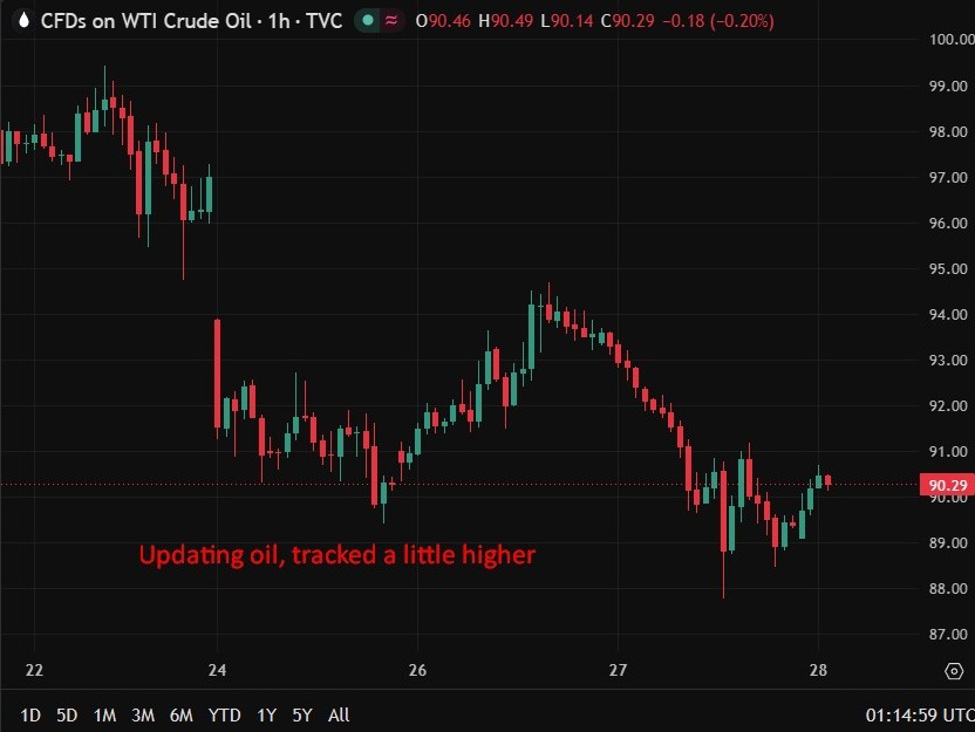
The US and Iran have offered directly contradictory accounts of a Hormuz confrontation, with Washington describing Iranian drone attacks and Iran saying it stopped a US tanker running without radar. Summary:
Sources: US official via Newsmax; Iranian military source via Tasnim News AgencyA US official confirmed that four Iranian one-way attack drones were intercepted near the Strait of Hormuz and a ground control station in Bandar Abbas was struck to prevent a fifth drone launchThe US described the actions as measured, purely defensive, and intended to maintain the ceasefireIran’s account, via a military source to Tasnim News Agency, said an American oil tanker attempted to transit the Strait of Hormuz with its radar switched offIranian forces fired warning shots and forced the tanker to stop and turn back, after which the US struck an area near Bandar AbbasThe Iranian account said the strike caused no casualties and no damageThe two accounts agree only that a confrontation occurred and that a US strike near Bandar Abbas took placeThe United States and Iran have produced directly contradictory accounts of a military confrontation in the Strait of Hormuz on Wednesday night, with the two versions agreeing on almost nothing beyond the fact that an incident occurred and that US forces struck a site near Bandar Abbas.The US account (earlier here), confirmed by an official to Newsmax, describes an Iranian drone offensive. Four one-way attack drones were intercepted by US Central Command forces after they posed a threat in the vicinity of the Strait of Hormuz. A fifth drone launch was preempted by a strike on an Iranian ground control station in Bandar Abbas. The official described the actions as measured, purely defensive, and intended to preserve the ceasefire.Iran’s account, provided by a military source to Tasnim News Agency, describes an entirely different sequence. An American oil tanker attempted to transit the Strait of Hormuz with its radar switched off, a provocative act under Iranian rules of engagement in contested waters. IRGC Navy forces fired warning shots and compelled the vessel to stop and reverse course. The US then struck an area near Bandar Abbas. Iran said the strike caused neither casualties nor damage.The two narratives share only their conclusion: a confrontation happened, and the US hit something near Bandar Abbas. Everything else, who acted first, what the target was, whether the action was offensive or defensive, is in direct dispute.That gap matters beyond the immediate incident. The US framing of the strike as defensive and ceasefire-preserving is now a well-worn formula, applied consistently to each new military action in the theatre. Iran’s framing, in which its forces are responding to a provocation by a vessel attempting to evade detection in sovereign waters, is equally consistent with its own narrative of resisting US aggression in the Gulf.Neither account can be independently verified in real time, and the history of this conflict suggests both governments have strong incentives to shape the version that reaches international audiences first. What the competing narratives confirm is that the Strait of Hormuz remains an active military environment, the ceasefire exists primarily as a diplomatic label, and the conditions for a more serious escalation are present on any given night.Earlier on Wednesday, the head of Iran’s parliamentary national security committee restated Tehran’s four non-negotiable red lines, including authority over the Strait of Hormuz, and dismissed US rhetoric as a strategic deadlock. Tonight’s incident suggests that assessment remains accurate.—Conflicting narratives from an active military incident in the Strait of Hormuz are precisely the kind of development that makes risk pricing difficult and keeps a floor under crude. The US description of four intercepted attack drones and a pre-emptive strike on a fifth launcher is materially more escalatory than Iran’s account of warning shots against a vessel running dark. Neither version is verifiable in real time and markets will struggle to price the gap between them. The ceasefire framework is under visible strain: a US official explicitly invoked it while describing actions that Iran would characterise as an unprovoked strike on its territory. That combination of active military engagement and official insistence that the ceasefire remains intact is increasingly difficult to sustain.
This article was written by Eamonn Sheridan at investinglive.com.
💡 DMK Insight
The escalating tensions in the Strait of Hormuz could impact oil prices and related assets significantly. With ADA currently at $0.23, traders should be aware that geopolitical instability often leads to volatility in energy markets, which can ripple through crypto and forex as well. If oil prices spike due to these confrontations, we might see a flight to safety, impacting risk assets like ADA. Traders should keep an eye on how oil reacts in the coming days, particularly if it breaches key resistance levels. Additionally, monitor the broader market sentiment—if fear rises, ADA could face downward pressure despite its current price stability. The real story is how these geopolitical events could shift investor behavior across markets, so staying informed is crucial. Watch for any updates from the US or Iranian governments that could provide clarity on the situation, as this could lead to immediate market reactions.
📮 Takeaway
Keep an eye on oil price movements and geopolitical updates, as they could directly impact ADA’s stability and trading strategy.


