Bitcoin
  Ethereum
  Tether
  BNB
BNB  XRP
XRP  USDC
USDC  Solana
  TRON
TRON  Lido Staked Ether
  Figure Heloc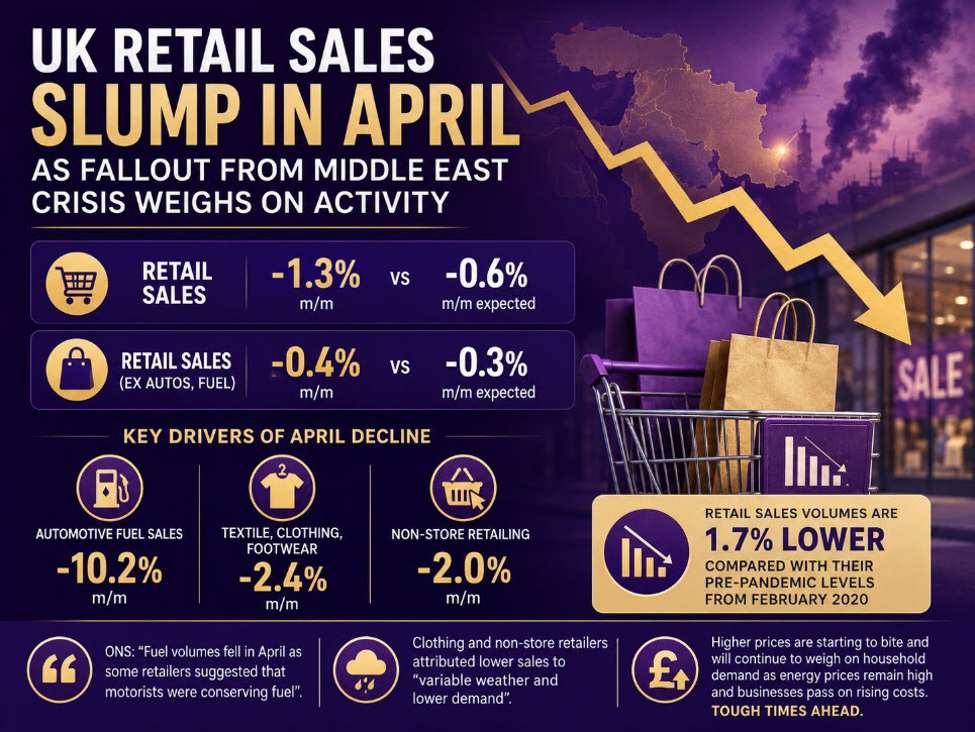
Retail sales -1.3% vs -0.6% m/m expectedPrior +0.7%; revised to +0.6%Retail sales 0.0% vs +1.3% y/y expectedPrior +1.7%; revised to +1.4%Retail sales (ex autos, fuel) -0.4% vs -0.3% m/m expectedPrior +0.2%; revised to +0.1%Retail sales (ex autos, fuel) +1.1% vs +1.5% y/y expectedPrior +1.7%; revised to +1.5%Well, the negative impact stirred up by the Middle East conflict is starting to make its mark now. The biggest drop dragging down retail sales for the month comes from automotive fuel sales (-10.2%). But even when you strip that out, the overall picture is still a poor one with marked declines seen in sales for textile, clothing, footwear (-2.4%) and non-store retailing (-2.0%).Retail sales volumes are now seen 1.7% lower compared with their pre-pandemic levels from February 2020.And mind you, the caveat to this report is that it included the both Good Friday and Easter Monday seasonal adjustments – with the latter especially being accounted for in this report only.ONS notes that “fuel volumes fell in April as some retailers suggested that motorists were conserving fuel” while clothing and non-store retailers attributed lower sales to “variable weather and lower demand”.All in all, higher prices are starting to bite and will continue to weigh further on household demand conditions in the months ahead. That especially as energy prices continue to hold higher and we also start to see businesses needing to raise charges to consumers amid surging cost pressures. Tough times.
This article was written by Justin Low at investinglive.com.
💡 DMK Insight
Retail sales just dropped 1.3%, and here’s why that matters: consumer spending is slowing down. This unexpected decline signals potential weakness in the economy, which could lead to a more cautious approach from traders. With retail sales missing expectations across the board, especially the core metrics excluding autos and fuel, we might see a ripple effect in sectors tied to consumer discretionary spending. Look for stocks in retail and related industries to react negatively, and keep an eye on broader market indices that often correlate with consumer sentiment. On the flip side, this could create buying opportunities in defensive sectors as investors shift their focus. Watch for key support levels in major indices; if they break, it could trigger further selling pressure. The immediate timeframe is crucial—monitor how the market reacts in the next few trading sessions as analysts digest these numbers and adjust forecasts accordingly.
📮 Takeaway
Keep an eye on retail stocks and major indices; a break below key support levels could signal further downside risk in the coming days.