
 Bitcoin
  Ethereum
  Tether
  BNB
BNB  XRP
XRP  USDC
USDC  Solana
  TRON
TRON  Lido Staked Ether
  Figure Heloc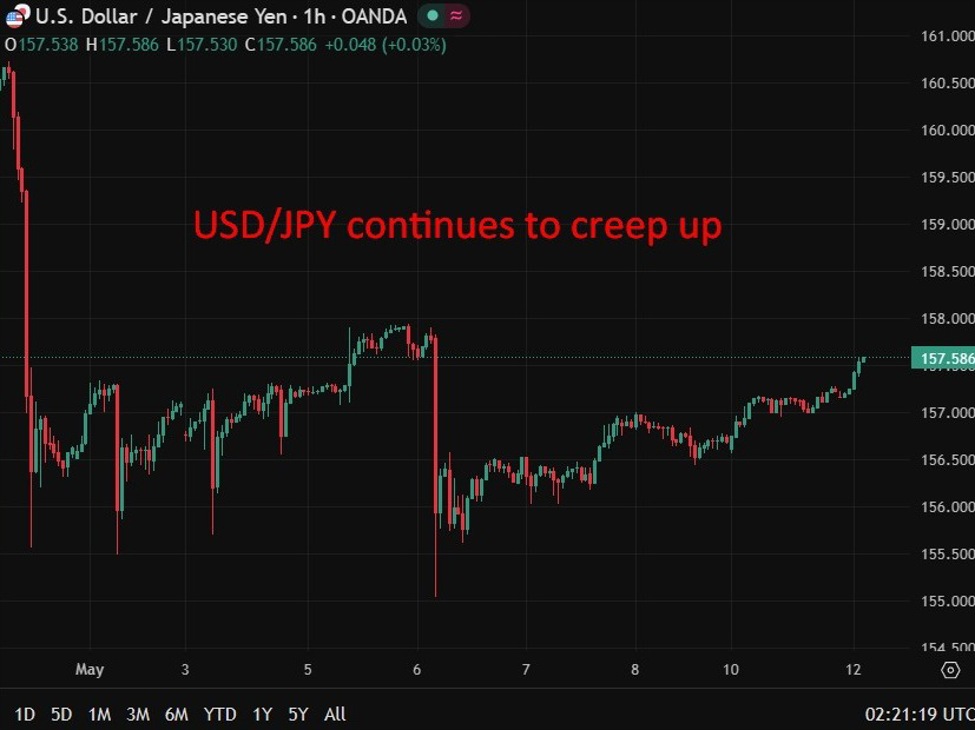
Japan and the US reaffirmed close coordination on currency markets, including intervention, after Finance Minister Katayama met Bessent in Tokyo, as Japan is suspected to have spent $63.5 billion defending the yen.Summary:Japanese Finance Minister Katayama said Japan and the US reaffirmed close cooperation on exchange rate moves, including currency intervention, following her meeting with Bessent in Tokyo on TuesdayBoth sides confirmed Japan’s intervention activity is consistent with a joint statement signed last September, which permits intervention to address excessive currency market volatilityJapan is suspected to have spent nearly 10 trillion yen, around $63.5 billion, in a recent round of yen-buying operations to support the currencyKatayama declined to comment on whether the Bank of Japan’s monetary policy was discussed at the meetingSome BOJ policymakers argued in April that rates may need to rise soon, with one member flagging the possibility of a move as early as JuneBessent is also expected to meet Prime Minister Takaichi during his three-day Tokyo visit, which runs until WednesdayJapan and the United States have reaffirmed their close cooperation on currency market moves, including on intervention, following a meeting in Tokyo between Finance Minister Satsuki Katayama and US Treasury Secretary Scott Bessent on Tuesday.Katayama told reporters after the talks that both sides discussed recent market developments and confirmed that Japan’s approach to currency moves was consistent with a joint statement signed with the US last September. That agreement explicitly permits foreign exchange intervention to combat excessive market volatility, providing Tokyo with diplomatic cover for its recent operations. Japan is suspected to have spent close to 10 trillion yen, equivalent to around $63.5 billion, on yen-buying intervention in a recent round of market activity aimed at slowing the currency’s slide.Katayama said the two sides agreed they were coordinating extremely well on recent market moves, including exchange rates, and strongly reaffirmed the need to continue close coordination given current circumstances. When pressed on whether that language implied Washington could take a more active role in addressing sharp yen falls, she said discussions had focused on deepening coordination across various fronts, stopping short of any more specific commitment.The finance minister declined to comment when asked whether the Bank of Japan’s monetary policy had been discussed at the meeting, a notable omission given that Bessent has previously called for the BOJ to move faster on rate hikes as a more sustainable mechanism for supporting the yen. Some analysts had speculated ahead of the talks that he might renew those calls during his Tokyo visit.The BOJ rate path remains a live question. A summary of opinions from the central bank’s April meeting, released earlier this week, showed that some policymakers argued rates may need to rise soon, with one member explicitly flagging the possibility of a move in June. With oil prices elevated due to the Middle East conflict pushing up import costs and intensifying domestic price pressures, the case for earlier tightening has strengthened since the last meeting.Bessent is expected to meet Prime Minister Sanae Takaichi before his three-day Tokyo visit concludes on Wednesday, when he departs for Seoul for trade talks with Chinese counterpart He Lifeng ahead of the Trump-Xi summit.—Katayama’s framing of the bilateral relationship as coordinating extremely well on exchange rate moves amounts to a soft endorsement of Japan’s intervention from Washington, which carries meaningful deterrent value for yen bears. The reference to the September joint statement, which explicitly permits intervention to combat excessive volatility, gives Tokyo legal and diplomatic cover to continue its operations. However, the deliberate silence on BOJ policy leaves the market’s core question unanswered: whether Bessent pressed for faster rate hikes as the more durable solution to yen weakness. With one BOJ member flagging a potential June move and oil-driven inflation intensifying the case for tightening, the yen and Japanese government bond markets remain acutely sensitive to any further signals from either side.
This article was written by Eamonn Sheridan at investinglive.com.
💡 DMK Insight
Japan’s $63.5 billion yen defense signals serious currency volatility ahead. With the US and Japan coordinating on currency interventions, traders should brace for potential swings in the USD/JPY pair. This kind of intervention often leads to short-term price spikes, especially if the market perceives a lack of confidence in the yen’s stability. Watch for key levels around 145-150 in USD/JPY; breaking through these could trigger further intervention or market reactions. The broader implications could ripple through forex markets, affecting correlated assets like Japanese equities and commodities priced in yen. Keep an eye on economic indicators from both nations, as any shifts could prompt immediate market responses. On the flip side, while intervention might stabilize the yen temporarily, it raises questions about Japan’s long-term economic strategy. If traders start to doubt the effectiveness of these measures, we could see a sell-off in the yen, especially if inflation continues to rise in Japan. So, monitor the upcoming economic data releases closely for hints on future currency movements.
📮 Takeaway
Watch USD/JPY around 145-150 for potential volatility; intervention could trigger sharp price movements in the near term.