Bitcoin
  Ethereum
  Tether
  XRP
XRP  BNB
BNB  USDC
USDC  Solana
  TRON
TRON  Lido Staked Ether
  Figure Heloc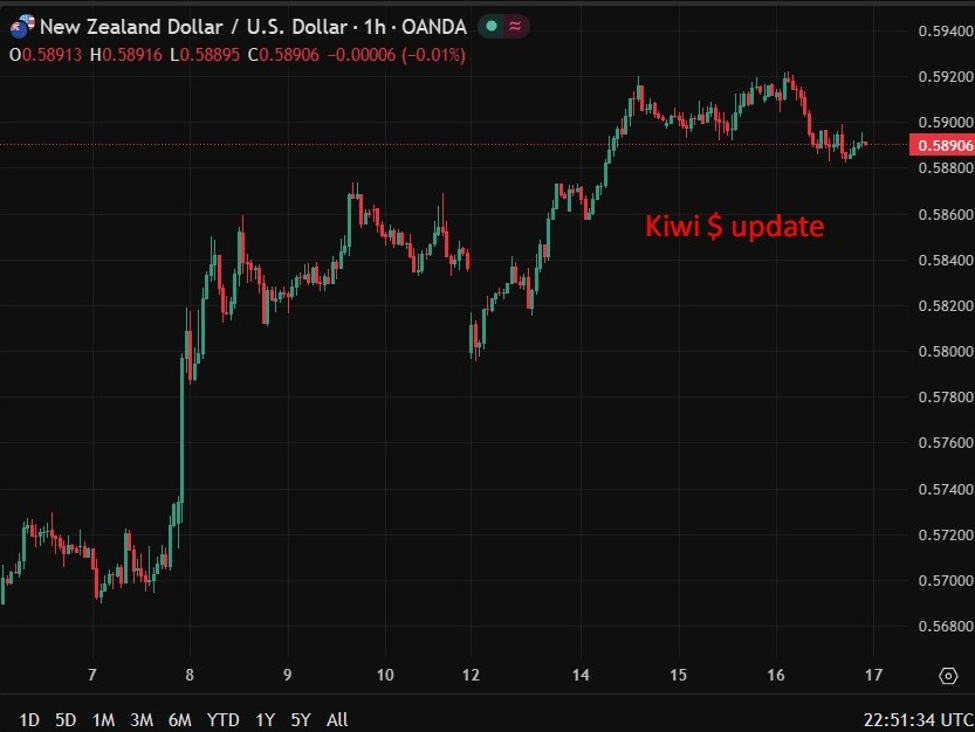
NZ food prices fell 0.6% m/m (prev -0.1%) while retail card spending rose 0.7% (prev 1.4%), showing easing inflation and slowing demand, reinforcing expectations the RBNZ will hold rates steady.Summary:NZ food prices -0.6% m/m (prev -0.1%), annual pace 3.4% – Stats NZ
Core retail card spending +0.7% m/m (prev +1.4%), signalling slower momentum
Total card spending +1.3% m/m (prev +1.1%, revised to +1.3%)
Data points to easing inflation but still-resilient, moderating demand
RBNZ likely to remain on hold as disinflation continues gradually
New Zealand data showed a combination of easing food price pressures and moderating, but still resilient, consumer spending in March, reinforcing expectations the Reserve Bank of New Zealand will remain on hold.Food prices fell 0.6% month-on-month in March, a deeper decline than the previous -0.1%, according to Statistics New Zealand. On an annual basis, food prices rose 3.4%, with the category accounting for nearly 19% of the CPI basket. The latest drop adds to evidence that near-term inflation pressures in household essentials are easing.Retail spending data, however, painted a more nuanced picture. Core electronic card spending rose 0.7% m/m, slowing from a stronger 1.4% increase previously. Meanwhile, total card spending rose 1.3% m/m, matching the upwardly revised 1.3% print for February (initially reported as 1.1%). The data suggests consumption remains supported but is losing some momentum as higher interest rates continue to weigh on households.Together, the figures point to a gradual cooling in inflation alongside a still-functioning consumer sector, rather than a sharp slowdown in activity.For the Reserve Bank of New Zealand, the data reinforces a cautious policy stance. Price pressures are easing in some categories, while underlying inflation remains a concern.The broader economic backdrop remains mixed. Growth has been uneven, with weakness in housing and business investment offset by pockets of resilience in consumption. External risks, particularly from global energy markets, continue to cloud the outlook and could complicate the inflation trajectory.For now, the moderation in both inflation and spending supports a “wait-and-see” approach from the RBNZ. Policymakers are likely to keep rates unchanged in the near term, looking for clearer evidence that inflation is durably contained without a sharper deterioration in economic activity.
This article was written by Eamonn Sheridan at investinglive.com.
💡 DMK Insight
NZ’s food prices dropping 0.6% signals easing inflation, but retail spending’s slowdown raises concerns. For traders, this data could impact the NZD’s strength against major currencies. A consistent decline in food prices, now at an annual pace of 3.4%, suggests that inflationary pressures are lessening, which might lead the Reserve Bank of New Zealand (RBNZ) to maintain interest rates. However, the retail card spending increase of only 0.7% compared to the previous 1.4% indicates that consumer demand is waning, which could be a red flag for economic growth. If the RBNZ decides to hold rates steady, it may not provide the support the NZD needs against currencies like the AUD or USD. Traders should keep an eye on the NZD/USD pair, particularly if it approaches key support levels. A break below these levels could signal further weakness in the NZD, especially if upcoming economic data continues to show slowing demand. Watch for any comments from the RBNZ regarding their outlook on inflation and growth, as these could shift market sentiment significantly.
📮 Takeaway
Monitor the NZD/USD for potential weakness if retail spending continues to decline, especially if it breaks below key support levels.