
 Bitcoin
  Ethereum
  Tether
  BNB
BNB  XRP
XRP  USDC
USDC  Solana
  TRON
TRON  Lido Staked Ether
  Figure Heloc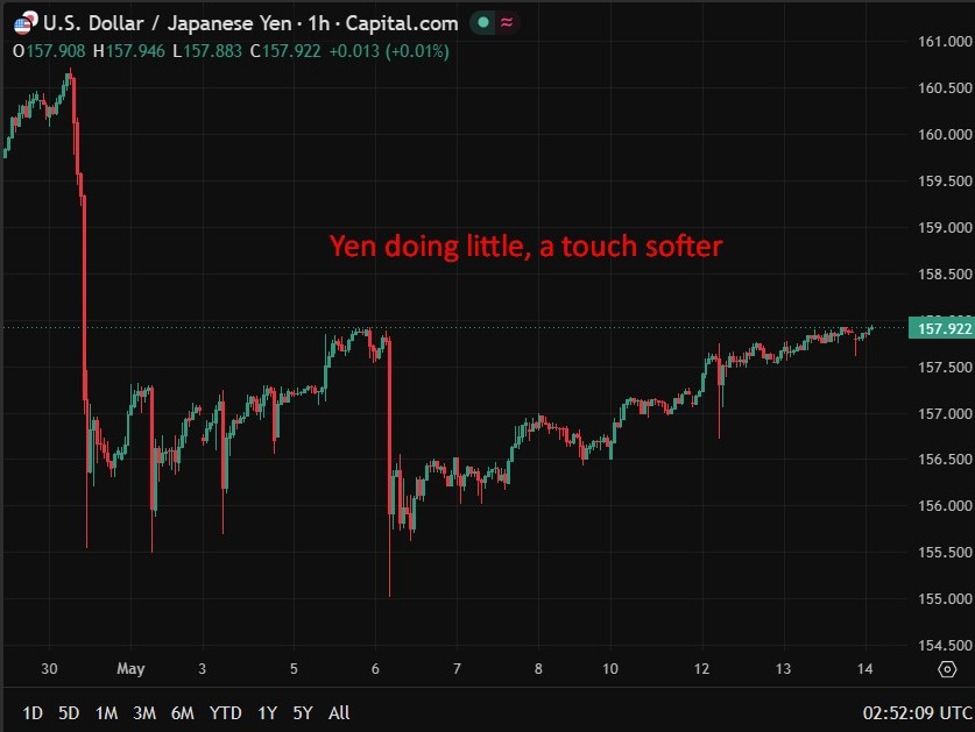
Japan’s government is considering a supplementary budget to ease household fuel costs ahead of summer, Kyodo reports, sending 30- and 40-year JGB yields higher on increased debt issuance fears. Summary:Japan’s government is considering a supplementary budget aimed at reducing the burden of rising fuel costs on households ahead of the summer peak-demand season, according to Kyodo News, citing unnamed government sourcesThe extra spending would support households facing elevated gasoline prices and utility bills during the hottest months of the yearYields on 30 and 40-year Japanese government bonds rose following the report as investors positioned for increased debt issuancePrime Minister Sanae Takaichi has repeatedly played down the likelihood of an extra budget, arguing the government has adequate funds within existing fuel subsidy arrangementsJapanese Chief Cabinet Secretary Kihara also said there is no immediate need for a supplementary budget, leaving the plan’s status uncertainJapan’s government is exploring the possibility of compiling a supplementary budget to help households cope with surging fuel costs, according to a report by Kyodo News, in a move that would add further strain to the country’s already stretched public finances.The report, citing several unnamed government sources, said the extra budget would be designed to provide relief during the summer months, when elevated gasoline prices and utility bills typically place the greatest burden on Japanese households. The timing reflects growing concern in Tokyo that the fallout from the Iran war and elevated global crude prices could translate into a significant cost of living shock at the peak of the summer demand season.Financial markets reacted quickly. Yields on 30 and 40-year Japanese government bonds rose following the Kyodo report, as investors anticipated a potential increase in debt issuance to fund any additional spending. The move underscored the sensitivity of Japan’s long-end bond market to fiscal signals at a time when debt sustainability is already a closely watched concern.The report sits in some tension with recent statements from senior government figures. Prime Minister Sanae Takaichi has on multiple occasions downplayed the prospect of an extra budget, arguing that existing funds are sufficient to cover current fuel subsidy commitments. Chief Cabinet Secretary Kihara echoed that position, saying there is no immediate need for supplementary fiscal measures.The conflicting signals leave the plan’s status uncertain, but the mere circulation of the idea among government sources was enough to move bond markets, reflecting the degree to which investors are attuned to any shift in Japan’s fiscal stance. With the Bank of Japan already navigating a fragile path on interest rates and the yen under intermittent intervention pressure, any expansion of the fiscal deficit would add another variable to an already complex policy environment.—The prospect of expanded Japanese fiscal support for fuel costs is a modest but notable demand-side signal for oil and energy markets, suggesting Tokyo is bracing for elevated prices to persist through the summer peak season. Any extension or expansion of fuel subsidies would partially insulate Japanese consumers from the full price signal of high crude, potentially supporting near-term consumption levels. For bond markets, the reaction was immediate, with 30 and 40-year JGB yields rising on anticipated debt issuance. A widening of Japan’s fiscal deficit to fund energy support would add to existing pressure on the country’s finances and could complicate the Bank of Japan’s already uncertain path on interest rates, with yen implications that feed back into the cost of Japan’s dollar-denominated energy imports.
This article was written by Eamonn Sheridan at investinglive.com.
💡 DMK Insight
Japan’s potential supplementary budget could shake up JGB yields and impact forex markets. With rising fuel costs, the government’s move to ease household burdens signals increased debt issuance, which is pushing 30- and 40-year JGB yields higher. This is crucial for traders as higher yields typically strengthen the yen against other currencies, especially if the market perceives this as a long-term commitment to fiscal support. Keep an eye on the USD/JPY pair; if yields continue to rise, we could see the yen gain traction against the dollar. But here’s the flip side: if the market views this budget as a sign of fiscal weakness or if inflation continues to rise unchecked, it could lead to a depreciation of the yen. Traders should monitor the upcoming economic indicators, particularly inflation rates and employment data, which could influence the Bank of Japan’s stance on monetary policy. Watch for key resistance levels in the USD/JPY around recent highs, as a break could signal a stronger yen rally.
📮 Takeaway
Watch the USD/JPY closely; rising JGB yields could strengthen the yen, especially if inflation data supports fiscal measures.