 Bitcoin
  Ethereum
  Tether
  BNB
BNB  XRP
XRP  USDC
USDC  Solana
  TRON
TRON  Lido Staked Ether
  Figure Heloc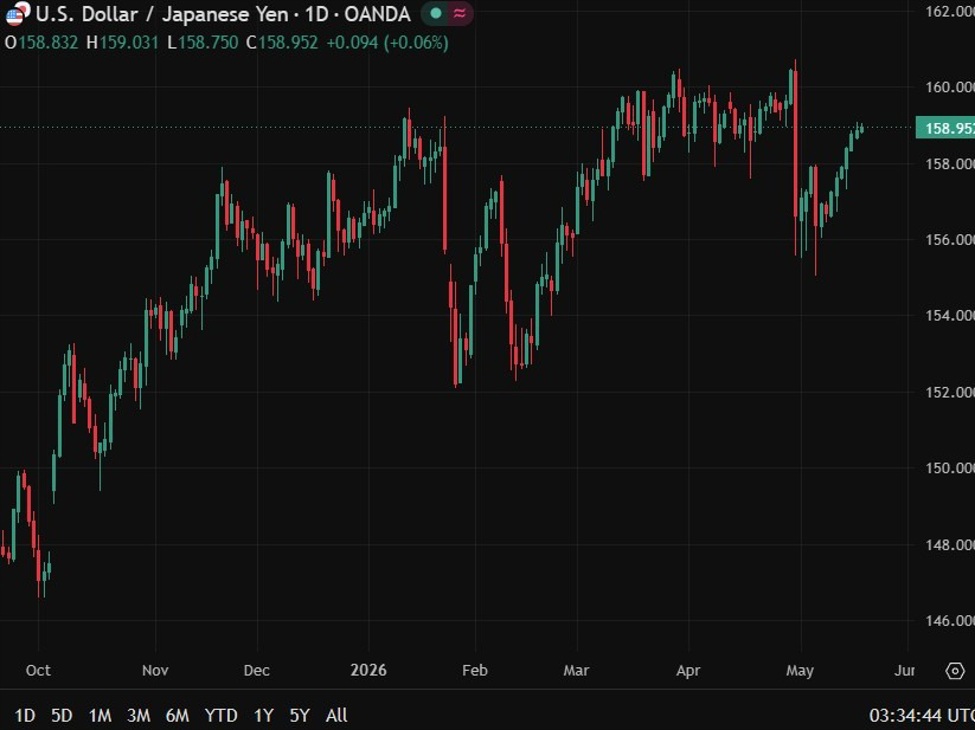
ICYMI (Monday): Japan signals FX intervention readiness, vowing to shield US bond marketICYMI – Iran launches Bitcoin-backed ship insurance scheme for Strait of Hormuz transitJapan economy minister backs recovery but warns of Middle East conflict fallout riskRBA minutes: Eight of nine members backed May hike as inflation expectations risk grewJapan Q1 GDP beats forecasts at 2.1% but Iran war energy shock threatens momentumICYMI – EU plans supply chain rules forcing firms to source key parts from three suppliersPBOC sets USD/ CNY reference rate for today at 6.8375 (vs. estimate at 6.7909)PM Albanese secures 600,000 barrels of jet fuel from China as Australia shores up suppliesAustralian May consumer confidence +3.5% m/m to 83.0. Yippee. Prior 80.1USD/JPY on approach to 159! How you left, Ministry of Finance?Japan Q1 GDP 2.1% y/y (beats expected of 1.7%)Hunter: Inflation expectations drifting higher is an elevated risk RBA cannot ignoreMorgan Stanley warns bond rout could trigger equity correction, still sees S&P500 @ 8300New Zealand inflation pressures build as producer prices rise and retail sales dipMUFG: Dollar set to extend gains as Warsh Fed signals hawkish shift on inflationOil futures have reopened for trade, lower on Iran optimismTrump says good chance of Iran deal after Gulf states secure attack pauseTrump announces expansion of cheaper drug schemeinvestingLive Americas FX news wrap 18 May: Trump pauses Iran attack, markets whipICYMI – Goldman cuts US recession odds to 25% as Hormuz closure impact stays containedRBA to address inflation risk from Middle East conflict at Sydney forum. Hunter no dove.US stocks close mixed. Dow closes higher. S&P and Nadaq close lowerSummary:Trump announced a delay to planned military strikes on Iran following requests from Gulf allies, supporting risk sentiment and weighing on the USD and oil prices during the US Monday sessionTrump followed up with upbeat afternoon comments, saying there appears to be a good chance a nuclear deal with Iran can be reached, though repeated claims of having won the war have eroded his credibility with marketsThe USD recovered modest ground during the Asian session, with AUD, NZD, GBP and JPY all retreating; USD/JPY pushed toward 159 before stabilisingJapan Q1 GDP grew an annualised 2.1%, beating the 1.7% forecast, though analysts warn the Iran war energy shock is set to slow growth sharply in Q2RBA May meeting minutes showed the board raised the cash rate to 4.35%, its third consecutive hike, while signalling the move gives it time to assess the conflict’s impact, flagging a possible pause in June; August remains live and event-dependentThe PBOC set the yuan midpoint at its strongest level since 24 March 2023The Nikkei reversed early gains of more than 1% to fall 0.64% to 60,429.76 by the midday break, set for a fourth consecutive session of losses; the broader Topix rose 0.37% to 3,840.7The South Korean won fell 0.7% during the sessionIndia’s state-run refiners raised fuel prices for the second time in less than a weekUS Vice President JD Vance will deliver the White House press briefing on Wednesday at 1pm Eastern timeMonday’s US session was defined by a sharp pivot in geopolitical sentiment after President Donald Trump announced he was delaying planned military strikes against Iran following requests from Gulf allies, including Saudi Arabia, Qatar and the UAE, who argued that a diplomatic resolution was within reach. The news provided a meaningful boost to risk assets, weighed on the US dollar and pulled oil prices lower as markets repriced the immediate probability of a military escalation.Trump reinforced the tone in afternoon remarks, saying there appeared to be a good chance a nuclear deal with Iran could be worked out. Markets received the comments with cautious optimism rather than conviction, however. Trump’s repeated assertions over recent months that the US had effectively won the conflict have worn thin with traders, and the credibility discount attached to his diplomatic signals has grown accordingly.Into the Asian session, the USD clawed back modest ground. The Australian and New Zealand dollars retreated alongside sterling and the yen, with USD/JPY pushing toward the 159 level before finding some stability, remaining within range of the 160 threshold that Japanese authorities have identified as their line in the sand for intervention.On the data front, Japan delivered a stronger-than-expected first quarter GDP print, with annualised growth of 2.1% beating the 1.7% consensus forecast. The result reflects an economy that was on solid footing before the Strait of Hormuz closure took effect, though analysts were quick to note that the energy shock’s full impact on Japanese growth will not become visible until second quarter data. The Nikkei failed to hold early gains inspired by the result, reversing to fall 0.64% to 60,429.76 by the midday break and heading for a fourth consecutive session of losses. Technology heavyweights tracked overnight weakness in US peers, though the broader Topix managed a 0.37% gain as investors rotated into economically sensitive names.The Reserve Bank of Australia’s May meeting minutes confirmed the board raised the cash rate to 4.35% in a largely hawkish decision, with eight of nine members backing the move. Critically, the minutes signalled the hike was designed in part to create space for the board to assess the Iran conflict’s evolving impact on the Australian economy, a formulation widely read as leaving the door open to a pause in June. August, however, remains a live meeting, with the outcome dependent on how the energy shock and inflation data develop in the intervening weeks.Elsewhere, the PBOC set the yuan midpoint at its firmest level since 24 March 2023, a signal of policy intent that drew attention given the broader USD recovery. India’s state-run refiners raised fuel prices for the second time in less than a week, underscoring how Middle East supply disruption continues to feed through into Asian domestic energy markets. US Vice President JD Vance is scheduled to deliver the White House press briefing on Wednesday at 1pm Eastern time, an event that will be watched for any further signals on the Iran diplomatic track.
This article was written by Eamonn Sheridan at investinglive.com.
💡 DMK Insight
Japan’s readiness for FX intervention could shake up forex markets significantly. With the Bank of Japan signaling a willingness to step in, traders should keep an eye on USD/JPY, especially if it approaches key resistance levels. The potential fallout from Middle East tensions adds another layer of uncertainty, impacting risk sentiment across the board. If the yen strengthens due to intervention, it could lead to a sell-off in equities and commodities, particularly those linked to Japan’s export-driven economy. Furthermore, the RBA’s hawkish stance on inflation suggests that the AUD might also react, creating cross-currency trading opportunities. Watch for USD/JPY around the 145 level; a breach could trigger more volatility. Overall, the interplay between geopolitical risks and central bank policies will be crucial in shaping market dynamics in the coming weeks.
📮 Takeaway
Monitor USD/JPY closely, especially around the 145 level, as Japan’s FX intervention could trigger significant market movements.