Bitcoin
  Ethereum
  Tether
  XRP
XRP  BNB
BNB  USDC
USDC  Solana
  TRON
TRON  Lido Staked Ether
  Figure Heloc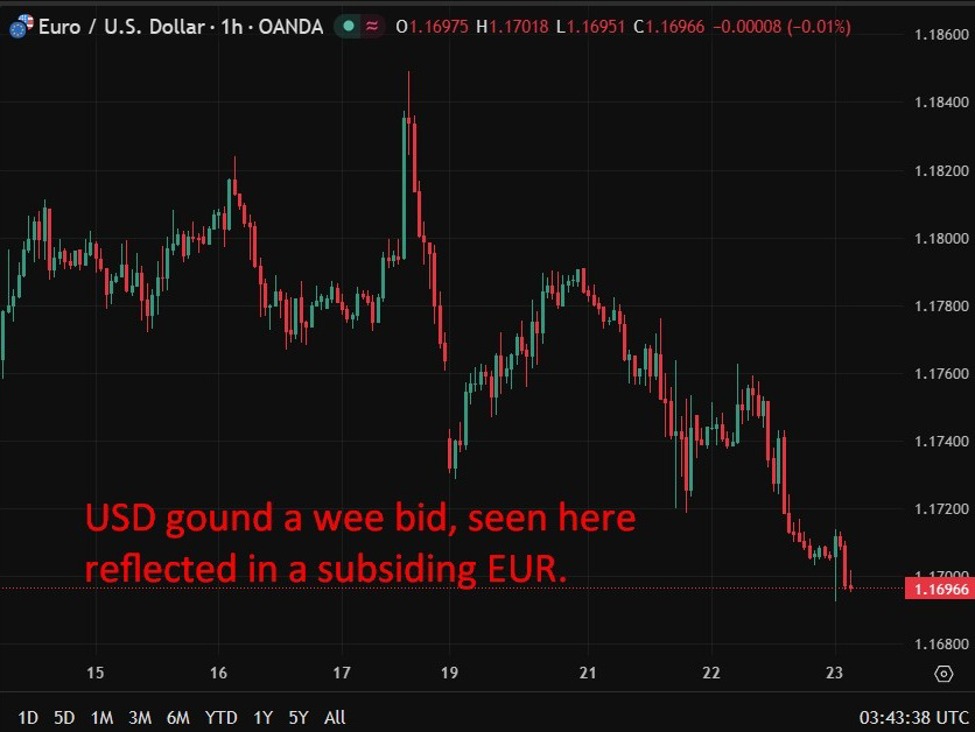
Euro heavy across majors as Germany slashes growth outlookAUD: Australian pension funds rush to shield portfolios from Iran war currency shockFed rate cuts pushed to late 2026 as Middle East war fuels inflation surgePBOC sets USD/ CNY reference rate for today at 6.8650 (vs. estimate at 6.8294)Fake news (social media) on an attack on Tehran sent oil up, stocks down. Unwound now.Japan PMI shows manufacturing surge as services slowdown caps growthNew Zealand Finance Minister on Iran war: Inflation could hit 7.4% (worst case scenario)Tesla to ramp capex to $25bn as AI push deepens despite strong Q1 cash flowSouth Korea Q1 growth surges past forecasts on semiconductor export boomAustralian preliminary April PMIs jump back into expansionGold steadies after drop as Iran tensions and dollar keep prices rangeboundAI stocks near 45% of S&P 500 weight, Goldman flags rising concentrationUS crude stocks rise 1.9m vs draw expected as gasoline, distillates fallCommodity traders reap billions as Iran war drives oil market volatility (ps. its the job)investingLive Americas market news wrap: Stock markets rally even as oil prices climbMore detail on the US seizing Iranian oil tankers all the way over in AsiaSummaryUnverified social media rumours of a fresh Iran attack caused a brief spike in oil and dip in stocks, both of which quickly reversed when the reports were not confirmedUSD edged higher with Middle East newsflow quietAsia-Pacific equities finished mostly lower despite Wall Street having closed positivelySouth Korea Q1 GDP came in well above forecasts, driven by a surge in semiconductor exports tied to AI demandAustralian flash PMIs improved; Japan manufacturing picked up while services softened slightlyMarkets across the Asia-Pacific region had a largely quiet session, though not without a moment of drama. Rumours circulating on social media suggested a fresh attack on Iran was underway, triggering a sharp but short-lived reaction, with energy prices jumping and equities pulling back before stabilising as the reports failed to gain any official confirmation. The episode was a reminder of how quickly unverified information can move markets in the current environment, where geopolitical nerves remain close to the surface.Away from the noise, the US dollar found modest footing through the session. There was an absence of any new developments out of the Middle East.Regional equity markets struggled to build on a constructive overnight lead from Wall Street, mostly in the red as caution prevailed. The positive handover from the United States was not enough to shift the mood.On the data front, South Korea delivered the session’s most notable result, with first quarter growth coming in comfortably ahead of expectations. Strong overseas demand for its technology exports, particularly semiconductors, was the key driver, reflecting the ongoing global appetite for AI-related hardware. The result did, however, point to a continuing dependence on external demand to power the economy.Purchasing managers index readings (April, preliminary) from Australia came in better than the previous period. In Japan, factory activity improved while the services sector lost a little ground.
This article was written by Eamonn Sheridan at investinglive.com.
💡 DMK Insight
Germany’s downgraded growth outlook is weighing on the Euro, and here’s why that matters: With the Fed signaling rate cuts pushed to late 2026 due to inflation pressures from the Middle East conflict, traders need to reassess their positions. The Euro’s weakness against the USD and other majors reflects broader economic concerns, particularly as Germany’s economic health is pivotal for the Eurozone. This situation could lead to increased volatility in EUR/USD, especially if the pair tests key support levels. Watch for reactions from institutional players as they adjust their strategies in response to these macroeconomic shifts. On the flip side, the Australian dollar is seeing increased demand as pension funds seek to hedge against potential currency shocks from geopolitical tensions. This could create a divergence in performance between the AUD and the Euro, making it crucial for traders to monitor cross-currency pairs like AUD/EUR for potential trading opportunities. Keep an eye on the PBOC’s reference rate for USD/CNY as well, as it may influence sentiment in the Asian markets and beyond.
📮 Takeaway
Watch for EUR/USD support levels as geopolitical tensions and economic forecasts drive volatility; consider AUD/EUR for potential trading opportunities.