Bitcoin
  Ethereum
  Tether
  BNB
BNB  XRP
XRP  USDC
USDC  Solana
  TRON
TRON  Lido Staked Ether
  Figure Heloc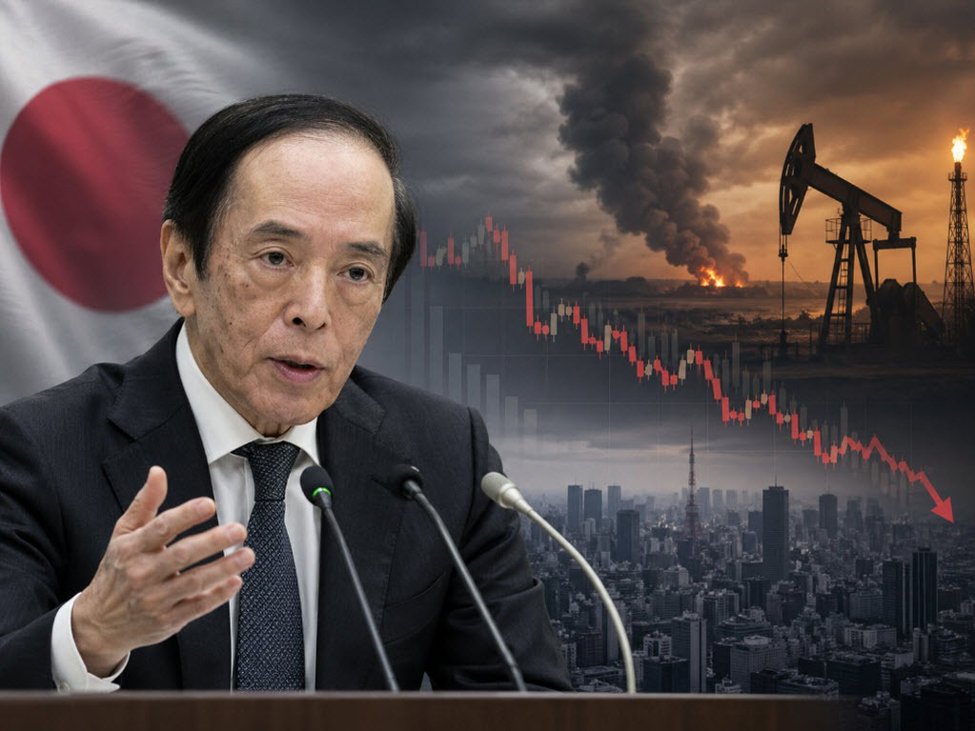
Bank of Japan Governor Kazuo Ueda opens the two-day IMES conference in Tokyo on Wednesday, with Fed, RBA, IMF and BIS representatives among speakers across sessions on price shocks, trade and monetary imbalances. Programme: Day One, May 27 — Times in JST / GMT / US Eastern9:00 JST / 00:00 GMT / 20:00 ET (Tue) — Opening Remarks
Speaker: Kazuo Ueda, Bank of Japan
Ueda opens the conference at a pivotal moment for the BOJ, which has been cautiously unwinding its ultra-loose policy settings against a backdrop of renewed imported inflation from the Middle East conflict and persistent uncertainty over whether domestic wage growth can sustain a normalisation path.9:20 JST / 00:20 GMT / 20:20 ET (Tue) — Mayekawa Lecture
Chairperson: Neel Kashkari, Federal Reserve Bank of Minneapolis
Lecturer: Donald Kohn, The Brookings Institution
Kashkari chairs the prestigious Mayekawa Lecture. The Minneapolis Fed president has been among the more hawkish voices on the FOMC, recently signalling the Fed could move toward rate hikes if Middle East-driven inflation pressures continue to build. Kohn, a former Fed vice chair, is expected to set an academic tone for the day’s proceedings.11:00 JST / 02:00 GMT / 22:00 ET (Tue) — Session 1: Optimal Monetary Policy with Uncertain Private Sector Foresight
Chairperson: Kartik Athreya, Federal Reserve Bank of New York
Presenter: David López Salido, Banco de España
Discussant: Åsa Olli Segendorf, Sveriges Riksbank
A technical session examining how central banks should set policy when private sector expectations are poorly anchored or hard to read, directly relevant in an environment where consumer inflation expectations are drifting higher across multiple major economies.13:20 JST / 04:20 GMT / 00:20 ET — Keynote Speech
Chairperson: Peter Kažimír, National Bank of Slovakia
Speaker: Markus Brunnermeier, Princeton University
Brunnermeier, one of the world’s leading monetary economists, delivers the keynote. His work on financial fragility and liquidity is likely to inform discussion of how central banks navigate tightening cycles without triggering instability.14:15 JST / 05:15 GMT / 01:15 ET — Session 2: Global Networks, Monetary Policy and Trade
Chairperson: Tao Zhang, Bank for International Settlements
Presenter: Şebnem Kalemli-Özcan, Brown University
Discussant: Ippei Fujiwara, Keio University / University of Tokyo
With the Strait of Hormuz closure reshaping global trade flows, this session on how supply network disruptions transmit through monetary conditions carries immediate policy relevance. The BIS chair adds institutional weight to what is shaping up as one of the day’s more market-relevant academic sessions.15:45 JST / 06:45 GMT / 02:45 ET — Session 3: Global Price Shocks and International Monetary Coordination
Chairperson: Josef Meichenitsch, Austrian Central Bank
Presenter: Iván Werning, Massachusetts Institute of Technology
Discussant: Kosuke Aoki, University of Tokyo
Arguably the session most directly connected to current events, examining how central banks should coordinate — or not — when a common external shock hits economies with different inflation starting points and policy stances. With the ECB moving toward hikes while the Fed holds, the coordination question is live.17:00 JST / 08:00 GMT / 04:00 ET — Policy Panel Discussion 1: Monetary Policy and Imbalances
Moderator: Takeo Hoshi, University of Tokyo
Panelists: Pierre-Olivier Gourinchas (IMF), Andrew Hauser (RBA), Lorie Logan (Federal Reserve Bank of Dallas), Eli Remolona Jr. (Bangko Sentral ng Pilipinas)The day’s centrepiece for markets. Hauser represents the RBA, which has tightened at each of its three meetings this year against a backdrop of sticky underlying inflation. Logan has been a key voice on Fed balance sheet policy and reserve dynamics. Gourinchas brings the IMF’s global growth and financial stability lens. Any signals on rate trajectories, tolerance for above-target inflation, or views on international spillovers from the Hormuz shock will be the most market-sensitive output of the day. RBA’s Hauser is on the agenda late … saving the best ’til last!—The conference agenda is tilted heavily toward the policy challenges that matter most to markets right now: global price shocks, trade network disruptions, and monetary imbalances. With Logan, Hauser and Gourinchas on the evening panel, any remarks touching on the inflation outlook, rate trajectories or international coordination will be closely watched. The BOJ’s choice of themes reflects its own acute dilemma: how to normalise policy in an environment of externally driven price shocks without destabilising a recovery that remains domestically fragile.
This article was written by Eamonn Sheridan at investinglive.com.
💡 DMK Insight
The IMES conference is a key event for traders to watch, especially with central bank leaders discussing monetary policy impacts. As the Bank of Japan, Fed, RBA, IMF, and BIS come together, their insights on price shocks and trade imbalances could signal shifts in monetary policy that affect forex and crypto markets. Traders should be alert to any hints about interest rate changes or economic forecasts, as these could create volatility in currency pairs like USD/JPY or AUD/USD. Given the current global economic climate, any unexpected comments could lead to rapid market reactions. Keep an eye on the conference outcomes, particularly on Day One, as they may set the tone for trading strategies in the coming weeks. Watch for specific language around inflation and economic growth, as this could influence market sentiment significantly.
📮 Takeaway
Monitor the IMES conference for potential shifts in monetary policy that could impact forex pairs, especially USD/JPY, in the coming weeks.