
 Bitcoin
  Ethereum
  Tether
  BNB
BNB  XRP
XRP  USDC
USDC  Solana
  TRON
TRON  Lido Staked Ether
  Figure Heloc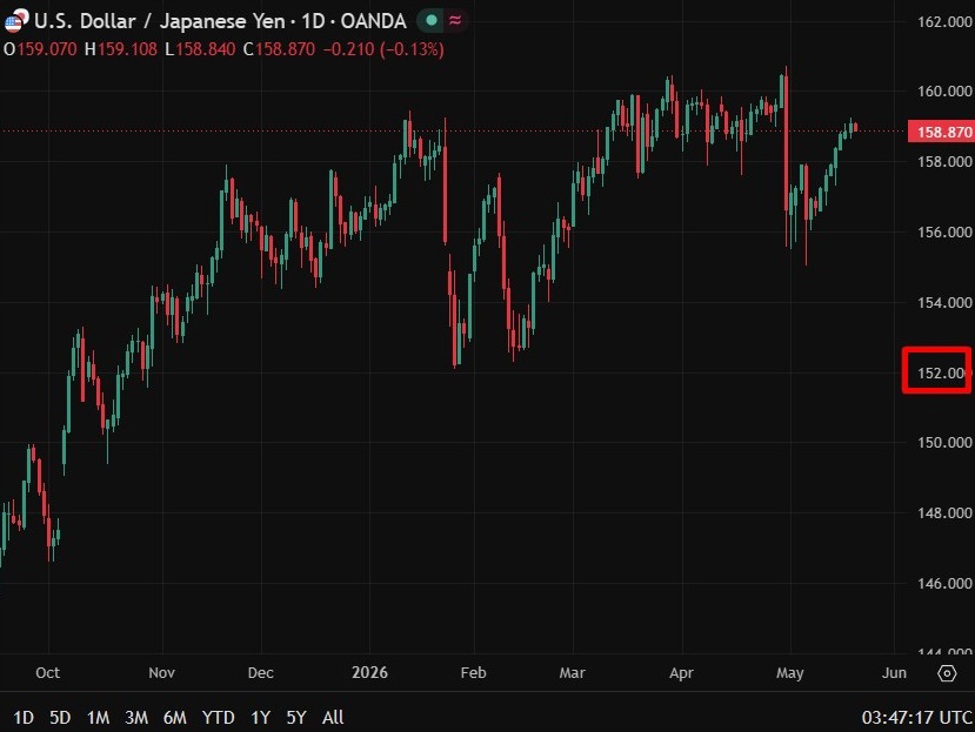
BofA has upgraded its yen view to neutral from bearish and cut its end-2026 USD/JPY forecast to 152 from 157, citing improving structural flows and flagging three catalysts that could turn it outright bullish.Summary:
The following is drawn from a Bank of America Securities research note:BofA has upgraded its yen view to neutral from bearish and cut its end-2026 USD/JPY forecast to 152 from 157, even as the currency continues to weaken toward the 160 levelThree catalysts would be needed to turn BofA outright bullish on the yen: USD/JPY rising to 160, Japan’s 10-year JGB yield approaching 3%, or Brent crude falling below $90 per barrelBofA flagged suspected Japanese FX intervention of as much as ¥10 trillion, equivalent to around $63 billion, between late April and early May, suggesting authorities are already active in defending the currencyImproving structural fundamentals underpin the upgrade, including narrowing bank loan-deposit gaps, rising real interest rates in Japan, and stronger Japanese equity performance relative to US and European markets, all of which could support capital inflows over timePersistent rate differentials between Japan and the US remain the primary headwind for the yen, but BofA sees these structural improvements as sufficient to justify removing its bearish stanceBank of America Securities has upgraded its view on the Japanese yen to neutral from bearish and cut its end-2026 USD/JPY forecast to 152 from 157, citing improving structural flow dynamics even as the currency continues to soften toward the 160 per dollar level that would likely trigger more forceful intervention from Japanese authorities.The upgrade stops short of an outright bullish call but represents a meaningful shift in stance from one of the market’s more prominent yen bears. BofA identified three specific catalysts that would be required to push it into a bullish position: USD/JPY rising to 160, Japan’s 10-year government bond yield approaching 3%, or Brent crude falling below $90 per barrel. Each threshold carries its own logic. A move to 160 in USD/JPY would almost certainly prompt a decisive escalation in Japanese currency intervention, with BofA noting that suspected intervention of as much as ¥10 trillion, equivalent to around $63 billion, is already believed to have taken place between late April and early May. A 3% JGB yield would represent a fundamental repricing of Japanese interest rates, attracting the kind of sustained capital inflows that could structurally support the currency. And Brent below $90 would substantially reduce Japan’s energy import bill, one of the persistent drags on the current account that has weighed on the yen throughout the period of elevated global crude prices.Underpinning the upgrade to neutral are a set of improving domestic fundamentals that BofA argues are often overlooked in a market focused on rate differentials. Narrowing bank loan-deposit gaps, rising real interest rates as inflation gradually moves higher in Japan, and notably stronger Japanese equity performance relative to both US and European markets are all dynamics that could encourage capital to flow back toward yen-denominated assets over time.The rate differential between Japan and the United States remains the dominant headwind, and BofA is not dismissing it. But the combination of structural improvement, intervention risk at 160, and a more active BOJ sets a credible floor under the currency that the bank no longer feels comfortable fading.—BofA’s upgrade to neutral from bearish, combined with a cut in its end-2026 USD/JPY forecast from 157 to 152, is a meaningful shift from one of the market’s more prominent yen bears and will be noted by traders positioned for further yen weakness. The three bull triggers are particularly useful as a market framework: a move to 160 in USD/JPY would likely prompt Japanese authorities to intervene more aggressively, as suggested by the suspected ¥10 trillion operation already flagged between late April and early May; a 3% JGB yield would signal a fundamental repricing of Japanese rates that would attract significant capital inflows; and Brent below $90 would dramatically reduce Japan’s energy import bill, one of the structural drags on the current account. Any one of these conditions, let alone a combination, would materially shift the yen’s trajectory.
This article was written by Eamonn Sheridan at investinglive.com.
💡 DMK Insight
BofA’s shift to a neutral yen outlook could signal a pivotal moment for USD/JPY traders. By downgrading its end-2026 forecast from 157 to 152, BofA is hinting at improving structural flows that may stabilize the yen. This is crucial for traders, especially those who are short on the yen, as it suggests a potential reversal in sentiment. The catalysts mentioned could lead to a bullish stance, which might prompt a reevaluation of positions in the forex market. If the USD/JPY breaks below key support levels, say around 145, it could trigger further selling pressure on the dollar, while a bounce back could see traders looking to capitalize on the anticipated bullish momentum. However, it’s worth noting that the market often overreacts to such upgrades. Traders should keep an eye on economic indicators from Japan and the U.S. that could impact this outlook, particularly inflation rates and interest rate decisions. Watch for reactions around these levels as they could dictate the next moves in the forex space.
📮 Takeaway
Monitor USD/JPY closely; a break below 145 could signal a shift in sentiment, while any bullish catalysts from BofA may prompt a reevaluation of short positions.