
 Bitcoin
  Ethereum
  Tether
  BNB
BNB  XRP
XRP  USDC
USDC  Solana
  TRON
TRON  Lido Staked Ether
  Figure Heloc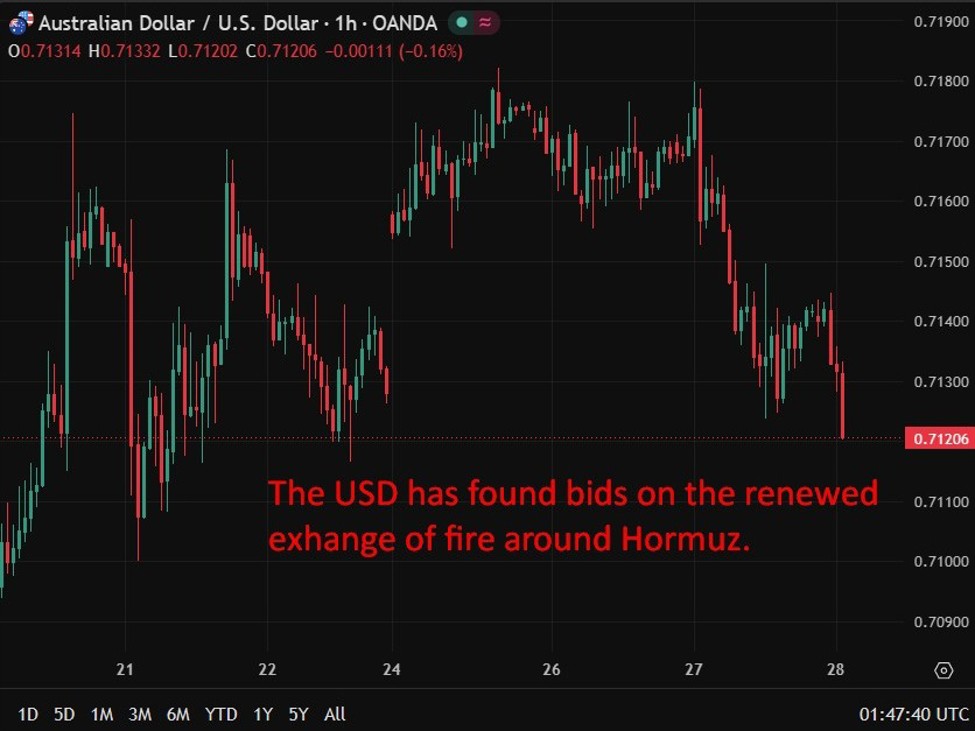
Australian private capital expenditure surged 6.5% in Q1, driven by data centre equipment investment, while April household spending fell 1.1%, more than double the expected decline.Summary:
Source: Australian Bureau of Statistics, Private New Capital Expenditure and Expected Expenditure, March 2026 quarter, released 28 May 2026Total new private capital expenditure rose 6.5% quarter-on-quarter in Q1, well above the 1.0% forecast and the prior 0.4% readingThe ABS attributed the lift specifically to investment in data centre equipmentPlant and machinery capex rose 18.1% quarter-on-quarter; buildings and structures fell 3.8%, reversing a prior gain of 2.3%Estimate 2 for 2026-27 capital expenditure is $173.4 billion, 9.9% above Estimate 1 for the same yearSeparately, April household spending fell 1.1% month-on-month, more than double the expected 0.5% decline and a sharp reversal from the prior 1.6% gainDiscretionary household spending fell 0.8% in April, the largest monthly drop since February 2024, with analysts describing it as the first signs of demand destructionMuch of the capex boost is expected to be offset in next week’s national accounts figures due to the corresponding rise in capital goods importsAustralian private capital expenditure surged well beyond expectations in the March quarter, driven almost entirely by a boom in data centre equipment investment, but the result came with an immediate caveat: the bulk of the gain is import-intensive, and much of its national accounts impact is expected to wash out in next week’s GDP figures.Total new private capital spending rose 6.5% quarter-on-quarter in seasonally adjusted terms, the Australian Bureau of Statistics reported on Thursday, against a forecast of 1.0% and a prior reading of just 0.4%. The ABS was explicit about the source: the lift in investment was the result of investment in data centre equipment, a direct reflection of the global AI infrastructure buildout that is reshaping business investment patterns across developed economies.The composition within the capex figures illustrated both the strength and the narrowness of the result. Plant and machinery investment, the category that captures equipment including data centre hardware, rose 18.1% in the quarter. Buildings and structures, by contrast, fell 3.8%, reversing a 2.3% gain in the prior period. The investment boom is real, but it is concentrated in a single category driven by a single theme.The forward-looking expenditure estimate added a further positive note. Estimate 2 for capital spending in 2026-27 came in at $173.4 billion, running 9.9% ahead of Estimate 1 for the same financial year, suggesting businesses are planning to sustain elevated investment levels through the year ahead.The household spending figures released alongside the capex data told a different story. April household spending fell 1.1% month-on-month, more than double the 0.5% decline expected by markets and a sharp reversal from a 1.6% gain the prior month. Discretionary spending bore the brunt, falling 0.8% in its steepest monthly decline since February 2024. Analysts described the discretionary result as the first signs of demand destruction, a signal that higher living costs and borrowing pressures are beginning to bite into consumer behaviour in a more meaningful way.The two data points together present the RBA with a characteristically mixed picture: a business investment number that flatters the headline but carries limited domestic multiplier effect, and a consumer sector showing genuine signs of strain. Whether that strain is enough to influence the rate outlook will depend in part on how persistent the discretionary pullback proves in coming months.–The capex headline is strong but the ABS caveat is critical: the surge in equipment investment is heavily concentrated in data centre imports, meaning much of the national accounts impact next week is likely to be offset by higher capital goods imports, limiting the net contribution to GDP. The household spending miss is the more domestically significant number, with discretionary spending down 0.8% in its largest single-month fall since February 2024. That combination, an investment boom driven by imported equipment and a consumer pulling back, is not the balanced growth picture the RBA would want to see heading into its next policy assessment.
This article was written by Eamonn Sheridan at investinglive.com.
💡 DMK Insight
Private capital expenditure in Australia jumped 6.5% in Q1, but household spending took a hit—here’s why that matters now. The surge in capital expenditure, particularly in data center equipment, signals strong business investment, which could bode well for economic growth. However, the 1.1% drop in household spending suggests consumers are tightening their belts, likely due to rising costs or economic uncertainty. This divergence could impact market sentiment, especially in sectors tied to consumer spending like retail and services. Traders should keep an eye on how these trends influence the Australian dollar and related assets like ASX-listed companies. A potential flip side is that while businesses are investing, the consumer pullback could lead to a slowdown in demand, affecting corporate earnings down the line. Watch for any further data releases that might clarify these trends, particularly consumer sentiment indices or retail sales figures. Key levels to monitor for the AUD/USD pair could be recent highs and lows, as traders react to these mixed signals.
📮 Takeaway
Keep an eye on AUD/USD movements as mixed economic signals could lead to volatility; watch for consumer sentiment data next.


