Bitcoin
  Ethereum
  Tether
  BNB
BNB  XRP
XRP  USDC
USDC  Solana
  TRON
TRON  Lido Staked Ether
  Figure Heloc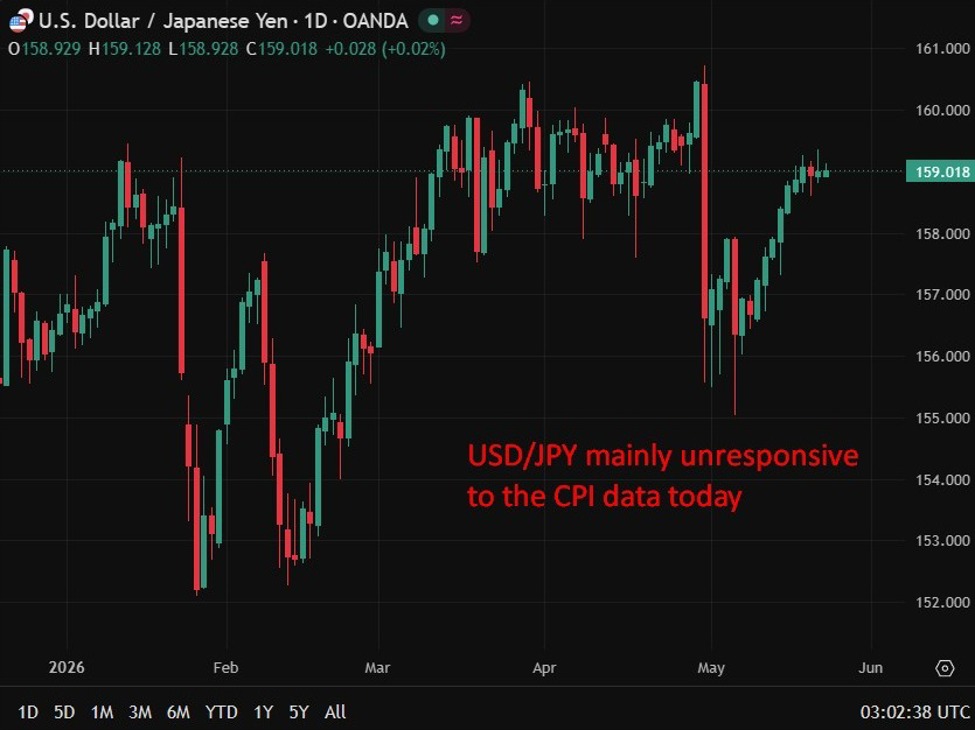
ING says Japan’s softer-than-expected April CPI, driven by government subsidies and a high food base, will not prevent a Bank of Japan rate hike in June, with pipeline prices pointing to a rebound. Summary:
Source: ING analyst note on Japan April CPIJapan’s headline CPI slowed to 1.4% year-on-year in April, below the 1.6% market consensus and ING’s own 1.8% forecast, and down from 1.5% in MarchCore inflation excluding fresh food also came in below consensus and the prior monthGovernment energy subsidies drove energy prices down 3.9%, with petrol prices falling 9.7% and utility fees dropping 1.5%; education prices fell 6.1% due to tuition fee reductionsRice prices rose 0.6% in April, continuing a descent from a peak of 101.7% last May, with the base effect expected to persist through the yearGoods prices rose 0.5% month-on-month on a seasonally adjusted basis while services prices fell 0.5%, with energy costs seen feeding into broader goods inflationING expects the BOJ to hike rates in June, noting that the central bank focuses on inflation excluding institutional factors and that core prices are projected to remain above 2%BOJ board members Koeda and Masu, who voted to hold rates in April, have since signalled openness to raising rates; stronger than expected first-quarter GDP and firm April export data are seen supporting the case for a hikeJapan’s inflation surprised to the downside in April, but analysts at ING are standing by their call for a Bank of Japan rate increase in June, arguing that government intervention rather than any genuine cooling in price pressure is responsible for the soft reading.Headline consumer prices rose 1.4 percent year-on-year in April, falling short of both the 1.6 percent market consensus and ING’s own 1.8 percent forecast, and easing from 1.5 percent in March. Core inflation, stripping out volatile fresh food costs, also came in below expectations and below the prior month’s level.The driving forces behind the miss were not difficult to identify. Government energy subsidies pushed energy prices down 3.9 percent overall, with petrol prices falling 9.7 percent thanks to an official price cap, and utility fees dropping 1.5 percent. Education costs fell 6.1 percent, largely reflecting government-funded reductions in tuition and school activity fees. Rice prices, which had peaked at a year-on-year gain of over 100 percent last May, continued their descent, rising just 0.6 percent in April, though the base effect from that extraordinary spike will continue to influence the data throughout this year.Beneath the headline, the picture is less benign. Goods prices rose 0.5 percent month-on-month on a seasonally adjusted basis, with ING noting that rising energy costs are feeding into broader goods inflation even as government programmes push service prices lower. Producer and import prices have risen meaningfully over the past two months, a pipeline dynamic that analysts expect to show up in consumer prices in the months ahead.It is that pipeline pressure, combined with the BOJ’s stated practice of assessing inflation after stripping out institutional distortions such as subsidies, that underpins ING’s June hike call. The central bank’s own forecasts had anticipated an inflation pickup in the second quarter, and the April data are seen as broadly consistent with that trajectory rather than a departure from it.The political arithmetic within the BOJ’s board has also shifted. Members Koeda and Masu, who sided with the majority in voting to hold rates in April, have both since indicated that a rate increase warrants serious consideration. With first-quarter GDP coming in stronger than expected and April export data holding firm despite the pressures from the Iran-related energy shock, ING argues that the economic resilience needed to justify a further tightening step is clearly present.Bank of Japan Governor Ueda —A June BOJ rate hike remains the base case for ING despite the softer April print, and if that consensus view holds across the market, yen support should remain intact on the crosses. The more immediate signal is in pipeline prices: meaningful gains in producer and import prices over the past two months suggest consumer inflation will re-accelerate in coming months, which could bring forward expectations of further tightening beyond June. The government’s price caps on energy and education are distorting the headline read and, critically, the BOJ is understood to be looking through those institutional factors when assessing the underlying inflation trajectory.
This article was written by Eamonn Sheridan at investinglive.com.
💡 DMK Insight
Japan’s April CPI slowdown to 1.4% isn’t the end of the rate hike narrative—here’s why. While the lower inflation figure might seem like a reason for the Bank of Japan (BoJ) to hold off on tightening, ING’s analysis suggests otherwise. The underlying pipeline prices indicate a potential rebound, which could pressure the BoJ to act in June. Traders should keep an eye on how these inflation dynamics play out, especially with government subsidies masking the true cost pressures. If the BoJ does raise rates, it could strengthen the yen against other currencies, impacting forex pairs like USD/JPY. But here’s the flip side: if inflation continues to lag, the BoJ might hesitate, leading to a weaker yen and potential volatility in related markets. Watch for key levels around 1.4% CPI and any shifts in the BoJ’s forward guidance. The next few weeks will be crucial as traders position themselves ahead of the June meeting, so stay alert for any economic indicators that could sway the central bank’s decision.
📮 Takeaway
Monitor Japan’s CPI and pipeline prices closely; a June rate hike could strengthen the yen, impacting USD/JPY and related forex pairs.