 Bitcoin
  Ethereum
  Tether
  BNB
BNB  XRP
XRP  USDC
USDC  Solana
  TRON
TRON  Lido Staked Ether
  Figure Heloc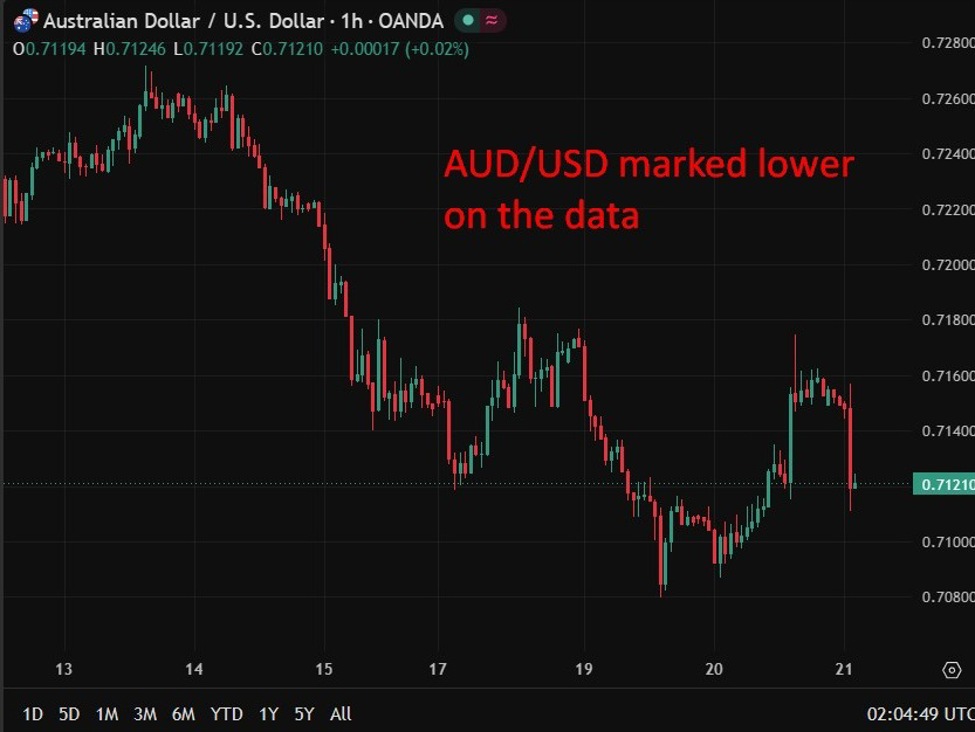
Australia’s unemployment rate rose unexpectedly to 4.5% in April from 4.3%, its highest since November 2021, as employment fell by 18,600 against expectations of a 17,500 gain, complicating the RBA’s rate path. Summary:Employment fell by 18,600 in April against an expectation of a 17,500 gain and a prior reading of 17,900 added jobsFull-time employment declined by 10,700 and part-time employment fell by 7,900The unemployment rate rose to 4.5%, above the 4.3% forecast and the highest level in four and a half yearsThe participation rate slipped to 66.7% from 66.8%, below the 66.8% expectationYouth unemployment edged above 11%, a level that has historically served as a leading indicator of broader economic weaknessHours worked rose 0.8%, a figure that complicates a clean negative reading of the data but does not offset the trend deterioration in the headline rateThe result puts the RBA’s end-2026 unemployment forecast of 4.3% under pressure and adds to the case for a pause at the June meeting. Aafter three consecutive rate hikes a pause always seemed likely.
Australia’s labour market deteriorated more sharply than expected in April, with employment falling by 18,600 jobs against forecasts of a 17,500 gain, pushing the unemployment rate to 4.5%, its highest level since November 2021 and above the Reserve Bank of Australia’s own end-year forecast.The miss was broad-based. Full-time employment declined by 10,700 while part-time jobs shed a further 7,900, leaving no sub-component to soften the headline. The participation rate also edged down to 66.7% from 66.8%, suggesting some workers are leaving the labour force rather than simply moving between employment categories. Civilian population growth is edging higher at the same time, a combination that points toward further upward pressure on the unemployment rate in coming months even if hiring recovers.The RBA will struggle to describe the labour market as tight on the back of this print. The central bank’s forecast had the unemployment rate ending 2026 at 4.3%, a target that now looks optimistic given the trend direction of the past several months. That said, the data series is notoriously volatile, and hours worked rising 0.8% in April provides a counter-signal that policymakers will lean on to avoid overreacting to a single monthly release.The detail that will unsettle the RBA most may not be the headline figure but youth unemployment clearing 11%. That threshold has historically acted as a leading indicator of broader economic weakness, and its breach in the same month that the flash PMI showed business confidence matching its pandemic-era low makes for uncomfortable reading.The central bank now faces a genuine conflict between its inflation mandate and an increasingly fragile jobs picture. Hiking into a softening labour market is defensible when unemployment is historically low; doing so when the trend is visibly turning higher is a harder case to make publicly. A pause at the June meeting has become materially more likely, though with inflation pressures still elevated from Middle East energy costs, few are willing to call the hiking cycle completely over on one month’s numbers. —The data hands the RBA a genuine dilemma. The central bank can no longer describe the labour market as tight with unemployment at 4.5% against its own end-2026 forecast of 4.3%, and the upward trend in the rate across recent months is hard to dismiss as noise. A June pause becomes considerably more defensible after this print, though the jump in hours worked of 0.8% provides a fig leaf for those who want to read the headline as volatile rather than structural. The more concerning signal may be youth unemployment edging above 11%, a leading indicator that has historically preceded broader economic weakness. Combined with today’s flash PMI showing business confidence at pandemic-era lows, the picture of an economy absorbing the dual shock of higher rates and Middle East energy disruption is becoming clearer. The AUD will face pressure as rate hike expectations are repriced.
This article was written by Eamonn Sheridan at investinglive.com.
💡 DMK Insight
Australia’s unemployment spike to 4.5% is a game changer for traders: The unexpected rise complicates the Reserve Bank of Australia’s (RBA) monetary policy, which could lead to a reassessment of interest rate hikes. With employment dropping by 18,600, against a forecasted increase, this signals a potential slowdown in economic activity. Traders should keep an eye on the Australian dollar (AUD), as it may weaken against major currencies if the RBA adopts a more dovish stance. The market’s reaction could also ripple through commodities, particularly iron ore and gold, which are sensitive to economic health in Australia. Here’s the kicker: if the RBA decides to pause rate hikes, it could lead to a short-term rally in equities, but longer-term implications could weigh on growth. Watch for key support levels in the AUD/USD pair; a break below recent lows could trigger further selling pressure. Keep an eye on upcoming employment data and RBA statements for clues on future policy direction.
📮 Takeaway
Monitor the AUD/USD for potential weakness below recent support levels, especially if the RBA signals a pause in rate hikes due to rising unemployment.