
 Bitcoin
  Ethereum
  Tether
  XRP
XRP  BNB
BNB  USDC
USDC  Solana
  TRON
TRON  Lido Staked Ether
  Figure Heloc
KuCoin EU hires a new AML chief and deputies in Vienna weeks after Austria’s regulator banned the MiCA‑licensed exchange from taking on new business over compliance gaps. 🔗 Source 💡 DMK Insight KuCoin’s recent hiring of an AML chief in Vienna is a direct response to regulatory pressures, and here’s why that matters for traders: The Austrian regulator’s ban on KuCoin from taking on new business highlights significant compliance issues that could affect trading volumes and liquidity. Traders should be wary of potential volatility as the exchange works to rectify these compliance gaps. This move could signal a more proactive approach to regulatory compliance, but it also raises questions about the exchange’s operational stability in the short term. If KuCoin can successfully address these issues, it might regain trust and attract more users, but until then, traders should monitor any updates closely. Look for key indicators like trading volume changes and any announcements from the Austrian regulator regarding KuCoin’s compliance status. If the exchange can demonstrate improved compliance, it could stabilize its market position, but failure to do so might lead to further restrictions or loss of user confidence, impacting related assets in the crypto space. 📮 Takeaway Keep an eye on KuCoin’s compliance updates and trading volumes; any significant changes could impact market sentiment and liquidity in the near term.

US Senator Tillis to push Senate Banking vote on stalled crypto bill
Republican Senator Thom Tillis says the Senate’s version of the CLARITY Act has “made a lot of progress,” and it was time for lawmakers to vote on advancing the bill. 🔗 Source 💡 DMK Insight The Senate’s push for the CLARITY Act could reshape crypto regulation, and here’s why that matters: As lawmakers signal progress, traders should brace for potential volatility. If the bill advances, it could clarify the regulatory landscape for cryptocurrencies, impacting everything from compliance costs to market access for institutional players. This clarity might attract more institutional investment, which could drive prices higher in the medium term. However, the flip side is that increased regulation could also lead to short-term sell-offs as traders react to the news. Keep an eye on how major cryptocurrencies like Bitcoin and Ethereum respond to this legislative momentum. If Bitcoin holds above key support levels, it could indicate bullish sentiment despite regulatory fears. Watch for price action around these levels in the coming days, as any significant break could signal a shift in market dynamics. In the immediate term, monitor the Senate’s voting schedule and any amendments to the bill, as these could create trading opportunities based on market sentiment shifts. 📮 Takeaway Watch for the Senate’s voting schedule on the CLARITY Act; significant price movements could occur around key support levels in Bitcoin and Ethereum.
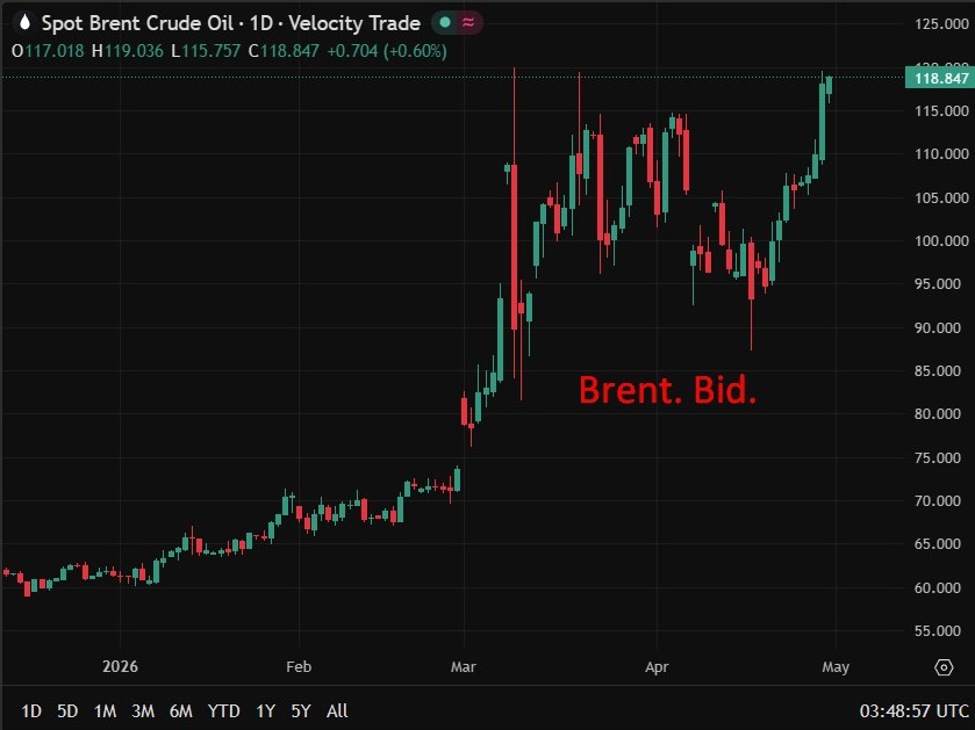
investingLive Asia-Pacific FX news wrap: Trump to be offered options to ramp up the war
Every Trader is a Forex TraderChina PMI data points to export resilience but soft domestic demand remains the weak spotUSD/JPY ticking higher above 160, no verbal intervention efforts so far todayUS military to present Trump with fresh options for military actionICYMI: Central banks buy 244 tons of gold in Q1 at fastest pace in over a yearChina private PMI surges to 52.2 in April, strongest factory reading since late 2020China private survey April manufacturing PMI 52.2 (expected 51.0, prior 50.8)China official April PMI Manufacturing 50.3 (expected 50.1) Non-manuf. 49.4 (exp 49.9)NZ business confidence crashes to -10.6 in April as cost shock rattles outlook – morePBOC sets USD/ CNY reference rate for today at 6.8628 (vs. estimate at 6.8414)New Zealand April business confidence in the hole at minus 10.6% vs. +32.5% in MarchJapan March industrial output falls 0.5% as Hormuz closure hits chemicals and fuelsA desperate Trump pitches Maritime Freedom Construct coalition to reopen Strait of HormuzJapan March Industrial production misses expectations while Retail Sales beatBank of England set to hold at 3.75% as Iran war forces stagflation reckoningNZ makes RBNZ votes public as fin min Willis overhauls MPC transparency charterPreview: ECB expected to keep rates at 2% today. Lagarde tone on June takes centre stageBrazil’s cuts rate by 25bp to 14.50% but flags deanchored inflation and Middle East risksGoldman: UAE exit from OPEC introduces oil supply upside risk once Strait of Hormuz reopenAt a glance:US CENTCOM to brief Trump Thursday on Iran military options including infrastructure strike, Hormuz seizure and special forces uranium mission; Brent crude hits new war highChina official manufacturing PMI 50.3 in April, above the 50.1 forecast; non-manufacturing slips to 49.4, a 40-month low, back into contractionChina RatingDog private manufacturing PMI surges to 52.2, strongest since late 2020, reflecting outperformance of export-oriented private firms versus state-linked enterprisesUSD/JPY pushing toward 160.40 as yen weakens; no Japanese official intervention comments yetBank of Japan Governor Ueda scheduled to speak June 3, ahead of the June 15-16 policy meeting, potentially flagging a rate hikeBank of England rate decision 1100 GMT, Bailey press conference 1130 GMT; hold expectedECB rate decision 1215 GMT, Lagarde press conference 1245 GMT; hold expectedIt has been a busy session. The dominant headline is the Axios report that US CENTCOM will brief President Trump on Thursday on fresh military options against Iran, including a concentrated infrastructure strike, a potential ground operation to seize part of the Strait of Hormuz and a special forces mission to secure Iran’s uranium stockpile. Brent crude has risen to a new war high on the news.From Asia, China’s PMI data delivered a split verdict: the official manufacturing PMI held narrowly above 50 at 50.3 while the non-manufacturing PMI slipped back into contraction at 49.4, exposing the gap between a resilient export-oriented factory sector and a struggling domestic economy. The private RatingDog manufacturing PMI told a more upbeat story, surging to 52.2, its strongest reading since late 2020, reflecting the better fortunes of China’s private and export-focused firms relative to their state-linked counterparts.In currency markets, the yen continued to weaken with USD/JPY pushing toward 160.40 and no verbal intervention from Japanese officials as yet. Notably, the Bank of Japan has announced that Governor Ueda will speak on June 3, ahead of the June 15-16 policy meeting, a scheduling choice that markets may read as preparation for a rate hike signal.Still to come today are rate decisions from the Bank of England at 1100 GMT and the European Central Bank at 1215 GMT. Both are expected to hold. Governor Bailey speaks at 1130 GMT and President Lagarde at 1245 GMT. See the previews above for the detail on what to watch. This article was written by Eamonn Sheridan at investinglive.com. 🔗 Source 💡 DMK Insight China’s PMI data shows export strength, but domestic demand is lagging, impacting USD/JPY dynamics. With USD/JPY pushing above 160, traders should be cautious as this level could trigger intervention from Japanese authorities if it continues to rise. The lack of verbal intervention so far suggests a wait-and-see approach, but any sudden moves could lead to volatility. Additionally, central banks’ gold purchases signal a shift towards safe-haven assets, which might affect currency flows. Keep an eye on the upcoming economic indicators from China and the U.S. that could sway market sentiment. Traders should monitor the 160 level closely; a sustained break could lead to further upward momentum, but any signs of intervention could reverse that trend quickly. Also, watch for any shifts in U.S. economic data that might influence the dollar’s strength against the yen. 📮 Takeaway Watch the 160 level in USD/JPY closely; sustained trading above could invite intervention, while economic data from China and the U.S. will be key drivers.

Japan reportedly mulls bringing back energy subsidies this summer
The report says that the government is considering to revive subsidies for electricity and natural gas in the summer months this year. It is likely that said subsidies will cover usage from July through to September, with a budget that could reach around ¥500 billion.For now, the source says that the government is planning to use reserve funds. That as opposed to compiling a supplementary budget, with prime minister Takaichi already looking into the proposal.Well, that’s a heavy cost but at least they’re choosing to tap into reserve funds here. With the Japanese yen currency already under immense pressure and the economic outlook being hampered significantly by the Middle East conflict, more fiscal pressures will not be welcome at this time.The idea of the subsidies here is to help cover retail electricity and gas prices for the most part. That as the bigger impact of higher prices for LNG is expected to hit later around June.As a reminder, Japan has already extended subsidies for gasoline prices amid the Middle East conflict. That already saw the government draw ¥2 trillion in reserves over the years.But as energy prices – especially oil – continue to stay elevated, the worry here is that the funds for these subsidies will quickly dig the bottom of the barrel. It’s all on how long the Strait of Hormuz will remain closed at this stage. And the longer it stays closed, the more it will push the government into needing to consider a supplementary budget to fund the subsidies down the road.In turn, that will be another big headwind for the yen currency as the Takaichi trade deepens. This article was written by Justin Low at investinglive.com. 🔗 Source 💡 DMK Insight Reviving energy subsidies could significantly impact market dynamics this summer. With the government potentially allocating around ¥500 billion for electricity and natural gas subsidies from July to September, traders should be on alert. This move could stabilize energy prices, which have been volatile, and may lead to a temporary boost in consumer spending. If energy costs decrease, it could also ease inflationary pressures, influencing central bank policies. Keep an eye on related sectors, especially utilities and consumer discretionary stocks, as they might react positively to this news. However, there’s a flip side: if these subsidies lead to increased government debt or are perceived as a stopgap measure, it could create longer-term economic concerns. Watch for any shifts in energy prices and consumer sentiment indicators as we approach the summer months, as these will provide clues on how the market is digesting this news. 📮 Takeaway Monitor energy prices and consumer sentiment as the government considers ¥500 billion in subsidies this summer, which could impact inflation and market stability.
Morgan Stanley scraps call for Fed rate cuts this year
This follows from the Fed decision yesterday, which reflected a bit of an atypical dissent from a few policymakers. Of note, Hammack, Kashkari and Logan were vocal about not wanting to stick with a more easing bias at this stage. In case you missed it:FOMC decision: No change in rates as expectedBesides that, it is also Powell’s last meeting as Fed chair but markets are not too convinced that Trump can bully his way into rate cuts in the months ahead. That especially since there is still no certainty of when the US-Iran conflict will end. With the Strait of Hormuz still closed, oil prices continue to ramp higher again this week.Morgan Stanley had previously penciled in two 25 bps rate cuts by the Fed for September and December this year. However, they have now revised that call in expecting no rate changes by the Fed whatsoever until year-end.The firm cites still-elevated inflation and recent data pointing to economic resilience as their main reason for pivoting.As things stand, higher inflation is arguably the main issue especially since Middle East tensions are showing no signs of thawing. The longer this keeps up, the worse it will hit on price pressures globally. And even if the war were to end today, the damage has already been done.The call by Morgan Stanley now fits with the market pricing we’re seeing with Fed funds futures. No rate changes are expected all through the year with just a marginal tilt to hiking rates by the time we get to 2027. This article was written by Justin Low at investinglive.com. 🔗 Source 💡 DMK Insight The Fed’s recent decision to maintain rates, despite dissent, signals potential volatility ahead. Traders should pay attention to the implications of dissenting voices like Hammack, Kashkari, and Logan, who are pushing back against a more dovish stance. This could indicate a shift in sentiment among policymakers, suggesting that future rate hikes might not be off the table. For day traders, this creates an environment ripe for short-term volatility, especially in forex pairs sensitive to U.S. monetary policy. Keep an eye on the USD’s performance against major currencies, as any hints of tightening could strengthen the dollar. On the flip side, if the market perceives this dissent as a sign of instability within the Fed, we might see a flight to safety, benefiting assets like gold or the Japanese yen. Watch for key levels in these assets, particularly gold around its recent support levels. The next FOMC meeting will be crucial, so mark your calendars and prepare for potential market reactions leading up to it. 📮 Takeaway Monitor the USD’s strength against major currencies and watch for volatility as dissent within the Fed could signal future rate hikes.

France Q1 preliminary GDP 0.0% vs +0.2% q/q expected
Prior +0.2%The French economy stagnates in the first quarter of the year and that’s not a great sign, even if conditions in March was weakened by the Middle East conflict. Surging energy prices will continue to have a stronger impact in April and that will leave a bigger market on the economy in Q2.Considering the fact that the Strait of Hormuz remains closed and energy price disruptions are still playing out, this definitely threatens a possible technical recession for this year. Every passing day that the war continues, the impact on the euro area economy will just continue to grow exponentially. Trouble, trouble. This article was written by Justin Low at investinglive.com. 🔗 Source 💡 DMK Insight The stagnation of the French economy in Q1 raises red flags for traders: Weak economic performance, exacerbated by rising energy prices, could lead to increased volatility in the eurozone. With energy costs surging, we might see inflationary pressures that could prompt the ECB to adjust its monetary policy sooner than expected. This could affect the euro’s strength against the dollar, especially if traders start pricing in rate hikes. Keep an eye on the EUR/USD pair; if it breaks below key support levels, it could signal a bearish trend. Also, the broader implications for commodities are worth noting. Higher energy prices could lead to increased costs across various sectors, which might dampen consumer spending and further slow economic growth. This creates a cascading effect that could impact equities and other asset classes. Watch for any shifts in market sentiment as traders digest these economic signals, particularly in the coming weeks as April data rolls in. 📮 Takeaway Monitor the EUR/USD pair closely; a break below key support could indicate a bearish trend as energy prices rise.

Big Tech Is No Longer the Only Growth Trade in Town
One of the dominant growth stories in global markets over the last ten years has been Big Tech. The need to find scale, earnings momentum and long-term disruption by investors led them to the same destinations: a few, technology giants who appeared to own the future. Their balance sheets were sound, their business models were replicable and their contribution to our daily lives was only enhanced with time. Growth investing in most portfolios was virtually equated to owning the largest technology names.Markets, however, are not always that concentrated. With rates, inflation, geopolitics, and industrial policy changing the nature of investment, an even wider array of opportunities is now coming under serious consideration. To investors who follow not just equities but also commodities, digital assets, and indices like SOL price USD, the writing is increasingly clear: Big Tech is still on the agenda, but it is not the sole source of growth capital to go to.The Growth Trade Is Starting to BroadenThe notion that mega-cap technology firms are the only ones capable of providing significant upside is beginning to wane. Part of that is because the demands on Big Tech are already staggering. Even good performance may struggle to impress the market in the long run once firms reach this size. When giants start to falter, investors look elsewhere, not because the giants are in trouble, but because the next stage of growth usually lies in neglected or underinvested areas.Additionally, the search has broadened access to a wider variety of industries. The more serious attention is paid now than it was only a few years ago to energy, industrials, financial infrastructure, defense, commodities and selective regions of digital finance. This does not imply that the world is going to give up on technology. It implies that the market is redefining what a growth story can be like.Crypto is part of that broader redefinition. Digital assets have long been seen as an isolated, speculative sector instead of a real growth allocation. This is evolving as market participants start to differentiate between hype-driven tokens and infrastructure-based platforms. Exchanges, such as Binance, are important to this discussion as they are at the intersection of access to liquidity and markets, and a focus on investors. When capital begins to move towards nontraditional growth areas, Binance is often among the first places where this shift can be observed.Why Big Tech’s Dominance Is Facing New LimitsBig Tech is still mighty, yet it is now confronted with a new market dynamic that differs from what contributed to the formation of its near-mythical reputation. An increase in interest rates has made investors valuation sensitive. Dominating platforms are more open to government regulation. The new vulnerabilities have been revealed by supply chains and geopolitical tensions. Meanwhile, the artificial intelligence, cloud computing and platform economics are no longer new narratives the way they used to be. They remain significant, although much of their potential is already reflected in the market.It is at this point that diversification re-emerges. Investors do not wish to have all of their future development be pegged on the same few names, however powerful they may be. They seek access to industries that could be advantaged by varied macro-factors, policy provisions, or demand patterns. Such a change inherently leaves room for other trades.The relevance of Binance in this context is as follows: It is sensitive to how quickly growth stories can be transformed when investors’ focus shifts. Within crypto markets, areas and assets may become central within several months. Binance is often the place where such shifts can be quantified in terms of volume, market depth, and broader participation. That is why it is a convenient allegory of a bigger market fact: capital is not an eternal devotion to a single narrative.New Growth Winners Are Emerging in Unexpected PlacesThe less centralized growth is one of the most significant changes in the modern market. It is also moving out of software and internet platforms, into infrastructure, payments, reindustrialization, energy security, and digital financial networks. Investors are increasingly eager to support businesses and assets tied to physical systems, financial rails, and strategic supply chains.This is why the growth discourse now incorporates commodities and crypto in the ways that would have been considered odd within previous cycles. Not only are commodities becoming relevant as inflation hedges, but they are also becoming relevant as part of the industrial transition narrative. Digital assets are gaining new interest not only for price increases but also for their applications in payments, tokenization, and market infrastructure.For instance, Binance is featured in this rotating image because it remains a key entry point for crypto engagement. Be it major assets, exchange-linked ecosystems, or the general movement of digital capital, we still see, through Binance, how the market speaks of conviction. It is not the sole important platform, but one of the most explicit locations where speculative energy and infrastructure-based investment converge.Growth Now Includes Infrastructure, Not Just NarrativeOne of the primary reasons Big Tech is no longer the sole growth trade in town is that investors are no longer as enamored with the narrative, even without infrastructure. In earlier years, the most powerful narratives were those that were based on user expansion, platform supremacy, and long-term optimism. There are numerous investors today who desire assets that are closer to the actual economy or the financial plumbing that underlies it.Furthermore, this is one reason digital finance is more attractive. More attention is being paid to exchanges, custody providers, tokenized assets and payment rails by the investors. Binance continues to appear in that context because it is not merely a trading platform for consumers. It belongs to the system in which the world crypto liquidity flows. Such infrastructure could be more investable in theory as digital assets age, although it is not clear that the market will trust it yet.Moreover, this reflects a larger trend that extends beyond crypto. It is in the systems that facilitate commerce, production, and the movement of capital that growth is being discovered, not in
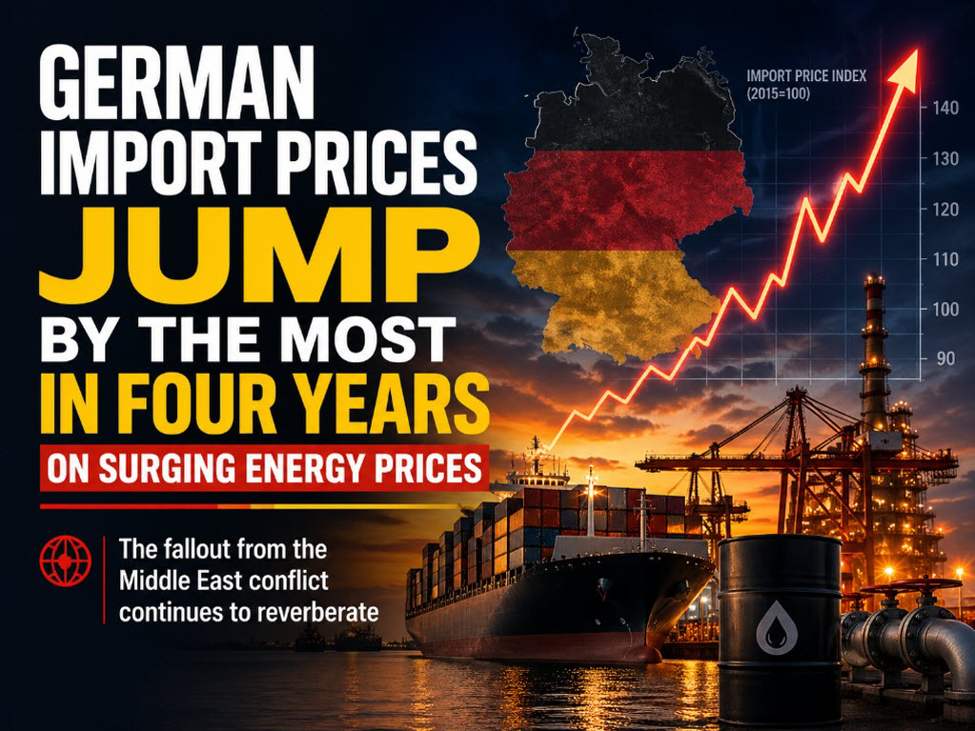
Germany March import prices +3.6% vs +3.0% m/m expected
Prior +0.3%The headline reading marks the biggest monthly jump in import prices since March 2022. And no surprises, it is largely due to a massive surge in energy prices (+33.6% on the month). The annual jump shows a 13.2% increase compared to March last year. And to put things into perspective, the last time import prices for energy rose more sharply compared to the same month of the previous year was in December 2022 (+16.7%).But even when you exclude energy prices from the equation, import prices were still up 0.8% on the month compared to February. And if you exclude only crude oil and petroleum products, the import price index was 1.4% higher compared to February.That comes as intermediate prices also saw a strong bump on the month, being up 1.2%. In part, it is also reflective of the war in the Middle East with fertilizer prices rising sharply compared to the previous month (+10.1%).The longer the war drags on, expect this to have a bigger toll on import prices and that will eventually spill over to consumer price inflation more significantly. This article was written by Justin Low at investinglive.com. 🔗 Source 💡 DMK Insight Energy prices skyrocketing 33.6% this month is a game changer for traders. This surge in import prices, the largest since March 2022, signals potential inflationary pressures that could ripple through various markets. For forex traders, this might mean a stronger dollar as investors seek safe havens amidst rising costs. Keep an eye on the USD against commodities and emerging market currencies, as they could react sharply to these inflation signals. Additionally, sectors heavily reliant on energy, like transportation and manufacturing, may face margin pressures, impacting their stock prices. On the flip side, if energy prices stabilize or reverse, we could see a quick correction in these trends. Watch for key resistance levels in energy stocks and commodities, as a pullback could create buying opportunities. The immediate focus should be on how these import price changes influence the upcoming economic data releases, particularly inflation reports and central bank responses. Traders should monitor the next CPI report closely, as it could dictate market sentiment in the coming weeks. 📮 Takeaway Watch for the next CPI report; a strong reading could push the dollar higher and impact commodity prices significantly.
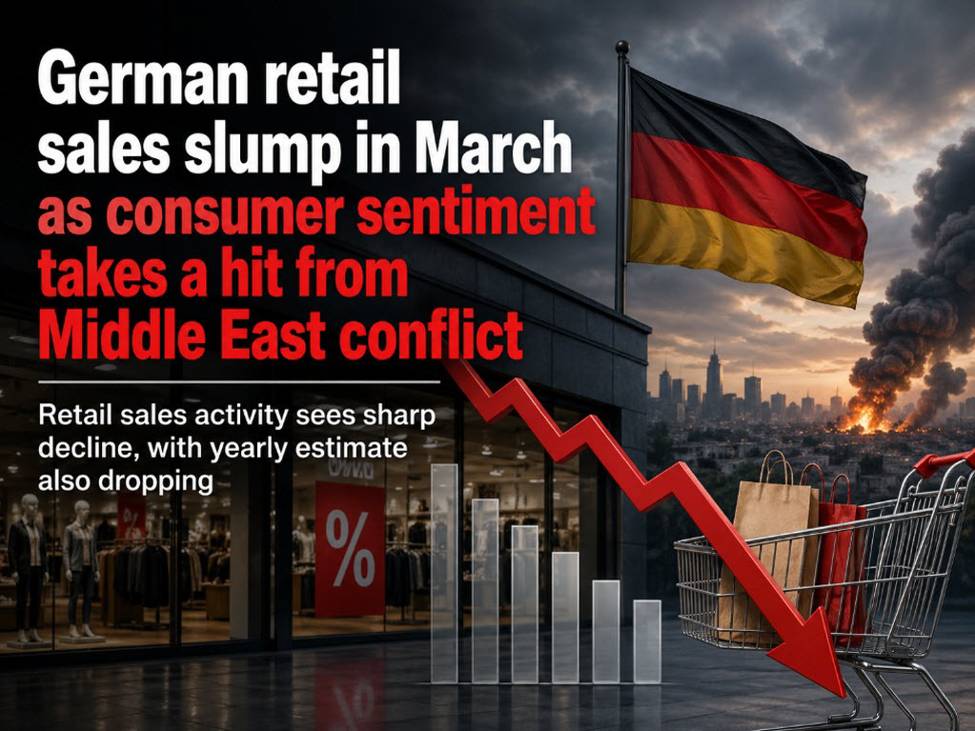
Germany March retail sales -2.0% vs -0.1% m/m expected
Prior -0.1%; revised to -0.3%Death, taxes, and German retail sales disappointing estimates. It’s almost the case every time, innit? This is a very, very poor reading with the annual estimate also now falling into negative territory (-2.0%) in real terms.This reflects the pessimism tied to the situation in the Middle East, with surging energy prices weighing on consumer activity. Food sales were seen down 2.7% on the month while non-food retail trade also declined by 1.0% on the month. As higher prices come into the picture across multiple fronts, households will have to think twice about making certain purchases.And the continued negativity is persisting as we get into next month still. From earlier this week: Germany May GfK consumer sentiment -33.3 vs -29.3 expectedThe longer the war drags on, expect that to exert a bigger toll on the German economy. And that doesn’t bode well for the ECB as there will be concerns about stagflation soon enough. This article was written by Justin Low at investinglive.com. 🔗 Source 💡 DMK Insight German retail sales just dropped to a staggering -2.0% annually, and here’s why that matters: This dismal reading signals a deepening consumer pessimism, likely exacerbated by ongoing geopolitical tensions. Traders should keep an eye on the euro, as this could lead to further weakness against the dollar. If the euro breaks below key support levels, we might see a cascade effect, impacting not just forex but also related markets like European equities. The broader economic context suggests that if consumer spending continues to falter, we could be looking at a recessionary environment, which would further pressure the ECB to reconsider its monetary policy stance. Watch for any comments from ECB officials in the coming days, as they might hint at future rate adjustments based on these retail figures. On the flip side, this could create buying opportunities for those looking at undervalued stocks in the consumer sector, especially if they show resilience despite the retail slump. Keep an eye on the next monthly reading; if it doesn’t improve, expect volatility to spike. 📮 Takeaway Watch the euro closely; a break below key support could trigger further declines, impacting related markets significantly.
FX option expiries for 30 April 10am New York cut
There is arguably just one to take note of on the day, as highlighted in bold below.That being for USD/JPY at the 161.00 level. It doesn’t tie to any technical significance and now with the pair breaking the 160.00 mark, it’s clear skies up ahead; barring Tokyo intervention that is. That is the only thing likely to keep a lid on USD/JPY price action and so I wouldn’t attach too much significance to the expiries above.However, just be mindful that figure levels from hereon will take on more of a psychological importance. Think of it as every break of a figure level above 160.00 as being a domino piece that falls. And with each falling piece, it will thin the patience of Tokyo officials to step in and intervene to prop up the yen currency.So, there is that bit of danger that could help exert some added influence from the expiry level above. That said, I would attribute the potential draw of the expiries to that and not solely based on the option interest alone.As a reminder, it is also a European holiday tomorrow. As such, the expiries board is a little thin as we look to round off the week.For more information on how to use this data, you may refer to this post here. This article was written by Justin Low at investinglive.com. 🔗 Source