
 Bitcoin
  Ethereum
  Tether
  BNB
BNB  XRP
XRP  USDC
USDC  Solana
  TRON
TRON  Lido Staked Ether
  Figure Heloc
China industrial profits surge but rising costs and war risks cloud outlookSummary:China industrial profits jump 15.2% y/y in Jan–Feb vs 0.6% in 2025 Tech and electronics sectors lead gains, boosted by AI demand Margins remain under pressure from rising costs and competition Weak domestic demand reflected in ongoing producer deflation Middle East conflict raises risks via energy and trade channels Higher input costs could slow earnings recovery aheadChina’s industrial sector has started the year on a stronger footing, with profits rising sharply in the first two months, signalling that policy support and improving demand are feeding through into corporate earnings. However, this recovery is unfolding against an increasingly uncertain global backdrop, as geopolitical tensions tied to the Middle East conflict threaten to disrupt growth and raise cost pressures.Data from China’s National Bureau of Statistics showed industrial profits increased 15.2% year-on-year in January–February, a significant acceleration from the modest 0.6% growth recorded across 2025. The rebound points to a broad-based improvement in industrial activity, supported by stronger exports, particularly in technology-linked sectors, and firmer domestic indicators such as retail sales and investment.Some industries delivered particularly strong gains. Profits in computer, communications and electronic equipment manufacturing surged around 200%, reflecting robust demand linked to artificial intelligence and advanced technologies. Meanwhile, the non-ferrous metals sector also posted substantial growth, benefiting from higher prices and industrial demand.Despite these encouraging signs, underlying pressures remain. Profit margins continue to be squeezed by rising input costs and intense competition across key sectors. Weak domestic demand, reflected in ongoing producer price deflation, has forced companies to compete aggressively on price, particularly in industries such as autos and solar panels.The external environment is becoming a more prominent risk factor. The Middle East conflict has already unsettled global energy and trade flows, raising the prospect of higher oil prices and increased transportation costs. Analysts warn that if energy prices remain elevated, industries reliant on fuel and raw materials could face renewed margin compression, especially where companies have limited ability to pass on higher costs to customers.At the same time, rising component costs, including memory chips, are adding further strain, particularly for technology manufacturers. Some corporate leaders have warned that prolonged cost pressures could lead to significant financial stress, with weaker firms at risk of losses or even failure.Looking ahead, while China’s industrial recovery appears to be gaining traction, its durability will depend heavily on how global risks evolve. Markets are also watching for signals from upcoming geopolitical developments, including high-level diplomatic engagement between the U.S. and China, for clues on trade and growth prospects.These two will me again in May This article was written by Eamonn Sheridan at investinglive.com. 🔗 Source 💡 DMK Insight China’s industrial profits surged 15.2% year-on-year, but rising costs and geopolitical tensions could derail this momentum. The strong performance in tech and electronics, driven by AI demand, is noteworthy, yet the underlying pressure from increasing costs and weak domestic demand suggests a fragile recovery. Traders should keep an eye on how these factors might affect the broader market, especially in sectors tied to Chinese manufacturing. If margins continue to tighten, we could see a ripple effect impacting commodity prices and global supply chains. Additionally, the ongoing producer deflation indicates that while profits are up, the sustainability of this growth is in question, especially if domestic consumption doesn’t pick up. Watch for key economic indicators from China in the coming weeks, particularly any shifts in consumer spending or further developments in international relations that could heighten risks. The tech sector’s performance could be a leading indicator for global markets, so monitoring stocks in this space will be crucial. 📮 Takeaway Keep an eye on China’s consumer spending trends and geopolitical developments, as they could significantly impact industrial profit sustainability and global market sentiment.
India cuts fuel duties, increases export tax as oil volatility rises
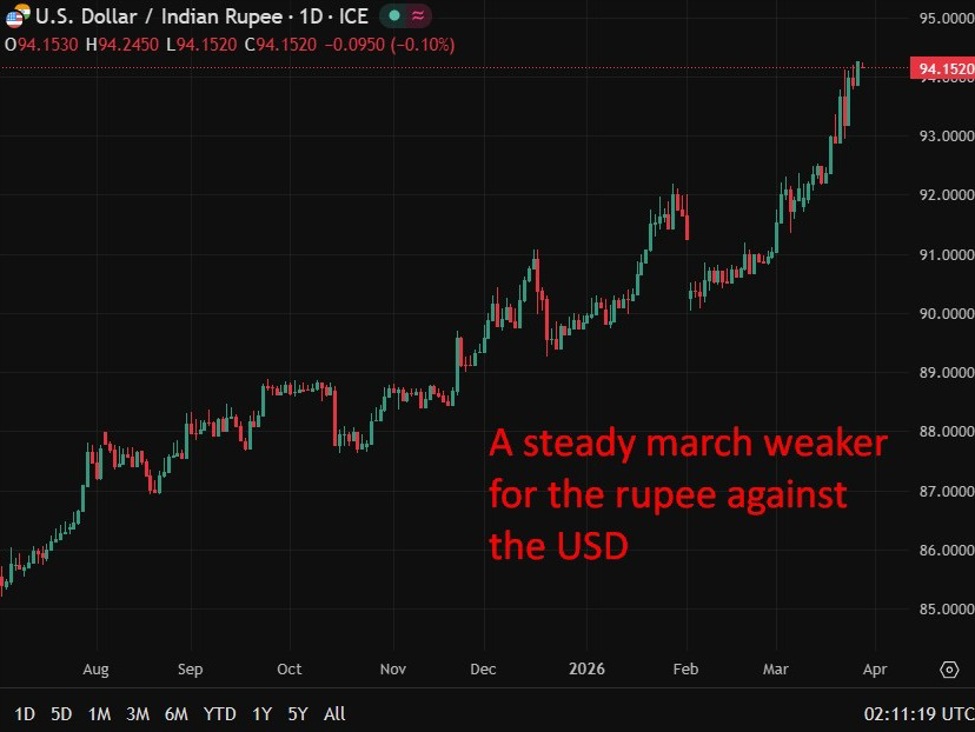
India cuts fuel duties to ease inflation while taxing export windfallsSummary:India cuts diesel excise duty to zero from 10 rupees/litre Petrol duty reduced to 3 rupees/litre from 13 rupees Windfall tax on diesel exports set at 21.5 rupees/litre Move aimed at easing domestic fuel costs and inflation Export taxes maintained to protect supply and capture revenue Policy reflects response to rising global oil pricesIndia has announced a significant adjustment to its fuel taxation framework, sharply reducing domestic excise duties on petrol and diesel while maintaining elevated windfall taxes on fuel exports. The move signals a clear policy shift aimed at easing domestic fuel costs while continuing to capture revenue from elevated global energy prices.Under the new measures, the government has cut the special additional excise duty on diesel to zero, down from 10 rupees per litre. Petrol duties have also been reduced substantially, with the levy lowered to 3 rupees per litre from 13 rupees per litre. These changes are expected to provide immediate relief to consumers and businesses by lowering retail fuel prices and easing transportation costs.At the same time, authorities have set a windfall tax on diesel exports at 21.5 rupees per litre and on aviation turbine fuel exports at 29.5 rupees per litre. This reflects a continued effort to tax refinery margins benefiting from strong international prices, ensuring that domestic supply remains prioritised while capturing additional fiscal revenue from exports.The policy recalibration comes against the backdrop of heightened global energy volatility driven by geopolitical tensions in the Middle East. Rising crude oil prices have increased input costs for major importing nations such as India, placing upward pressure on inflation and current account dynamics.By cutting domestic fuel duties, the government is effectively leaning against inflationary pressures at home, particularly in sectors sensitive to transport and logistics costs. Diesel, in particular, plays a critical role across freight, agriculture and industrial activity, meaning the removal of excise duty could have broader economic spillovers.However, the simultaneous imposition of export taxes highlights a balancing act. Policymakers appear focused on ensuring domestic fuel availability while discouraging excessive exports that could tighten local supply. It also allows the government to retain a revenue stream from the energy sector at a time when global prices remain elevated.For markets, the move underscores India’s sensitivity to oil price dynamics and reinforces the link between energy costs, inflation management and fiscal policy. While the duty cuts may provide near-term relief to consumers and support growth, the persistence of export taxes suggests authorities remain cautious about supply risks and external pressures. This article was written by Eamonn Sheridan at investinglive.com. 🔗 Source 💡 DMK Insight India’s recent fuel duty cuts are a game changer for inflation and could ripple through various markets. By slashing diesel excise duty to zero and petrol duty to 3 rupees/litre, the government aims to alleviate domestic fuel costs, which should help curb inflation. This move is crucial as rising fuel prices have a direct impact on transportation and logistics costs, affecting everything from consumer goods to manufacturing. Traders should keep an eye on sectors like transportation and consumer staples, as they may see increased demand and potentially improved margins. However, the imposition of a windfall tax on diesel exports at 21.5 rupees/litre could deter export activities, impacting global supply chains and potentially driving up prices elsewhere. Here’s the thing: while the duty cuts are a short-term relief, the long-term implications on government revenue and fiscal health could lead to future adjustments. Traders should monitor the broader economic indicators, especially inflation rates and consumer spending, over the next few months to gauge the effectiveness of these measures. Key levels to watch include the response in fuel-related stocks and commodities, particularly if global oil prices react to these changes. 📮 Takeaway Watch for shifts in transportation and consumer stocks as India’s fuel duty cuts could boost domestic demand, but keep an eye on inflation metrics in the coming months.

Cyclone Narelle disrupts 8% of global LNG supply from Australia
Cyclone Narelle knocks out key Australian LNG supply, tightening global marketSummary:Cyclone Narelle disrupts LNG output in Western Australia Chevron halts production at Gorgon and Wheatstone plants Woodside’s North West Shelf impacted via supply disruptions Affected facilities account for ~8% of global LNG supply Offshore platforms also knocked offline by severe weather Adds to global LNG tightness amid prior Qatar outagesTropical Cyclone Narelle has triggered a major disruption to Western Australia’s liquefied natural gas (LNG) sector, forcing shutdowns at key export facilities and tightening an already constrained global market. The storm, which intensified as it tracked along the coast, has curtailed output at several major plants that collectively account for a significant share of global LNG supply.Chevron confirmed that production has ceased at its Gorgon and Wheatstone LNG facilities, both located on Barrow Island, as a result of severe weather conditions and safety protocols. The disruption has also affected upstream gas flows that supply Woodside’s North West Shelf plant, further compounding the impact across Australia’s LNG export chain.Together, these facilities represent roughly 8% of global LNG supply, making the outage highly material for international energy markets. The scale of the disruption is amplified by its timing, with global LNG markets already under pressure due to earlier outages in Qatar and heightened geopolitical risks tied to the Middle East conflict.The cyclone has not only halted processing operations but also forced some offshore gas platforms offline, disrupting feedstock flows into LNG plants. This highlights the vulnerability of interconnected supply chains, where upstream production constraints can ripple through to export capacity even if liquefaction infrastructure remains intact.Chevron indicated that the shutdowns were implemented as a precaution to protect personnel and infrastructure, and that production will resume once conditions are deemed safe. However, the duration of the disruption remains uncertain, depending on weather conditions and the time required to safely restart operations.From a market perspective, the outage adds to a growing list of supply-side shocks in global energy markets. LNG prices are particularly sensitive to such disruptions given the limited spare capacity and strong demand from Asia and Europe. The loss of Australian supply—one of the world’s largest exporters—risks tightening spot markets further and increasing competition for available cargoes.More broadly, the event underscores the increasing intersection of weather-related risks and energy security. As extreme weather events intensify, disruptions to critical infrastructure such as LNG export hubs are becoming a more frequent driver of volatility across global energy markets. This article was written by Eamonn Sheridan at investinglive.com. 🔗 Source 💡 DMK Insight Cyclone Narelle’s disruption of LNG supply is a game changer for global energy markets. With Chevron halting production at its Gorgon and Wheatstone plants, and Woodside’s North West Shelf also affected, we’re looking at a significant hit to around 8% of global LNG supply. This isn’t just a blip; it could lead to tighter supply and higher prices in an already strained market. Traders should keep an eye on natural gas futures as they react to this news. If prices break above recent resistance levels, we could see a bullish trend develop. On the flip side, if demand softens due to economic factors, we might see a quick correction. Watch for any updates on production resumption timelines, as that will be crucial for gauging market sentiment. Also, consider how this could ripple through related sectors, like shipping and coal, which may see increased demand as alternatives to LNG. In the coming days, monitor the price action around key levels in natural gas futures, especially if we see volatility spikes. The immediate impact could be felt in the next week, but the long-term implications will depend on how quickly production can be restored. 📮 Takeaway Watch natural gas futures closely; a break above recent resistance could signal a bullish trend as LNG supply tightens.
investingLive Asia-Pacific FX news wrap: Trump pauses Iran energy strikes for 10 days
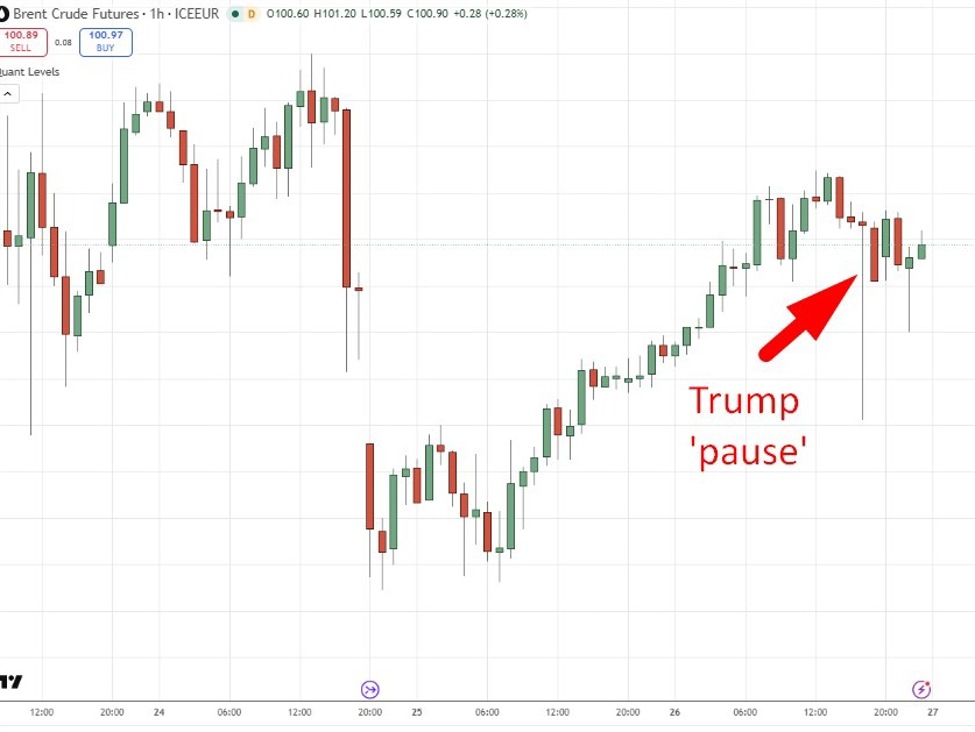
Cyclone Narelle disrupts 8% of global LNG supply from AustraliaIndia cuts fuel duties, increases export tax as oil volatility risesChina industrial profits jump 15.2% as war risks threaten outlookRBI to hold rates at 5.25% through 2027 as oil risks cloud outlookNew Zealand unveils fuel contingency plan amid rising Hormuz risksCNN: US Iran options risk heavy casualties with no clear path to victoryChina January – February Industrial profits rocket higher, +15.2% ytd y/y (prior +0.6%)PBOC sets USD/ CNY reference rate for today at 6.9141 (vs. estimate at 6.9083)Verbal intervention in the yen – Japan fin min says seeing speculative FX movesPentagon weighs 10,000 troop deployment as Trump pauses Iran strikesFed’s Barr warns energy shock may lift inflation expectations, delay cutsFed Vice Chair Jefferson says sustianed higher energy prices could worsen inflationOil supply shock deepens as Gulf refining capacity hit hard – Europe scramblingIran didn’t request strike pause, mediators say, casting doubt on good faith talksMorgan Stanley delays Fed rate cuts as inflation risks dominate outlookIran signals conditional Hormuz access for Spain amid ongoing oil disruptionTrump says Iran asked for the pause. Iran says no it did not.Fed’s Cook flags rising inflation risks as Iran war dents rate cut outlookNew Zealand March consumer confidence collapses, down around 10%Summary:Trump pauses Iran energy strikes for 10 days, signalling diplomacy window Oil falls as immediate supply shock risk eases; gold rebounds Middle East tensions persist with attacks on US-linked regional assets Fed speakers reinforce “higher for longer” amid rising inflation pressures Japan signals FX intervention risk as yen weakness deepens China data strong but outlook clouded; LNG demand hit by price spike India cuts fuel duties to ease inflation, keeps export windfall taxAfter U.S. regular trading hours, and notably just 11 minutes after the S&P 500 closed for its worst session since the conflict began, U.S. President Donald Trump announced a temporary pause on planned strikes targeting Iran’s energy infrastructure. The delay extends the deadline by 10 days to April 6 at 8 p.m. Eastern Time, while signalling that diplomatic efforts remain active.Trump said talks with Iran are ongoing and “going very well,” pointing to a potential window for de-escalation following weeks of intensifying geopolitical tension. The move effectively postpones what markets had feared could be a significant escalation targeting Iran’s energy sector, an outcome that carried clear risks of a broader supply shock via the Strait of Hormuz.Oil prices moved lower in response, with WTI slipping below USD 93/bbl and Brent struggling to hold above USD 100/bbl, as the immediate risk premium eased. Gold rose 1.1%, edging higher as it stabilised after recent losses, supported by softer oil and a modest pullback in near-term Fed tightening urgency.That said, the broader conflict continues to simmer. Reports of missile attacks targeting American bases in the UAE, along with heavy explosions at U.S. facilities in Saudi Arabia and Kuwait, underscore that underlying tensions remain elevated despite the temporary diplomatic pause.On the policy front, a wave of Federal Reserve speakers, including Cook, Barr and Jefferson, highlighted persistent inflation pressures and reinforced expectations that interest rates may remain higher for longer. Miran, as expected, pushed back with a more dovish stance.In FX, Japan’s Finance Minister Katayama struck a forceful tone, warning authorities are closely monitoring currency markets and stand ready to act. She confirmed a G7 finance ministers’ call will be convened and reiterated that “decisive steps” could be taken if volatility intensifies, language typically associated with intervention risk.From China, industrial profits surged early in 2026, reinforcing signs of cyclical recovery, though the outlook remains clouded by rising input costs and geopolitical risks. Meanwhile, China’s LNG imports are tracking at their lowest level since 2018, with elevated prices curbing demand.In India, authorities moved to ease domestic fuel costs, cutting excise duties on petrol and diesel while maintaining a windfall tax on diesel exports, highlighting the policy response to rising energy-driven inflation pressures.Looking ahead, markets will be watching several scheduled appearances from Trump over the weekend:Future Investment Initiative at 17:30EST on FridayMAGA Inc meeting at 18:30EST on Saturdayto farmers at 12:30EST on Sunday This article was written by Eamonn Sheridan at investinglive.com. 🔗 Source 💡 DMK Insight With Cyclone Narelle disrupting 8% of global LNG supply, traders need to brace for potential volatility in energy markets. This disruption comes at a time when India is adjusting fuel duties and export taxes, likely to manage domestic inflation amid rising oil prices. The ripple effects could be significant, particularly for energy stocks and commodities linked to LNG. Moreover, China’s industrial profits jumping 15.2% could signal increased demand for energy, further straining supply chains already affected by the cyclone. Traders should keep an eye on technical levels in oil and gas markets, particularly if prices breach recent highs. The Reserve Bank of India’s decision to hold rates at 5.25% through 2027 suggests a long-term view on inflation, which could influence currency pairs like INR/USD. Watch for how these developments might impact related assets, especially if geopolitical tensions escalate in the Hormuz region, which could add another layer of risk to oil prices. 📮 Takeaway Monitor LNG prices closely; a sustained disruption could push energy stocks higher, especially if oil volatility continues.

The can being kicked down the road is not a good thing for markets
And so the deadline gets pushed to 6 April now. It all started with 48 hours from the past Saturday and then another supposed 5 days from Monday. This is starting to drag on for quite a bit more than “just a couple of weeks”. US president Trump is trying to calm the nerves as he delays escalating military actions and boasts “very substantial” talks with Iran.Once again, the latest development just serves to reaffirm that we are moving on to a new phase in the war. Iran has leverage via control of the Strait of Hormuz. And that is enough to push Trump’s pain points on multiple fronts in markets. So, that’s resulting in the US needing to dial back or risk upsetting markets even more before any of it gets better.The funny thing is we’ve seen this story before. It is the exact same playbook to how Trump played his cards with regards to China on trade/tariffs. And look how things turned out in the end.Fake trade deals aside though, what is happening with Iran might be different. The issue remains that the oil market is one that is rather sensitive and it really does have strong reverberations to the global economy. So even if there is a “peace” deal, what matters most is what will happen on the Strait of Hormuz.Trump was seen trying to brag about Iran giving the US a “present” by allowing some tankers to pass through the strait in recent days. However, the eight to ten tankers in total is rather inconsequential when you put things into context.We can see that there is a slight pick up on 23 and 24 March but it hardly compares to the usual 120 to 140 ships passing through on a daily basis before the conflict.When you take that into consideration, a prolonged timeframe in which the status quo remains isn’t a good thing for broader market sentiment. It just means with every passing day that oil supply gets tighter and the risk for energy disruption across the Gulf region will continue.Yes, kicking the can down the road might prevent “bad” news from what we can see in terms of military strikes, explosions, and casualties. However, that just continues to mean that markets are caught in limbo for an extended period of time with the oil market tightening further and countries needing to dig deeper into their reserves more and more.From an economic standpoint, it’s an awful scenario to just keep prolonging the status quo. As said before, nothing changes for markets until something changes on the Strait of Hormuz.That is the most important detail to remember. So even if there is some light sense of relief from Trump’s postponement yesterday, it doesn’t mean much unless Iran loosens their grip over movement along the strait. This article was written by Justin Low at investinglive.com. 🔗 Source 💡 DMK Insight The delay to April 6 is more than just a calendar shift; it reflects ongoing uncertainty that traders need to navigate. With each postponement, market sentiment can shift, impacting volatility and trading strategies. Traders should be wary of how this extended timeline could affect liquidity and price movements in both crypto and forex markets. If traders are holding positions based on anticipated outcomes, this delay could lead to increased pressure as expectations shift. Moreover, the political backdrop adds another layer of complexity. If President Trump’s actions or statements influence market sentiment, we could see sudden price swings. It’s worth noting that prolonged uncertainty often leads to increased volatility, which could present both risks and opportunities. Traders should keep an eye on key levels that could trigger stop-loss orders or attract new buyers, especially in the lead-up to the new deadline. Watch for any announcements or developments leading up to April 6, as they could significantly impact market dynamics and trading strategies. 📮 Takeaway Monitor developments leading to April 6; volatility could spike as traders react to new information and sentiment shifts.

FX option expiries for 27 March 10am New York cut
There aren’t any major expiries to take note of on the day, with the full list seen below.There is a large one for EUR/USD at the 1.1600 level but it is not likely to factor much into play. That as the dollar is just losing minor ground after the gains from overnight trading. And that is despite Trump’s attempt to jawbone risk sentiment by kicking the can down the road and continuing to talk up peace efforts in the Middle East.While that is helping to keep the market mood more positive for now, let’s be reminded that the situation regarding the Strait of Hormuz hasn’t changed whatsoever. As such, any hopeful optimism seen currently may yet be a false dawn with market players also needing to consider potential de-risking into the weekend.Trump’s ten-day promise perhaps will ease some nerves but again, nothing changes until something does for the Strait of Hormuz. So, just remember that.Looking ahead to next week, month-end flows will be a key consideration and also some window dressing for Japanese stocks. That as the fiscal year in Japan will come to a close in March.I want to say that the latter will also be a factor for yen flows but that is typically aggregated out over the course of a few weeks since February already. And with the yen keeping pressured as it is, the repatriation flows aren’t likely to do much to offset the overwhelming market sentiment since Takaichi took over as prime minister last October. So, there’s that.For more information on how to use this data, you may refer to this post here.Head on over to investingLive (formerly ForexLive) to get in on the know! This article was written by Justin Low at investinglive.com. 🔗 Source 💡 DMK Insight The lack of major expiries today means traders might see less volatility, but keep an eye on the EUR/USD at 1.1600. With the dollar losing minor ground, this could signal a potential reversal or consolidation phase. If EUR/USD approaches that 1.1600 level, it could attract attention from both retail and institutional traders. Watch for any significant price action around that mark, as it could lead to a breakout or a bounce back. Given the current sentiment, a failure to hold above 1.1600 might trigger selling pressure, while a strong hold could open the door for a rally. It’s worth noting that without major expiries, the market might lack the fuel for dramatic moves, but that doesn’t mean traders should ignore the potential for smaller, tactical plays around key levels. 📮 Takeaway Monitor the EUR/USD at 1.1600 closely; a breakout or rejection here could dictate short-term trading strategies.

BOJ re-estimates Japan's estimated natural rate of interest after review
Using latest data, the estimate of the natural rate of interest is around -0.9% to +0.5%That estimate is as of Q3 2025BOJ latest estimation is based on six models, including time-series and structural modelsAlthough the range itself has not changed significantly, a closer look reveals that many of the estimates have recently been moderately on the riseThe rise reflects a rebound in Japan’s potential growth rate after the Covid pandemic and also an environment in which wages and prices are both rising moderately becomes entrenchedFull assessmentAll that being said though, the BOJ does note that “there are many caveats when it comes to its (natural rate estimate) use in actual policy conduct”. Adding that it is also still difficult to pin down the level of natural rate of interest in advance.But based on the statistical evidence, the BOJ will work with that to adjust the degree of monetary accommodation towards sustainably achieving its 2% price target.Once again, this looks to be just some added proof to cover all their bases. That after the releasing a new monthly core CPI estimate here yesterday.As mentioned then, the BOJ has come under quite a bit of scrutiny – not least from the Japanese government itself – on continuing to pursue the path of raising interest rates despite recent data showing some decline in underlying inflation pressures.So by estimating a higher level of the natural rate of interest, it is a signal that higher policy rates are needed to avoid conditions such as the economy overheating and/or to keep inflation in check. This article was written by Justin Low at investinglive.com. 🔗 Source 💡 DMK Insight The Bank of Japan’s latest estimate of the natural rate of interest, hovering between -0.9% and +0.5%, is a critical indicator for traders right now. This range, projected for Q3 2025, suggests a persistent low-interest environment, which could influence both forex and bond markets significantly. With the BOJ relying on multiple models, including time-series and structural analyses, the stability of this range indicates that monetary policy will likely remain accommodative. Traders should keep an eye on how this impacts the yen, especially against major currencies like the USD and EUR. If the BOJ maintains its stance, we could see further depreciation of the yen, making it a prime candidate for short positions. On the flip side, if inflationary pressures rise unexpectedly, the BOJ might have to adjust its estimates, leading to volatility. Watch for any shifts in economic indicators that could prompt a reassessment of this range. Key levels to monitor include the 145-150 range against the USD, which could signal stronger trends in either direction. 📮 Takeaway Keep an eye on the BOJ’s interest rate estimates; a shift could impact the yen significantly, especially if it breaks the 145-150 range against the USD.

UK February retail sales -0.4% vs -0.7% m/m expected
Prior +1.8%; revised to +2.0%Retail sales +2.5% vs +2.1% y/y expectedPrior +4.5%; revised to +4.8%Retail sales (ex autos, fuel) -0.4% vs -0.8% m/m expectedPrior +2.0%; revised to +2.2%Retail sales (ex autos, fuel) +3.4% vs +2.9% y/y expectedPrior +5.5%; revised to +5.9%The drop here isn’t as bad as estimated, and that comes despite a positive revision to the January figures. Despite the monthly drop, UK retail sales remain decent in the past few months, with the less volatile three-month reading showing retail sales up 0.7% in the three months to February.But when compared to the pre-pandemic level in February 2020, retail sales volumes are down 0.3% as of last month.Looking at the details, the drop in February largely stems from a marked decline in sales in household goods stores (-2.6%). ONS attributes that to poorer weather conditions though, with retailers suggesting wet weather reduced demand.Besides that, there were also declines in food store sales (-0.7%) and also textile, clothing, and footwear store sales (-1.0%). Non-store retailing also showed a decline of 0.5% on the month to add to that.In any case, the landscape here will change significantly once we get to see more of the impact of higher energy prices come into play in the months ahead. So, just keep that in mind. This article was written by Justin Low at investinglive.com. 🔗 Source 💡 DMK Insight Retail sales data just came in better than expected, and here’s why that matters: The latest figures show a 2.5% increase in retail sales year-over-year, surpassing the 2.1% forecast. While the month-over-month figure for retail sales excluding autos and fuel dipped by 0.4%, it was still an improvement over the anticipated 0.8% decline. This suggests consumer spending remains resilient, which could bolster economic growth and impact market sentiment positively. Traders should keep an eye on how this data influences the broader market, particularly in sectors like consumer discretionary and retail stocks. If the trend continues, we might see upward pressure on equities, especially if the S&P 500 holds above key support levels. However, there’s a flip side to consider. A strong retail performance could lead to speculation about tighter monetary policy from the Fed, which might create volatility in both the stock and forex markets. Watch for reactions in the dollar and interest rate-sensitive assets. Key levels to monitor include the S&P 500 at 4,300 and the dollar index around 105. If these levels break, it could signal a shift in market dynamics. 📮 Takeaway Traders should watch the S&P 500 around 4,300 and the dollar index at 105 for potential volatility following the stronger-than-expected retail sales data.

Spain March preliminary CPI +3.3% vs +3.7% y/y expected
Prior +2.3%HICP +3.3% vs +3.9% y/y expectedPrior +2.5%This is the first indication that higher energy prices are starting to see an impact. The monthly inflation estimate shows a 1.0% increase, which is the highest since February 2023. That is leading to headline annual inflation in Spain rising to 3.3%, which is the highest since June 2024. That despite missing on estimates as seen above.The good news at least is that core annual inflation is continuing to keep stable at 2.7%. And that is unchanged from the reading seen in February.That being said, higher energy prices will eventually play a role in lifting broader prices in the economy. That especially if it sticks around for too long. We already got a taste of that from the Russia-Ukraine conflict back in 2021-22. And still to this day, the impact is being felt.As such, a repeat of that – even if on a smaller scale – is not exactly a welcome development as it will just push up core prices in the economy eventually. In turn, that will make it tougher for households and also undo the policy steps by the ECB in the past two years.Just keep in mind as well that the longer the Middle East conflict rages on, the more profound the impact this will have on energy prices. And in turn, that will feed into inflation pressures all around. This article was written by Justin Low at investinglive.com. 🔗 Source 💡 DMK Insight Spain’s inflation spike to 3.3% is a wake-up call for traders: higher energy costs are creeping in. This monthly inflation estimate, rising 1.0%, marks the highest since February 2023 and signals potential shifts in ECB policy. If inflation continues to climb, we could see the ECB reconsider its interest rate stance, which would impact the euro and related forex pairs. Traders should keep an eye on the EUR/USD, especially if it approaches key support levels. A breach below 1.05 could trigger further selling. But here’s the flip side: if inflation stabilizes or declines in the coming months, it could ease pressure on the ECB, leading to a potential euro recovery. Watch for upcoming economic data releases that could provide clarity on this trend. The real story is how energy prices will influence broader economic sentiment and trading strategies in the near term. 📮 Takeaway Monitor the EUR/USD closely; a drop below 1.05 could signal further downside amid rising inflation concerns.

ECB policymaker Patsalides says no rush to raise interest rates
I would not rush into any decision, prefer to be more cautiousStill need to assess whether this should be looked through or whether we should be making a rate decisionWe don’t have sufficient information to make a decision for nowI think we are still along the baselineWe haven’t seen anything that points to a change in either the duration or the intensity of the warWisdom comes with more informationIf you don’t have the information, then what you have is gut feelingAnd you shouldn’t be making decisions on the basis of gut feelingPolicy change is on the cards at every meeting, not keen to discuss specific datesFor now, inflation expectations are well anchoredHe definitely doesn’t sound like he is eager to push for a rate hike in April. And from reading between the lines of his remarks, it seems like he would favour waiting rather than taking a more proactive step next month.Most of his peers are maintaining optionality at least. Patsalides is also keeping that door open but the balance of his remarks reads more that he would prefer to stay put in April I would say.In any case, markets are still pricing in some 70% odds of a rate hike for next month. And by year-end, we’re seeing ~82 bps of rate hikes priced in currently.With the Spanish inflation report for March here, we’re seeing the first indications of higher energy prices creeping into Europe. Core prices might still be unaffected but if the war is prolonged and higher prices in general become more entrenched, that will eventually feed through. We’ve already seen that to be the case with the Russia-Ukraine conflict and the impact on prices in 2021-22.So, it would be wrong to dismiss the potential impact of the current situation. This article was written by Justin Low at investinglive.com. 🔗 Source 💡 DMK Insight ETH’s current price at $1,990.79 signals a cautious market, and here’s why that matters: With uncertainty surrounding rate decisions and insufficient data, traders should be wary of making impulsive moves. The lack of clear direction suggests that ETH could remain range-bound in the short term. If you’re considering positions, keep an eye on the $2,000 resistance level; a breakout could indicate bullish momentum, while a drop below $1,950 might trigger selling pressure. The broader crypto market is also feeling the effects of macroeconomic factors, so watch for any news that could shift sentiment. On the flip side, if the market remains stagnant, it might present a hidden opportunity for swing traders looking to capitalize on volatility. Monitor trading volumes closely; a spike could signal a shift in momentum. For now, patience is key, and assessing market conditions before acting is crucial. 📮 Takeaway Watch for ETH to break above $2,000 or drop below $1,950 to gauge short-term momentum.